
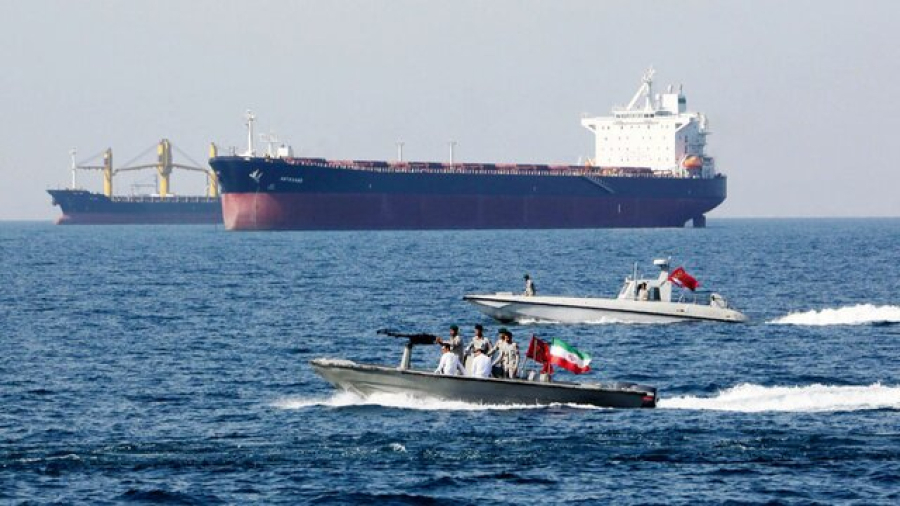
The Middle East Monitor has examined the strategic and economic implications of Iran’s closure of the Strait of Hormuz during its ongoing war with the United States. The article notes that the current situation reflects a strategy of “existential erosion,” a strategy through which Iran is trying to challenge the US government’s narrative of the war by exerting pressure on global markets.
According to the article, the White House has tried to portray its military campaign against Iran as a great success through press conferences and public statements. However, Iran’s actions have in practice sent shockwaves through global markets.
The British media outlet notes that disruption or closure of the Strait of Hormuz directly affects everyday economic sensitive points such as fuel prices and the cost of living. Even before the attacks on ships, threats alone had deterred many companies from using the waterway.
The article explains that major shipping companies have stopped transporting goods through the Strait of Hormuz due to security concerns. As a result, traffic through the strait has been virtually halted since the war began on February 28. The disruption threatens the transportation of about a fifth of the world’s oil supply, a fifth of global trade in liquefied natural gas and about 13 percent of global trade in chemicals, including agricultural fertilizers.
According to the article, tanker freight rates, the cost of marine fuel and war insurance premiums have also increased sharply.
The Middle East Monitor also cites comments by Iranian Foreign Minister Abbas Araqchi, who commented on the economic consequences of the crisis. In a post on social media, Araqchi said that just nine days after the “epic miscalculation”, oil prices have doubled and commodity prices around the world are rising. He also said that Iran is ready for further developments and raised the possibility of further measures.
The British publication further cites the statement of the spokesman for the Khatam al-Anbiya headquarters of the Islamic Revolutionary Guard Corps on March 11, who announced that any ship associated with the Zionist regime, the United States or their allies would be considered a “legitimate target.” He also considered efforts to curb the rise in oil prices ineffective, warning that oil prices could reach $200 per barrel, adding that insecurity in the region is the main factor driving up prices.
The International Energy Agency has tried to curb the rise in oil prices. 32 member countries of the agency decided to release 400 million barrels of oil from their strategic reserves to reduce market disruptions. Fatih Birol, the executive director of the International Energy Agency, announced that this measure was taken to immediately relieve market pressure, but stressed that the return of a stable flow of oil and gas will only be possible if passage through the Strait of Hormuz is resumed.
The Middle East Monitor cites the statement of US Senator Chris Murphy, who expressed his concern after attending a confidential briefing on the war. Murphy said the United States does not currently know how to safely reopen the Strait of Hormuz, adding that the current situation was entirely predictable.
Finally, the article concludes that the consequences of closing the Strait of Hormuz extend beyond purely military considerations. Tankers are piling up on both sides of the waterway, ports are overwhelmed by ships, and oil and gas production in countries such as Qatar, Bahrain, Iraq, and Saudi Arabia could be affected.