
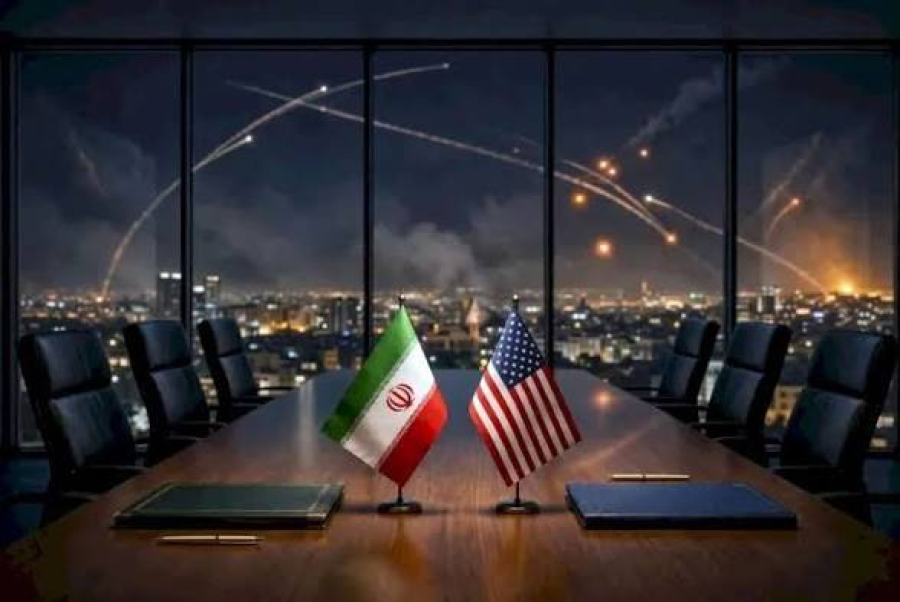
By: S.N. Sabzwari
Iran, US Peace Agreement
Is Iran Once Again Falling into a Trap in the Name of a Peace Agreement After a Strategic Victory?*
Mearsheimer writes in his book The Tragedy of Great Power Politics:
"Great powers always act to preserve their survival and power, not on the basis of moral principles or ideological aspirations."In this context, if we examine the proposed agreement between Iran and the United States, an important question arises: which side stands to gain the real benefit from this agreement?
Following reports of a proposed peace agreement between Iran and the United States, a new debate has emerged in the region. One group considers it an important step toward ending the war and bringing stability to the region, while another sees it as a dangerous strategic trap through which the United States and Israel seek to compensate for their failures.
Analysts who hold this view argue that: The war of the past several months has demonstrated that Iran could not be forced into submission through military pressure. The situation in the Strait of Hormuz, instability in global oil markets, pressure on America's allies, and continuing regional instability had created a complex challenge for Washington. This is why the United States, which initially spoke the language of force, suddenly began talking about negotiations and agreement. According to these circles, the real question is not whether an agreement is being reached or not, but rather who will benefit the most from it.
If one examines the current situation, a strange contradiction becomes apparent.On the one hand, there is talk of reconciliation between the United States and Iran; on the other hand, Israeli attacks in Lebanon continue. Israeli officials have openly stated that they will not abandon their "security zone" policy in Lebanon, Gaza, and Syria. Some Israeli media outlets and government figures have even gone so far as to say that the proposed agreement is dangerous for Israel's security interests. Israel's military operations in Lebanon continue unabated.
Against this backdrop, critics of the agreement raise the following question:Is Iran being kept occupied with negotiations and a peace agreement while Israel is being given time to achieve its objectives in Lebanon?
In their view, if Iran remains silent for the sake of the agreement, pressure on Lebanon and the resistance forces may increase. On the other hand, if Iran responds in support of Lebanon, it will immediately be accused of sabotaging the agreement. In this way, Iran could find itself in a difficult strategic position.
According to this group, another important point is that the United States has entered into agreements with Iran in different periods before, only to later back away from them. The JCPOA nuclear agreement is often cited as an example, from which the United States unilaterally withdrew. For this reason, these circles believe that relying solely on promises and statements could be a major mistake.
Supporters of the agreement argue that it will reduce the risk of war, reopen the Strait of Hormuz, ease sanctions, and bring stability to the region. Critics, however, respond that: the real test is not signatures on paper but realities on the ground. If the war in Lebanon continues, if sanctions are not lifted in practice, and if Israel does not change its military policy, then declaring this agreement a success would be premature.
Within this context, some resistance-oriented circles argue that the United States is attempting to escape from a crisis in which there were no clear signs of military victory. According to them, if Iran abandons its sources of power and leverage while the opposing side succeeds in achieving its objectives, this could prove to be a strategic mistake.
Therefore, according to this perspective, the real question is not whether an agreement will be reached or not. Rather, it is whether Israel's behavior changes after the agreement, whether the war in Lebanon comes to an end, whether sanctions are genuinely lifted, and in which direction the regional balance of power moves.
The critics of the Iran-US peace agreement maintain that:
● The United States is not trustworthy.
● Agreements have been reached before and later broken.
● The political gains resulting from sacrifices made during the war should not be wasted.
● Israel continues its operations in Lebanon and Gaza; therefore, there should be no haste.
This is the key point:
"If attacks on Lebanon continue, doubts and suspicions within Iran will increase."
A segment that has been fighting what it views as a defensive war against the United States and
Israel for a specific objective holds the following position:
■ Any form of reconciliation with the United States is fundamentally wrong.
■ The primary objective should be the removal of American influence in the region.
■ No restrictions should be accepted on Iran's nuclear program or its regional allies (such as
Hezbollah).
At present, the real debate is less about whether there should be an agreement and more about
under what conditions it should take place.
What will happen to the Strait of Hormuz?
When will the sanctions be lifted?
When will frozen assets be released?
What will happen to Lebanon and Hezbollah?
How many concessions will be made regarding the nuclear program?
The pro-war circles in Iran view this agreement with suspicion. They appear willing to accept it only if they are convinced that the United States and Israel are not using this period to buy time in order to achieve their objectives against Lebanon, Gaza, or Iran's regional allies. For this reason, the ongoing Israeli operations in Lebanon have perhaps become the most sensitive
political issue surrounding this agreement. If we look at the issue from the perspective of those
who consider this agreement a deception or a strategic trap, their argument is as follows:
The United States and its allies had become trapped in a long and costly war. The disruption of
the Strait of Hormuz, rising energy prices, international pressure, and regional instability had become a burden for them. Therefore, the agreement was more of a necessity for the United States than for Iran.
According to this viewpoint, when one side begins to feel pressure on the battlefield and then suddenly moves toward negotiations, the real question becomes: "Why does it want to buy time?"
Those who hold this view argue that if peace were genuinely the objective, Israeli operations in Lebanon would have been reduced simultaneously. Instead, according to various reports, Israeli attacks in Lebanon and operations against Hezbollah have continued. Iran is being told to stop the war and reopen the Strait of Hormuz, while at the same time Israel is being given the opportunity to complete its objectives in Lebanon. For this reason, some hardline circles within Iran have criticized the negotiating team and described its approach as premature flexibility. The real test of any ceasefire will be seen in Gaza or Lebanon, not merely at the Iran–US negotiating table. If Israel continues its military operations, the agreement will appear one-sided.
If sanctions are not lifted immediately and only promises are offered, then Iran would have already surrendered its greatest source of leverage: the Strait of Hormuz. If satisfactory answers to these questions do not emerge, then according to the critics of the agreement: This is not peace but merely a temporary pause, an opportunity for the United States to catch its breath and for Israel to be given a free hand to achieve its objectives during that period. Its purpose would simply be to rearrange the battlefield for the next phase.