
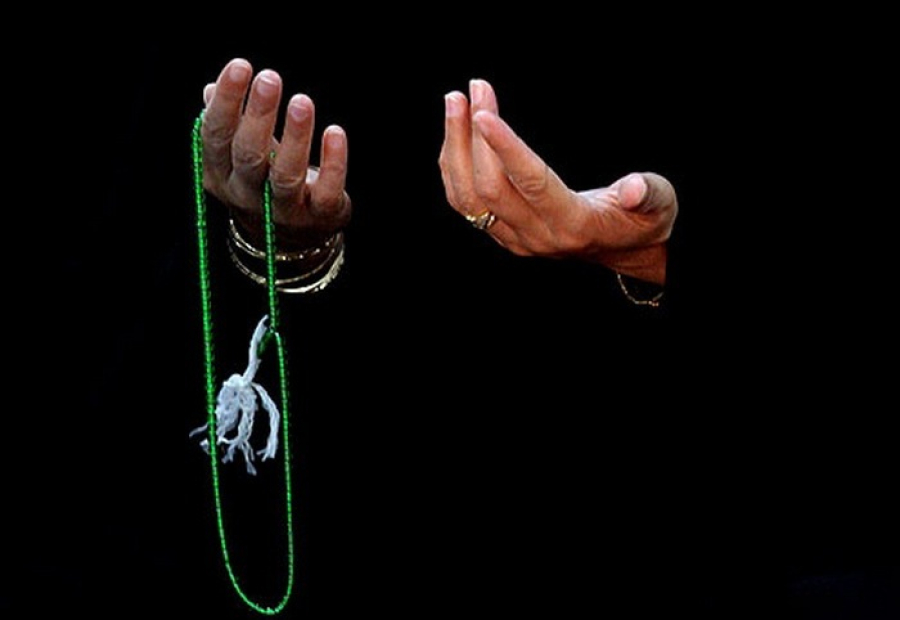
Tawassul (seeking nearness to God through a means) has long been a deeply rooted belief among Muslims, particularly within Shiʿa theology. However, some Sunni scholars reject tawassul entirely, while others permit it only with living persons and not with the deceased. This short article examines the legitimacy of tawassul through the Qur’an and Prophetic tradition and provides concise responses to these objections.
---
1. The Qur’anic Basis for Tawassul
The Qur’an explicitly affirms the principle of seeking a means to draw closer to God:
> “O you who believe! Fear Allah and seek the means (al-wasīlah) to Him.”
(Qur’an 5:35)
Prominent Sunni exegetes such as Fakhr al-Dīn al-Rāzī and al-Qurṭubī state that wasīlah includes anything that brings one closer to Allah, including righteous and honored individuals.
Allah also says:
> “If, when they wronged themselves, they had come to you and asked forgiveness of Allah, and the Messenger had asked forgiveness for them…”
(Qur’an 4:64)
This verse clearly establishes the legitimacy of approaching the Prophet and seeking Allah’s forgiveness through him.
---
2. Response to the Claim: “Tawassul Is Not Permissible at All”
If tawassul were polytheism or an innovation:
The Qur’an would not command seeking a wasīlah
The Companions would not have practiced it
In well-established Sunni sources, a blind man came to the Prophet ﷺ and asked for his prayer. The Prophet taught him to say:
> “O Allah, I ask You and turn to You through Your Prophet Muhammad…”
(Sunan al-Tirmidhī, vol. 5, p. 569; Musnad Aḥmad, vol. 4, p. 138)
This narration is a clear example of tawassul through the person of the Prophet, not merely a direct supplication without mediation.
---
3. Response to the Claim: “Tawassul Is Allowed with the Living, Not with the Dead”
This distinction has no explicit basis in the Qur’an or authentic Sunnah.
The Qur’an states:
> “Do not think of those who are killed in the way of Allah as dead.”
(Qur’an 3:169)
If martyrs are alive, then the Prophet ﷺ and the righteous saints are even more deserving of this status.
Moreover, after the Prophet’s passing, the Companion Bilāl ibn al-Ḥārith al-Muzanī came to the Prophet’s grave during a drought and said:
> “O Messenger of Allah, ask Allah to grant rain for your nation.”
Rain then fell, and none of the Companions objected to this act.
(al-Istīʿāb, Ibn ʿAbd al-Barr, vol. 3, p. 1149; al-Bidāyah wa al-Nihāyah, Ibn Kathīr, vol. 7, p. 105)
This incident clearly demonstrates tawassul after the Prophet’s death.
---
Conclusion
Tawassul has a clear Qur’anic foundation
It was practiced by the Prophet and his Companions
The distinction between the living and the deceased lacks scriptural proof
Tawassul is not worship of other than Allah, but rather asking Allah through those whom He loves and honors
Therefore, tawassul is neither polytheism nor innovation, but a well-established Islamic practice supported by the Qur’an and the Sunnah.