
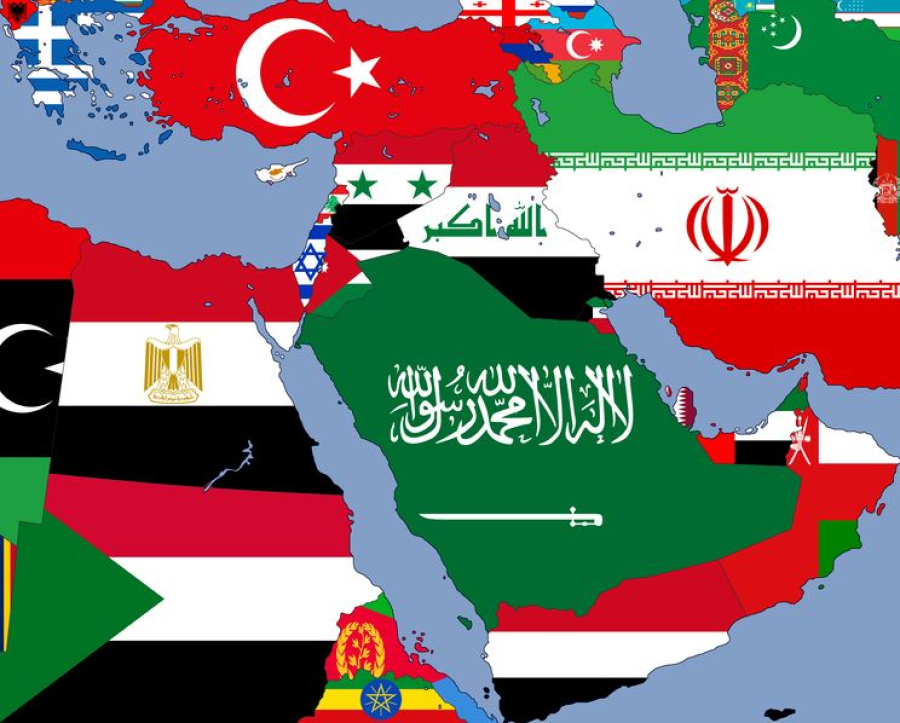
Long seen as oases of stability and ambition, the Gulf Arab states of Saudi Arabia, the United Arab Emirates, Kuwait, Qatar, Oman and Bahrain have attracted a flurry of investors, big companies and skilled workers. Their airports have become global hubs and their cities financial and tourist hubs.
But the US-Israeli war with Iran has tarnished that image, as Iranian missiles and drones target not only US military bases in the region but also civilian infrastructure and energy.
Governments have tried to return to normalcy as quickly as possible: Qatar, for example, has ended teleworking and resumed university classes. But some experts say that while the Gulf states may be able to weather the shock, the war has forced them to rethink their strategies.
“You can’t stop Iran from attacking because it’s about geographic proximity,” says Alex Vatankhah of the Middle East Institute, a think tank in Washington. “These countries are now caught in the middle of this conflict, on the front lines of a war that is not theirs, but they are paying a very high economic price for it.”
“Even if they spend all their money on defense, what we’ve seen so far is that these countries are very easy targets for Iran, and their billions of dollars of investments are at risk with Iranian drones that cost a few thousand dollars.”
This imbalance, Mr. Watankhah said, increases insurance costs, complicates logistics processes and may force companies to reconsider their presence and risk-taking in the Gulf.
As Gulf states struggle to balance their relations with the United States and Iran, one immediate consequence is a re-alignment of their security with Washington, said Ebtesam Kotbi, head of the Emirates Policy Center think tank in the United Arab Emirates.
The Gulf states are “moving closer to the United States because of their urgent security needs, while at the same time, quietly and practically, they are moving closer to Israel,” he said. But he stressed that this cooperation is based on expediency, not ideology. “They remain concerned about being drawn into more wars, becoming prime targets, and losing their strategic autonomy.”