
Wars cannot be measured solely by the number of missiles fired, the volume of ammunition consumed, or declarations of victory. The primary metric is the ratio between stated objectives and the actual outcomes on the battlefield—a domain where offensive capabilities, deterrent power, logistical sustainability, and the capacity to impose one’s political will upon an adversary all intersect. From this perspective, the remarks of former U.S. President Barack Obama regarding the consequences of a war against Iran carry implications that extend beyond mere political wrangling between Democrats and Republicans; they touch directly upon the assessment of U.S. military performance and the strategic standing of the Islamic Republic of Iran.
By pointing to potential attacks on U.S. bases and allies, the casualties among American military personnel, the depletion of missile stockpiles, and a surge in energy prices, Obama raises a fundamental question: If the objective of initiating such a war were to weaken Iran’s military capabilities and impose Washington’s will upon Tehran, why—after months of conflict—would the United States still face heavy military and economic costs, while the security of the Strait of Hormuz becomes one of its most pressing concerns?
The significance of this question lies in the fact that it is posed by a politician who spent years at the highest echelons of U.S. security decision-making. While Obama’s comments should not be taken, in isolation, as definitive proof of one side’s victory or the other’s defeat, they—alongside other criticisms voiced within the United States—indicate that the assessment of the consequences of such a war has become a serious subject of debate within American political circles.
Hormuz; Geography That Gives Meaning to Military Power
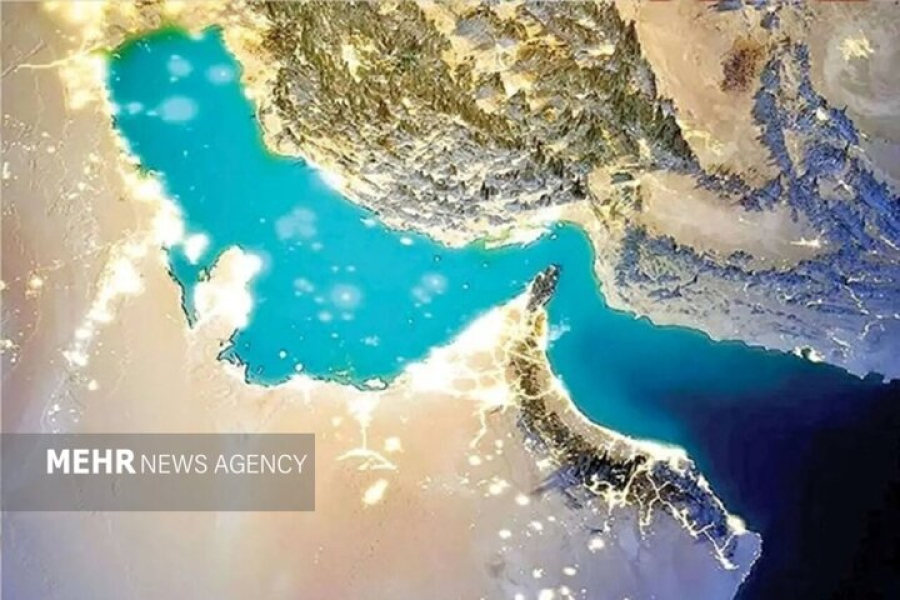
In assessing Iran’s defensive posture, the Strait of Hormuz is not merely a maritime passage; this waterway is a component of the power equation in the Persian Gulf and a critical link connecting the global energy market to the region’s major oil producers. Consequently, any disruption to security or maritime traffic in this area carries repercussions that extend well beyond the geographical confines of the Persian Gulf, potentially impacting energy prices, shipping costs, and the security calculations of major powers.
When Obama speaks of Iran possessing a "veto power" over the Strait of Hormuz, the significance of this characterization must be understood within the context of this strategic reality. This does not necessarily imply legal sovereignty over the entire Strait or the capacity for absolute control over vessel movement; rather, it reflects the fact that Iran’s military capabilities and geographical position can decisively influence the costs, security, and reliability of maritime transit.
From a military perspective, this position provides Tehran with a form of deterrent leverage. Any power intending to conduct large-scale operations in the region must inevitably factor in the potential consequences for the security of lines of communication, energy infrastructure, and global markets. In such a scenario, military superiority is not measured solely by the number of vessels, aircraft, or bases stationed in the region; the ability to impose costs on an adversary is also a key element of the balance of power.
More importantly, the security of the Strait of Hormuz is not confined to developments on the battlefield. Even an increased likelihood of disruption to maritime traffic—well before any widespread stoppage actually occurs—can impact global markets. Therefore, deterrence capability in this region—beyond its operational dimensions—also encompasses economic and psychological effects.
However, transforming this potential capacity into a sustainable strategic outcome depends on a range of factors, including coastal defense capabilities, the protection of critical infrastructure, the resilience of command and control networks, the security of lines of communication, and the management of the economic consequences resulting from any escalation of conflict.