
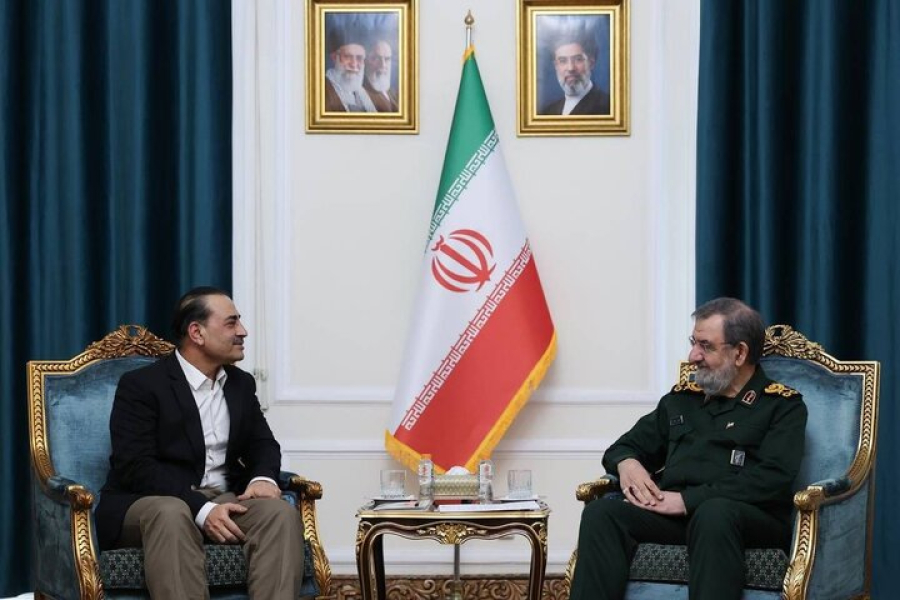
From warnings regarding the costs of any military adventurism against Iran to an insistence on ending reliance on political promises, the statements and regional engagements of the Secretary of the Supreme National Security Council are once again drawing significant attention.
Mohsen Rezaei’s message must be examined across two domains: his rhetoric concerning the costs of war, Iran’s capacity to retaliate, and the future of negotiations; and his meetings with regional officials. On one hand, he emphasizes that the Islamic Republic of Iran is prepared for various scenarios; on the other, he does not view the path of diplomacy as closed—though it must not be a diplomacy built, once again, upon political promises and unreliable guarantees. Together, these two pillars illustrate an approach wherein dialogue and defensive strength are not contradictory paths, but rather interconnected components in the pursuit of national interests.
When Negotiation Without Guarantees Means Repeating the Past
"Everyone must understand that taking action against Iran comes at a cost." This statement encapsulates the recent position taken by Major General Mohsen Rezaei, Secretary of the Supreme National Security Council, in an interview with the American outlet *Drop Site*. This stance—coupled with his emphasis on readiness to continue retaliatory measures should the conflict persist—conveys a clear message regarding the Islamic Republic of Iran’s security calculus.
In this interview, Rezaei stressed that while Iran prefers diplomacy—provided it can eliminate threats and reduce the costs of confrontation—the country possesses the necessary means to respond should the war continue. Noting that Iran’s full capabilities were not deployed during previous phases, he indicated a readiness to leverage greater capacity—commensurate with the intensity of any conflict—and warned that should hostilities resume, the scope of Iran’s operations would be significantly broader.
Another aspect of this message involves a reference to high-value U.S. assets in the region, including data centers, cables, and infrastructure related to artificial intelligence. The significance of these remarks lies in the fact that they extend the concept of deterrence beyond the mere exchange of military strikes, drawing attention instead to the vulnerability of the adversary’s infrastructure and strategic interests. It should be noted, however, that these statements do not in themselves constitute a specific operational plan to target any of these assets; rather, they should be understood as a warning regarding the potential scale of the costs associated with a new conflict.
In this same context, his emphasis that "we will not return to the diplomacy of the past, yet we are not abandoning diplomacy altogether" carries particular weight. This distinction draws a line between the principle of negotiation and the previous approach to confidence-building. The issue is not the abandonment of dialogue; rather, the question is whether one can once again rely on an agreement where the fulfillment of the other side’s commitments depends, above all else, on their political will and good faith.
Given the experience of recent confrontations between Iran and the United States—particularly where diplomatic channels have coincided with escalating military tensions—this question has emerged as a central theme in the discourse surrounding the future of negotiations. According to the perspective presented in Rezaei’s remarks, any potential agreement must be structured in such a way that the obligations of the parties are clear, their implementation is verifiable, and any breach of these commitments entails specific consequences.
In other words, diplomacy can only serve national interests effectively if it extends beyond the mere signing of a document or the issuance of a joint statement. Mechanisms for verification, enforcement guarantees, and the clear definition of consequences for non-compliance are essential elements that can help bridge the gap between an agreement on paper and practical commitment.