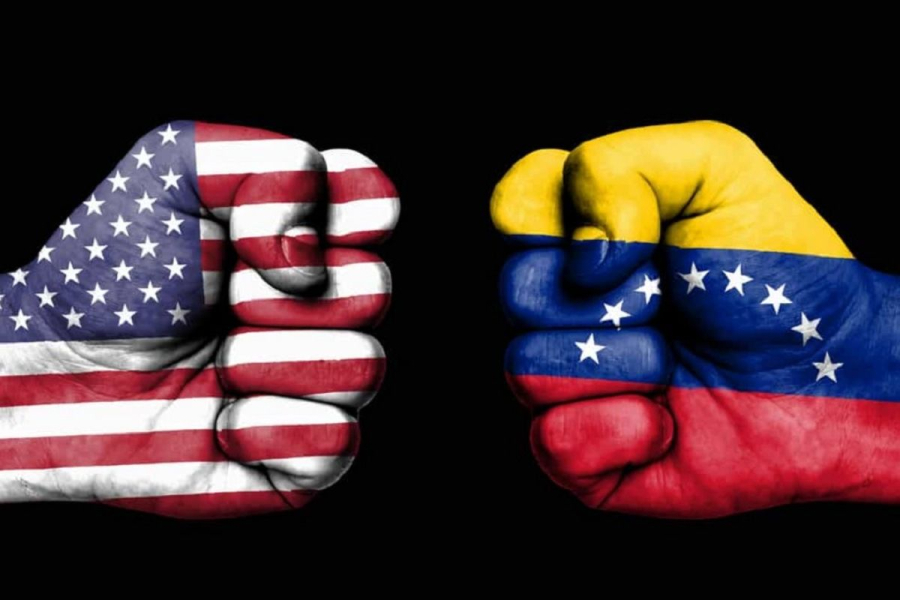
The recent action by the United States in carrying out a military operation on Venezuelan soil and arresting President Nicolás Maduro must be regarded as one of the most controversial and unprecedented political events of recent years—an incident that has shocked not only Latin America, but the entire international system.
In this operation, U.S. forces entered Venezuelan territory, detained Maduro and his wife, and transferred them to the United States to stand trial. The operation was accompanied by heavy clashes and human casualties, and in practice amounted to a direct military intervention aimed at changing the balance of power in a sovereign country.
Washington has justified the move with accusations such as drug trafficking and “narco-terrorism,” but a large part of the international community considers this explanation insufficient. In the view of many governments and analysts, what has happened is nothing less than a blatant violation of Venezuela’s sovereignty and a breach of one of the most fundamental principles of international law: the prohibition of the use of force.
The significance of this event goes far beyond Venezuela’s internal political fate. The operation sends a deeply alarming message: that major powers can, without authorization from international institutions and purely on the basis of their own judgments and interests, attack an independent country and even arrest its president. If such a pattern becomes normalized, the very concept of a “rules-based international order” will give way to a “might-makes-right” world order.
From a geopolitical perspective, this move is likely to intensify tensions between the United States and major rivals such as China and Russia, pushing the world into a more dangerous phase of great-power rivalry—one in which shared international rules are increasingly weakened.
At the regional level, Latin American countries fear that this precedent could lead to wider instability, internal conflicts, and new waves of humanitarian and migration crises. Many governments in the region have received a clear message: national sovereignty is no longer guaranteed, and any country could one day become a target under similar pretexts.
At the same time, the economic and energy dimension cannot be ignored. Venezuela possesses the largest oil reserves in the world, and any shift in the balance of power there can have a direct impact on global energy markets and on the competition among major powers over resources.
Overall, the arrest of Maduro is far more than a legal or security case. It is a sign of a dangerous turn in global politics: a move toward normalizing the use of force, weakening international law, and returning to a logic in which power stands above law. The earthquake that has begun in Venezuela today may tomorrow shake the foundations of the global order elsewhere.