By Mehdi Mohammadi
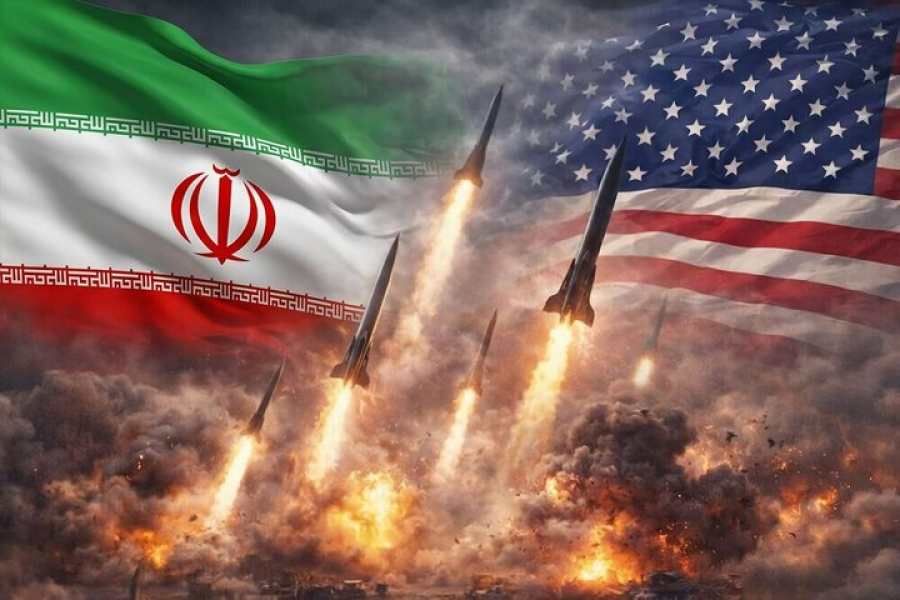
Iran and the United States are moving closer to a confrontation, although nothing has yet been finalized.
The United States is seeking to impose a multi-front conflict on Iran, one that would involve at least three fronts:
1. Military: Direct military confrontation with Iran.
2. Regional: Efforts to weaken Hezbollah in Lebanon, Ansar Allah in Yemen, and, in particular, Kata'ib Hezbollah in Iraq, with the aim of preventing them from playing an effective role in a future conflict.
3. Domestic: Creating unrest and instability inside Iran.
In response, if a conflict breaks out, Iran will challenge the United States and its allies on a global scale. The geographical scope of the next war will not be limited to the region, and Iran will enter the conflict with a different geographical reach, weapons capabilities, and strategic approach.
Military Developments
The USS George Washington has left the region and moved into the Indian Ocean. However, this does not mean that it has been removed from potential operations against Iran; the United States may use the carrier to launch long-range strikes.
There are also indications that Ukraine may be seeking to participate in U.S. reconnaissance operations on the northern front, alongside the deployment of additional U.S. military personnel to Bahrain and Kuwait.
Iranian attacks on vessels deemed to be in violation of regulations in the Strait of Hormuz have also intensified.
The Northwestern Front: Escalating Clashes with Anti-Regime Groups and Possible Ground Operations
Clashes between Kurdish anti-regime groups and the Islamic Revolutionary Guard Corps (IRGC) have intensified in northwestern Iran.
The process of arming these groups is gaining serious momentum, and the United States is seeking to establish a ground force to complement its aerial bombing campaign in a future war.
Israel's Efforts to Draw Trump into War: False-Flag Operations
The Israeli regime has sharply intensified its efforts to draw Trump into a war.
Netanyahu, Tzachi Hanegbi, and other Israeli officials are advancing a series of so-called “false-flag” operations aimed at accusing Iran of conducting intelligence and sabotage operations on U.S. and European soil.
The Military Option Is Back on Trump's Table
Available information indicates that Trump is seriously considering the military option against Iran, but has not yet been able to reach a final decision.
Because of the deadlock in negotiations, a consensus is emerging within the United States that Iran must be dealt a military blow, although there are disagreements over the timing.
Trump remains concerned about the consequences of war and continues to hesitate over the decision. The central issue in his calculations is the scale of Iran's response to a potential attack.
American planners have clearly defined scenarios for an attack, and the option of assassinating Iranian officials has once again become their number-one operational priority. However, their defensive and air-defense options for countering Iran's response remain unclear.
Breaking the Blockade: Iran's Military Response to U.S. Aggression
Iran considers the blockade an act of war and has multiple scenarios available to break it.
These scenarios include:
1. Escalating efforts to disrupt oil exports from the region, thereby increasing the cost of maintaining the blockade.
2. Direct attacks on platforms and infrastructure responsible for enforcing the naval blockade.
3. Implementing a “blockade for blockade” strategy by preventing ships from docking at ports in countries along the southern coast of the Persian Gulf.
The Condition for Ending the War: The United States Must Make Major Concessions
The only path to an agreement is for the United States to back down and accept Iran's fundamental demands. These include lifting the naval blockade; ending the war on all fronts, including Lebanon; releasing Iran's frozen assets; ending oil sanctions; withdrawing U.S. forces from the region; lifting new sanctions and ending the policy of economic exclusion; and abandoning excessive demands concerning Iran's nuclear program.
Even if such an agreement is reached, it will be temporary and fragile, with the possibility of its collapse remaining ever-present.
If Iran agrees to a deal without receiving substantial concessions, reopens the Strait of Hormuz, and retreats from its nuclear program, the United States will conclude that it can achieve its objectives through war. Under such circumstances, military action against Iran will become a credible option in U.S. strategic calculations.