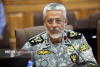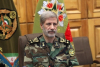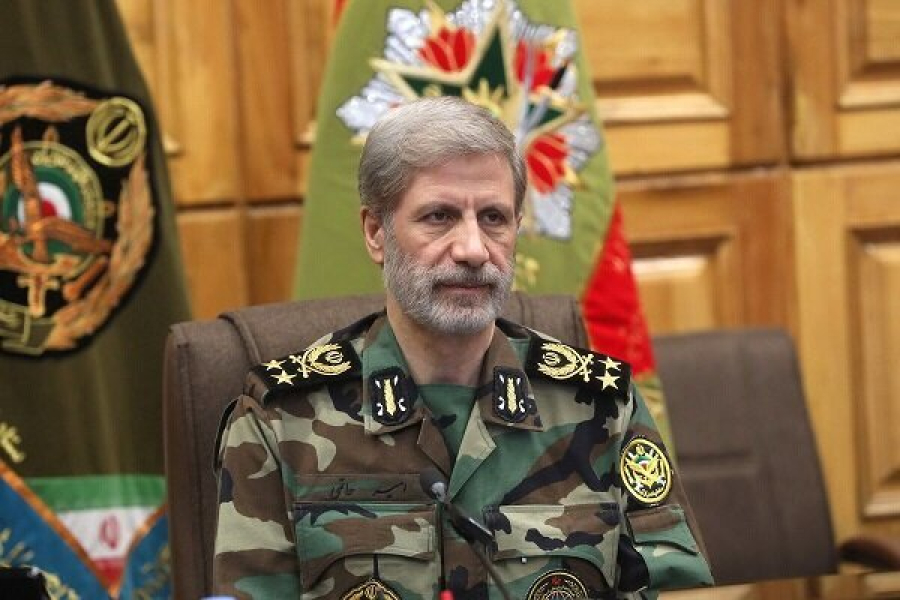
Major General Amir Hatami, Commander-in-Chief of the Army of the Islamic Republic of Iran, speaking at the closing ceremony of the 11th National Congress on *E’tikaf* (spiritual retreat) and the 8th International Scientific, Literary, and Artistic Festival on *E’tikaf*—held at the mosque of the Imam Ali (AS) Officers' Academy in Tehran—identified the four pillars of Iran’s power as the people, the armed forces, the governance structures, and the country’s geopolitical position. He emphasized that these components have caused the enemy’s calculations to fail.
Referring to the role played by the people during the early days of the war, Hatami stated: "Relying on their own capabilities, the people entered the arena; in the words of the Supreme Leader, it was the people who steered the course of events during those initial days."
Noting that the presence of the people was a key component of the Islamic Republic of Iran’s power, he added: "The people stepped forward amidst wartime conditions and played a crucial role in thwarting the enemy’s calculations."
**Armed Forces Continue Operations Despite the Martyrdom of Commanders**
Identifying the armed forces as the second pillar of the nation’s power, the Commander-in-Chief of the Army stated: "The armed forces responded to the enemy with full strength; in the very first hours, hundreds of rounds were fired toward the enemy."
He added: "Despite the martyrdom of a large number of commanders and officials, the Army of the Islamic Republic of Iran and the Islamic Revolutionary Guard Corps (IRGC) continued their operations; these events did not hinder the ongoing operational activities of the armed forces." The Country’s Governance Structure Remained Uninterrupted Despite the Martyrdom of Officials
Hatami identified the establishment of institutions and the continued functioning of the nation’s structures as the third pillar of Iran’s power. He stated that the governance structure of the Islamic Republic of Iran—across the administrative, political, economic, judicial, and security spheres—continued to operate despite the martyrdom of officials; consequently, the country did not experience the disruption the enemy had anticipated.
Furthermore, the Commander-in-Chief of the Army of the Islamic Republic of Iran cited the nation’s geopolitical position as the fourth pillar of its power. Pointing to the strategic significance of the Strait of Hormuz, he remarked that this position constitutes a key component of the Islamic Republic of Iran’s power.
He emphasized that should the enemy fail to respect the rights of the Iranian nation, restrictions regarding transit through the Strait of Hormuz will remain in place.