zarezadeh
British media analysis of the economic consequences of the closure of the Strait of Hormuz
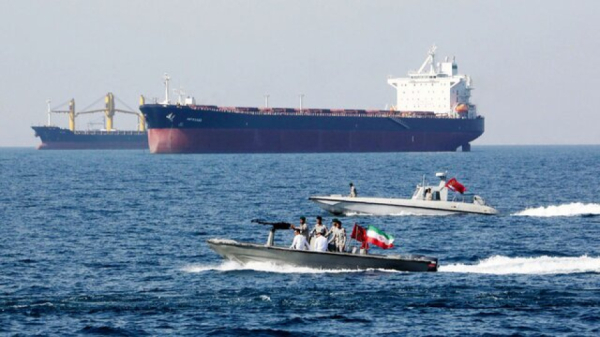
The Middle East Monitor has examined the strategic and economic implications of Iran’s closure of the Strait of Hormuz during its ongoing war with the United States. The article notes that the current situation reflects a strategy of “existential erosion,” a strategy through which Iran is trying to challenge the US government’s narrative of the war by exerting pressure on global markets.
According to the article, the White House has tried to portray its military campaign against Iran as a great success through press conferences and public statements. However, Iran’s actions have in practice sent shockwaves through global markets.
The British media outlet notes that disruption or closure of the Strait of Hormuz directly affects everyday economic sensitive points such as fuel prices and the cost of living. Even before the attacks on ships, threats alone had deterred many companies from using the waterway.
The article explains that major shipping companies have stopped transporting goods through the Strait of Hormuz due to security concerns. As a result, traffic through the strait has been virtually halted since the war began on February 28. The disruption threatens the transportation of about a fifth of the world’s oil supply, a fifth of global trade in liquefied natural gas and about 13 percent of global trade in chemicals, including agricultural fertilizers.
According to the article, tanker freight rates, the cost of marine fuel and war insurance premiums have also increased sharply.
The Middle East Monitor also cites comments by Iranian Foreign Minister Abbas Araqchi, who commented on the economic consequences of the crisis. In a post on social media, Araqchi said that just nine days after the “epic miscalculation”, oil prices have doubled and commodity prices around the world are rising. He also said that Iran is ready for further developments and raised the possibility of further measures.
The British publication further cites the statement of the spokesman for the Khatam al-Anbiya headquarters of the Islamic Revolutionary Guard Corps on March 11, who announced that any ship associated with the Zionist regime, the United States or their allies would be considered a “legitimate target.” He also considered efforts to curb the rise in oil prices ineffective, warning that oil prices could reach $200 per barrel, adding that insecurity in the region is the main factor driving up prices.
The International Energy Agency has tried to curb the rise in oil prices. 32 member countries of the agency decided to release 400 million barrels of oil from their strategic reserves to reduce market disruptions. Fatih Birol, the executive director of the International Energy Agency, announced that this measure was taken to immediately relieve market pressure, but stressed that the return of a stable flow of oil and gas will only be possible if passage through the Strait of Hormuz is resumed.
The Middle East Monitor cites the statement of US Senator Chris Murphy, who expressed his concern after attending a confidential briefing on the war. Murphy said the United States does not currently know how to safely reopen the Strait of Hormuz, adding that the current situation was entirely predictable.
Finally, the article concludes that the consequences of closing the Strait of Hormuz extend beyond purely military considerations. Tankers are piling up on both sides of the waterway, ports are overwhelmed by ships, and oil and gas production in countries such as Qatar, Bahrain, Iraq, and Saudi Arabia could be affected.
The armed forces responded by setting fire to American installations
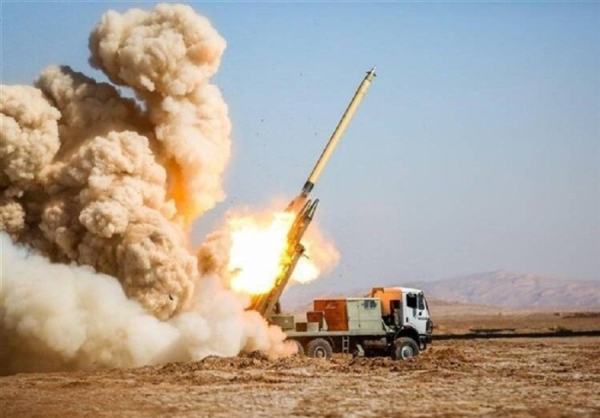
The IRGC Public Relations Department announced in a statement:
بسم الله القاصم الجبارین
فمن اعتدی علیکم فاعتدوا علیه بمثل ماعتدی علیکم
The sixty-third wave of Operation Sadeq 4 against US-related oil facilities in the region was carried out with great force under the code “O Master of the Time, may God hasten the return of the Sharif,” dedicated to the brave and martyred Minister of Intelligence and other martyrs of the intelligence community.
The honorable and upright people of Iran, the deceitful and lying enemy, targeted some energy facilities in the Iranian Republic this afternoon to narrow the field for the people who are shouting their opinions in the streets 16 days a week about the recent aggressions, and to take revenge on the Iranian nation.
The Islamic Republic of Iran did not intend to expand the scope of the war to oil facilities and did not want to harm the economies of friendly and neighboring countries. However, with the enemy’s aggression against energy infrastructure, we have effectively entered a new phase of the war, and the necessity of defending Iran’s infrastructure forced us to attack energy facilities related to the US and American shareholders.
The honorable nation of Iran;
Your brave sons in the armed forces immediately began to take offensive action after the enemy's malice and, following a heavy and counter-attack operation until the damage reached the level of the blow, set fire to a series of oil facilities that are considered American interests in the region.
American-Zionist aggressors!
We warn you once again that you made a big mistake in attacking the energy infrastructure of the Islamic Republic, for which the response is underway. If it is repeated again, further attacks on your energy infrastructure and that of your allies will not stop until it is completely destroyed, and our response will be much more severe than tonight's attacks.
و ماالنصر الا من عندلله العزیز الحکیم
The American Salam Barracks and Counter-Revolutionary Headquarters in Sulaymaniyah Under IRGC Fire
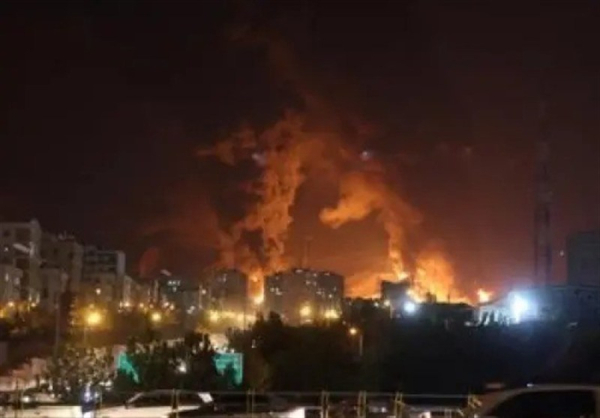
The IRGC Public Relations Department announced in a statement: The Salam barracks of the American forces in Sulaymaniyah province and the headquarters of the Kurdish counter-revolutionary forces in Zarguyeh, Sulaymaniyah province were targeted by missile attacks by the IRGC Ground Force missile units.
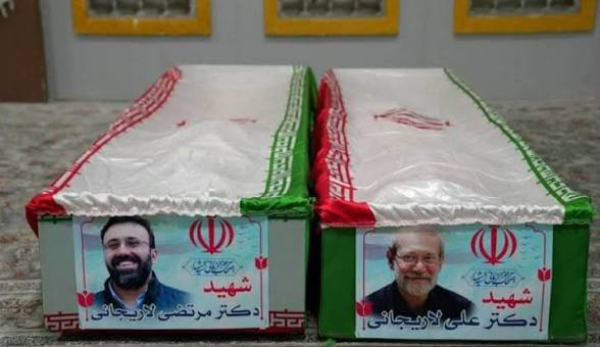
The Leader of the Revolution’s Condolence Message Following the Martyrdom of the Secretary of the Supreme National Security Council, His Son, and Some of His Colleagues
In the Name of Allah, the Most Gracious, the Most Merciful
With great regret, I received the painful news of the martyrdom of Mr. Dr. Ali Larijani, Secretary of the Supreme National Security Council and the Leader’s representative in that council, Boroumand’s son, and some of his colleagues. He was a learned, far-sighted, intelligent, committed individual with diverse experiences in various political, military, security, cultural, and managerial fields. Nearly five decades of playing a role in various layers of the Islamic system had made him a distinguished figure.
Undoubtedly, the assassination of such a figure shows the extent of his importance and the hatred of the enemies of Islam towards him. Anti-Islamists should know that shedding this blood at the foot of the tree of the Islamic system only makes it stronger, and of course, every blood has a price that the criminal murderers of the martyrs must soon pay. I offer my sincere condolences to his beloved wife and other children, as well as to all his relatives, especially Ayatollah Amoli Larijani, and I pray to Allah Almighty to grant them the highest ranks.
Seyyed Mojtaba Hosseini Khamenei
Message of Condolences from the Leader of the Revolution following the Martyrdom of Major General Gholamreza Soleimani
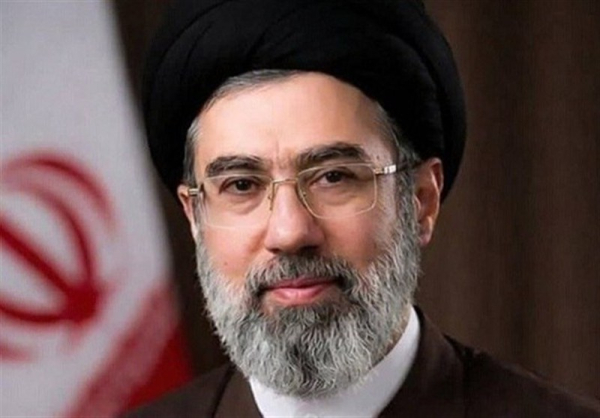
Receiving the unfortunate news of the martyrdom of Major General Gholamreza Soleimani, Head of the Basij for the Oppressed, caused great sorrow and regret. He had been active in the field of struggle for the cause of God for a long time and had gained many experiences in this way. The assassination of this mujahideen general is a reminder of the great importance of the Basij and the great fear that the evil-tongued enemy has of confronting it.
I offer my condolences to the family of that esteemed martyr, all his colleagues in the Islamic Revolutionary Guard Corps, and all the dear Basijis, of whom I am the youngest, on this painful tragedy. I hope that God Almighty will grant him a high position.
Seyyed Mojtaba Hosseini Khamenei
What do the Iranian people think about the course of the war?
Tehran Times wrote, citing a politically informed source: In two separate surveys conducted simultaneously with the war in different regions of Iran, more than 84 percent of respondents rated Iran’s ability to respond to the enemy’s actions as “good” or “very good.”
According to this source, about 81 percent of participants also considered targeting US bases and resources in the region to be a “correct and logical” measure and supported expanding the scope of the conflict to a regional level.
This informed source emphasized: The results of these surveys indicate the formation of a kind of convergence and consensus among different segments of society.
Referring to the current approach, he clarified: The macro policy is based on continuing defense until objective guarantees are achieved and field events are formed to prevent future wars from recurring. Therefore, the mediators who were brought in by the American side to negotiate have returned empty-handed.
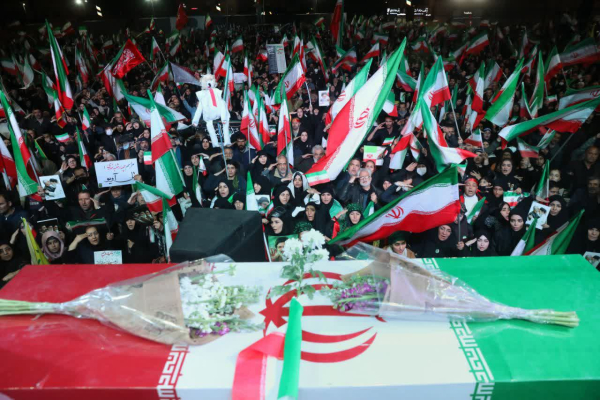
What is happening on the streets of Iran these days?
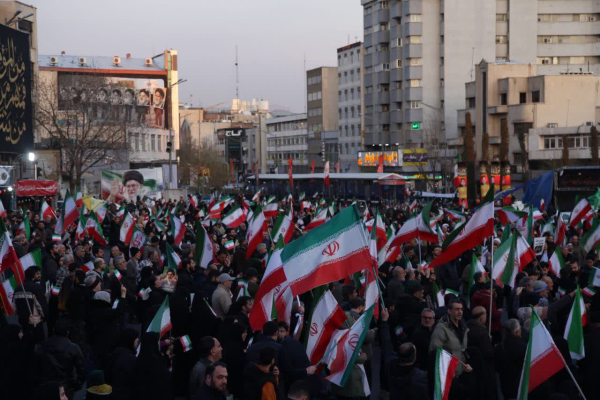
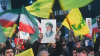
Iranians all over the country are taking to the streets after congregational prayers and breaking their fast.
In all cities and villages, they are taking to the streets in support of the Islamic Republic of Iran to prove that they will always defend their government and leaders against the enemy.
What will happen if the Iranian people do not take to the streets? At that time, agents and elements of the Mossad and the CIA will take to the streets disguised as ordinary people and start rioting as protesters of the regime.
And this is what the enemy wants.
So the vigilant and loyal people of Iran are trying to protect their country from the enemy.
The people of Iran love their country, their regime, and their leader, but the Western media is insinuating that the people are dissatisfied. In fact, this is the enemy’s evil plan.
Iran’s president vows Israeli assassinations of top officials won’t go unanswered
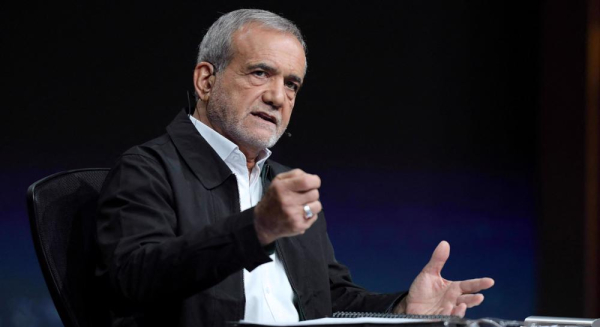
Iran’s President Masoud Pezeshkian has stressed that the Israeli assassination of the head of the Basij Organization and his comrades “will not go unanswered,” and will further increase the determination of the Iranian nation.
In a message on Wednesday, the Iranian president offered his condolences over the martyrdom of the “brave commander” Brigadier General Gholamreza Soleimani Farsani, along with several of his comrades, in a “terrorist” Israeli attack.
Noting that Soleimani bravely served on the fronts during Iraq’s 1980-88 imposed war on Iran and took part in all arenas of resistance and was “always prepared for martyrdom”, Pezeshkian said that he has “now reached his long‑held aspiration.”
“It is a false illusion of the inhumane and terrorist Zionist regime that such malicious actions could weaken the resolve of the noble Iranian nation,” he stressed.
“There is no doubt that the blood of these dear martyrs will not go unanswered, and their martyrdom will inspire a revolutionary fervor with even greater motivation,” Pezeshkian added.
In a seperate statement earlier on Wednesday, Pezeshkian also condoled the martyrdom of top security official Dr. Ali Larijani and his associates.
President Pezeshkian described him as a "virtuous, precious, and dear brother."
"He was an outstanding and valuable figure who, throughout the era of the Islamic Republic, served in various capacities, yielding extensive and diverse results. During our long collaboration in the Islamic Consultative Assembly and his recent tenure as Secretary of the Supreme National Security Council, I witnessed nothing but goodwill, keen insight, companionship, and foresight from him," Pezeshkian wrote in the message.
Iran’s president warned of severe consequences for the perpetrators of the horrific crime.
"Undoubtedly, a severe revenge awaits the terrorist criminals who have stained their foul hands with the blood of the innocent, yet brave and steadfast, martyrs of the sacred land of Iran during the recent terrorist aggressions," he warned.
The US and Israel started a fresh round of aerial aggression on Iran on February 28, some eight months after they carried out unprovoked attacks on the country.
The attacks led to the martyrdom of Leader of the Islamic Revolution Ayatollah Seyyed Ali Khamenei.
Iran began to swiftly retaliate against the strikes by launching barrages of missile and drone attacks on the Israeli-occupied territories as well as on US bases and interests in regional countries.
Press TV’s website
Assassinations only make Iran ‘stronger’, aggressors to pay price: Leader
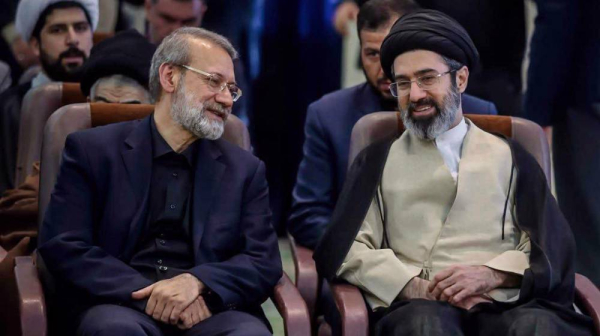
Leader of the Islamic Revolution Ayatollah Sayyed Mojtaba Khamenei has vowed revenge for the assassination of Secretary of the Supreme National Security Council Ali Larijani in an Israeli strike, stressing that the perpetrators will pay a price soon.
In a statement on Wednesday, the Leader offered his condolences over the martyrdom of Ali Larijani, his son and several of his companions in an Israeli strike Tuesday night.
Ayatollah Khamenei paid tribute to Larijani, saying “he was a learned, farsighted, intelligent, and committed individual, possessing diverse experience across various political, military, security, cultural, and managerial fields.”
“Nearly five decades of influential service within different layers of the Islamic establishment had made him a distinguished figure,” he added.
Ayatollah Khamenei noted that the assassination of Larijani “reflects both his importance and the deep hostility of the enemies of Islam toward him.”
He emphasized that such assassinations will only make the Islamic establishment “stronger”, stressing that “every spilled blood has a price, which the criminal killers of these martyrs will soon have to pay.”
Dr. Larijani also served as a member of Iran's Expediency Council and a senior advisor to the martyred Leader of the Islamic Revolution, Ayatollah Seyyed Ali Khamenei.
He previously served as Speaker of the Iranian Parliament (Majlis) for 12 years before being succeeded by Mohammad-Baqer Qalibaf.
Throughout his long and successful political career, he also contested presidential elections and served as head of the national broadcaster, the Islamic Republic of Iran Broadcasting (IRIB).
His assassination comes as part of the unprovoked and illegal US-Israeli aggression against Iran, which began on February 28.
The attacks led to the martyrdom of Leader of the Islamic Revolution Ayatollah Seyyed Ali Khamenei.
Iran began to swiftly retaliate against the strikes by launching barrages of missile and drone attacks on the Israeli-occupied territories as well as on US bases and interests in regional countries.
In a separate statement, Ayatollah Khamenei offered his condolences over the martyrdom of the head of the Basij Organization, Brigadier General Gholamreza Soleimani.
The Leader said the “distressing” news of Soleimani’s assassination had caused “deep sorrow” for the Iranian nation.
Ayatollah Khamenei noted that “the assassination of this devoted commander is a reminder of the great importance of the Basij [volunteer forces] and the profound fear that the spiteful and cowardly enemy has of confronting it."
The Islamic Revolution Guards Corps (IRGC) announced Soleimani's assassination in a targeted strike by the American-Zionist enemy on Tuesday.
The Corps emphasized that this "cowardly assassination indicates the importance and role of Basij in the field of all-out battle against the terrorist US army and the Zionist regime, especially in the recent war."
Press TV’s website
All US bases in region, Israeli gathering points ‘shoveled’ in wave 62 of retaliation: IRGC
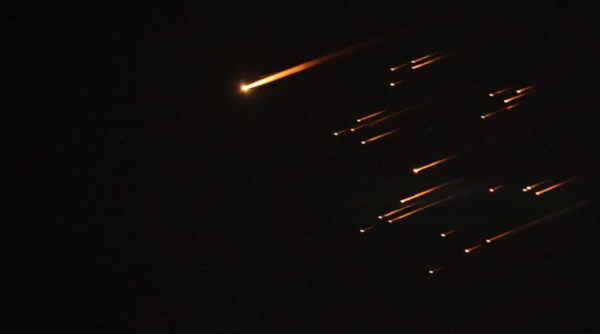
The Islamic Revolution Guards Corps (IRGC) has announced the successful completion of the 62nd wave of Operation True Promise 4, targeting all US bases across the region and Israeli military gathering points and combat support centers with a barrage of advanced missiles and precision drones.
The IRGC Public Relations department said in a statement that the wave 62 successfully destroyed targets in Acre, Haifa, Tel Aviv, and Beersheba.
The strikes were carried out without the activation of warning sirens, demonstrating the penetration capabilities of the Iranian missiles.
The IRGC employed a variety of powerful weaponry in the latest strikes, including multi-warhead Qadr missiles, Kheibar Shekan missiles, Emad missiles, and Haj Qassem missiles.
US bases 'shoveled' for 3rd time
For the third time, all US bases throughout the region were targeted and "shoveled" by Iranian forces, the statement said.
It specifically named multiple installations that were struck: Ali Al Salem Air Base in Kuwait, Victory Base in Iraq, Al Kharj Air Base in Saudi Arabia, Al Udeid Air Base in Qatar, Al Udeirah Base in the United Arab Emirates (UAE), Al Dhafra Air Base in the UAE, Al Azraq Air Base in Jordan, Fifth Fleet Naval Base in Bahrain, and the Arifjan Base in Kuwait.
These installations were hit with powerful multi-warhead missiles and precision explosive drones, according to the IRGC.
The IRGC statement highlighted the extraordinary and astonishing presence of the Iranian nation in social and public arenas, particularly on the eve of the last Wednesday of the Iranian year, as a source of rage, desperation, and madness for the enemy.
"The enemy is trapped and imprisoned in a triangle of Iranians' national cohesion, the immense missile and drone power, and the support of world public opinion for Iranians," the statement declared.
Addressing the recent "blind terror" attacks that resulted in the martyrdom of a number of Basij members, the IRGC said such crimes have no impact on the vast sea of Basij forces.
"The blind terror of a number of Basij members in no way disrupts in the immense and million-strong sea of Basijis, and instead strengthens the determination to continue the path of war until victory and the surrender of the enemy," the statement said.
Wave 62 represents the latest phase of Iran's sustained response to the US-Israeli war of aggression that began on February 28.
The United States and Israel assassinated Leader of the Islamic Revolution Ayatollah Seyyed Ali Khamenei and thousands of civilians, including the Minab school students, and the recent martyrdom of three-day-old Mojtaba and his family near Arak.
The IRGC has reported firing about 700 missiles and 3,600 drones at US and Israeli targets since the conflict began, utilizing a full arsenal of advanced weaponry, including hypersonic Fattah missiles, Khorramshahr missiles with one-ton warheads, and various precision-guided systems.
Iran has consistently maintained that its retaliatory operations are legitimate self-defense under international law, targeting only American and Israeli military assets while avoiding harm to civilian infrastructure.
The repeated strikes on US bases throughout the region demonstrate Iran's capability to project power across West Asia despite enemy efforts to degrade its military capacity.
Press TV’s website