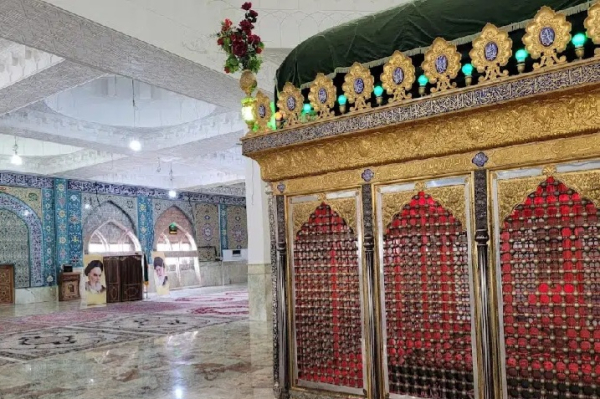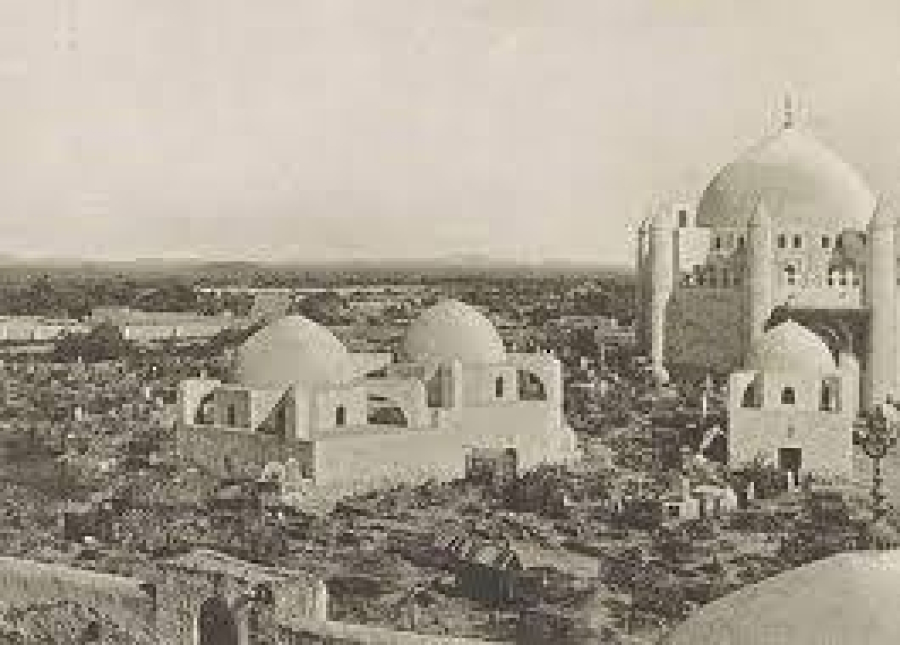
In 1220 AH, the Wahhabis took over the city after a year and a half of siege, resulting in a famine in Medina. According to available sources, after the surrender of Medina, Saud bin Abdul Aziz confiscated all the property in the treasury of the Prophet's Shrine and also ordered the destruction of all the buildings and domes of Medina, including the Baqi Cemetery. Accordingly, the shrine of the four infallible Imams (a.s.) and the dome attributed to Hazrat Fatima (a.s.), which was called the "House of Sorrows", were destroyed or seriously damaged in the first Wahhabi attack in 1220 AH.
After this incident, the Ottoman government sent an army to occupy Medina and retake it from the Wahhabis, and in Dhul-Hijjah 1227 AH, it took back control of Medina. Accordingly, Mahmud II, the 30th Ottoman Sultan, ordered the reconstruction of the shrines in 1234 AH.
The Wahhabis attacked Medina again in Safar 1344 AH. In this attack, damage was caused to the Prophet's shrine and religious sites. Seven months later, in Ramadan 1344 AH, Sheikh Abdullah bin Bulayhid (1284-1359 AH), who was the Chief Judge of Mecca from 1343 to 1345 AH, entered Medina and, after consulting the Muftis of Medina, received an order to destroy the graves.
On the 8th of Shawwal 1344 AH, all the historical monuments of Baqi', including the tombs, were destroyed by the fatwa of Sheikh Abdullah Bulayhid, the Saudi Chief Judge, relying on the fatwa of the Muftis of Medina. In the aforementioned fatwa, 15 of the Muftis of Medina unanimously prohibited the construction of buildings on graves and ordered their destruction. However, contrary to the Wahhabi belief, the construction of graves, as is widely believed by Sunnis and Shiites, does not conflict with Islamic beliefs, and visiting the graves of religious leaders and the graves of believers is considered recommended.