zarezadeh
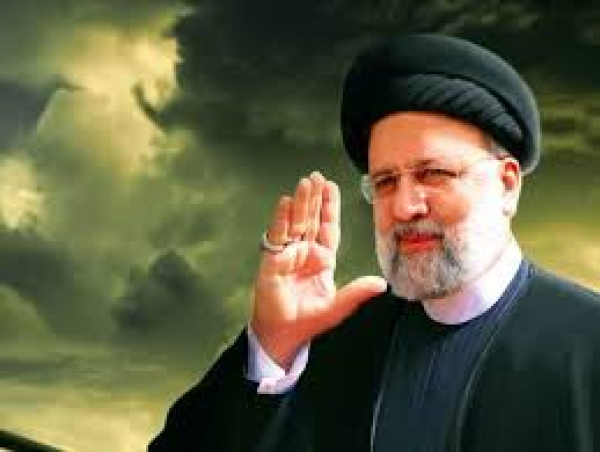
A life in service: The legacy of Martyr Raeisi in the words of his daughter Reyhaneh Sadat
By Humaira Ahad
Tucked away in the quiet, serpentine alleys of Mashhad, the modest home of the late Iranian President Ebrahim Raeisi’s mother whispers of a family deeply tethered to the people.
Even his own residence, set within a humble Tehran neighborhood, betrays no hint of power's extravagance—no security detail and no ornate symbols of power or privilege.
The setting speaks volumes—a testament to a leader who refused to let the trappings of power distance him from his humble origins. He lived a life marked by simplicity and austerity.
Raeisi’s life stood as an eloquent testament that true dignity does not come from power or grandeur, but from the strength of remaining rooted and being at the service of people.
Born in 1960 in the holy city of Mashhad, home to the magnificent shrine of the eighth Shia Imam, Ali ibn Musa Reza (AS), Raeisi was nurtured in an atmosphere steeped in faith and tradition.
He pursued his scholarly path at the seminary in Qom, a cradle of Islamic learning where towering figures—among them the Leader of the Islamic Revolution, Ayatollah Sayyed Ali Khamenei—shaped his intellectual and spiritual growth.
From a young age, Raeisi was captivated by the revolutionary vision of Imam Khomeini, the founder of the Islamic Republic, whose teachings left an indelible mark on his consciousness.
Those close to him often recall how thoroughly Raeisi had internalized Imam Khomeini’s message: a vision grounded in justice, reason, spirituality, ethics, and the inherent dignity of every human being.
That ideological foundation would later become the compass by which he steered his unwavering support for the oppressed of the world and those resisting the oppression, and the lens through which he forged the policies of his presidency.
Deep faith in the Islamic Revolution
Throughout his presidency, Raeisi anchored Iran’s foreign policy in the principle of defa-al-mostazafin—the defense of the oppressed—a doctrine deeply embedded in Imam Khomeini’s revolutionary ideology.
For Raeisi, this was far more than a political choice; it was a spiritual and universal human mandate.
“Supporting the oppressed is not merely a political stance, it is a Quranic imperative,” he declared in a historic speech at the United Nations General Assembly in September 2023, just weeks before the Al Aqsa Storm operation.
“In the field of resistance, he strongly defended military, economic, and cultural support for the liberation movements. He was the voice of the oppressed Muslims worldwide," said Reyhaneh Sadat Raeisi, the late president's daughter, in an exclusive interview with the Press TV website.
"His stance was evident in his courageous speeches in Russia’s State Duma and at the United Nations.”
Sadat emphasized her late father’s profound sense of duty toward oppressed Muslims worldwide.
“He saw himself responsible, like a father, for every incident in the Islamic world. He considered himself the guardian of situations like what happened in Gaza in particular," she said.
Throughout his leadership, Raeisi was distinguished by his consistent advocacy for oppressed people, always endeavoring to uphold the revolutionary tenets of the Islamic Republic.
Under his administration, Iran amplified its moral commitment to marginalized groups. Analysts note that Raeisi’s vision transcended geopolitics, grounded in an unwavering commitment to social justice.
His prior role as Iran’s judiciary chief had only deepened his belief in governance driven by fairness and integrity, which was praised by all and sundry.
For Raeisi, supporting the mostazafin—the downtrodden—was not a diplomatic maneuver but a sacred responsibility. His unwavering support for resistance movements in Palestine, Lebanon, Yemen, and Iraq was a reflection of this principle.
“The Islamic Republic’s government during the time of the honourable martyr paid special attention to assisting others and sent the first aid shipments to Gaza. Of course, when the passageways were closed, many supplies from the Red Crescent that had been sent were blocked, as the pathways were restricted," Sadat said, speaking about Raeisi’s unflinching dedication to the Palestinian cause.
The late Iranian president's support for the oppressed was not confined to his presidency alone. He was always the voice of the oppressed and voiceless.
“Even at other times, when he (Raeisi) was the custodian of Astan Quds Razavi (2016–2019), he utilized his role to provide structural support for the resistance and sometimes even turned the circumstances in favour of the resistance,” Sadat told the Press TV website.
Championing the Palestinian cause
To Raeisi, Palestine symbolized the most glaring case of global injustice, and the struggle of its people embodied the essence of human dignity. “Resistance is a right, and submission to tyranny, a betrayal of faith,” Raeisi would often assert.
In the aftermath of the events of October 7, 2023, and the Al-Aqsa Storm operation launched by the Palestinian resistance group Hamas, Raeisi extended unwavering support to them.
“The Al-Aqsa Storm operation was a major security, military, and intelligence failure for the Zionist regime,” he stated during a cabinet meeting on October 8.
In subsequent speeches, he hailed the operation as a defining moment in regional history—one that dismantled the illusion of the Zionist regime’s perceived invincibility.
He believed the operation would breathe new life into the resistance and ignite the spirit of defiance in future generations of the campaigners of truth and justice.
“There is no other way but to resist Israel,” Raeisi declared during a November 2023 emergency summit in Riyadh, where he commended Hamas for its retaliatory operations.
He emphasized that resistance transcended individuals or factions—it was a force embedded in the soul and blood of the Palestinian people, a flame that could not be extinguished.
During meetings with media outlets and foreign dignitaries in late 2023, Raeisi emphasized that the Palestinian issue had evolved beyond a regional or religious concern.
He cast it as a universal humanitarian crisis, noting how the growing awareness of Gaza’s plight was drawing empathy and solidarity from diverse global communities, including many outside the Muslim world.
Raeisi had come to be regarded not merely as a statesman but as a beacon of principled resistance and moral clarity.
“Not only in the Islamic world but in various parts of the freedom-seeking world, this personality (Raeisi) became significant to them and turned into a role model—for courage and for creating dignified authority,” Sadat told the Press TV website, contemplating her father's global legacy.
In his speeches to both the Iranian public and Muslim leaders abroad, Raeisi framed resistance as the only ethical response to the tyranny of Western imperialism and Zionism.
“Why do you not support a people fighting a legitimate battle for their land?” he asked in an interview with Arabian media.
“It is the Palestinian people who fight, who sacrifice. We only stand beside them. The support is just and based on humane and Islamic principles,” he said, defending Iran’s ethical alignment with the resistance.
A voice against Western hegemony
Raeisi’s presidency was marked by his unflinching opposition to global power structures—especially Western imperialism and the Zionist enterprise, which he saw as the architects of modern injustice.
To him, Western backing of the child-murdering Zionist regime wasn’t just a policy—it was symptomatic of a deeper, structural inequity embedded in Western liberalism.
He vocally criticized the West’s double standards, especially its unwavering support for Israel during its genocidal campaign in Gaza. Raeisi pointed to the stark hypocrisy in promoting human rights while enabling military aggression.
“The Americans tell others not to interfere in the war, yet they provide full support to the Zionists, equipment and facilities needed by the Zionists for their criminal acts in Gaza before the eyes of the people of the world,” he once said in an interview.
“The crimes of the Zionists in Gaza today expose the true face of Western racism,” Raeisi remarked during an October 2023 meeting with Niger’s Foreign Minister.
In Algeria (March 2024) and Tunisia (December 2023), he pointed to a “global structure” of injustice behind Gaza’s suffering and urged Muslim nations to cut ties with the “Zionist regime” as a necessary step toward justice.
“How can those who claim to defend democracy and humanity justify their full military, financial, and diplomatic support to a regime that drops bombs on hospitals and starves children in Gaza?” he remarked at a global summit in late 2023.
Raeisi consistently championed the creation of a “just global order” in his diplomatic engagements with leaders from Africa, Latin America, and the Islamic world, advocating a world shaped not by militaristic dominance but by equity, ethics, and human dignity.
He often argued that Western hegemony extended beyond politics into the psychological, cultural, and epistemological realms. Western media, he said, shaped narratives that distorted the truth, often casting the oppressed as aggressors.
This critique was inextricably tied to his support for resistance movements, which he viewed as rightful responses to occupation and systemic domination.
One of the most powerful moments of his worldview came during his iconic speech at the United Nations General Assembly in September 2023.
Holding aloft the Holy Qur’an in protest against its desecration in Sweden—an act shielded under so-called “freedom of speech”—Raeisi struck a chord across the Muslim world.
For him, this was not an isolated act of blasphemy but part of a broader, calculated disregard for Islamic sanctities—a cultural manifestation of Western double standards.
“This is not freedom of speech; this is an assault on the sanctities of 1.8 billion people,” he declared in his speech.
“Those who allow this desecration under the banner of liberty expose their colonial arrogance. They pretend to be guardians of civilization while trampling on the very values they claim to uphold.”
Raeisi’s message found resonance across the world, especially the Global South—from Latin America and Africa to West Asia. He always presented himself not just as a politician, but as a religious scholar wielding power in service of the faithful.
This vision informed a foreign policy rooted in solidarity with the downtrodden and resistance to imperialism.
His unshakeable stance earned him admiration from diverse international communities who saw in him a rare fusion of moral courage and leadership.
“He (Raeisi) constantly referred to himself as a humble cleric, someone who wants to be identified in the attire of religion, while occupying the highest level of political leadership," said Sadat, reflecting on the broader appeal of a man whose legacy now spans continents.
"That’s why the inclination of Muslim nations toward him increased significantly, as did that of the broader Islamic Ummah and also freedom-seeking nations, who felt a sense of brotherhood with him, especially in countries like those in Latin America and Africa."
Press TV’s website
Leader praises late President Raeisi’s dedication to serving people during martyrdom anniv.
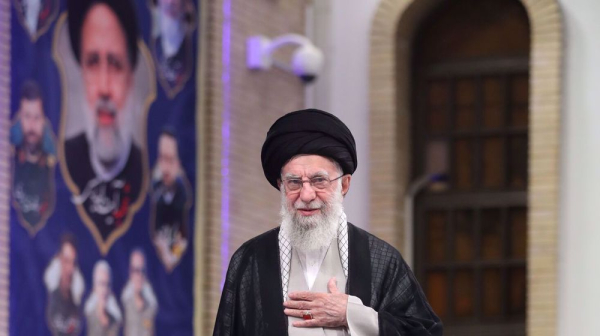
Leader of the Islamic Revolution Ayatollah Seyyed Ali Khamenei has praised the late President Ebrahim Raeisi’s dedication to serving the nation, saying that the martyr chief executive considered himself to be in the same rank as that of the people, and even in a lower position.
Ayatollah Khamenei made the remarks at the Imam Khomeini Hosseiniyeh in the capital Tehran on Tuesday as Iran commemorated the first anniversary of former president’s martyrdom.
“Raeisi did not consider himself to be superior to the people,” the Leader noted, praising Raeisi’s approach to his official duties, and underscoring his belief in being equal to the people he served.
Raeisi lost his life during a tragic helicopter crash in the northwestern Iranian East Azerbaijan Province on May 19, 2024. The crash also claimed the lives of several other senior officials, including former foreign minister Hossein Amir-Abdollahian.
The Bell 212 helicopter, en route from a dam inauguration event, lost contact about 30 minutes into the flight, with dense fog being later blamed for the aircraft’s collision with mountain.
The wreckage was found the following day, and no evidence of mechanical failure or foul play was discovered.
The incident was followed by an outpour of international sympathy.
According to Ayatollah Khamenei, Raeisi possessed “a humble heart,” as well as “a sincere and straightforward discourse, and tireless and continuous action."
The ceremony was also attended by senior government officials, including the heads of the country’s threesome executive, judicial, and legislative branches, families of martyrs, and other members of the public.
The attendants included children of Sayyed Hassan Nasrallah, former legendary secretary-general of Lebanon’s Hezbollah resistance movement, who was assassinated in Israeli strikes against Beirut last year.
The run-up to the anniversary featured various domestic and international officials paying affectionate tributes to Raeisi’s legacy.
Earlier, Esmaeil Khatib, Iran’s intelligence minister reaffirmed that rekindling Raeisi and Amir-Abdollahian’s memory would be realized through confrontation with the United States and the Israeli regime as well as continued support for resistance.
Foreign Minister Abbas Araghchi also honored the martyrs’ legacy, noting that the foreign policy principles established by Raeisi and Amir-Abdollahian continued to shape Iran's diplomatic stance today.
In another tribute, President Masoud Pezeshkian went to the holy city of Mashhad, where he visited Raeisi’s mother.
The first anniversary of Raeisi’s martyrdom conjures up memories of the sacrifices that have been made towards preservation of Iran’s sovereignty, an imperative that was honored duly and dedicatedly under the former president.
The ceremony harks back to Raeisi’s commitment to the ideals of justice, resistance, and support for the oppressed, values that Raeisi championed throughout his life.
As the anniversary was approaching, Hezbollah’s current Secretary-General, Sheikh Naeim Qassem identified Raeisi as “a great personality whose significant stances were not swayed by power.”
“Palestine rested in the heart of Martyr Raeisi,” Qassem stated.
Press TV’s website
Memorial of Martyr Majid Ghorbankhani
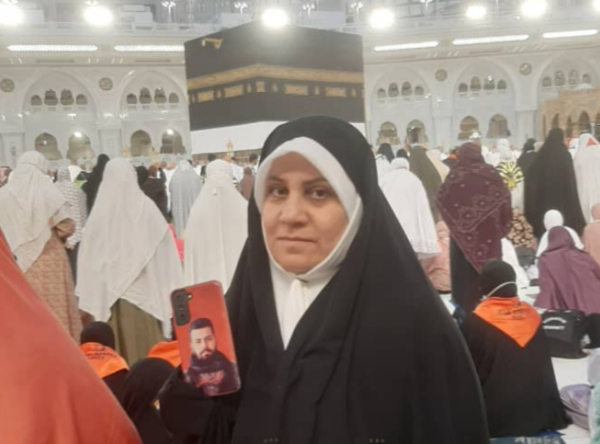
Remembering Martyr Majid Ghorbankhani
This year, during Hajj Tamattu, the mother and father of Martyr Majid Ghorbankhani are guests of the House of God and have come to Mecca for Hajj Tamattu after visiting the shrine of the Prophet Muhammad (peace be upon him and his family). They are a very kind and loving family. On this occasion, we introduce this brave and zealous martyr.
The martyr of the shrine "Majid Ghorbankhani" was born on August 21, 1990 in Tehran and was a resident of the Yaftabad neighborhood. After an internal transformation, he was voluntarily sent to Syria to defend the shrine of Hazrat Zainab and the oppressed people of Syria.
On January 11, 2016, Majid was martyred by Takfiri terrorists in the Khan Toman region, and his body remained in the region. Finally, the martyr's body was discovered by the martyrs' investigation teams and identified through DNA testing.
Martyr Majid Ghorbankhani was very fearless and brave.
It was on January 12 that he picked up his bag and left home. He was brave and had a special devotion to Mrs. Zainab (peace be upon him).
Majid was kind and everyone in the house called Majid Dadaash. When his father, mother, and sisters want to talk about Majid, they add the suffix "Dadaash" to Majid's name with all their longing and review his memories.
Majid's absence is very difficult; but Majid has done something to us that we resent his distance and absence and cry, remember his mischief and jokes, and laugh heartily again.
Majid's father also reacts to Majid's tattoo on his hand, and Majid does not come home at night, but his anger is just as strange as his: the tattoo was for 6 months before Majid's martyrdom. He would say I regret it; he would say why are you repeating it? You said it once, I was embarrassed. Don't say it again.
Martyr's mother: For the first 4 months, we didn't know that Majid wanted to go to Syria. Later, when we found out, we saw that Majid wanted to convince us to go to this war. Well, every parent dreams of their child's marriage. We had gone to a matchmaking service for our son and were going through the final stages when my brother passed away and he went to Syria without saying goodbye.
Majid respected his family very much, but when he saw Hazrat Zahra in his dream telling Majid that he would come to me a week before going to Syria; so anyone can be touched. Majid really felt touched and every night he cried and cried and wrote in messages to his friend that he didn't know what had happened to him and what Hazrat Zainab had done to me that I couldn't be calm and I had become a woman reading the Quran and crying and wailing. What was it about Majid that Hazrat Zainab loved Majid so much that Majid was so afraid of everything in the world and modern facilities. God willing, everyone will appreciate these young people.
Majid became the defenders of the shrine and is different from other martyrs. God chose Majid to prove to the whole world that He would take Majid to the throne of the Almighty.
Martyr's father: In the Syrian operation, when they ordered these fighters to retreat, Majid told several fighters that no one has the right to return. We came to defend the shrine of Hazrat Zainab (PBUH). If we retreat, the enemy will come forward and take this area. They did not retreat and Majid reached the front line of the operation. They resisted until 4:00 PM. It was 5:30 PM when 13 people had been martyred, 11 bodies remained, and 2 bodies were returned to the rear. Majid had given my phone number to one of his friends and had said that if anything happened to me, he should inform this number.
That evening, several people were watching with cameras to see how to return and bring the children's bodies back. One of them says that while I was watching the camera, I saw a car come and 3 people got out and they shot the children, the first of whom was Majid, and they threw Majid in the back of the car and took his body away; in 2018, when I went to Syria and was serving the Imam, I stayed for about 10 days and at dusk we were waiting for the plane with 24 martyred fathers, two of whom came and one of them said I have the film of Martyr Qurban Khani.
I asked him to watch the film and I did. He said I saw the body of Mr. Majid that ISIS had hung on a tree, I don’t know what enmity they had with Majid, out of those 11 bodies they only took Majid, I don’t know what he had done; the commander had beaten them and they shot Majid’s body like a drain.
Majid’s mother and father have come to Mecca this year for Hajj Tamattu. His mother talks about Majid with passion and love. There is a photo of Majid on the cover of Majid’s mother’s phone, which is always with her. This young and strong mother deserves praise and admiration.
Hijr Ismail
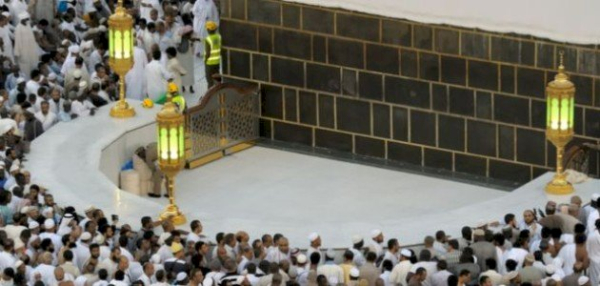
Hijr Ismail is a space between the Kaaba and a semicircular wall about 10 meters wide that extends from the Iraqi to the Syrian corner.
It is a wall with a height of 1.30 meters that is arched and is called Hijr Ismail.
After Prophet Abraham (PBUH) and Hajar and their infant son Hazrat Ismail (PBUH) arrived in the valley of Mecca, they settled in the current location of the Hijr with the guidance of Gabriel. Then Hajar and Ismail, along with their sheep, settled in this place and in a canopy that they built with tree wood. Both Hajar and Ismail were buried in this place after their death.
Hijr Ismail has been respected and sanctified since pre-Islamic times.
The Prophet (PBUH) also sat in Hijr Ismail after his mission and, in addition to praying and reciting the Quran, answered people's questions.
Factbox: Trump’s off-the-cuff claims about ‘water crisis’ in Iran hold no water

By Ivan Kesic
Speaking at the US-Saudi Investment Forum in Riyadh on Wednesday, US President Donald Trump launched a scathing attack on Iran, drawing on a familiar mix of baseless claims and inflammatory comparisons that align with longstanding American biases and propaganda.
Trump echoed deeply prejudiced remarks about Iran, primarily focusing on what he called a water crisis, mismanagement of natural resources, and systemic corruption.
However, these claims were riddled with inaccuracies, drawing on entrenched myths and biases perpetuated by anti-Iranian factions in the West, including high-ranking officials.
Trump's absurd claims
In front of a receptive audience in the Saudi capital, Trump contrasted the infrastructural achievements of Persian Gulf states with what he described as Iran’s decay.
"While you have built the world's tallest skyscrapers in Jeddah and Dubai, Tehran's historical monuments have been collapsing and turning into rubble and dust since 1979," he remarked.
Similarly, he contrasted Saudi Arabia’s achievements in transforming deserts into fertile land with Iran’s situation, claiming that the reverse process is taking place there.
"While your skill has turned dry deserts into fertile farmland, Iran’s leaders have managed to turn green farmland into dry deserts as their corrupt water mafia causes droughts and empty river beds," he hastened to add.
He attributed Iran’s environmental issues, including droughts and desertification, to corruption and mismanagement by its leadership, and to what he called a "water mafia."
Broadening his tirade, Trump referenced Iran's “water crisis” as part of a larger narrative of failure, with claims that Iran's leadership is spending financial resources on foreign financing of the Axis of Resistance.
"The greatest destructive force in the Middle East is Iran. Iran is causing destruction and devastation in Yemen, Iraq, Syria, Lebanon, and other countries," he claimed.
Trump’s remarks formed part of a wider “maximum pressure” strategy to mount pressure on Iran amid ongoing indirect nuclear talks mediated by Oman.
While he has offered an "olive branch" for a "new and better path," he has also foolhardily spoken of "massive maximum pressure" and zero oil exports if diplomacy fails.
Iranian response
Iran's Foreign Minister Abbas Araghchi dismissed Trump’s remarks about Iran's progress and foreign policy, citing decades of US sanctions as the cause of internal issues and accusing him of whitewashing Israeli genocidal crimes.
Araghchi said what Trump "stated about the desire of the regional countries to enjoy a path of progress and prosperity is, in fact, the same path that the Iranian people chose with their revolution and took it to have an independent, democratic, free, prosperous, and advanced country."
Araghchi touched on Trump's renewed threat "to inflict massive maximum pressure" on Iran and portraying it as a "source of insecurity" in the region.
"The US President has ignored all of Israeli crimes in the region and is seeking to portray Iran as a threat; this is pure deception and a reversal of the source of threats. Which regime has killed 60,000 people in Gaza?" he asked.
"Who has caused this much destruction in Gaza? Which regime attacks the areas surrounding Palestine, including Lebanon, Syria, and Yemen? The extent of the occupation carried out by the Zionist regime in Syria in recent months is greater than the entire area of Gaza," he added.
The Zionist regime has placed a nation in Gaza under economic siege, Araghchi reminded,
“All these issues are ignored, and at the same time, they try to portray Iran as a threat to the region so that the main menace is forgotten, but they will not succeed in this path either.”
Well-known propaganda methods
Trump's statements were greeted enthusiastically on social media by various anti-Iran rabble-rousers who have been spreading similar canards for years, glorifying the overthrown dictatorship and blaming the Iranian government for every issue, including natural disasters.
Incoherent analogies with selective, unrepresentative photographs or distorted data have long been a favorite propaganda method of Zionists and their brothers in arms, the monarchists and members of the MKO terror cult, as well as the corporate Western media.
For example, during an interview with the late Iranian President Ebrahim Raeisi in September 2023, CNN journalist Fareed Zakaria presented him with a false contrast between the buildings of downtown Tel Aviv and the dilapidated suburbs of Tehran, suggesting that the Iranian authorities allegedly do not care about their population.
Zakaria also claimed in his questions that there is a "lack of development" in Iran, that the country is isolated, and that it "looks backward" compared to decades ago.
The former Iranian president’s responses were incisive and informative that debunking the myths perpetrated by the American leaders and their media.
“Why do you in the United States impede the dissemination of truth and not let it reach people? Why do you slap sanctions against news agencies? Why do you enforce bans on many youth networks in different parts of the world? Why do you prevent the echo of the voice of Iran and others and block it from reaching other people?” Raieisi asked Zakaria.
The manipulative images used by CNN to prove its theory dated back to March 2008, were clicked by Iranian photographer Behrouz Mehri, and showed the undeveloped suburban neighborhood of Ghaleh Hassan Khan with buildings built before the revolution.
Just a year later, in 2009, the neighborhood was razed to the ground and the area became a new city, Shahr-e Qods, witnessing major housing redevelopment with modern infrastructure.
Despite the modern availability of thousands of online photos from the Iranian capital, CNN selectively took outdated and irrelevant photos, with the obvious intention of misleading its audience with a false perception of Iran's "backwardness."
Fact-checking Trump's construction claims
The claims made by Trump relied on the same misleading contrast, using selective and distorted examples—on one side, the striking super-tall skyscrapers of Saudi Arabia and the UAE, and on the other, a false narrative of the decay of Tehran’s historical monuments.
The emphasis on 1979 romanticizes a period when Iran was ruled by an absolute monarchy and functioned as an American client state, portraying it as an era of supposed progress.
While the towering structures in Jeddah and Dubai are undeniably impressive, they offer little insight into genuine national development.
These projects were designed by foreign architects, constructed by international firms using imported materials and technologies, and often built by migrant labor. Their funding largely depends on foreign currency earned from oil exports, facilitated by foreign technology – a model that closely mirrors the dynamics of pre-revolutionary Iran.
In contrast, today’s Iran and particularly Tehran sets itself apart from these cities, as well as from other major Asian metropolises, including Beijing, by building its landmark structures such as towers, skyscrapers, and stadiums through domestic architects, local firms, homegrown materials, and Iranian labor.
This reflects a fundamentally different model of development—one grounded in national capacity and self-reliance.
Iran has not only avoided degradation or stagnation over the past 50 years but is an example of a country that has achieved remarkable progress in infrastructure development, largely through self-sufficiency.
In 1979, Iran was predominantly rural, with the majority of its population residing outside urban areas. By 2023, the urban population had surged to 77.26 percent, significantly surpassing the global average of 61.36 percent.
This transformation was propelled by comprehensive infrastructure development, industrialization, and population growth, culminating in the establishment of over 1,300 cities, more than triple the number before the 1979 revolution.
The construction sector experienced a profound shift in materials and methods in this period.
Prior to 1979, fewer than 25 percent of homes were built with durable materials like steel and concrete, while approximately two-thirds were constructed using perishable materials such as mud bricks, wood, and straw.
Despite the challenges posed by the Iran-Iraq War, the early post-revolution years saw the proportion of durable housing double, and the use of non-durable materials halve.
Between 1990 and 2010, the prevalence of unreinforced masonry buildings plummeted from 90 percent to 23 percent, while the share of steel and concrete structures soared from 3 percent to 74 percent.
By the 2011 census, Iran had 20 million housing units, with an astounding 90 percent constructed after the revolution, compared to a mere 10 percent under the Pahlavi regime.
Contrary to claims about the deterioration of Iran's historical monuments, the Pahlavi regime, which was backed by the West, largely neglected the preservation of Qajar-era buildings, leading to their decay or deliberate destruction in the name of modernization.
In contrast, contemporary Iran has made significant strides in safeguarding its architectural heritage. Thousands of buildings from both monarchical periods are now listed on the national register, including palaces of deposed monarchs and mansions of former elites.
Many of these structures have undergone meticulous restoration, such as the Qajar city gates in Tehran, which were destroyed during the early Pahlavi era.
Fact-Checking Trump's Water Claims
Trump's assertion that Iran has transformed its "green farmlands into dry deserts" is an exaggeration that overlooks the facts and reflects a double standard when compared to similar issues in the United States.
Once again, the US president employed an incoherent analogy, citing Saudi Arabia as a contrasting and positive example of turning desert into fertile soil.
While Saudi Arabia has indeed made progress in irrigation and water supply, thanks to foreign knowledge, companies, and technology, their results are actually below the level of Iran.
Most of Iran's territory lies in hot, dry zones and, like much of the world, faces water issues due to climate change, droughts, overexploitation, and foreign policies (including disputes with Afghanistan), but these challenges are far from catastrophic.
According to relevant international data, Iran uses 1,110 cubic meters of water per capita per year, ranking twelfth in the world, well ahead of Saudi Arabia (747) and slightly below the US (1,340).
Iran's percentage of access to urban and rural drinking water is 96.1 and 87.2 percent, respectively, ranking 19th and 9th among countries worldwide.
At the beginning of the Islamic Revolution, urban access to safe, hygienic, and sustainable water was 74.6 percent, which increased to 99.87 percent at the beginning of the 13th government in 2021. Also, only 12 percent of the country's rural population had access to drinking water in 1979, but with sustained efforts, this rate rose to more than 85 percent.
According to data from the Food and Agriculture Organization of the United Nations (FAO), Iran irrigates 88,478 square kilometers of land, ranking fifth in the world, after India, China, the USA, and Pakistan.
This ranking is even more remarkable considering that these four countries possess huge rivers with abundant water, whereas Iran's largest river, the Karun, has a flow of only 575 cubic meters per second.
Furthermore, Iran is unique among ancient civilizations in that it did not emerge in the valleys of large rivers, but rather was built upon the ancient innovation of underground irrigation canals known as qanats.
Sophisticated irrigation and water supply projects continue to this day, including a multibillion-dollar initiative to transfer 2.4 cubic kilometers of desalinated water from the Indian Ocean into the Iranian interior, all the way to Mashhad.
The results of Iranian irrigation are also evident in agricultural production data, as the country now ranks among the world's top ten producers of most fruits and vegetables.
Since the revolution, Iran has also gained recognition as one of the largest dam builders in the world, alongside China and Turkey, with hundreds of projects across the country.
The dams have been the subject of bizarre, politicized accusations of being "useless," yet during recent torrential floods, they proved effective by filling to capacity and saving thousands of lives in downstream settlements.
In addition to irrigation, Iran has achieved success in afforestation, with forested areas increasing every year. Iran's forests expanded by 15% in the first 20 years of this century and are now comparable in size to those of Germany.
On the other hand, recent Saudi irrigation has relied on fossil aquifers, which have largely been depleted, resulting in the shutdown of numerous irrigation project.
The gloomy picture in the US
On the other hand, when we analyze the situation in the United States, reports suggest that the country continues to grapple with a multifaceted water crisis, defined by infrastructure failures, contamination and disparities.
According to the Environmental Protection Agency (EPA), the US loses approximately 2.1 trillion gallons of drinking water on an annual basis due to leaks and inefficiencies in its 2.2 million miles of pipes, which shows the aging water infrastructure in the country.
Biden administration had pumped $3 billion into replacing these damaged pipes but experts believe it’s not enough, as US taxpayers money mostly goes to the Israeli regime and Ukraine.
There are many reasons across the US that are experiencing acute water shortage while many are forced to consume contaminated water. In Mississippi, for example, reports say residents have little access to safe drinking water due to flooding, aging infrastructure, and inadequate maintenance.
Similarly, in the Virgin Islands, one district had to declare state of emergency in late 2023 after high and dangerous level of lead and copper were found in the tap water, putting health of people in danger.
Forests in the US are also at risk due to the waves of wildfires, particularly in the Western states, making experts believe that the balance between economic interests and environmental protection isn’t there.
The United States is one of the largest consumers and producers of timber globally, and this contributes deforestation, especially in Washington, Oregon and Georgia, as authorities watch mutely.
Rapid urban growth has also led to deforestation, with forests turning into residential areas, commercial spaces, and infrastructure projects, as the government prioritizes economic interests over environment.
While the government claims to have enacted environmental laws, its policies and actions have largely been influenced by political ideologies, industry interests, and misplaced priorities.
Despite early awareness of environment and climate issues, the successive US governments have failed to implement comprehensive policies. The major factor has been the fossil fuel industry that has exerted considerable influence on US environmental policy at the cost of people’s health.
Under Trump, the US also withdrew from key international environmental agreements, including the Paris Agreement, which was a blow to the environmental protection globally.
The waste of natural resource in the US is another significant issue, which is driven by both government policies and corporate practices.
US governments have often been slammed for inefficient land management practices. Apart from that, federal subsidies for fossil fuel industries have encourage waste non-renewable resources.
US has also been reported to export significant amounts of hazardous waste to countries with less stringent environmental regulations. For example, over 1 million tons of toxic waste are shipped annually to Mexico and Canada, leading to pollution and health risks in recipient communities.
Press TV’s website
‘Congress pays for bombs that kill children in Gaza,’ Ben & Jerry's co-founder
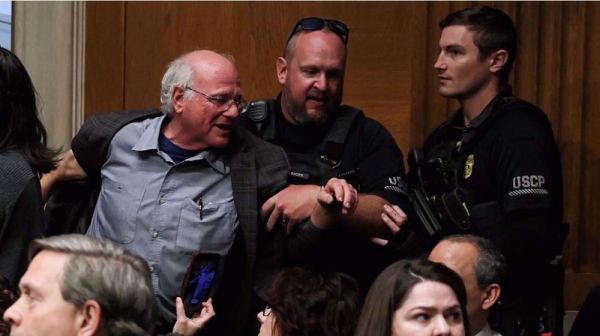
Ben Cohen, one of the co-founders of American Ben & Jerry’s ice cream, says the US Congress "pays for bombs that kill children in Gaza.”
Cohen said on Wednesday on Capitol Hill that he could not call himself an American without putting his “body on the line,” as he was arrested during a Senate health committee hearing for protesting against US support for Israel’s war on Gaza, Middle East Eye reported.
Police dragged Cohen and other protesters out of the room. A Capitol Hill police officer grabbed Cohen by the arm, almost knocking the 74-year-old off balance, and forcibly pulled him out of the Senate hearing.
Department of Health and Human Services Secretary Robert J Kennedy Jr. looked alarmed during the hearing after shouting erupted shortly after he testified about how the agency’s 2026 budget aligns with President Donald Trump’s agenda.
As Cohen was arrested and led away, a woman asked, “Ben, why are you getting arrested?”
Cohen responded, “Congress kills poor kids in Gaza by buying bombs and pays for it by kicking kids off Medicaid in the US.”
The woman further asked, “Ben, what are you calling for the Congress and senators to do for Gaza?”
“They need to let food into Gaza,” Cohen said as he was led away by a police officer. “They need to let food to starving kids.”
In a post on X on Thursday, Cohen said, “I can't call myself an American and not put my body on the line.
“For me, our government-funded destruction and slaughter of families living in Gaza is an attack on justice, common decency, and what I had thought was the American way. The American way that Superman used to defend, along with Truth and Justice.”
The Israeli military resumed bombardment of Gaza on March 18, killing thousands of Palestinians, and injuring many others, after it shattered the 2-month ceasefire agreement with Hamas and the deal on the exchange of Israeli captives with Palestinian abductees.
More than 53,000 Palestinians have been killed, mostly women and children, in the brutal Israeli military onslaught on Gaza since October 7, 2023.
Israel has blocked the entry of food, water, and humanitarian aid into the Gaza Strip since March 2. Food has run out, and Palestinians are being subjected to famine-like conditions.
Hamas said on Wednesday that the occupying Tel Aviv regime has enforced a complete blockade on Gaza for more than seventy consecutive days, restricting all access to essential supplies such as food, medicine, water, and fuel.
The resistance movement condemned Israel for persistently using starvation as a tactic against over two million people in the Gaza Strip, in clear violation of international law.
The closure aligns with an intensifying and brutal military offensive, which together amounts to an act of genocide perpetrated openly and with impunity by Israeli forces before the very eyes of the international community.
Hamas further cautioned that the inaction of the international community, coupled with the blatant failure to address war crimes or prevent extensive famine in Gaza, indicates a worrying disintegration of the global order and the world's failure to uphold international law and humanitarian values.
Press TV’s website
Trump asks US companies to manufacture drones similar to Iranian drones
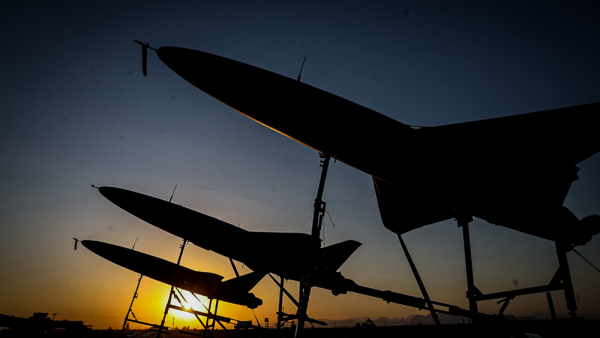
US President Donald Trump says he asked American companies to manufacture drones similar to Iranian drones, which are not very expensive but very fast and lethal.
Trump made the remarks in Qatar on Thursday before flying on to the United Arab Emirates for the third and final leg of the tour that began in Saudi Arabia earlier this week.
“I said to one of the defense companies, ‘I need a lot of drones, and you know, Iran makes good drones, and they make them for $35,000 to $40,000,’” he said.
“So I said to that company, ‘I want to see something like that.’ Two weeks later, they came to me with a drone that cost $41 million! I said, ‘That’s not what I was talking about. Forty-one million?! I’m talking about something that costs $35,000 to $40,000, so you can fly them by the thousands,'” he said.
Iran’s massive and rapid progress in drone technology and its capabilities to carry out long-range strikes in drone warfare with a high level of accuracy have cemented the country’s growing military might in West Asia.
The cutting-edge drone program has been among the Iranian military’s breakthroughs in manufacturing a broad range of indigenous defensive equipment to make the armed forces self-sufficient in the face of years-long US threats and sanctions.
Iranian officials have repeatedly warned that the country will not hesitate to strengthen its military capabilities, including its missile power, which is entirely meant for defense, saying the Islamic Republic’s defense capabilities will never be subject to negotiations.
Speaking in Doha on Thursday, Trump also said that a nuclear deal with Iran was close that would avert what he called a military action against the Islamic Republic.
"I think we're getting close to maybe doing a deal without having to do this," he said, referring to military action.
"You probably read today the story about Iran. It's sort of agreed to the terms," Trump said.
The US president did not specify which remarks he was referring to.
During his visit to Saudi Arabia on Tuesday, Trump labeled Iran as the “most destructive force” in the West Asia region. He accused Iran of fueling regional instability and said the United States would not allow the country to develop a “nuclear weapon,” rebuffing Tehran’s total rejection of such non-conventional arms.
Iranian President Masoud Pezeshkian said Tehran will never bow to threats and pressure, rebuking Trump, who has accused Tehran of being a destabilizing force in the region.
Pezeshkian criticized the United States for pursuing double-standard policies toward Iran.
"Trump thinks that he can sanction us, threaten us, and then sit back and talk about human rights … All the crimes in the region are because of these policies and these individuals,” he said.
“We seek peace, not war. We have always been seeking to live in peace and [based on] mutual respect, both when it comes to internal issues and also in relations with our neighbors.”
Iran’s Foreign Minister Abbas Araghchi said Tehran had yet to receive any proposal in writing from the United States but said it stood to build trust if sanctions were lifted.
"We are ready to build trust and transparency about our nuclear program in response to the lifting of sanctions," he said.
In a statement issued on Wednesday, Iran’s Foreign Ministry also firmly rejected the pejorative remarks that had been made by the US president against the country, calling them “false, divisive, and misleading.”
The ministry condemned Trump’s accusations as an attempt to distort the realities of the region and shift blame onto Tehran.
Press TV’s website
Unrepeatable Memories of Pilgrims in the House of God
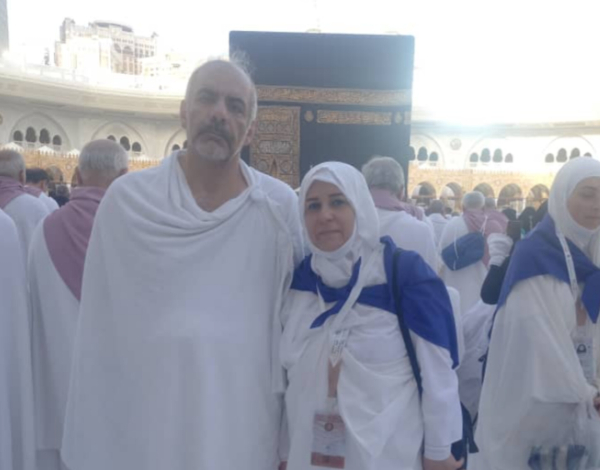
Iranian pilgrims travel to the holy lands with love and enthusiasm, and they have great wishes and effective prayers in their hearts. Memories such as visiting holy places and performing Hajj rituals are part of this spiritual journey.
Iranians, especially with the empathy and companionship of other pilgrims, create friendships that will last forever. Happy and compassionate moments on the journey, and the collective prayers they perform for the love of the Ahl al-Bayt, create eternal memories. Also, the shared experiences and sometimes the challenges they face during this journey also deepen these memories.
Making memories in difficult and happy moments with fellow travelers and friends is something that stays in the heart forever and reminds pilgrims of that spiritual journey.
Palestinians rally in West Bank to mark Nakba Day
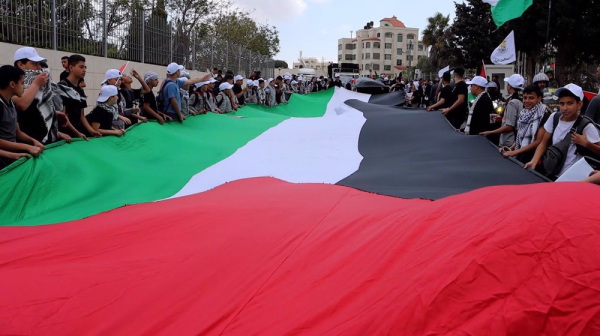
Palestinians have taken to the streets of the occupied West Bank to mark the 77th anniversary of Nakba (Catastrophe) Day.
It marks the 1948 forced expulsion of hundreds of thousands of Palestinians from their homes in historical Palestine as Israel proclaimed its illegal existence.
On Wednesday, Palestinians rallied in the province of Ramallah and chanted, “We will not leave, Palestine is for the Palestinians”, stressing their right to return to the areas from which they were forced to leave in 1948 and their refusal of all schemes to displace them.
Similar rallies also took place in Tulkarm and other Palestinian provinces on the eve of Nakba Day.
Nakba Day is commemorated on May 15 every year, marking the day after Israel declared its existence in 1948. That year also saw a war between Israel and a coalition of Arab states over the control of Palestine, during which some 700,000 Palestinians were driven out of their homes and hundreds of Palestinian towns and villages were destroyed.
According to Mohammed Alian, the coordinator of the “Nakba Day” commemoration events, the activities will continue tomorrow and upcoming days.
The 77th anniversary of Nakba Day coincides with Israel’s intensified attacks in the West Bank and the regime’s genocidal war in Gaza.
Since a ceasefire in Gaza was announced in January, Israel has intensified its attacks in Tulkarm, Jenin and other parts of the occupied West Bank.
More than 45,000 Palestinians have been displaced from refugee camps in Jenin and Tulkarm.
In March, the regime broke the ceasefire, while it proceeded with its large-scale military raids in the occupied West Bank.
Israel launched the campaign of genocide in Gaza on October 7, 2023. It has killed nearly 53,000 Palestinians there so far.
Late last month, the Euro-Med Human Rights Monitor said that at least 94 percent of the victims of the regime’s war on Gaza are civilians. The Israeli military officially acknowledged to Israeli outlet HaMakom HaKhi Ham that most of the casualties in Gaza were civilians, but put the toll lower: “over 80%” of those killed in Gaza since March 18.
Press TV’s website
The number of Iranian pilgrims arriving in the land of revelation has been announced.
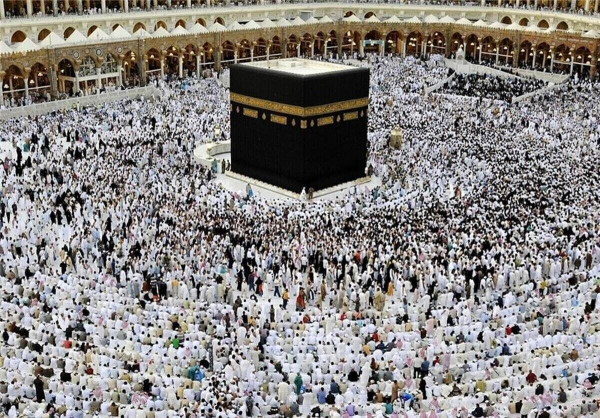
According to Khabar Online, the Hajj and Pilgrimage Organization announced: The number of Iranian pilgrims arriving in the land of revelation has reached more than 17,000 people, and the process of transferring pilgrims will continue until June 10.
Mehr wrote: The first destination of 57 Iran Air and Saudi Arabian Airlines flights, which have transported 116 caravans totaling 17,100 people by the end of Monday, May 12, was the city of Medina.
During this period, about 6,200 people in 42 caravans have arrived in Mecca after staying in the city of the Prophet for 5 days, and the process of sending all pilgrims by the Haramain express train has taken place.
However, currently, 74 caravans of Iranian pilgrims with a population of about 10,900 people are present in the city of the Prophet (PBUH) and will gradually leave this city for Mecca in the coming days.
The pilgrimage to Medina is also planned for all Iranian pilgrims living in this city on the third day of their stay, and all the loved ones will visit Quba Mosque, Zhoqbaltin, and Mount Uhud in a caravan. During this period, 84 caravans have participated in this program, meaning about 12,400 people have visited the aforementioned religious sites in 293 buses.
Experienced Iranian chefs present in the two kitchens of Medina have been working tirelessly and day and night since their arrival in the city of the Prophet, and have cooked and distributed 170,500 meals so far.
The process of sending pilgrims to "Previous Medina" will continue in the coming days, and the number of Iranian pilgrims for Hajj Tamattu 1404 will gradually increase.