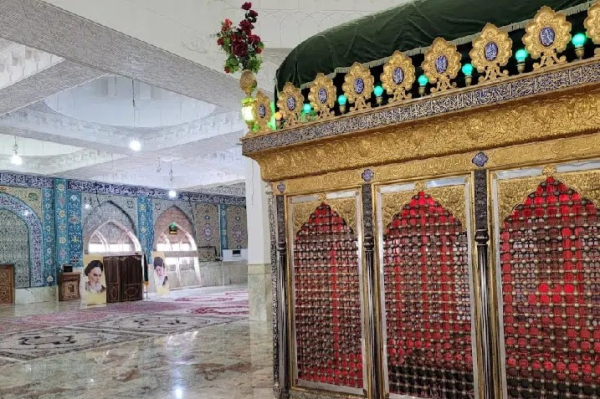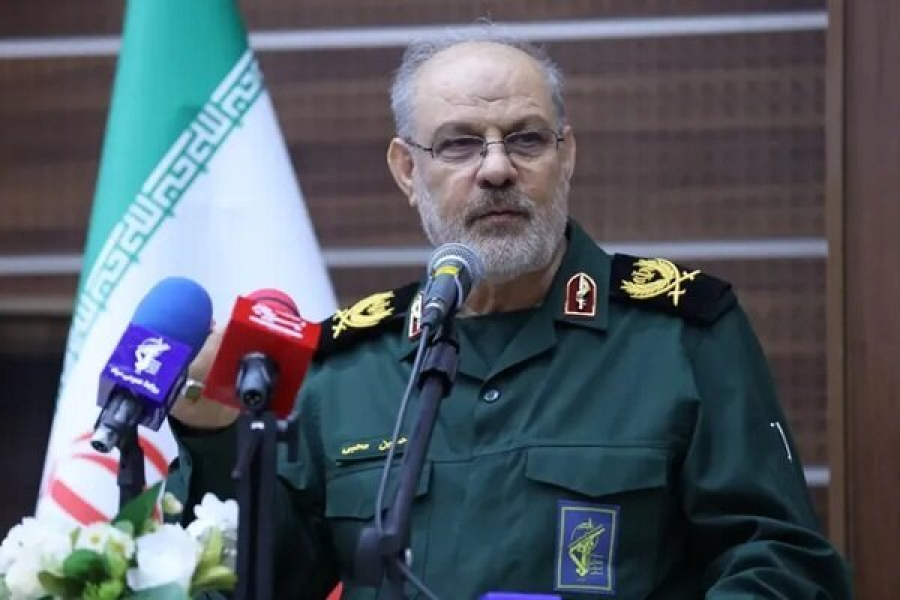
Speaking on Saturday morning at the Qazvin provincial summit on prayer for the Armed Forces—held at the holy shrine of Imamzadeh Agha Seyyed Ali Mousavi Sharini in Esfarvarin—General Hossein Mohebbi highlighted the significance of prayer within divine religions. He noted that prayer is not exclusive to Islam but has existed in all divine religions, as it represents the highest, most authentic, best, and most affectionate form of connection between a human being and God Almighty.
Referring to a statement by Ayatollah Javadi Amoli, Mohebbi described prayer as a "pilgrimage text" (*ziyarat-nameh*) for God. He added that divine religions have utilized this obligation to connect with the Lord, and that within religious teachings, prayer holds a status far beyond a mere collection of recitations and outward physical movements.
Citing the "martyred leader" [likely referring to a high-ranking martyred official, such as Qasem Soleimani] regarding prayer, the IRGC spokesperson explained that prayer possesses both a body and a soul. The "body" consists of the recitations, essential components, and external form, while the "soul" manifests through the presence of the heart, attentiveness to the words, and a profound sense of standing in the presence of the Lord.
Mohebbi continued: If an individual performs the outward aspects of prayer correctly while simultaneously embodying its inner soul, they have truly "established" (*iqamah*) the prayer in its complete form.
Emphasizing the distinction between merely "reciting" (*khandan*) a prayer and "establishing" (*iqamah*) it, he stated that religious teachings speak specifically of "establishing" prayer. This implies that one must keep prayer alive—both within oneself and throughout society—in such a way that its effects become visible in one's life and social conduct.
Highlighting one of the strategic functions of prayer, the IRGC spokesperson noted that Imam Khomeini described prayer as a "factory for human construction"—a factory that shapes the individual and brings them closer to their true identity. Noting that human beings possess both a material/natural dimension and an innate, divine dimension, he added that this "innate dimension" (*fitrah*) refers to the very nature upon which God created humanity—a concept alluded to in the Quranic verse: "the nature [framed] of God, in which He has created mankind."
To further elucidate this point, Mohebbi referred to Quranic verses concerning human behavior when faced with hardships and blessings. He noted that some verses describe a type of person who becomes impatient and distressed when struck by adversity, yet, when blessed with good fortune, acts stingily—withholding that good from others and desiring to keep all blessings exclusively for himself.
He added that a person who performs prayers (*salah*) should not succumb to panic or impatience in the face of adversity, nor should they focus solely on their own personal interests when enjoying blessings. Rather, prayer should transform the individual into someone who is benevolent, affectionate toward others, self-sacrificing, altruistic, and inclined toward doing good.
The spokesperson for the Islamic Revolutionary Guard Corps (IRGC) emphasized that one of the primary functions of prayer is to draw the material, natural aspect of a human being closer to the divine realm, thereby guiding the individual back to their true nature (*fitrah*) and authentic identity. Anyone aspiring to become a "divine human being"—to attain their true human identity—must take prayer seriously and observe it diligently.