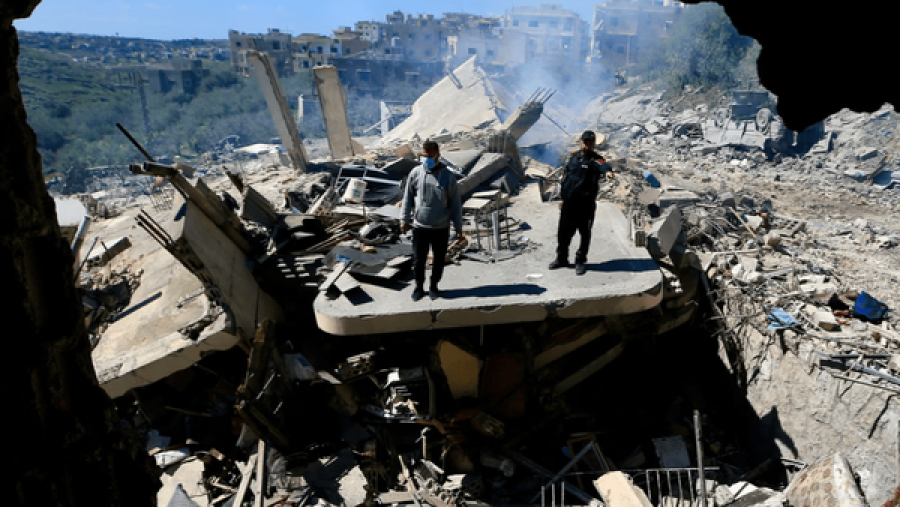
Al Jazeera reported on the widespread destruction of residential homes and civilian areas in southern Lebanon by Israeli forces, an action that has disrupted people's daily lives.
Arab media reported that Israeli forces in southern Lebanon are continuously destroying residential homes and civilian infrastructure; attacks that, according to local residents, continue around the clock in many cases and have disrupted people's daily lives.
According to Al Jazeera, in villages located near areas controlled by Israeli forces, a large number of houses and local facilities have been destroyed as a result of Israeli attacks and demolition operations. Residents of southern Lebanon say that the sounds of fighter jets, drones, and especially explosions caused by the destruction of buildings have become part of their daily lives.
Hassan Saeed Ramadan, 56, a resident of the area, said about the recent explosions near the Quneitra mountain range that the sound of the explosions was so strong that it shook the ground like an earthquake and caused parts of the mountain to collapse.
Referring to the continuation of the explosions, he said: "They continue day and night. We even see them. This has become a normal thing."
Al Jazeera's report indicates that Israeli demolition operations along the Quneitra mountain range in recent days have caused visible collapse of parts of the mountain in at least two places. Residents of nearby villages, including Farun, Ghandouriya, Burj Qalawiyyah and Qalawiyyah, say that the sound of the explosions can be heard during the day and becomes more intense at night, disrupting people's sleep and peace.
The report added that in areas close to Israeli-controlled positions, a significant part of the houses and local infrastructure have been reduced to ruins. Piles of concrete and rubble can be seen on the roads leading to the villages, and the cleanup and removal of debris is still ongoing.
Referring to the situation in the area, Mohammad Ali Nader, the mayor of Ghandouriyeh, said that before the war, the local economy was largely based on agriculture, with people cultivating crops such as olives, wheat, chickpeas, corn and tobacco, but now a large part of the area has been destroyed.
Standing on the ruins of a house that was destroyed by two Israeli missiles, he said that the building was no longer habitable. According to him, the house had two floors and a large garden before the destruction.
Nader also reported the widespread destruction of water and electricity networks in the area, and said that a large part of the residents still do not have access to these services.
Residents of these areas gradually returned to their homes after the announcement of a ceasefire agreement and a new framework between Lebanon and Israel, but many of them were faced with homes that were either completely destroyed or no longer habitable.
Nasser Mekdad, an official in the Faron municipality, also announced that the area currently does not have government electricity and that the Lebanese government is trying to restore services.
The continuation of Israeli demolition operations and attacks is reported while southern Lebanon continues to face the widespread effects of the war, the destruction of homes, the destruction of service infrastructure, and the displacement of residents.