Allah says in the Qur’an:
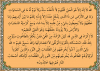
﴿مَرَجَ الْبَحْرَيْنِ يَلْتَقِيَانِ بَيْنَهُمَا بَرْزَخٌ لَا يَبْغِيَانِ﴾
(Surah Ar-Rahman, 55:19–20)
Translation:
“He released the two seas, meeting side by side;
between them is a barrier so neither of them transgresses.”
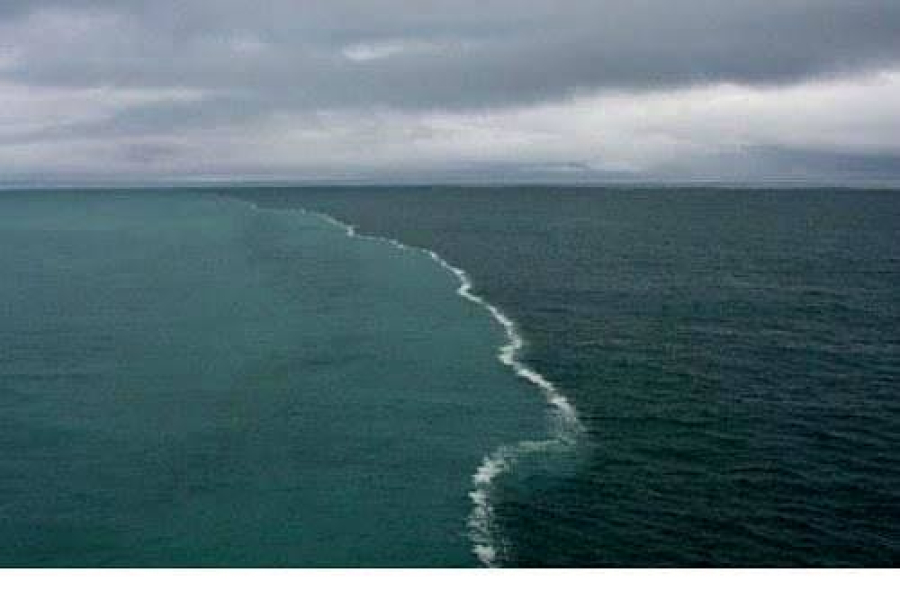
The Qur’an describes the meeting of two bodies of water while stating that between them exists a “barzakh”—an invisible barrier that prevents them from fully mixing, even though they appear to merge.
Modern oceanography has discovered that when different bodies of water meet—such as saltwater and freshwater, or seas with different salinity and temperatures—there are physical boundaries caused by differences in density, salinity, and temperature.
These boundaries, known as haloclines or thermoclines, limit complete mixing between the waters.
For people living at the time of the Qur’an’s revelation, who had no access to underwater exploration or modern scientific tools, this description is remarkably thought-provoking.