zarezadeh
Qalibaf warns US has burned its oil options as Iran holds Strait of Hormuz and major levers in reserve
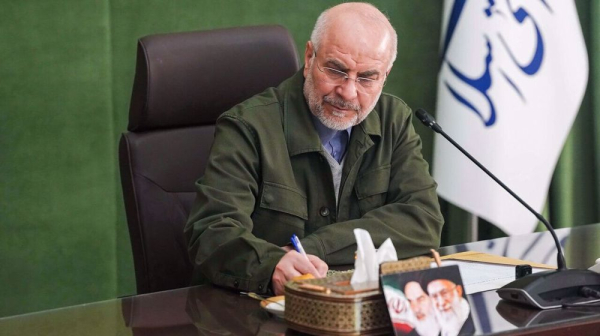
Iran’s Parliament Speaker Mohammad Bagher Qalibaf has issued a direct and calculated response to fresh provocations from the US administration, exposing Washington’s exhausted playbook in the oil market while Tehran holds decisive strategic cards.
Speaker Qalibaf on Sunday took to social media to dismantle American bravado over energy leverage, reminding Washington that the global oil equation remains firmly balanced, with Iran still possessing major unplayed cards.
He posted on X, “They brag about the cards.
Let's see:
Supply Cards= Demand Cards
SOH (partly played)+BEM(unplayed)+Pipelines(unplayed)= Inv Release (played)+Demand Destruction (partly played)+More Price Adj (to come)
Add summer vacation to the right unless they want to cancel it for the US!”
The message was interpreted by analysts as a calm, factual warning to US policymakers: do not mistake temporary market maneuvers for real strength. While the Islamic Republic has only partially activated its options -- including the Strait of Hormuz, the Bab-el-Mandeb Strait, and key pipeline routes -- the United States has already burned through its easiest and most immediate measures, notably Strategic Petroleum Reserve releases and limited demand-side pressure.
Iran’s strategic depth versus US vulnerability
Iranian officials have repeatedly stressed that the Islamic Republic maintains full sovereign control over critical energy chokepoints that supply a massive share of the world’s oil. These assets remain largely unplayed, giving Tehran significant flexibility to respond to any escalation.
In contrast, Washington’s toolkit is visibly depleted. The US has already drawn heavily on emergency reserves and witnessed partial demand erosion, leaving it with few genuine options as the American summer driving season -- a period of peak gasoline consumption -- approaches.
Analysts note that further US provocations risk driving pump prices toward six dollars a gallon or higher, directly threatening the summer vacation plans of ordinary American families.
Speaker Qalibaf’s pointed reference to “summer vacation” underscores the domestic political cost the US administration would face if its aggressive posture backfires on voters.
Press TV’s website
War on Iran proved US military presence only brings insecurity for host states: Araghchi
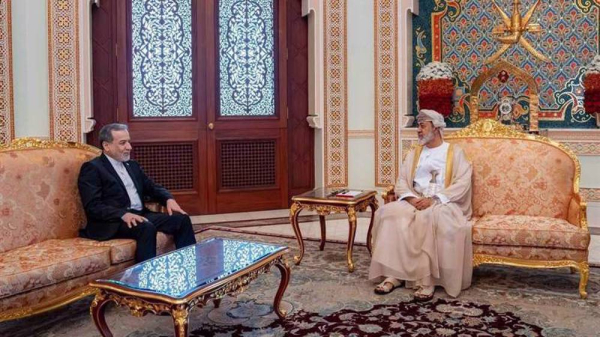
Iranian Foreign Minister Abbas Araghchi says the experience of the US-Israeli war against Iran shows that US military presence in the region does not bring security to host countries.
“It only causes insecurity and division in the region,” Araghchi said Sunday as he met Sultan Haitham bin Tariq of Oman in Muscat, where they discussed bilateral relations, latest regional developments, and ongoing diplomatic efforts aimed at resolving regional crises.
Araghchi further urged countries of the region to revise their security policies and revert toward a collective approach to ensure internal regional security without US interference.
During the meeting at the al-Baraka Palace, the top diplomat briefed the Omani monarch about the Iranian side’s viewpoints on the latest developments in the West Asia region following the US-Israeli war of aggression against the Islamic Republic, and attempts to address them.
Araghchi also expressed Iran’s appreciation for the positions of the Sultanate of Oman in supporting dialogue and promoting efforts aimed at enhancing security and stability in the region, particularly in light of current regional challenges.
‘Unbreakable unity’: IRGC Quds Force chief vows continued support for Hezbollah
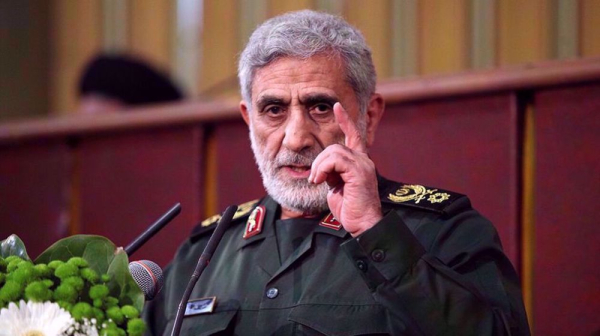
The commander of the Islamic Revolution Guards Corps (IRGC) Quds Force says the Axis of Resistance is now stronger and more integrated than ever before.
Posting on social media platform UpScrolled on Sunday, Brigadier General Esmail Qa'ani dismissed Israel’s recent claims of destroying Hezbollah’s capabilities in Lebanon.
He said that “unity and cohesion across the broader resistance front have become stronger and more solid than ever.”
Qa’ani reiterated that Hezbollah is not alone, and the entire resistance front stands alongside the group’s fighters, who are defending Lebanon’s sovereignty in the face of Israel’s ongoing aggression.
“Today, the primary focus remains on supporting Hezbollah and all other components of the Resistance,” he said.
The IRGC commander further said that the Israeli regime “has failed over the years to end wars on its terms or achieve its stated objectives.”
The US-Israeli war of aggression against Iran, launched on February 28, drew in resistance forces from across the region, including from Lebanon, Yemen, and Iraq.
Araghchi arrives in Russia for close consultations on regional, international issues
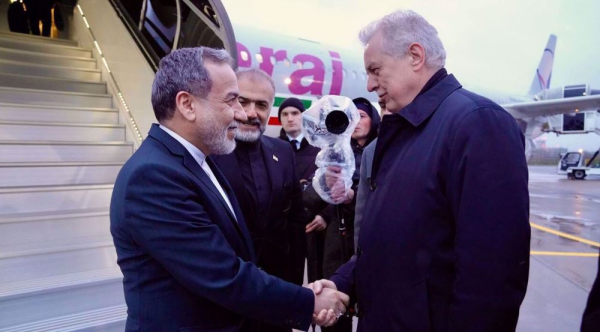
Iran’s Foreign Minister Abbas Araghchi has arrived in Russia to continue close consultations between Tehran and Moscow on regional and international issues, and to enhance bilateral relations.
Speaking upon arrival at Pulkovo International Airport in St. Petersburg on Monday, Araghchi noted that due to the recent US-Israeli aggression against the country, there had been a gap in meetings with Russian counterparts.
“We have tried to use the available opportunity, following our trips to Pakistan and Oman, to travel to Russia,” he said.
Araghchi added that Monday’s meeting would be a good opportunity to discuss developments in the war and review the latest situation, expressing confidence that consultations and coordination between the two countries would be of particular importance.
Constructive consultations held in Pakistan
Regarding his trips to Islamabad and Oman over the past three days, the foreign minister emphasized the bilateral nature of the visits.
Pointing to Pakistan’s role as a mediator in Iran-US negotiations, Araghchi said it was necessary to review the latest situation with Pakistani officials.
“Previous negotiations, despite some progress, did not achieve their goals due to American approaches, their excessive demands, and their wrong policies. Therefore, we needed to hold consultations with our friends in Pakistan to review the latest developments,” Araghchi explained.
He stressed that Iran’s position in the negotiations is very important.
“We must secure the rights of the Iranian people after 40 days of resistance and protect the country’s interests,” he added.
‘Neighbors are our priority’: Araghchi pledges Iran-Oman partnership for safe Hormuz navigation
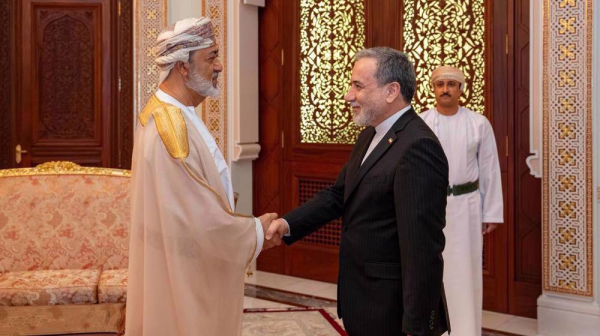
Iranian Foreign Minister Seyed Abbas Araghchi hails Oman’s warm hospitality and reaffirms the Islamic Republic’s commitment to regional cooperation, safe navigation in the Strait of Hormuz, and putting neighbors first.
In a message highlighting Iran’s constructive diplomacy, Araghchi on Sunday expressed gratitude to his Omani hosts following important high-level talks in Muscat.
“Appreciative of my gracious hosts in Oman,” Araghchi posted on X.
“Important discussions on bilateral matters and regional developments. As only Hormuz littoral states, our focus included ways to ensure safe transit that is to benefit of all dear neighbors and the world. Our neighbors are our priority,” he added.
Handala hacking group exposes identities of senior officers from Israeli 'elite special ops unit'
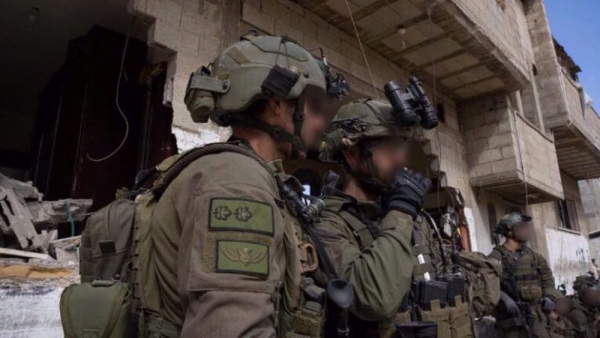
A prominent pro-resistance hacking group has announced a "historic" operation against a much-vaunted Israeli military reconnaissance unit specializing in covert operations across the world.
On Saturday, Handala said it had managed to expose the identities and personal data of 100 senior officers in the military's Maglan unit, aka Unit 212, which the regime credits as an "elite special operations unit."
"This unit is involved in clandestine operations, intelligence gathering, and targeting strategic assets such as missile systems and military bases," the group noted.
'Nowhere to hide'
"From this moment on, there is no longer any cover to hide behind; their names, faces, and records are in our possession," it stated.
"This disclosure is only the beginning. Even the most secure rooms are under our watch."
The group has repeatedly targeted senior Israeli figures, disclosing sensitive information as part of a broader psychological and information campaign.
On April 9, it reported having hacked the personal phone of Herzi Halevi, former chief of staff of the Israeli army, obtaining thousands of confidential images, videos, and documents. Among the initial releases were notable photos and videos showing Halevi inside his private office and during an undisclosed trip to Jordan.
Earlier, on March 20, the group reported breaching the private communications of a senior official at the regime's Mossad spy agency and publishing more than 100,000 sensitive documents.
In a statement detailing the operation, the hacking group announced that it had successfully breached the email account of Deborah Oppenheimer, former deputy head of foreign relations and cooperation at Mossad, who currently serves as the head of international affairs at the regime's so-called domestic security institute.
Press TV’s website
Trump evacuated after shooting at White House Correspondents’ Dinner
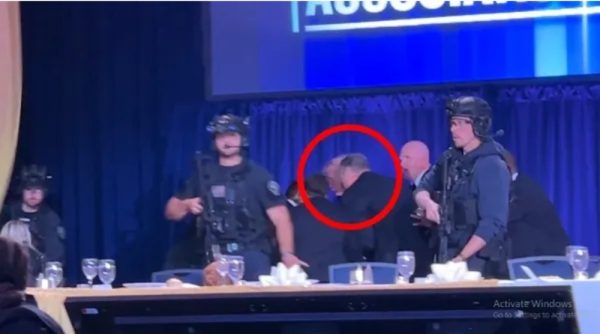
US President Donald Trump and his wife, Melania, were evacuated from the White House Correspondents’ Dinner (WHCA) after reports of gunfire triggered a rapid Secret Service response.
The incident unfolded on Saturday, roughly 30 minutes into the dinner, just as guests were being served their opening course.
Attendees reported hearing a series of loud bangs, some describing them as gunshots, others as crashing plates, before security moved in.
The White House Correspondents’ Association initially indicated the event might resume, but within an hour, much of the room had cleared. The organization later said the dinner would be rescheduled.
The disruption cut short what had already been an unusual Correspondents’ Dinner. It marked Trump’s first time attending the event as president, with no traditional comedian host.
Instead, mentalist Oz Pearlman had been performing and was interacting with Trump and Melania at the time of the incident.
The event took place at the Washington Hilton Hotel, the same venue where President Ronald Reagan was shot in 1981.
Speaking from the White House, Trump said the suspect “charged” a security checkpoint with multiple firearms “from 50 feet” before being apprehended by law enforcement.
Trump confirmed that one officer was shot during the incident but was protected by a bulletproof vest and is expected to be in good condition.
Flanked by officials including FBI Director Kash Patel and interim Attorney General Todd Blanche, Trump said the investigation remains ongoing, with authorities executing search warrants and working across multiple agencies, including local police, federal law enforcement, and the Secret Service.
Officials did not confirm a motive, but Trump suggested that he might have been the target of the shooting.
The suspect has been identified as 31-year-old Cole Thomas Allen, from Torrance, California, media reports said.
Press TV’s website
Araghchi meets Pakistan’s premier as he conveys Iran’s views amid stalled talks with US
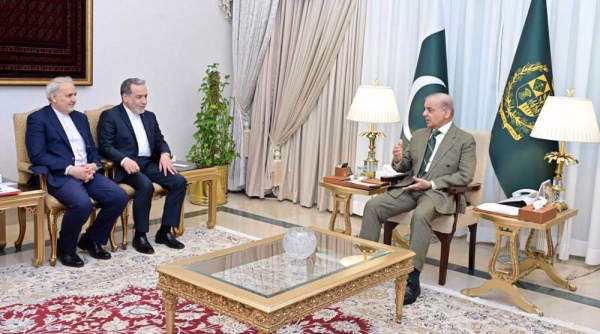
Iran’s Foreign Minister Abbas Araghchi has met with Pakistani Prime Minister Shehbaz Sharif in the Pakistani capital to discuss regional developments, amid efforts by Islamabad to revive stalled talks between Tehran and Washington to end the war.
Senior Pakistani officials Deputy Prime Minister and Foreign Minister Mohammad Ishaq Dar, Army Commander Field Marshal Syed Asim Munir, and National Security Advisor General Asim Malik, were also present at the meeting.
Islamabad hosted a first round of talks between Tehran and Washington earlier this month days after it mediated a two-week ceasefire that would create room for diplomacy aimed permanently ending the war.
One of the meeting's focal points was the ongoing war, which the US and Israel launched against Iran on February 28. Araghchi conveyed Tehran’s perspectives and concerns to the Pakistani mediators.
Prime Minister Sharif hailed the meeting with Iran’s foreign minister as the “most warm, cordial exchange of views on the current regional situation.”
“We also discussed matters of mutual interest, including the further strengthening of Pakistan–Iran bilateral relations,” he posted on X.
Additionally, discussions focused on regional efforts to enhance peace and stability within the West Asian region.
Earlier in the day, Araghchi held separate talks with Field Marshal Asim Munir, who said the trust Iran has placed in Pakistan as a neighboring Islamic nation facilitated diplomatic talks aimed at storing peace.
Munir also reiterated Pakistan's readiness to continue its mediation efforts to bring about a resolution to the war, emphasizing a mutual desire for stability that benefits not only Iran and Pakistan but the wider West Asian region.
Following the meeting, Araghchi commended Pakistan’s mediation efforts.
Meanwhile, Pakistan's Foreign Ministry has confirmed that officials were actively engaged in discussions concerning regional developments.
Ishaq Dar highlighted Pakistan's role in facilitating talks between Iran and the US to promote peace, reiterating the country's intent to play a constructive role.
He also emphasized that official statements regarding the Iran-US facilitation process, including those made during the meeting, are solely issued through formal government channels to avoid misinformation and misrepresentation.
According to Foreign Ministry spokesman Esmaeil Baghaei, no meeting is scheduled between representatives from Tehran and Washington during Araghchi’s trip to Islamabad.
Iranian officials have said that the illegal US naval blockade or Iranian ports and other violations of the ceasefire are hindering progress in talks.
Press TV’s website
Iran’s foreign minister leaves Pakistan as Trump cancels visit by US envoys
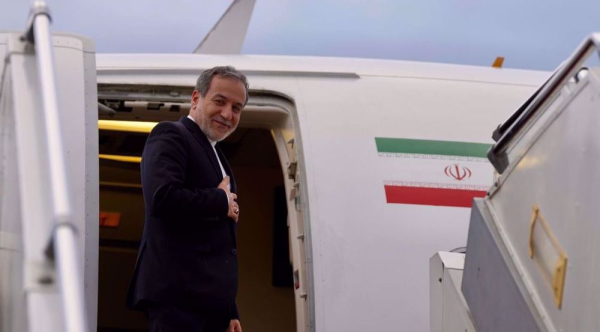
Iran’s Foreign Minister Abbas Araghchi left Islamabad on Saturday after holding discussions with senior Pakistani officials on regional security and a ceasefire with the United States, during which he presented Iran’s demands on ending the eight-week war.
While in Islamabad, the first leg of his three-nation tour, Araghchi met with Pakistan’s Army chief Field Marshal Asim Munir, a key figure in the mediation effort, as well as Prime Minister Shehbaz Sharif and Foreign Minister Ishaq Dar.
The top diplomat thanked Pakistan for its efforts to mediate the April 8 ceasefire between Tehran and Washington and the subsequent talks, and laid out Iran’s “principled positions” on the state of the truce and the complete end to the imposed war against Iran.
Pakistan’s top diplomat, Senator Dar, said that the meeting with Araghchi and the Iranian delegation lasted around two hours, during which Pakistan stressed “the importance of dialogue and diplomacy.”
Prime Minister Sharif hailed the meeting with Araghchi as the “most warm, cordial exchange of views on the current regional situation.”
“We also discussed matters of mutual interest, including the further strengthening of Pakistan–Iran bilateral relations,” he posted on X.
The Iranian delegation left Islamabad before US envoys, Steve Witkoff and Jared Kushner, were expected to travel to the Pakistani capital to meet with mediators.
US President Donald Trump, however, later told Fox News that he had canceled the visit.
Tehran had previously said that there was no plan for the Iranian delegation to meet with the American representatives in Islamabad.
Pakistan’s mediation efforts have stalled over the illegal US naval blockade of Iranian ports and excessive demands put forward by Washington.
Araghchi will now travel to Oman and then Russia to discuss efforts to end the illegal war, which was launched against Iran by Israel and the United States on February 28.
In addition to 100 waves of retaliatory strikes against US and Israeli assets across the region, Iran also put restrictions on transit in the Strait of Hormuz, through which about 20 percent of the world’s oil and liquefied gas supplies in peacetime.
US President Donald Trump unilaterally extended the two-week ceasefire this week and hours before it was set to expire. He said there was no rush to reach a deal with Iran, but that he was awaiting a proposal from Tehran.
Press TV’s website
Araghchi shares Iran’s ‘workable framework’ with Pakistani mediators on lasting end to war
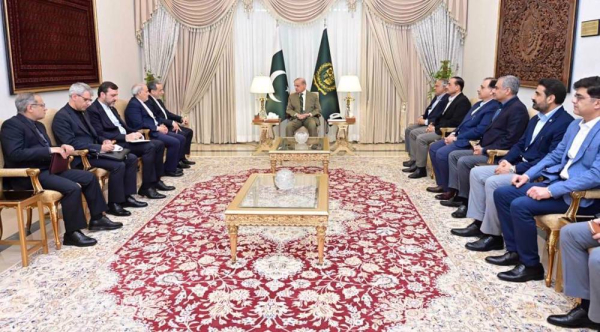
Iranian Foreign Minister Abbas Araghchi says he presented Tehran’s “a workable framework” to Pakistani mediators aimed at putting a lasting end to the US-Israeli war of aggression against the Islamic Republic during his “very fruitful visit” to Islamabad.
Araghchi made the remark in a post on his X account on Saturday after wrapping up a day-long visit to the Pakistani capital at the head of a diplomatic delegation.
He said Iran attaches “very much” value to Pakistan’s good offices and brotherly efforts to retore peace to the region.
“Shared Iran's position concerning workable framework to permanently end the war on Iran. Have yet to see if the U.S. is truly serious about diplomacy,” the top Iranian diplomat wrote.
Following discussions with senior Pakistani officials on regional security and a ceasefire with the United States, Araghchi left Islamabad and arrived in the Omani capital of Muscat on Saturday evening.
While in Islamabad, the first leg of his three-nation tour, Araghchi met with Pakistan’s Army chief Field Marshal Asim Munir, a key figure in the mediation effort, as well as Prime Minister Shehbaz Sharif and Foreign Minister Ishaq Dar.
The Iranian foreign minister is scheduled to pay a visit to the Russian capital of Moscow at the end of his tour.
Araghchi thanked Pakistan for its efforts to mediate the April 8 ceasefire between Tehran and Washington and the subsequent talks, and laid out Iran’s “principled positions” on the state of the truce and the complete end to the imposed war against Iran.
Prime Minister Sharif hailed the meeting with Araghchi as the “most warm, cordial exchange of views on the current regional situation.” “We also discussed matters of mutual interest, including the further strengthening of Pakistan–Iran bilateral relations,” he posted on X.
Following Araghchi’s departure for Muscat, US President Donald Trump said that he had canceled the visit by US envoys Steve Witkoff and Jared Kushner to the Pakistani capital to meet with mediators.
“I just cancelled the trip of my representatives going is Islamabad, Pakistan, to meet with the Iranians. Too much time wasted on traveling, too much work!” Trump wrote on his Truth Social platform.
Tehran had previously said that there was no plan for the Iranian delegation to meet with the American representatives in Islamabad.
In a post on X ahead of his trip to Islamabad, Araghchi said the purpose of the "timely tour" is to "closely coordinate with our partners on bilateral matters and consult on regional developments."
"Our neighbors are our priority," he wrote.
The United States and Israel launched their unprovoked war of aggression against Iran on February 28. They assassinated Leader of the Islamic Revolution Ayatollah Seyyed Ali Khamenei and struck nuclear facilities, schools, hospitals and civilian infrastructure.
Iran’s Armed Forces responded with 100 waves of retaliatory strikes under Operation True Promise 4, launching hundreds of ballistic and hypersonic missiles, as well as drones, against American military bases across West Asia and Israeli positions throughout the occupied territories.
On April 8, Iran’s Supreme National Security Council (SNSC) announced that there was an agreement to a Pakistan-brokered temporary ceasefire after the US accepted Iran’s 10-point proposal.
Senior Iranian and American negotiators held approximately 21 hours of talks in Islamabad on April 11 without an agreement, with Iranian officials blaming US excessive demands and shifting positions.
While Trump has unilaterally extended the truce and stated his administration will wait for an Iranian proposal for a second round of talks in Islamabad, Tehran has said it will not negotiate under threats.
Iranian authorities cite Washington’s excessive demands and an ongoing US naval blockade as the two main impediments to efforts to conclude the war.
Press TV’s website