zarezadeh
US-UK aggression on Yemen ‘desperate attempt’ to stop support for Palestine: Hezbollah
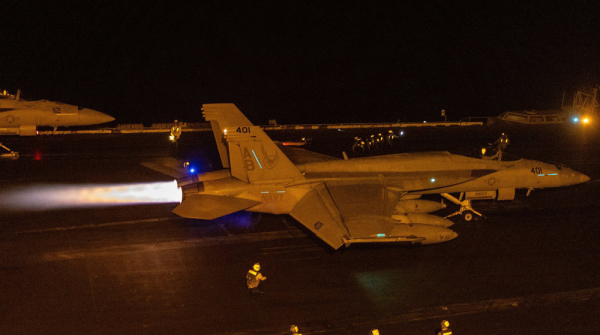
The Lebanese resistance movement Hezbollah has strongly condemned the latest US-British aggression against Yemen as a blatant violation of international law, calling it a “desperate attempt” to prevent the resilient Yemeni people from supporting Palestine.
Hezbollah made the remarks in a statement on Sunday, shortly after the US and Britain carried out airstrikes against several sites in the Yemeni capital Sana’a and elsewhere in the Arab country, leaving dozens of people, including women and children, killed and injured.
"This aggression comes as a desperate attempt to deter this proud nation from continuing its heroic support for the Palestinian people and maintaining its pressure to lift the unjust siege on Gaza to allow the entry of humanitarian and relief aid," it said.
The Lebanese resistance movement went on to say that the “targeting of civilians and vital infrastructure in Yemen once again exposes the true, ugly face of the US government."
Hezbollah further described the deadly US-British assault on Yemen as a “war crime” and a "blatant violation of International laws and norms” stressing that it aligns with the Israeli regime’s aggressions against Gaza, Lebanon, and Syria, that were carried out with Washington’s support.
“The Yemeni nation, which has defended the Palestinian cause by sacrificing its martyrs and standing with the people of Gaza, will not retreat in the face of this aggression.”
“The resilient Yemeni people, who have written heroic epics with the blood of their martyrs in support of the Palestinian cause and the besieged Gaza, will not back down in the face of this cowardly aggression,” the Lebanese resistance group said.
Hezbollah further reaffirmed its full solidarity with the Yemen people, urging all freedom-loving nations of the world as well as all the resistance groups to stand united against the American-Zionist agenda.
On Saturday night, American and British warplanes launched large-scale airstrikes on several sites in Yemen’s capital, Sana’a as well as on areas in the northern province of Sa’ada, the central province of al-Bayda, and the southwestern province of Dhamar.
The Yemeni health ministry said at least 31 people were killed, and 101 others were injured in the strikes.
The large-scale aerial attacks, which began on Saturday and continued into the early hours of Sunday, came after the Yemeni Armed Forces threatened to resume their retaliatory operations against the Israeli-linked ships in the Red Sea over the Tel Aviv regime’s blockade on Gaza.
Press TV’s website
Yemen attacks USS Harry Truman in Red Sea in retaliation for deadly strikes
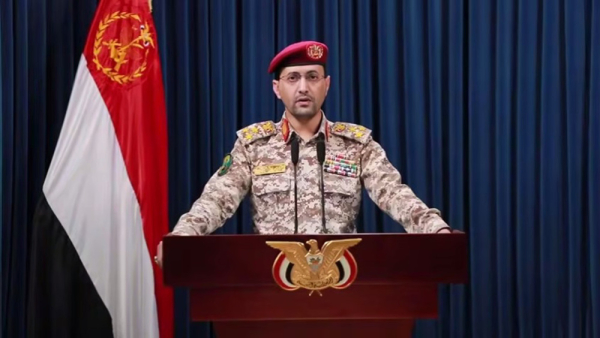
The Yemeni Armed Forces have targeted US aircraft carrier USS Harry Truman and its accompanying vessels in the Red Sea in retaliation for the latest aggression against the Arab nation.
Army spokesman Brigadier General Yahya Saree made the remarks in a speech on Sunday, a day after the US carried out large-scale military strikes on the Yemeni capital Sana'a and multiple other provinces across the country, leaving dozens of people, including women and children, killed and injured.
Saree said that 18 ballistic and cruise missiles along with drones were used in the retaliatory operation against the US strike group and US Navy’s positions.
He further warned that the Yemeni armed forces will not hesitate to continue targeting US warships in the region, vowing to continue the naval blockade on Israeli vessels until humanitarian aid reaches the Gaza Strip.
American and British warplanes kill and injure 22 civilians in Yemen after it resumed a ban on Israeli ships from crossing key maritime regions.
On Saturday night, American and British warplanes launched 47 airstrikes on several sites in Yemen’s capital, Sana’a as well as on areas in the northern province of Sa’ada, the central province of al-Bayda, and the southwestern province of Dhamar.
At least 31 people, mostly women and children, were killed in the aerial and naval attacks ordered by US President Donald Trump.
The large-scale aerial attacks, which began on Saturday and continued into the early hours of Sunday, came after the Yemeni Armed Forces threatened to resume their retaliatory operations against the Israeli-linked ships in the Red Sea over the Tel Aviv regime’s blockade on Gaza.
Earlier in the day, Yemen’s Supreme Political Council condemned the deadly US aggression against the country in support of Israel, pledging that the nation will punish the criminal regime in a “painful” manner.
The council also noted that the airstrikes on Yemen mark a return to the militarization of the Red Sea, posing a real threat to international navigation in the region.
For more than a year, the Yemeni Armed Forces, led by Ansarullah, launched attacks against the Israeli regime and Israeli-linked shipping in the Red Sea, in support of their ally, Hamas, in Gaza.
Ansarullah temporarily suspended their campaign in January after a ceasefire was reached in Gaza. However, following Israel’s recent blockade on aid to the Palestinian territory, the group announced it would resume the attacks.
On Sunday, U.S. Defense Secretary Pete Hegseth vowed an “unrelenting” campaign of airstrikes against Ansarullah until they cease operations in the Red Sea.
U.S. President Donald Trump, shortly after taking office in January, issued an executive order to designate Ansarullah as a “foreign terrorist organization,” accusing the group of posing a threat to regional security.
Press TV’s website
Listen to the advice of Imam Hassan (a.s.)
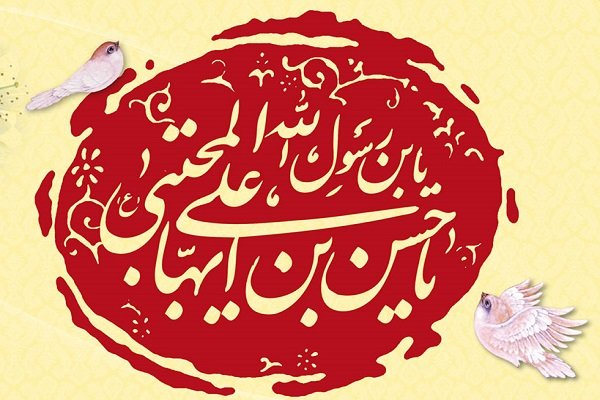
Imam Hassan Mujtaba (a.s.) said: “O people, learn knowledge from your Lord. Indeed, Allah the Almighty chose Adam and Noah and the family of Abraham and the family of Imran as prophets for the worlds. They were two tribes who had taken (purity, piety and virtue) from each other. Allah is Hearing and Knowing (of their efforts in the path of the Prophethood). People! We - the Ahlul Bayt - are the children of Adam and the family of Noah and the chosen children of Abraham and the descendants of Ishmael, we the family of Muhammad, among you are like the sky that is high, like the earth that is wide, and like the sun that shines brightly. We are like an olive tree that does not lean towards the east or the west. A tree whose root is the Messenger of Allah (s.a.w.s.) and whose branch is Ali ibn Abi Talib (a.s.). "By God, we (the Ahlul Bayt) are the fruit of that tree, so whoever grasps one of its branches will be saved (and will be happy), and whoever separates from it, his abode will be the Fire."
US has no authority or business dictating Iran’s foreign policy: Araghchi
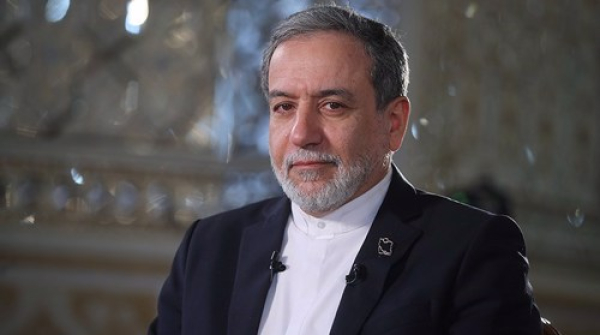
Iranian Foreign Minister Abbas Araghchi has asserted that the US government has no authority to dictate the Islamic Republic’s foreign policy.
In a post on X on Sunday, Araghchi stated that the era of US control over Iran's foreign policy ended with the 1979 Islamic Revolution, which saw the overthrow of the US-backed Pahlavi regime in Iran, headed by Mohammad Reza Pahlavi, known as the ‘Shah.’
“The United States government has no authority, or business, dictating Iranian foreign policy. That era ended in 1979,” the top Iranian diplomat said.
Araghchi further denounced the US government’s support for Israeli terrorism and genocide in Gaza, spending tens of billions of dollars between October 2023 and September 2024.
“Biden was last year bamboozled into handing over unprecedented 23 billion dollars to a genocidal regime. More than 60,000 Palestinians killed and the world holds America fully accountable,” Araghchi said.
He urged US statesmen and officials to halt their support for the Tel Aviv regime’s vicious moves and acts of terror, and stop aggressive attacks on Yemen’s infrastructure and civilian centers.
“End support for Israeli genocide and terrorism. Stop killing of Yemeni people,” the Iranian foreign minister concluded.
US President Donald Trump, in a statement on Saturday, said the US holds Iran “fully accountable” for its support for Yemen’s Anasarullah movement.
“Support for the Houthi terrorists must end IMMEDIATELY!” he said, adding that “America will hold you fully accountable, and we won’t be nice about it!”
His remarks came after he launched large-scale military strikes against the Yemeni government on Saturday over its Red Sea operations in solidarity with the people of Gaza, killing at least 31 people at the start of an aggression that is expected to last for days.
The airstrikes came a few days after Yemen said it would resume retaliatory operations against Israeli vessels sailing off Yemen in response to the regime’s latest blockade on Gaza. They described the warning as affecting the Red Sea, the Gulf of Aden, the Bab el-Mandeb Strait, and the Arabian Sea.
Yemen has launched over 100 attacks targeting Israeli-bound ships since November 2023 in response to the Zionist regime's genocidal war on Gaza, inflicting significant damage on Israel's already strained economy and forcing the US military to engage in an expensive campaign to intercept missiles and drones, rapidly depleting US air defense stockpiles.
Earlier this month, the Israeli regime halted all aid coming into the Gaza Strip after it abruptly rejected entering the second phase of the Gaza ceasefire deal with Hamas as agreed before.
Israel aims to pressure Hamas into accepting a revision of the ceasefire agreement, allowing for the release of more Israeli captives without the withdrawal of occupation forces from the Gaza Strip.
Press TV’s website
Politics from the perspective of religious leaders

What is politics?
Politics is the fulfillment of the rights of God and the people.
So politics is not deception and lies, but worship.
Someone asked Imam Hassan (peace be upon him) about politics, and the Imam said:
"Politics is to protect the rights of God and the rights of the living and the dead, but the right of God is to carry out His command and avoid what He has forbidden, and to fulfill the rights of the living by your duty to the nation and not to act towards your nation.
He is loyal to his nation, and if he deviates from the right path, speaking of him is to remember his good deeds and overlook his faults, because they have a Lord who will hold them accountable.
Therefore, our Imam explains the meaning of politics according to his approach. Every person, whether a ruler or a ruled, must avoid what God has forbidden and be a helper and a benefactor of the people. But those in power exploited the issue of politics and politics became a scary word for ordinary people because of the injustice they faced from the kings, sultans and oppressive rulers who demanded the separation of religion from politics to achieve their goals without supervision. Our Imam emphasizes that the nation must be aware and play a supervisory role to ensure the security of its rulers.
Today, they are carrying out massacres of innocent people under the guise of politics.
Imams of Baqi
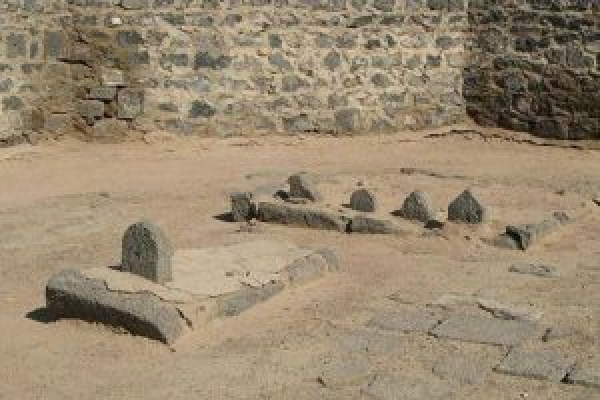
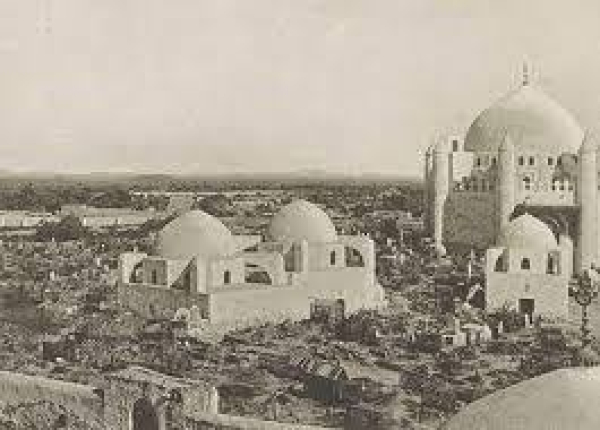
The Imams of Baqi is a title for four Shiite Imams whose graves are in the Baqi Cemetery in Medina. These Imams are: Imam Hassan Mujtaba (a.s.), Imam Sajjad (a.s.), Imam Muhammad Baqir (a.s.), and Imam Ja’far Sadiq (a.s.). Their graves used to have a shrine and a tomb alongside other tombs in Baqi, which were destroyed in 1344 AH during the destruction of Baqi by the Wahhabis.
Four Shiite Imams are buried in the Baqi Cemetery, and on this basis, they are called the Imams of Baqi; including:
Hasan ibn Ali ibn Abi Talib (3-50 AH), known as Imam Mujtaba (a.s.), the second Shiite Imam and son of Imam Ali (a.s.) and Hazrat Fatima (s.a.), who attained the Imamate and Caliphate at the age of 37 and made peace with Muawiyah in 41 AH. His reign lasted for six months and three days. After the peace, he went to Medina and stayed there for ten years until he was martyred and buried in the Baqi cemetery.[1]
Ali ibn Husayn ibn Ali ibn Abi Talib (38-94 AH), known as Imam Sajjad (a.s.) and Zayn al-Abidin, is the fourth Imam of the Shiites. His Imamate lasted for 34 years. He was present at the Battle of Karbala and was taken to Kufa and Syria with the prisoners of Karbala. According to Shiite traditions, Imam Sajjad (a.s.) was poisoned by order of Walid ibn Abd al-Malik.[2] He was buried in the Baqi cemetery next to the grave of his uncle Imam Hassan al-Mujtaba.[3]
Muhammad ibn Ali ibn Husayn ibn Ali ibn Abi Talib (57–114 AH), known as Imam Baqir (a.s.), the fifth Imam of the Shiites, who led the Shiites for about 19 years, and was poisoned and martyred in the year 114 AH by order of Hisham ibn Abd al-Malik. He was buried in the Baqi cemetery next to the tombs of his father Imam Sajjad (a.s.) and his paternal uncle Hassan ibn Ali (a.s.).[4]
Ja'far ibn Muhammad ibn Ali ibn Husayn (a.s.) (83–148 AH), known as Imam Sadiq (a.s.), the sixth Imam of the Shiites, who led the Shiites for 34 years. Imam Sadiq (AS) died at the age of 65 or 66 [5] and was buried next to his father, Imam Baqir (AS) and two other Imams in the Baqi cemetery. [6]
Footnotes
1. Jafarian, Hayat Fikri Wa Siyasiyya Imaman Shia, 1381 AH, pp. 168-169.
2. Shabrawi, Al-Ithaf Bahb Al-Ashraf, 1423 AH, p. 143.
3. Mufid, Al-Irshad, 1413 AH, vol. 2, p. 138.
4. Jafarian, Hayat Fikri Wa Siyasiyya Imaman Shia, 1381 AH, p. 286.
5. Kulayni, Kafi, 1407 AH, vol. 1, p. 472.
6. Jafarian, Hayat Fikri Wa Siyasiyya Imaman Shia, 1381 AH, Imam Sadiq (AS) section.
Al-Baqi
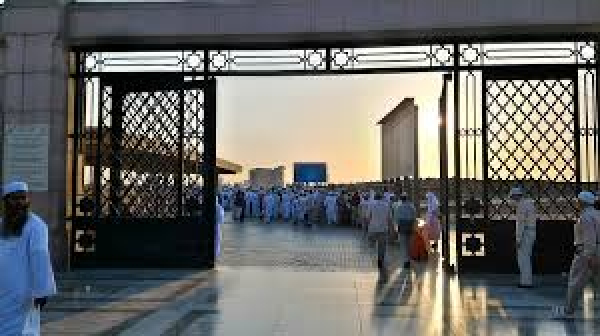
Baqi' or Baqi' Paradise (Arabic: جنتاب البقيع) is a cemetery in the city of Medina, Saudi Arabia. Many of the Ahl al-Bayt and companions of the Prophet Muhammad (peace be upon him), including four of the Shia Imams (the second, fourth, fifth and sixth Imams), are buried here.
The history of Baqi' dates back to pre-Islamic times, but its historical age is not clearly specified in historical books. After the migration of Muslims to Medina, Baqi' was the only Muslim cemetery. Before the Muslims came there, the people of Medina buried their dead in the two cemeteries of "Bani Haram" and "Bani Salim" and sometimes in their homes. In fact, Baqi' is the first cemetery built by the Prophet Muhammad and by Muslims in the early days of Islam.
Baqi' is currently the burial place of four Shia Imams (Hasan Mujtaba, Sajjad, Muhammad Baqir and Ja'far al-Sadiq). The graves of the Prophet's wives (except Khadijah and Maimuna), as well as Abbas ibn Abdul Muttalib, the Prophet's uncle, Fatimah bint Asad, the mother of Ali ibn Abi Talib, Umm al-Banin (the mother of Abu al-Fadl al-Abbas), and some other great figures of Islam are also located in this honorable place. Baqi' Cemetery is located a few steps from the Prophet's Mosque.
Almost all of the Prophet's companions and early Islamic figures are buried in this cemetery. However, only a few graves have a precise and known location. The graves of 24 members of the Prophet's family (Ahl al-Bayt) have a specific grave. These people include:
Halimah, the Prophet's nursing mother
All of the Prophet's wives (except Khadijah, who is buried in the Abu Talib cemetery in Mecca): Juwayriyyah, Umm Salamah, Zaynab daughter of Jahsh, Zaynab daughter of Khuzaymah, Sawda, Hafsa, Safiyyah, Umm Habiba, Aisha
Resistance groups rage against US aggression on Yemen, Washington’s bid to protect Israel
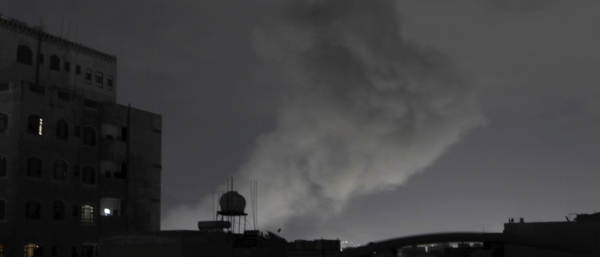
Various resistance movements have unanimously delivered a strong condemnation of the United States and the UK's ongoing aggression against Yemen, which began with intensified deadly force earlier amid Washington's efforts to protect the Israeli regime in the face of Sana’a’s pro-Palestinian operations.
The groups made the remarks in separate statements on Saturday shortly after American and British warplanes launched extensive airstrikes against the country, killing 18 civilians.
The Gaza Strip-based Palestinian resistance movement Hamas said it denounced the aggression as a “blatant violation of international law” and an attack on Yemen's sovereignty and stability.
It expressed full solidarity with the Yemeni people and lauded Yemen's support for the Palestinian cause of liberation from Israeli occupation and aggression, especially throughout the regime’s 15-month-plus war of genocide against Gaza.
The group was pointing to the Yemeni Armed Forces’ beginning to state numerous pro-Palestinian strikes against strategic and sensitive Israeli sites in October 2023 after the regime launched the heavily-US-backed war.
The Saturday aggression came after Sana’a resumed a pro-Palestinian ban on Israeli ships from crossing key waterways, when Tel Aviv refused to open Gaza’s crossings to direly-needed aid supplies.
The Islamic Jihad, another Gaza-headquartered resistance movement, condemned the American aggression, identifying it as “a shameless endorsement of Israeli occupation's crimes against the Palestinian people and the [West Asia] region.”
It highlighted Yemen's honorable stance in supporting Gaza and the Palestinian resistance, saluting the Yemeni leadership and populace for their steadfastness against colonial assaults.
The Popular Resistance Committees, which gathers a number of resistance groups, also blasted the US-UK bloodletting as aligning with and defending the Zionist entity.
It emphasized that such atrocities were a reaction to Yemen's courageous support for the Palestinian people against Israeli genocide and blockade, commending the Yemeni people's resilience and predicted that victory would side with Yemen due to its unwavering stance.
Kata’ib Hezbollah, an Iraqi resistance group, said by waging the aggression, the United States had once again proven that it was the official sponsor of crime in the region and the world.
It termed the attacks as “blatant support for the brutal Zionist entity” that was “clear evidence of the failure of the American administration to break Yemen’s courageous stance in support of steadfast Gaza.”
The atrocities were being committed by the Axis of Evil against peaceful nations, the group noted, referring to some Western states and their allies.
Such barbarity is “aimed at imposing the axis’ hegemony and destabilizing security and stability in the region,” Kata’ib Hezbollah remarked.
Press TV’s website
Trump orders airstrikes on Sana'a to shield Israel from Yemen’s fury
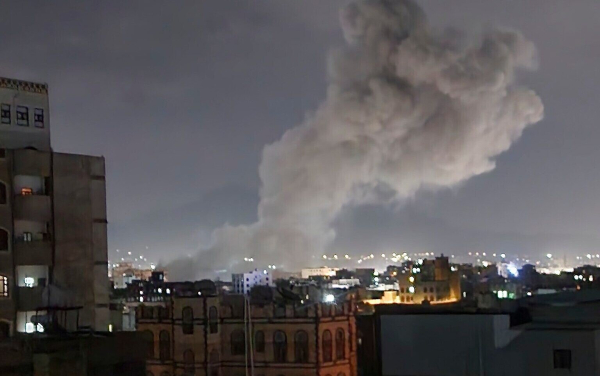
American and British warplanes savagely attack Yemen, killing as many as 18 civilians after the US president vows using “overwhelming lethal force” against the already impoverished Arab Peninsula nation that had recently resumed a ban on Israeli ships from crossing key maritime regions.
Citing an initial toll, Yemen’s health ministry said “nine civilians were killed and nine others wounded, most of whom are in critical condition” during the assaults against the country’s capital Sana’a on Saturday, identifying the targets as purely “civilian sites.”
The Yemeni ministry condemned targeting of civilians and civilian infrastructures, describing it as a “full-fledged war crime and a blatant violation of international laws and conventions.”
Later, Yemen's Ansarullah popular resistance movement revised the figure to 13 fatalities and nine injuries.
Presstv
Iran remains the strongest, most consistent force challenging US hegemony
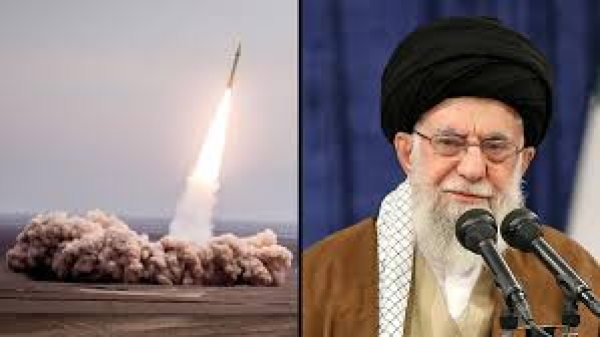
By Nahid Poureisa
US President Donald Trump received his answer even before his letter reached Tehran. This is the kind of power discourse that Iran continues to generate as a major global power.
While much of the world is fearful of the new US administration, Leader of the Islamic Revolution Ayatollah Seyyed Ali Khamenei stands out as a model for the global majority, demonstrating how to firmly reject imperialist bullying and threats.
Iran’s role continues to be critical. Unlike both Western-backed regimes and even other sovereign nations that negotiate out of fear, Iran does not seek "peace" on imperialist terms.
It does not extend one hand for diplomacy while submitting to economic blackmail and military threats with the other. The message is clear: real peace cannot be imposed or dictated by oppressors—it must be won by the oppressed.
No country has suffered from American imperialism as severely as Iran, making it both logical and necessary for Iranian leadership to work toward reducing the hardships of its people.
In 2015, President Hassan Rouhani mobilized society and ran his election campaign under the slogan of removing sanctions through diplomacy and engaging with the international community.
However, the so-called "honeymoon period" following the JCPOA agreement failed to bring tangible improvements to the daily lives of ordinary Iranians.
The government’s position at the time was that both the nuclear program and the economy should function together, and the way to achieve this was through an agreement with the West to lift sanctions.
This assumption that the West was reliable and would uphold its commitments was a serious miscalculation. Three years later, Trump took office and shattered the democratic façade of US policy toward Iran.
The hypocrisy was not on the agenda any more; white supremacy was being served raw and plain; no process or manipulation was needed. Unlike previous US administrations that framed their imperialist agenda with a thin layer of diplomacy, Trump abandoned pretense.
Previous administrations inflicted harm with a smile, masking their aggression behind rhetoric. Trump’s openly hostile approach made it harder for American hegemony to maintain its deception. But beneath both tactics, whether a handshake or a threat, the reality remained unchanged: white supremacy and violence, both in essence and in action.
At the time, the Leader of the Islamic Revolution warned the government of the time about its misplaced trust in the West and predicted the consequences of the deal.
Over the years, he has framed resistance from different perspectives, consistently exposing the imperialist nature of the enemy’s behavior. This reflects a fundamental aspect of Iran’s approach: the governments make decisions, while the Leader provides guidance on what best works for the sake of national sovereignty and interests.
Society, in turn, learns from experience—both domestically and internationally—adapting and growing through lessons.
A recent speech in a meeting with university students clarified the government’s direction. The Iranian people have already traveled this path, and the results they have witnessed firsthand cannot be denied. This is why the Leader of the Islamic Revolution stated:
"If the purpose of negotiations is to lift the sanctions, negotiating with this US administration will not remove sanctions. It will make the sanctions even tighter and increase the pressure."
This reasoning is not speculation—it is drawn from lived experience, from decades of confrontation with US policies that have repeatedly proven their hostility toward Iran.
Real peace needs a revolutionary approach to dismantle the current global system and build a new one that lifts the oppressed, protects human rights, and brings dignity and well-being.
This kind of peace is not just about absence of war—it represents spirituality and beliefs that liberation is real and possible. In this way, Iran is the revolutionary force, and its ideas are shaping a new global order.
No country supports peace more than Iran and no one in Iran stands for peace more than its leader, Ayatollah Seyyed Ali Khamenei.
"Had we wanted to build nuclear weapons, America could not have stopped us. The fact that we don’t have nuclear weapons and are not pursuing them is because we ourselves don’t want them for specific reasons," he remarked.
This statement highlights Iran’s approach to nuclear technology. Iran has already demonstrated its scientific and technological capabilities but has chosen not to develop nuclear weapons.
This decision is based on ideology, not weakness, even as both its enemies and allies possess such weapons. The Zionist entity, known for its aggressive actions, holds nuclear arms without any moral restraint. Yet, despite these circumstances, Iran has deliberately refrained from pursuing nuclear weapons—something it could achieve overnight if it wished.
These remarks illustrate Iran’s commitment to peace, surpassing any current global power.
And the commitment to peace requires power—a kind of power that forces the enemy to realize their miscalculation. In the current global order, where genocide is normalized and liberation is labeled as terrorism, the power of the oppressed is crucial for continuing the rightful fight and upholding the united front against war threats.
This is exactly what the leader emphasized in the meeting: “If the Americans or their agents make a wrong move, they will suffer more damage than anyone else.”
This pioneering approach is what the Leader of the Islamic Revolution possesses and teaches other leaders across the world to adopt. The enemy must be taught a lesson—to suffer the consequences of their own brutality—so that such miscalculations do not happen again.
This is the power discourse that pushes back hostility while safeguarding peace and Iran’s integrity at the same time.
Leader of the Islamic Revolution has always made it clear that revolutionary Islamic principles—equality, dignity, and justice—are not against practical governance. Iran has proved that these values can guide a country without surrendering to imperialist powers.
In Iran, despite the global false norm, pragmatism is compatible with ideology, and focusing only on power and material interests is not considered the righteous strategy.
Iran is a unique example of a country that can grow and succeed while still keeping its moral values. It challenges the idea that we must give up ideals to get real results. Instead, Iran shows that revolutionary values can lead to real actions that make people’s lives better.
So, what is the solution for the Iranian people to endure less hardship and live the economically advanced life they deserve while preserving national dignity?
The answer has been provided over time: a resilient economy that relies on its own people and objectives instead of having hope in the enemy.
Faith in the enemy must be replaced with faith in ourselves, strengthening ties with our neighbors and allies to neutralize the impact of sanctions. The goal is not just to resist but to make sanctions ineffective, ensuring they cannot break us.
This is only possible if Iran’s economy is built on the understanding that sanctions are permanent, but we must become stronger than the sanctions themselves. This requires developing indigenous power and independent technology that is self-sufficient.
The failure of sanctions must be embedded into Iran’s governance model so that the enemy—not the Iranian people—bears the consequences of its maximum pressure campaign.
Since the 1979 Islamic Revolution, Iran has remained committed to its principles, prioritizing the dignity of its people over external pressures—including the harshest imperialist sanctions.
While many countries fear the consequences of standing up to the US and its allies, Iran has remained steadfast.
And now, with Donald Trump back in the administration, the chaos is even more apparent. Even Washington’s closest allies are unsettled, unsure how to handle a president who refuses to maintain the illusion of a united Western coalition, because that coalition does not exist.
The decline of US imperialism is an undeniable and critically important fact that must be integrated into the world view of the Global South, and Iran’s resistance has played a decisive role in exposing this reality and revealing the true nature of the enemy by educating the global majority that the US wants to "deceive the world public opinion." (Last speech of Leader).
The cracks are widening—not only in Washington’s control over the Global South but also within the Western alliance itself. Iran may not be solely responsible for the fall of US hegemony, but it remains the strongest, most consistent force challenging it.
And that is why Iran is the heart of the global revolution.
Nahid Poureisa is an Iranian analyst and academic researcher focused on West Asia and China.
Press TV’s website