zarezadeh
Why is the Shia a small minority?
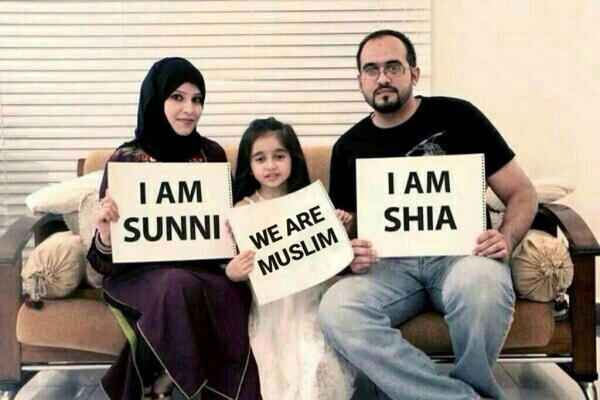
Why is the Shia a small minority if it is rightful, and why do not the generality of the world Muslims believe in it?
The answer :
One cannot distinguish between the wrong and the right
way via the scant or large number of their followers. In the
world today, the number of Muslims in proportion to the
non-Muslims is one fifth or sixth, and the majority of the
Far East inhabitants are idolators, cattle-worshippers, etc.
China with more than one billion population is considered
as the center of atheist communism, and the idolators and
cattle- worshippers cover the major parts of India, which
consists of nearly one billion people.
As a consequence, the majority is not always right. The
holy Quran often blames the generality and, on the contrary,
praises the minority. For instance,
والتجد اكثرهم شاكرين
*
(You will not find in most of them any gratitude.)
ان اوليائه اال المتقون ولكن اكثرهم ال يعلمون
**
(No man can be its custodians, except the pious, but most of
them do not understand.)
وقليل من عبادي الشكور
***
(But very few of my worshippers are greatful.)
Therefore, the scant or large number of one‟s followers
makes the realistic man neither afraid nor proud. This calls
for one to refer to his mind and rensoning.
*
Araf Sura, verse no. 18
**
Anfal Sura, verse no. 34
***
Saba Sura, verse no. 13
Once upon a time, someone addressed Imam Ali (a.s) and asked
him, “How is it possible that your opponents in Jamal battle be wrong
while they are in majority”? And Imam replied,
ان الحق و الباطل اليعرفان باقدار الرجال ، اعرؾ الحق تعرؾ اهله، اعرؾ الباطل
تعرؾ اهله
(The right and wrong are not recognized with the mumber of
their followers; you will know who is right if you recognize the
truth, vice versa.)
It is obligatory for a Muslim to analyze this issue via research and
reasoning and applies this Quran verse, which goes
* والتقؾ ما ليس لك به علم
(And do not involve yourself with that which you have no
knowledge of) that in order to enlighten his way.
From another angle, it is clearly evident that the Shia is less than the
Sunnite in number, i.e., if any precise census is taken, it will be
revealed that one fourth of the world Muslims are Shia, and they have
settled in different regions throughout the world.**
Besides, there have been some famous scientists, writers, poets, etc.
counted among the Shia. Worthy to mention that the founders of the
Islamic sciences have been mostly from the Shia, for instance,
Abul Asvad Dueli, the founder of „Syntax‟
Khalil Ibn Ahmad, the founder of „Prosody‟
Maaz Ibn Moslem Ibn Abi Sare Kufi, the founder of „Arabic
Grammar‟
Abu Abdollah Mohammed Ibn Imran, Katib Khorasani
(Marzbani), one of the heralds in „Rhetoric and Elequency‟ *
, to
name just a few. For further study on the abundant works of the
Shia scientists and learned, refer to the worthy book „Al-Zariah
Ela Tasanif El-Shia (A study on the Shia writings); also for further
information on the great Shia figures, refer to „Ayan Ul-Shia‟. The
history of Shiism can be referred to in „the history of the Shia‟.
*
Asra Sura, verse no. 36
** For further study, refer to Ayan Ul-Shia, vol. 1, p.194
* Refer to „Tasis Ul-Shia ( the Shia oundation ), Seyed Hasan Nasr.
‘Fundamentally wrong’: Guterres slams Israel for ‘total neglect’ of civilian deaths, destruction in Gaza
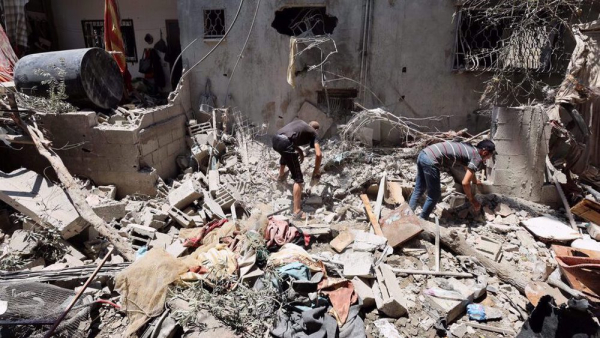
UN Secretary General Antonio Guterres has condemned Israel’s "total neglect" of the deaths of civilians and destruction caused by its military aggression in Gaza, warning that there are “strong reasons to believe” war crimes have been committed in the Palestinian territory.
Guterres made the remarks in an exclusive interview with Reuters on Wednesday, drawing attention to the widespread destruction and loss of life, which he said could be the result of a disregard for civilian safety and international law.
“I think there was something fundamentally wrong in the way this operation was conducted with total neglect in relation to the deaths of civilians and to the destruction of Gaza,” he said, Reuters reported on Thursday.
The UN chief noted that Gaza was destroyed as a result of the war, while Israel failed to achieve its declared objective to "eliminate" the Palestinian resistance movement Hamas.
The human cost of the ongoing genocidal war has been catastrophic, with more than 70,000 deaths reported in Gaza since October 2023.
When asked whether the occupying regime’s aggression could amount to war crimes, the UN chief responded, “There are strong reasons to believe that that possibility might be a reality."
Israel’s UN envoy Danny Danon criticized Guterres for his remarks, accusing him of moral failure for not visiting the occupied territories in the wake of October 7, when Hamas launched a retaliatory attack against the regime.
However, Guterres had been blocked by Israeli authorities from visiting. In October 2023, then–foreign minister Israel Katz, now the minister of military affairs, confirmed that the UN chief was barred from entry.
The world body has long complained of obstacles to delivering and distributing desperately-needed aid in Gaza, blaming impediments on the Israeli regime and lawlessness.
Two months into a US-brokered ceasefire deal between Tel Aviv and Hamas, rights groups and ceasefire monitors say the regime's genocide in Gaza has continued, causing further deaths and destruction.
Press TV’s website
IRGC Navy launches major Persian Gulf drill with warnings to US ships
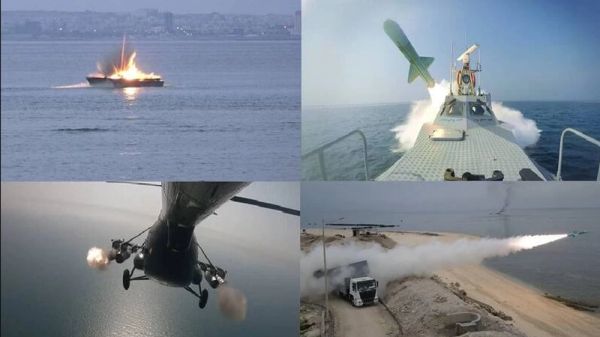
The Islamic Revolution Guards Corps (IRGC) Navy has kicked off a large-scale exercise in the Persian Gulf, showing advanced defensive and offensive capabilities enhanced by artificial intelligence.
The IRGC Navy began the exercise on Thursday, emphasizing enhanced intelligence readiness and demonstrating the unwavering spirit and resistance of its sailors to confront any threat.
During the exercise, naval units conveyed their firm message by issuing warnings to American ships present in the region.
Advanced air defense systems including Nawab, Majid, and Misagh were also deployed in electronic warfare conditions. Using artificial intelligence, these systems were able to identify flying and naval targets in a fraction of the time and hit them with high accuracy.
The exercise, codenamed Shahid Mohammad Nazeri, takes place across the Persian Gulf, the Nazeat maritime zone – Abu Musa, Greater Tunb, Lesser Tunb, and Siri islands, the Strait of Hormuz, as well as the Sea of Oman.
Nazeri was the commander of the elite commando units of the IRGC Navy. He is widely recognized in Iran for his direct involvement in the capture of 10 American sailors – nine men and one woman – who wandered into Iran’s territorial waters on January 12, 2016.
The drill conveys a dual message: peace and friendship to neighboring countries, and a clear warning to enemies that any miscalculation will face a decisive response.
Iranian and American naval forces have had a long history of encounters in the Persian Gulf, the Sea of Oman, and the Strait of Hormuz since the 1980s.
The Iranian Navy frequently conducts large-scale drills in the Persian Gulf and the Sea of Oman, demonstrating its capabilities and signaling deterrence against foreign powers.
Chief Commander of Iran’s Army Major General Amir Hatami, during a meeting with members of the Parliament’s Planning, Budget and Accounting Commission on Thurday, reiterated that Iran has “not wasted a moment” in enhancing its defense capabilities.
Hatami underlined that protecting the Islamic system is inseparable from safeguarding Iran’s independence and territorial integrity, declaring that “the least harm to the Islamic system is harm to the independence and territorial integrity of our beloved country, Iran."
Addressing long-standing tensions with the United States and Israel, Hatami said hostility from global arrogance has persisted since the victory of the Islamic Revolution and has grown in scope and intensity over time.
He referred to the recent 12-day war in June, stating that Iran was engaged in negotiations with the United States when it was suddenly attacked by Israel with US support.
On June 13, Israel launched an unprovoked war against Iran, assassinating many high-ranking military commanders, nuclear scientists, and ordinary civilians.
More than a week later, the United States also entered the war by bombing three Iranian nuclear sites in a grave violation of the United Nations Charter, international law, and the Nuclear Non-Proliferation Treaty (NPT).
In response, the Iranian Armed Forces targeted strategic sites across the occupied territories as well as the al-Udeid air base in Qatar, the largest American military base in West Asia.
According to Hatami, the aggressors aimed to destroy Iran’s nuclear, missile, and defense capabilities and to assassinate key commanders as part of a broader effort to overthrow the Islamic Republic.
Hatami asserted that Iran “won the war” because its adversaries failed to achieve their objectives.
He said that Israel views Iran as an existential threat, adding, “Since the war, we have not wasted a single moment in strengthening our defense capabilities and enhancing our military readiness, and we have made becoming stronger our top priority.”
Press TV’s website
Israeli settler attack cuts vital water supply to Palestinian communities in occupied West Bank
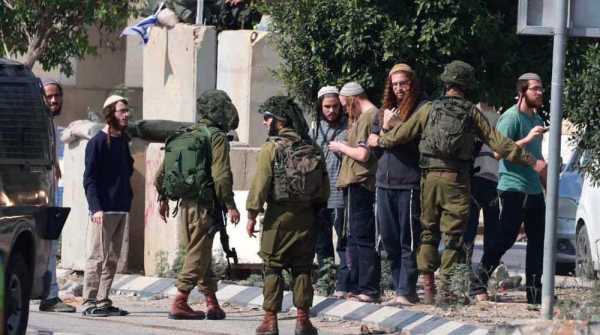
Palestinian communities east of the city of Ramallah in the occupied West Bank have been left without water after violent Israeli settlers targeted a key water facility.
The Sunday assault on Water Well No. 6 in the Ein Samia area, near the village of Kafr Malik, brought pumping operations to a complete halt, depriving dozens of towns of a crucial daily resource.
The water authority in the holy occupied city of al-Quds confirmed that the well, one of the region’s most important groundwater resources, supplies up to 12,000 cubic meters of water daily, roughly 17 percent of the total output of the al-Quds District’s water utility.
The repeated attacks on Ein Samia, including the destruction of surveillance equipment and tampering with critical infrastructure, have raised serious concerns about deliberate efforts to undermine Palestinian water security.
The Israeli regime and its settlers have markedly scaled up their brutal attacks on Palestinians in the West Bank since October 2023, when the regime began a war of genocide on the Gaza Strip.
Since the start of the genocide, the regime's forces have killed 1,086 Palestinians throughout the occupied territory, including 223 children, and wounded more than 10,662 others, while over 20,500 have been detained.
As of the beginning of November, 9,204 Palestinians were held in Israeli prisons, including 3,368 without charge.
At least 98 Palestinians have lost their lives in Israeli custody since the start of the Gaza war.
Addressing the issue of the settler violence on Saturday, Gaza’s Hamas resistance movement vehemently denounced the ongoing attacks, describing them as a calculated escalation and a deliberate strategy by the Israeli authorities to intimidate and forcibly displace Palestinian communities.
Senior Hamas official Mahmoud Mardawi stated that the daily assaults, theft of property, and unrestrained actions of settler groups across the West Bank, coupled with the Israeli army’s sustained offensives in the territory’s northern areas, exposed the depth of “terrorism” being executed under the explicit political guidance of the regime’s extremist administration.
Press TV’s website
Palestinian man killed in latest Israeli drone strike on Gaza in breach of ceasefire
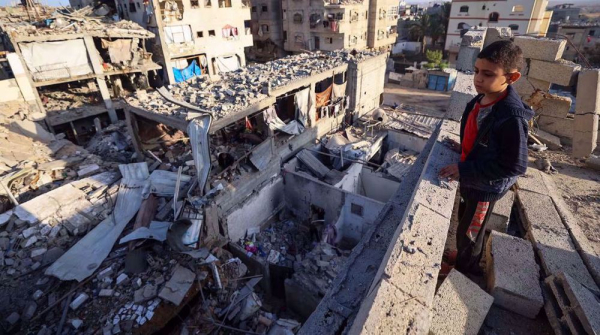
A Palestinian man has been killed in an Israeli drone strike near the so-called yellow zone in Gaza City’s Zeitoun neighborhood, in breach of the ceasefire agreement between the Palestinian resistance movement Hamas and the occupying regime.
Medical sources in Gaza reported that the young man, Muhammad Nasr Siam, was killed by gunfire from an Israeli drone east of the Zeitoun neighborhood, southeast of Gaza City, on Monday.
The so-called yellow line in Gaza demarcates the area where Israeli forces are permitted to stay as per the ceasefire agreement. This operational boundary, set by the Israeli military, has become a restricted movement zone since the US-brokered ceasefire took effect last month.
Israeli artillery also targeted the eastern part of the Maghazi refugee camp in the central Gaza Strip.
Iran warns about regional implications of Israeli incursions into Syria
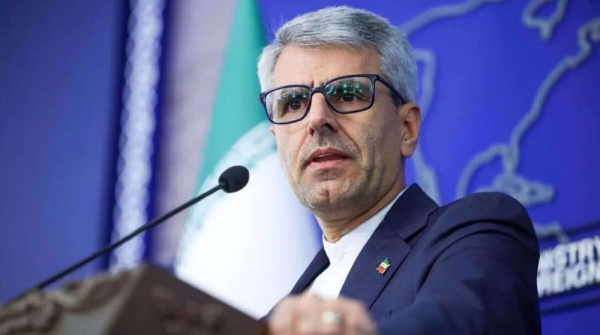
Iran’s Foreign Ministry spokesman cautions about the implications of the Israeli regime’s rampant incursions into Syria and Tel Aviv’s territorial ambitions in the Arab country for the broader West Asia region’s security.
Esmaeil Baghaei was speaking at a press conference on Monday, identifying the issue as a “shared regional concern,” and underlining the importance of stability as a region-wide imperative.
The official explained that Syrian security was inseparable from that of the wider West Asian stability, singling out the continued Israeli “acts of aggression” and the recent appearance of senior Israeli officials inside Syria’s occupied parts.
“One of the key, shared anxieties among regional nations is the continuation of attacks by the Zionist regime against Syria,” Baghaei said, adding that Tel Aviv had pushed deeper into the country “over recent weeks.”
Baghaei underscored that “the issues in the region are all interconnected,” naming “tragic [Israeli-manufactured] crises” in the Gaza Strip and Lebanon as cases in point.
Last year, the regime backed up increasingly ferocious onslaughts throughout Syria by the so-called Hay'at Tahrir al-Sham (HTS) Takfiri terrorist group with airstrikes targeting the country’s civilian and defensive infrastructure. The HTS-led militants topped the government of President Bashar al-Assad as a result.
Various reports have shown that, during the escalation, the regime conducted more than 1,000 airstrikes on the Syrian territory and over 400 ground raids into the south.
Following the collapse of the Assad government, Tel Aviv also widened its grip over the occupied Golan Heights by taking control of a demilitarized buffer zone, in defiance of a 1974 Disengagement Agreement. Earlier this month, senior Israeli officials, including Prime Minister Benjamin Netanyahu, visited the buffer zone, prompting expressions of alarm on the part of the United Nations.
All Wives of the Prophet(pbuh)
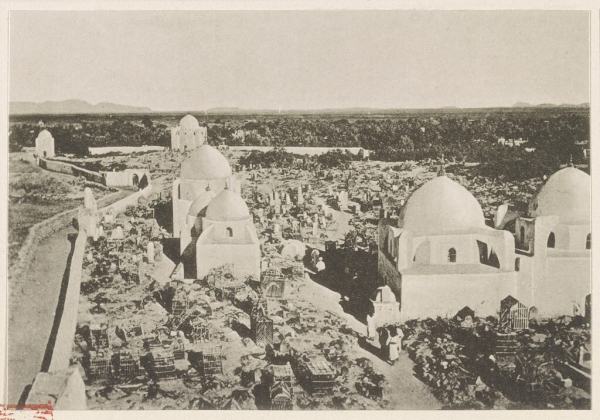
According to reliable historical sources and Islamic tradition, the women who remained married to the Prophet Muhammad (peace be upon him) until the end of his life and are recognized as the Mothers of the Believers were:
Khadijah bint Khuwaylid
She was the first wife of the Prophet and the only woman he was married to until her death. She passed away before the Prophet, so she was not with him during the final years of his life.
The women who were alive until the end of the Prophet's life and remained his wives are:
Sawda bint Zam'a
Aisha bint Abi Bakr
Hafsa bint Umar
Umm Salama
Zaynab bint Jahsh
Juwayriya bint al-Harith
Umm Habiba
Safiyya bint Huyayy
Maimuna bint al-Harith
A Moral Guideline for Youth in Facing the Enemies of Islam
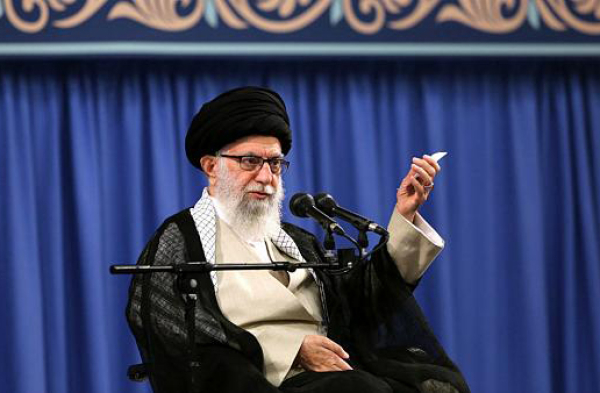
Moral Advice for the Youth
Young people should preserve their faith and clarity of vision. In the face of pressure, propaganda and the hostility of both internal and external enemies, they must hold firmly to their religious and revolutionary identity. As emphasized repeatedly by the Leader, steadfastness rooted in belief and understanding is the path that ultimately leads to success.
Youth must recognize that the enemy relies on creating division, despair and attacks on cultural and religious identity. Therefore, unity, awareness and sincere effort form the strongest barrier against their plans. Cooperation and solidarity among the people, officials and institutions are essential for overcoming challenges.
The responsibility of young people is not limited to resistance in difficult situations. Knowledge, research, ethical behavior and piety are powerful tools. Centers of learning and religious education must take the lead, and young people should contribute actively to clarifying truths and strengthening the intellectual foundations of society.
At the same time, they should remain patient, hopeful and committed to the long-term path they have chosen. Even when adversaries intensify their pressure, history has shown that perseverance in the pursuit of truth leads to eventual victory.
Summary
For any young person who values their religious and cultural identity, the best course is to protect their faith and insight, work consistently toward knowledge and moral integrity, maintain unity with fellow believers and face challenges with patience and hope. This strengthens not only the present generation but also secures the future for those who follow.
Three Possible Futures for Sudan
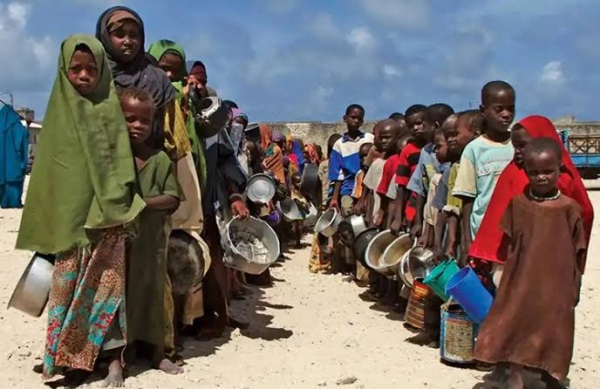
Scenario 1 – Optimistic: A Sustainable Ceasefire and Gradual Reconstruction
Likelihood: Low but possible
In this scenario, international and regional pressure pushes the Sudanese Armed Forces and the Rapid Support Forces toward a practical agreement to stop the fighting. A monitored ceasefire is established, creating space for political dialogue. Humanitarian aid gains easier access to conflict zones, and key regions such as Khartoum and Darfur begin to regain relative stability.
The outcomes include a reduction in displacement, the beginning of reconstruction projects, and the formation of a transitional government. Achieving this scenario depends on sustained external pressure, war fatigue among both parties, and global concern over Sudan’s humanitarian crisis.
---
Scenario 2 – Moderate (Realistic): Temporary Lulls in Fighting and a Fragmented State
Likelihood: Moderate and the most probable scenario
In this scenario, the war does not fully end, but the conflict moves through alternating phases of escalation and relative calm. Sudan effectively becomes divided into zones of influence: some controlled by the army, some by the Rapid Support Forces, and others by local or tribal groups. The central government remains weak and fragmented.
The consequences include a prolonged humanitarian crisis, expansion of the informal economy, and reduced national cohesion. This situation resembles the recent experience of Libya. This scenario is most likely because neither side is capable of a decisive victory and because external interests maintain a balance of weakness.
---
Scenario 3 – Pessimistic: Structural Collapse and a Path Toward Fragmentation
Likelihood: Moderate to high if the war continues
In this scenario, the conflict intensifies further, and regions such as Darfur and Kordofan may move toward practical self-rule. Local armed groups grow stronger, and the central state effectively collapses.
The results may include the emergence of de facto semi-state regions, a deeper humanitarian catastrophe, increased displacement, and greater regional instability. Factors such as continued foreign support for the warring parties, the breakdown of essential services, and the absence of acceptable political leadership contribute to the likelihood of this scenario.
---
Conclusion
The optimistic scenario envisions a ceasefire and gradual reconstruction, though its chances are limited. The moderate scenario — the most realistic — anticipates a fragmented Sudan with ongoing instability. The pessimistic scenario, whose likelihood is increasing, points to the structural collapse of the state and potential fragmentation.
Sudan in the Fire of Power: How the Struggle Over Gold and the Military Pushed the Country to the Brink
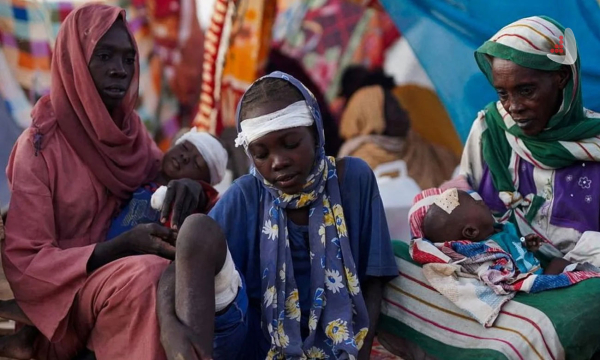
Since the Sudanese Armed Forces and the Rapid Support Forces entered a fierce confrontation in April 2023, the country has effectively transformed into a prolonged battlefield marked by structural collapse — a war that now targets ordinary civilians more than ever. What initially appeared to be a manageable crisis has evolved into a full-scale nightmare for the people of Sudan.
The first major mistake was the failed attempt to integrate the Rapid Support Forces into the official army — a plan meant to unify the security structure but one that ultimately deepened the divide between the two sides. This incomplete process allowed the RSF to grow into an independent and powerful entity pursuing its own political and economic interests.
The second critical error was neglecting the country’s long-standing structural tensions — conflicts rooted in competition over natural resources, deep economic inequality, and rivalries among political elites. The rush to control gold mines, farmland, and other essential assets escalated mistrust and hostility to a point where any spark could ignite a war — and eventually did.
The results of these failures are evident in the collapse of Sudan’s essential institutions: millions displaced, a devastated healthcare system, widespread disease, severe hunger, and a complete halt in educational activities. Today, Sudan’s economy, infrastructure, and governance are in the weakest condition seen in its modern history.
At present, no clear path toward peace or recovery is visible. The absence of a unified national strategy for rebuilding security and economic stability — combined with the involvement of regional actors and armed groups — has made resolving the crisis even more complex. Sudan’s current catastrophe is not merely the product of a civil war but the outcome of a chain of structural flaws, mismanagement, and relentless competition for power and wealth.