zarezadeh
Iran condemns deadly US attacks on Yemen as ‘war crime’, blasts international silence
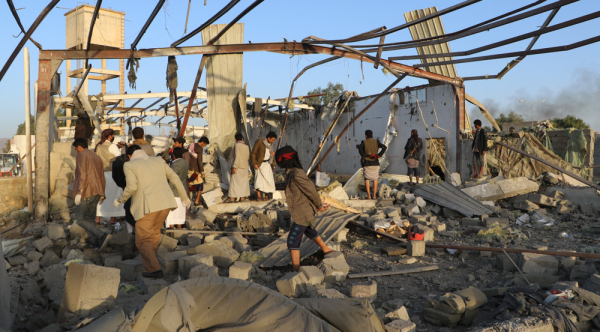
Iranian Foreign Ministry spokesman Esmaeil Baghaei has strongly condemned deadly strikes by the United States on areas in Yemen, including a detention center designated for African migrants.
Nearly 70 inmates were killed and more than 50 others wounded, most of them critically, in an US airstrike that targeted one of the detention centers designated for African migrants in Sa’ada province on Monday.
In a statement on Monday, Baghaei said the continued US military attacks on civilian targets, key infrastructures and homes of people in various parts of Yemen, which have killed hundreds of innocent people, are amount to a “war crime”.
He lashed out at the United Nations and human rights bodies for remaining silent and indifferent to the US attacks in clear breach of law and repeated violation of Yemen’s national sovereignty and territorial integrity.
Birthday of Hazrat Masoumeh (S.A) (Girls Day)
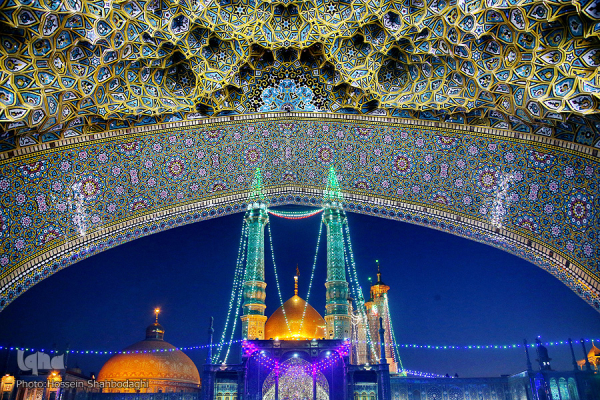
Hazrat Fatima Masoumeh (S.A) the Blessed and the Gracious Divine Lady from the Holy Ahlul Bayt (A.S.) was born in the holy city of Medina on the First Day of the month of Dhu al-Qa’dah 173 A.H. Hazrat Fatima Masoumeh (S.A) was the most learned scholar and very pious lady and was greatly revered by the Holy Imams (A.S). She was buried in the holy city of Qum (Iran) and her holy shrine is every year visited by millions of the lovers of Holy Ahlul Bayt (A.S).
Happy auspicious birthday of Hazrat Masoumeh(PBUH) and Happy Girl’s Day to all Muslim girls especially Monji international students.
Teachings of Imam Sadiq(pbuh)

The versatile genius of Imam Ja'far As-Sadiq in all branches of knowledge was acclaimed throughout the Islamic world, which attracted students from far-off places towards him till the strength of his disciples had reached four thousand. The scholars and experts in Divine Law have quoted many traditions from Imam Ja'far As-Sadiq. His disciples compiled hundreds of books on various branches of science and arts. Other than Fiqh (Islamic jurisprudence), Hadith (tradition), Tafsir (exegesis of the Holy Qur'an), etc., the Holy Imam also imparted mathematics and chemistry to some of his disciples. Jabir ibn Hayyan, a famous scholar of Chemistry and Mathematics, was one of the Imam's disciples who benefited from the Imam's knowledge and guidance and was able to write four hundred books on different subjects.
It is an undeniable historical truth that all the great scholars of Islam were indebted for their learning to the very presence of the AhluI-Bayt who were the fountain of knowledge and learning for all. Ash-Shibli one of Sunni outstanding scholars writes in his book Siratu'n- Nu'man: "Abu Hanifah remained for a considerable period in the attendance of Imam Ja'far As-Sadiq, acquiring from him a great deal of precious research on Fiqh and Hadith. Both the sects -Shi'a and Sunni- believe that the source of Abu Hanifah's knowledge was mostly derived from his association with Imam Ja'far As-Sadiq." The Imam devoted his whole life to the cause of religious preaching and propagation of the teachings of the Holy Prophet and never strove for power. Because of his great knowledge and fine teaching, the people gathered around him, giving devotion and respect that was his due. This excited the envy of the 'Abbasid ruler al-Mansur Ad-Dawaniqi who fearing the popularity of the Imam, decided to do away with him.
The number of traditions preserved from the Fifth and Sixth Imams is more than all the hadith that have been recorded from the Prophet and the other ten Imams combined.
But toward the end of his life the Imam As-Sadiq was subjected to severe restrictions placed upon him by the Abbasid caliph Al-Mansur, who ordered such torture and merciless killing of many of the descendants of the Prophet who were Shia that his actions even surpassed the cruelty and heedlessness of the Umayyad. At his order they were arrested in groups, some thrown into deep and dark prisons and tortured until they died, while others were beheaded or buried alive or placed at the base of or between walls of buildings, and walls were constructed over them. Hisham, the Umayyad caliph, had ordered the Sixth Imam to be arrested and brought to Damascus.
Later, the Imam was arrested by As-Saffah, the Abbasid caliph, and brought to Iraq. Finally, Al-Mansur had him arrested again and brought to Samarrah where he had the Imam kept under supervision, was in every way harsh and discourteous to him, and several times thought of killing him. Eventually the Imam was allowed to return to Medina where he spent the rest of his life in hiding, until he was poisoned and martyred through the intrigue of Al-Mansur. Upon hearing the news of the Imam's martyrdom, Al-Mansur wrote to the governor of Medina instructing him to go to the house of the Imam on the pretext of expressing his condolences to the family, to ask for the Imam's will and testament and read it. Whoever was chosen by the Imam as his inheritor and successor should be beheaded on the spot. Of course, the aim of Al-Mansur was to put an end to the whole question of the Imamate and to Shia aspirations. When the governor of Medina, following orders, read the last will and testament, he saw that the Imam had chosen five people rather than one to administer his last will and testament: the caliph him- self, the governor of Medina, 'Abdullah Aftah, Abdullah the Imam's older son, and Musa Al-Kadhim, his younger son and Hamidah Musa Al-Kadhims Mother. In this way the plot of al-Mansur failed.
Imam Ja'far As-Sadiq(pbuh)
Imam Sadiq University
Imam Sadiq UniversityHomeHome top tabs
Imam Sadiq(A.S)Who Is Imam Sadiq(A.S)
| Post date: 2019/08/31 |
The holy Imam Ja'far As-Sadiq was the sixth Imam in the succession of the twelve Apostolic Imams. His epithet was Abu 'Abdillah and his famous titles were As-Sadiq, Al-Fadil and At-Tahir. He was the son of Imam Muhammad Al-Baqir, the Fifth Imam, and his mother was the daughter of Al-Qasim ibn Muhammad ibn Abi Bakr.
Imam Ja'far As-Sadiq saw his grand-father, Imam Zaynu 'I-'Abidm in Medina for twelve years and then remained under the sacred patronage of his father Imam Muhammad al-Baqir for a period of nineteen years.
Imam’s Knowledge and his Sciences
Imam Jaffer Sadiq(a.s.) stood out among their group for his great merit (fadl); he was the most celebrated, the greatest in rank and the most illustrious of them in the eyes of both the non-Shia (al-amma) and the Shi’a (al-khassa). The people transmitted on his authority the religious sciences which travelers carried with them and thus his fame was spread throughout the lands. The learned scholars have transmitted on the authority of no other member of the House (ahl al-bayt) as much as they have transmitted on his authority. None of them met as many of the reporters of traditions as he did, nor did the latter transmit on their authority to the same extent as they transmitted on the authority of Abu Abd Allah Imam Jaffer Sadiq(a.s.). The specialists in tradition (ashab al- hadith) have gathered together the names of those who narrated on his authority, who were reliable despite differences in views and doctrines and they were four thousand men. The clear evidence for his Imamate was such that it overcame hearts and silenced the attempts of an opponent to denigrate it with doubts.
During the imamate of the sixth Imam greater possibilities and a more favorable climate existed for him to propagate religious teachings. This came about as a result of revolts in Islamic Lands, especially the uprising of the Muswaddah to overthrow the Umayyad caliphate, and the bloody wars which finally led to the fall and extinction of the Umayyads. The greater opportunities for Shi’ite teachings were also a result of the favorable ground the fifth Imam had prepared during the twenty years of his imamate through the propagation of the true teachings of Islam and the sciences of the Household of the Prophet.
The Imam took advantage of the occasion to propagate the religious sciences until the very end of his imamate, which was contemporary with the end of the Umayyad and beginning of the Abbasid caliphates. He instructed many scholars in different fields of the intellectual and transmitted sciences, such as Zorarah, Muhammad ibn Muslim, Mu’min Taq, Hisham ibn Hakam, Aban ibn Taghlib, Hisham ibn Salim, Hurayz, Hisham Kalbi Nassabah, and Jabir ibn Hayyan, the alchemist. Even some important Sunni scholars such as Sufyan Thawri, Abu Hanifah, the founder of the Hanafi school of law, Qadhi Sukuni, Qadhi Abu’l- Bakhtari, and others, had the honor of being his students. It is said that his classes and sessions of instruction produced four thousand scholars of hadith and other sciences. The number of traditions preserved from the fifth and sixth Imams is more than all the hadith, that have been recorded from the Prophet and the other ten Imams combined.
There are innumerable reports about him concerning signs and revealing the unknown similar to those which we have mentioned, which would take too long to recount.
He used to say: “Our knowledge is of what will be (ghabir), of what is past (mazbur), of what is marked in hearts (nakt fi al-qulub), and of what is tapped into ears (naqr fi al-asma). We have the red case (jafr), the white case, and the scroll of Fatima(s.a.) and we have (the document called) al-jami’a in which is everything the people need.”
He was asked to explain these words and he said: “Ghabir is knowledge of what will be; mazbur is knowledge of what was; what is marked in the hearts (nakt fi al-qulub) is inspiration; and what is tapped into the ears (naqr fi al- asma) are words of angels; we hear their speech but we do not see their forms. The red case (jafr) is a vessel in which are the weapons of the Apostle of God, may God bless him and his family. It will never leave us until the one (destined) among us members of the House, to arise (qa’im), arises. The white case (jafr) is a vessel in which are the Torah of Moses, the Gospels of Jesus, the Psalms of David and the (other) Books of God. The scroll of Fatima, peace be on her, has in it every event which will take place and the names of all the rulers until the (last) hour comes. (The document called) al-jami’a is a scroll seventy yards long which the Apostle of God, may God bless him and his family, dictated from his own mouth and Ali b. Abi Talib, peace be on him, wrote in his own handwriting. By God, in it is everything which people need until the end of time, including even the blood-wit for wounding, and whether a (full) flogging or half a flogging (is due).
He, peace be on him, used to say: “My traditions are my father’s traditions; my father’s traditions are my grandfather’s traditions; my grandfather’s traditions are the traditions of Ali b. Abi Talib, the Commander of the faithful; the traditions of Ali the Commander of the faithful are the traditions of the Apostle of God, may God bless him and his family; and the traditions of the Apostle of God, may God bless him and his family, are the word of God, the Mighty and High.
Source: Imam Sadiq University
Over 100 rabbis, cantors in Chicago area condemn Trump for crackdown on pro-Palestine campus protests
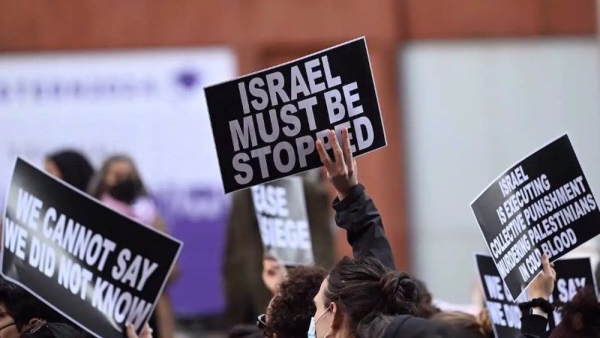
Students at New York University (NYU) continue their demonstration on campus in solidarity with the students at Columbia University and to oppose Israel’s attacks on Gaza, in New York, United States, on April 22, 2024. (Photo by Anadolu)
In an open letter, more than 100 rabbis and cantors in Chicago have condemned US President Donald Trump for his crackdown on pro-Palestine campus protests.
The signatories, from across the Chicago area, publicly expressed their strong dissent against the Trump administration’s recent move to cut funding and make arrests on US college campuses, Middle East Monitor reported on Wednesday, citing Israeli media.
The punitive measures, implemented since early March, are designed to curb protest rallies by students across the US held against Israel’s genocidal war in the besieged Gaza Strip and in solidarity with Palestinians suffering in the war-ravaged territory since October 2023.
In the open letter published as a full-page ad in the Chicago Tribune on Tuesday, the rabbis and cantors denounced the White House for exploiting concerns about antisemitism to justify broader attacks on civil liberties, including mass deportations and the erosion of civil rights.
The signatories, representing various Jewish denominations, stressed that such measures do not protect the Jewish community but rather endanger it by using their fears as a political tool.
“Many of these actions have been presented as in defense of the Jewish community. Yet in truth, Jewish fear is being used as a fig leaf for an anti-democratic agenda of mass deportations, civil rights rollbacks, and attacks on higher education,” the letter read.
The public letter comes amid a nationwide crackdown on university campuses, with institutions like Northwestern University experiencing funding freezes and numerous student protesters facing detention.
“As Jewish leaders, we reject the exploitation of our fears and experiences of antisemitism to justify the dismantling of those institutions. Such actions do not protect our community — they use us, and they put us in danger,” the signatories stressed.
The situation escalated when the Trump administration froze $2.2 billion in federal funding to Harvard University, demanding significant policy changes in response to what it labeled as antisemitism. Harvard, however, has refused to comply and has initiated legal action challenging the federal government’s decision.
This growing dissent among Jewish leaders highlights a significant divide within the community regarding the administration's approach to civil liberties.
Press TV’s website
Houthi: Bab al-Mandab, Arabian Sea closed to Israeli, US ships
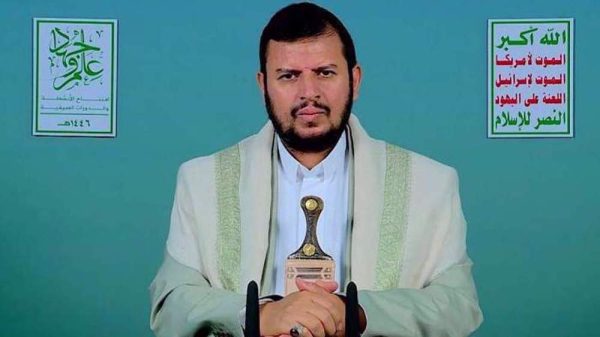
The leader of Yemen’s Ansarullah resistance movement says retaliatory operations carried out in solidarity with Gaza by Yemeni resistance have effectively halted the movement of Israeli and US vessels near Yemen’s waters.
“The Bab al-Mandab and the Arabian Sea are closed to Israeli and American ships. That’s a fact," Abdul-Malik al-Houthi said in a televised speech on Thursday night.
Yemenis, he said, targeted US vessels and naval carriers in nine operations over past week, adding both public demonstrations and military operations launched in response to the “US-Israeli genocide in Palestine” will continue.
Houthi also slammed Washington for escalating aggression against Yemen, stating that the US had launched 260 attacks on civilian infrastructure in Yemen in the past week.
“The US and the Israeli regime have realized that they have failed in their anti-Yemen campaign,” he said.
Houthi condemned Israel’s bombardment of the Gaza Strip, citing Israeli attacks on “hospitals, medical centers, and paramedics,” in Gaza, which he described as “barbaric crimes.”
Houthi also condemned Israel’s use of starvation and deprivation as a weapon of war against civilians in Gaza.
“Israeli regime prevents food and medical supplies from entering besieged Gaza Strip and impedes relief efforts in this area,” he said.
The ongoing Israeli blockade has left more than 3,500 children at risk of death due to hunger and malnutrition in the strip.
Addressing the Israeli military’s act of genocide in Gaza, al-Houthi said, “Occupation forces fear and avoid confrontations with resistance fighters in Gaza and they target defenseless civilians in the besieged Strip.
He criticized the killing of innocent civilians, displaced persons, and the destruction of medical facilities in the strip, stating that they are “not achievements,” and reiterated that Israeli forces remain “incapable of achieving so-called objectives” in their onslaughts.
The death toll from US-Israeli genocidal war on Gaza has risen to 51,266, with nearly 117,000 Palestinians reported injured as the Israeli assault on Gaza continues.
Houthi condemned the Israeli regime for aiming to forcibly displace Palestinians from Gaza and stated that in the occupied West Bank, settler “acts of terrorism” and aggression are intended to confiscate Palestinian homes and expand illegal settlements.
“Israeli regime seeks to destroy refugee camps in the occupied West Bank in line with its land grab policy,” al-Houthi stated, also slamming certain Arab governments and media outlets of enabling Tel Aviv’s genocidal campaign through their silence or alignment with Israeli interests.
Houthi also called for greater Palestinian unity in response to the crimes of the Israeli regime. “More Palestinians should come together and unite for the sake of Palestinian cause,” he urged.
Elsewhere in his speech, he criticized Israel’s repeated violations of a ceasefire agreement with Lebanon’s Hezbollah, which was reached last year.
“Israeli regime continues targeting villages in South Lebanon and continuously violating ceasefire and Lebanese sovereignty,” he said.
He called on the Lebanese government to apply “more pressure on Israeli regime to implement ceasefire agreement.”
Addressing Israeli acts of aggression in Syria, Houthi stated that Israeli violations of Syrian sovereignty are being carried out with US support as part of the “Zionist project” aimed at controlling Syrian territory and movement.
In closing, he condemned some Arab governments for criticizing Iran over its support for the Palestinian cause, suggesting such positions serve to deflect attention from Israeli aggression.
Press TV’s website
Fresh aggression: Nearly 30 Palestinians killed in fresh Israeli strikes on Gaza
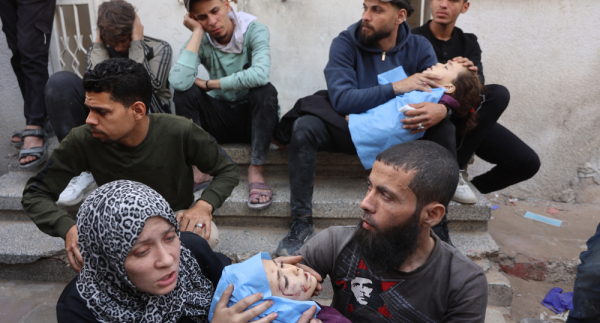
Israeli warplanes have conducted fresh aerial assaults across the Gaza Strip, killing at least 28 people, mostly women and children.
The Gaza Health Ministry said the deadly Israeli strikes took place on Thursday and targeted the cities of Jabalia and Khan Yunis, as well as areas in the central part of the besieged territory.
The ministry said at least nine people were killed in an air raid on a police station in Jabalia.
The Israeli military acknowledged the attack, claiming that it had targeted a command and control center for resistance groups.
Other Israeli strikes hit Khan Yunis, killing at least seven people, including a mother and her two children, and another two children, it added.
At least six people, including two women and two children, lost their lives in Israeli air raids on central Gaza while four children and their parents were killed in attacks on Gaza City.
Meanwhile, the ministry said a total of 50 Palestinians were killed and 152 others wounded in the past 24 hours in the Gaza Strip.
Israel launched a genocidal war on Gaza October 7, 2023, after the Hamas resistance group carried out its historic operation against the usurping entity in retaliation for its intensified atrocities against the Palestinian people.
After one year and a half of war, the Tel Aviv regime has failed to achieve its declared objectives in Gaza, despite killing at least 51,355 Palestinians and injuring 117,248 others.
The usurping entity accepted Hamas' longstanding negotiation terms under a Gaza ceasefire, which began on January 19.
However, Israel unilaterally abandoned the truce on March 2, cutting off humanitarian aid to the Gaza Strip. The regime also resumed its brutal bombing campaign and redeployed troops to the territory.
On Wednesday, the International Organization for Migration (IOM) said more than 90 percent of homes in Gaza have been destroyed or damaged during the Israeli onslaught.
"With nowhere safe to go, families shelter in unsafe ruins," it noted. "IOM has shelter aid ready—entry points must open NOW."
Press TV’s website
The Campaign to Disarm Hezbollah: A Peace Effort or the Agenda of the Powerful
Written by: Independent Analyst Syed Nawazish Raza, (Pakistani International Affairs Analyst from Pakistan)
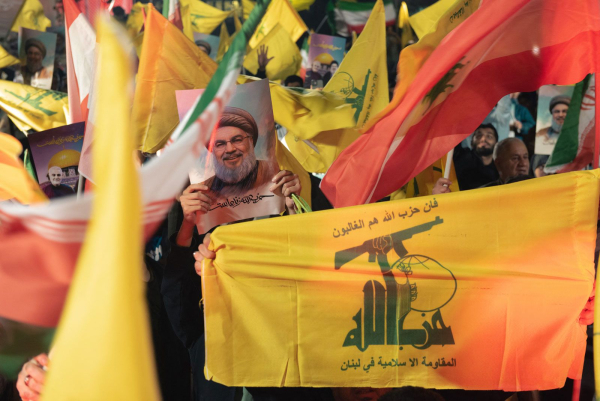
The year 2025 has become a turning point for Lebanon, Syria, and the entire Middle East. The fall of Bashar al-Assad's government in Syria, the rise of a Western-backed Julani regime, the assassination of Hezbollah leadership—particularly the martyrdom of Sayyed Hassan Nasrallah and the direct military presence of Israel on Lebanese soil have drastically altered the regional balance of power. In this scenario, the Lebanese government is under immense international pressure to disarm Hezbollah. Western powers and global media portray this demand as a pathway to peace in Lebanon. But the critical question is: Is this truly a peace effort or a forced political agenda?
Disarming Hezbollah: A Reality or a Deception?
The global narrative being promoted today is:
"For Lebanon’s sovereignty and regional peace, Hezbollah must be disarmed!"
But is that truly in Lebanon’s best interest?
The reality is:
This demand is a top priority for the United States and Israel—because Hezbollah remains the only force that successfully challenged Israel both militarily and politically, most notably during the 2006 war.
If Hezbollah is disarmed today, Lebanon will become a defenceless state, while nuclear-armed Israel continues to sit heavily fortified along its southern border.
Is this a fair balance of power? Or is it a systematic effort to further weaken the already weak?
The Syrian experience is fresh in the minds of the Lebanese.
Bashar al-Assad's government was toppled through armed rebellion supported by the U.S., Europe, Turkey, and Israel. And what followed? Israel dismantled Syria’s military infrastructure, descended from the Golan Heights, and continued advancing. Today, discussions of dividing Syria are underway. Its independence and sovereignty are effectively lost. Will Lebanon repeat that experience? Can the Lebanese afford to trust the U.S. and Israel?
Hezbollah’s Power and Its Role
It is true that Hezbollah holds power comparable to that of a state. But the question is:
Did Hezbollah misuse that power? Did it attempt to overthrow the Lebanese state? Did it use its weapons against the Lebanese people?
The answer is: No. Hezbollah has used its military capabilities solely to resist Israel.
When ISIS and extremist groups threatened the region, Hezbollah stepped forward to protect Lebanon’s borders—while most politicians simply issued statements.
Hezbollah is not an ordinary political party. It is a well-structured political and military entity. It has influence in key positions within Lebanon's army and state institutions. Its social service network, including hospitals, schools, and aid programs, is active not only in Shiite areas but also in Sunni and Christian regions.
Is Hezbollah Really Weak Now?
Some analysts claim Hezbollah is now weakened, due to:
The fall of Bashar al-Assad’s government, severing supply and logistical routes
The martyrdom of its top leaders, including Sayyed Hassan Nasrallah
Israeli strikes targeting weapons depots and command structures
But is this weakness permanent or temporary? Ground realities suggest Hezbollah remains organized, armed, and ideologically committed to resistance.
What Happens if Hezbollah Is Disarmed?
Will Israel withdraw its forces if Hezbollah lays down its weapons?
No. In fact, it will advance further. That has always been its policy: “When the threat is gone, expand the control.”
Can the Lebanese army stand up to Israel?
The honest answer: No. It is weak and plagued by sectarian divisions.
Can Lebanon rely on the U.S., France, or the United Nations for protection?
History teaches us that these powers stand with the strong—not with the weak.
Is Hezbollah Above Criticism?
Absolutely not. No human institution—religious or military—is above accountability.
But what should the criteria for criticism be?
If Hezbollah were corrupt, oppressive to its people, or used arms for personal gain, it would deserve criticism.
But if a movement has:
Fought solely against an external enemy
Built social systems to support the poor
Sacrificed lives in defense of the homeland
Then calling for its elimination is not wisdom—it is national suicide.
Conclusion: A Fair Question
If disarming Hezbollah were truly for the sake of Lebanon’s independence and peace, everyone would welcome it.
But when the demand comes from the enemy, is enforced by pressure, and seeks to dismantle the last line of resistance—then we must ask:
Do we want a Lebanon that is dignified, free, and resistant?
Or a Lebanon that is weak, submissive, and left to Israel’s mercy?
The Killing of Aid Workers in Gaza: Sky News Report, Israel’s Narrative, and the Test of International Law
Written and Analyzed by: Syed Nawazish Raza
Introductory Context: Background and Purpose of this Article
This article is based on a comprehensive investigative report published by Sky News on 16 April 2025, detailing the Israeli airstrike that led to the deaths of fifteen aid workers in Gaza. Using satellite imagery, video footage, audio analysis, and eyewitness testimonies, the report presents a factual reconstruction of the event that contradicts both the initial and revised statements issued by Israeli authorities.
This article draws on the findings to explore the incident through the framework of international law, humanitarian ethics, and moral responsibility aiming to foster a serious and impartial discourse.
Background: Israel’s Justification and the Contested Strike
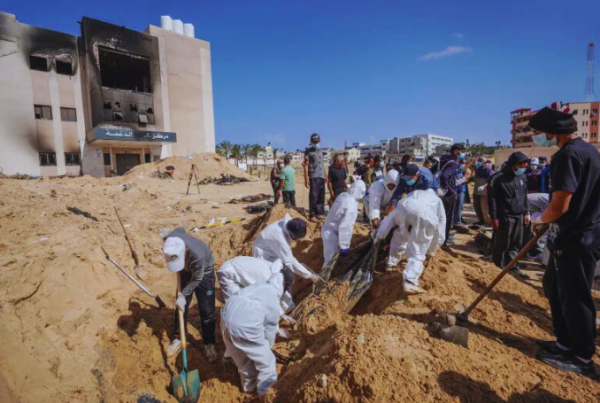
On 30 March 2025, a mass grave was discovered in Gaza containing the bodies of fifteen aid workers. Israel denied responsibility, claiming that the targeted vehicles were believed to be carrying Hamas militants—and later insisted that the suspicion was validated.
However, the convoy was affiliated with internationally recognized humanitarian organizations and was clearly engaged in delivering aid at the time of the strike.
Sky News Investigation: Discrediting the Israeli Narrative Through Evidence
Sky News’ investigation included satellite imagery, verified videos, audio recordings, and interviews with eyewitnesses. These pieces of evidence contradict several central claims of the Israeli military:
No indication was found that the convoy posed a threat or included armed individuals.
Communication logs confirmed that the route was coordinated and pre-approved by humanitarian organizations.
The recovered video footage displays fear, confusion, and medical efforts by unarmed paramedics—not militant activity.
(Source: Sky News Investigative Report, 16 April 2025)
Rifaat Radwan and the Final Video: A Glimpse into Faltering Humanity
Among the victims was 24-year-old paramedic Rifaat Radwan, whose mobile phone was recovered from the mass grave. It contained two videos totaling 19 minutes, documenting the final moments of the convoy team. The footage shows Rifaat and others providing medical aid under fire.
These recordings expose the raw human cost of the attack and starkly refute Israel’s justification.
International Response: Cautious Condemnation and Criminal Silence?
The United Nations, Amnesty International, and Human Rights Watch all issued serious concerns about the attack. Amnesty International stated:
“The deliberate targeting of aid workers is a clear violation of international humanitarian law and may constitute a war crime.”
Human Rights Watch called for an independent international inquiry. Yet many Western governments issued muted or no responses, a silence described by human rights observers as “morally criminal negligence.”
Legal Perspective: Accountability Under International Law
According to the Geneva Conventions and its Additional Protocols, humanitarian workers enjoy protection in conflict zones. Deliberate attacks against them—especially when their routes are pre-approved and they are unarmed—may qualify as war crimes under international law.
(Reference: Geneva Conventions, Protocol I, Articles 48–51)
A Voice of Conscience: Open Letter Published in the Financial Times
In April 2025, 36 international Jewish figures, all affiliated with the UK’s largest Jewish organization—the Board of Deputies of British Jews—published a powerful open letter in the Financial Times, strongly condemning Israel’s actions in Gaza.
The letter read:
Since the resumption of war following a ceasefire agreement, hundreds more Palestinians have been killed; food, fuel, and medical supplies have once again been cut off in Gaza; and we are once again witnessing a brutal war, where the killing of 15 paramedics and their burial in a mass grave is not only possible but at risk of becoming normalized.”
These events are deeply painful and shocking, but we know in our hearts that we cannot close our eyes or remain silent in the face of this new human and material loss.
The soul of Israel is being torn apart. As members of the Board of Deputies of British Jews, we are fearful for the future of the Israel we love and to which we are closely connected.”
Silence will be interpreted as support for policies and actions that contradict our Jewish values.”
(Source: Financial Times, April 2025)
The Human Cost: Fatalities Among Aid Workers
According to the United Nations Office for the Coordination of Humanitarian Affairs (OCHA), from October 2023 to April 2025:
More than 400 aid workers have been killed in Gaza
Of them, over 160 were paramedics, including doctors, nurses, ambulance drivers, and field medics
In March 2025 alone, 22 paramedics were killed in Israeli airstrikes
(Source: UN OCHA Casualty Report, April 2025)
Conclusion: Justice, Accountability, and the Cost of Silence
The killing of aid workers in Gaza is not just a military incident—it is a test of the global conscience. The Sky News investigation, the footage from Rifaat Radwan’s phone, and the open letter by 36 Jewish members of the Board of Deputies together demand:
Independent international investigation
Accountability for Israeli political and military leadership
Global guarantees for the protection of humanitarian workers
This is no time for silence—it is a time for principled action, so that those who serve humanity are never punished for their compassion.
Iran's Potential Nuclear Program: Progress, Regional and International Implications, and the Context of Iran-U.S. Nuclear Talks in Muscat
By: Syed Nawazish Raza from Pakistan
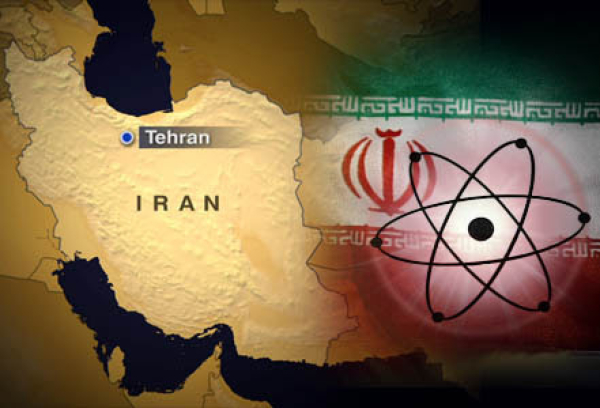
Iran’s nuclear program has remained at the center of global attention for the past two decades.
According to the IAEA report (March 3, 2025), Iran’s stockpile of enriched
uranium increased up to 60% from 182 kg to 275 kg in the last three months (a quarterly increase of 93 kg, averaging 31 kg per month). The IAEA states
that Iran is the only non-nuclear weapon state enriching uranium to this level. close to the 90% enrichment threshold required for nuclear weapons.
If this pace continues, Iran could possess enough material to build multiple nuclear weapons by the end of 2025.
The United States, Israel, and European countries are fully aware that Iran has the technical capability to build nuclear weapons but avoid acknowledging this publicly. This article reviews the current status of Iran’s nuclear program,
its regional and global consequences, and the possible outcomes of Iran-U.S.
talks in Muscat.
The Joint Comprehensive Plan of Action (JCPOA), signed on July 14, 2015, was
an international agreement between Iran and major world powers (China,
Russia, France, Germany, the UK, the U.S., and the EU). However, in May 2018,
the U.S. (under the Trump administration) unilaterally withdrew from the
deal, refused to uphold its terms, and imposed further sanctions on Iran.
Efforts to revive the JCPOA during President Biden's term (2021–2022) failed,
and from 2023 to 2025, negotiations have effectively stalled.
Since 2015, Iran has limited the International Atomic Energy Agency's (IAEA)
access to its nuclear program, arguing that the agency could serve U.S. and
Israeli interests.
Key incidents support Iran’s concerns:
- In 2010, the Stuxnet virus targeted Iranian centrifuges.
- In 2018, Israeli PM Netanyahu leaked secret documents from Iran’s nuclear
archives.
- In 2020, top nuclear scientist Mohsen Fakhrizadeh was assassinated.
- Media leaks of sensitive nuclear sites and timely Israeli media revelations
following IAEA inspections suggest potential intelligence activity within
inspection teams.
The U.S., Europe, and Israel recognize that:
“If no new agreement is reached between Iran and the U.S., Iran will rapidly
advance its nuclear program.”
Major Iranian Nuclear Facilities:
1. Natanz: Iran's largest underground uranium enrichment center with
advanced IR-6 centrifuges.
2. Fordow: Built into a mountain, capable of 20% and 60% uranium
enrichment considered naturally secure.
3. Arak: A heavy-water reactor with plutonium production capability.
4. Esfahan: Key center for uranium conversion and nuclear research.
5. Bushehr:A civilian 1,000 MW nuclear power plant built with Russian
support.
6. Shiraz: Underground center for medical research and radio-
pharmaceuticals.
7. Karaj: A facility for nuclear fuel research and training scientists.
8. Lashkarabad: A secret site inaccessible to IAEA.
9. Chabahar: Under-construction nuclear project near Pakistan, with Chinese
collaboration.
10. Yazd: Facility for managing nuclear waste and radioactive material
recycling.
Despite possessing the technical ability to build nuclear weapons, Iran has not
shown decisive political will to do so. The primary reason is a fatwa (religious
decree) by Supreme Leader Ayatollah Ali Khamenei, explicitly declaring the
production, stockpiling, and use of nuclear weapons as forbidden (haram).
This decree has become the cornerstone of Iran’s nuclear policy.
However, this does not eliminate the possibility that under extreme military
pressure or provocation from Israel or the U.S., Iran might be compelled to
shift course.
Why Hasn’t Iran Conducted a Nuclear Test Despite its Capabilities?
Iran consistently claims its nuclear program is for peaceful and civilian
purposes. Still, it could adopt a "nuclear ambiguity" policy—implying nuclear
capability without overt declaration.
Iran's strategy is based on a cautious balance: reaching the nuclear threshold
without crossing it, to reap strategic benefits without violating international
law.
This includes:
- 60%+ uranium enrichment
- Deployment of advanced centrifuges
Hypersonic missile tests
- Ambiguous political/military statements like: “We’re ready if needed.”
Through this, Iran strengthens its deterrence strategy and bargaining position
at the negotiation table.
On April 9, 2025, during National Nuclear Technology Day, Iran
showcased major developments at the Atomic Energy Organization of
Iran (AEOI) headquarters:
1. IR-9 centrifuge: 50 times more efficient than previous models.
2. New underground facility near Shiraz, designed with advanced
environmental and security features.
3. “Made in Iran” radiopharmaceuticals for cancer treatment; nuclear energy-
based polio vaccine production.
4. Bushehr-2 nuclear power plant progress, targeted for completion by 2030
with Russian support.
5. Thorium-based energy research a potential alternative to uranium.
6. Drought-resistant wheat varieties developed using nuclear radiation; use of
nanotechnology for enhanced industrial materials.
7. Nuclear-powered batteries for future satellite missions.
Message to the World Pre-Muscat Talks:
Iran conveyed a strong message: despite sanctions, it has achieved nuclear
and scientific self-reliance. While asserting peaceful intent, Iran made it clear
that it now has the capability to build nuclear weapons, and its program has
reached a point of no return.
Message to Israel:
“We are technologically close enough to build nuclear weapons—don’t make
the mistake of attacking.”
This serves as a strategic deterrent to prevent Israeli aggression.
Message to the U.S.:
If the U.S. refuses equal and respectful negotiations or fails to lift sanctions,
Iran will continue on its current path. Iran has surpassed the point where
reversing nuclear progress is feasible.
Possible Responses from Israel and the U.S.
Israel:
- Might target Iranian scientists, facilities, or supply chains.
*But:*
- The U.S. will likely avoid direct military conflict due to:
- Ongoing war in Ukraine
- Risk of Middle East escalation following Iranian retaliation
*Probable U.S. Responses:*
- Trump may issue aggressive statements to appease Israel but avoid military
action.
- The U.S. establishment (CIA, Pentagon) prefers a diplomatic solution.
Western intelligence agencies (CIA, MI6) closely monitor Iran’s nuclear
advancements:
- Iran has enriched uranium to 60%, with 90% capability.
- Advanced IR-6 and IR-9 centrifuges are operational.
- Research reactors and heavy-water technology show significant progress.
Thus, even if not acknowledged publicly, it’s widely accepted in Western
intelligence circles that Iran has crossed a critical nuclear threshold. Still, they
maintain pressure to avoid provoking Israel or legitimizing Iran’s stance.
What Does the U.S. Want from the Muscat Talks?
Will the U.S. seek a return to JCPOA through diplomacy or maintain pressure and covert actions to preserve its superpower status?
Diplomacy appears to be the only viable path forward. Economic sanctions haven’t curbed Iran’s progress, and military action could ignite a global conflict.
Iran has demonstrated enough military and nuclear power to convince the U.S. that it now sits across a more equal, confident counterpart at the negotiation table.
While Trump may continue his hardline rhetoric, he will have to show
flexibility internally because Iran is now speaking the language of technology, not pressure.
Conclusion:
During the Muscat nuclear talks, Iran held a strong position. The atmosphere was notably positive. Analysts suggest that Iran, backed by technology and
strategic maturity, has emerged as a new reality on the world stage.
Now, the question is: how will the world perceive and respond to this
new reality?