zarezadeh
Analysis of the Iran-US nuclear talks in Muscat, Oman on the first day
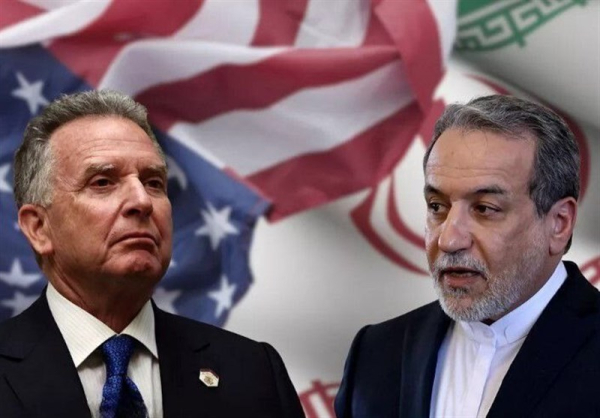
The Development of the Islamic Republic of Iran: A Self-Determined Model of Self-Sufficiency Despite All Sanctions — An Analysis and Commentary in the Context of the Muscat Talks
Author: Syed Nawazish Raza from Pakistan
Introduction:
This article has been written at a time when the first round of nuclear talks between Iran and the United States has concluded in Muscat, the capital of Oman, on April 12, 2025, and both parties have agreed to continue negotiations. Western media, particularly American and European broadcasting networks, are projecting that if Iran does not completely abandon its nuclear program in accordance with the wishes of the United States, stricter economic sanctions will be imposed, potentially bringing Iran's economy to the brink of collapse.
Contrary to such narratives, this article presents an analysis based on ground realities and evidence showing how Iran, despite enduring over four decades of continuous sanctions, has successfully progressed militarily, scientifically, industrially, economically, and socially, without succumbing to the immense pressure exerted by the United States and its allies.
This analysis critically examines the repeated propaganda claims made by Western media, such as the notion that Iran is economically crippled and socially degraded—depicted as a destitute nation. Furthermore, that Iran spends all its resources on terrorism and uses proxies as mercenaries. We shall analyze all such claims in light of historical facts and objective evidence.
1. Iran’s Resistance Economy and Internal Self-Sufficiency Model:
The core of Iran's economic policy lies with the Supreme Leader, Ayatollah Sayyid Ali Khamenei (may his shadow extend), whose single statement sends tremors through the ruling circles of the U.S. and Europe. Under his insightful leadership, the concept of the “Economy of Resistance” was introduced in 2011 as a revolutionary policy. The strategy aims to maintain national dignity and independence while enhancing domestic production, self-reliance in research, technological advancement, and improving standards for public necessities despite external pressure.
The Islamic Republic of Iran has achieved complete self-reliance in key sectors such as food, medicine, automotive, construction materials, energy, and air transport—meeting international standards. It not only fulfills domestic needs but also exports these products successfully to global markets.
“A country’s true development is determined by socio-economic indicators, not narratives fabricated by Western media networks.”
By 2023, Iran had achieved more than $120 billion in non-oil exports. According to the latest available data, Iran’s target for non-oil exports by 2025 is $75 billion annually, with a consistent upward trend, indicating strong economic resilience and self-reliance despite sanctions.
(Source: Iran Trade Promotion Organization)
Iran has begun domestic production of more than 100% of its required pharmaceuticals, including drugs for cancer, hepatitis, and other costly diseases.
(Source: Tehran Times, Health Ministry Iran)
2. Iran’s Nuclear Advancement: A Source of Power, Not Weakness
Iran has utilized nuclear technology on three fronts: as a defensive power, as diplomatic leverage, and for peaceful domestic development. On National Nuclear Day, celebrated on April 9, 2025, Iran unveiled over 100 new nuclear achievements, including IR-9 centrifuges, radiopharmaceuticals, nuclear diagnostic units, and applications of nuclear technology in agriculture. The IAEA’s 2023 annual report declared Iran’s peaceful nuclear technology technically effective and active, while WHO acknowledged Iran as a major producer of radiological tools for cancer treatment in the developing world. According to UNESCWA, Iran’s civilian nuclear advancements now serve as an economic model for the region.
(Sources: IRNA, Press TV, AEOI Iran)
By 2023, Iran had achieved over 60% enrichment capability of uranium—near the 90% weapons-grade level. As of 2025, monthly production of 60% enriched uranium has increased to 9 kilograms, up from 6kg post-June 2024.
(Source: IAEA Annual Reports)
Iran is producing advanced centrifuges such as IR-6, IR-8, and IR-9, based on indigenous designs. The Arak Heavy Water Reactor has also been successfully upgraded. These achievements have been made despite sanctions aimed at dismantling Iran’s nuclear program.
3. Defense and Military Self-Reliance
Iran’s Defense Achievements (as of 2025, internationally recognized):
1. Drones:
Shahed 136, Ababil, Fotros, and advanced Karrar drone (range: 1000+ km)
Verified by: Jane’s Defence Weekly (2024), IISS (International Institute for Strategic Studies)
2. Ballistic Missiles:
Fateh 110, Khorramshahr, Zelzal, and advanced Etemad missile (range: up to 1700 km)
Verified by: CSIS, Defense News (2025)
3. Air Defense:
Bavar-373 system (360-degree coverage, advanced tech)
Verified by: RUSI and Stratfor (2025)
International Reaction:
✔ NATO 2024: “Significant growth in Iran’s missile technology”
✔ Pentagon 2025: “Iran’s drones pose a regional challenge”
✔ UN Experts: Acknowledgment of Iran’s defense self-sufficiency (UNSC Report 2024)
Sources:
Jane’s Defence Weekly (2024) – Karrar drone capabilities
CSIS Missile Database – Etemad missile details
RUSI Tech Analysis – Bavar-373 performance
Mehr News (Bavar-373 testing)
Tasnim News (Etemad missile deployment)
Iran’s defense industry not only meets domestic needs but also exports arms to Russia, Venezuela, and some African nations.
(Source: SIPRI Arms Transfers Database)
4. War Against ISIS: Refuting Western Claims
Former U.S. President Obama stated in 2014 that defeating ISIS would take 20–30 years.
(Source: The Atlantic, 2014)
Under General Qassem Soleimani’s leadership, Iran defeated ISIS in Syria, Iraq, and Lebanon between 2014–2018. On November 21, 2017, General Soleimani declared ISIS's defeat in a historic letter to the Supreme Leader.
(Sources: Al-Monitor, Press TV, The Guardian, UN CTED Reports 2024)
This victory was due not just to military skill but strategic intelligence, local alliances, and the resilience of resistance forces—despite the West’s support for ISIS. It reflects Iran’s strong economic capacity.
5. Western Propaganda: False Claims of Mercenary Support
Western media often claims that Iran pays groups like Hezbollah, Hamas, Islamic Jihad, and others millions monthly. Ironically, such claims themselves prove Iran’s economic strength, as supporting such groups requires financial capability.
These groups are now independently confronting major powers like the U.S., Europe, and Israel on the battlefield—something impossible if Iran were truly economically devastated.
6. Iran’s Role in Reconstruction: Gaza and Lebanon as Examples
After the 2006 Israeli war on Lebanon, Iran restored basic infrastructure within months.
(Sources: BBC Arabic, Al Jazeera)
Iran still claims that if attacks on Gaza cease, it can rebuild the region within a few years—contrary to U.S. claims of 30–40 years.
(Source: Iranian Foreign Ministry Statements 2024)
7. The Iranian Nation’s Dignified Collective Identity
The Iranian people are known for pride, discipline, and economic independence. They prefer self-reliance over foreign aid or charity, shunning undignified jobs and striving for honorable employment.
They are seldom seen in desperate conditions abroad. Instead, they appear in professional, academic, or business contexts, reflecting a national temperament of pride and self-respect.
8. Presence of Foreign Laborers in Iran: A Sign of Economic Stability
Iran is now among countries that attract foreign workers. Individuals from Pakistan, India, Bangladesh, Afghanistan, etc., work in Iranian factories, construction projects, hotels, and service sectors.
Wages and working conditions in Iran are better and safer than in many South Asian countries—indicating Iran is now a destination for employment, not a nation of emigrants.
9. Iran: A Giving Hand, Not a Beggar
Iran is one of the few countries not indebted to global financial institutions like the IMF, World Bank, or Paris Club. It demands the release of its frozen assets in the U.S., UK, and Europe—assets that earn interest for Western countries while Iran is deprived under the guise of sanctions.
In contrast, Iran continues to aid oppressed nations like Palestine, Yemen, Lebanon, and African states—what the West calls “proxy support,” Iran calls humanitarian and Islamic duty.
A country that aids others despite being denied access to its own assets is not poor—but a symbol of generosity and sovereignty.
10. Social Development and Indicators:
● Literacy rate: 96%; Female university attendance: 65% (Source: UNESCO)
● Universal health coverage: Best-rated by WHO among developing nations
● 80%+ of the population has access to clean water, electricity, and education
11. Iran: A Self-Sufficient Model Despite Sanctions
Iran has presented a model based on the Economy of Resistance that showcases:
》Economic self-sufficiency
》Technological autonomy
》A dignified path of development despite external pressures
Today, Iran stands as:
A sovereign nation retaining its dignity despite Western sanctions
A stable regional power with political and economic resilience
12. Modern Iranian Cities and Urban Infrastructure
Cities like Tehran, Mashhad, Isfahan, and Shiraz compare with many developed cities in terms of urban planning and architecture. Modern metro systems, highways, airports, hospitals, and universities demonstrate Iran’s commitment to urban progress despite sanctions.
13. Education and Health: Among the Region’s Best
Iran’s education system outperforms many developing countries. Thousands of international students study in Iran. Its healthcare system is among the best in the developing world (per WHO) and is becoming a medical tourism hub.
Where once doctors came from abroad, now patients from abroad seek treatment in Iran.
14. Global Reach of Iranian Industry
Iranian products meet international standards—affordable yet often superior in quality to those of developed nations. Its motorcycles, cars, agricultural machinery, home appliances, and tiles are all present in international markets.
Development is not just GDP or dollars—but pride and institutional self-reliance.
Iran has shown the world that:
“True progress is not defined by the West—but is created from within by a nation’s own will.”
*Contradiction Between the Narrative of Sanctions as a Pressure Point and the Reality of Iranian Progres*
Western media is portraying these negotiations as the final pressure on Iran, implying that if it does not show flexibility towards American demands, it will be destroyed. But the reality is:
Iran endured even more sanctions after the U.S. withdrew from the JCPOA in 2018, yet it was not destroyed.
Europe and the U.S. merely make noise, because their real power lies in shaping minds through propaganda and media control. While they are well aware that they lack the ability to change ground realities.
Iran has shifted its economy from oil to non-oil sectors, and despite sanctions, not only became self-sufficient at a national level but also continued exports.
For over forty years, despite siege, sanctions, threats, and war conspiracies, Iran has remained a state of resilience and dignity. It has repeatedly challenged the military and diplomatic superiority of the U.S., Israel, and their allies.
The purpose of this article is to highlight that the clamour raised by Western media, claiming Iran is economically dying or will collapse, is merely a part of a psychological war. The true face of Iran is that of a dignified, resistant, developing state with a global strategy, and this image must be presented to the world.
The Islamic Republic of Iran stands as a successful example for all oppressed nations who seek true freedom. It is a shining proof that self-reliance can be sought only if: 》Leadership is sincere
》National dignity is not sold for a few dollars of interest-based loans
》There is a clear national vision
》And complete trust in the people
Then no global colonial or imperial power can enslave any nation.
With the wise guidance of Imam Khomeini (RA) and the blessings of the concept of Wilayat-e-Faqih (Guardianship of the Islamic Jurist), the Islamic Revolution introduced the Iranian nation to a new era of prosperity. It is practically based on true dignity, faith, unity, and steadfastness. It introduced a path of development that stands as a practical example of resistance against external pressures. This revolution proves that when a nation places firm trust in its cultural values, national resources, and internal capabilities, no power of global arrogance can stop it from achieving its great national objectives.
And it is this very concept of Wilayat-e-Faqih, under the farsighted leadership of the Supreme Leader Ayatollah Sayyid Ali Khamenei (may his shadow last), that now represents an Islamic system of resistance, a system that has made Iran stand strong, self-sufficient, and independent in the face of global colonial and hegemonic powers.
The Iranian people must always keep in mind that the system of Wilayat-e-Faqih is the solid foundation that guarantees:
✓ True progress and self-sufficiency without compromising national dignity, cultural identity, or Islamic values
✓ True freedom and independence
✓ Genuine Islamic democracy
✓ And the ability to stand firm against colonial and imperial forces
This is precisely why today’s modern imperialism fears this system because it has proven to be an unbreakable wall against their evil ambitions.
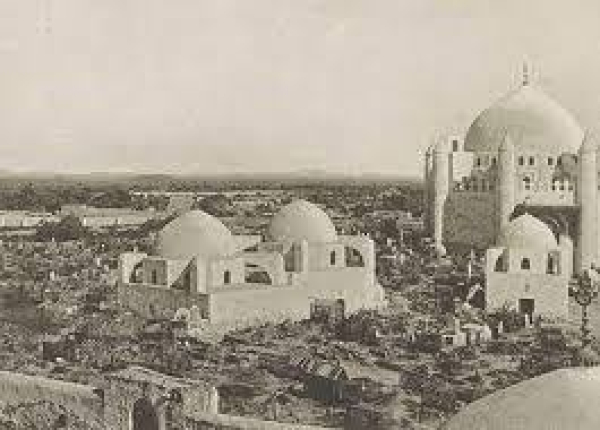
Is someone who dies aware of the material world?

When a person dies and settles in the world of Barzakh, due to leaving the limited world of matter, he may have higher abilities in terms of perception and performing certain tasks. He may have better and greater awareness of the realities of the world. However, this does not mean that the dead have absolute power to perceive; the truth of the matter is more related to the position and status that the person has in Barzakh; based on what has been stated in the narrations and sayings of the Infallibles, peace be upon them, the dead are generally aware of certain situations.
Many matters also reach them through intermediaries, meaning that by seeing some spiritual gifts that reach them, they become aware of good things for themselves; for this reason, it has been said that visiting the graves of the dead and remembering them well makes them happy. Doing any good deed, sending blessings, saying the remembrance of God, praying, fasting, performing any obligatory or recommended deed on their behalf and presenting its reward to the dead, causes openness in their affairs and status and elevates their status.
Muhammad ibn Muslim says: I asked Imam Sadiq (a.s.): Is there any benefit to the deceased in visiting their graves? He said: “Yes.” I asked: Do they see and recognize those who visit their graves? He said: “By God, yes! They see and recognize you. They are happy that you remembered them and visited them. They will become close to you and will be interested in you.”(2)
A person named Umar bin Buraid asked Imam Sadiq (a.s.): Is it possible to pray (or do any other good deed) on behalf of a deceased person and donate its reward? He said: “Yes. Sometimes a deceased person is in distress and torment because of his deeds. When a prayer – or any other good deed is performed on his behalf and its reward is donated to him, an opening is achieved in his work. It is said to that deceased person: This opening (and forgiveness) is because of the prayer that so-and-so performed on your behalf.”
The person said: I asked: Is it permissible for me to pray two rak'ahs and share the reward with two or more people? He said: "Yes, just as a gift is sent to the living, it makes them happy. Every request for forgiveness or mercy from the living reaches the dead, which makes them happy and joyful." (3) According to such teachings, it is clear that the dead mentioned in the question are informed about the gifts of the mentioned individuals. They understand who brought the gift. That is why, based on religious beliefs, we send gifts to scholars, martyrs, believers and imams even though we have not seen them.
Believers see each other in the Barzakh. In the presence of Imam Sadiq (AS), the topic of the souls of believers was raised, and the Imam said: "The souls of the believers meet and visit each other in the Barzakh."
A person asked the Imam in surprise: Do they meet? He said: “Yes, and they ask each other and get to know each other, even when you see him you say: So-and-so.”
Another narration speaks about the meeting of all people with their fellow believers. The narrator says: I asked Imam Sadiq (AS): Where are the souls of the believers? The Imam said:
“The souls of the believers are in the chambers of Paradise, eating from its food, drinking from its drinks, and visiting each other.”
The souls of the believers are in the chambers of Paradise. They eat from its food, drink from its drinks, and visit each other.” (5)
In connection with such narrations, a detailed analysis by some of the great contemporary scholars is worth listening to:
The soul of a believer meets, communicates, and has friendships with the souls of believers in the world of Barzakh, whether with those with whom he had friendships and relationships in worldly life (such as relatives) or with other souls of other believers. All these connections, meetings, and friendships are based on divine affinity and attraction. In fact, the emergence of Barzakh is the same friendships and affections that existed in the world based on divine affinity and attraction. Every believer has a special attraction to every other believer based on his faith and, if possible, is in contact with him, and if not, seeks it. (6)
Footnotes:
1. Kulayni, Muhammad ibn Yaqub, Kafi, Dar al-Kutb al-Islamiyyah, Tehran, 1388 AH, vol. 3, pp. 231 and 230.
2. Sheikh Saduq, Man la yahdrah al-Faqih, Jame’ah al-Modaresin, Qom, Bi-ta, vol. 1, p. 180, h. 540.
3. Ibid., p. 183, h. 554.
4. Ahmad ibn Muhammad Barqi, Mahasin al-Barqi, Ahl al-Bayt Institute, Qom, 1413 AH, p. 178.
5. Ibid., p. 178.
6. Muhammad Shoja’i, Ma’ad or Return to God, Publishing Joint Stock Company, 1362 AH, pp. 349 and 350.
Hamas urges ‘week-long global solidarity’ rallies to push end to Israel’s Gaza genocide
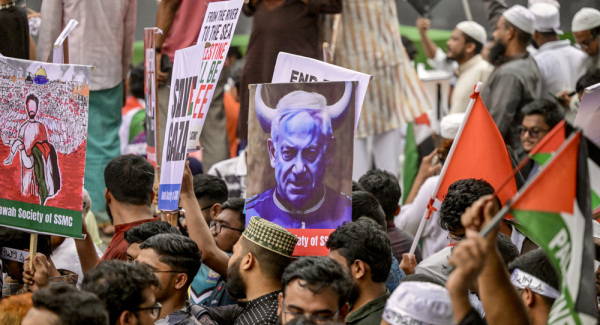
The Palestinian resistance movement Hamas has made an urgent appeal to the people of the world to actively take part in a week-long rally to push for an end to Israel’s vicious campaign of genocide in the besieged Gaza Strip.
In a Wednesday statement, Hamas called on the “Arab and Muslim nations and the free people” of the world to attend the rally on Friday, Saturday, and Sunday (April 18, 19 and 20).
The Palestinian resistance movement declared those days as “days of worldwide anger in the face of the occupation and against the American complicity and international inaction.”
Hamas reiterated the need for immediate international action to put an end to “ongoing Zionist brutality and genocide against our Palestinian people in Gaza, which is committed under the American support and deafening international silence.”
It also called for a global general strike on Tuesday (April 22) in all universities and educational institutions around the world in support of the besieged people of Gaza.
Pro-Palestinian protests have swept across major cities worldwide in solidarity with the people of Palestine since Israel launched its campaign of genocide and ethnic cleansing in Gaza in October 2023.
Demonstrations have drawn large crowds in cities such as London, where tens of thousands have repeatedly taken to the streets, calling for a ceasefire in the besieged territory.
In the United States, university campuses have become central to pro-Palestine protests, with students staging walkouts, sit-ins, and rallies demanding divestment from companies linked to the Israeli regime and greater support for Palestinian rights.
Press TV’s website
Gaza death toll from Israel’s savagery passes 51,000 mark: Health ministry
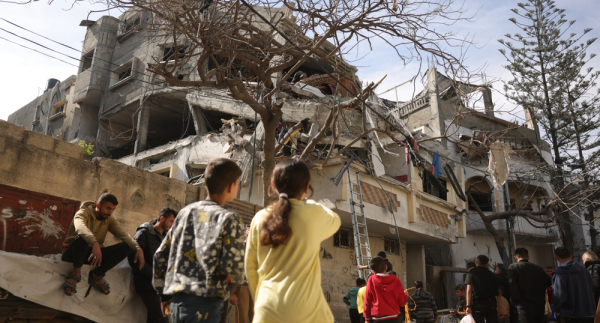
The Gaza Ministry of Health says the death toll from the US-backed Israeli campaign of genocide since October 2023 has passed the 51,000 mark.
The number of injured Palestinians has also exceeded 116,400.
The ministry said on Wednesday that the death toll since March 18, 2025, had reached 1,652.
Only in the recent 24 hours, the ministry said, the Israeli killing machine has massacred 25 Palestinians, with 89 injured.
“A number of victims remain under the rubble and on the roads, unable to be reached by ambulance and civil defense crews,” the ministry said.
The WAFA news agency reported that a Palestinian journalist and 10 members of her family were killed in an Israeli airstrike in Gaza City.
The report said that Israeli warplanes bombed the home of journalist Fatima Hassouneh in Tuffah neighbourhood, east of Gaza City, killing her, alongside her relatives.
Since Israel launched its campaign of genocide in Gaza, the regime has killed more than 210 Palestinian journalists and media workers.
The Palestinian Civil Affairs Commission said the Israeli forces killed two Palestinians in the occupied West Bank.
The commission identified the two as Mohd Omar Zakarneh, 23, and Mirth Yasser Khzemiyeh, 19. Their bodies are being withheld by the Israeli military.
In the occupied West Bank, Israel has killed over 950 Palestinians since October 7, 2023.
Press TV’s website
Iran warns ‘moving the goalposts’ could derail Tehran-Washington talks
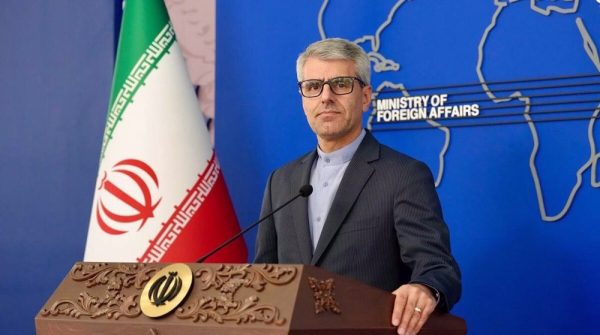
Iran’s Foreign Ministry spokesman Esmaeil Baghaei has warned that making fundamental mistakes could disrupt the negotiations between Tehran and Washington.
US Special Envoy Steve Eitkoff on Tuesday said Iran “must stop and eliminate” its nuclear enrichment program to reach a deal with Washington.
The remark contradicted an earlier stance by the United States concerning Iran’s enrichment of uranium at a low level to produce energy.
Baghaei metaphorically described the US’s move as moving the goalposts. He said it “constitutes a professional foul and an unfair act in football.”
“In diplomacy, any such shifting (pushed by hawks who fail to grasp the logic/art of commonsensical deal-making) could simply risk any overtures falling apart. It could be perceived as a lack of seriousness, let alone good faith. We’re still in testing mode...” Baghaei stated on X.
He said, “The American hardliners do not understand the art of a win-win deal, and impose their unjust will on the US government and the US negotiators.”
The US State Department echoed Witkoff’s latest statement about the Iran negotiations later on Tuesday, explaining that the US seeks to “eliminate” Iran’s uranium enrichment.
Washington’s unstable attitude towards making a deal with Iran indicates firm opposition from certain interest groups and lobbies within the US to making a fair deal with Iran.
Furthermore, hardliners and anti-Iran lobbies in the US and beyond have gone to considerable lengths to derail the negotiations, using fear, misinformation, character assassination, and psychological tactics.
Following the familiar change of words by the US, Iranian Foreign Minister Abbas Araghchi said the enrichment of uranium as part of the country’s peaceful nuclear program is “non-negotiable.”
The Tehran-Washington talks, Araghchi said, would yield no results if they are held under pressure and a lack of mutual respect.
Leader of the Islamic Revolution Ayatollah Seyyed Ali Khamenei said on Tuesday that the indirect talks between Iran and the US in the Omani capital of Muscat had been “implemented well in their initial steps,” but added that the Islamic Republic was “very skeptical” of the other side.
The second round of the talks is expected to take place on April 19 in Muscat.
Condolences on the anniversary of the martyrdom of Hazrat Hamza and the passing of Hazrat Abdul Azim Hassani (peace be upon him).
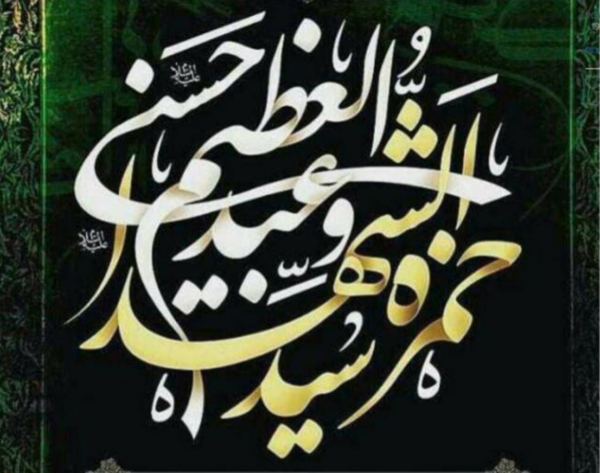
The 15th of Shawwal, the third year of the Hijri calendar, coincides with the oppressive and heroic martyrdom of Hazrat Hamza, the Master of Martyrs (peace be upon him), and on this day, we offer our condolences to the followers of the path of virtue.Also, the 15th of Shawwal is the anniversary of the passing of the great scholar Hazrat Abdul Azim Hassani.
Al-Ahli Hospital bombing: Israel strikes last functioning north Gaza health facility
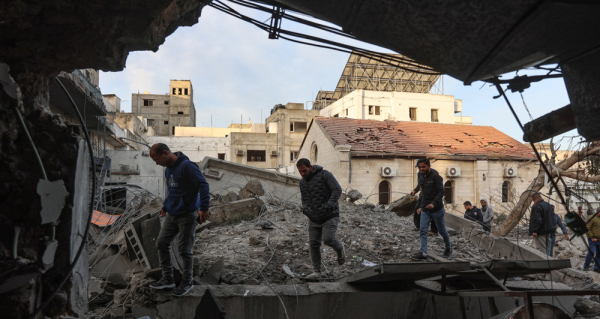
Israeli forces launched a devastating attack on Gaza City’s al-Ahli Hospital, the last functioning medical facility in the north, destroying the hospital’s emergency unit, main entrance, and a critical facility housing medical oxygen for intensive care patients.
Following the Sunday attack, critically ill patients have been left stranded on the streets as the largest remaining functioning hospital in northern Gaza is now out of service, according to reports.
Razan al-Nahhas, the emergency doctor in Gaza, said at least three people, including a 12-year-old boy with a head injury, have been reported dead following their forced evacuation from the Al Ahli Hospital in Gaza City.
“He was on oxygen, as were the two other patients, and the family basically walked with them to a nearby hospital, a very small facility with no capacity for the number of patients head their way. And they [the patients] arrived dead,” said al-Nahhas, who is in the city of Deir el-Balah.
“There’s so many patients on the streets. Some mats have been made out to Al Shifa at this point. But I can’t even imagine the scene of patients and their family members scattered in the streets, trying to find their way to a place for medical care. I’m certain that many of them will not make it.”
Al-Nahhas said many of those at al-Ahli have severe injuries.
“The majority of patients that are admitted to this hospital are patients that are victims of these traumatic, explosive injuries, unfortunately,” she said.
These include patients with multiple amputated limbs and patients with traumatic injuries to their chest, abdomen or head, as well as “a lot of burn patients,” she added.
“They’re very high-risk patients that need to be closely monitored, not lying or scrambling in the streets trying to find their way to another medical facility.”
This is because Israel is working under the US’s diplomatic cover, with Washington blocking all international mechanisms for accountability, it added.
Authorities in Gaza also condemned the attack and said that al-Ahli Hospital was treating hundreds of patients when it was bombed.
Verified footage of the moment Israeli forces bombed al-Ahli Hospital shows a ball of fire and smoke rising in the sky as a loud explosion is heard.
It also shows displaced Palestinians, including children, fleeing in the aftermath.
Video of the aftermath of the attack shows rescue workers at the site of a bombed building at al-Ahli Hospital, looking through the rubble for survivors.
According to al-Nahhas, patients in north Gaza have nowhere to go after the Israeli attack on al-Ahli Hospital.
The Government Media Office in Gaza has published a list of 35 hospitals – including al-Ahli Hospital – that Israeli forces have attacked during the ongoing war, which began on October 7, 2023.
Throughout its devastating war, the Israeli military has systematically targeted Gaza’s hospitals with impunity, repeatedly alleging that resistance fighters utilize these facilities as “command centers” despite failing to provide any evidence to support such baseless claims.
These attacks have not only severely crippled the already strained healthcare infrastructure in Gaza but also compounded the humanitarian crisis unfolding in the besieged territory, where more than 50,900 Palestinians, most of them women and children have been killed during relentless Israeli bombings.
Press TV’s website
‘Another war crime by fascist occupation’: Hamas slams Israeli airstrike on Al-Ahli Hospital
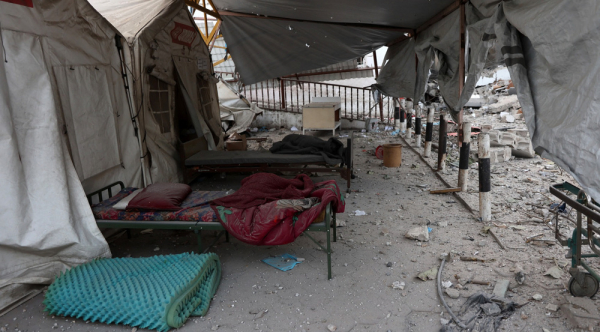
Palestinian resistance movement Hamas has condemned a devastating Israeli attack on Gaza City’s al-Ahli Hospital, the last functioning medical facility in the northern Gaza Strip, calling it “yet another war crime” committed by the rogue Israeli regime.
In a statement on Sunday, hours after the attack took place, Hamas said the bombing destroyed part of the hospital, displaced patients, and wounded individuals.
Calling the attack a continuation of the “fascist” occupying regime’s “long series of atrocities” in Gaza, Hamas said the Israeli military acts with impunity under “blatant US cover” and amid the inaction of international accountability bodies.
The statement questioned the silence of global institutions, particularly the UN Security Council, in the face of these “unprecedented crimes in modern history.”
Hamas further held the United States “fully responsible” for the Israeli act of aggression, arguing that the attack would not have taken place without Washington’s green light.
It called on the international community, especially Arab and Islamic countries, to act immediately to halt what it described as genocide in Gaza.
The group also urged people across the Arab and Islamic world, as well as global supporters, to intensify solidarity efforts and pressure Israel to stop its military campaign in the besieged territory.
Israeli forces attacked al-Ahli Hospital, also known as the Baptist or Ahli Arab hospital, early on Sunday, destroying the hospital’s emergency unit, main entrance, and a critical facility housing medical oxygen for intensive care patients.
According to reports, critically ill patients were left stranded on the streets as the largest remaining functioning hospital in northern Gaza was put out of service.
Israel ‘escalating criminality’ with al-Ahli strikes: Islamic Jihad
The Palestinian Islamic Jihad said in a statement that the Israeli military first caused panic among patients and civilians sheltering at al-Ahli Hospital by sending them a warning before bombing them in the dark of night.
“This heinous aggression is part of a systematic series of attacks targeting hospitals, schools, shelters and tents for the displaced in Gaza, within the context of a systematic war of extermination that violates all humanitarian and moral standards,” the resistance movement said.
It also held the US responsible for the assault, saying, “The international silence on Gaza is forcing it to become a graveyard for law and humanity.”
Press TV’s website
60,000 Palestinian children starve as Israel continues blockade of Gaza
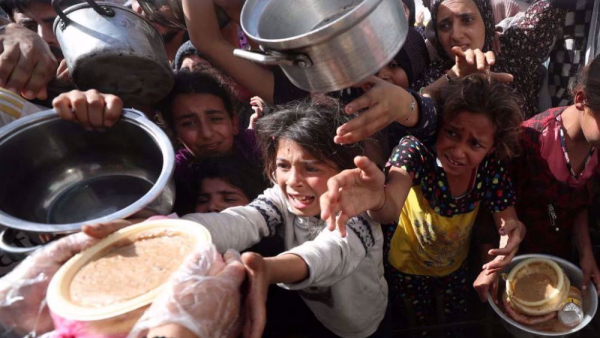
As the Israeli regime continues the siege of the Gaza Strip, the ministry of health in the Palestinian territory has warned that at least 60,000 children suffer from severe malnourishment and related health complications.
The health ministry’s statement came on Wednesday, a day after Secretary-General of the United Nations Antonio Guterres rejected Israel’s new proposal to control aid deliveries to Gaza.
Since March 2, the Israeli regime has closed off all crossings into Gaza and blocked the entry of essential supplies, including food, medicine, and water.
The health ministry has warned that “the lack of adequate nutrition and drinking water will compound health challenges, with the continued ban on vaccinations for children, especially polio vaccinations.”
The siege has resulted in the closure of 21 nutrition centers and has disrupted care for the already severely malnourished children of Gaza, the ministry said.
According to the United Nations Relief and Works Agency for Palestine Refugees (UNRWA), Israel’s ongoing siege of the region has had a “devastating impact” on children in the enclave.
“Safe water, food, shelter, and medical care have become increasingly scarce. The impact on children is devastating,” UNRWA said.
“All basic supplies are running out … It means babies, children are going to bed hungry. Every day without these basic supplies, Gaza inches closer towards very, very deep hunger,” said Juliette Touma, Director of Communications at UNRWA.
Last month, the UN World Food Programme (WFP) reported that hundreds of thousands of Palestinians in Gaza are at risk of starvation because the activities of the Israeli military have disrupted food assistance operations across the war-torn region.
“WFP and partners from the food security sector have been unable to bring new food supplies into Gaza for more than three weeks,” the Organization said in a statement.
Press TV’s website
Israeli report: Only 25% of Hamas tunnels destroyed after months of war
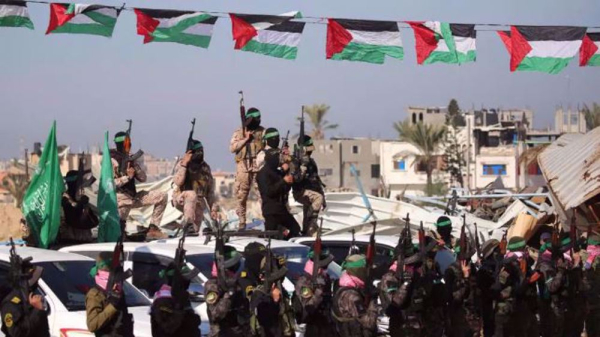
Israeli military sources estimate that Israel's strikes on Gaza, which have killed over 50,000 people, have destroyed only a quarter of the tunnel network and defense capabilities of the Palestinian resistance movement Hamas.
Israel’s Haaretz newspaper cited military officials as saying Hamas still “retains a significant portion of its tunnel network.”
According to the report, the Israeli war has “only managed to destroy 25% of the group’s underground facilities so far.”
The report also noted that Hamas’ military wing, al-Qassam Brigades, still has the capability to produce weapons and missiles, despite 18 months of war.
Meanwhile, Israeli military analysts estimate that Hamas has 40,000 fighters.
Before the start of Israel’s war, the movement was estimated to have between 20,000 and 30,000 fighters under arms.
While the US intelligence community, near the end of the Joe Biden administration, estimated Hamas had lost 15,000 men during the Israeli war, the Haaretz report said the group had recruited the same number of new forces.
This comes as the daily confirmed that Hamas retains its popularity in Gaza.
Israel launched the campaign of genocide in Gaza on October 7, 2023, killing 50,886 Palestinians and injuring 115,875 others, according to the health ministry.
The Israeli regime was forced to agree to a ceasefire deal with Hamas last January, given the regime’s failure to achieve any of its objectives, including the “elimination” of the Palestinian resistance movement or the release of captives.
The 42-day first stage of the truce, which was marred by repeated Israeli violations, expired on March 1, but Israel is refraining from stepping into talks for the second stage of the agreement.
Since March 18, the regime has launched strikes on Gaza, breaking the ceasefire and prisoner-captive exchange agreement that lasted nearly two months.
Press TV’s website