zarezadeh
Companions of Imam Musa al-Kazim (a.s.)

There is no precise information about the companions of Imam Kazim (a.s.) and there is disagreement about their number. Sheikh Tusi counted their number as 272, and Barki counted their number as 160. Baqir Sharif al-Qarashi, the author of Hayat al-Imam Musa ibn Ja'far, rejected Barki's statement that mentioned their number as 160, and he himself named 321 as the companions of the Imam.
Ali ibn Yaqtin, Hisham ibn Hakam, Hisham ibn Salim, Muhammad ibn Abi Umayr, Hammad ibn Isa, Yunus ibn Abd al-Rahman, Safwan ibn Yahya, and Safwan Jamal were among the companions of Imam Kazim, some of whom, like Safwan ibn Yahya and Muhammad ibn Abi Umayr, are mentioned among the companions of consensus. After the martyrdom of Imam Kazim, a number of his companions, including Ali ibn Abi Hamzah Bata'ini, Ziyad ibn Marwan, and Uthman ibn Isa, did not accept the Imamate of Ali ibn Musa al-Rida (a.s.) and stopped at the Imamate of Musa ibn Ja'far.
This group became known as the Waqfiyyah. Of course, some of them later accepted the Imamate of Imam Reza (a.s.)
The Status of Imam Musa al-Kazim (a.s.) Among Sunnis

Sunnis respect the seventh Imam of the Shiites as a religious scholar. Some of their elders have praised Imam al-Kazim's knowledge and ethics and have spoken of his tolerance, generosity, abundance of worship, and other moral qualities.
Instances of Imam al-Kazim's (a.s.) tolerance and worship have been reported in Sunni sources. Some Sunni scholars, such as Sam'ani, a historian, hadith scholar, and jurist Shafi'i of the sixth century AH, used to visit the grave of Imam al-Kazim and seek his help. Abu Ali Khalal, a Sunni scholar in the third century AH, said that whenever I had a problem, I would visit the grave of Musa ibn Ja'far and seek his help, and my problem would be solved. Imam al-Shafi'i, one of the four Sunni jurists, is also quoted as describing his grave as a "healing medicine."
Imam Kazim (AS) in Prison

Imam Musa Kazim was summoned and imprisoned by the Abbasid caliphs several times during his Imamate. The first time was during the caliphate of Mahdi Abbasi, when the Imam was transferred from Medina to Baghdad by order of the caliph. Harun also imprisoned the Imam twice. The time of the first arrest and imprisonment is not mentioned in the sources, but the second time was on 20 Shawwal 179 AH in Medina and on 7 Dhul-Hijjah he was imprisoned in the house of Isa ibn Ja'far in Basra. According to Sheikh Mufid, Harun wrote a letter to Isa ibn Ja'far in 180 AH asking him to kill the Imam, but he refused.
After a while, the Imam was transferred to the prison of Fadl ibn Rabi' in Baghdad. Imam Kazim (AS) spent the last years of his life in the prisons of Fadl ibn Yahya and Sindi ibn Shahak.
In the Ziyarat of Imam Kazim (AS), he is greeted with the phrase الْمُعَذَّبِ فِي قَعْرِ السُّجُون; the one who was tortured in the dungeons. In the Ziyarat of the Imam, his prison is also mentioned as ظُلَمْمِرِ. A prison in which it is impossible to stretch one's legs and sleep is called a matmura. Also, the underground prisons of Baghdad were humid and damp (matmura) due to their proximity to the Tigris.
There are different reports in the sources about the reason why the seventh Shiite Imam was arrested by the Abbasid caliphs and transferred to prison. According to some reports, the reason for the arrest of Musa ibn Ja'far on the orders of Harun was the jealousy of Yahya Barmaki and the slander of Ali ibn Isma'il ibn Ja'far, his nephew, to Harun.
It is said that Harun was sensitive to the Shiites' relationship with Imam Kazim and feared that the Shiites' belief in the Imamate of the Imam would weaken his government.
Also, according to some reports, the reason for Imam Kazim's (a.s.) imprisonment was that some Shiites, such as Hisham ibn Hakam, did not comply with the Imam's wishes, even though the Imam had ordered them to practice taqiyyah. These reports have listed Hisham ibn Hakam's debates as one of the reasons for the Imam's imprisonment.
Division in Shia during the period of Imam Musa al-Kazim (a.s.)
During the period of Imam Musa ibn Ja'far (a.s.), the Ismailiyyah, Fatahiyyah, and Nawwasiyyah sects were formed. Although during the lifetime of Imam Sadiq (a.s.), the ground for division in Shia had been prepared, no division occurred among them. However, with the martyrdom of Imam Sadiq (a.s.) and the beginning of the Imamate of Musa ibn Ja'far, the Shia split into different sects; a group of them denied the death of Ismail, the son of Imam Sadiq (a.s.), and considered him the Imam. A number of this group, who were disappointed with the life of Ismail, considered his son Muhammad to be the Imam. This group became known as the Ismailiyyah. Others considered Abdullah al-Aftah as the Imam and became known as the Fatahiyyah, but after his death, which occurred about 70 days after the martyrdom of Imam Sadiq (a.s.), they believed in the Imamate of Musa ibn Ja'far. Some also stopped following a person named Nawus in the Imamate of Imam Sadiq (AS), and some believed in the Imamate of Muhammad Dibaj.
Ghaliyan activity
During the period of Imam Kazim (AS), Ghaliyan were also active. During this period, the Bashiriyya sect was formed, which was attributed to Muhammad ibn Bashir, one of the companions of Musa ibn Jafar. During the life of the Imam, he told lies about the Imam.
Muhammad ibn Bashir said that the person people know as Musa ibn Jafar is not Musa ibn Jafari, who is the Imam and the proof of God, and he claimed that the real Musa ibn Jafar is with him and can show them the Imam. He was skilled in magic and had made a face like the face of Imam Kazim (AS) and showed it to people as Imam Kazim (AS), and some were deceived by him. Before the martyrdom of Imam Kazim (AS), Muhammad ibn Bashir and his followers had spread rumors in the community that Imam Kazim (AS) had not been imprisoned, was alive, and would not die. Imam Kazim considered Muhammad ibn Bashir impure and cursed him, and considered it permissible to shed his blood.
Imam Sadiq (AS)'s Will and the Wandering of Some Shiites
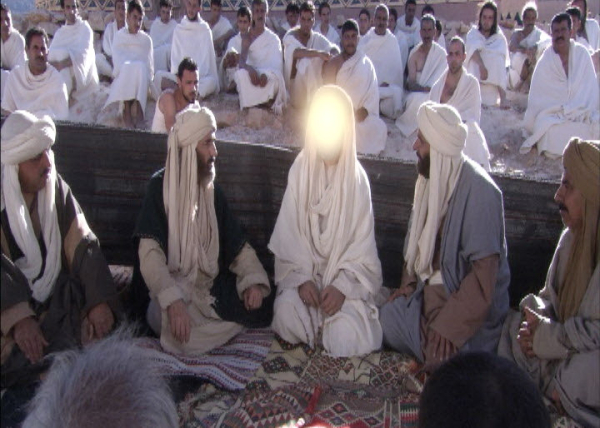
It is stated in the sources that Imam Sadiq (AS) introduced five people, including the Abbasid Caliph, as his successors in view of the strictness of the Abbasids and to protect the life of Imam Kazim (AS). [Pishvai, Sirah Pishvaiyan, 1372, p. 414]
Although Imam Sadiq (AS) had repeatedly introduced the Imam after him to his special companions, this action somewhat confused the situation for the Shiites. During this period, some of the prominent companions of Imam Sadiq (AS) such as Momin Taq and Hisham bin Salim were also in doubt. They first went to Abdullah Aftah, who had claimed to be the Imam, and asked him about zakat. But Abdullah's answers did not convince them. The two then met with Musa ibn Ja'far (a.s.) and were satisfied with his answers and accepted his imamate. [Kashshi, Rijal, 1409 AH, pp. 282-283]
Imam Musa al-Kazim(pbuh)
Imam Musa al-Kazim(pbuh)
Born: November 6, 745 AD, Al-Abwa', Saudi Arabia
Died: 799 AD (age 54 years), Baghdad, Iraq
Children: Ali al-Rida, Fatimah bint Musa, Hakima bint Musa, Ahmad ibn Musa · See more
Parents: Ja'far al-Sadiq, Hamīdah al-Barbariyyah
Full name: Mūsá ibn Ja‘far al-Kāzim
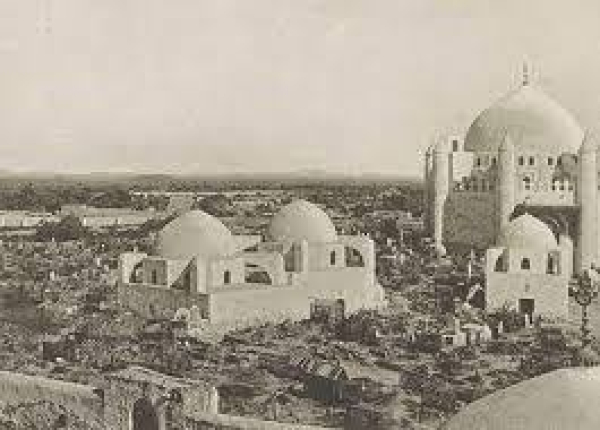
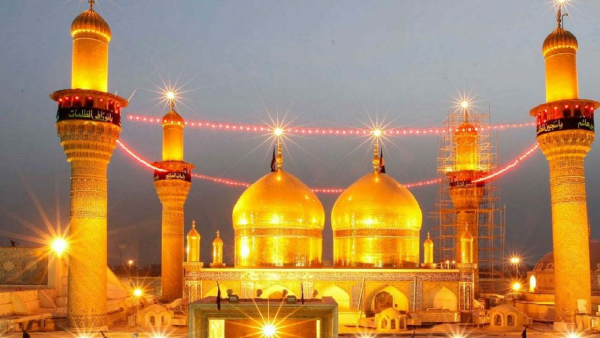
Place of burial: Imam al-Kazim & Imam al-Jawad Shrine, Baghdad, Iraq
Siblings: Isma'il ibn Ja'far
Musa ibn Ja'far al-Kazim (Arabic: مُوسَىٰ ٱبْن جَعْفَر ٱلْكَاظِم, romanized: Mūsā ibn Jaʿfar al-Kāẓim; 745–799) was a descendant of the Islamic prophet Muhammad and the seventh imam in Twelver Shia Islam. Musa is often known by the title al-Kazim (lit. 'forbearing'), apparently a reference to his patience and gentle disposition. He was born in 745 CE in Medina to Ja'far al-Sadiq, the sixth Shia imam, who died in 765 without publicly designating a successor to save his heir from the wrath of the Abbasid caliphs. The subsequent crisis of succession was eventually resolved in favor of al-Kazim, with a dissenting group, now known as the Isma'ilis, separating from the mainstream Shia.
US, Israel reject Gaza reconstruction plan proposed by Arab leaders that allows Palestinians to stay
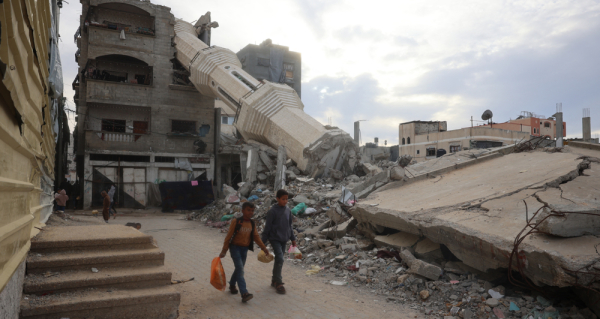
The United States and Israel have rejected a long-awaited Arab plan for the reconstruction of the Gaza Strip that would allow the territory’s roughly two million residents to stay in their homeland.
Arab leaders adopted Tuesday a unified plan for the future of the Gaza Strip at an emergency summit in the Egyptian capital, Cairo.
The proposal counters President Donald Trump’s controversial plan for the United States to take over Gaza and permanently resettle its population.
Both the White House and the Tel Aviv regime claimed that the Arab plan failed to address realities in Gaza.
They said they stood by Trump’s plan to expel the territory’s Palestinian residents and transform it into a “Riviera” owned by the United States.
“The current proposal does not address the reality that Gaza is currently uninhabitable and residents cannot humanely live in a territory covered in debris and unexploded ordnance,” National Security Council spokesman Brian Hughes said in a statement on Tuesday.
“President Trump stands by his vision to rebuild Gaza free from Hamas. We look forward to further talks to bring peace and prosperity to the region.”
Israel’s foreign ministry also said in a statement that with “Trump’s idea, there is an opportunity for the Gazans to have free choice based on their free will. This should be encouraged!”
“Instead, Arab states have rejected this opportunity, without giving it a fair chance, and continue to level baseless accusations against Israel.”
Arab League Assistant Secretary General Hossam Zaki said the Israeli foreign ministry’s response to the Arab plan was “against humanity and against morals.”
He said Trump’s proposal “is against international law and, we have said this time and again, this is not a way to treat this man-made crisis.”
“This is a war that has been waged by Israel partly with the aim of driving Palestinians out of their territory.”
Trump proposed in February that Washington would take over control of the Gaza Strip — possibly with the help of US troops — to create a “Riviera” of West Asia.
He said the displaced Palestinians would have no right of return since, he claimed, they would have “much better housing” in Egypt, Jordan and other countries.
Press TV’s website
Israel’s siege on Gaza part of its ‘war of extermination’: Hamas
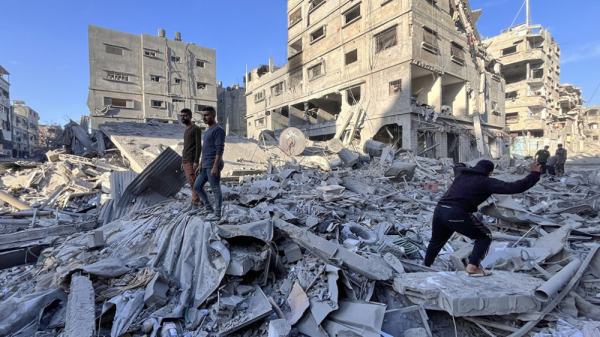
The Palestinian resistance movement Hamas says Israel’s intensification of the siege of Gaza and preventing the entry of aid are parts of the regime’s genocidal war on the blockaded territory.
Hamas spokesman Abdel Latif al-Qanou said on Friday Israel’s policy of starving Palestinians in Gaza is a blatant violation of International law and amounts to a war crime.
The siege is a “flagrant violation of international and humanitarian laws and a war crime that the world must stop and hold its perpetrators accountable”, he said.
The Hamas official added the world must stop Israel from continuing the starvation policy and that the perpetrators must be put on trial.
Al-Qanou called on the International community and human rights institutions to force Israel to open Gaza crossings and allow humanitarian aid, including food and medical supplies, to enter Gaza.
“We renew our call to the international community, all human rights and humanitarian institutions, and all free people of the world to force the Zionist occupation to open the crossings, bring in relief and medical aid, and end the suffering of our people.”
Israel accepted Hamas’ longstanding negotiation terms under the Gaza truce, which began on January 19.
The first phase ended at the weekend after six weeks of relative calm, during which Israeli captives were exchanged for Palestinian prisoners.
Israel wants to extend this phase until mid-April, but Hamas insists on transitioning to the second phase, seen as leading to a lasting ceasefire.
Israel has ramped up its rhetoric and halted the flow of aid into Gaza, prompting several nations and international organizations to warn against using aid as a "political tool."
Israel has blocked humanitarian aid entering Gaza, leading to fears of food shortages in the besieged Palestinian strip.
Rights groups have warned about the devastating consequences of the blockade of Gaza with the UN World Food Program (WFP) saying that its food stockpile will only last two weeks.
Meanwhile, Israeli media outlets recently reported that the regime plans to resume the Gaza war in the next 10 days.
The Israeli military’s new chief of staff, Lt. Gen. Eyal Zamir, has also acknowledged that the regime has failed to defeat the Palestinian resistance movement Hamas as he hinted at the possibility of resuming the war on Gaza.
The UNRWA recently warned that Israel’s ongoing violent aggression against the West Bank appears to be part of the regime’s plan to annex the occupied territory.
Since the onset of the Gaza war in October 2023, attacks by the Israeli army and illegal settlers have killed at least 930 Palestinians and injured nearly 7,000 in the occupied West Bank.
Last July, the International Court of Justice (ICJ) declared that Israel’s long-standing occupation of Palestinian territories is illegal, demanding the evacuation of all illegal settlements in the West Bank and East al-Quds.
Press TV’s website
Women’s Day: Hamas blasts Israeli killing of 12,000 women in Gaza as ‘stain on humanity’
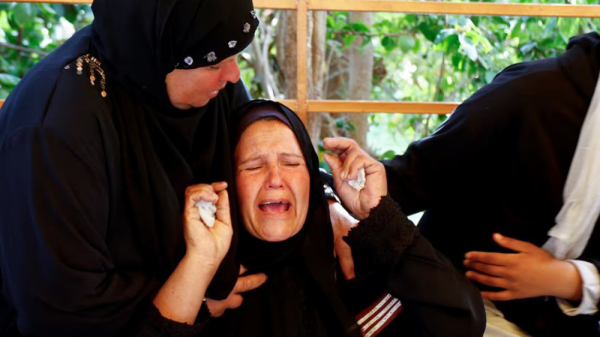
As the world marks International Women’s Day, Palestinian resistance movement Hamas condemns Israel’s killing of more than 12,000 Palestinian women in Gaza as a “stain on humanity.”
“The killing of 12,000 women in Gaza, the injury and arrest of thousands, and the displacement of hundreds of thousands are a stain on humanity,” Hamas said in a statement on Saturday.
It said female Palestinian abductees are “subjected to psychological and physical torture in flagrant violation of all international norms and conventions.”
Hamas added that the suffering endured by these women exposed the “double standards” of Western countries, including the United States, in dealing with Palestinian abductees.
The statement came shortly after the head of the Government Media Office in the Gaza Strip, Salama Maarouf, said 12,316 women had been killed due to the Israeli regime’s genocidal war in the besieged territory.
“Women’s Day coincides with the continuation of the Israeli siege and the prevention of aid, as women live in catastrophic humanitarian conditions and suffer from starvation and thirst,” Maarouf said.
According to the Gaza government tally, the bloody Israeli onslaught also left 2,000 women and girls with permanent disabilities due to amputations.
Moreover, 13,901 women were widowed and at least 17,000 mothers lost their offspring, while over 50,000 pregnant women lost their unborn babies.
Backed by the United States and its Western allies, Israel launched the war on Gaza in early October 2023, after Hamas and other Gaza-based Palestinian resistance movements carried out Operation Al-Aqsa Flood against the Israeli regime in response to its decades-long oppression of Palestinians.
Israel’s genocidal war on Gaza has led to the death of at least 48,446 Palestinians, mostly women and children, and left 111,852 others injured.
A ceasefire and prisoner exchange agreement went into effect in Gaza on January 19, halting Israel’s aggressive campaign against the coastal region.
Press TV’s website
Iran will definitely reject insistence on talks by bullying powers: Ayatollah Khamenei
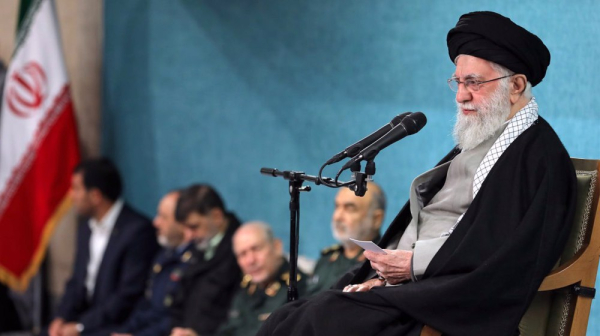
Leader of the Islamic Revolution Ayatollah Seyyed Ali Khamenei says the insistence of some bullying powers on holding talks with Iran does not aim to solve issues.
Ayatollah Khamenei made the remarks in a meeting with heads of the three branches of government and a number of Iranian officials in Tehran on Saturday.
"The insistence of some bully governments on negotiations is not aimed at resolving issues, but rather [aims] to assert and impose their own expectations,” the Leader said.
“Absolutely, the Islamic Republic will not accept their expectations,” Ayatollah Khamenei added.
These bullying governments do not seek to negotiate solely on the nuclear issue; instead, they use negotiations as a “path to create new expectations” in areas such as Iran’s defense capabilities and international capabilities, which Iran would definitely oppose, Ayatollah Khamenei emphasized.
They are raising the issue of negotiations to exert pressure on public opinion, so Iran refuses to hold talks with them despite their expression of readiness, he added.
The Leader criticized Europeans for leveling shameless allegations against Iran, saying their claim that Iran has not fulfilled its nuclear commitments is “irrational.”
"You say that Iran has not fulfilled its nuclear commitments. Well, did you fulfill yours? You did not comply with [your obligations] from the very beginning," Ayatollah Khamenei told Europeans.
After the US withdrawal from the 2015 nuclear deal, Europeans vowed to compensate but failed to fulfill their promise, the Leader pointed out.
Ayatollah Khamenei emphasized that the principles of Western civilization are contrary to the principles of Islam and “we cannot follow them.”
“We can and should use any benefit [available] anywhere in the world but we cannot rely on the principles of Western civilization,” the Leader said.
The Leader said that the actions of Western nations, including colonization, the plundering of nations' resources, widespread massacres, false claims about human rights and women's rights, and double standards on various issues, have brought disgrace to Western civilization.
“[The claim of] free dissemination of information in the West is nothing more than a lie,” Ayatollah Khamenei emphasized.
Elsewhere in his remarks, the Leader pointed to Iran’s economic woes and stressed the importance of making reforms in the country’s monetary policies and revaluing the national currency.
Ayatollah Khamenei urged all Iranian officials to foster coherence to solve problems, saying the three branches of government and the Armed Forces should strengthen cooperation.
Press TV’s website