zarezadeh
How Zionist lobby silenced Australian senator for commending Iranian women
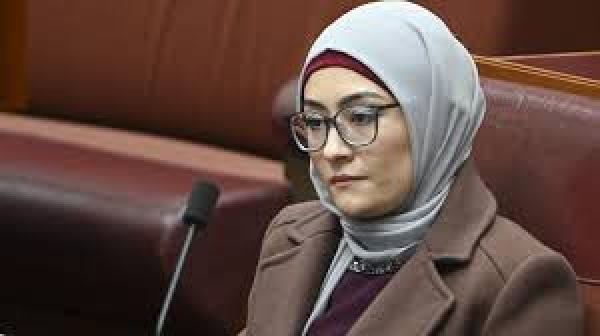
By Yousef Ramazani
Over the past three weeks, a relentless media and political campaign has targeted independent Australian senator Fatima Payman and others who attended a recent event in Sydney where the status and empowerment of women in Iran
By Yousef Ramazani
Over the past three weeks, a relentless media and political campaign has targeted independent Australian senator Fatima Payman and others who attended a recent event in Sydney where the status and empowerment of women in Iran was discussed.
The smear campaign, led by Zionist elements and anti-Iran rabble-rousers, has aimed to muzzle their voices and pressure them into revising their stance.
It all began in Sydney at an event focused on Iranian women, where Iranian-Australian women shared their experiences in advancing their scientific, artistic, and professional careers, challenging entrenched prejudices.
Their positive accounts, along with the enthusiastic responses from attendees speaking to reporters, were swiftly met with an extensive defamation campaign across the political sphere, media, and social networks.
Under intense pressure, largely from the Zionist lobby and some hostile anti-Iran groups, an Australian politician who participated in the event was compelled to publicly distance herself from the gathering, its organizers, and the Press TV that interviewed here.
The Sydney event
The event, titled "Women in Contemporary Iran: A Novel Narrative - Challenging the Narrative of Iranian Women in the West to Reflect the Unheard Voices of Many Women," was held on February 22 at Parramatta South Campus, Western Sydney University, in commemoration of International Women’s Day 2025.
Organized by the Benevolent Iranian Women Association (BIWA), the gathering brought together prominent Iranian-Australian women and other distinguished guests to discuss pressing issues related to authenticity, diversity, and representation of women in
In a statement, the BIWA emphasized its goal "to provide factual information, first-hand experiences, and authentic observations about Iran, women in Iran, and expose the skewed and incomplete narrative represented in Western media."
The event served as a platform to recognize the vital contributions of Iranian women in society, politics, the arts, and science—particularly in the realm of scientific advancements, despite challenges.
Sheikh Abdul Quddus Al-Azhari, the Grand Mufti of the Australian Continent, delivered a passionate keynote speech titled "Islam Leads the World in Women’s Rights," highlighting the framework within which women's rights are progressing in Muslim societies.
Another speaker, Keysar Trad, a prominent member of several Australian Muslim associations, expressed admiration for the treatment of women in Iran.
He cautioned against the simplistic framing of their experiences in Western media narratives, describing it as "a herald of intended imperial colonialism."
Participants included dozens of women, among them scientist Masoomeh Alaibakhsh and artist Suella Shokooh—both Iranian women residing in Australia—as well as New South Wales Minister for Women Jodie Harrison and American-Iranian journalist and Press TV host Marzieh Hashemi, who addressed the event via video link.
Hashemi, drawing on over 20 years of experience living in Iran, provided insights into the country’s advancements in women's rights and education since the 1979 Islamic Revolution.
She cited significant increases in literacy and university attendance among Iranian women, challenging dominant Western narratives.
Other attendees underscored the importance of fostering awareness and understanding, particularly among minority communities in Australia, while advocating for responsible media representation.
Following the event, the BIWA outlined its next steps to advance its mission, including continuing to organize educational sessions and events that promote authentic narratives about Iranian society and women. The organization also encouraged community members, politicians, and other groups to strengthen collective efforts in this regard.
Additionally, BIWA called for greater engagement on social and mainstream media to challenge misrepresentations of Iran and provide alternative perspectives. It also emphasized the need to monitor and expose funding sources behind anti-Iran propaganda.
One of the guidelines specifically mentioned Senator Payman, calling for ongoing communication with her to ensure continued support and advocacy.
Senator Payman's speech and reactions
Payman, an independent senator for Western Australia, on the sidelines of the event gave an interview to a Press TV reporter, praising the status of women in Iran.
She noted that Western audiences are rarely exposed to "the incredible place that Iran is, allowing for women to participate in the workforce, to ensure that they have a voice, and their voices are heard, they're involved in the democratic process."
The senator further stated that people in the West, including Australia, only receive propaganda about Iran from "single-sided organizations with a specific agenda."
Payman is an Australian politician of Afghan origin, one of the youngest members ever elected to the Australian Senate, and the first female senator to wear a hijab.
She is also the founder and leader of her own political party, Australia’s Voice.
Until last year, she was a member of the Labour Party, from which she resigned in protest against its pro-Israel policies, its indifference to genocidal war crimes in Gaza, and its refusal to recognize a Palestinian state.
Her statements about Iran were informed by the impressive data presented at the meeting, her personal experience of escaping Afghanistan, and the deeply skewed image of Iran in Australia due to politically motivated propaganda.
Undeniably, independent statistics confirm that Iran has made remarkable progress in all social spheres since the Islamic Revolution—progress that is hardly comparable to any other country over the same period.
Before the revolution, under a Western-backed dictatorship, women’s life expectancy was just 54 years, and fewer than a quarter of women were literate—a figure worse than Afghanistan today.
Now, women's life expectancy has risen to 80 years, comparable to the United States. In education, the number of female university students in Iran exceeds that of Japan.
Iranian women voted in the 1979 referendum, which resulted in over 99 percent support for the establishment of the Islamic Republic. To this day, they vote in presidential, parliamentary, assembly, and local elections, while also actively participating as candidates.
Iran is also widely recognized among international travelers as one of the safest countries for women, with a femicide rate three times lower than the global average, five times lower than in the US., and slightly lower than in Western Europe.
Iran’s rapid rise in global rankings across various sectors, along with individual achievements in science, academia, sports, and the arts, makes the status of women in the country truly remarkable.
Despite being undeniable facts, this data is considered "controversial" by the Australian political elite and mainstream media simply because it does not align with the distorted and prejudiced narrative that portrays Iran as a country at the bottom of the world.
It is important to emphasize that this distorted image of Iran is not only directed against its politics but also against its society, religion, and culture as a whole—pushing the boundaries of what is publicly accepted as hatred.
Smear campaign against Payman
Immediately after Payman gave an interview to Press TV, a vicious smear campaign was launched against her in the Australian media and on social media networks.
The first striking feature of the Australian media’s coverage is its use of delegitimizing terms for the Iranian government—something rarely seen in reference to overthrown regimes or similar current dictatorships that are friendly to Canberra, London, and Washington.
In other words, according to experts, even after nearly half a century, they have not come to terms with the fall of the puppet regime and the democratic decision of the Iranian people.
Yet, in their attacks on Payman, they hypocritically and falsely denied the existence of a democratic process in Iran.
Labeling her statement as "controversial," virtually all Australian media outlets attempted to uphold the distorted narrative, citing selective, loaded, or outright false arguments.
They exaggerated the scope and significance of the deadly West-backed riots in Iran three years ago—proven to be sponsored by hostile Western countries—while continuing to misrepresent the attributed cause, the tragic death of a girl.
Despite Australia’s own domestic controversies—including the historical imposition of clothing on Indigenous Aborigines and ongoing discrimination and xenophobic calls for bans on Muslim and Sikh attire—the media unanimously attacked Iran's dress code while conveniently ignoring the fact that it applies to men as well.
Many articles quoted hostile figures from the Iranian-Australian community of 100,000, presenting their views as if they were representative of Iran’s 90 million citizens.
Among them were members of the so-called Australian United Solidarity for Iran (AUSIRAN), a group that, under the guise of "human rights," openly advocates for the overthrow of Iran’s political system by "any means necessary."
Beyond calling for Iran to be turned into another Syria, they bizarrely accused Tehran of fictitious "genocide" and "gender apartheid," while simultaneously urging the Australian government to tighten sanctions—sanctions that harm ordinary Iranians, including female patients.
Several other groups—composed of advocates for restoring the collapsed dictatorship, separatist movements, or other marginal political factions—also came out against Payman, formally requesting an investigation into alleged "foreign influence."
In Australia’s supposedly pluralistic society, no prominent public figure came to the defense of the young female politician, ultimately forcing her to distance herself from her earlier comments.
Payman released a statement explaining that she had "heard first-hand positive experiences from Iran" from Australian-Iranian women who feel excluded from one-sided representation.
She added that, as a leader, it is important for her to "keep an open mind and listen to both sides" and acknowledged that "the Iranian community is not homogenous and individuals have different lived experiences," countering the narrative that all experiences must be negative.
Under attack from different quarters, she attempted to downplay her original statement to Press TV, claiming that she was merely quoting what she had heard from other women at the meeting.
In addition to Payman, NSW Minister for Women Jodie Harrison also faced pressure and publicly "apologized" for her participation via video, calling her decision "ill-considered" and stating that she "does not share the views of the panelists."
The event organizers from BIWA were not spared either, prompting them to issue a statement in which they "strongly rejected media accusations of being a mouthpiece for the Iranian government."
Ultimately, Australia proved to be the antithesis of the so-called "incredible place" Payman initially described—one where there is no space for women's voices and differing perspectives, even if they stem from personal experiences. A place where pure facts are unwelcome, and only a distorted, politically motivated narrative about Iran is publicly acceptable.
Zionists' role in smear campaign
In the attacks on Payman and the Sydney meeting across social networks, it is evident that the loudest voices in the smear campaign came from Israeli-affiliated activists such as Kylie Moore-Gilbert, Emily Schrader, Masih Alinejad, Sana Ebrahimi, and Elica Le Bon, among others.
Kylie Moore-Gilbert, an Australian-British citizen who served a prison sentence in Iran for spying for the Israeli regime before being released in late 2020, launched vicious attacks on Payman in the Australian media and on social media.
In her articles, she makes absurd comparisons between Iran and Afghanistan, recycles long-refuted misinformation about recent riots, and insists that she served a sentence in Iran for "no reason at all."
Despite ongoing denials and intentional concealment of the truth, it has been established that she completed a two-year special training course at the Alon Shvut settlement—one of many illegal settlements in the occupied West Bank—preparing herself for espionage activities.
Emily Schrader, a notorious Zionist propagandist and agitator who works for the Israeli regime's Hasbara, also took to X to attack the event organizers.
She resorted to the familiar Zionist tactic of falsely accusing critics of the very crimes her own side commits, branding Iran as "gender apartheid," while conveniently ignoring the actual apartheid imposed on Palestinians.
Masih Alinejad, a US regime propagandist with direct ties to Zionist lobby groups and a reputation for spreading anti-Iran disinformation, also joined the smear campaign.
Assuming her usual role as the self-proclaimed spokesperson for all Iranian women, she portrayed her negative (and factually questionable) experience as representative of the entire nation, repeatedly using the phrase "millions of Iranian women."
Amidst a barrage of false accusations, fabrications, and manipulation, she challenged Senator Payman with the question: "If women had a real voice, why are so many of them in prison?"
This claim is not only factually incorrect and contextually misleading but also deeply hypocritical, given that the country she resides in has the highest number of female prisoners in the world, both in absolute numbers and incarceration rate.
Iran, by contrast, has a female incarceration rate eight times lower than the United States and half that of Australia, with the vast majority of cases involving non-political crimes.
Two other self-proclaimed "spokeswomen" for Iranian women, Sana Ebrahimi and Elica Le Bon—both based in the US and working for Zionist organizations—attempted to attack Payman in a similar manner to Alinejad, relying on false personal testimonies, insults, and manipulations.
Ebrahimi, who claims to be a human rights advocate, has used the X platform to refer to Palestinians as "scum of the human race" while openly advocating for Israeli airstrikes on civilians gathered in Gaza.
Le Bon, whose real full name is Elica Najmi Mojtahed-Zadeh, falsely claims in Western media that she comes from a refugee family, despite the fact that her father moved to London to study before the Islamic Revolution.
Over the past year and a half, she has emerged as a fervent supporter of Israeli genocidal policies in Gaza, working closely with figures such as Noa Tishby, Gazelle Sharmahd, and Ayaan Hirsi Ali—alongside several other Zionist propagandists.
On multiple occasions, she has openly boasted about her association with son of former Iranian dictator Reza Pahlavi, who is financially supported by Israeli regime for years.
The coordinated smear attacks orchestrated by these individuals were uncritically reported by numerous Australian media outlets as "critical voices of Iranian women."
Calls to ban Press TV
In parallel with the campaign to silence Australian women, the media and politicians also targeted Press TV, whose reporter attended the Sydney meeting.
The media frenzy was initiated by Moore-Gilbert, who accused Press TV of "propaganda" and broadcasting "forced confessions" as well as "forced interviews with prisoners before execution."
She was referring to Abdolmalek Rigi and Jamshid Sharmahd, both Israeli and Western assets responsible for terrorist attacks that claimed the lives of dozens of Iranian civilians.
According to the twisted Western narrative, their trials were "unfair" and "politically motivated," which served as the pretext for the Australian government’s decision to sanction Press TV a year and a half ago—symbolically timed to coincide with the first anniversary of the Western-backed riots in Iran.
Although Press TV has not been broadcast in Australia since the sanctions were imposed, the network still maintains at least one local reporter and continues to cover Australian stories.
Moore-Gilbert, in response, questioned the effectiveness of this censorship in her articles and launched a campaign to have Press TV banned entirely—a move that was quickly echoed on the political stage by Dave Sharma.
Sharma, an Australian senator and former Australian ambassador to the Zionist entity, is well known for his staunchly pro-Israel stance, close ties with Israeli far-right politicians, and opposition to an independent Palestinian state.
His statement that Palestinians fleeing Israeli genocide "pose a threat to Australian safety" was widely condemned as racist by the Jewish Council Australia.
Commenting on Payman’s statements, Sharma said he was "shocked" to see a report featuring "Press TV’s name and logo on the microphone," as well as the revelation that the network has a correspondent based in Sydney.
He used a recent Senate estimates hearing to question officials from the Department of Foreign Affairs and Trade (DFAT) about Payman’s interview with Press TV and whether the network was legally permitted to operate in Australia given the sanctions against it.
However, Foreign Minister Penny Wong pushed back against Sharma’s criticism, pointing out that DFAT does not disclose its investigations into sanctions breaches ahead of time.
The campaign against Press TV ultimately led to Payman distancing herself from the network, claiming she had been unaware of its affiliations.
Facing mounting pressure, she reportedly went a step further on Monday, expressing support for an initiative to ban Press TV completely in Australia.
With these actions, the Zionist lobby has effectively eradicated even the slightest possibility of a balanced and neutral dialogue between the two countries, reinforcing Australia’s extreme hostility toward Iran—a stance that has drawn anger and outrage in Iran.
Press TV’s website
‘Nobody is expelling any Palestinians’: Trump walks back on plot to ethnically cleanse Gaza after backlash
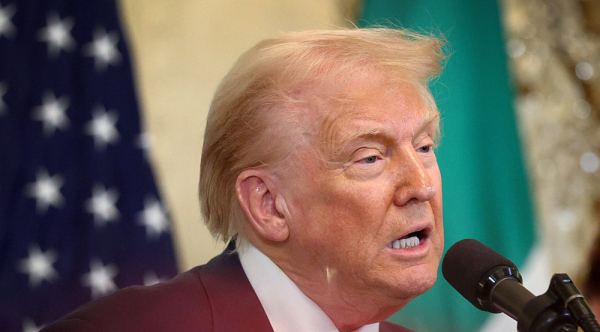
In his latest statement about the war in Gaza, US President Donald Trump seems to back down on his previous plan to forcibly relocate the population of the Gaza Strip, claiming, “Nobody is expelling any Palestinians.”
The statement was made in response to a reporter's question about the ethnic cleansing plan during a meeting with Irish Prime Minister Micheál Martin on Wednesday.
It was embraced by Hamas, with the resistance group's spokesman Hazem Qassem stating, “If President Trump’s statements represent a reversal of the plan of displacing the people of Gaza, they are welcomed.”
“We call for this stance to be followed by holding the occupation accountable for implementing all ceasefire agreements,” Qassem added.
Trump first unveiled his plan to ethnically cleanse Gaza of its native population in February.
Under the plan, the people of Gaza will be forcibly relocated to Jordan and Egypt, regardless of the consent of either the Palestinians or the governments of Jordan and Egypt.
Since the beginning of the Israeli genocide in Gaza, many Israeli officials have also been calling for the ethnic cleansing of Gaza, including ministers of the current Israeli administration.
Most recently, Israeli Minister Idit Silman reiterated calls for expelling the people of Gaza in an interview on Tuesday, stating the “only solution for the Gaza Strip is to remove its Palestinian population.”
The plan to ethnically cleanse Gaza has been widely condemned by human rights groups and governments around the world, including even some of Israel’s allies such as Germany.
Press TV’s website
Wife of Palestinian activist Mahmoud Khalil says he is ‘fighting for his people’
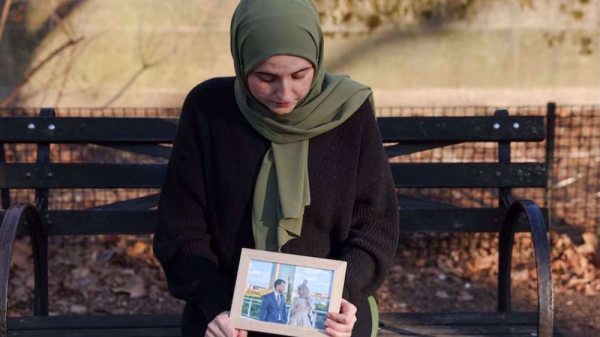
The spouse of Mahmoud Khalil, Palestinian student-activist and US Green Card holder, says that her husband is standing up for his people.
Noor Abdalla, a US citizen and a practicing dentist, in an interview with Reuters on Tuesday, said that her husband's focus was on supporting his community through advocacy and in more direct ways.
"Mahmoud is Palestinian and he's always been interested in Palestinian politics," she said, adding, "He's standing up for his people, he's fighting for his people."
Abdalla, who is eight months pregnant, described the harrowing moment when Immigration and Customs Enforcement (ICE) agents handcuffed her husband in the lobby of their university-owned apartment in Manhattan on Saturday.
As a legal permanent resident of the US, surely Khalil did not have to worry about that, she said she recalled telling him. “I didn’t take him seriously. Clearly I was naive,” she said.
Khalil arrived in the United States on a student visa in 2022 and obtained his permanent residency green card last year.
Despite the outpouring of support from peers and faculty, his wife expressed frustration at the lack of assistance from Columbia's administration. “No one from Columbia has contacted me to offer help.”
Khalil, a recent Colombia graduate and a Syrian-born Palestinian refugee, was detained on Saturday for his involvement in leading solidarity protests supporting Palestinians against Israel's genocide in Gaza.
His activism, which includes negotiating with university officials during protests advocating for Palestinian rights, has put him at the center of a political storm.
On Sunday, the Trump administration transferred Khalil from a US Immigration and Customs Enforcement jail in Elizabeth, New Jersey, near Manhattan, to a jail in rural Jena, Louisiana, about 2,000 kilometers (1,200 miles) away.
The following day, US District Judge Jesse Furman temporarily blocked Khalil's deportation. By Wednesday, the judge had formalized the ban in a written order after a hearing in Manhattan's federal court, granting himself additional time to evaluate the constitutionality of the student's arrest.
“Mr Khalil was identified, targeted, detained and is being processed for deportation on account of his advocacy for Palestinian rights,” Khalil’s lawyer Ramzi Kassem said in court on Wednesday.
The lawyers contend that Khalil's free speech rights have been violated, a position that resonates with many who believe that dissent should not come with the threat of deportation.
Hundreds of people rallied outside the New York City courtroom during the hearing to demand Khalil’s release. “Release Mahmoud Khalil now!” they chanted.
The situation has garnered significant attention, with support pouring in from various communities, including a rally held by Jewish faculty at Columbia University who voiced their opposition to Khalil's deportation. “Jews say no to deportations,” they chanted.
Following the detention of Khalil, US President Donald Trump declared it was "the first of many to come," labeling Khalil a “radical foreign pro-Hamas student” without providing any evidence.
He emphasized that his administration would adopt a strict stance against any pro-Palestinian activities within American universities.
Secretary of State Marco Rubio echoed Trump’s sayings, suggesting potential visa and green card revocations for individuals deemed supporters of Palestinian resistance group Hamas.
Neither Rubio nor the Department of Homeland Security offered any specifics on how Khalil's activism at Columbia University, where he openly acted as a student negotiator with school officials, constituted support for Hamas.
Press TV’s website
Trump’s call for talks with Iran ‘deception’: Ayatollah Khamenei
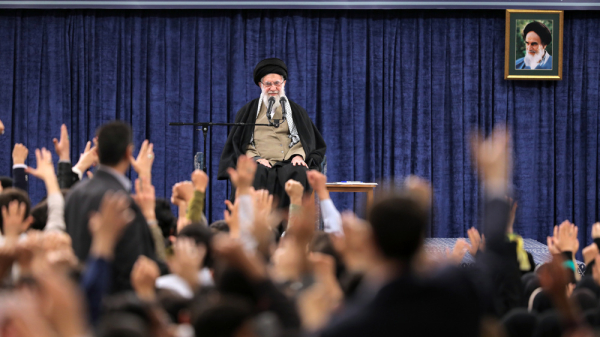
Leader of the Islamic Revolution Ayatollah Seyyed Ali Khamenei says a call by US President Donald Trump for negotiations with Iran is nothing but an attempt to "deceive the world public opinion" and portray the Islamic Republic as the party not willing to give diplomacy another chance.
“We sat down for years and negotiated. This same person threw off the table and tore apart the concluded, finalized, and signed negotiations,” Ayatollah Khamenei said during an address to a gathering of students in Tehran on Wednesday.
“When we know he doesn’t honor [agreements], what is the point of negotiating?” the Leader asked. “Therefore, calls for negotiation and talks of negotiation are meant to deceive the global public opinion.”
The Leader said the Trump administration does not intend to remove the sanctions, and that negotiations will only worsen the pressure campaign as Washington will raise new demands.
“If the purpose of negotiations is to lift the sanctions, negotiating with this US administration will not remove the sanctions. It will make the sanctions even tighter and increase the pressure,” the Leader said.
‘US to lose more in case of war’
Responding to Western allegations that Tehran seeks nuclear weapons, the Leader reiterated that Iran does not want to build nuclear arms, adding that it could have done so by now if it had so chosen.
“It is said that ‘We won’t let Iran obtain nuclear weapons.’ Had we wanted to build nuclear weapons, America could not have stopped us. The fact that we don’t have nuclear weapons and are not pursuing them is because we ourselves don’t want them for specific reasons.”
Referring to US threats of military action against Iran, Ayatollah Khamenei warned that Iran is prepared to deliver a decisive response. The United States, he said, would suffer more in such a confrontation.
“In my view, this threat is irrational because war or military aggression is not a one-sided affair. Iran has the capability to retaliate, and it will certainly deliver a counterstrike if necessary,” he said. “I even believe that if the Americans or their agents make a wrong move, they will suffer more damage than anyone else.”
‘Sanctions losing effectiveness’
On the sanctions, the Leader said such measures are losing their effectiveness gradually as Iran has found ways to neutralize them.
“Over time, when sanctions persist globally, they gradually lose their impact. Even they (US officials) themselves admit this. They acknowledge that a sanctioned country can gradually find ways to neutralize sanctions and render them ineffective. We have discovered many such ways and have neutralized sanctions in many areas,” the Leader said.
However, Ayatollah Khamenei said that most of Iran’s economic challenges stem from internal negligence and mismanagement rather than external sanctions.
‘Resistance growing in power’
Ayatollah Khamenei also addressed the martyrdom of prominent resistance leaders in Lebanon, Palestine, and Iran over the past year, including Hezbollah leader Sayyed Hassan Nasrallah.
While acknowledging the losses felt by the Resistance Front, the Leader emphasized that these setbacks do not signify weakness or decline.
“Yes, these brothers were incredibly valuable individuals whose absence is undoubtedly a loss for us, there’s no doubt about that,” Ayatollah Khamenei stated.
“But today, despite their absence, we are stronger in some areas compared to last year on this very day. In other areas, we are at least as strong as before, if not stronger.”
He added that the loss of prominent figures does not mean retreat or weakness if two key factors remain intact: Having ideals and striving toward those ideals.
“If these two factors exist within a nation, then while the absence of such individuals may be a loss, it won’t disrupt the overall movement forward,” Ayatollah Khamenei said.
Press TV’s website
How have the Kaaba's curtain changed throughout history?
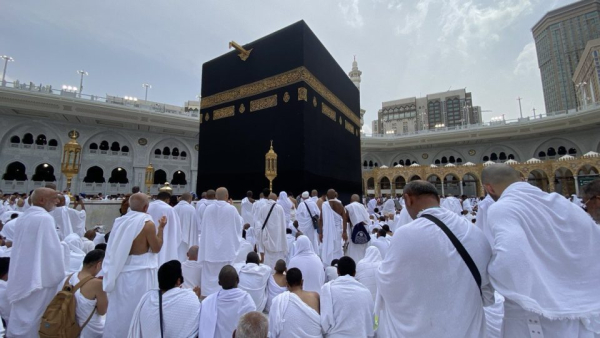
Anyone who has been on the Hajj pilgrimage has seen that the Holy House is covered with a cloth. This is also seen in pictures of the Kaaba, and we even see in very old photographs that a cloth has been thrown over the Kaaba. When did this happen?
Covering the Holy House has been a tradition for centuries. Not only can we see this in very old photographs, but we can also see this when we study history. Even a position called "the curtain keeper" of the Kaaba was created for this reason, and there were people who were responsible for maintaining, replacing, and changing the covering of the House of God.
As is clear from the narrations, it seems that the first people to cover the House of God with a cloth were Prophet Abraham and Prophet Ismail (peace be upon them). This is something that is clear from the hadiths of the pure Imams (a.s.), especially from the precious words of Imam Sadiq (a.s.).
Although some Sunni brothers believe that a person named Tubba or Asad Al-Hamiri was the first person to cover the Sacred House of Allah with a cloth, and of course they say that he put a door for the Kaaba. At the same time, some narrations state that the first person to cover the Kaaba was Hazrat Ismail (a.s.), and Tubba years later changed the covering of the Kaaba to a covering made of leather.
Has the type of cloth that covers the Kaaba changed throughout history?
Yes. As history shows, the Sacred House of Allah was covered with a cloth made of leather in the era before the advent of Islam and the mission of the Holy Prophet (s.a.w.s.); But the Messenger of God (peace be upon him and his family) changed this cloth and covered the Kaaba with a Yemeni cloth. After his death, the second and third caliphs covered the Kaaba with a thin, white Egyptian cloth called Qabati. Of course, some sources state that before the advent of Islam, the Kaaba was covered with this thin, white cloth.
In the second century AH, Hussein ibn Aftas, a Talebi, led a rebellion and took control of Mecca. After this capture, he entered the Kaaba and took possession of all the cloths there. Then he covered the Sacred House with a yellow and white silk cloth.
A few years later, when Ma'mun became the caliph, he was informed that the cloth on the Kaaba, which was red at that time, had become worn out. He ordered that a white silk cloth be sewn and installed on the Kaaba.
What are the cultural effects of Hajj?
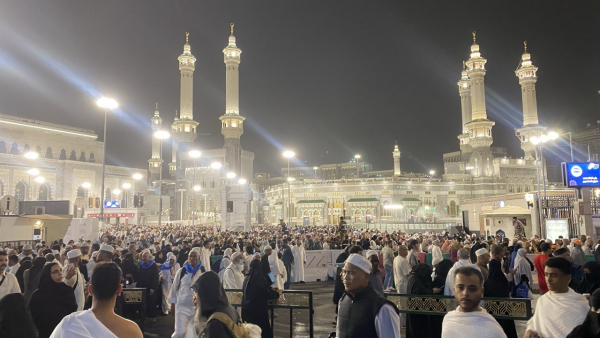
This avoidance of hypocrisy and showing off and paying attention to the deity is also one of the important philosophies of Hajj.
That's right. One of the most important philosophies and wisdoms of Hajj is that it affects the morality and character of a person. Someone who was looking for hypocrisy and being seen in the eyes of people before Hajj, after Hajj, sees only God and seeks divine pleasure. Basically, the Ihram ceremony itself is a kind of ceremony that should completely distance a person from worldly attachments and attention to external and material privileges. Suddenly, during the Ihram ceremony, a person is freed from any kind of vain and worldly privileges that have no effect on his spirituality and, on the contrary, distance a person from spirituality, and this is one of the important philosophies of Hajj.
At the same time, while we are moving away from hypocrisy and attracting attention in the eyes of people, it is as if we are also establishing a bond with believers.
That's right. Muslims establish a bond of friendship during Hajj. Everyone appears with one voice, with the same appearance, and has a single slogan and goal. Important cultural exchanges take place during this ceremony, and all Muslims unite. This is why it is stated in narrations that one of the important effects of Hajj is the dissemination of the news and teachings of the Holy Prophet (peace and blessings of Allah be upon him) to all parts of the Islamic world.
Are there any conditions for performing Hajj and its effect on the forgiveness of sins?
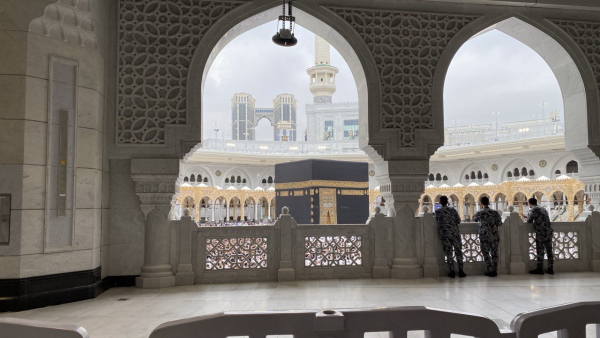
Yes. As mentioned, a person must not have the intention of committing a sin after Hajj and his repentance must be genuine. As Imam Sadiq (AS) said: “Whoever performs Hajj without any kind of hypocrisy and showing off and only with the intention of seeking the pleasure of Allah, Allah Almighty will forgive his sins.” Note that when someone goes to Hajj for hypocrisy and showing off and intends to be honored by people by doing so, he must ask for his reward from those people. Allah Almighty accepts Hajj that a person performs without hypocrisy and with the intention of seeking Allah’s mercy, not to attract attention from people.
Today, the Kaaba is covered with a black cloth. What is the history of this issue?
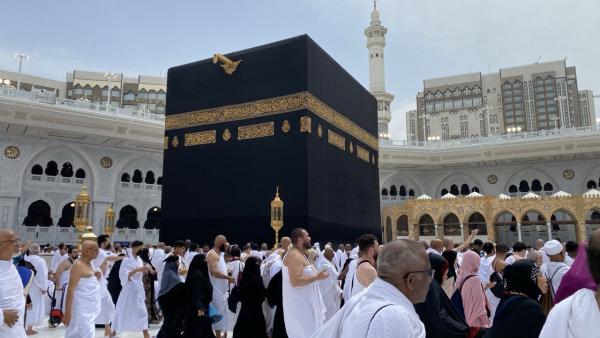
One of the Abbasid caliphs, Al-Nasir Ludinullah, was the first to cover the Kaaba with a black cloth. Of course, the cloth was made of silk. Since then, the Kaaba has been covered with a black cloth every year. In fact, this trend has become common since the time of the Abbasid caliph and has continued to this day.
Here, the question comes to mind: why is it necessary to cover the Kaaba with a black cloth?
The reason why the cloth covering the Kaaba is black is that the heat and intensity of the sun's radiation in the land of Arabia are very high, and a hot light shines on the Kaaba. Among all the existing colors, black is more resistant to the sun and it seems that this color is more suitable for covering the Sacred House of Allah.
Why is the Tawaf seven rounds?
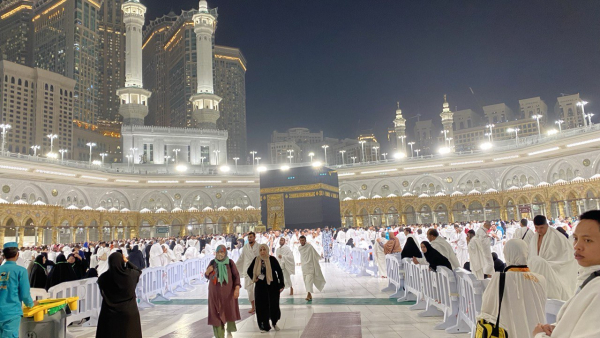
Another question is about Tawaf. It has been said that the Tawaf of the Sacred House of Allah must be seven rounds. What is the reason for this? Basically, what is the secret behind the fact that we must definitely go around the Kaaba seven times during Hajj?
Many people have asked the Holy Prophet (peace and blessings of Allah be upon him) and the pure Imams (peace be upon him), and those great people have answered this question to the best of their mental capacity and understanding. The depth of the story of the seven rounds of Tawaf has secrets that lie in divine wisdom, and only those great people do not know it and cannot understand it. However, they have mentioned some points about it in their speeches.
For example, it is mentioned in a hadith that Imam Sajjad (peace be upon him) said that I asked my father Imam Hussain (peace be upon him) why the Tawaf was made seven rounds and why Muslims and believers must go around the Kaaba seven times? The Prophet replied: Because God Almighty told the angels that I will place a successor on earth. But the angels objected and said: Will you place someone on earth who will shed blood and cause corruption? So if the purpose of creation is worship, we will praise and glorify You and worship You.
But God Almighty said that I know truths that you do not know. He became angry with the angels and those who benefited from the divine light were deprived of it. This continued for seven thousand years and they asked God Almighty for forgiveness and pardon for seven thousand years until they were finally forgiven by God and the House of the Occult, which is located in the fourth heaven, was made the Kaaba, a place of refuge, safety and reward. Since then, it has become obligatory for God's servants to circumambulate the Kaaba seven times, circling it once every thousand years.
Why did God make Hajj obligatory for Muslims?
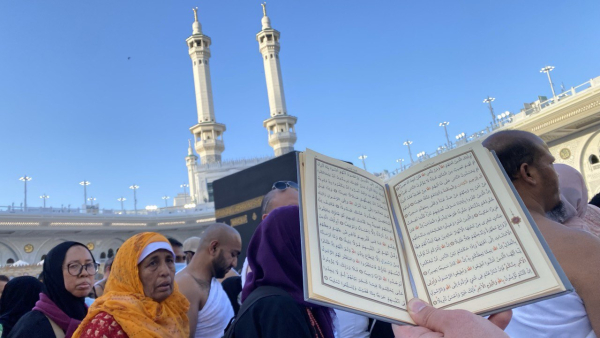
Hajj is one of the obligations that our Lord has made for us, but what is the real reason for it?
Why should we go to Hajj, why should we perform difficult and exhausting acts during Hajj, can't we perform another act of worship instead of Hajj?
Hajj is a worship in which there are many wisdoms, such as servitude, simplicity, obedience, unity, etc.
These benefits include all material, spiritual, political, social, cultural and economic benefits; one of the wisdoms of Hajj is to examine the important issues and problems of the Islamic nation, cultural exchange, etc.
This Islamic worship, like other Islamic worships, has beneficial wisdoms that benefit the individual and society.
Here we will briefly discuss some of the wisdoms of Hajj:
The most important and beneficial wisdom of Hajj is to declare servitude and servitude to God Almighty, which is evident and clear in all acts of Hajj such as Ihram, Tawaf, Sa'i, Sacrifice, etc.
In addition, many spiritual, psychological and moral benefits accrue to the pilgrim and to the Islamic community, including:
By wearing Ihram and severing his/her dependence on material and worldly attachments, a person is freed from all harmful restrictions and dependencies and becomes ready to ascend and fly in spiritual and mystical spaces.
Muslims from all over the Islamic and non-Islamic countries gather in the Great Hajj Congress on specific days and, with unity and consensus, examine the solutions to the problems of the Muslims of the world and seek help from the great power of Muslims in resolving the problems. And they establish Islamic unity among all Muslims of the world, God willing.
The dynamics of the Muslim market and economy
Since ancient times, the Hajj season has been a good opportunity for the prosperity of Muslim merchants and the circulation of capital in the hands of merchants and the poor from the east to the west of the world.
Getting to know the works and news of the Holy Prophet (PBUH) and keeping these works alive
Hisham ibn Hakam says that I asked Imam Sadiq (AS): Why has God commanded people to perform Hajj and circumambulate His House?
He said: God created humans... and commanded them to perform an act (Hajj) that includes obedience to religion and their worldly interests. During the Hajj season, Muslims gather from the East and the West to get to know each other, so that each nation can benefit from the trade and economic products of other nations, so that travelers and transporters can benefit from renting their vehicles on this journey, so that they can become familiar with the works and news of the Holy Prophet (PBUH) and these works will continue to live and not be forgotten. If each nation were to speak only about its environment, they would perish, cities would be destroyed, commercial benefits would be lost, and the news and works of the Prophet would be destroyed. This is the philosophy of Hajj.