zarezadeh
New developments regarding the Strait of Hormuz
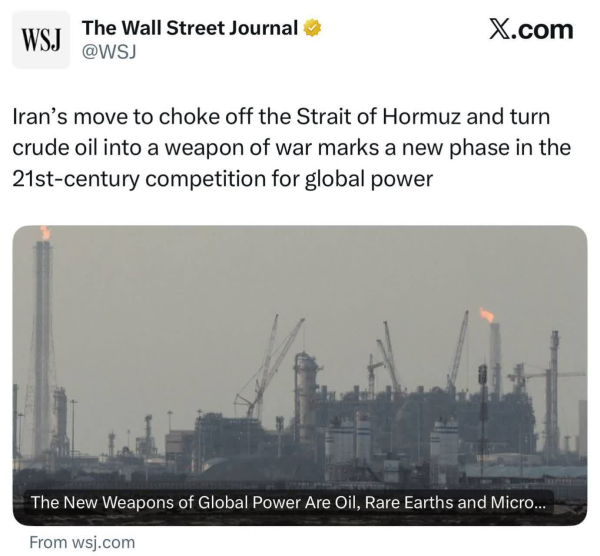
Wall Street Journal: Iran’s move to close the Strait of Hormuz and turn crude oil into a weapon of war marks a new phase in the competition for global power in the 21st century.
Why is the idea of “guaranteeing non-aggression” meaningless?
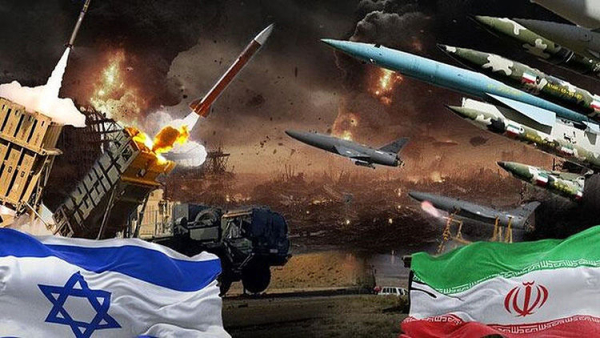
Why is the idea of “guaranteeing non-aggression” meaningless?
In the midst of the direct confrontation between the United States and the Zionist regime with Iran, some political activists have proposed the idea of “obtaining a guarantee of non-aggression.” This idea, more than being a considered strategy, is a reflection of an inaccurate understanding of the logic governing international politics. In the international system, commitments are not based on legal or moral will, but on the balance of power. Any agreement is valid only as long as the balance of power supports it; with a change in this balance, commitments also practically lose their function. Therefore, wars are essentially a means of redefining the balance of power, and it is the victorious side that ultimately determines not only the outcome of the battlefield, but also the rules of order that follow.
Washington and Tel Aviv entered this confrontation with the assumption that the space was fully prepared for the Iranian people to revolt against the government and change the political system. Why, their economic influencers had prepared the ground for public discontent and social revolt by increasing the price of currency and energy, and the disaster of January made the enemy greedy (we will discuss the role of economic influencers in the martyrdom of our beloved leader in detail at the appropriate time). Therefore, they implemented the policy of decapitation and assassination of political and military officials with the aim of creating a vacuum at the top of the government.
However, the exemplary insight of the people and their unprecedented presence in the streets in support of the regime did not allow the nuclei of chaos to become active, and the project was nipped in the bud. The courage and wisdom of the nation's experts in appointing the new Supreme Leader disappointed the enemy on another level.
In the current situation, the United States has neither defined achievable operational goals with clarity, nor does it have a reliable "image of victory," nor an exit strategy that can justify the costs of this conflict. This situation is a sign of disruption at the strategic level of the other side.
In contrast, Iran has managed to shift the logic of the confrontation from the level of direct military conflict to a broader and more complex level; a level in which the costs for the other side increase exponentially and the hardware superiority is not the only determining factor in this war. Iran’s superiority is not unidimensional, but rather the result of the synergy of several key components: social cohesion and the effective presence of the people as a strategic support, the rapid consolidation of the leadership structure and the continuation of the decision-making capacity, the continuation of targeted strikes on the enemy’s vital interests and infrastructure, and the use of energy and global trade bottlenecks as leverage. This shift in the level of play has significantly changed the equation of war.
In such a framework, raising issues such as a “ceasefire” or obtaining “guarantees” before establishing superiority not only lacks real support, but can also lead to a standstill at a point that has not yet led to a lasting change in the balance of power. The experience of the ceasefire after the 12-day war shows that in the absence of imposing decisive costs and a tangible change in the balance, any commitment by the other side will be tactical and temporary in nature and can be quickly violated. Perhaps if Iran had not accepted the ceasefire at the end of the 12-day war and had defined and offensive the battlefront in the same dimensions as it is now, many things would not have happened.
The strategic logic of the current situation requires that Iran’s goals be defined explicitly and at a level that targets the roots of the reproduction of the threat. In this framework, the end of the US military presence in the region can be proposed as a central goal; because the continuation of this presence provides a structural basis for the continuation of insecurity and intervention. The US withdrawal from the region is not simply a political demand, but a prerequisite for the formation of a new order in the Middle East; an order in which the rules of the game will be written by the new hegemon of the region (i.e. Iran) and its allies.
Accordingly, the main issue is not simply the end of an ongoing conflict, but rather the determination of the shape and rules of the order that follows. Any haste in accepting arrangements that lack support in the balance of power could lead to the reproduction of the threat cycle in the future. In contrast, consolidating superiority and defining strategic goals at a structural level will allow the formation of a more stable order based on the new realities of power.
Seyyed Yasser Jabraili
Report: US F-35 among 20 aircraft hit by Iran, pilot injured
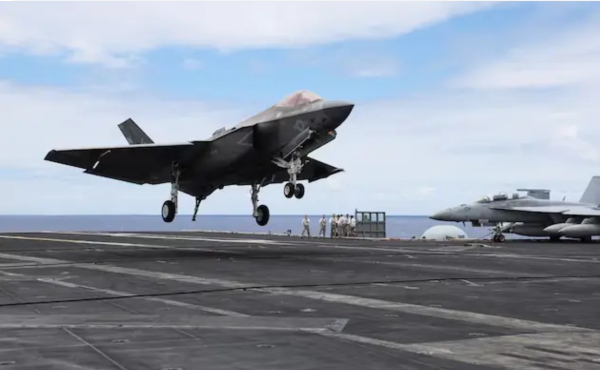
Details have emerged on a US Air Force F-35A that was severely damaged by a surface-to-air missile over Iran on March 19, marking it as one of approximately 20 US aircraft known to have been damaged or destroyed in the nearly three-week-old war.
Air & Space Forces Magazine, the official journal of US Air Force, cited sources familiar with the incident as saying that the aircraft was most likely damaged by a surface-to-air missile, given the altitude at which the F-35 typically operates.
Although US Central Command (CENTCOM) has not provided further details, the incident is reportedly under investigation by military officials.
Iran has developed air defense systems that can use passive infrared sensors rather than radar to target aircraft, a solution that previously proved effective in Yemen when employed by Ansarullah, which downed around half a dozen MQ-9 Reapers during Operation Rough Rider last year.
The F-35 reportedly made an emergency landing at an airbase in the region, and the pilot was injured by shrapnel. CENTCOM reportedly declined to comment further when asked about the incident on March 22.
On the same day, Iran’s Islamic Revolution Guards Corps (IRGC) posted a video showing an F-35 being targeted and struck by an Iranian air defense system.
The IRGC said to have “severely damaged” the F-35. Iran's air defense systems, which use passive infrared sensors to target aircraft, have proved effective in previous engagements, such as when downing multiple MQ-9 Reaper drones.
The F-35, designed to evade radar detection, remains vulnerable to infrared targeting, which homing systems use to track heat signatures.
The incident marks one of about 20 US Air Force aircraft that have been damaged or destroyed during the ongoing terrorist war on Iran, which began nearly three weeks ago.
On March 2, three F-15E Strike Eagles were shot down over the Persian Gulf. A KC-135 Stratotanker also crashed in western Iraq on March 12, killing all six crew members aboard, while another KC-135 sustained severe tail damage but was able to land.
President Donald Trump later acknowledged that at least one KC-135 had been damaged during Iranian attacks on Saudi Arabia.
Additionally, about a dozen MQ-9 Reaper drones have been lost in the war, some of which were damaged on the ground by Iranian forces. These losses have not been publicly disclosed.
Press TV’s website
Iran warns US: Do not call your retreat an agreement
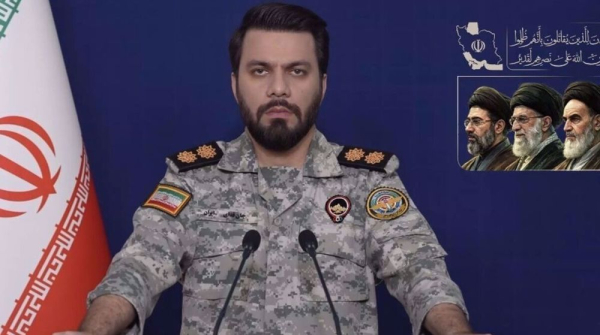
Spokesman for the Khatam al-Anbiya Central Headquarters Lieutenant-Colonel Ebrahim Zolfaqari
Spokesman for the Khatam al-Anbiya Central Headquarters, Lieutenant Colonel Ebrahim Zolfaqari, says the strategic power that the enemy boasted about has “turned into a strategic defeat.”
“If the self-proclaimed superpower of the world could have escaped this predicament, it would have done so by now. Do not call your defeat an agreement,” he said on Wednesday.
This comes as US President Donald Trump backed away from his 48-hour ultimatum to strike Iran’s power plants after the Islamic Republic warned that all energy and power installations in the region would be targeted in retaliation.
Trump claimed in a post on his Truth Social media platform that the US and Iran have had “very good and constructive conversations over the past two days regarding a complete and total resolution of our hostilities in [West Asia].”
A source familiar with internal discussions in Tehran said Monday that there has been no official contact between Tehran and Washington.
“The era of your promises is over. Today, there are only two fronts in the world: truth and falsehood. And every freedom-seeking pursuer of truth will not be deceived by your media waves,” Zolfaqari said.
USS Abraham Lincoln under constant surveillance, will be hit if within range: Navy commander
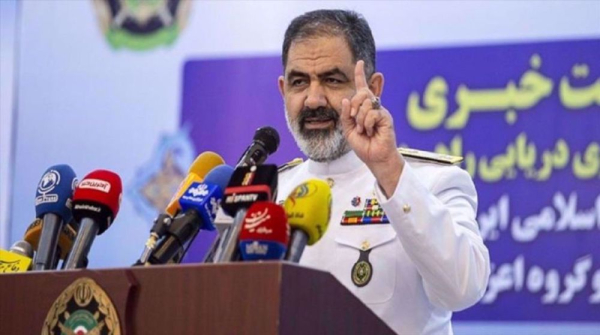
Iranian Army’s Navy has said that the movements of the USS Abraham Lincoln carrier group are being closely and constantly monitored and will be targeted if it comes within the range of Iranian missiles.
Rear Admiral Shahram Irani, the commander of the Iranian Navy, warned that should the hostile carrier group enter the range of Iranian missile systems, it would be targeted with crushing strikes.
"Like Mount Dena, we stand firm for the dignity and glory of Iran and Iranians, to be a hope for the oppressed and a thorn in the eyes of enemies," he said in remarks on Wednesday.
USS Abraham Lincoln (CVN-72) is the fifth Nimitz-class aircraft carrier in the US Navy.
Rear Admiral Irani honored the memory of the martyrs of the destroyer Dena and outlined the Navy's posture in the strategic waters of the Persian Gulf.
"The Navy of the Islamic Republic of Iran, with resolute will and the absolute maritime dominance of the Islamic Republic of Iran in the Persian Gulf, intelligent control of the Strait of Hormuz, and authoritative monitoring of the passage of military and hostile fleets north of the 10-degree line, will not relent until we avenge the blood of our dear martyrs," he said
Iran closely monitoring deployment of US troops in region: Qalibaf
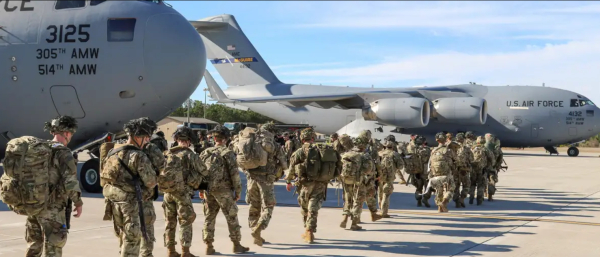
Western media reports say some 3,000 more US soldiers could be deployed to West Asia.
Parliament Speaker Mohammad Baqer Qalibaf has issued a stern warning to the United States, stating that Iran is closely monitoring the deployment of American soldiers in the region.
In a post on the social media platform X on Wednesday, Qalibaf addressed recent reports of US military movements.
“We are closely monitoring all US movements in the region, especially the deployment of their soldiers,” he wrote.
“What the generals have ruined, the soldiers cannot fix; instead, they will only become victims of Netanyahu’s delusions. Do not test our resolve to defend our land.”
The statement comes amid heightened tensions, 26 days into a US-Israeli aggression against Iran. The remarks follow unconfirmed reports from Western media and claims by US President Donald Trump regarding negotiations with the Islamic Republic.
Iranian officials have not yet officially confirmed any such negotiation proposals.
Analysts suggest that the proposed five-day deadline for talks, as floated by Trump, might serve as a cover for potential hostile actions.
Prior to the diplomatic overtures, Trump had made comments regarding the seizure of Iran’s Kharg Island. Reports from American media outlets indicate that the Pentagon has ordered approximately 2,000 soldiers from the US Army’s 82nd Airborne Division to deploy to West Asia.
In response to these naval movements, the Iranian Army’s Navy has conducted a military operation.
According to official reports, missiles of the Iranian Army’s Navy targeted the USS Abraham Lincoln strike group, compelling the US naval force to change its position.
Press TV’s website
Wave 80: IRGC launches major strikes against northern, central occupied territories, US bases
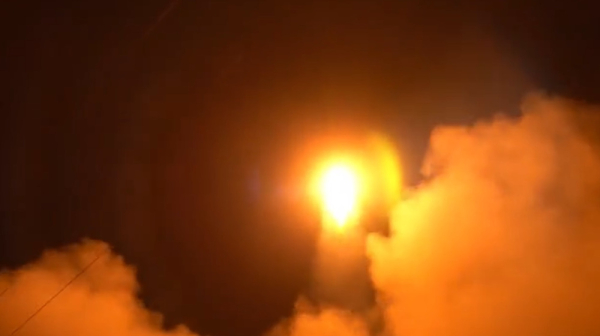
The Islamic Revolution Guards Corps (IRGC) has announced carrying out the 80th wave of its decisive retaliatory Operation True Promise 4, this time striking strategic points and military centers on the occupied territories' northern side, besides pummeling American outposts across the region.
In a statement on Wednesday, the IRGC said the latest phase was staged by the Corps' Aerospace Force in support of the "proud offensives," carried out by Lebanon's Hezbollah resistance movement against Israeli targets, and the residents of southern Lebanon, who have been bearing the brunt of Israeli aggression.
The Consequences of Trump's Contradictions
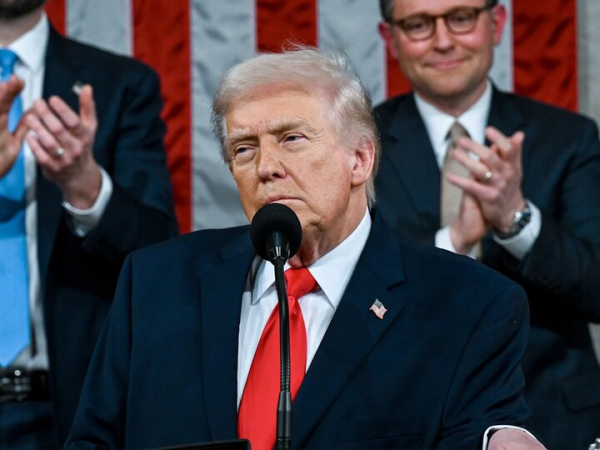
Shanaka Anselm Perera
(University Professor and Human Rights Scholar
36 hours ago, President Donald Trump used the word "derailment"; this morning he spoke of "constructive dialogue." The question every trader, diplomat, and general is asking is: What broke between Saturday night and Monday morning?
*Six things fell apart simultaneously*
*First*: The bill has arrived. The Pentagon has requested more than $200 billion in supplemental funding. The cost of the war has been $11.3 billion in 6 days and $16.5 billion in 12 days. At $1.38 billion a day and rising, Congressional resistance to the supplemental funding is serious. Money that was supposed to pay for the war for "a few days, not weeks" now requires a vote that may not pass.
*Second*: The Federal Reserve killed the idea of cutting interest rates. On March 18, the Fed cut interest rates kept the target between 3.5% and 3.75% and raised its 2026 PCE inflation forecast from 2.4% to 2.7%, citing the energy shock from the Iran war. The dot plot now shows just one rate cut for all of 2026. Every unit of delay in easing means pressure on housing, credit and the Magnificent Seven. What was supposed to be a show of strength has become an inflationary show.
*Third*: Allies respectfully rebelled. 22 countries signed up to coordinate in Hormuz, but none committed to sending warships in time for a fight. Japan is releasing its strategic reserves. South Korea’s KOSPI is down 12%. European gas prices jumped 35% after Qatar’s LNG was decommissioned and declared a “major force” for five years. Trump called NATO “cowards” and received only a press release in response The “coalition of the miles” has become the “coalition of the waiting.”
*Fourth*: TSMC sends a signal. Taiwan imports about 97 percent of its energy. Its LNG reserves last only 11 days. Qatar supplies a third of the world’s helium, which TSMC needs to make chips. That helium is locked behind a closed strait. Every Nvidia GPU, every Apple chip, every AI cluster relies on a factory in Hsinchu. The seven tech giants have lost hundreds of billions of dollars.
*Fifth*: Birol names the extent of the damage. The head of the International Energy Agency told Australia this morning that 40 energy facilities in nine countries have been severely damaged, global oil supplies have been cut by 11 million barrels a day, and the crisis is bigger than the two shocks of the 1970s combined; no country is immune. He cited fertilizers and helium as the main culprits. The man who runs the world’s energy security He called the war Trump started the worst energy crisis in modern history.
*Sixth*: Midterm elections. Gas prices are up 93 cents a gallon. 60 percent are dissatisfied and 57 percent say things are going badly. The numbers that matter in Washington are approval ratings in key states, where voters fill up their gas tanks every Tuesday.
*Conclusion:*
Six pressures. President Trump didn’t get diplomacy; he got math.
The 48-hour deadline was a threat; the 5-day pause is an admission that the consequences of that threat were worse than intended.
Destroying the power plants would block the strait forever, fulfill Qalibaf’s promise to “irreversibly destroy” the energy and desalination infrastructure of the [Persian] Gulf, disrupt TSMC’s supply chain, and send inflation above 3 percent. and offered the opposition a midterm election in a $7 gas can.
This is a real pause, but not a lull. The strait is still closed. Those 40 facilities are still damaged. The fertilizer is still blocked. The planting season is coming to an end. The five-day clock is already ticking.
Molecules don’t negotiate. Molecules wait.
The Power Puzzle in the 2026 War and Trump’s Strategic Suicide
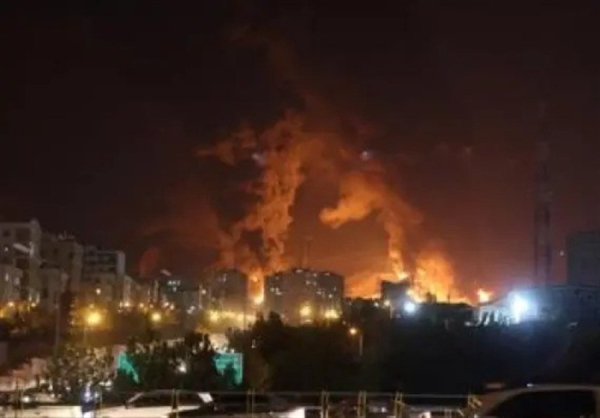
Mehdi Arab Sadeq, Energy Diplomacy Analyst
Trump did not hit the oil tanks in Kharg. Because he knew that oil would cost $150. Now he says he will hit the power plants. The difference is: oil can be brought from elsewhere. Electricity cannot.
Two different models of the power grid in the region:
Israel (centralized model): Five major power plants provide more than 50 percent of the electricity. The largest of them provides 20 percent of the electricity alone. The CEO of their power company said: “After 72 hours of power outage, life becomes impossible.”
Iran (dispersed model): Five major power plants provide only 14 percent of the electricity. The largest power plant, Damavand, produces only 3.7 percent of the country’s total electricity. That is, if all five major power plants are hit, we still have 86 percent of the capacity.
The hard test of war: In the past 23 days, there have been limited attacks on power stations in Tehran and Karaj. The outages were resolved within hours. The network has been restored. This means our architecture has passed the test of war.
Water, the next red line:
Iran’s response to Trump’s threat goes beyond power plants. The region’s desalination plants are within our reach. 80 percent of Israel’s water depends on five facilities. Kuwait and Bahrain get 90 percent of their water from desalination. There are more than 400 desalination plants in the Persian Gulf. Water has no substitute. Without water, cities will evacuate. Geography says this, not us.
You say you can hit our power plants. We say we can hit your five main power plants. We can hit your desalination plants. We can make life impossible for millions of people.
Mr. Trump, if attacking oil infrastructure is gradual suicide for you, attacking electrical infrastructure is certain and immediate death. And it is not you who will pay the price, but the American people, in sudden blackouts and $8 gas prices.
Iran’s armed forces determined to fight until complete victory: Commander
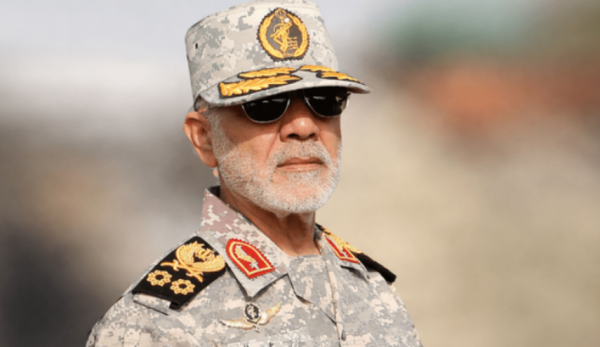
The commander of the Khatam al-Anbiya Central Headquarters says Iran’s armed forces remain steadfast on the path to complete victory.
In a statement released on Tuesday, Major General Ali Abdollahi said the “vicious, criminal US-Zionist enemy” ignited a war with the aim of partitioning and devouring the Islamic Republic of Iran.
On the first day of the war, February 28, they assassinated Leader of the Islamic Revolution Ayatollah Seyyed Ali Khamenei and a number of military commanders, expecting that the country without its leader and the military without its commanders would collapse within 48 hours.
But, Abdollahi said, by God’s grace, the epic presence of the great and heroic Iranian nation, and the unparalleled efforts of the brave fighters in the armed forces over the past 25 days, the enemies, chief among them the wicked and arrogant United States, have suffered major blows.
“The fake powers, notably the United States, which for decades exploited the oppressed nations of the world, particularly Islamic countries, through threats and intimidation, have now been brought to their knees before the eyes of the world with divine assistance,” the statement read.
Abdollahi said that given the facts on the battleground, the enemy is now desperately seeking off-ramps from the conflict it initiated.
Donald Trump, the president of the United States, “understanding the realities on the ground and finding himself trapped in the quagmire of war, has turned to the leaders of certain countries to seek a way out after losing hope in achieving his objectives,” General Abdollahi stated.