zarezadeh
Hello to the first grade flowers of Minab
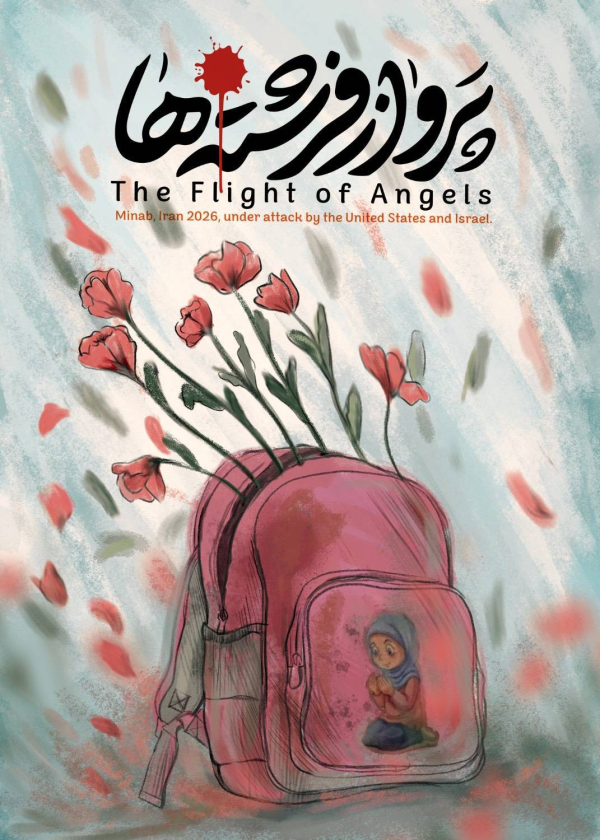
Who understands this; except me, the first grade teacher, who started your day with a smile and cold hands or the hug of your teacher.
How quickly the school year ended for you. The signs of the Persian book are not finished yet. They were supposed to celebrate the alphabet for you this year, but they celebrated in a different way; among the rubble, dirt and blood; and the song of the celebration is the sound of your mothers' cries and wails! So that the whole world saw this celebration.
It is true that you started with the first word, water, but you ended with the word homeland!
The beginning of your reading and writing was the beginning of your journey;
You had gone to school to study, but you did not know that today you would teach us a lesson in patriotism!
This blood cannot be erased.
Is it possible to forget all that purity and smiles????
I cannot write more than this; I can only say that your class today was a piece of heaven!
And history will write that the first martyrs recorded in the Third Sacred Defense were innocent schoolgirls.
First Grade Teacher; Mojgan Eslami
Airstrike on Minab School
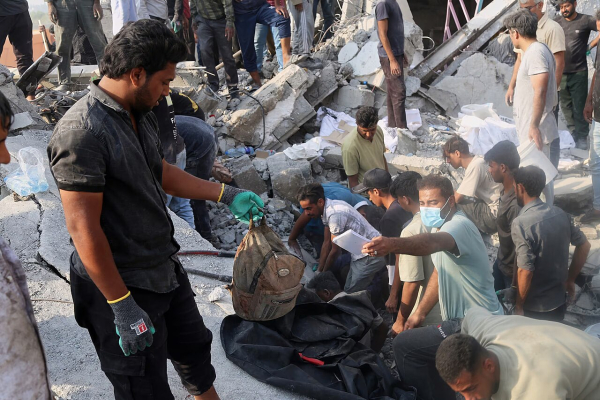
On March 29, 1404, in the early hours of the US-Israeli war with Iran, the Islamic Revolutionary Guard Corps Navy’s Shajre Tayyiba Girls’ Elementary and Preschool in Minab was attacked.
According to Iranian state media, during the March 29 airstrikes across Iran, the Shajre Tayyiba School in Minab was targeted by a missile. The airstrikes, which began at around 10 a.m. Iranian time, coincided with the time when children in Iran would normally be getting ready to go to school, as Saturday is a workday in Iran. The missile strike immediately killed dozens of people inside the building.
Human rights organizations said that about 170 students and teachers were killed in the attack, while the Iranian Ministry of Education put the number of students present at 264. Most of them were girls aged 7 to 12. Shiva Rad, a representative of the Iranian Teachers’ Union Coordination Council, said the school had decided to close after the airstrikes began, but parents were unable to reach the school before the missile hit.
The school was targeted between 10 and 10:45 a.m., as classes were changing bells. The force of the explosion destroyed more than half of the school building, knocking down walls and causing the roof to collapse, trapping a number of people under the rubble. Images released showed the bodies of some of the victims, some of whose bodies were still buried under the rubble. The explosion destroyed at least half of the two-story school building.
According to reports provided to Middle East Eye by two Red Crescent aid workers and one of the victims’ parents, the second attack was a “double attack.” One aid worker said that after the first attack, the school principal had moved a group of students to the prayer room and called parents to come pick up their children; but the same location was targeted by a second attack shortly after, killing most of those who had taken refuge there. A parent confirmed this account, saying that after the school called about the first attack, in which her daughter had survived, she was on her way to school when the second attack occurred, killing her daughter. According to the mayor of Minab and the Iranian Ministry of Education, the school was targeted three times in total. On March 1, BBC Persian and some news agencies reported that a clinic in the same location had been hit, which some described as a “second attack on the same location” and others as a “supplementary attack.” The New York Times also confirmed that smoke was rising from two buildings at the scene. In the released videos, smoke can be seen coming from the windows of the school; A school whose painted walls were decorated with images of crayons, children and an apple. Experts also confirmed that other locations near the school were also targeted.
Who is Ayatollah Seyyed Mojtaba Hosseini Khamenei?
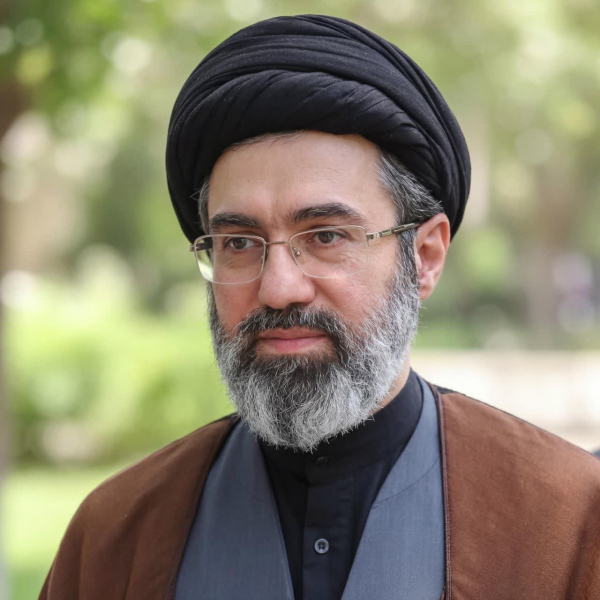
Ayatollah Seyyed Mojtaba Hosseini Khamenei is the third Supreme Leader of the Islamic Republic of Iran, who was elected as the Supreme Leader of the Islamic Republic by the Assembly of Experts after the martyrdom of his father, the former Leader of the Islamic Revolution, and the deaths of his wife, mother, and some other close family members in a terrorist attack on the Supreme Leader's residence. The beginning of his leadership came at one of the most sensitive and tense periods in Iran's contemporary history, and had a wide-ranging impact on the domestic and regional space.
Seyyed Mojtaba Khamenei was born in the city of Mashhad. He is the second son of Seyyed Ali Khamenei, the former martyred Leader of the Islamic Republic of Iran, and comes from a family known for religious, revolutionary, and cultural activities. His mother was also from a religious and cultural family that lived alongside the former Leader of the Revolution for many years.
Despite their high political and social status, this family has continued to focus on raising their children and maintaining family unity over the past years, and has always kept their distance from the media.
Seyyed Mojtaba Khamenei pursued his religious education at the Qom Seminary and learned an important part of jurisprudence and principles from prominent professors. After years of scientific and research presence at the seminary, he also taught and trained students and played an effective role in teaching and spreading Islamic knowledge.
During a terrorist attack that targeted Tehran, Seyyed Ali Khamenei, the former leader of the Islamic Republic of Iran, was martyred. At the same time, his wife, mother, and a number of other close family members also lost their lives. This incident was one of the most bitter and important events in Iran's contemporary history and had a profound impact on the country's political, social, and security environment.
Following this tragic incident, the Assembly of Experts held an extraordinary session and, by vote of its members, elected Seyyed Mojtaba Hosseini Khamenei as the third Supreme Leader of the Islamic Republic of Iran. This election was made in a situation where the country was facing security and regional threats and pressures, and maintaining internal stability and continuing the path of the revolution were considered the most important priorities.
With the beginning of Seyyed Mojtaba Khamenei’s leadership, the Islamic Republic of Iran entered a new stage in its history. He is known as the third leader after Ruhollah Khomeini and Seyyed Ali Khamenei, and the responsibility of maintaining internal cohesion, guiding the path of the Islamic Revolution, and confronting regional and international threats has been placed on his shoulders.
20 defeats for enemies so far
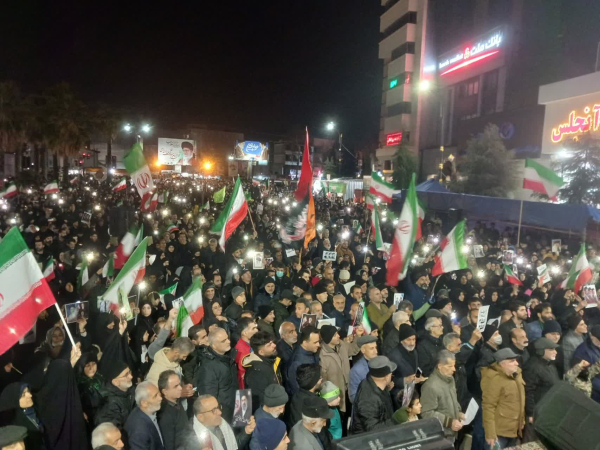
The enemy entered the field with great calculations, but the reality of Iran upset their equations one by one. Today, even in their think tanks, there is a discussion about finding a “turnaround.”
1. They thought that by eliminating the Leader of the Revolution, the pillar of the country’s tent would collapse; but they saw that the nation stood firm and a deep-rooted structure would not allow collapse.
2. They had imagined a three-day war; but Iran stood firm and from the very first days, they realized that they had entered a field whose end was not in their control.
3. They wanted to shake the country’s defensive pillars by assassinating the commanders; but the command was rebuilt faster than they imagined and the responses continued to be heavier.
4. They thought that the streets would be on fire at the same time as the war; but the people stood firm and this scenario collapsed before it could take shape.
5. They wanted to deepen social polarization by inducing fear for one group and courage for another; but the war awakened the sense of defending the homeland.
6. They dreamed of dividing some regions of the country; but the timely presence of the military buried this dream at the very beginning.
7. They thought that the resistance front was tired and weakened; but the field responses of Iraq, Hezbollah, and Yemen surprised them.
8. They thought that by attacking police stations, the security of the cities would collapse; but timely planning caused only empty buildings to be demolished and the security of the people to be maintained.
9. They wanted to create a narrative of victory through a media war; but the reality of the field was so clear that many of these claims collapsed.
10. They thought that Iran's missile capabilities were limited; but in the field, they were confronted with new weapons and new methods that they were nailed.
11. They thought that Iran's missile stockpile would run out soon; But the continuation of the responses showed that Iran was ready for a long battle.
12. They thought they could portray the war as a mere conflict with the government; but when hospitals and people's homes were targeted and the blood of innocent students spilled on the ground, this deception collapsed
13. They hoped that the country's economy would collapse and the service delivery system would be disrupted; but the market and the provision of people's needs and the service delivery process continued.
14. They expected internal political divisions to deepen; but many currents stood together against foreign aggression.
15. They thought that Iran would be isolated in the world; but Iran's voice was heard in many forums.
16. They thought that a grand coalition would be formed against Iran; but such a consensus never emerged.
17. They hoped that the countries of the region would side with them; but many of them distanced themselves from the spread of the war.
18. They sought to disrupt the country's management with sabotage and cyber attacks; but the resilience of the structures also thwarted this plan.
19. They thought they could downplay the international economic effects; but the reaction of global markets showed that the crisis could not be easily hidden.
20. They thought that Iran would become confused in difficult moments such as the removal of the leadership; but timely decisions and anticipated structures such as experts showed that the regime of the governor was ready for difficult days.
Aman Organization and the gathering place of the Zionist regime's fighters were targeted
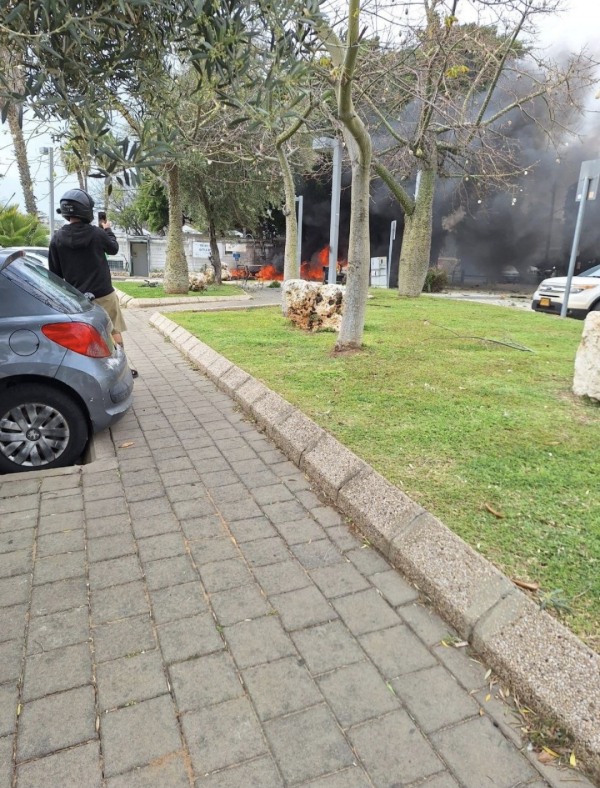
Army Announcement No. 27: In memory of the brave and martyred commanders of our beloved Iran, Lieutenant General Mousavi, Lieutenant General Pakpour and Major General Nasirzadeh; In continuation of the drone operations, since this morning, the Aman Intelligence Organization, the 8200 cyber operations and data processing units and the gathering place of a number of the occupying regime's fighters in the occupied territories were targeted by drone attacks by the Islamic Republic of Iran's army.
"Aman" is part of the Zionist regime's intelligence structure in the Ramadan War and Unit 8200 is responsible for collecting intelligence signals, intercepting digital communications and conducting offensive cyber operations.
The drone attacks on the occupied territories continue, and the warriors of the Islamic Republic of Iran's army, with the help of God Almighty and with all their might, will avenge the innocent blood of their dear compatriots, brave leader and valiant commanders.
Best leader was killed by worst people
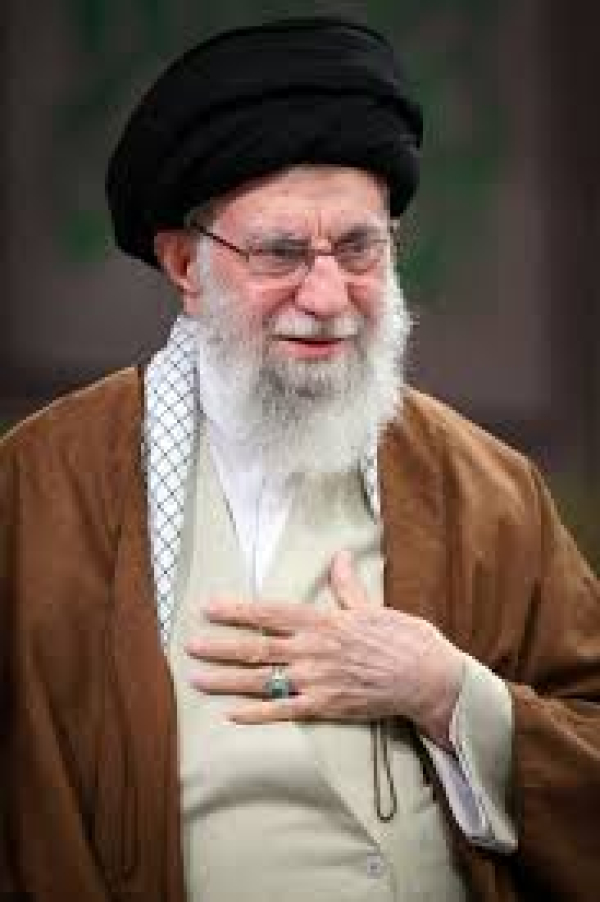
Ayatollah Khamenei the Supreme leader of Islamic Republic of Iran was martyred by Israel and USA. He was killed in his house by his family such as the other people. Iranian people are so angry and vowed to take revenge for his blood. Iranian people are so brave and continue until certain successes.
The Passing of Khadija (Peace Be Upon Her)
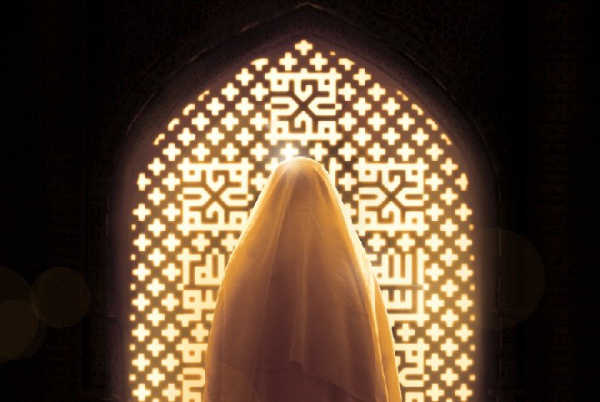
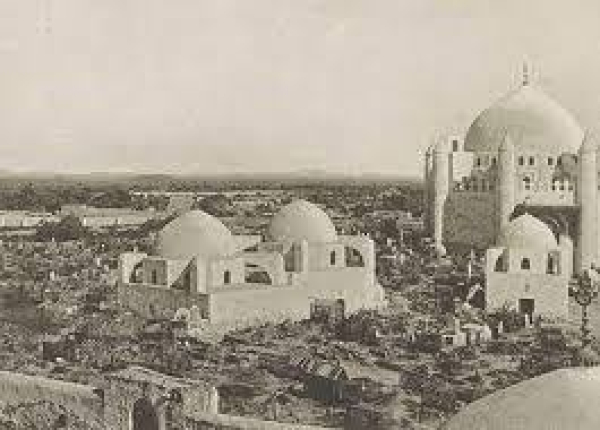
The death of حضرت خدیجه (Khadija bint Khuwaylid) occurred on the 10th of Ramadan in the tenth year after the beginning of the Prophet Muhammad’s mission (approximately three years before the Hijrah to Medina). She passed away in Mecca and was buried in the cemetery of Jannat al-Mu'alla. Her death, followed shortly by the passing of Abu Talib, marked a period of profound sorrow for the Prophet, and that year became known as the “Year of Sorrow” (‘Aam al-Huzn).
Khadija had been the Prophet’s strongest supporter from the very beginning of revelation. She was the first to believe in his message and devoted her wealth, status, and entire being to the cause of Islam, especially during the harsh years of boycott in the Valley of Abu Talib. Her passing left a deep emotional void in the Prophet’s life, as she was not only his beloved wife but also his most loyal companion and steadfast supporter in the earliest and most difficult days of Islam.
Normalization increases cost of defeating Israel, Yemeni leader warns
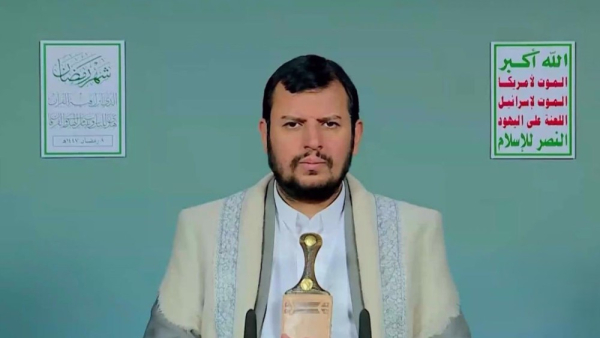
Leader of Yemen's Ansarullah resistance movement Abdul-Malik al-Houthi warned that normalization of ties with the Israeli regime only increases oppression against the Muslim nation and increases the costs of defeating the regime.
Speaking on Thursday evening in a televised address, he said that “what the Arab regimes are doing under the guise of normalizing relations with the Zionist regime only increases the oppression against Islamic nations.”
“In light of this blind approach by Arab and Islamic governments and regimes, the cost of the Zionist regime's defeat and collapse is rising day by day,” he added.
The remarks come amid a US push for normalization of ties between Muslim countries and the Israeli regime. The United Arab Emirates, Morocco, and Bahrain joined the so-called Abraham Accords in 2020 as Palestinians slammed the move as a “stab in their back.”
Elsewhere in his speech, al-Houthi pointed to the expansionist schemes of the regime.
“The Israeli enemy is hardly ambiguous or mysterious, given its open statements about expansionist and aggressive aims to dominate a vast geographical expanse of the Islamic Ummah's lands,” he said.
He was referring to the so-called “Greater Israel” concept, which has resurfaced in Israeli political discourse in recent years.
In August last year, prime minister Benjamin Netanyahu told Israeli media he felt a deep connection to “this vision,” referring to Israeli-occupied Palestinian territories as well as parts of Egypt, Jordan, Syria and Lebanon, and described it as “a historical and spiritual mission.”
Just last week, US ambassador to the occupied territories Mike Huckabee repeated the claims in other words.
In the interview, released on Friday, Huckabee responded to a question about a Genesis passage promising land to Abraham's descendants "from the river of Egypt to the Euphrates" by saying, "It would be fine if they took it all."
More than a dozen regional countries and international organizations slammed the provocative statement, which demonstrated the US support for the annexation of the West Bank and attacks on other countries.
However, al-Houthi sees no special benefit in the act of condemnation.
“What good does condemning the annexation of the West Bank to occupied territories by 14 Arab countries do for the Palestinian people?” he asked.
“Some issue statements for the Palestinian people merely to avoid reproach, while simultaneously providing financial aid to the Zionist enemy,” he lamented.
“The extent of the Zionists' hostility towards Islam is very clear and obvious,” added the Ansarullah leader.
“The crimes of the Israeli enemy are among the ugliest crimes one can imagine, just as it has committed—and continues to commit—such crimes in the Gaza Strip over the past two years,” he said, referring to the genocidal Israeli war on Gaza, which killed more than 72,000 Palestinians and destroyed large swaths of the besieged territory.
He also referred to the US-Israeli push to disarm Hezbollah in Lebanon, saying, “What this enemy is doing to the Lebanese nation and its continuous assault on Hezbollah is aimed at stripping Lebanon of all means of power and defense.”
“This enemy does not seek peace with Lebanon, contrary to what some delusional and foolish people imagine,” he added.
The comments come as the Israeli regime continues to attack Lebanon almost on a daily basis despite a ceasefire agreement that was sealed in November 2024.
Press TV’s website
Activists announce massive 'Freedom and Sumud Flotilla' to challenge Gaza blockade
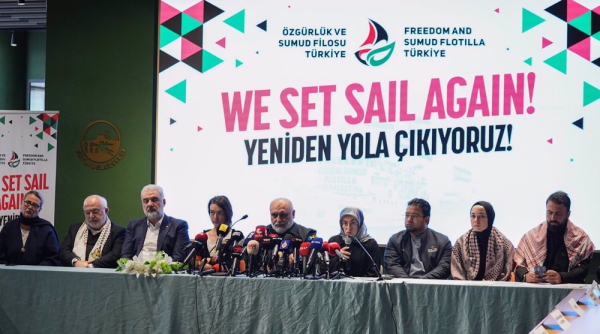
Organizers of a major international solidarity campaign have unveiled plans for the largest civilian maritime effort yet to break Israel's long-standing blockade of the Gaza Strip, with a fleet of up to 200 vessels set to depart in mid-April 2026.
The Global Sumud Flotilla (also referred to as the Freedom and Sumud Flotilla) announced the initiative in recent statements and press conferences, including one held by Turkish participants in Istanbul on Wednesday.
The mission merges elements of the ongoing Freedom Flotilla Coalition efforts with the "Sumud Convoy", building on previous attempts in 2025 that were intercepted by Israeli naval forces.
According to the group's announcements, the flotilla aims to sail from multiple Mediterranean ports, starting with Barcelona in Spain on April 12, followed by departures from ports in Italy and Tunisia in the ensuing days.
Organizers claim the large number of vessels—reported as 200 in some statements, though official sites and allied reports more consistently cite over 100 boats—will make it logistically challenging for Israeli forces to intercept the entire convoy.
The mission is expected to involve thousands of participants from approximately 150 countries, coordinated with support from more than 200 civil society organizations worldwide.
It is described as a purely people-powered, non-governmental effort with no official state or large NGO backing. A key focus of the April sailing will be humanitarian and professional aid.
The flotilla plans to carry more than 1,000 healthcare workers—including doctors, nurses, and other medical professionals—along with engineers, lawyers, war crimes investigators, and essential supplies such as life-saving medicines.
This emphasis responds to what organizers call the systematic destruction of Gaza's healthcare infrastructure amid ongoing war and restrictions on aid access.
The broader Spring 2026 Global Sumud campaign also includes overland humanitarian convoys involving hundreds of trucks, with phased departures planned to confront the blockade through multiple routes and assert Palestinians' rights to free movement and access to their territorial waters.
Organizers frame the initiative as a direct, nonviolent challenge to Israel's naval blockade, in place since 2007 and tightened further during periods of heightened war.
They say Israel has imposed an illegal siege that has contributed to severe humanitarian crises, including famine risks and mass displacement in Gaza.
The group invokes the principle of sumud (steadfastness) and calls for global solidarity to end genocide and occupation.
Press TV’s website
Iran urges Afghanistan, Pakistan to hold dialogue amid new escalation
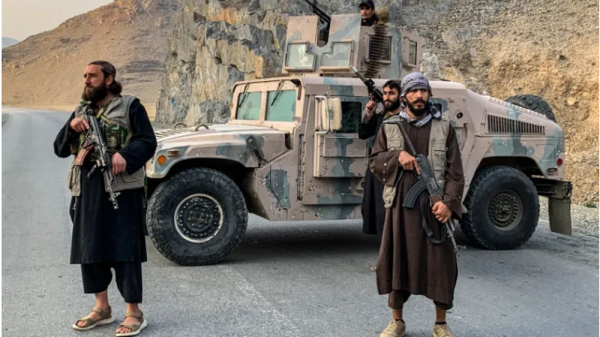
Iranian Foreign Minister Abbas Araghchi has urged Afghanistan and Pakistan to hold talks to settle their disputes, as the neighboring countries are engaged in an “open war”.
“In the blessed month of Ramadan, a month of self-restraint and strengthening solidarity in the Islamic World, it’s fitting for Afghanistan and Pakistan to manage and resolve their existing differences within the framework of good neighborliness and through dialogue,” Araghchi said in a post on X on Friday.
He also expressed Tehran’s readiness to support the process and provide any assistance to facilitate dialogue, and enhance understanding and cooperation between the two countries.
This comes as Pakistan’s Defense Minister Khawaja Asif declared the neighbors are at “open war” following months of tension.
Pakistan bombed major cities in Afghanistan, including the capital Kabul, on Friday, after Afghan forces had attacked Pakistani border troops on Thursday night.
Taliban officials described the operation as a "retaliatory" measure against recent Pakistani airstrikes earlier in the week, which they claimed killed at least 18 people, including civilians, in eastern Afghan border regions. Islamabad said the attacks targeted alleged militant camps and hideouts near the Pakistan-Afghanistan border.
The escalation marks a sharp deterioration in relations between the two neighbors, building on months of tension fueled by cross-border militant activity.
Pakistan has repeatedly accused the Afghan Taliban of allowing its territory to serve as a safe haven for groups like the Tehreek-e-Taliban Pakistan (TTP), responsible for a surge in attacks inside Pakistan, including recent bombings.
The Afghan side counters that Pakistan supports anti-Taliban elements and conducts violations of its airspace and territory.
The latest flare-up threatens to undermine fragile diplomatic efforts, including a Qatar-mediated ceasefire that had largely held since late 2025 despite sporadic violations.
Press TV’s website