zarezadeh
Palestinians granted only 66 building permits in West Bank over 11 years: Report
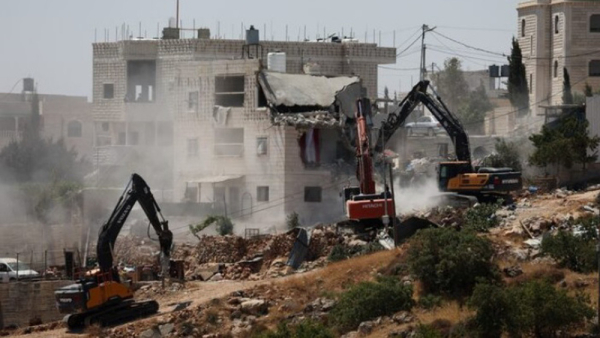
The Israeli regime has granted only 66 building permits to Palestinians in the occupied West Bank over an 11-year period, Israeli media reports say.
Israel’s Haaretz daily, quoting sources, reported on Sunday that only 66 building permits were issued to Palestinians between 2009 and 2020.
This is while 22,000 permits were granted to illegal Israeli settlers during the same period, it said.
The report cited widespread demolitions carried out by the Israeli authorities since January in the Taawun neighborhood, south of Nablus in the northern part of the occupied West Bank.
Al-Taawun, it added, is “just one example of the accelerating pace of demolitions across the West Bank.”
The neighborhood is located in Area C and “did not receive building permits from the Israeli authorities, despite being far from any settlement or access road.”
“As most of the West Bank is off-limits to Palestinian development, residents are forced to build without permits,” the Israeli daily commented.
In January alone, the Israeli army demolished a total of 24 Palestinian buildings in Area C due to the lack of building permits.
The Coordination of Humanitarian Affairs (OCHA) recently said at least 2,461 Palestinian buildings were demolished over the past two years due to the lack of building permits, up from 4,984 structures over the previous nine years.
As a result, around 3,500 people lost their homes during those two years.
The demolition campaign over the past two years has coincided with the displacement of around 80 Palestinian communities due to the rapid expansion of settler farms and outposts.
Palestinians view the measures as a prelude to the formal annexation of the West Bank.
Israel recently approved a series of sweeping measures in the occupied West Bank, which Palestinians say constitute a blatant breach of the Oslo Accords and amount to a de facto annexation of Palestinian land.
The policy, announced by Israel's extremist finance minister Bezalel Smotrich and minister of military affairs Israel Katz, significantly alters governance in the West Bank, opening the way for expanded settlements, land seizures, and the erosion of Palestinian civil rights.
The measures lift longstanding legal restrictions on Israeli settlers, accelerate settlement expansion, and extend Israeli military and “civil” authority into areas that were previously under partial Palestinian control.
The Organization of Islamic Cooperation (OIC) has strongly denounced Israel's actions as part of its ongoing colonial policy, labeling them a war crime and a grave breach of international law and UN resolutions.
US-Israel digital wallet scheme risks placing aid under Israeli co
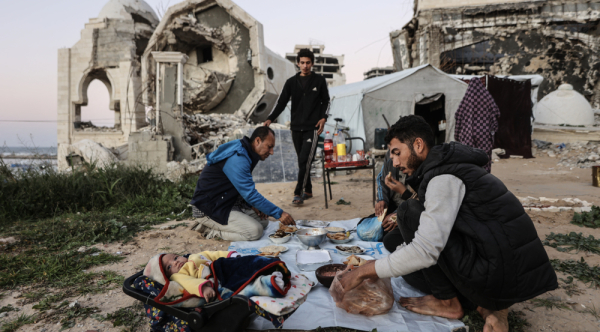
Euro-Med Human Rights Monitor has warned that US-Israeli plans to introduce digital wallets in Gaza risk turning access to money, food, and aid into tools of coercion under the regime's oversight.
The Geneva-based rights organization warned that plans to implement a digital economy in the besieged Palestinian territory could turn access to money and humanitarian aid into tools of coercion, giving the Tel Aviv regime and its allies unprecedented control over daily life and essential services in Gaza.
The plan, outlined by Israeli businessman and former intelligence officer Liran Tancman, involves creating what he described as a “secure digital backbone” to support electronic payments, education, and financial services, alongside an “Amazon-like logistics system.”
Tancman presented the scheme at a Washington event, describing it as a foundation for Gaza’s reconstruction.
Euro-Med Monitor said the approach risks turning financial technology into a tool of coercion, enabling real-time monitoring, arbitrary restrictions, and selective freezing of funds—particularly affecting journalists, activists, and human rights defenders.
“Subjecting the right of access to financial resources to a security authority undermines the core of economic and social rights, damages the right to food and human dignity, and breaches international humanitarian law,” the Monitor said.
It warned that such a system could effectively allow collective punishment, in violation of the prohibition on using starvation as a warfare tactic.
Euro-Med Monitor also highlighted the role of Tancman in the Gaza Humanitarian Foundation (GHF), which sparked outrage over its so-called aid distribution practices during Israel’s genocidal war against the people of Gaza.
It said field data suggest that the foundation’s policies contributed to engineered starvation conditions in Gaza, resulting in around 1,200 civilian deaths and thousands of injuries as desperate residents attempted to access food assistance.
The organization also said that proposals to link aid distribution to “biometric checks" would effectively transform humanitarian relief into a system of surveillance, data collection, and security control.
Currently, Israel enforces extensive security classifications over Palestinians, limiting movement and access to services. Euro-Med Monitor warned that integrating financial systems into this framework could extend these restrictions to money itself, further increasing dependency and control over the population.
The human rights group called for any digital infrastructure in Gaza to operate under full Palestinian sovereignty over data and financial systems.
It also called for independent audits, transparency of operators and funders, non-digital alternatives for essential services, and robust appeal mechanisms for asset freezes or transaction restrictions.
The Monitor urged the establishment of an independent Palestinian civil authority to govern Gaza’s financial and technological systems without interference from the occupation.
It said that genuine economic recovery requires lifting unlawful restrictions on crossings, cash flow, goods, and communications rather than replacing a physical blockade with a “smart” digital one that perpetuates violations.
The Gaza Strip has been under a near-continuous blockade imposed by Israel since 2007, restricting the movement of people, goods, and capital.
The blockade, followed by two years of genocide and ethnic cleansing, has left Gaza’s economy in severe decline, with high unemployment, widespread poverty, and limited access to essential services such as healthcare, electricity, and clean water.
Press TV’s website
Denmark rejects Trump's plan to send US hospital ship to Greenland
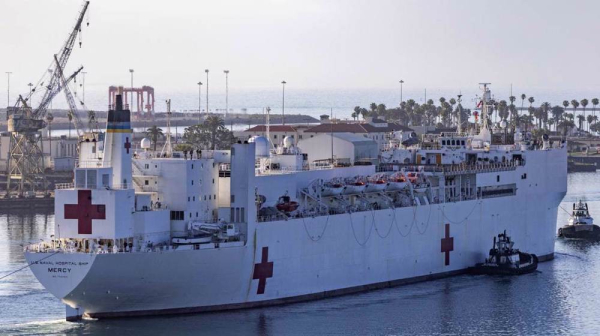
The leaders of Greenland and Denmark have rejected US President Donald Trump’s plan to dispatch a hospital ship to the Arctic territory, saying the island does not need foreign medical assistance.
Trump, in a Truth Social post on Saturday, announced he would send a “great hospital boat to take care of the many people who are sick, and not being taken care of there. It’s on the way.”
Denmark’s Defense Minister Troels Lund Poulsen told reporters on Sunday that his government had not been made aware of the plan. He said there was “no need for special health care efforts” in Greenland.
“Trump is constantly tweeting about Greenland. So this is undoubtedly an expression of the new normal that has taken hold in international politics,” Lund Poulsen added.
Greenlandic Prime Minister Jens-Frederik Nielsen also rejected the plan in a Facebook post, saying Greenland has “a public health system where care is free for citizens.”
Danish Prime Minister Mette Frederiksen responded on Instagram, without mentioning Trump or the United States directly, writing that she is “happy to live in a country where there is free and equal access to health care for everyone.” She added, “The same approach exists in Greenland.”
Greenland has six hospitals serving a population of fewer than 60,000 people. In early February, the territory’s government signed an agreement with Copenhagen to improve Greenlandic patients’ access to treatment in Danish hospitals.
Trump’s latest remarks are seen as part of his continuing pressure campaign on Greenland. The US president has repeatedly said the United States needs to acquire the semi-autonomous territory of NATO ally Denmark for national security reasons.
He later backed down on earlier threats to seize Greenland unilaterally after striking a “framework” deal in January with NATO Secretary General Mark Rutte, intended to ensure greater US influence.
However, at the Munich Security Conference this month, Frederiksen said she still feared US intentions toward the island. She called the pressure from the United States “unacceptable” and “outrageous.”
Press TV’s website
Ansarullah decries Israel’s bloody massacre in east Lebanon, urges unified Arab action
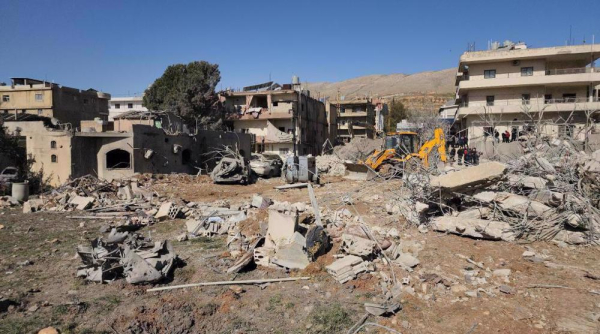
Yemen’s Ansarullah resistance movement has strongly condemned the Israeli rgeime’s “bloody massacre” in Lebanon’s eastern Beqaa region, which killed roughly a dozen people and wounded many more, calling it a flagrant violation of humanitarian values and international conventions.
The political bureau of Ansarullah said on Sunday that the Israeli airstrike, which targeted a neighborhood inside the Ain al-Hilweh Palestinian refugee camp in the city of Sidon in southern Lebanon, falls within the framework of Israel’s expansionist agendas.
It said the crime extends beyond attacking Lebanese civilians and infringing upon Lebanon’s sovereignty, describing it as part of attempts to enforce new dynamics associated with the initiative of the so-called “Greater Israel” and the “New Middle East.”
It also expressed its complete support for the Lebanese nation and the Hezbollah resistance movement in the face of Israeli acts of aggression backed by US and Western threats.
Lebanon’s Ministry of Public Health said on Saturday that Israeli strikes on eastern Lebanon killed 10 people and wounded 24, including three children.
Two officials with Hezbollah said eight members of the resistance movement were killed in strikes near the village of Rayak in northeast Lebanon late on Friday.
One of the Hezbollah officials said three of the dead were local commanders and identified them as Ali al-Moussawi, Mohammed al-Moussawi and Hussein Yaghi.
Yaghi was the son of prominent Hezbollah official and one of its founders, Mohammed Yaghi, who died in 2023. Mohammed Yaghi was also a close aide to late Hezbollah leader Sayyed Hassan Nasrallah who was assassinated in an Israeli airstrike in southern Beirut in September 2024.
Iran’s military alertness main ‘deterrent’ against enemy miscalculations: Top commander
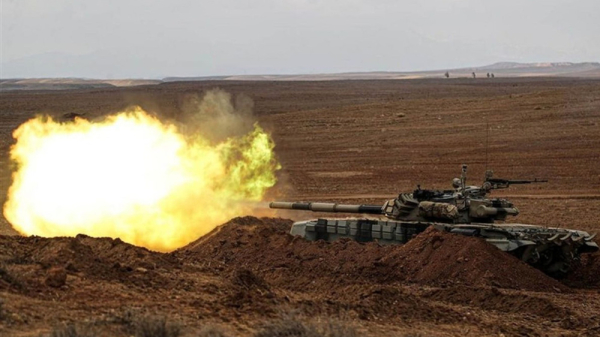
A senior Iranian commander said the constant alertness and readiness of the country’s Armed Forces constitute the “most important deterrent” against any adventurism or miscalculation by enemies.
Commander of the Iranian Army Ground Force Brigadier General Ali Jahanshahi made the remarks on Saturday during a visit to a mobile assault brigade in the city of Piranshahr, West Azarbaijan Province, which was conducted to assess the combat readiness and operational capabilities of the units.
He said the Army’s Ground Forces are “continuously and vigilantly” defending Iran’s territory as they are monitoring and neutralizing all the enemy’s actions and threats.
He pointed to the guidelines of Leader of the Islamic Revolution Ayatollah Seyyed Ali Khamenei about the importance of maintaining full readiness in the face of the enemy, saying the Armed Forces’ alertness is the key factor that deters enemies from any action against Iran’s interests and security.
“The Ground Forces have reached a level of capability and deterrence that can nip any threat in the bud,” Jahanshahi emphasized.
He stressed the importance of enhancing combat capabilities, utilizing state-of-the-art equipment and up-to-date tactics against asymmetric threats, and conducting regular maneuvers and tactical drills in the region.
The top commander added that the Ground Forces will not allow ill-wishers to carry out any measure against Iran’s territory.
Family of US citizen shot dead by Israeli settler demands end to impunity

The family of a 19-year-old Palestinian-American man who was reportedly shot dead by an Israeli settler in the occupied West Bank is calling for those responsible to face justice, as concerns grow over rising settler attacks and the limited number of legal cases that follow.
The cousin of Nasrallah Abu Siyam, a US national born in Philadelphia who died on Wednesday near the city of Ramallah, said on Saturday that his killing reflected a wider pattern of impunity.
“A young man of 19 shot and killed in cold blood, and no responsibility… Impunity completely,” Abdulhamid Siyam told the BBC.
Abu Siyam’s death marks at least the sixth time in roughly two years that an American citizen has been killed in events involving Israeli settlers or military forces in the territory.
According to family members, Abu Siyam was part of a group of around 30 people from the village of Mukhmas who confronted armed settlers they believed were trying to take livestock from the community. Witness accounts say both groups threw stones before settlers began firing live rounds, injuring several residents.
Abu Siyam was hit during the shooting and later succumbed to his wounds.
Abdulhamid Siyam said that young Palestinian lives are lost without meaningful consequences, as he insisted that his cousin’s killing illustrates a broader climate where perpetrators are rarely held accountable.
The US State Department confirmed it was aware that an American citizen had died and said officials were closely observing developments. The US government added that consular support was available if needed.
The Israeli regime’s embassy in Washington said that the killing was being examined and that a formal operational investigation should be concluded quickly.
Palestinian groups and human rights advocates say that investigations of this kind seldom result in criminal charges, and that cases involving settler violence are frequently not pursued by Israeli authorities.
The incident occurred less than two weeks after the Israeli regime approved a set of broad measures aimed at accelerating settlement construction in the occupied West Bank, a decision that drew widespread criticism from the international community.
Press TV’s website
IRGC Navy tests Sayyad-3G air defense missile in Strait of Hormuz
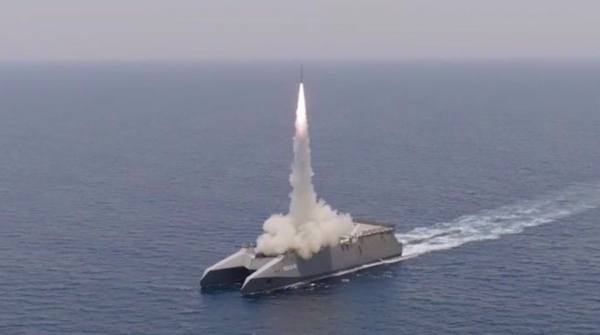
The Islamic Revolution Guards Corps (IRGC) Navy has successfully launched the Sayyad-3G naval air defense missile for the first time during the “Smart Control” exercises in the Strait of Hormuz.
According to footage released during the drills on Saturday, the missile was fired from the vessel Shahid Sayyad Shirazi, marking the system’s operational debut at sea.
The Sayyad-3G is the naval variant of Iran’s Sayyad-3 air defense missile and features a vertical launch system with a reported range of 150 kilometers (93 miles).
Iranian officials said the missile offers medium-to-long-range air defense coverage and facilitates the establishment of a regional air defense umbrella for vessels of the Shahid Soleimani class.
Authorities stated that the system is capable of independently detecting and engaging aerial threats, while also being integrated into a broader command-and-control network. This dual capability, they said, enhances the survivability of naval units against a range of air threats.
With a declared 150-kilometer range, the Sayyad-3G is designed to intercept and destroy various airborne targets, including fighter jets, high-altitude unmanned aerial vehicles, support aircraft, maritime patrol aircraft, and cruise missiles. Iranian officials described the missile as adding long-range defensive capacity to the country’s naval operations.
The Strait of Hormuz—one of the world’s most critical energy transit chokepoints—was the location of the three-day “Smart Control” drills, which began on February 16. Military analysts note that establishing extended air defense coverage in such a strategically sensitive waterway significantly increases the defensive depth of deployed naval forces.
Iran first tested the land-based Sayyad-3 air defense missile on December 28, 2016. The land version reportedly has a range of 120 kilometers, a length of six meters, and a weight of approximately 900 kilograms. The newly tested Sayyad-3G represents the maritime adaptation of that system, incorporating vertical launch capability suited for naval platforms.
The latest test underscores Tehran’s continued efforts to enhance its integrated air and missile defense architecture, particularly in strategically vital maritime zones.
The IRGC naval forces started military drills off the country’s southern coast on Monday, practicing smart control of the strategic Strait of Hormuz.
The drills come amid heightened regional tensions and repeated US threats to attack Iran if it does not accept its nuclear demands, among others.
The United States has dispatched warships to regional waters near Iran, prompting authorities in Tehran to warn that even a single shot fired at the country would be met with a massive response targeting US assets in the region.
Press TV’s website
The Ahl al-Bayt and Relatives of the Prophet Buried in Baqi
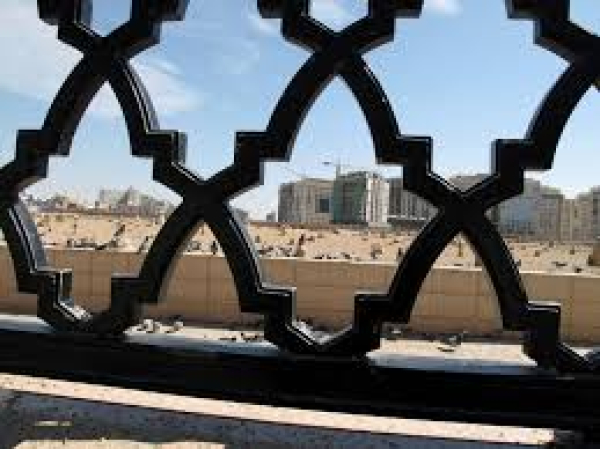
Imam Hasan al-Mujtaba (peace be upon him), Imam Ali ibn Husayn Zayn al-Abidin (peace be upon him), Imam Muhammad al-Baqir (peace be upon him), and Imam Ja‘far al-Sadiq (peace be upon him) are buried there, along with Fatimah bint Asad, the mother of Imam Ali (peace be upon him), and Abbas, the uncle of the Prophet. They are buried opposite the main entrance of Baqi, toward the south on the right side.
The daughters of the Prophet—Zaynab, Ruqayyah, and Umm Kulthum—are buried in front of the main entrance, a short distance away from it.
Also buried in Baqi are Aqil ibn Abi Talib, Abdullah ibn Ja‘far ibn Abi Talib, Umm al-Banin (peace be upon her), the mother of Abbas, Halimah al-Sa‘diyyah, the Prophet’s foster mother, Safiyyah, the Prophet’s aunt, Jumana, the Prophet’s aunt, and Arwa, the Prophet’s aunt.
Although it is widely believed that Atikah, another aunt of the Prophet, is buried in Baqi, historical sources do not provide confirmed reports about this.
Among the wives of the Prophet buried in Baqi are Umm Salamah, Hafsah, Zaynab bint Jahsh, Zaynab bint Khuzaymah, Safiyyah bint Huyayy, Aisha bint Abi Bakr, and Mariyah al-Qibtiyyah. They are buried to the north of the graves of the Prophet’s daughters, about eight meters to the right.
What is the origin of the name “Baqi Cemetery”?

The word Baqi comes from the root baqa‘, which refers to a piece of land that is different from the surrounding land, or land where trees—or their roots—are scattered sparsely across it.
In Islamic sources, the famous cemetery of Medina is called Baqi. It is also known as Baqi al-Gharqad because thorny gharqad trees used to grow there.
Can Iran sink the American aircraft carrier Abraham Lincoln?
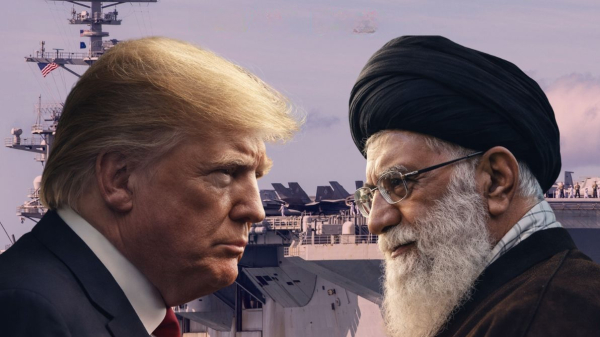
Yes, Iran has the military capability to do so, and at the right opportunity, this aircraft carrier and all its personnel could be sent to destruction and death. Iran is waiting for the right moment. Now we explain what the conditions are.
Amid rising tensions in West Asia and the deployment of a United States Navy carrier strike group led by the aircraft carrier Abraham Lincoln in the northern Arabian Sea, a long-standing question has once again emerged in strategic circles: Can Iran sink a U.S. aircraft carrier?
On paper, U.S. President Donald Trump could order an airstrike against Iran in the shortest possible time, but in practice, it is not that simple. Although America’s naval power is extremely impressive, Iran’s hands are not empty when it comes to confronting the U.S. Navy and its massive warships.
The aircraft carrier Abraham Lincoln, a nuclear-powered Nimitz-class carrier, carries about 60 F/A-18 Super Hornet fighter jets. This means that launching attacks on Iran from these aircraft is not as easy as it seems, and it is unclear whether U.S. carriers would be able to protect themselves against Iranian missile attacks in the event of war.
---
Missile cities versus carriers and fighter jets
Iran’s conventional air force is generally considered limited, largely because years of sanctions have prevented Iran from acquiring large numbers of modern fighter aircraft. However, Iran has compensated for this limitation by developing its missile capabilities.
Today, Tehran possesses one of the most diverse missile arsenals in the world, including short-range ballistic missiles, medium-range missiles, cruise missiles, and most importantly, hypersonic ballistic weapons. Hypersonic missiles travel at speeds greater than Mach 5, drastically reducing reaction time for the opponent.
According to military sources and based on Iran’s missile responses to Israel during the 12-day war, Iran has demonstrated that it possesses intercontinental missiles equipped with hypersonic systems such as the Fattah-2 missile. Some Iranian ballistic missiles are specifically designed to target ships and large naval vessels.
Some of these missiles were reportedly used by Yemeni forces in 2024 to target commercial and military vessels in the Gulf of Aden, and the Yemeni government confirmed purchasing these missiles from Iran.
In fact, the experience of Yemeni forces using Iranian anti-ship missiles during operations related to Gaza and against ships bound for Israel in 2024 demonstrates that Iran has sufficient missile capability to target warships at sea.
---
How vulnerable are American carriers?
The aircraft carrier Abraham Lincoln does not operate alone at sea. It is surrounded by a carrier strike group consisting of cruisers and destroyers.
According to Reuters, the Abraham Lincoln is protected by warships equipped with the Aegis combat system, one of the most advanced naval air defense networks in the world. This defensive shield operates in layers.
The outer layer includes electronic warfare systems designed to disrupt or confuse incoming missiles. Each destroyer carries about 90 air defense missiles, including the RIM-174 SM-6 interceptor, which has a range of over 400 kilometers. Newer versions also have ballistic missile defense capabilities, allowing them to intercept certain ballistic and hypersonic threats at various stages of flight.
However, a key question remains: how effective would this defense system be against a massive missile barrage from Iran, especially if more than 100 missiles were launched simultaneously?
Even the most advanced missile defense systems may struggle against saturation attacks, as intercepting more than 100 incoming missiles at once presents a major operational challenge.
---
How would Iran carry out such an attack?
Iran would likely rely on precise technical intelligence and careful operational planning.
According to India Today, Iranian forces could launch hundreds of long-range Shahed-136 drones alongside ballistic and cruise missiles toward U.S. naval vessels. This would aim to overwhelm defensive systems and force American warships to use up their interceptors.
After exhausting these defenses, hypersonic missiles with greater destructive power could then be launched toward the carriers.
A potential Iranian attack would likely involve two phases:
Launching large numbers of drones to deplete air defense interceptors
Launching ballistic missiles to strike the carrier itself
---
Geography: the decisive factor
Geographically, it is unlikely that U.S. aircraft carriers would enter coastal waters near Iran, such as the Persian Gulf or even the Gulf of Oman, because Iranian coastal missile forces would have maximum effectiveness there.
Instead, the Abraham Lincoln operates in the Arabian Sea, using geographic distance and terrain to increase defensive response time.
Aircraft carriers are not stationary targets. A Nimitz-class carrier weighs over 100,000 tons and can travel at speeds exceeding 25 knots, covering hundreds of kilometers per day. Carrier strike groups constantly change course to avoid predictable movement patterns.
For a successful attack, Iran would need rapid targeting, satellite surveillance, integrated command systems, and real-time missile launch capabilities.
Iran has invested in satellite tracking, navigation systems, and domestic space technology to improve its targeting capability.
In the past, GPS was the only global navigation option, but today countries such as China, Russia, Japan, and the United Kingdom have their own navigation systems. Iran has also sought to develop indigenous systems and integrate with non-Western satellite navigation networks.
---
Iran ready to test its naval deterrence
Despite these developments, sinking a U.S. aircraft carrier remains extremely difficult.
Iran could increase the risks and operational costs for U.S. naval forces, but destroying a carrier would require a complex combination of intelligence, timing, and weapon effectiveness.
Military experts note that naval deterrence is not based solely on weapon size, but on which side can detect, track, and strike first.
Iran appears to be working toward improving its missile, surveillance, and satellite capabilities to enhance its naval deterrence.