zarezadeh
The Loyal Doves and the Radiant Sun of Jannat al-Baqi
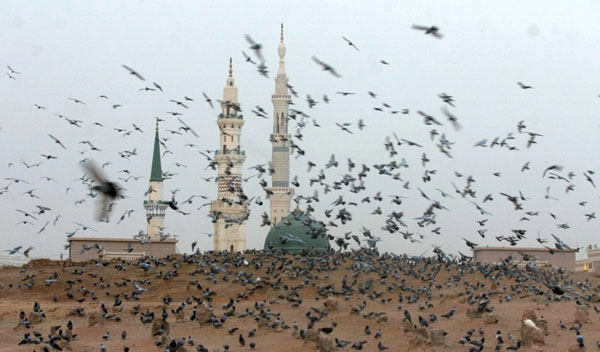
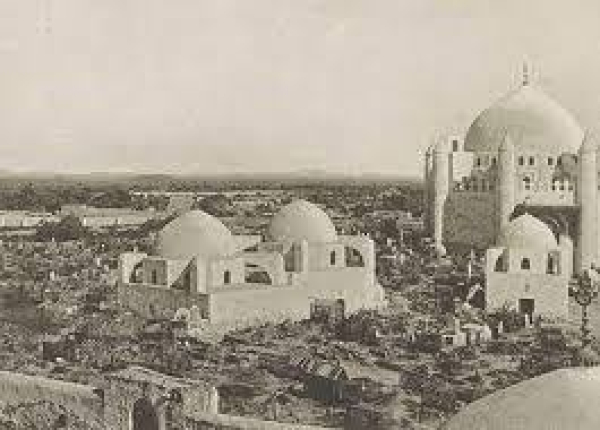
Al-Baqi is the most famous and most virtuous cemetery of Muslims in the city of Madinah. After the migration (Hijrah) to Madinah, the Prophet (peace be upon him) selected the land of Al-Baqi as the burial place for deceased Muslims. This land was located southeast of Al-Masjid an-Nabawi and close to it.
As‘ad ibn Zurarah al-Khazraji was the first person among the Ansar to be buried there, and Uthman ibn Maz‘un was the first among the Muhajirun to be buried in this cemetery.
Later, with the inclusion of the Hash Kawkab cemetery and the houses of the Companions that were located between Al-Masjid an-Nabawi and Al-Baqi, the area of this cemetery was expanded. In the contemporary period, land belonging to the Madinah municipality was also added to this cemetery.
Al-Masjid an-Nabawi (The Prophet’s Mosque)
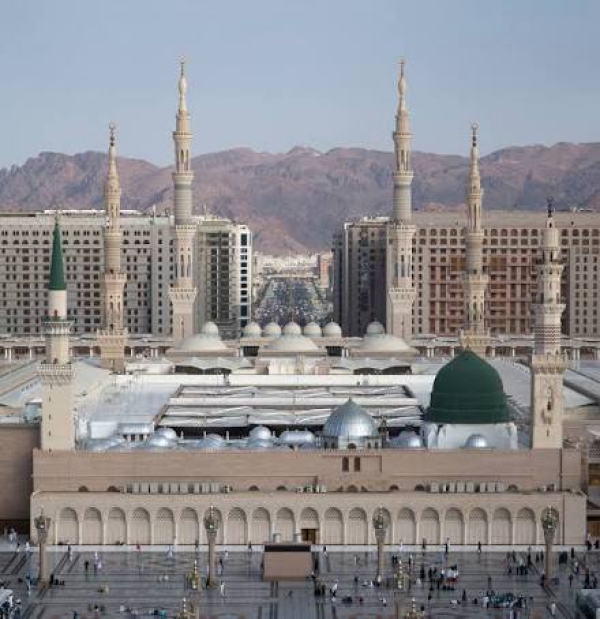
Thirteen years after the Prophet’s mission and his preaching and guidance in Makkah, the polytheists decided to assassinate the Prophet (peace be upon him). As a result, he was forced to migrate from Makkah to Madinah.
Upon arriving in Madinah, the Prophet (peace be upon him) built a mosque that became known as Al-Masjid an-Nabawi (the Prophet’s Mosque).
Over the course of ten years, Al-Masjid an-Nabawi witnessed the tireless efforts of the Prophet (peace be upon him), and after him, the Commander of the Faithful (Imam Ali) and the infallible Imams (peace be upon them).
Presence and worship in this mosque are highly recommended, and the virtue of each unit (rak‘ah) of prayer in Al-Masjid an-Nabawi is equal to ten thousand units of prayer elsewhere.
Syria Alawite women abducted and raped, others sold by Jolani's men: Report
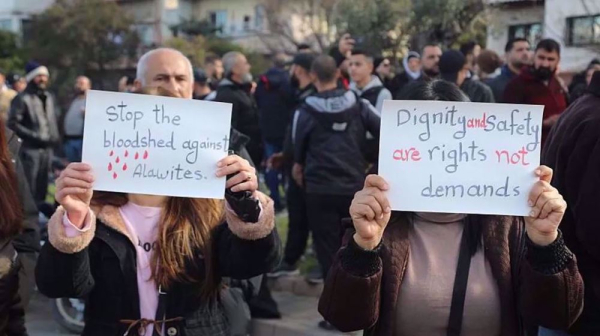
Since former al-Qaeda affiliate Hayat Tahrir al-Sham (HTS) took power in Syria, dozens of Alawite women have been abducted and raped, and forced by new authorities to change their testimonies, BBC reports.
The Syrian Feminist Lobby (SFL), a women's rights advocacy group, told the British broadcaster that it had recorded reports of more than 80 missing women and had verified 26 of them as abductions.
Ramia, a 19-year-old woman from Lattakia, recounted that she had been kidnapped while preparing to have a picnic in a field in her village in Latakia.
While her mother and siblings were about to arrive, a white car pulled up and three armed men got out, claiming to be members of Syria's General Security forces, and forced Ramia into the vehicle.
“The car drove in the opposite direction from our house, and then we left the village. That's when I realized they had kidnapped me,” Ramia said.
“They beat me. I started crying and screaming, but they kept hitting me even harder. One of them asked me if I was Sunni or Alawite. When I answered that I was an Alawite, they started insulting the sect.”
Ramia was taken to Idlib and raped, before being released after two days.
In Idlib, her captor, who did not speak Arabic fluently and was likely a foreign militant who had come to fight for HTS, took pictures of her to send “to the emir, who would decide her fate.”
The militant's wife, who was in the same house with his children, told Ramia that the picture “would be used to determine her price when she is sold.”
When Ramia asked her kidnapper's wife how many women he had abducted before her, the wife replied that there were “many.”
“Some are raped and sent back to their families, and others are sold,” the militant's wife told Ramia.
A security source in one of the coastal regions of Syria confirmed to BBC that abductions had occurred, claiming that “investigations have been opened into them” and that “measures have been taken to dismiss” those involved from service, including security personnel.
But the kidnapped women and their families emphasized that the authorities have made no effort to hold the kidnappers accountable.
Ramia said she thought the so-called HTS police were interested in her return, but after the kidnapper was identified, they stopped answering her family's repeated calls to follow up on the investigation.
The family even decided to leave the country after receiving a series of threatening phone calls.
Ali, a man in his thirties whose wife Nour disappeared while on her way to visit family in a coastal village, told BBC that he knows the kidnapper's identity and has shared all his information with the security services, but is still waiting for a response.
“I suffer day and night, spending all my time alone in the forest, praying for my wife and for her return to us,” he said.
His wife was returned several weeks later, but they declined to give details about the circumstances of her abduction.
Another returnee was Nasma, a mother in her thirties, who was also abducted and held in what appeared to be an industrial facility in Idlib for seven days.
Three Syrian men who were holding her “hurled sectarian insults at me, saying that Alawite women were created to be captives”, Nasma said.
Nasma was raped multiple times by her captors. “All I could think about was death. I would die, and my child would be left without a mother,” she stated.
After the man responsible for her kidnappers decided to release her, Nasma went to the security authorities, who treated her rudely and mocked her.
“They said they knew the terrorist groups that kidnapped me, but when I went to file the police report, they asked me to change my statement and claim that I had just gone out for a walk,” she added.
According to the report, Nasma is not the only one who was asked to change her statements after being kidnapped.
BBC said another woman who had just returned after being abducted, was too afraid to talk to the media, especially after “security personnel asked her to change her story,” which she refused to do, according to a relative.
The SFL says that the testimonies of the abducted women “indicate the presence of an extremist religious ideology in many of the kidnapping cases.”
In December 2024, the HTS led by former Daesh deputy Muhammad al-Jolani took control of Damascus in a surprise offensive that was launched from their stronghold in northwestern Syria, reaching the capital in less than two weeks.
The HTS administration has since been accused of flagrant violations of human rights in Syria, particularly against minorities, namely Syria's Alawite minority, drawing widespread condemnations from the international community.
In November, Jolani's interior ministry claimed that out of 42 cases of kidnappings it had probed, the allegations were found to be false in 41 of them.
However, various reports have said that the widespread kidnapping of Alawite women began shortly after the collapse of al-Assad's government, intensifying after HTS-led forces massacred at least 1,600 Alawite civilians in March 2025.
After news of the abductions began reaching the media and gaining attention, the Jolani regime and affiliated media outlets launched a propaganda campaign to hide the kidnappings.
The campaign included forcing victims to make videos claiming that they had not been abducted, but had run away with their Sunni Muslim lovers, and publishing them on social media.
Despite numerous reports from human rights organizations documenting sectarian violence, extrajudicial killings, arbitrary detention, and sexual violence, Western governments have increasingly shifted toward open engagement the Jolani regime.
In 2025, the US formally removed Hay’at Tahrir al-Sham from its terrorist designation list, and Jolani held direct talks in Washington with President Donald Trump, a move critics say reinforced claims that Washington has come to view him not only as a pragmatic partner but, in practice, as a strategic asset despite his group’s terrorist past.
Press TV’s website
Iran won’t initiate war, but will ‘decisively’ defend itself against aggression: UN envoy
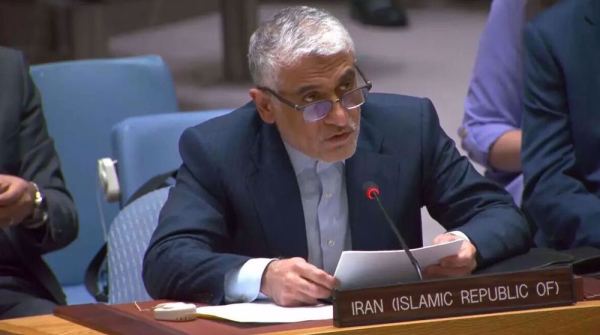
The Iranian ambassador and permanent representative to the United Nations has stressed that the Islamic Republic will not initiate any war but will deliver a “decisive” response to an act of aggression against the country.
Amir Saeid Iravani made the remarks in a letter sent on Thursday to the UN chief and the Security Council president, one day after US President Donald Trump threatened that Washington may need to use the Indian Ocean's Diego Garcia Island, home to a joint UK-US military base, to attack Iran.
“The Islamic Republic of Iran has repeatedly stated at the highest level that it neither seeks tension nor war, and will not initiate any war,” he said.
“However, in the event that it is subjected to military aggression, Iran will respond decisively and proportionately in the exercise of its inherent right of self-defense under Article 51 of the Charter of the United Nations.”
He also noted that in case of any military aggression against Iran, all regional bases, facilities, and assets belonging to the “hostile force” would constitute "legitimate targets" for Iran’s retaliatory operations.
The United States, Iravani warned, would bear responsibility for any "unpredictable and uncontrolled" consequences.
He further denounced Trump’s threats to use force against Iran as a flagrant violation of the UN Charter and international law that risks plunging the entire region into a new cycle of crisis and instability.
“Given the volatile situation in the region and the persistent movement and build-up of military equipment and assets by the United States, such a belligerent statement by the President of the United States must not be treated as mere rhetoric, it signals a real risk of military aggression, the consequences of which would be catastrophic for the region and would constitute a grave threat to international peace and security,” he added.
Meanwhile, the Iranian envoy emphasized that the country remains fully committed to the purposes and principles of the UN Charter and to diplomatic solutions.
He highlighted Tehran’s engagement in recent indirect nuclear talks with Washington in Geneva aimed at lifting unlawful US sanctions and addressing ambiguities regarding Iran’s peaceful nuclear program.
Iravani also said that a durable and balanced solution can be achieved if the United States, like Iran, approaches nuclear talks with "seriousness and sincerity and demonstrate genuine respect for the UN Charter and international law."
Additionally, he renewed Iran’s call on the Security Council to ensure that the United States immediately ceases its unlawful threats, complies with its obligations under the UN Charter, and refrains from any action that could further escalate tensions or lead to a military confrontation.
“The Security Council and the Secretary-General must act without delay, before it is too late. The Security Council must not allow threats of the use of force and acts of aggression to be normalized, legitimized, or treated as an acceptable political norm, or to be used as instruments of foreign policy. Should such unlawful conduct be left unaddressed, another sovereign Member State's turn will soon come,” he warned.
Trump began to threaten military action against Iran after recent economic protests in the country, which were quickly hijacked by foreign-backed rioters.
Since then, the United States has dispatched a number of warships to regional waters near Iran, prompting authorities in Tehran to warn that even a single shot fired at the country would be met with a far-reaching and massive response.
Press TV’s website
The Blessed City of Madinah
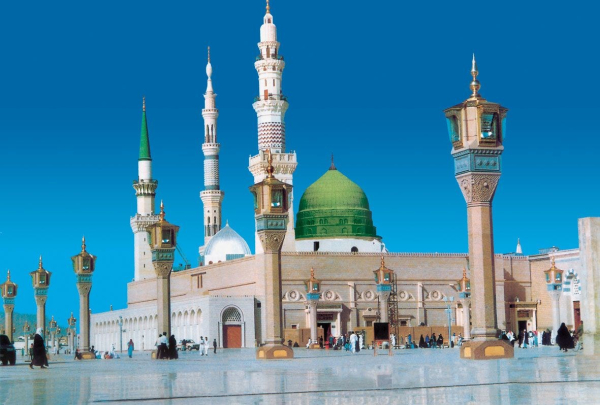
Madinah is located 420 kilometers north of Makkah, in the northern half of the Kingdom of Saudi Arabia.
Since ancient times, Madinah was situated along the trade route between Makkah and Syria, and it witnessed the presence of the Prophet’s ancestors as well as the Prophet’s youth during journeys to Syria.
Before Islam, it was called Yathrib, and by the blessing of the Prophet’s presence, it was named Madinat al-Rasul (the City of the Prophet).
After the Prophet (peace be upon him) was appointed to his mission at the age of forty, he spent the first 13 years in Makkah. Then, after migrating to Madinah, he devoted the last 10 years of his life there guiding the people.
Due to the presence of Al-Masjid an-Nabawi, the sacred resting place of the Prophet (peace be upon him) and Lady Fatimah al-Zahra, Al-Baqi Cemetery, and dozens of other places connected to the Prophet and his family, Madinah holds special love and significance for Muslims.
The Virtues of Ramadan: The Month of Mercy, Forgiveness, and Spiritual Freedom
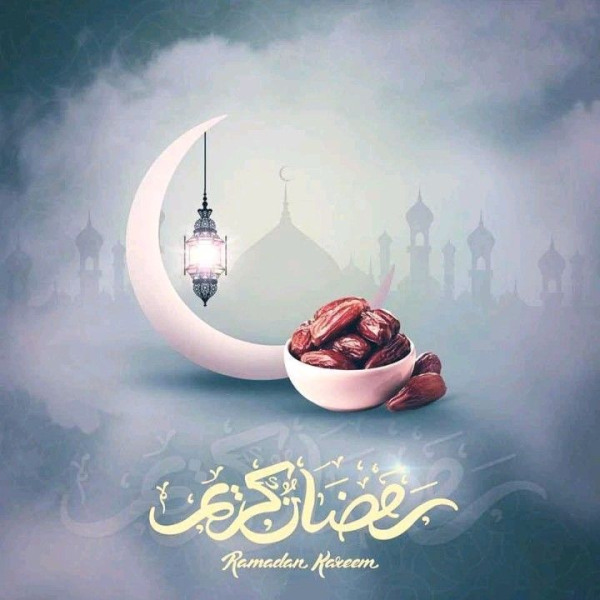
Ramadan is the ninth month of the Islamic lunar calendar and the holiest month in Islam. It is regarded as a divine opportunity for spiritual purification, self-reflection, and strengthening one’s relationship with God. Muslims around the world welcome this month with deep devotion and see it as a renewed season of worship and self-improvement.
1. The Month of the Revelation of the Qur’an
One of the greatest virtues of Ramadan is that the Qur’an was revealed during this month to the Prophet Muhammad (peace be upon him). As the holy book of guidance for humanity, the Qur’an holds a special place in Ramadan. Muslims increase their recitation, reflection, and study of the Qur’an, and many aim to complete its full reading during the month.
2. Laylat al-Qadr: Better Than a Thousand Months
Within Ramadan lies Laylat al-Qadr (the Night of Decree), described in Islamic teachings as better than a thousand months. It is a unique opportunity for prayer, repentance, and seeking forgiveness. Muslims believe that on this night, divine decrees for the coming year are determined. Special night prayers and spiritual gatherings reflect the deep significance of these blessed nights.
3. Fasting: A Practice of Self-Discipline and Piety
Fasting is the central act of worship in Ramadan. From dawn until sunset, Muslims abstain from food, drink, and certain physical needs. However, fasting is not merely physical restraint; it is a spiritual discipline that strengthens self-control and nurtures mindfulness of God (taqwa). Through experiencing hunger and thirst, believers develop empathy for those in need and cultivate compassion and generosity.
4. A Month of Mercy and Forgiveness
Islamic traditions describe Ramadan as a month of mercy, forgiveness, and salvation. It is believed that divine mercy is abundant during this time, and sincere repentance can lead to the forgiveness of past sins. The spiritual atmosphere encourages reconciliation, kindness, and the renewal of faith.
5. Strengthening Social Bonds
Ramadan also has a powerful social dimension. Shared iftar meals, increased charity, paying zakat and zakat al-fitr, and gathering in mosques strengthen community ties. This spirit of unity fosters a more compassionate and spiritually conscious society.
Conclusion
Ramadan is a spiritual school in which patience, piety, generosity, and devotion are cultivated. Its virtue lies not only in abstaining from food and drink, but in inner transformation and drawing closer to God. Those who truly benefit from this blessed month gain spiritual strength that lasts throughout the year.

Does the Quran inform us of the descent of the devils upon whom?
Shall I inform you of whom the devils descend?
They descend upon every sinful liar.
They convey what they hear, and most of them are liars.
(Poems 221 to 223)
From the above verses, one can understand how some people make extraordinary progress in filth and baseness. The poor are the playthings of their sworn enemy, the devils.
Let us fear lies and sin, which are the gateways through which the devils can penetrate our souls and minds.
The traitorous Iranians who are the playthings of the devils, both human and jinn, in foreign media and who constantly spread lies, making people cynical about the authorities and causing them trouble, are clear examples of the above verses.
The Islamic Revolution of Iran; From Early Protests to the Victory of 11 February 1979
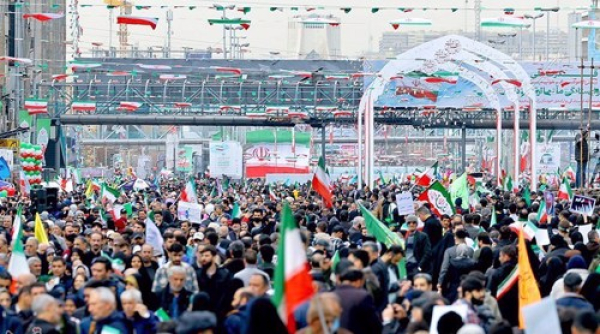
The Iranian Revolution was one of the most significant political events of the 20th century in the Middle East. It culminated in 1357 SH (1979 CE) with the سقوط of the monarchy and the establishment of the Islamic Republic of Iran. The movement was led by Ruhollah Khomeini.
Historical Background
1. Political Dissatisfaction
During the 1340s–1350s SH (1960s–1970s CE), the government of Mohammad Reza Pahlavi implemented modernization programs but faced criticism over political restrictions, limits on party activity, media control, and the role of security institutions.
2. Economic and Social Changes
The sharp rise in oil revenues in the 1350s SH (1970s CE) led to rapid economic growth. However, inflation, widening social inequality, and large-scale rural-to-urban migration created social tensions and public dissatisfaction.
3. Religious and Cultural Factors
A significant segment of the religious community viewed certain cultural and social policies of the government as incompatible with Islamic values. Ayatollah Khomeini’s open opposition began in 1342 SH (1963 CE), which resulted in his exile.
The Course of Events Leading to Victory
The Start of Widespread Protests (1356–1357 SH / 1977–1978 CE)
From late 1356 SH (1977 CE), protests spread across major cities. The traditional practice of holding memorial ceremonies forty days after casualties helped sustain successive waves of demonstrations.
Escalation of the Revolution
In the summer and autumn of 1357 SH (1978 CE), nationwide strikes—especially in the oil industry—placed heavy pressure on the government. Massive demonstrations during the months of Muharram and Safar showed the breadth of the revolutionary movement.
Return of the Revolutionary Leader
On 12 Bahman 1357 SH (1 February 1979 CE), Ayatollah Khomeini returned to Iran after years of exile. The large public استقبال marked a decisive turning point in the revolutionary process.
Final Victory
On 22 Bahman 1357 SH (11 February 1979 CE), the structure of the Pahlavi government collapsed, and the revolution achieved victory.
Outcomes and Consequences
A national referendum in Farvardin 1358 SH (March–April 1979 CE) confirmed the establishment of the Islamic Republic.
A new constitution was drafted and approved.
Iran’s political structure and foreign policy direction changed fundamentally.
Why Is the Islamic Revolution Significant?
It transformed Iran’s political system.
It introduced a model of governance combining religious authority with popular participation.
It had major regional and international impacts.
What is 22 Bahman?
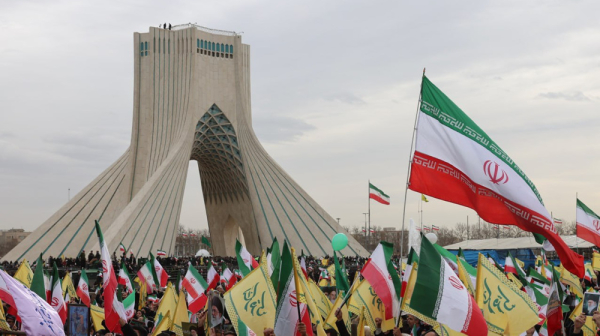
22 Bahman (11 February 1979); The Victory of the Islamic Revolution of Iran
What is 22 Bahman?
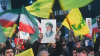
22 Bahman 1357 (11 February 1979) is the anniversary of the victory of the Iranian Revolution. It is one of the most important official holidays in Iran and is commemorated annually with nationwide rallies.
Brief Historical Background
In 1357 SH (1978–1979 CE), after months of widespread protests against the rule of Mohammad Reza Pahlavi, the revolutionary movement reached its peak.
On 12 Bahman 1357 (1 February 1979), Ruhollah Khomeini returned to Iran after years of exile, which accelerated political developments.
Finally, on 22 Bahman 1357 (11 February 1979):
Military and government centers fell to revolutionary forces.
The Pahlavi monarchy collapsed.
A new political system, the Islamic Republic, was established.
This date marks the official end of the Pahlavi dynasty and the beginning of the Islamic Republic of Iran.
How Is It Commemorated?
Each year on 22 Bahman (11 February):
Nationwide public rallies are held across Iran.
Official speeches are delivered.
Special cultural and media programs are broadcast.
The day is a public holiday.
The largest gathering is usually held in Tehran, often along the route leading to Azadi Square.
Why Is This Day Significant?
It represents a major turning point in modern Iranian history.
It fundamentally transformed Iran’s political system.
It had significant regional and international consequences.