zarezadeh
President Pezeshkian: Iran’s nuclear industry aimed at public welfare, not nukes
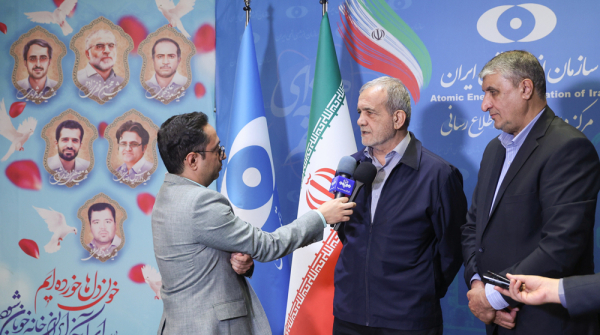
President Masoud Pezeshkian has emphasized that Iran’s expansion of its peaceful nuclear industry is aimed at enhancing the nation’s welfare, not acquiring weapons.
He made the remarks on Sunday during a meeting with senior managers at the Atomic Energy Organization of Iran (AEOI) after visiting an exhibition showcasing the latest nuclear achievements in the fields of healthcare, medicine, and production of radiopharmaceuticals.
Pezeshkian said biased propaganda and narratives are meant to insinuate that nuclear activities are synonymous with developing atomic bombs.
“However, the nuclear industry is a vast collection of scientific and industrial capacities and only a tiny fraction of its disproportionate and inhumane consequences relates to bomb-making,” he added.
“Our intention and determination in expanding this industry is to meet the needs of the people and enhance the welfare of our country, not to produce weapons.”
The Iranian president also noted that harnessing modern technologies and entering the global competitive arena is vital for the country at a time when arrogant powers are seeking to deprive independent nations of access to advanced technologies and keep them confined to assembly industries.
He further stressed that hostilities against Iran and the assassination of its scientists stem from the major powers’ concern about the country’s scientific and technological independence.
“We have repeatedly declared that building nuclear weapons is not on our agenda—and they (the world powers) know this. Yet they use false claims as a pretext to hinder Iran’s progress,” he said.
The Islamic Republic has repeatedly underscored that its defense doctrine excludes nuclear weapons entirely as per a fatwa (binding religious decree) issued by Leader of the Islamic Revolution Ayatollah Sayed Ali Khamenei.
Additionally, in his remarks, Pezeshkian honored the memory of martyrs of June’s illegal Israeli-US aggression against Iran, especially nuclear scientists, describing their efforts as a form of “scientific jihad (endeavor for the sake of God) and sincere service to the nation.”
Israel launched its blatant and unprovoked aggression against Iran on June 13, triggering a 12-day war that killed at least 1,064 people in the country, including civilians, military commanders, and nuclear scientists.
The United States also entered the war by bombing three Iranian nuclear sites in a grave violation of international law.
In response, the Iranian Armed Forces targeted strategic sites across the occupied territories as well as the Al-Udeid air base in Qatar, the largest American military base in West Asia.
On June 24, Iran, through its successful retaliatory operations against both the Israeli regime and the US, managed to impose a halt to the terrorist assault.
Press TV’s website
Sunni documents about Imam Mahdi (a.s.)

The Prophet (S) said: "Even if the entire duration of the world’s existence has already been exhausted and only one day is left (before the day of judgment), Allah will expand that day to such a length of time, as to accommodate the kingdom of a person from my Ahlul-Bayt who will be called by my name. He will fill out the earth with peace and justice as it will have been full of injustice and tyranny (by then)."
Sunni References:
• Sahih al-Tirmidhi, v2, p86, v9, pp 74-75
• Sunan Abu Dawud, v2, p7
• Musnad Ahmad Ibn Hanbal, v1, pp 84,376; V3, p63
• al-Mustadrak ala al-Sahihayn, by al-Hakim, v4, p557
• Jami’ al-Saghir, by al-Suyuti, pp 2,160
• al-Urful Wardi, by al-Suyuti, p2
• al-Majma’, by al-Tabarani, p217
• Tahdhib al-Tahdhib, by Ibn Hajar al-Asqalani, v9, p144
• Fat’h al-Bari fi Sharh Sahih al-Bukhari, by Ibn Hajar Asqalani, v7, p305
• al-Sawa’iq al-Muhriqah, by Ibn Hajar al-Haythami, Ch. 11, section 1, p249
• al-Tathkirah, by al-Qurtubi, p617
• al-Hawi, by al-Suyuti, v2, pp 165-166
• Sharh al-Mawahib al-Ladunniyyah, by al-Zurqani, v5, p348
• Fat’h al-Mugheeth, by al-Sakhawi, v3, p41
• Kanz al-Ummal, v7 P186
• Iqd al-Durar Fi Akhbar al-Mahdi al-Muntadhar, v12, Ch. 1,
• al-Bayan fi Akhbar Sahib al-Zaman, By Ganji al-Shafi’i, Ch. 12
• al-Fusool al-Muhimmah, by Ibn Sabbagh al-Maliki, Ch. 12
• Arjahul Matalib, by Ubaidallah Hindi al-Hanafi, p380
• Muqaddimah, by Ibn Khaldoon, p266
• and also in the works of Ibn Habban, Abu Nua’ym, Ibn Asakir, etc.
Also:
The Prophet (S) said: "al-Mahdi is one of us, the members of the household (Ahlul-Bayt)."
Sunni reference: Sunan Ibn Majah, v2, Tradition #4085
The Prophet (S) said: The Mahdi will be of my family, of the descendants of Fatimah (the Prophet’s daughter).
Sunni references:
• Sunan Abu Dawud, English version, Ch. 36, Tradition #4271 (narrated by Umm Salama, the wife of the Prophet)
• Sunan Ibn Majah, v2, Tradition #4086
• al-Nisa’i and al-Bayhaqi, and others as quoted in:
• al-Sawa’iq al-Muhriqah, by Ibn Hajar al-Haythami, Ch. 11, section 1, p249
Also:
The Prophet (S) said: "We the children of Abd al-Muttalib are the Masters of the inhabitants of the heaven: Myself, Hamza (ra), ‘Ali (as), Ja’far Ibn Abi Talib (ra), al-Hasan (as), al-Husayn (as), and al-Mahdi (as)."
Sunni references:
• Sunan Ibn Majah, v2, Tradition #4087
• al-Mustadrak, by al-Hakim, on the authority of Anas Ibn Malik
• al-Daylami
• al-Sawa’iq al-Muhriqah, by Ibn Hajar al-Haythami, Ch. 11, section 1, p245
The Prophet (S) said: "We (I and my family) are members of a household that Allah (SWT) has chosen for them the life of the Hereafter over the life of this world; and the members of my household (Ahlul-Bayt) shall suffer a great affliction and they shall be forcefully expelled from their homes after my death; then there will come people from the East carrying black flags, and they will ask for some good to be given to them, but they shall be refused service; as such, they will wage war and emerge victorious, and will be offered that which they desired in the first place, but they will refuse to accept it till they pass it to a man from my family (Ahlul-Bayt) appears to fill the Earth with justice as it has been filled with corruption. So whoever reaches that (time) ought to come to them even if crawling on the ice/snow since among them is the Vice-regent of Allah (Khalifatullah) al-Mahdi."
Sunni references:
• Sunan Ibn Majah, v2, Tradition #4082,
The Messenger of Allah said: "The world will not perish until a man among the Arabs appears whose name matches my name."
Sunni reference: Sahih al-Tirmidhi, v9, p74
Abu Sa’id and Jabir Ibn Abdullah reported that Allah’s Messenger (may peace be upon him) said: "There would be in the last (phase) of the time a Caliph who would distribute wealth but would not count."
Sunni references:
• Sahih Muslim, English version, v4, chapter MCCV, p1508, Tradition #6964
• Sahih Muslim, Arabic version, Kitab al-Fitan, v4, p2235, Tradition #69
It is also narrated:
Moreover, it is narrated that:
‘Ali Ibn Abi Talib (as) said: "When the ‘Support’ of the family of Muhammad (al-Qa’im Aale Muhammad) rises Allah will unite the people of east and the people of west."
Sunni references:
• Ibn Asakir, as quoted in:
• al-Sawa’iq al-Muhriqah, by Ibn Hajar al-Haythami, Ch. 11, section 1, p252
Ibn Hajar wrote that:
Muqatil Ibn Sulayman and those who followed him among the (Sunni) commentators of Qur’an said that the verse: "And he shall be a Sign for (the coming of) the Hour”(Qur’an 43:61) was revealed about al-Mahdi.
Sunni reference: al-Sawa’iq al-Muhriqah, by Ibn Hajar, Ch. 11, section 1, p247
Also Ahmad Ibn Hanbal recorded:
The Prophet (S) said: "Allah will bring out from concealment al-Mahdi from my Family and just before the Day of Judgment; even if only one day were to remain in the life of the world, and he will spread on this earth justice and equity and will eradicate tyranny and oppression."
Sunni references:
• Musnad Ahmad Ibn Hanbal, v1, p99
• A close version has also been narrated in Sunan Abu Dawud, English version, Ch. 36, Tradition #4270 narrated from ‘Ali Ibn Abi Talib (as).
It is narrated in Sahih Muslim that:
Jabir Ibn Abdillah al-Ansari (ra) said: I heard the Messenger of Allah saying: "A group of my Ummah will fight for the truth until near the day of judgment when Jesus, the son of Marry, will descend, and the leader of them will ask him to lead the prayer, but Jesus declines, saying: "No, Verily, among you Allah has made leaders for others and He has bestowed his bounty upon them."
Sunni reference:
• Sahih Muslim, Arabic, part 2, p193
• Musnad Ahmad Ibn Hanbal, v3, pp 45,384
• al-Sawa’iq al-Muhriqah, by Ibn Hajar al-Haythami, Ch. 11, section 1, p251
• Nuzool Isa Ibn Maryam Akhir al-Zaman, by Jalaluddin al-Suyuti, p57
• Musnad, by Abu Ya’ala which provides another version of the tradition with more clear words on the authority of Jabir that the Messenger of Allah said: "A group among my Ummah will continue to fight for the truth until Jesus, the son of Marry, will descend, and the Imam of them will ask him to lead the prayer, but Jesus replies: "You have more right to it, and verily Allah has honored some of you over others in this Ummah."
• Sahih Ibn Habban, whose tradition reads: "their leader al-Mahdi”and the rest of tradition is the same.
• Ibn Abu Shaybah, another Sunni traditionist, and the mentor of al-Bukhari and Muslim, has reported several traditions about Imam al-Mahdi (as). He has also reported that the Imam of the Muslims who will lead Prophet Jesus in prayer is Imam al-Mahdi himself.
Jalaluddin al-Suyuti mentioned that: "I have heard some of the deniers of (truth) deny what has been conveyed about Jesus that when he descends will pray the Fajr prayer behind al-Mahdi. They say, Jesus has higher status than to pray behind a non-Prophet.
This is a bizarre opinion since the issue of prayer of Jesus behind al-Mahdi has been proven strongly via numerous authentic traditions from the Messenger of Allah, who is the most truthful.”And then al-Suyuti goes on narrating some of the traditions in this regard. (See Nuzool Isa Ibn Maryam Akhir al-Zaman, by Jalaluddin al-Suyuti, p56).
Also al-Hafidh Ibn Hajar al-Asqalani mentioned that:
"The Mahdi is of this Ummah, and that Jesus (S) will come down and pray behind him."
Sunni reference: Fat’h al-Bari, by Ibn Hajar al-Asqalani, v5, p362
This is also mentioned by another Sunni scholar, Ibn Hajar al-Haythami, who wrote:
"The Ahlul-Bayt are like the stars through whom we are guided in the right direction, and if the starts are taken away (or hidden) we would come face to face with the signs of the Almighty as promised (i.e., the Day of Resurrection). This will happen when the Mahdi will come, as mentioned in the traditions, and the Prophet Jesus will say his prayers behind him, the Dajjal will be slain, and then the signs of the Almighty will appear one after another."
Sunni reference: al-Sawa’iq al-Muhriqah, by Ibn Hajar, Ch. 11, section 1, p234
Also Ibn Hajar quoted Abu al-Husayn al-Ajiri saying:
The traditions of al-Mustafa (S) on the rising of al-Mahdi has been transmitted via numerous authorities and is more than the level of (being sufficient for) Mutawatir, describing that he is of his Ahlul-Bayt, and will fill the earth with justice, and that Jesus (as) will come at the same time and he will assist Jesus for killing al-Dajjal in the land of Palestine, and that he will lead this nation and Jesus will pray behind him.
Sunni reference:
• Abu al-Husayn al-Ajiri as quoted in al-Sawa’iq al-Muhriqah, by Ibn Hajar, Ch. 11, section 1, p254
So if al-Mahdi and Jesus are to be the same person as some ignorants claim, then how can one prays behind himself?! Moreover this shows that Imam al-Mahdi and Jesus (the Messiah) will come at the same time so that they could pray the morning prayer together in Jerusalem.
In fact, the equivalent word of "Messiah”in Arabic is "al-Maseeh”which means "Wiped Clean; Purified". This word has been used in Qur’an as the title of Prophet Jesus (as). As such, the "Messiah”is the Prophet Jesus (as) and not the Imam al-Mahdi (as).
However, the word "Messiah”in English has another meaning, that is "savior". As a result, there have been some English translators who used the word "Messiah”for Imam al-Mahdi (as) with the meaning of "Savior”which does NOT have anything to do with Arabic word "al-Maseeh".
I should point out that, there exists a fabricated tradition which is mainly used by Ahmadis and Qadianis to prove that al-Mahdi and Jesus are the same. The tradition states: "And no Mahdi except Jesus.”
This tradition has been rated by al-Hakim as unknown and strange and he said there are discrepancy in its chain of authorities. al-Bayhaqi said Muhammad Ibn Khalid said this tradition is single (Mufrad). al-Nisa’i has mentioned that this tradition is unfamiliar and is denied, and that the memorizers of traditions confirm that the traditions which state that al-Mahdi is the descendants of Fatimah are authentic and reliable. (See al-Sawa’iq al-Muhriqah, Ch. 11, section 1, p252 for details).
Prophet Jesus is not the Imam of Muslims, and when he comes back, he will be the follower of the Imam of Muslims who is known as Imam al-Mahdi (as).
In Sahih al-Bukhari, it is narrated that:
The Prophet (S) said: "What would be your situation if the Son of Marry (i.e. Jesus) descends upon you and your Imam is among you?"
Sunni reference:
• Sahih al-Bukhari, Arabic-English, v4, Tradition #658
NOTE: The above is my own translation. The Saudi-paid translator of Sahih al-Bukhari (Muhammad Muhsin Khan) has shown pure dishonesty in translating the above tradition. His translation of the last portion of the tradition does not bear any similarity what so ever with the Arabic text of the tradition which is as follows:
كيف أنتم إذا نزل اْبنُ مريم فيكم و إمامكم منكم؟
Now let us look at the false translation of Mr. Muhammad Muhsin Khan:
Sahih Bukhari Hadith: 4.658
Narrated Abu Huraira:
Allah’s Apostle said "How will you be when the son of Mary (i.e. Jesus) descends amongst you and he will judge people by the Law of the Qur’an and not by the law of Gospel.
Mr. Muhsin Khan has trimmed the last part of the tradition which states that the Imam of Muslims (i.e., Imam al-Mahdi) is among Muslims when the son of marry descends. Instead, the translator has added another sentence which does not exists in the Arabic text. I should mention that this is not the only place that he has altered the text, and there are much more examples in this regard which proves his bias and his dishonesty.
Al-Hafidh Muhammad Ibn ‘Ali al-Shawkani (d. 1250/1834) wrote in a book called "al-Tawdhih fi twawatur ma jaa’a fil muntadar wad-djjal wal masih”(the explanation about the frequent reports concerning the Awaited one, the Dajjal, and the messiah) in which he wrote about Imam al-Mahdi (as) that: "The traditions about al-Mahdi have been related by numerous authorities and are therefor reliable beyond doubt or confusion, because in jurisprudence the qualification of Mutawatir is valid even for (traditions) with less than this number of narrations.
There are also many sayings of the companions (of the Prophet) which explicitly mention the Mahdi, which have the status of narrations from the Prophet since there is no question of establishing such saying through Ijtihad (one’s opinion and research)". The author gives the same opinion in his other book "al-Fat’h al-Rabbani". (In this connection see also Mawsu’atil Imam al-Mahdi, v1, pp 391-392,413-414,434, and also Tuhfatul Ahwadhi, v6, p485).
The author of the book, "Ghayah al-Ma’amool,”mentioned that: "It is a famous narration among the Scholars of the past and the present that there has to appear a man from the family of the Prophet (S) named al-Mahdi. In addition, the traditions about the Mahdi have been narrated by the most renowned companions of the Prophet (S), as well as by the most renowned scholars such as Abu Dawud, al-Tirmidhi, Ibn Majah, al-Tabarani, Abu Ya’ala, al-Bazzar, Imam Ahmad Ibn Hanbal, and al-Hakim (May Allah be pleased with them all); furthermore, those who claim that the traditions narrated with regard to the appearance of the Mahdi are weak, are themselves in error."
Al-Saban in his book, "Is’af al-Raghibeen,”mentioned that: "The news about the appearance of the Mahdi are traceable back to the Prophet (S), and that he is one of the members of the family of the Prophet (S); and that he will fill the Earth with justice."
This statement was accepted by the subsequent scholars as testified by Ibn Hajar al-Asqalani (See Tahdhib al-Tahdhib, v9, p144; Fat’h al-Bari, v7, p305), al-Qurtubi (al-Tathkirah, p617), al-Suyuti (al-Hawi, v2, pp 165-166), al-Muttaqi al-Hindi (al-Burhan fi Alamat Mahdi Akhir al-Zaman, pp 175-176), Ibn Hajar al-Haythami (al-Sawa’iq al-Muhriqah, Ch. 11, section 1, p249), al-Zurqani (Sharh al-Mawahib al-Ladunniyyah, v5, p348), al-Sakhawi (Fat’h al-Mugheeth, v3, p41), etc.
The above quote proves that even Ibn Khaldoon was in the opinion that the belief in Imam al-Mahdi was not a characteristic of a special sect of Islam, but was a common belief to ALL Muslims.
Sunni scholars openly criticized those elements (like Ibn Khaldoon) who tried to cast doubt the traditions about al-Mahdi (as), and have strongly asserted that the belief in Mahdi is well-established for ALL Muslims. See for instance: "Awnul Ma’bud”(which is the commentary of Sunan Abu Dawud), by al-Azimabadi, v11, pp 361-362, Tuhfatul Ahwadhi (which is the commentary of Sahih al-Tirmidhi), by al-Mubarakfuri, v6, p484, al-Tajul Jami’ lil Usul, by Shaikh Mansoor ‘Ali Nasif, v5, p341.
Two Shafi’i scholars, Ganji in his book "al-Bayan", and Shablanji in his book "Noor al-Absar", on the verse 48:28 of Qur’an: "He is the One who sent his Messenger (Muhammad) with the guidance and the true religion that in order to prevail over all the religions”narrated from Sa’id Ibn Jubair that "this promise to Prophet Muhammad will be fulfilled by al-Mahdi who is in the progeny of Fatimah (sa)."
Even Ibn Taymiyyah (d. 728/1328), who is acclaimed by the Wahhabis, wrote in his book "Minhaj al-Sunnah”(v4, pp 211-212) that the traditions concerning the Mahdi are certainly reliable, and his student, al-Dhahabi, conformed with him in his summary of his teacher’s book. (See Mukhtasar Minhaj al-Sunnah, pp 533-534).
As far as we have been able to discover, at least 35 prominent Sunni scholars have written 46 of books exclusively about Imam al-Mahdi (as), the leader of our time. Here are some of the name of some of these books:
(1) "Kitab al-Mahdi,”by Abu Dawud.
(2)"Alamat al-Mahdi,”by Jalaluddin al-Suyuti.
(3)"al-Qawl al-Mukhtasar fi Alamat al-Mahdi al-Muntadhar,”by Ibn Hajar.
(4)"Al-Bayan fi Akhbar Sahib al-Zaman,”by Allamah Abu Abdillah Ibn Muhammad Yusuf al-Ganji al-Shafi’i.
(5)"Iqd al-Durar fi Akbar al-Imam al-Muntadhar,”by Shaikh Jamaluddin Yusuf al-Damishqi.
(6)"Mahdi Aale Rasool,”by ‘Ali Ibn Sultan Muhammad al-Harawi al-Hanafi.
(7)"Manaqib al-Mahdi,”by al-Hafidh Abu Nu’aym al-Isbahani.
(8)"Al-Burhan fi Alamat al-Mahdi Akhir al-Zaman,”by al-Muttaqi al-Hindi.
(9)"Arba’in Hadith fi al-Mahdi,”by Abdul Ala al-Hamadani.
(10)"Akhbar al-Mahdi,”by al-Hafidh Abu Nu’aym.
In conclusion, the belief in the coming Mahdi (as) who is a person other than Jesus (as), is an undeniable fact for the Sunnis. As we discussed above, the Sunni scholars affirm that belief in "Mahdi of the House of the Prophet”is one of the Islamic tenets for "Ahlussunnah wal Jama’a". In the next part, however, we will discuss the points of differences between the Shi’a and most Sunnis on the issue of Imam al-Mahdi.
Why do the Shia say: اشهد ان علیا ولي الله

Inside Venezuela’s military arsenal: How Caracas could withstand US aggression
By Ivan Kesic
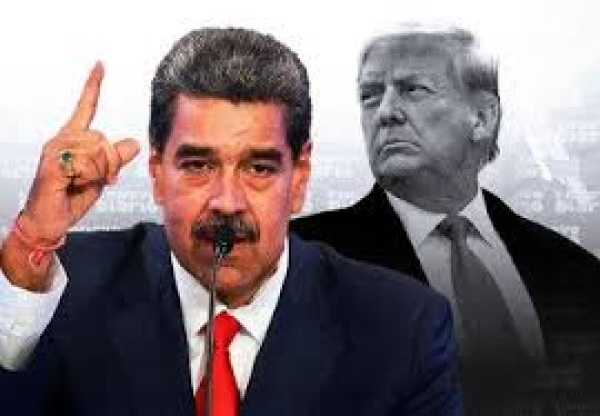
Tensions are escalating dramatically in the Western hemisphere amid US President Donald Trump’s military buildup in the Caribbean and sabre-rattling against the Venezuelan government led by Nicolas Maduro.
The Trump administration has radically pivoted from a policy of sanctions and diplomatic pressure to one of overt military confrontation, framing its actions under the banner of a "war on drugs."
This strategic shift has been heavily influenced by hawkish figures within the administration, including Secretary of State Marco Rubio, who have been advocating for a more belligerent approach that sidelines pragmatic considerations like the oil deals previously negotiated.
The US government has made serious but unsubstantiated accusations against President Maduro, designating him and key military figures as part of the "Cartel de los Soles," a so-called narco-trafficking network, and has even placed a multi-million dollar bounty on Maduro's head.
These provocative actions have been compounded by a series of direct military moves, including the deployment of a significant naval task force to the Caribbean, featuring advanced assets like the USS Gerald R. Ford carrier group, F-35 stealth fighters, and a nuclear submarine.
The situation has been further militarized by confirmed US airstrikes on vessels in international waters that Washington alleges are involved in drug smuggling, resulting in dozens of casualties and which United Nations experts have condemned as illegal extrajudicial executions.
This overt military posturing has been matched by confirmed covert actions, with President Trump himself acknowledging CIA operations inside Venezuela, a move that suggests a comprehensive campaign aimed at “regime change” in Caracas.
In response, the Maduro government has mobilized its own defenses, declared hundreds of "battlefronts," and sought to deepen its strategic alliance with Russia, ratifying a new partnership agreement that signals a clear alignment with a major US adversary.
Critics of the US approach argue that the "narco-terrorism" justification is a thin pretext for a wider imperialist project, noting that Venezuela is not a primary transit route for cocaine entering the US and produces no fentanyl, thereby exposing the underlying motivations of securing control over Venezuela's vast oil reserves and enforcing a neoconservative ideology.
The hawkish US policy has drawn significant domestic and international criticism for its potential to trigger a catastrophic humanitarian disaster, displace millions more people, and violate international law without a congressional declaration of war, recklessly prioritizing regime change over regional stability and diplomatic solutions.
What are Venezuela’s military capabilities?
In the face of American threats, Venezuela has vowed to stand firm against any bullying. In his remarks earlier this week, Maduro said the US is “fabricating a new eternal war” against him.
“They are fabricating an extravagant narrative, a vulgar, criminal and totally fake one,” Maduro said in a national broadcast. “Venezuela is a country that does not produce cocaine leaves.”
The South American country possesses a layered and technologically diverse air defense network that would present a formidable challenge to any potential military aggression.
The cornerstone of this defensive shield is the Russian-made S-300VM system, a highly capable long-range surface-to-air missile platform that forms the strategic backbone of the Bolivarian Army's anti-access capabilities.
With an engagement range exceeding 200 kilometers, the S-300VM can threaten a wide array of high-value aerial assets, including fighter aircraft, surveillance planes like the AWACS, and even aerial refueling tankers, forcing US pilots to operate at a significant distance or risk engagement.
This system is complemented at the medium-range tier by the Buk-M2E, a highly mobile and autonomous surface-to-air system that is particularly effective against low-flying aircraft, unmanned drones, and cruise missiles, and its proven combat performance in other theaters underscores its lethal potential.
The Venezuelan military further augments its defenses with numerous upgraded S-125 Pechora-2M systems, which, while based on a legacy Soviet design, have been modernized and mounted on mobile launchers, allowing them to pose a credible threat to aircraft operating at medium altitudes without sophisticated electronic warfare support.
The sheer mobility of these Russian-supplied systems, from the tracked transporters of the S-300VM to the wheeled launchers of the Buk-M2E and Pechora-2M, constitutes one of their greatest strategic assets, enabling them to pop up without warning from concealed positions and making them exceptionally difficult to detect, target, and destroy in a preemptive strike.
This unpredictable deployment pattern creates a pervasive threat environment that would complicate even the most carefully laid US military plans and scenarios, demanding a significant allocation of defense suppression assets.
The defensive depth continues into the lower tiers, where the Venezuelan armed forces deploy a dense array of point-defense weapons, including hundreds of ZU-23-2 anti-aircraft guns for engaging helicopters and low-flying targets, and a vast inventory of advanced man-portable air defense systems like the Russian Igla-S.
With an estimated stockpile of 5,000 Igla-S missiles, Venezuelan forces can generate localized zones of high risk for any aircraft operating at low altitudes, severely complicating close air support and combat search and rescue operations.
The Venezuelan Air Force, though smaller, contributes a potent aerial deterrent with its fleet of 21 Sukhoi Su-30MK2V Flanker fighters, advanced multirole aircraft capable of engaging US forces with beyond-visual-range air-to-air missiles like the R-77 and supersonic anti-ship cruise missiles, presenting a credible threat to American naval vessels operating near the coast.
This integrated defensive architecture was recently showcased in major nationwide air defense drills, the largest since 2019, which demonstrated a state of high readiness and a coordinated response to the perceived threat from the USS Gerald R. Ford strike group.
While the Venezuelan command-and-control network may lack the seamless integration of a NATO-standard system, the autonomy and mobility of its key air defense units ensure a resilient and distributed capacity to resist.
The demonstrated effectiveness of even rudimentary air defenses in other wars, such as Yemen's defense campaign against the Saudi-led military coalition, serves as a stark reminder that technologically superior forces can still suffer losses against determined and well-equipped defenders.
Any US air campaign would therefore rely heavily on stealth aircraft and costly standoff munitions, dedicate immense resources to the dangerous mission of suppressing air defenses, and prepare for potential combat losses, ensuring that a military confrontation would be neither swift nor cost-free.
How are Venezuelan strategic calculations?
The deployment of the USS Gerald R. Ford carrier strike group to the waters near Venezuela provides the US military with a formidable platform for launching rapid, precision strikes using carrier-based aircraft and Tomahawk cruise missiles from escorting destroyers.
This forward deployment signals a clear and immediate capacity to initiate a significant air campaign aimed at crippling Venezuelan command centers, air defense sites, and critical infrastructure.
The presence of Marine Corps F-35B stealth fighters in Puerto Rico further enhances this capability, offering a penetrating strike and reconnaissance asset designed to operate in contested airspace, though these very aircraft are likely already being tracked by Venezuelan radar as they patrol the coast.
The stated US objective of countering “narcotics trafficking,” however, serves as a strategically misleading and legally contentious justification for a military buildup of this magnitude, one that appears disproportionately large for targeting illicit drug shipments and instead aligns more closely with a strategy of “regime change,” as per experts.
This aggressive posture risks triggering a regional conflagration that could draw in other actors and destabilize neighboring countries like Colombia and Brazil, which would bear the brunt of a new wave of refugees fleeing the violence.
The recent strengthening of military ties between Caracas and Moscow introduces an additional layer of strategic complexity, potentially providing Venezuela with enhanced intelligence sharing, technical support, and diplomatic backing that could complicate US operational planning.
Within the US, the hawkish policy is not universally endorsed, facing criticism from figures who point to the lack of concrete evidence, the absence of congressional authorization, and the haunting echoes of past military quagmires like Iraq.
The Venezuelan military's strategy appears focused not on achieving victory in a prolonged, all-out war with the United States, but on imposing a significant tactical cost during the initial phases of any intervention.
By leveraging its mobile and layered air defenses, Venezuela aims to degrade US air superiority, delay the establishment of a permissive environment for sustained operations, and potentially down American aircraft in the early hours of a conflict.
The goal of such a deterrent posture is to raise the perceived political and human price of an invasion to a level that US policymakers would find unacceptable, thereby preventing an attack through the credible threat of a painful and protracted confrontation.
The ongoing crisis thus represents a dangerous game of brinkmanship, where the motivations for intervention are questioned by many, the defensive capabilities of the target nation are substantial, and the potential for miscalculation on both sides threatens to plunge the region into a devastating conflict with unforeseeable humanitarian and geopolitical consequences.
Press TV’s website
Genocide rages on’: Report says Israel kills some 10 Gazans daily since ceasefire deal took force
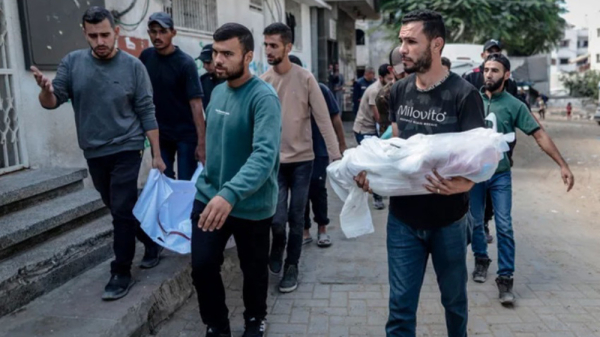
The Israeli regime has killed an average of 10 Palestinians per day in the Gaza Strip since October 10, when a deal took effect aimed at implementing the first phase of a plan to end Tel Aviv’s two-year-plus war of genocide on the territory, a human rights organization has reported.
In a statement on Friday, the Geneva-based Euro-Mediterranean Human Rights Monitor said the regime’s actions, including daily shelling, systematic destruction, and forced displacement, amounted to “acts of genocide against Palestinians.”
According to the body, the campaign was now being waged “in a quieter and more systematic manner,” with repeated violations of the agreement through attacks that often escalate into large-scale strikes on displacement centers, homes, and tents.
Israel’s Ben‑Gvir calls for Palestinian detainees’ execution on prison visit
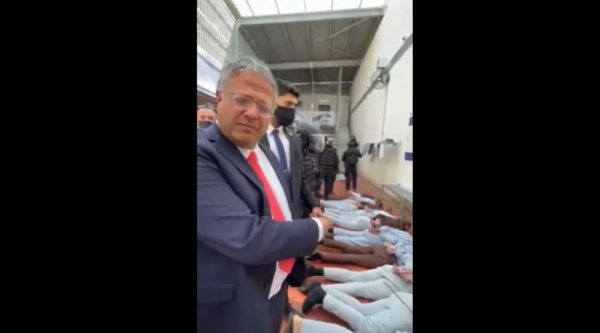
This screen grab taken from a video, released on October 31, 2025, shows Israeli minister Itamar Ben-Gvir standing next to tied-up Palestinian prisoners at an Israeli detention center.
Israeli minister Itamar Ben‑Gvir called for the execution of Palestinian inmates in Israeli prisons and detention centers, as he stood beside a row of Palestinian prisoners being abused while lying on the ground with their hands tied behind their backs.
In footage shared on his personal Telegram channel on Friday, Ben-Gvir addresses the camera while pointing at a dozen detainees faced down in front of an Israeli flag.
The Israeli minister and chairman of the Otzma Yehudit party stated that Palestinian prisoners are being held under minimal conditions.
“But there’s still something that must be done: the death penalty” for them, he stated.
He highlighted the severe detention conditions he had enforced on Palestinian prisoners – a subject he has repeatedly flaunted in recent months.
“I am proud of the revolution in the prisons, unlike anything since the founding of the entity; today, instead of a summer camp, there is deterrence. There are no more smiles there — we erase them,” Ben-Gvir said.
“Ask any detainee who passed through my prison, if he would like to return there — they are afraid, trembling, and the number of attacks has fallen remarkably,” he added.
Ben-Gvir, who is known for his inflammatory remarks, has threatened to stop voting with Israeli Prime Minister Benjamin Netanyahu’s right-wing coalition if his bill calling for the execution of Palestinian detainees is not put to a parliamentary vote soon. The Israeli Knesset (parliament) is set to vote next week on the bill.
Earlier this month, Ben-Gvir told reporters that with the release of the final 20 surviving Israeli captives from Gaza, there were no longer any excuses for delaying the legislation.
He published a video in August, showing him threatening prominent Palestinian political leader Marwan Barghouti in his prison cell.
Testimonies collected by Palestinian lawyers indicate that prisoners are subjected to systematic torture in Israeli facilities, including severe beatings, starvation, medical neglect, and other brutal treatments.
According to the Palestinian Prisoners’ Society, 80 Palestinians have died in Israeli custody since October 2023, when the Tel Aviv regime unleashed its genocidal war on the Gaza Strip.
Press TV’s website
Hezbollah not merely a military force but 'integrated strategic project,' says Sheikh Naim Qassem
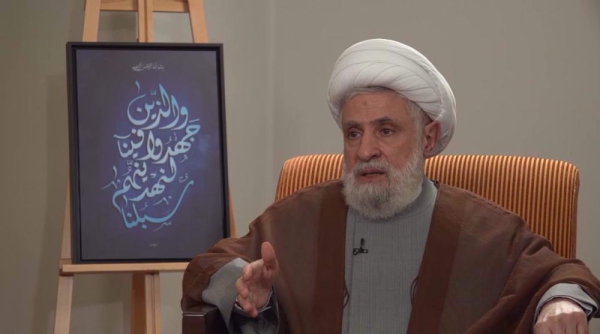
Screengrab of Hezbollah chief Sheikh Naim Qassem during an interview broadcast on Al-Manar on October 26, 2025.
Hezbollah Secretary-General Sheikh Naim Qassem says the movement is far more than an armed group, describing it as an “integrated strategic project” that addresses Lebanon’s defense as well as its social and economic needs.
In an interview with Al-Manar TV aired on Sunday, Sheikh Qassem said resistance for Hezbollah is not a temporary tactic or a standalone military option but an “integrated way of life” embedded in the organization’s identity.
“We do not tire, and the party’s journey is strong and firm, and we cannot resort to surrender just because of a feeling of exhaustion. Instead, we continue to defend and stand firm,” he said, highlighting the religious and ethical commitment that animates the movement.
He stressed that the spirit of martyrdom permeates the group, from front-line fighters to the families who have borne heavy sacrifices. “The characteristic of the martyrdom-seeker belongs to every individual in the party, and it means facing difficulties and sacrificing everything precious to achieve the goal, no matter how difficult the path,” he said.
Iran's National Elites Foundation honors 17 Olympiad medalists in scientific fields
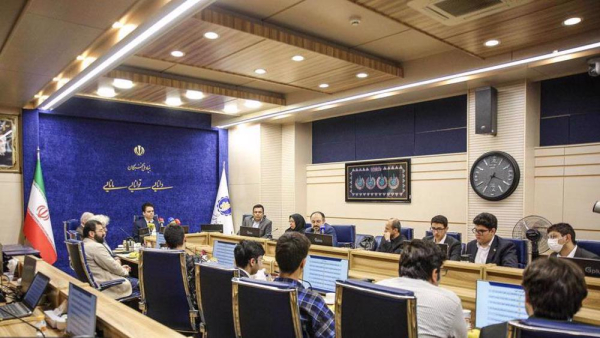
Iran's National Elites Foundation (INEF) has held a ceremony honoring 17 talented students and young individuals who have won gold, silver, and bronze medals in the International Science Olympiad competitions in the fields of Artificial Intelligence, Astronomy and Astrophysics, Economics, and Computer Science.
Speaking during the event on Saturday, INEF Deputy Head Saeed Khodaygan said that Olympiad medalists automatically enter the “elite pathway,” a journey that marks the beginning of their scientific flourishing and a true test of their impact on society.
He emphasized that the path embodies both privilege and duty, a privilege bestowed upon the elite by society, and a duty the elite must uphold in service to that society.
“Your medal is a great honor for the country — but it is only the beginning of the journey,” he told the medalists. “In the years to come, what will hold greater value than the medal itself is your social impact and scientific service to the nation. That is the true medal that society gives you.”
The official further highlighted the challenging and complex nature of the elite pathway, saying it marks a stage during which the individual must transition from being a recipient to becoming a provider of scientific and social services.
“I hope that through your personal dedication, the support of families, and the collaboration of the country’s scientific institutions, you will continue on the path of elite development with steadfastness — so that your name may be proudly etched in Iran’s history,” he added.
In July, Iran’s biology team won 3 golds and 1 silver at the 36th International Biology Olympiad in the Philippines, cementing its place among the world’s top teams.
In the same month, Iran’s national mathematics Olympiad team shone at the 66th International Mathematical Olympiad 2025 in Australia, winning two golds, three silvers, and one bronze
In August, the Iranian National Olympiad Team in Astronomy and Astrophysics, for the second year in a row, claimed top honors at the 18th International Olympiad on Astronomy and Astrophysics (IOAA), where 64 nations took part.
The Iranian team staged an outstanding performance in this year’s competition and managed to secure first place with a clean sweep of five prestigious gold medals.
Press TV’s website
Israel continues to exploit Gaza aid as weapon of war: Doctors Without Borders
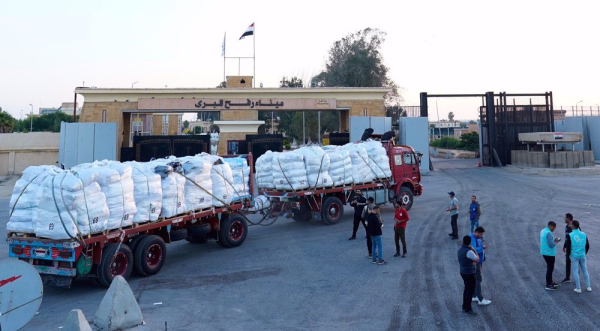
A senior official from the international medical humanitarian organization Doctors Without Borders (MSF) says the Israeli regime continues to use humanitarian aid in Gaza as a weapon of war against Palestinians.
Caroline Willemen, MSF project coordinator in Gaza, underscored in a statement on Sunday that aid sent to the Gaza Strip should not be tied to any political conditions.
She noted that there has been a notable decline in Israeli attacks on Gaza since the ceasefire was enacted, but she also pointed out that a major assault took place on 19 October, with near-daily shelling persisting.
The humanitarian conditions in Gaza, Willemen said, have not seen significant improvement. Shortages of water and shelter continue to exist, and as winter draws near, hundreds of thousands of individuals remain living in tents, she added.
She highlighted that MSF teams are still registering severe malnutrition in children younger than five years and in pregnant women. Despite a slight increase in food availability, the nutritional status remains worrisome.
“Residents of Gaza have lived under the threat of mass extermination for two years,” Willemen said.
The senior MSF official added, “We urgently need aid to ensure people can sleep on a mattress with a blanket inside their tents. Rebuilding Gaza will take a long time, but we have not yet reached even the minimum basic humanitarian standards in the strip.”
One Palestinian killed in Israeli drone strike
Meanwhile, medical sources at al-Awda Hospital said one Palestinian was killed and four others injured in an Israeli drone attack last night at Nuseirat refugee camp in northern Gaza.
The Israeli army asserted in a statement that it carried out the attack against a member of the Islamic Jihad resistance movement.
The first phase of the Gaza ceasefire agreement was aimed at bringing an end to Israel’s assault, a partial withdrawal of its troops to a so-called yellow line along Gaza’s borders, and a modest increase in humanitarian aid.
Last Monday, as part of the deal Hamas released all living captives, as well as the remains of 12 of the 28 dead Israeli captives.
In return, Israel freed 2,000 Palestinian detainees and returned 15 Palestinian bodies for every one dead Israeli captive returned.
Since the onset of the Israeli genocidal war in October 2023, the occupying regime has killed at least 68,519 Palestinians — mostly women and children — and reduced Gaza to ruins, drawing global outrage and calls for accountability.
Experts warn that the true death toll could reach hundreds of thousands once the missing and those buried beneath the ruins are fully counted.
Press TV’s website
How Trump frames himself and Iran: An analysis of his social media posts
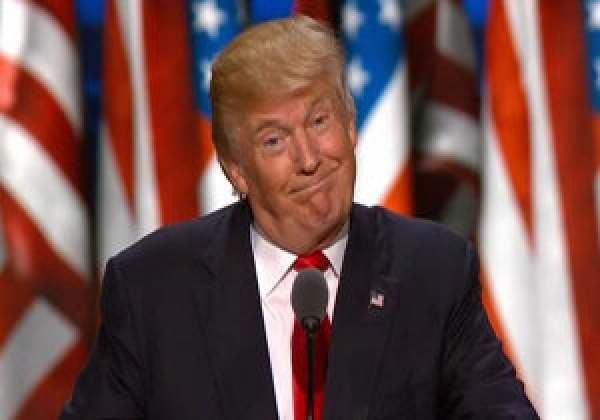
By Saeedeh Moradifar, Ali Reza Nasr Esfahani
After Donald Trump’s social media accounts, particularly on X (Twitter), were suspended, he launched his own platform, Truth Social, at the end of 2021. The goal was to regain media influence and directly convey his political beliefs as well as his portrayals of himself and others.
Trump has consistently expressed his views—often diverging from traditional diplomatic norms—first via X and later through Truth Social. Notably, his rhetoric directly influences US foreign policy and international diplomatic relations, shaping perceptions of US governance
One country that Trump frequently comments on is the Islamic Republic of Iran. In this article, we analyzed 80 posts (Truth Social) from Trump specifically about Iran, spanning from January 2025 to the end of the 12-day imposed war, to uncover the implicit messages in his content
Using a mixed-method content analysis, we extracted 165 codes, including keywords, repeated phrases, and thematic variations, and grouped them into meaningful categories. Ultimately, two dominant conceptual images emerged: Trump as the “Saviour of the world” (Trump's image of himself), and Iran as the“weak enemy” (Trump's image of Iran).
The content analysis of Trump’s social media posts suggests that he has emphasized building a positive image of his administration to shape international perceptions against Iran and foster empathy and support for the United States.
By publishing this content, Trump has aimed to portray Iran negatively in the region and globally, while presenting his administration in a favorable light. Indeed, 75 percent of the content in Trump’s posts focuses on his image as a global savior, while only 25 percent addresses Iran as a weakened adversary.
Trump's image of himself – ‘savior of the world’
Trump has sought to portray himself as the “savior of the world” by disseminating selective information. His aim appears to be the justification of his administration’s policies toward Iran and the manipulation of international perceptions to align foreign stances with US objectives.
His self-image is constructed through four thematic categories: 'Questioning the achievements of the Democrats,' 'pre-emptive self-defense,' 'ending the war,' and 'preventing the emergence of a regional hegemon.'
The analysis reveals that 'pre-emptive self-defense' dominates his narrative, representing 39 percent of the content, followed by 'ending the war' (35 percent), 'questioning the achievements of the Democrats' (23 percent), and 'preventing the emergence of a regional hegemon' (3 percent)
To construct this image of himself, the US president has questioned the Democrats’ achievements through two main codes: the termination of the Democrats’ nuclear deal and the need for a new diplomatic agreement with Iran.
He has depicted former US president Barack Obama and the Democrats’ nuclear deal as responsible for enabling Tehran’s “pursuit of nuclear weapons.” From Trump’s perspective, a new agreement with Iran is necessary to prevent uranium enrichment and the acquisition of nuclear weapons by Tehran. He frames Iran as a state whose interests conflict with those of the US, aligned with the Eastern Bloc, and as an international threat that must be countered to protect both the Israeli regime and American interests in the region.
By filtering intelligence and using his own rhetoric, Trump has sought to present a US attack on Iran as “pre-emptive self-defense,” guided by two codes: the legitimacy of striking Iranian nuclear facilities and the destruction of Iran’s nuclear sites.
From his perspective, these actions enabled the US to create a significant historical moment for Israel and the world by targeting Iranian nuclear sites, including Fordow, Natanz, and Esfahan.
Trump’s ultimate aim has been to portray his administration’s success in so-called “Operation Midnight Hammer” in mid-June as neutralizing a destabilizing nuclear threat in the region, which in reality was in brazen violation of international law and based on false intelligence.
He has presented his Republican administration as the main factor in ending the war in the West Asia region with two codes (a ceasefire agreement between Israel and Iran, establishment of world peace). In fact, Trump's goal was to present himself as a peacemaker and a security-conscious person in the international system by sorting out positive information, such as the one that resulted in the ceasefire agreement after the 12-day war, sought by Israel.
Importantly, Trump has placed less emphasis on preventing the emergence of a regional hegemon with a code. However, he sees any progress in Iran’s nuclear program as a basis for acquiring nuclear weapons, which he claims would imperil security in the region.
Trump's image of Iran – ‘weak enemy’
Trump has also attempted to portray Iran as a weak adversary within the international system. While the roots of this negative depiction date back to the victory of the Islamic Revolution in 1979, there are two primary reasons for it:
The fundamental principle of Imam Khomeini’s and Leader of the Islamic Revolution Ayatollah Seyyed Ali Khamenei’s foreign policy during their leadership was resistance to global arrogance and confrontation with American imperialism. From the US government’s perspective, this reflects Iran’s deep hostility toward the US.
Iran’s support for Palestine in resisting Israel is another aspect of its discourse of resistance to global arrogance. Clear evidence of this support includes operations "True Promise1" in April 2024 and "True Promise2" in October 2024, carried out in response to Israel’s genocidal war against the people of Gaza and the cowardly assassinations of top resistance leaders, Hassan Nasrallah, Ismail Haniyeh, and Abbas Nilforoushan.
These factors have contributed to a distorted image of Iran in international relations, portraying it as an enemy and a threat from the US perspective, potentially encouraging Western countries and Israel to consider further attacks on Tehran. Crucially, Trump sought sufficient and morally framed justifications for this negative portrayal of Iran to support potential military action.
Trump’s image of Iran as a weak enemy is constructed around three categories: 'disruptor of the international order,' 'incapable of governance,' and 'lacking credibility and authority in the international system.'
Content analysis indicates that Trump placed the greatest emphasis on the 'disruptor of the international order,' which accounted for 68 percent of the content. This was followed by 'incapable of governance' at 17 percent and 'lacking credibility and authority in the international system' at 15 percent, showing his focus on reinforcing a negative image of Iran.
To depict Iran as a disruptor, Trump emphasized two codes: sponsorship of terrorism and pursuit of nuclear weapons. In his view, Tehran’s support for the Ansarallah resistance movement in Yemen through military and financial aid contributes to regional chaos and instability, while its nuclear ambitions threaten global security.
Trump has also portrayed the Islamic Republic as incapable of governing effectively, emphasizing the need for regime change as a key code. By highlighting internal challenges and sanctions-related restrictions, Trump linked the solution to Iran’s problems to “regime change,” while downplaying the primary causes—namely, unilateral and illegal sanctions imposed by his own country against the Iranian nation. The same “regime change” project that has been in the works for the past 46 years.
Finally, Trump frames Iran as lacking credibility and authority in the international system through two codes: inability to sell oil and defeat in the war against Israel. From his perspective, Israel’s 12-day war represented a successful counter to Tehran’s regional ambitions, positioning Israel as the real victor. Moreover, Iran’s weakened state, according to Trump, prevents it from exporting oil even to allies like China. Both claims are based on bogus information fed to the US president.
To counter Trump’s negative and manipulative portrayals of Iran, a strategic approach could involve establishing a non-profit organization, which would operate independently, free from political influence, and adopt a long-term strategy for real image-building.
Saeedeh Moradifar is a Ph.D in International Relations and a Researcher at the Islamic Parliament Research Center of the Islamic Republic of Iran.
Ali Reza Nasr Esfahani is a Ph.D. in Futures Studies and a member of the academic staff at the Islamic Parliament Research Center of the Islamic Republic of Iran.
Press TV’s website