zarezadeh
Three Possible Futures for Sudan

Scenario 1 – Optimistic: A Sustainable Ceasefire and Gradual Reconstruction
Likelihood: Low but possible
In this scenario, international and regional pressure pushes the Sudanese Armed Forces and the Rapid Support Forces toward a practical agreement to stop the fighting. A monitored ceasefire is established, creating space for political dialogue. Humanitarian aid gains easier access to conflict zones, and key regions such as Khartoum and Darfur begin to regain relative stability.
The outcomes include a reduction in displacement, the beginning of reconstruction projects, and the formation of a transitional government. Achieving this scenario depends on sustained external pressure, war fatigue among both parties, and global concern over Sudan’s humanitarian crisis.
---
Scenario 2 – Moderate (Realistic): Temporary Lulls in Fighting and a Fragmented State
Likelihood: Moderate and the most probable scenario
In this scenario, the war does not fully end, but the conflict moves through alternating phases of escalation and relative calm. Sudan effectively becomes divided into zones of influence: some controlled by the army, some by the Rapid Support Forces, and others by local or tribal groups. The central government remains weak and fragmented.
The consequences include a prolonged humanitarian crisis, expansion of the informal economy, and reduced national cohesion. This situation resembles the recent experience of Libya. This scenario is most likely because neither side is capable of a decisive victory and because external interests maintain a balance of weakness.
---
Scenario 3 – Pessimistic: Structural Collapse and a Path Toward Fragmentation
Likelihood: Moderate to high if the war continues
In this scenario, the conflict intensifies further, and regions such as Darfur and Kordofan may move toward practical self-rule. Local armed groups grow stronger, and the central state effectively collapses.
The results may include the emergence of de facto semi-state regions, a deeper humanitarian catastrophe, increased displacement, and greater regional instability. Factors such as continued foreign support for the warring parties, the breakdown of essential services, and the absence of acceptable political leadership contribute to the likelihood of this scenario.
---
Conclusion
The optimistic scenario envisions a ceasefire and gradual reconstruction, though its chances are limited. The moderate scenario — the most realistic — anticipates a fragmented Sudan with ongoing instability. The pessimistic scenario, whose likelihood is increasing, points to the structural collapse of the state and potential fragmentation.
Sudan in the Fire of Power: How the Struggle Over Gold and the Military Pushed the Country to the Brink
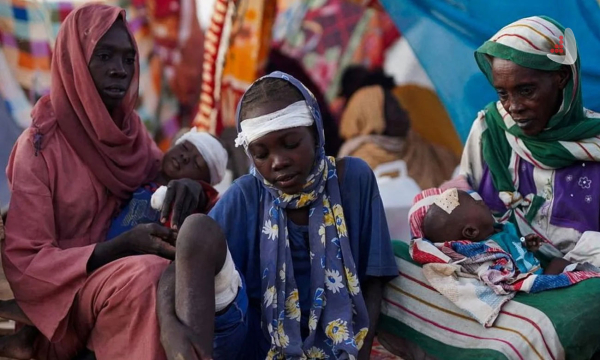
Since the Sudanese Armed Forces and the Rapid Support Forces entered a fierce confrontation in April 2023, the country has effectively transformed into a prolonged battlefield marked by structural collapse — a war that now targets ordinary civilians more than ever. What initially appeared to be a manageable crisis has evolved into a full-scale nightmare for the people of Sudan.
The first major mistake was the failed attempt to integrate the Rapid Support Forces into the official army — a plan meant to unify the security structure but one that ultimately deepened the divide between the two sides. This incomplete process allowed the RSF to grow into an independent and powerful entity pursuing its own political and economic interests.
The second critical error was neglecting the country’s long-standing structural tensions — conflicts rooted in competition over natural resources, deep economic inequality, and rivalries among political elites. The rush to control gold mines, farmland, and other essential assets escalated mistrust and hostility to a point where any spark could ignite a war — and eventually did.
The results of these failures are evident in the collapse of Sudan’s essential institutions: millions displaced, a devastated healthcare system, widespread disease, severe hunger, and a complete halt in educational activities. Today, Sudan’s economy, infrastructure, and governance are in the weakest condition seen in its modern history.
At present, no clear path toward peace or recovery is visible. The absence of a unified national strategy for rebuilding security and economic stability — combined with the involvement of regional actors and armed groups — has made resolving the crisis even more complex. Sudan’s current catastrophe is not merely the product of a civil war but the outcome of a chain of structural flaws, mismanagement, and relentless competition for power and wealth.
Iranian retaliation left Israel’s military capacity in ruins, but damage kept secret: Advisor
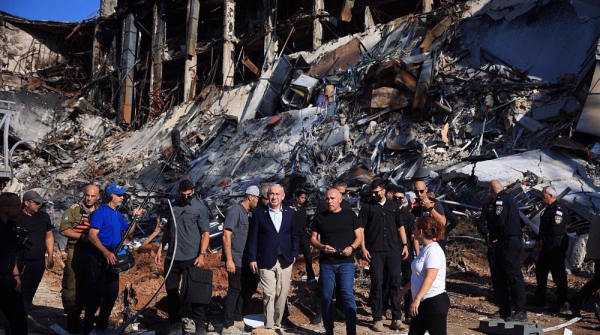
An advisor to the chief of general staff of the Iranian Armed Forces says Israel is deliberately withholding the full scale of losses from Tehran’s recent retaliatory strike, noting that the damage went far beyond official accounts and destroyed key military infrastructure and operational capacity.
“The true extent of the damage inflicted on the Zionist regime has not been announced,” Brigadier General Fathollah Jafari said on Thursday while addressing a local event in Jiroft, Kerman.
“The harm it suffered was far greater than the official accounts; its operational capacity and infrastructure were destroyed,” he added.
On June 13, the Israeli regime carried out an unlawful act of aggression, assassinating senior commanders, nuclear scientists, and ordinary citizens. Iran responded within 24 hours with a barrage of missiles and drones, later expanding its campaign under the operation known as True Promise III.
The United States intervened on June 22, striking three Iranian nuclear sites in a blatant violation of international law. In self‑defense, Iran targeted Al Udeid Air Base in Qatar, the largest American military installation in West Asia. The embattled Israeli regime was forced to unilaterally accept a truce deal on June 24.
“The enemy thought that after years of secret planning it could catch Iran off guard, but the presence of the people, the Islamic Revolution Leader, the spirit of the volunteers, and the country’s defensive readiness overturned all the calculations of Israel and the United States,” Jafari added.
He noted that the US and Israeli regimes had carried out ten years of intelligence work to prepare the people to hit the streets following the aggression, but the people’s presence was “the opposite of what the enemy had imagined.”
The advisor also reminded that the “treacherous” US-Israeli aggression came as Tehran was in the midst of indirect negotiations with Washington over its peaceful nuclear program.
Following the assassination of Iran’s top commanders, the Israeli regime did not expect Iran to be able to manage the retaliatory operation, he said, noting that, however, the mighty response was delivered by relying on the younger generation of forces and the country’s missile power.
The remarks come as military censorship laws in Israel restrict the publication of sensitive security information, particularly during active conflicts.
However, data examined by Oregon State University researchers in early July showed that Iranian missiles struck five Israeli military sites during the war.
US, with all its modern military arsenal, suffered defeat in 12-day war: Leader
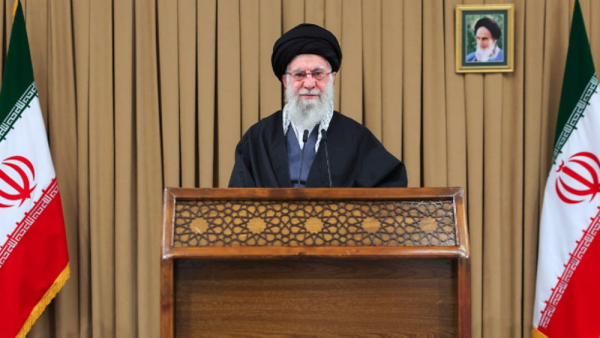
Leader of the Islamic Revolution Ayatollah Seyyed Ali Khamenei says the US suffered severe losses during the 12-day war with Iran in June, despite deploying its most advanced military equipment, including submarines, fighter jets, and state-of-the-art defense systems.
“In the 12-day war, the Iranian nation undoubtedly defeated both the United States and the Zionist regime. They came and committed mischief, but were beaten and returned empty-handed, failing to achieve any of their objectives — this was a real defeat for them,” Ayatollah Khamenei said in a televised speech on Thursday night.
The Leader said that according to some accounts, the Zionist regime had planned and prepared for the war for 20 years.
"They had planned a war in which they hoped to provoke the people and force them to fight against the system. But the situation was reversed, and they failed so completely that even those who had disagreements with the system stood alongside it, creating a general unity in the country,” he added.
Ayatollah Khamenei referred to the heavy losses suffered by the US in the 12-day war despite deploying its most advanced military equipment, including submarines, fighter jets, and state-of-the-art defense systems.
“The United States was severely damaged in this war, since despite using the latest offensive and defensive weapons, it could not achieve its goal of deceiving the nation and winning their support. Instead, the unity of the people increased, and the United States was also thwarted," he said.
“Of course, we also suffered losses, and, as is the nature of war, precious lives were lost. But the Islamic Republic demonstrated that it is a center of will and power, able to stand strong and make decisions without fear of the noise around it. Moreover, the material damage inflicted on the invading enemy was far greater than the material losses we suffered,” he added.
On June 13, Israel launched an unprovoked war against Iran, assassinating many high-ranking military commanders, nuclear scientists, and ordinary civilians.
More than a week later, the United States also entered the war by bombing three Iranian nuclear sites in a grave violation of the United Nations Charter, international law, and the Nuclear Non-Proliferation Treaty (NPT).
Key Virtues of Lady Fatimah al-Zahra (a.s.)

? 1. Infallibility (ʿIsmah)
Lady Fatimah (a.s.) is purified from all sin and error according to the Verse of Purification.
Equal to the Ahl al-Bayt (a.s.) in spiritual purity.
---
? 2. Leader of the Women of the Worlds
The Prophet (s) said: “Fatimah is the leader of the women of all worlds.”
The highest spiritual rank among all women in history.
---
? 3. The Kawthar of the Prophet (s)
She is the embodiment of the Kawthar mentioned in the Qur’an.
The blessed source of the Prophet’s pure progeny.
---
? 4. Divine Knowledge and Spiritual Status
Possessed knowledge granted through the Prophet (s) and angelic inspiration.
Owner of the “Mushaf of Fatimah,” a book of divine inspirations.
---
? 5. Perfect Worship and Devotion
Known for night prayers and always praying for others before herself.
A complete model of piety and spirituality.
---
? 6. Intercession
Holds a special position of intercession for the believers on the Day of Judgment.
---
? 7. Mother of the Imams
She nurtured Imam Hasan (a.s.), Imam Husayn (a.s.), and Lady Zaynab (a.s.),
each becoming pillars of Islam after the Prophet (s).
The Tasbih of Lady Fatimah (a.s.) as a Heavenly Gift

According to reliable Shia sources, when Lady Fatimah al-Zahra (a.s.) spoke to the Prophet Muhammad (s) about the difficulties of managing the household and asked for a servant, the Angel Jibrā’īl (Gabriel) descended and brought a special form of glorification (tasbih) as a gift. This later became known as the “Tasbih of Lady Fatimah (a.s.)”.
The Prophet (s) then said to Lady Fatimah (a.s.):
“O Fatimah! I give you something better than a servant and better than anything else:
Say Allāhu Akbar 34 times, Alhamdulillāh 33 times, and Subhānallāh 33 times.”
This remembrance is considered one of the most important and emphasized acts of worship after the daily prayers in Shia Islam, and great scholars have strongly recommended it.
Strategic ascent: How Iran’s cutting-edge drone technology gained global foothold
By Ivan Kesic
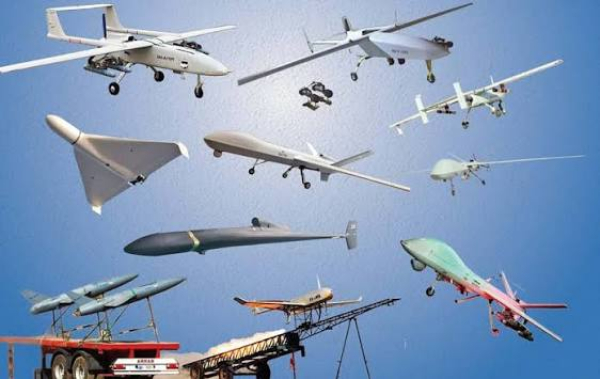
Iran's drone technology has evolved from a domestic defense initiative into a formidable presence on the global stage, demonstrating a distinctive and effective approach to aerospace development that resonates with a diverse array of international partners.
Over the past decade, the Islamic Republic of Iran’s unmanned aerial vehicle (UAV) industry has undergone a remarkable transformation, progressing from a localized capability to a significant global force.
This rise is not necessarily due to groundbreaking new technologies, but rather a pragmatic and strategic philosophy that defines the country’s aerospace engineering program.
Iran’s astounding success lies in its intelligent integration of existing commercial technologies, combining them into simple, reliable, and cost-effective platforms that are mass-produced to meet the specific demands of modern asymmetric warfare.
This approach has produced three notable UAV systems: the Shahed-136 loitering munition, the Mohajer-6 multi-role combat drone, and the Ababil-3 reconnaissance platform.
Each model reflects a distinct phase of Iran’s technological evolution and operational doctrine, addressing a wide spectrum of military needs.
From the plains of Africa to the skies of South America, these drones serve as instruments of strategic influence, extending Iran’s geopolitical reach and cementing its role as a prominent manufacturer and exporter of military-grade drone technology.
Their widespread adoption underscores a global demand for capable, affordable unmanned systems and highlights the effectiveness of Iran’s tailored development strategy.
Strategic philosophy: Pragmatism as a cornerstone
The foundational strength of Iran’s burgeoning drone program lies in its purposeful and pragmatic design philosophy, which prioritizes functionality, cost-effectiveness, and reliability over cutting-edge complexity.
This strategy reflects a conscious effort to maximize operational output while minimizing technological input, resulting in systems that are both easy to produce and challenging to counter.
At its core, the program optimizes the use of commercially available, dual-use components, engineered into robust platforms tailored for specific battlefield roles.
By focusing on simplicity, Iran facilitates rapid mass production, enabling the deployment of large numbers of drones to achieve strategic effects.
This approach aligns with an asymmetric warfare doctrine, where overwhelming an adversary with numerous, affordable, and capable assets neutralizes the technological advantage of costlier, limited platforms.
This philosophy has allowed Iran to build a sustainable and scalable aerospace industry from the ground up, bypassing restrictions on access to specialized military-grade technology.
The resulting product line precisely meets the operational needs of a diverse client base, providing practical, cost-effective solutions to real-world security challenges without the prohibitive expenses of advanced Western drone systems.
Shahed-136: The archetype of asymmetric warfare
The Shahed-136 epitomizes Iran’s strategic approach – a loitering munition designed for long-range, one-way missions where simplicity and affordability are paramount.
Its design is a masterclass in minimalist engineering that achieves devastating strategic impact.
Featuring a delta wing and single fuselage, the drone’s airframe is inherently stable and durable, manufactured from inexpensive composite materials like fiberglass.
Complex landing gear is eliminated, replaced by a simple rocket-assisted launch system that reduces weight, cost, and mechanical complexity.
Powering the Shahed-136 is a commercial MADO MD 550 two-stroke piston engine, widely used in light aviation and prized for its low cost and easy maintenance.
Although its distinctive loud acoustic signature is notable, it is tactically mitigated by doctrines deploying these drones in large, saturating swarms designed to overwhelm enemy air defenses.
The guidance system combines a commercial GPS receiver with a basic inertial navigation system (INS), allowing pre-programmed target coordinates.
Even under GPS jamming, the INS maintains sufficient accuracy to engage large, stationary infrastructure targets.
The Shahed-136’s design effectiveness is underscored by its widespread replication and licensed production in countries such as Russia and Yemen, alongside imitation projects reported in China, India, Turkey, Saudi Arabia, North Korea, Ukraine, Poland, France, and even the United States—a testament to the enduring influence of Iran’s foundational drone design philosophy.
Mohajer-6: A leap into advanced multi-role combat drones
Representing a more advanced tier of Iran’s drone capabilities, the Mohajer-6 marks the industry’s maturity and successful transition into the realm of multi-role, medium-altitude, long-endurance (MALE) combat UAVs.
This platform showcases significant technological evolution, moving beyond simple, single-use munitions to a sophisticated system capable of intelligence, surveillance, and reconnaissance (ISR) missions as well as precision strikes.
Its airframe features a classic, proven aerodynamic design with straight wings optimized for extended loiter times and an H-tail configuration for enhanced stability, highlighting a balance between reliability and performance.
The Mohajer-6 is believed to be powered by a version of the highly reliable Rotax 912/914 series four-stroke engine, or an Iranian equivalent, reflecting Iran’s continued emphasis on leveraging dependable commercial technology as the foundation for military-grade systems.
The platform’s key technological advancements lie in its secure communications suite and advanced sensor and weapons payload.
Equipped with a secure line-of-sight data link for real-time video transmission and command, some variants reportedly possess satellite communication capabilities, dramatically extending operational range.
Its stabilized electro-optical/infrared (EO/IR) gimbal, combined with a laser designator, enables accurate target identification, tracking, and guidance of precision munitions such as the Qaem series bombs and Almas anti-tank missiles.
The Mohajer-6’s operational adoption by countries including Ethiopia, Venezuela, and Iraq, alongside reports of licensed production, underscores its competitive standing as a sought-after platform in the global combat drone market.
Ababil-3: Pillar of reliable battlefield surveillance
Serving as a vital link in Iran’s drone lineage, the Ababil-3 is a dedicated and reliable tactical intelligence, surveillance, and reconnaissance (ISR) platform.
Though less complex than the Mohajer-6, it significantly surpasses basic reconnaissance drones, demonstrating Iran’s proficiency in producing effective, long-endurance surveillance systems.
Purpose-built for its role, the Ababil-3 features a classic aerodynamic layout with a rear-mounted engine and propeller, providing an unobstructed field of view for its nose-mounted sensor payload, essential for capturing clear, stable imagery.
Its twin-tail design enhances flight stability, a crucial factor for effective surveillance missions.
Like its counterparts, the Ababil-3 employs a simple, reliable piston engine prioritizing flight endurance over high speed, allowing several hours of operation.
The platform’s primary technological focus is its reconnaissance payload, typically an electro-optical/infrared (EO/IR) system capable of rotation and zoom to track ground targets.
Live video feeds are transmitted to ground control stations via data links with ranges reported up to 250 kilometers, making it invaluable for frontline monitoring, artillery coordination, and border patrol.
Its versatility extends to armed variants, capable of carrying light bombs and missiles.
The Ababil-3’s proven service with nations such as Syria and Sudan, and licensed production as the Zagil-3 in Sudan, further cement its reputation as a robust and effective tool for persistent battlefield situational awareness.
Global reach and strategic influence
The international reach of Iranian UAV technology stands as a defining pillar of its success, extending well beyond the West Asia region to establish a presence across Africa, South America, and Eastern Europe.
This global dispersal is multifaceted, operating through a variety of channels including direct state-to-state sales, licensed production agreements, and observable technology transfers, reflecting a flexible and adaptive export strategy.
The deployment of these systems in different environments has provided real-world validation of their capabilities, further fueling international interest and demand.
This expansion carries significant geopolitical weight, positioning Iran as an emerging partner for countries seeking to enhance their defense capabilities outside traditional Western or Russian arms markets.
By providing these drones, Tehran fosters new defense partnerships and wields strategic influence, extending its diplomatic reach through technology-driven relationships.
Iranian UAVs offer a compelling value proposition for many countries, delivering capable military assets that are affordable, accessible, and often free from the political strings commonly attached to other suppliers.
This growing network of users and producers fosters a form of technological solidarity, reinforcing Iran’s narrative of self-reliance and strategic independence, and cementing its role as a prominent actor within the global defense technology landscape.
A model of purposeful innovation
Iran’s rise in the global drone market is a compelling example of how a deliberate and pragmatic technological strategy can yield outsized strategic influence.
The Shahed-136, Mohajer-6, and Ababil-3 collectively reflect a sophisticated grasp of modern warfare demands, offering a tiered portfolio of systems ranging from low-cost saturation weapons to advanced intelligence and precision-strike platforms.
Iran’s achievement lies in its consistent ability to identify and integrate mature, accessible technologies into coherent, effective military systems tailored to the specific, often budget-conscious needs of a diverse international clientele.
This development model, which prioritizes reliability, affordability, and operational effectiveness over cutting-edge novelty, has proven highly successful.
It has not only secured Iran’s defensive capabilities but also enabled it to become a significant exporter of military technology, carving out a distinctive niche in a fiercely competitive global market.
The ongoing evolution and widespread adoption of these platforms indicate that Iran’s approach to drone warfare and defense industrialization has established a lasting and influential footprint, one poised to shape conflict dynamics and defense partnerships well into the future.
Press TV’s website
Iran demands accountability for Israeli crimes after fatal airstrike in Beirut
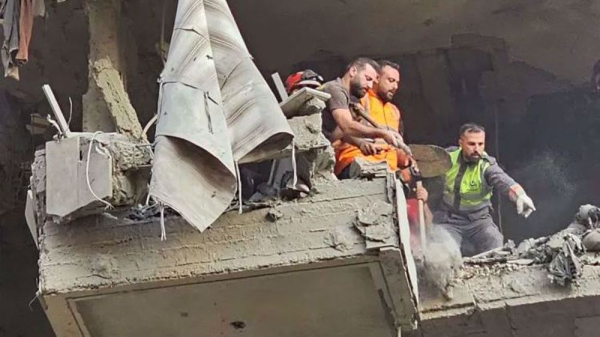
The Ministry of Foreign Affairs of the Islamic Republic of Iran has condemned the Sunday airstrike carried out by the Israeli regime on a densely populated area in the capital city of Lebanon, Beirut, and called for accountability for Israeli crimes.
Israel launched "a treacherous attack" on residential apartments in the southern Beirut suburb of Dahiyeh on Sunday that killed at least five people, including senior Hezbollah commander Haytham Ali Tabatabai and four resistance fighters. It also wounded 28 others, including women and children.
In a statement on Sunday night, the Iranian Foreign Ministry called the strike a “gross violation” of the November 2024 ceasefire agreement and a “brutal attack” on Lebanon's sovereignty.
The ministry emphasized the necessity of holding criminal Israeli leaders accountable for “terrorist acts” and war crimes.
Top Israeli military commanders fired over failures in preventing Hamas’s October 7 operation
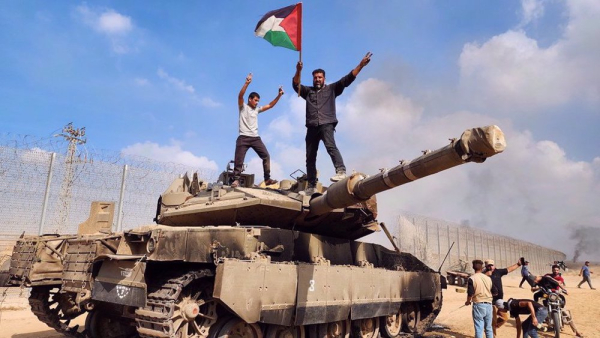
Israel's military chief has announced the ouster of several top military officials and reprimand of others over the failures leading to the operation by the Palestinian resistance movement Hamas on October 7, 2023.
In a statement on Sunday, the military said a number of military officers have been notified that they will be released from reserve duty and will no longer be part of the armed forces.
It added that some officers received formal reprimands, while one was informed that their service would be terminated. Additionally, another officer submitted their resignation.
Those notified of their release from reserve duty included the former heads of the intelligence directorate, operations directorate, and southern command that oversaw the Gaza war. These generals had earlier resigned from active duty but continued to serve in a reserve capacity.
Israel’s military chief of staff Eyal Zamir said the Israeli regime “failed in its primary mission on October 7” to protect Israelis, adding, "This is a severe, resounding, systemic failure, relating to decisions and conduct on the eve of the event and during it.”
He emphasized that “the lessons of that day are numerous and significant, and they must serve as our compass for the future” to lead the occupation forces.
Israeli Prime Minister Benjamin Netanyahu's administration has defied calls for an investigation into the regime’s failures in the face of the Hamas operation on October 7, 2023.
On Saturday night, thousands of demonstrators, along with opposition leaders, gathered in Tel Aviv to call for the establishment of a commission of inquiry.
Israel has launched a genocidal war on Gaza since October 7, 2023, after Palestinian resistance fighters waged the surprise Operation Al-Aqsa Flood against the Zionist entity in response to the regime's decades-long campaign of bloodletting and devastation against Palestinians.
According to Israeli tallies, the assault by Hamas and other Palestinian resistance movements killed around 1,200 Israelis, while some 250 others were taken captive.
Under a ceasefire agreement between Hamas and Israel, which took effect on October 10, the occupying regime is required to immediately halt its genocidal war on Gaza and allow the entry of aid and food into the besieged territory in exchange for the return of its captives.
However, the Gaza Government Media Office said in a statement on Saturday that the Israeli military has violated the Gaza ceasefire agreement at least 497 times in 44 days, killing 342 Palestinian civilians and injuring 875 more, with the majority of the victims being children, women, and the elderly.
Press TV’s website
Palestinian youth shot dead as Israeli army, settlers step up attacks across occupied West Bank
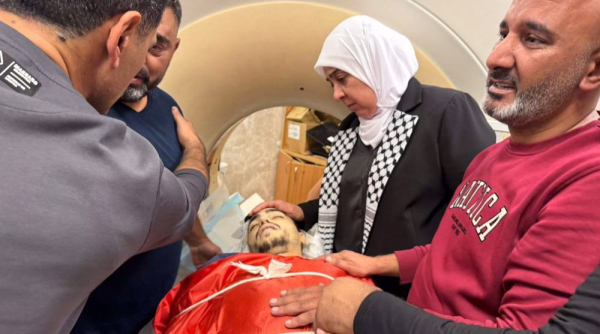
A young Palestinian man has died of wounds sustained during an Israeli military raid in the central West Bank, as the occupation forces and illegal settlers step up their attacks against Palestinian civilians, their properties, lands, and sacred sites across the occupied territory.
The official Palestinian news agency WAFA, citing the Ministry of Health, reported that the youth was killed by Israeli forces’ gunfire in the town of Deir Jarir, northeast of Ramallah, on Sunday evening.
Head of the town council, Fathi Hamdan, identified the victim as 20-year-old Bara’ Khairy Ali Maali, stating that he lost his life as settlers and Israeli occupation forces attacked the area.
Earlier, armed settlers attacked residents’ homes on the outskirts of Deir Jarir, while Israeli army forces raided the area to provide protection for the assailants.
The occupation soldiers and settlers opened fire at residents who attempted to confront the attack, directly striking Maali in the chest with live ammunition.
He was initially taken to the emergency center in Silwad and then transferred to the Palestine Medical Complex, where he succumbed to his critical wounds shortly afterward.
Additionally, a Palestinian man was shot and injured by Israeli occupation forces in the town of al-Ram, northeast of occupied al-Quds.
The Palestinian Red Crescent Society reported that the man suffered a live bullet injury to the thigh in the al-Dahiya area of the town after he crossed the controversial separation wall. He was subsequently transferred to the hospital for treatment.
Israeli occupation forces also stormed the town of al-Khader, south of Bethlehem, on Sunday evening, deployed in various neighborhoods, and forced shop owners to close their businesses.
In another development, Israeli settlers attacked Palestinians’ vehicles near the town of Beitunia, west of Ramallah.
Local sources said a group of settlers pelted citizens’ vehicles with stones on a road northwest of Beitunia, causing material damage to one vehicle.
Moreover, a group of settlers uprooted young olive trees near the village of Asira al-Qibliya, south of Nablus, on Sunday morning.
The reports come as Palestinians across the West Bank have faced a wave of intensified Israeli military and settler violence in the shadow of Israel’s Gaza war, which has killed more than 69,000 people in the coastal territory since October 2023.
Rights groups have been warning for months that Palestinians in the West Bank faced a heightened risk of ethnic cleansing amid the violence.
In July 2024, the International Court of Justice (ICJ) ruled that Israel's prolonged occupation of historic Palestine was illegal.
The ICJ called for the removal of all current settlements in the West Bank and East al-Quds.
The court's advisory opinion, although it lacks legal binding force, possesses substantial political influence as it signifies the first occasion that the ICJ has articulated a viewpoint regarding the legality of the 57-year occupation.
Press TV’s website