zarezadeh
The Relationship Between Divine Names and Attributes
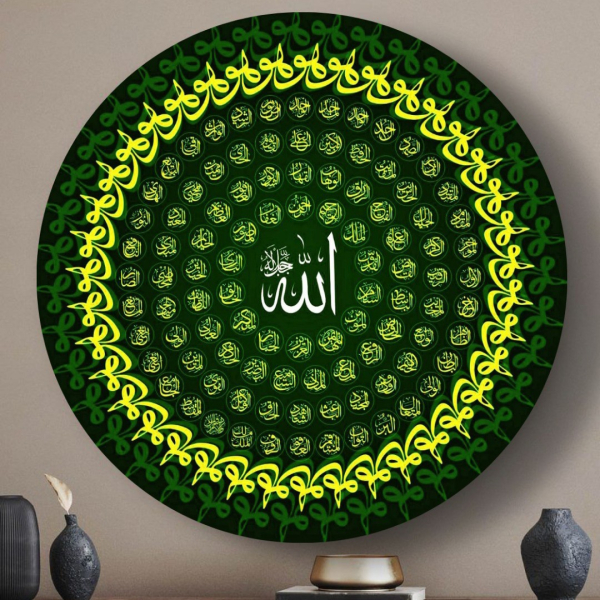
In discussing the names and attributes of God, we first encounter the issue of what relationship exists between these two terms: Are the names and attributes identical and do these two terms convey the same meaning, or does each have a specific meaning?
Mu'tazilite view
From the Mu'tazilite view, these two terms have distinct meanings and the name of God does not imply His attribute. For example, names such as 'Alim, Qadir, and Sami are specific and synonymous names and refer only to God.
However, the Mu'tazilites believe that God can be called by names such as "alive", "knowing" and "powerful", but God cannot be described as "life", "knowledge" and "power".
Sunni (Ash'ari) view
Unlike the Mu'tazilites, the Sunnis not only do not consider the name to be separate from the attribute, but they also consider the proof of the names without the proof of the attributes to be impossible and unknowable.
And thus, they consider the name to be the same as the attribute, and the only difference they believe between the two is that the attributes have a derivational property, while the names do not.
Some Sunni theologians have determined specific attributes for each name.
Shia Opinion
Some Shia scholars have also not distinguished between names and attributes and have considered both to imply the same truth, just as Hayat as an attribute expresses the truth of one of God's attributes, and Hayy as a name also expresses a truth of God's essence.
The Heavenly Lady; The Virtues of Fatimah al-Zahra (sa)
Lady Fatimah al-Zahra (sa) holds a unique and exalted position in the view of the Prophet Muhammad (pbuh) and the Ahl al-Bayt (as). Her virtues are clearly mentioned in authentic Shia and Sunni sources. Here are some well-known, well-documented examples:
1) Fatimah (sa) — The leader of the women of Paradise
The Prophet (pbuh) said:
“Fatimah is the leader of the women of Paradise.”
Source: Sahih al-Bukhari, Kitab al-Manaqib; Amali of Shaykh al-Saduq.
2) Her pleasure is God’s pleasure
The Messenger of God (pbuh) said:
“Indeed, God is angered by Fatimah’s anger and pleased with her pleasure.”
Source: Al-Mustadrak by al-Hakim al-Nishaburi, vol. 3; Bihar al-Anwar, vol. 43.
3) Fatimah (sa) — A part of the Prophet
The Prophet (pbuh) said:
“Fatimah is a part of me.”
Source: Sahih Muslim, Kitab Fada’il al-Sahabah; Musnad of Ahmad ibn Hanbal.
4) Her devotion in worship
Imam Hasan (as) said:
“My mother would stand in worship at night until her feet became swollen…”
Source: Bihar al-Anwar, vol. 43.
If you would like, I can also prepare a shorter version suitable for social media.
Birth of the Light, Mother’s Day
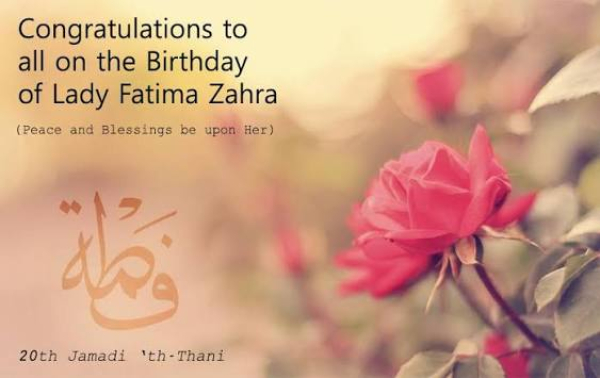
Lady Fatimah al-Zahra (sa) was born on 20th Jumada al-Thani, in the 5th year after the beginning of the Prophet’s mission, in Mecca—during difficult days for the early Muslims. Yet her blessed birth brought a new light of hope and mercy to the household of the Prophet (pbuh) and to the believers. According to narrations, at the moment of her birth, several women of Paradise came to assist Lady Khadijah (sa), including:
Asiya bint Muzahim, Maryam bint Imran, Sarah, the wife of Prophet Ibrahim (as), and Kulthum, the sister of Prophet Musa (as).
Their presence signified the sacredness and exalted status of Lady Fatimah (sa).
On this occasion, I congratulate everyone on the birth anniversary of Lady Fatimah al-Zahra (sa) and Mother’s Day. ??
Palestinian woman and son killed by Israeli fire in Gaza, bringing day’s death toll to eight
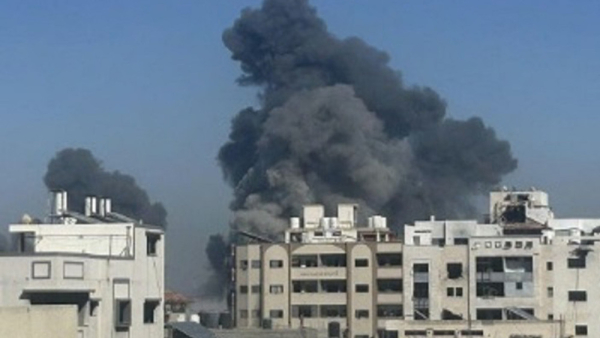
The Israeli military has killed a Palestinian woman and her son in the northern Gaza Strip, amid the regime’s ongoing violations of the ceasefire agreement with the Palestinian resistance movement Hamas.
The official Palestinian WAFA news agency, citing local sources, reported that Israeli gunfire killed a 70‑year‑old woman and her son in Gaza City’s al‑Zaytoun neighborhood on Saturday.
Following the incident, the woman and her son were taken to Gaza City’s al-Ahli Arab Hospital, where they were pronounced dead, bringing the total number of Palestinians killed in Gaza since Saturday morning to eight.
Qatari PM warns Gaza deal not a true ceasefire without Israeli withdrawal
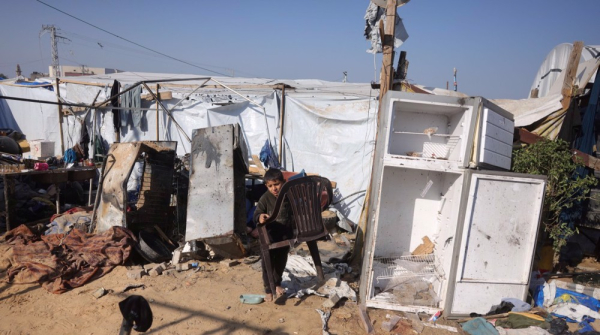
Qatar’s Prime Minister, Sheikh Mohammed bin Abdulrahman Al Thani, has warned against Israel’s continued hostilities in the Gaza Strip, stressing that only a full withdrawal of Israeli forces would constitute a full ceasefire under the US-brokered peace plan.
Speaking at the Doha Forum on Saturday, Al Thani said the current nearly two-month truce has reached a “critical” juncture as the first phase of US President Donald Trump's 20-point peace plan draws to a close.
“What we have just done is a pause,” he said. “We cannot consider it yet a ceasefire. A ceasefire cannot be completed unless there is a full withdrawal of Israeli forces, there is stability back in Gaza, people can go in and out, which is not the case today.”
Foreign ministers of Iran, Egypt urge global action to end Israel’s violations in Gaza, Lebanon
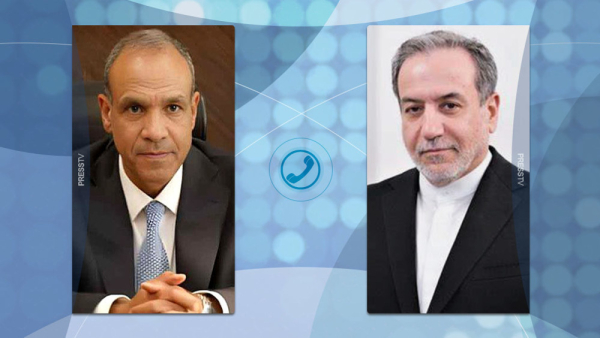
The top Iranian and Egyptian diplomats say the international community must take swift action to put an end to the Israeli regime’s ongoing aggression in Gaza and Lebanon.
In a phone conversation on Saturday, Iranian Foreign Minister Abbas Araghchi and his Egyptian counterpart Badr Abdelatty said Israel continues to carry out acts of aggression and violate the ceasefires in Gaza and Lebanon.
Israel accepted the Gaza truce deal after two years, following its failure to achieve its declared objectives of eliminating the Palestinian resistance movement Hamas and freeing all captives.
The initial phase of the ceasefire plan took effect on October 10 and saw a prisoner exchange, but further stages have not been negotiated yet.
However, the fragility of the 20-point Gaza deal, pushed by US President Donald Trump, was evident from the beginning, as reports from Gaza health officials indicated over 366 Palestinian casualties since the ceasefire's initiation, with the latest incident involving an Israeli airstrike northwest of Gaza City.
ceasefire between Israel and the Lebanese resistance movement Hezbollah took effect in November 2024 following a conflict sparked by the Tel Aviv regime’s genocidal war on the Gaza Strip in October 2023.
Israel was forced to accept the truce with Hezbollah after suffering heavy losses on the battlefield and failing to achieve its goals despite killing over 4,000 people in Lebanon.
The Iranian and Egyptian foreign ministers also exchanged views about mutual relations and agreed to hold more discussions about ways to expand ties.
Meanwhile, Araghchi informed Abdelatty of Iran’s stance on its peaceful nuclear program.
Press TV’s website
Peace depends on trust in God.

Resisting the Ego and Liberating the Soul from Self-Centeredness
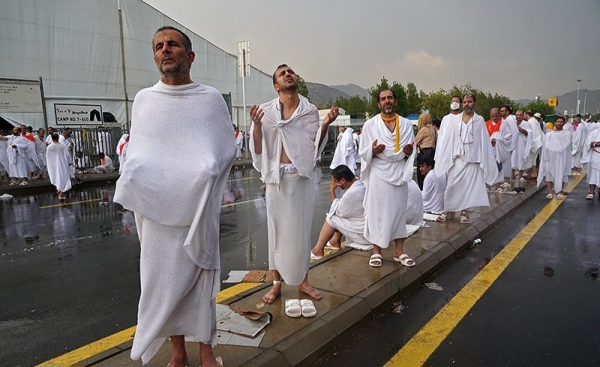
Hajj, in its mystical depth, is a battlefield where the seeker confronts the most persistent enemy—the ego. The journey begins when one steps out of the comfort of familiar surroundings and enters the vast horizon of divine presence. Ihram is the first strike against the ego’s illusions: by removing the layered garments of identity, status, and pride, the pilgrim enters a state of spiritual equality where the self loses its false crowns. In this sacred simplicity, the heart begins to taste freedom from the chains of self-worship.
As the pilgrim moves through the rites of Hajj, each act becomes a symbolic confrontation with the ego’s demands. Tawaf teaches the soul to displace the self from the center and replace it with the Divine. Sa‘y between Safa and Marwah mirrors the inner tension between purity and yearning, discipline and surrender. In Mina, the burning desire of the ego is challenged, and through Ramy al-Jamarat, the pilgrim reenacts the timeless battle against inner arrogance, temptation, and pride. Every stone cast is a declaration: I will not bow to myself.
In illuminating this struggle, Imam al-Sadiq (peace be upon him) presents Hajj as a form of spiritual combat. He said:
Arabic Narration (Imam al-Sadiq عليه السلام):
«الْحَجُ جِهَادُ كُلِّ ضَعِيفٍ»
English Translation:
“Hajj is the jihad (struggle) of every person who is unable (to fight in physical combat).”
This profound statement reveals that Hajj is, at its core, a battlefield of the heart. It is a struggle against the tyranny of the ego, a journey in which the pilgrim learns to defeat self-importance, entitlement, pride, and inner resistance. When the seeker emerges victorious from this inward jihad, the soul steps into a new freedom—no longer a servant of the self, but a servant of the Truth. This liberation is the true triumph of Hajj, and the deepest meaning of worship.
Hajj: The Soul’s Loving Journey from Multiplicity to Oneness
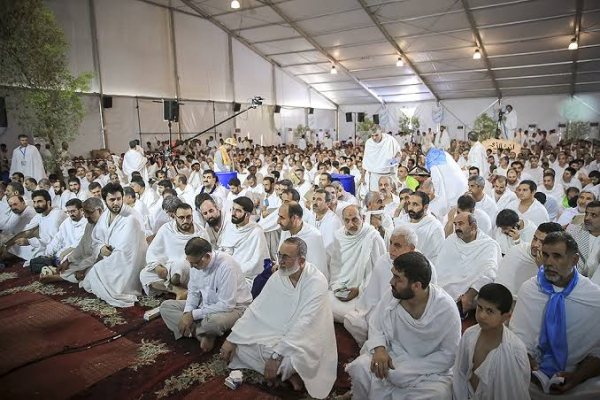
Hajj, in the mystical perspective, is a journey from earth to the heavens—a movement from the scattered world of multiplicity to the serene shore of divine unity. In this sacred passage, the human being separates from home, habits, and attachments to transcend the confined “self” and encounter the Infinite Truth. Ihram marks the beginning of this new birth; a moment when the seeker, clothed in two simple white garments, strips himself of social roles and worldly possessions and stands unveiled before the One Reality.
The next step in this monotheistic ascent is Tawaf—an act that outwardly appears as circling the Kaaba, yet inwardly symbolizes the heart’s rotation around the Absolute. With each round, the pilgrim breaks another circle of ego-centeredness and moves closer to making God the center of his existence. In the mystical tradition, Tawaf is a reminder that the universe has only one true axis: the Divine. Everything other than Him is merely a shadow and a sign.
Along this loving journey, the words of Imam al-Sadiq (peace be upon him) offer a deeper illumination. He said:
Arabic (original narration):
«إِنَّمَا أُمِرَ النَّاسُ بِالْحَجِّ لِيَرِدُوا عَلَى اللَّهِ تَعَالَى فَيَطْلُبُوا الزِّيَادَةَ»
English Translation:
“People were commanded to perform Hajj so that they may come before God, the Exalted, and seek closeness and increase from Him.”
This narration reveals that the essence of Hajj is an encounter of the heart with God—not an ordinary journey, but an ascension toward divine unity. In this path, the seeker learns to let go of everything other than Him, so that only He remains. And that is the most beautiful mystical meaning of Hajj.
What does the term الرجعه (Raja‟t) mean, and why do the Shia believe in it?
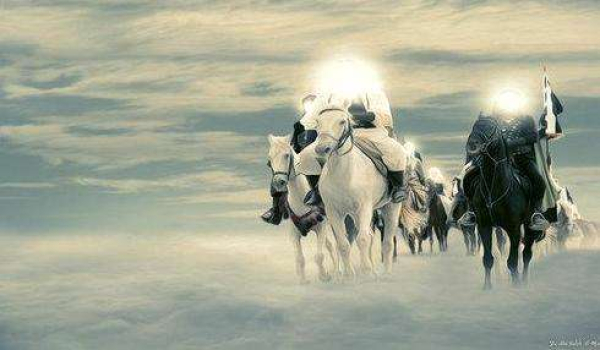
The termالرجعه means „return‟ in Arabic, and it signifies the return of a group of human beings after their death and before the Day of Resurrection to the world anew,synchronized with the occurrence of
the universal movement of Mahdi, the Promised, and this fact is neither inconsistent with logic nor mind.
From the Islamic viewpoint and the other Divine religions, man‟s essence consists of his abstract soul, so-called „his self‟, which continues existing eternally after his body is annihilated.
Furthermore, God, the Almighty, as also specified in the holy Quran, is Omnipotent, and no one is able to circumscribe His Omnipotence.
This brief introduction clarifies that the issue of returning, based on logic, is feasible, because the „returning‟ of the people sounds much easier than their creation for the first time. The Creator, who has created them with no means, is able to return them anew to the world.
Listed below are just a few examples of „returning‟ in the previous nations, presented in the holy Quran:
واذ قلتم ياموسي لن نومن لك حتي نري هللا جهرة فاخذتكم الصاعقه و انتم تنظرون. ثم
* بعثناكم من بعد موتكم لعلكم تشكرون
(And remember when some of you said, “O, Moses! We will never believe in you until we see Allah manifestly”. Then, the thunderbolt seized you while you werebeholding and waiting for some responses. Then, We raised you to life after you were dead, so that you may come to your senses and become
thankful.)
In Ale Imran Sura, verse no. 49, it says about Jesus Christ:
و احي الموتي باذن الله
(And will bring to life the dead by Allah‟s leave.)
The holy Quran endorses the possibility of mass „returning‟ and approves its occurrence after man‟s death. In the following verses, the holy Quran refers implicitly to the returning of a group of people after their death and before the occurrence of the Resurrection:
و اذا وقع القول عليهم اخرجنا لهم دابه من االرض تكلمهم ان الناس كانوا باياتنا ال يوقنون
** و يوم نحشر من كل امة فوجا ممن يكذب باياتنا فهم يوزعون
(And when our command comes against the disbelievers, We shall bring out from the earth a gigantic beast to talk to them; because they had no faith in our Revelation and Signs. On the
Day that We shall gather from every nation those who disbelieved in our signs and miracles; they shall be kept in ranks.)
Now to clarify the discussion on this issue, consider the following
points:
1- The Islamic commentators are of the opinion that these two verses allude the issue of Resurrection; but the former declares one sign of the pre-Resurrection. As Jalal Ul Din Soyuti in his commentary book „Dor Ul-Manthur‟ narrated from Ibn Abi Shibah from Hazifah, the appearance of the gigantic beast is one of the incidents, occurring before the Resurrection *
.
2- There is no doubt that, the whole human beings and not a special group will be resurrected on the Day of Resurrection. In this regard, the holy Quran says:
** ذلك يوم مجموع له الناس
(This is a Day on which the people will be gathered.)***
And in Kahf Sura, verse no. 47, it notes,
و يوم نسير الجبال و تري االرض بارزة و حشرناهم فلم نؽادر منهم احدا
(And remind them of the Day that We remove the mountains
*
Dor Ul-Manthure, vol.5, p. 177, in the commentary of Naml Sura, verse no.82
** Hood Sura, verse no. 103
*** Dor Ul-Manthure, vol. 3, p. 349 has interpreted this day as Doomsday.
and set them in motion; and you can see the earth utterly leveled. And We shall gather all mankind together, and We will not leave out any of them.)
3- The following verse specifies the resurrection of a particular group of men, and not the whole. It says,
و يوم نحشر من كل امه فوجا ممن يكذب باياتنا...
(On the Day that We shall gather from every nation those who disbelieved in our signs and miracles; they shall be kept in ranks.)
This verse is quite explicit about the resurrection of some human beings.
Conclusion:
The three above-mentioned points explicitly reveal that „the resurrection of those disbelieving the divine signs occurs before the happening of the Resurrection, because man‟s resurrection on the Day of Resurrection includes the whole people‟.
This explanation proves that our claim is true, and this phenomenon is known as „returning‟.
With regard to this fact, the Prophet‟s Ahlul-Bait (a.s) as the authentic commentators of the Divine revelation has had some remarks, including: Imam Sadeq (a.s) said,
ايام هللا ثالثة يوم القائم عليه السالم ويوم الكرة و يوم القيامة
(The Divine days are three: the Day of Imam Mahdi‟s Rising, the Day of Returning, and the Day of Resurrection.)And somewhere else, he said,
ليس منا من لم يإمن بكرتنا
(He who believes not in our returning to the world is not of our disciples.)
Now, consider the following points:
1- The philosophy of ‘returning’:
Reflecting on the motives of „returning‟, two ultimate goals of this phenomenon are clarified; first, the demonstration of Islam grandeur as well as the disgrace of unbelief, and second the reward of thebelievers and pious as well as the punishment of the unbelievers and sinners.
2-The salient distinction between ‘returning’ and
‘metempsychosis’:
It is noteworthy to say that from the Shia point of view the issue of „returning‟ is not affiliated with the theory of metempsychosis, because the latter is based on the negation of Resurrection and considers the worldly life in a continual circulation; each circle is the repetition of the previous one.
This theory is based on the supposed passing of the soul at death into another body, either human or animal. Therefore, if the soul belonged to a pious man in the past, it will be passed to a body that enjoys the time and vice versa. This passing of the soul into another body is considered as his Resurrection! while those believing in the issue of „returning‟ believe in Resurrection and conceive not the occurrence of metempsychosis feasible.*
They believe that only a group of men return to this world before the Day of Resurrection and then turn back to their eternal abode after the Divine interests are achieved, and they will be resurrected once again along with the others, and one‟s soul is never passed into another body after it is separated from the original body.