zarezadeh
If due to crowding or exhaustion one cannot perform prayers at their earliest time in Masjid al-Haram, is there any problem?
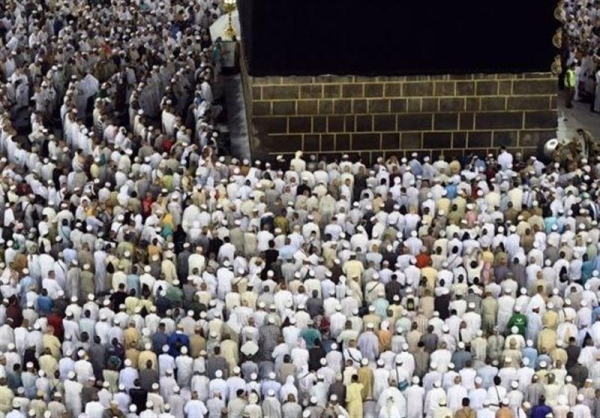
Performing prayers at the earliest time is highly recommended, especially in Masjid al-Haram. However, if due to severe crowding, physical exhaustion, or health-related reasons, praying at the earliest time is not possible, delaying the prayer is permissible and the prayer remains valid. In Shi‘a jurisprudence, religious duties are assigned according to a person’s ability, and preserving one’s well-being is important.
Is it permissible for women to cover their faces while in ihram, especially in the presence of non-mahram men?
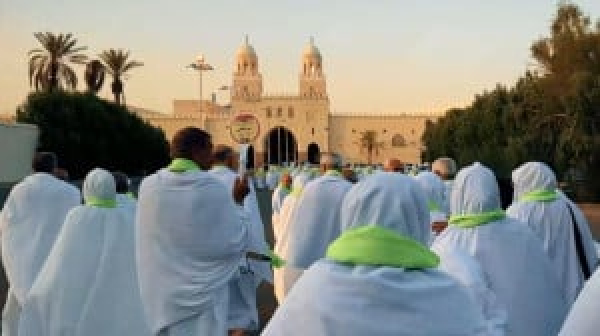
While in ihram, women are not permitted to cover their faces directly. However, when facing non-mahram men, they may lower a veil or part of their garment in a way that does not touch the face. Shi‘a scholars consider this permissible, as it preserves both the rules of ihram and the obligation of modesty.
If a person in the state of ihram commits a prohibited act (such as using perfume) out of forgetfulness or ignorance, what is the ruling?
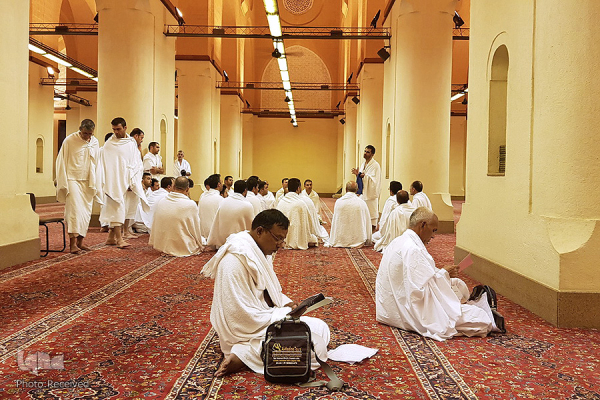
If a prohibited act is done due to forgetfulness or lack of knowledge, there is no sin, and the Hajj or ‘Umrah is not invalidated. However, in some cases, once the person remembers or becomes aware, they must immediately stop the act, and a kaffarah (expiation) may still be required depending on the specific prohibition. This is the well-known opinion of Shi‘a jurists such as Imam Khomeini and Ayatollah Khamenei.
Pro-Palestinian hacker group breaches phone of former Israeli PM Bennett
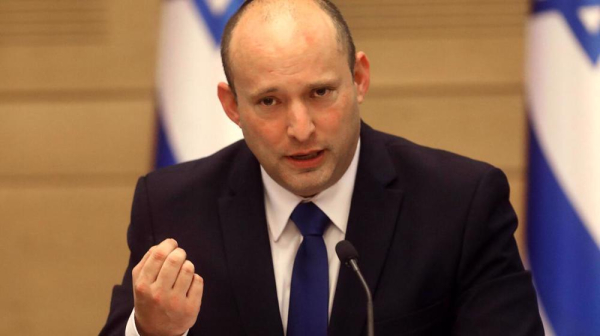
The pro-Palestinian hacker group Handala says it has infiltrated the personal cellular device of former Israeli prime minister Naftali Bennett, accessing sensitive documents and personal communications.
In a Wednesday statement, the Handala group, whose name is borrowed from a symbol of Palestinian rejectionism of the Zionist regime’s existence, said they managed to gain remote access to Bennett’s cellphone and hack into his iPhone 13 device.
The digital infiltration was dubbed “Operation Octopus,” apparently in reference to Bennett’s past remarks about Iran being the “head of the octopus” and spearheading the anti-Israel coalition in West Asia.
“You once prided yourself on being a leading light of cybersecurity and displayed your expertise to the world,” Handala said in its statement, mocking Bennett’s previous career as a cybersecurity company executive.
“And even so, how ironic that your iPhone 13 fell so easily into the hands of Handala,” the group added.
“Despite all of your pride and boasting, your digital fortress is nothing more than a paper wall waiting to be broken.”
Alongside its statement, the group published a series of files said to have been extracted from the phone, including a contact list with names of senior Israeli officials, internal communications, sensitive documents, and personal photographs.
Among the documents exposed in the leak are drafts of memos and letters, some dated July 2025. Additionally, political communications were released, including internal criticism of so-called security minister Itamar Ben-Gvir.
The leak also included documents with the names of senior Israeli officials, including far-right minister of settlements and national missions Orit Strock, and foreign minister Gideon Sa'ar.
In its statement, Handala underlined that the breach represented not just a technological accomplishment but also an element of psychological warfare, describing the information security of senior Israeli officials as “fragile.”
The group urged journalists to reach out to them on the social media platform X for further resources.
Press TV’s website
US-Israeli spy network neutralized during 12 day war: Iran Armed Forces
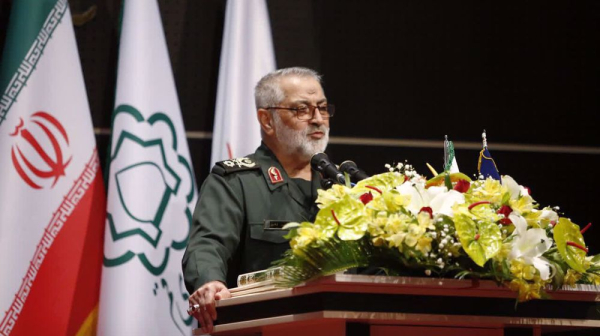
The senior spokesman for the Iranian Armed Forces says the enemy's extensive espionage network was dealt a severe blow during the 12-day Israeli-US aggression in June and largely dismantled, describing it as a major intelligence achievement.
Addressing an event in Tehran on Wednesday, Brigadier General Abolfazl Shekarchi highlighted the US-Israeli miscalculations during the war, saying they relied on their espionage networks and direct US command, and believed the Iranian system of governance would collapse under the initial strikes.
However, he said the reality on the ground proved the national will of Iranians to be unshakable.
The spokesman said that during the war, NATO’s full military capacity and its most advanced equipment were deployed as part of an all‑out hybrid warfare strategy against Iran.
"The enemy entered the field with a wrong assessment," Shekarchi stated.
"Despite the martyrdom of commanders and initial damages, the command vacuum was quickly filled. Within hours of defense, Iran's continuous offensive began, increasing in operational power day by day and leaving the enemy in absolute confusion," he added.
According to the general, the enemy's inability to achieve its strategic goals, including regime change and the disintegration of Iran, led them to a point where they "begged" for an end to the war, ultimately resulting in a unilateral ceasefire declaration.
Sudan

Geography and Location
Location: Northeast Africa
Borders: Egypt, Libya, Chad, Central African Republic, South Sudan, Ethiopia, Eritrea, and the Red Sea
Area: About 1.88 million square kilometers (one of the largest countries in Africa)
Climate:
Mostly desert and semi-desert in the north
Savanna and more fertile areas in the south
Major River: The Nile River (White Nile and Blue Nile), which is central to life and agriculture
---
? Population and Culture
Population: Around 45 million
Ethnic diversity: Very high (Arab, Nubian, Beja, Fur, Zaghawa, and many other groups)
Official language: Arabic
Lifestyle:
Family-oriented
Strong tradition of hospitality
Music and poetry play an important cultural role
Traditional clothing: Jalabiya (men), Thobe/Toob (women)
---
☪️ Religion
About 90% Muslim (mostly Sunni)
Christian minorities and indigenous beliefs, mainly in southern and border regions
Religion plays a major role in law, culture, and daily life
---
⚠️ Current Situation (Political and Economic)
Since April 2023, Sudan has been experiencing a severe internal conflict between the army and the Rapid Support Forces
Consequences include:
A large-scale humanitarian crisis
Millions of displaced people
Shortages of food, medicine, and healthcare services
Economy:
Weak and unstable
Based mainly on agriculture (cotton, sesame, livestock) and partly on gold
Living conditions: Very difficult, with widespread poverty and high inflation
---
? Summary
Sudan is a country with an ancient history, rich cultural diversity, and significant natural resources, but decades of political instability and armed conflict have prevented development. The country is currently facing one of the most difficult periods in its history.
Are the “Sea Route to Gaza” Activists Still Active?
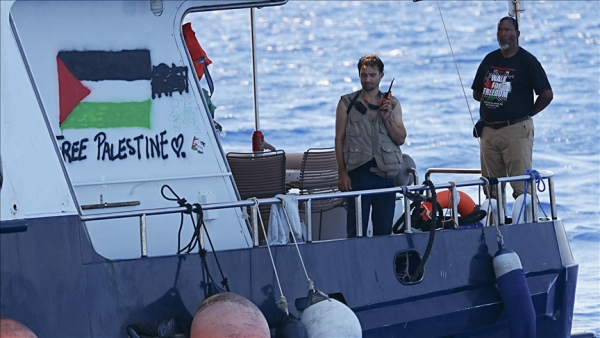
Yes, their activities have not stopped, but almost all sea attempts have been blocked or suppressed, and the form of activism has changed.
---
1. The sea movement still exists, but with great difficulty
In recent years (especially 2024–2025), coalitions such as the Global Sumud Flotilla — involving international activists from Europe, Latin America, and the Arab world — attempted to sail toward Gaza with dozens of boats. Their goals were:
Breaking the naval blockade of Gaza
Delivering humanitarian aid
Drawing global public attention
However, nearly all of these vessels were intercepted by the Israeli navy before reaching Gaza.
---
2. Why do we hear less about them now?
There are several main reasons:
Israel exercises full military and intelligence control over the eastern Mediterranean
Most boats are intercepted in international waters or near the coast
Foreign activists are detained, interrogated, and then deported
The financial cost and personal risk of these missions have increased dramatically
As a result, continuing sea missions has become extremely difficult, not because activists gave up, but because the route is effectively blocked.
---
3. What is the current situation of the activists?
Many well-known activists (including European and environmental figures) were detained and later returned to their home countries
Some activists remain engaged in legal cases, international lawsuits, and media advocacy
In certain cases, activists have carried out hunger strikes or legal protests
---
4. Have the activities completely stopped?
No — the strategy has shifted:
Greater focus on international legal pressure
Media work and public awareness campaigns
Lobbying parliaments and human rights organizations
Attempts to deliver aid through land routes or official humanitarian channels
In other words, the sea flotilla is no longer the main tactic, but it remains a powerful symbol of civil resistance.
---
Final Summary
❌ The sea route to Gaza is practically closed
✅ Activists have not disappeared or surrendered
? Activism has shifted from direct sea action to legal and media pressure
? The Gaza blockade remains a major focus of global activism
Palestinians condemn Netanyahu’s provocative tour of Al-Aqsa compound

Benjamin Netanyahu has toured the Al-Aqsa Mosque compound in occupied East al-Quds in a provocative move to celebrate the Jewish Hanukkah holiday, drawing strong condemnation from the Palestinians.
In a statement issued on Tuesday, the Al-Quds Governorate denounced the presence of the Israeli prime minister at the al-Buraq Wall, also known as the Western or Wailing Wall, describing it as a “new provocation” at one of Islam’s holiest sites.
It said the wall is an integral part of the compound, warning that such actions risk further inflaming tensions at the flashpoint site.
Netanyahu’s office released photographs showing him at the compound alongside several official figures, including US Ambassador Mike Huckabee.
The eight-day Hanukkah holiday runs from December 14 to 22.
According to Palestinian authorities, at least 210 illegal Israeli settlers have entered the al-Aqsa Mosque complex under heavy Israeli police protection to mark the holiday since Monday.
Palestinian and Muslim officials have repeatedly rejected “growing incursions and attempts” to alter the historic and legal status of the site.
Al-Aqsa Mosque, the third-holiest site in Islam, has been a longstanding focal point of Israeli-Palestinian tension.
Non-Muslim worship at the holy compound is prohibited under an agreement signed between Israel and the Jordanian government in the wake of the regime's occupation of al-Quds in 1967. However, the ban is a mere phrase and, in action, circumstances have been against Muslims.
Netanyahu is wanted by the International Criminal Court (ICC) over war crimes in the Gaza Strip.
East al-Quds, where the al-Aqsa Mosque is located, was occupied by Israel during the 1967 Arab-Israeli war and unilaterally annexed in 1980, a move not recognized by the international community.
Under international law, East al-Quds is considered occupied territory, and Israeli settlement activity and official actions in the area are deemed illegal.
Press TV’s website
Iran’s judiciary to launch cases against collaborators in June US-Israel aggression
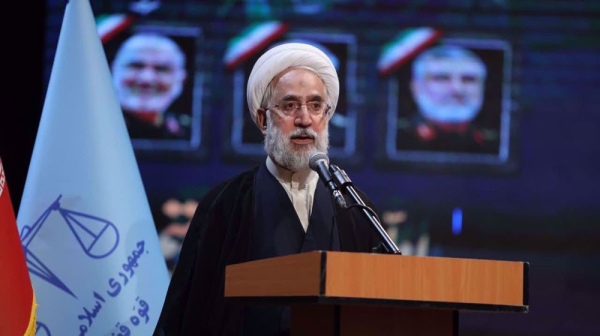
Iran’s Prosecutor General says Tehran Prosecutor’s Office will initiate legal proceedings against leaders of domestic and foreign groups that cooperated with the United States and the Israeli regime during the 12-day imposed war of June.
Speaking on Tuesday at the fourth specialized meeting on documenting and pursuing damages from the aggression, Mohammad Movahedi Azad said it was the judicial system’s “definite and legal duty” to defend the rights of the Iranian nation.
“The judicial system, utilizing all domestic and international legal capacities, is powerfully continuing the legal and criminal pursuit of the perpetrators of the recent aggression and the documentation of damages incurred.
Movahedi Azad said that “no negligence is acceptable in this path.”
The official confirmed that there are no pending cases concerning the damages caused by the imposed war, saying all files are being pursued with diligence and accuracy.
He underscored the necessity of full coordination among responsible institutions, instructing all relevant bodies to expedite the review, completion, and submission of documentation regarding the damages.
Movahedi Azad said the incidents of June once again proved that the Iranian people are an “independent, united, and resilient nation” and that “no aggression can weaken the national will and authority of the Islamic Republic system.”
Israel launched the blatant aggression against Iran on June 13. Over the course of the 12 days, the regime killed at least 1,064 people and targeted civilian infrastructure. More than a week later, the United States violated international law by joining the war and targeting three Iranian nuclear sites.
On June 24, Iran managed to impose a halt to the aggression after conducting waves of successful retaliatory operations
Press TV’s website
Why do Shiʿa omit ‘Āmīn’ after Surah al-Fātiḥah
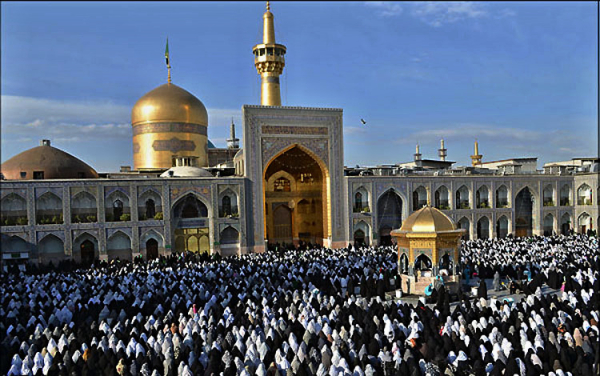
Rationally, prayer must consist only of established acts and phrases taught by the Prophet ﷺ. Any additional utterance within prayer requires explicit proof that the Prophet included it as part of ṣalāh.
From the Qur’anic perspective, Surah al-Fātiḥah itself is a complete supplication ending with:
> “Guide us to the straight path.” (Qur’an 1:6)
There is no Qur’anic instruction to add any word after it within the prayer.
From Sunni hadith literature:
Ṣaḥīḥ Muslim narrates that the Prophet ﷺ said “Āmīn” after finishing al-Fātiḥah, but the reports differ on whether it was inside the formal prayer text or a congregational response.
Imam Mālik held that saying Āmīn aloud is not part of the prayer, and in the Maliki school it is often omitted entirely. Therefore, the Shiʿi omission of “Āmīn” is supported by recognized Sunni juristic opinions and is not a deviation.