zarezadeh
Israel's military chief describes Gaza's dividing 'yellow line' as 'new border'
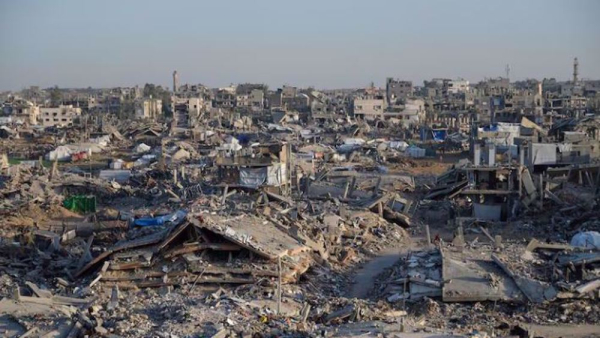
Israeli military chief of staff Eyal Zamir has openly described the so-called “yellow line”, a north–south axis cutting through the Gaza Strip and marking the point of Israel’s pullback, as “a new border line” with Gaza.
Addressing Israeli troops inside the besieged strip on Sunday, Zamir said, "We have operational control over extensive parts of the Gaza Strip and we will remain on those defense lines. The yellow line is a new border line - serving as a forward defensive line for our communities and a line of operational activity."
Israeli forces withdrew to the "yellow line" in October as part of the first phase of US President Donald Trump's 20-point Gaza ceasefire plan with the Palestinian-based resistance movement Hamas.
Zamir’s remarks came even as the ceasefire agreement explicitly requires a full withdrawal of Israeli forces.
Meanwhile, a US official said that the US is preparing to announce a transition into the second phase of the truce plan in the coming weeks.
The announcement would include the unveiling of a new governing body in Gaza, led by the so-called Board of Peace, along with the launch of an “International Stabilization Force” in the strip, ABC News reported.
It is anticipated that Trump will soon disclose the names of the individuals and countries participating in the mechanism as part of his announcement.
Israel’s Prime Minister Benjamin Netanyahu also confirmed that the second phase of the plan is "close", as he is expected to discuss it during the upcoming meeting with Trump at the White House by the end of this month.
“We’ll be having very important conversations at the end of the month on how to ensure that this second stage is achieved," Netanyahu stated.
In a joint press conference with German Chancellor Friedrich Merz in al-Quds on Sunday, Netanyahu said broader normalization with Arab states remains possible, while he reiterated that Israel won’t accept a Palestinian state.
He claimed that a Palestinian state would threaten the occupying regime’s existence.
His remarks come as Trump pressed Saudi Crown Prince Mohammed bin Salman to move towards normalizing ties with Israel, after a ceasefire was reached in Gaza.
Riyadh has long insisted that it will only normalize ties with Tel Aviv if the regime agrees to establish a time-bound, irreversible pathway to a future Palestinian state.
Israel has killed more than 70,000 Palestinians since launching its genocidal war on Gaza on October 7, 2023, following the al-Aqsa Storm operation, before a ceasefire deal was reached in the besieged strip last October.
Press TV’s website
Iran inflicted ‘heavy, extensive’ losses on Israel during 12-day war: Diplomat
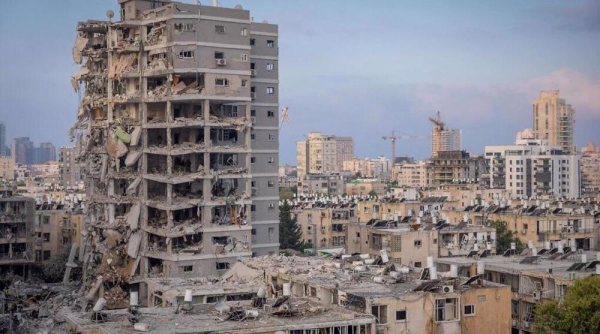
A senior Iranian diplomat says the Islamic Republic inflicted “heavy” and “extensive” damage on Israel during its US-backed aggression of June against Iran.
Speaking on Monday, Iranian Deputy Foreign Minister for Legal and International Affairs, Kazem Gharibabadi, said in the course of the aggression, Iran dealt a “severe blow” to Israel, which had remained arrogant since the wars in the 1960s, particularly the Six-Day War and subsequent conflicts with Arabs.
“During the war, we inflicted very heavy losses upon the Zionist regime, only a portion of which was made public. Israel itself prevented the full disclosure of the extent of damage caused by Iran’s missile attacks.”
“The reports and images we received from various satellites, together with information obtained from multiple sources in the Israeli-occupied territories, all indicated that the damage sustained [by the regime] was absolutely extensive.”
He said Iranian missiles penetrated through the host of defense systems deployed by several countries aimed at shooting them down in mid-air.
"The Zionist regime represents the Western countries, particularly the United States, will all its weaponry."
"It also has every defensive and protective measure supplied by certain European states. This conflict was not merely a war between Iran and the Zionist regime; rather, all of these actors were involved," Gharibabadi said.
Israel launched its blatant aggression against Iran on June 13, killing at least 1,064 people and targeting civilian infrastructure. More than a week later, the United States violated international law by joining the war and targeting three Iranian nuclear sites.
On June 24, Iran managed to impose a halt to the aggression after conducting waves of successful retaliatory operations.
Israel did not achieve its strategic objectives and suffered a major defeat, the deputy foreign minister said, emphasizing that the situation reached the point where the US itself requested a ceasefire.
Brigadier General Ali Mohammad Naeini, a spokesman for the Islamic Revolution Guards Corps (IRGC), said on December 7 that during the 12-day war, Iran hit Israel’s largest oil refinery in Haifa twice and killed 36 at a raid targeting a facility of the Mossad spy agency.
Iran fired 14 missiles at the al-Udeid air base in Qatar, the most important US base in the region, with six of them hitting the target, he added. The Americans, as asserted by themselves, spent 111 million dollars on tracking Iranian missiles.
Israel waged the aggression against Iran after a “miscalculation,” assuming that the country was weakened and unable to respond to the regime’s attacks, Naeini said.
Press TV’s website
The Relationship Between Divine Names and Attributes
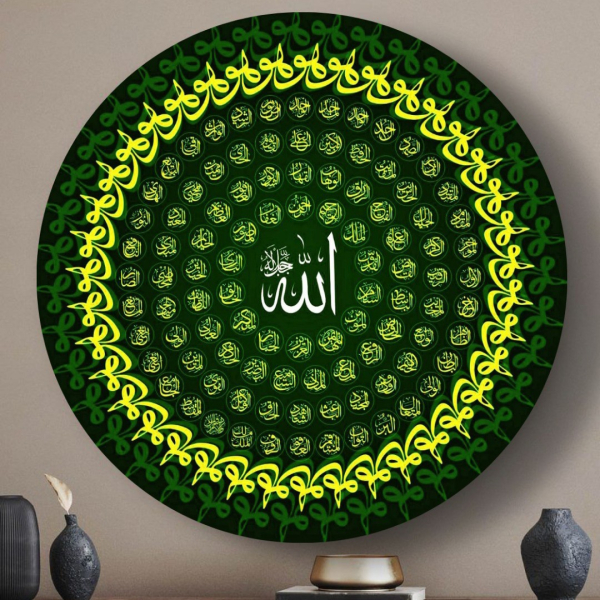
In discussing the names and attributes of God, we first encounter the issue of what relationship exists between these two terms: Are the names and attributes identical and do these two terms convey the same meaning, or does each have a specific meaning?
Mu'tazilite view
From the Mu'tazilite view, these two terms have distinct meanings and the name of God does not imply His attribute. For example, names such as 'Alim, Qadir, and Sami are specific and synonymous names and refer only to God.
However, the Mu'tazilites believe that God can be called by names such as "alive", "knowing" and "powerful", but God cannot be described as "life", "knowledge" and "power".
Sunni (Ash'ari) view
Unlike the Mu'tazilites, the Sunnis not only do not consider the name to be separate from the attribute, but they also consider the proof of the names without the proof of the attributes to be impossible and unknowable.
And thus, they consider the name to be the same as the attribute, and the only difference they believe between the two is that the attributes have a derivational property, while the names do not.
Some Sunni theologians have determined specific attributes for each name.
Shia Opinion
Some Shia scholars have also not distinguished between names and attributes and have considered both to imply the same truth, just as Hayat as an attribute expresses the truth of one of God's attributes, and Hayy as a name also expresses a truth of God's essence.
The Heavenly Lady; The Virtues of Fatimah al-Zahra (sa)

Lady Fatimah al-Zahra (sa) holds a unique and exalted position in the view of the Prophet Muhammad (pbuh) and the Ahl al-Bayt (as). Her virtues are clearly mentioned in authentic Shia and Sunni sources. Here are some well-known, well-documented examples:
1) Fatimah (sa) — The leader of the women of Paradise
The Prophet (pbuh) said:
“Fatimah is the leader of the women of Paradise.”
Source: Sahih al-Bukhari, Kitab al-Manaqib; Amali of Shaykh al-Saduq.
2) Her pleasure is God’s pleasure
The Messenger of God (pbuh) said:
“Indeed, God is angered by Fatimah’s anger and pleased with her pleasure.”
Source: Al-Mustadrak by al-Hakim al-Nishaburi, vol. 3; Bihar al-Anwar, vol. 43.
3) Fatimah (sa) — A part of the Prophet
The Prophet (pbuh) said:
“Fatimah is a part of me.”
Source: Sahih Muslim, Kitab Fada’il al-Sahabah; Musnad of Ahmad ibn Hanbal.
4) Her devotion in worship
Imam Hasan (as) said:
“My mother would stand in worship at night until her feet became swollen…”
Source: Bihar al-Anwar, vol. 43.
If you would like, I can also prepare a shorter version suitable for social media.
Birth of the Light, Mother’s Day
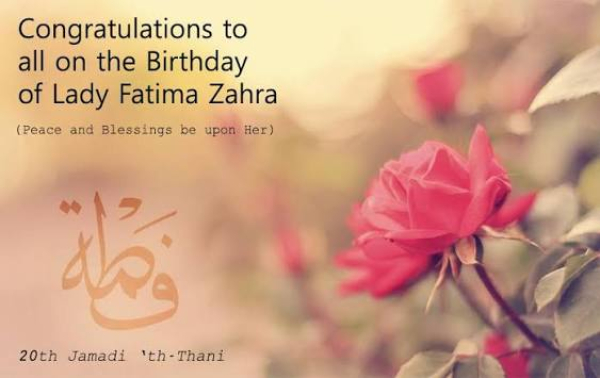
Lady Fatimah al-Zahra (sa) was born on 20th Jumada al-Thani, in the 5th year after the beginning of the Prophet’s mission, in Mecca—during difficult days for the early Muslims. Yet her blessed birth brought a new light of hope and mercy to the household of the Prophet (pbuh) and to the believers. According to narrations, at the moment of her birth, several women of Paradise came to assist Lady Khadijah (sa), including:
Asiya bint Muzahim, Maryam bint Imran, Sarah, the wife of Prophet Ibrahim (as), and Kulthum, the sister of Prophet Musa (as).
Their presence signified the sacredness and exalted status of Lady Fatimah (sa).
On this occasion, I congratulate everyone on the birth anniversary of Lady Fatimah al-Zahra (sa) and Mother’s Day. ??
Palestinian woman and son killed by Israeli fire in Gaza, bringing day’s death toll to eight
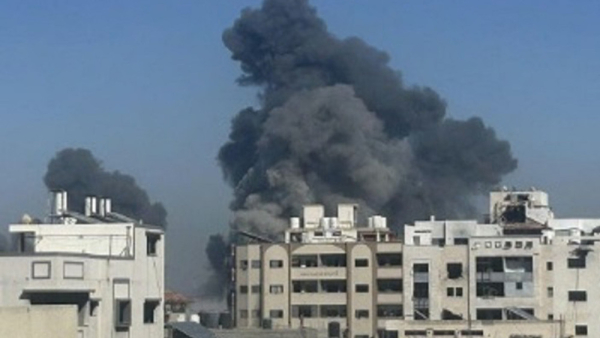
The Israeli military has killed a Palestinian woman and her son in the northern Gaza Strip, amid the regime’s ongoing violations of the ceasefire agreement with the Palestinian resistance movement Hamas.
The official Palestinian WAFA news agency, citing local sources, reported that Israeli gunfire killed a 70‑year‑old woman and her son in Gaza City’s al‑Zaytoun neighborhood on Saturday.
Following the incident, the woman and her son were taken to Gaza City’s al-Ahli Arab Hospital, where they were pronounced dead, bringing the total number of Palestinians killed in Gaza since Saturday morning to eight.
Qatari PM warns Gaza deal not a true ceasefire without Israeli withdrawal
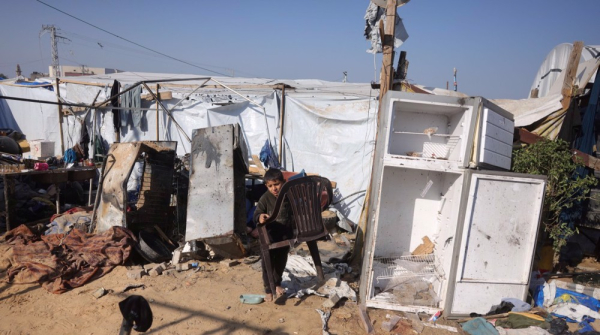
Qatar’s Prime Minister, Sheikh Mohammed bin Abdulrahman Al Thani, has warned against Israel’s continued hostilities in the Gaza Strip, stressing that only a full withdrawal of Israeli forces would constitute a full ceasefire under the US-brokered peace plan.
Speaking at the Doha Forum on Saturday, Al Thani said the current nearly two-month truce has reached a “critical” juncture as the first phase of US President Donald Trump's 20-point peace plan draws to a close.
“What we have just done is a pause,” he said. “We cannot consider it yet a ceasefire. A ceasefire cannot be completed unless there is a full withdrawal of Israeli forces, there is stability back in Gaza, people can go in and out, which is not the case today.”
Foreign ministers of Iran, Egypt urge global action to end Israel’s violations in Gaza, Lebanon
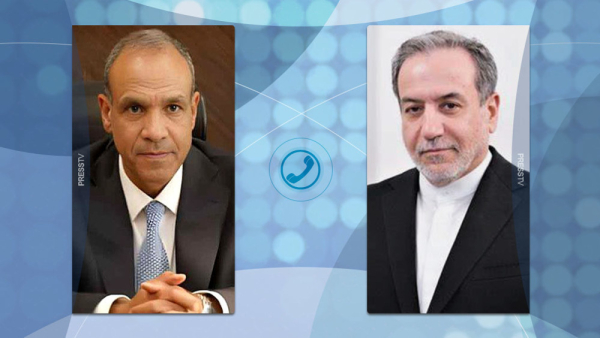
The top Iranian and Egyptian diplomats say the international community must take swift action to put an end to the Israeli regime’s ongoing aggression in Gaza and Lebanon.
In a phone conversation on Saturday, Iranian Foreign Minister Abbas Araghchi and his Egyptian counterpart Badr Abdelatty said Israel continues to carry out acts of aggression and violate the ceasefires in Gaza and Lebanon.
Israel accepted the Gaza truce deal after two years, following its failure to achieve its declared objectives of eliminating the Palestinian resistance movement Hamas and freeing all captives.
The initial phase of the ceasefire plan took effect on October 10 and saw a prisoner exchange, but further stages have not been negotiated yet.
However, the fragility of the 20-point Gaza deal, pushed by US President Donald Trump, was evident from the beginning, as reports from Gaza health officials indicated over 366 Palestinian casualties since the ceasefire's initiation, with the latest incident involving an Israeli airstrike northwest of Gaza City.
ceasefire between Israel and the Lebanese resistance movement Hezbollah took effect in November 2024 following a conflict sparked by the Tel Aviv regime’s genocidal war on the Gaza Strip in October 2023.
Israel was forced to accept the truce with Hezbollah after suffering heavy losses on the battlefield and failing to achieve its goals despite killing over 4,000 people in Lebanon.
The Iranian and Egyptian foreign ministers also exchanged views about mutual relations and agreed to hold more discussions about ways to expand ties.
Meanwhile, Araghchi informed Abdelatty of Iran’s stance on its peaceful nuclear program.
Press TV’s website
Peace depends on trust in God.

Resisting the Ego and Liberating the Soul from Self-Centeredness
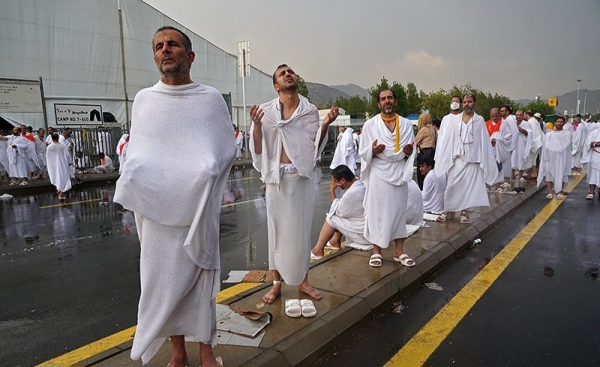
Hajj, in its mystical depth, is a battlefield where the seeker confronts the most persistent enemy—the ego. The journey begins when one steps out of the comfort of familiar surroundings and enters the vast horizon of divine presence. Ihram is the first strike against the ego’s illusions: by removing the layered garments of identity, status, and pride, the pilgrim enters a state of spiritual equality where the self loses its false crowns. In this sacred simplicity, the heart begins to taste freedom from the chains of self-worship.
As the pilgrim moves through the rites of Hajj, each act becomes a symbolic confrontation with the ego’s demands. Tawaf teaches the soul to displace the self from the center and replace it with the Divine. Sa‘y between Safa and Marwah mirrors the inner tension between purity and yearning, discipline and surrender. In Mina, the burning desire of the ego is challenged, and through Ramy al-Jamarat, the pilgrim reenacts the timeless battle against inner arrogance, temptation, and pride. Every stone cast is a declaration: I will not bow to myself.
In illuminating this struggle, Imam al-Sadiq (peace be upon him) presents Hajj as a form of spiritual combat. He said:
Arabic Narration (Imam al-Sadiq عليه السلام):
«الْحَجُ جِهَادُ كُلِّ ضَعِيفٍ»
English Translation:
“Hajj is the jihad (struggle) of every person who is unable (to fight in physical combat).”
This profound statement reveals that Hajj is, at its core, a battlefield of the heart. It is a struggle against the tyranny of the ego, a journey in which the pilgrim learns to defeat self-importance, entitlement, pride, and inner resistance. When the seeker emerges victorious from this inward jihad, the soul steps into a new freedom—no longer a servant of the self, but a servant of the Truth. This liberation is the true triumph of Hajj, and the deepest meaning of worship.