zarezadeh
International flotilla heading to Gaza approaches Israeli high-risk zone
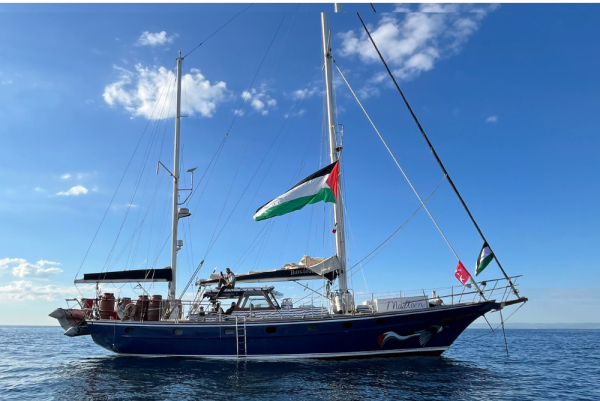
The Global Flotilla of Somod, an international initiative aimed at reaching the Gaza Strip to lift the Israeli blockade and deliver humanitarian aid, is about 150 nautical miles from the besieged territory and approaching a dangerous area, according to a statement released by the organization on Tuesday.
“Today, we are approaching the 150 nautical mile zone, the zone after which Israel will start abducting people from boats,” Dutch activist Russ Yakma said in a video statement.
On July 26, Israeli naval forces intercepted the aid ship Hanzala as it approached the Gaza coast and escorted it to the port of Ashdod. The ship had reached about 70 nautical miles from Gaza, exceeding the distance traveled by the Medellin, which was 110 miles before it stopped.
“I urge my government to demand safe passage,” the activist said. I call on Israel to lift the blockade, end the siege, end the genocide and allow food to enter Gaza because the Palestinian people are hungry.”
“We are about 420 kilometers (nearly 226 nautical miles) away from reaching Gaza,” the International Committee to Break the Siege of Gaza said early Tuesday via the American social media company X.
The global Somod fleet has begun live streaming some of its boats on YouTube 24 hours a day as a precaution against possible Israeli attacks.
“As we approach the dangerous ‘orange zone,’ we must keep an eye on the fleet! Witness protects,” the organization said in a statement, urging global supporters to pressure their governments and international institutions to protect and allow safe passage for its ships.
The Somod Global Fleet, consisting of about 50 ships with more than 500 activists, set out earlier this month to break the Israeli blockade and deliver humanitarian aid, especially medical aid, to the Gaza Strip.
The Israeli military has killed more than 66,000 Palestinians, most of them women and children, in Gaza since October 2023. The relentless bombardment has rendered the besieged area uninhabitable, leading to hunger and disease outbreaks.
Yemen says ready to joint Colombia-proposed ‘global army’ to liberate Palestine
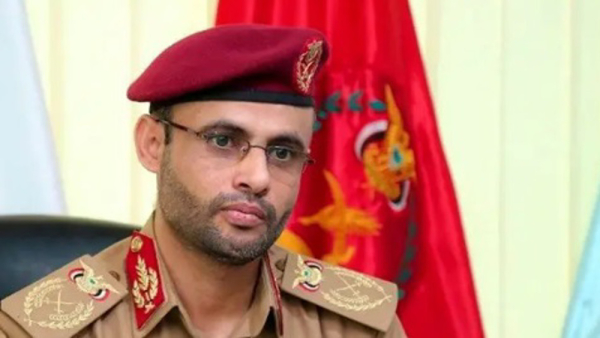
The chairman of Yemen's Supreme Political Council has commended the Colombian president’s recent proposal during his UN speech to create a global army tasked with liberating Palestine from US-backed Israeli occupation and aggression.
Mahdi al-Mashat made the remarks on Tuesday, calling the proposal “courageous and historic,” and reaffirming Yemen’s readiness to provide all forms of support for the liberation of Palestine.
The Yemeni official said he, his country’s Armed Forces, and its people were “proud” of President Gustavo Petro’s stance.
He noted that Yemen was already “engaged in the war against the Zionist enemy entity,” citing Sana’a’s naval blockade on Israeli ships and vessels heading towards the occupied Palestinian territories.
Mashat also referred to the Armed Forces’ having staged numerous solidarity operations in support of Palestinians in the Gaza Strip, who have been under an Israeli war of genocide since October 2023.
The forces, the official said, had staged missile and drone strikes penetrating more than “2,000 kilometers (1,242 miles) into occupied Palestine.”
“We will continue to do so, and we welcome everyone who wishes to contribute to this military effort in defense of human values.”
Addressing the United Nations Security Council recently, Petro made an unprecedented and daring call for “a strong army of nations that do not accept genocide.”
“We must gather weapons and armies. We must liberate Palestine,” he added.
The US, the Israeli regime’s biggest ally, decided to revoke his visa afterwards, to which Petro responded, “I don’t care.”
Appreciating the Yemeni nation’s support for his stance, Petro published a post on his X account that read, “Within the Arab countries, within humanity itself.”
Observers said the appreciative remarks signaled the Colombian head of state’s acknowledgment that his idea was gaining traction throughout the globe, including among Arab nations.
The Colombian president also personally thanked Mashat in another post.
Press TV’s website
Trump-Netanyahu Gaza plan meant to perpetuate aggression against Palestinians: Islamic Jihad
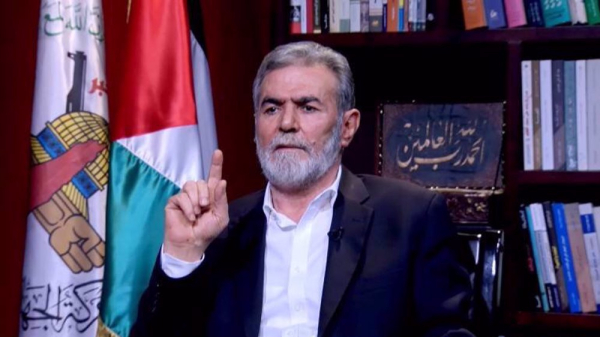
The secretary general of the Palestinian Islamic Jihad resistance movement has categorically denounced US President Donald Trump's 20-point plan to end Israel’s genocidal war on Gaza, characterizing it as a “formula for perpetuating the Israeli aggression against the Palestinian nation.”
In a statement released on Monday, Ziyad al-Nakhalah emphasized that the proposal, which Trump presented at the White House alongside Israeli Prime Minister Benjamin Netanyahu, completely reflects the occupying Tel Aviv regime’s vision.
“Israel aims to enforce, with the support of the United States, what it could not accomplish through military action. Consequently, we view the US-Israeli declaration as a catalyst for escalating conflict in the region,” the Islamic Jihad chief stated.
On Monday, Trump said "we're beyond very close" following the announcement of his plan, which entails an immediate cessation of all military operations in Gaza, and referred to Monday as a "historic day for peace."
He elaborated on the so-called peace plan that he had introduced to the Muslim and Arab leaders on the sidelines of the UN General Assembly.
Trump stated that the proposal includes the release of all Israeli captives within a 48-hour timeframe, the demilitarization of Gaza, and a gradual withdrawal of Israeli troops from Gaza.
The procedure will be supervised by a Board of Peace led by leaders from the Arab world, Israel, and the United States.
Trump additionally mentioned the unequivocal opposition of the Israeli prime minister to Palestinian statehood.
He underscored his complete backing for the Tel Aviv regime, stating that he would persist in the effort to make the occupied al-Quds the capital of Israel.
Trump also claimed that he was “hearing that Hamas wants to get this done too.”
Netanyahu, for his part, commended Trump and conveyed his endorsement of the initiative to conclude the conflict in Gaza.
Press TV’s website
Netanyahu has come to the UN with a handout again
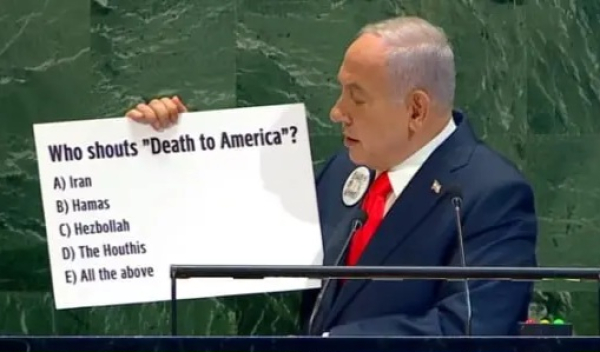
Netanyahu has come to the UN with a handout again, and this time he has presented his accusations against Iran with a test question from the audience!
"Who says death to America?"
Describing the position of other countries towards the performance of the Israelis, he claimed that many officials who criticize the Israelis are secretly grateful to him. He referred to Meretz's comments and the phrase "Dirty Work."
Addressing the countries criticizing the Israelis, Netanyahu said that the Israeli government and army pursue the interests of the people and governments, and in return, they face sanctions and threats from them.
He described the "genocide" claim as false, and pointed to some cases of praise for the Israelis by some experts, and claimed that the "ratio of military and civilian casualties" in Israeli operations has been better than in many other conflicts.
Netanyahu claimed that the death of every civilian is a tragedy for Israelis and a strategy for Hamas.
The Prime Minister of the occupation regime claimed that it is Hamas that steals food from the people of Gaza and it is the Israelis who feed them. He pointed to UN statistics that reported that Hamas steals 85 percent of the aid.
In discussing the recognition of the Palestinian state by dozens of countries, Netanyahu pointed out that the Palestinians will never accept a two-state solution.
He claimed that they only want Palestine!
It should be noted that Netanyahu put forward this blatant lie in a situation where Mahmoud Abbas officially announced and in fact pointed out that the self-governing government has recognized the Israelis twice and several times.
Netanyahu officially announced that the rejection of the formation of an independent Palestinian state has been approved in the Knesset and that this is the decision of the Israeli representatives.
He announced that the great achievement of the Israelis in defeating Iran and its affiliated forces has opened the way for peace in a valuable and strange way and announced that an agreement with Syria is on the way. He announced that peace with Lebanon is also possible in this new era.
Netanyahu announced that with the complete disarmament of Hezbollah, complete peace with the Lebanese government is within reach.
At the end of his speech, the Prime Minister of the occupying regime, without mentioning the invasion of our country and the hundreds of civilian casualties and the assassination of our country's nuclear scientists, expressed confidence that the Iranian people, with the change in political conditions, will make Iran great again and that the friendship between Iran and the Israelis will begin.
Speech without an audience
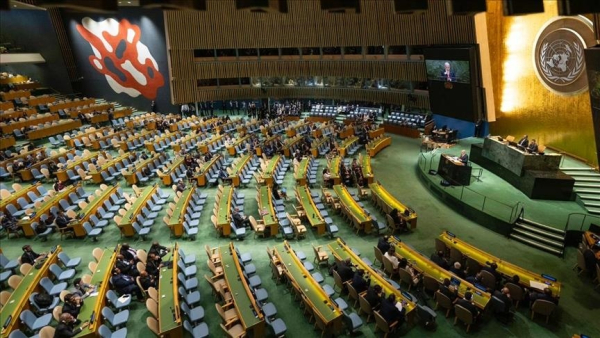
Benjamin Netanyahu's speech at the UN General Assembly began as a large group of country representatives left the UN conference hall before his speech began.
During his speech, Netanyahu, enumerating the actions of the Israeli army and security agencies, announced that half of the Houthi leaders, Sinwar, Nasrallah, Assad, and Iranian military commanders and Iranian nuclear scientists, were all gone.
Netanyahu thanked Trump for what he described as a courageous act in joining the aggression against our country.
He called for the implementation of the snapback process and announced that "Iran's enriched uranium" must be eliminated.
Netanyahu, in Hebrew and English, sent a message to the hostages held by Hamas that they had not been forgotten and that they would be returned.
Netanyahu announced that his voice would be broadcast to all mobile phone owners and all residents of Gaza through telecommunications networks and loudspeakers installed in Gaza, calling on Hamas to surrender and release the hostages.
The martyrdom of Sayyed Hassan Nasrallah; Strengthening the Tree of Resistance
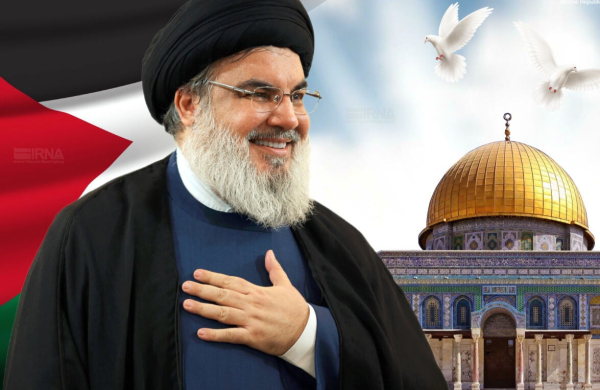
Martyr Sayyed Hassan Nasrallah, who worked for more than 30 years to serve the Resistance Front, was a symbol of resistance and defense of the oppressed Palestinian people. His martyrdom not only did not weaken the Resistance Front, but it made the tree of resistance stronger and showed the world the power of the Quran and Islamic civilization.
The enemies of Islam have always sought to destroy the components of the power of Islam and weaken Islamic unity, but the martyrdom of Sayyed Hassan Nasrallah not only did not weaken Islam and Muslims, but his pure blood made the tree of resistance stronger.
Martyr Nasrallah was one of the pioneers of the fight against oppression and the usurping Zionist regime, who spent his blessed life defending the ideals of Islam and the Quran and preserving human dignity against oppression.
And the Islamic Resistance Front will not only not be weakened by the martyrdom of great men, but will continue its path with greater dignity and authority.
Iran slams Trump's 'preposterous' claims of diplomatic offer after US strikes
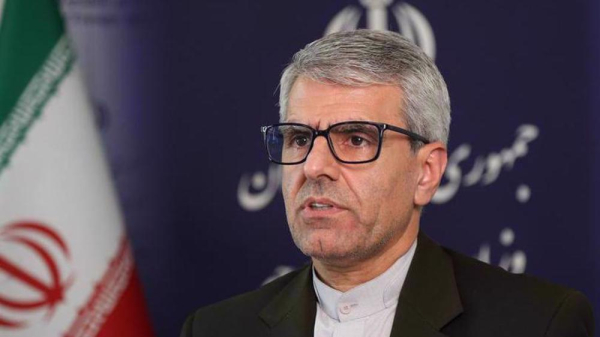
Iran has rejected US claims of willingness to negotiate, calling them “simply disingenuous and preposterous” following unprovoked attacks on the country’s nuclear facilities in June amid ongoing diplomatic talks.
Foreign Ministry spokesman Esmaeil Baghaei on Thursday responded to US President Donald Trump's claims that upon taking office, he had made a “generous offer” of full cooperation with Iran in exchange for suspending its nuclear program.
"The United States claim of offering diplomacy is simply disingenuine and preposterous; you cannot bomb a country amidst ongoing diplomatic negotiations and offer peace," Baghaei wrote on X.
Baghaei touched on Trump's boasts in his UN General Assembly speech, proudly declaring how B2 bombers had dropped 30,000-pound bombs on Iran’s nuclear facilities supervised by the UN nuclear agency and "totally obliterated everything”.
"Taking pride in your unlawful attack on Iran's peaceful nuclear facilities - as outrageous and gross as it is- would also further aggravate the United States int'l responsibility for its egregious wrongful act of aggression and demonstrate the US's rulers deep animosity toward "The Nation of IRAN"," the spokesman wrote.
In his speech, Trump declared Iran “the world’s number one sponsor of terror", claiming that he had sent Leader of the Islamic Revolution Ayatollah Seyyed Ali Khamenei "a letter making a generous offer", but Tehran's "answer was to continue their constant threats to their neighbors and US interests”.
"When you point a 'wrong' finger at someone, three fingers are pointing back at you; falsely accusing Iran of supporting terrorism would not absolve the United States of their direct participation & complicity in Israel's ongoing genocide of Palestinians, systematic terrorism and continuing aggressions against many States," Baghaei responded.
On June 13, Israel launched an unprovoked aggression against Iran, initiating a 12-day war that resulted in at least 1,064 Iranian casualties, including military commanders, nuclear scientists, and civilians.
The United States further escalated the war by unlawfully bombing three peaceful Iranian nuclear facilities.
Through successful retaliatory operations, Iran effectively halted the terrorist assault by June 24.
Press TV’s website
Pezeshkian: Iran ‘fully prepared’ for any scenario if snapback triggered
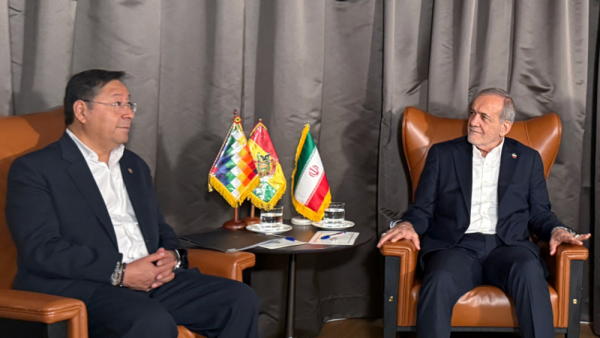
President Masoud Pezeshkian says Iran is fully prepared for any scenario if European powers proceed with reinstating UN sanctions through the so-called snapback mechanism, and warned that diplomatic dialogue would be meaningless under renewed sanctions.
Speaking during a meeting with Bolivian President Luis Arce Catacora on the sidelines of the United Nations General Assembly in New York, Pezeshkian said Tehran would adjust its policies in proportion to any new developments should the mechanism be activated.
“We hope the snapback mechanism will not be triggered, but if it is, Iran’s interaction with the international community will be proportional to the new situation,” he said.
Britain, France and Germany — signatories to the 2015 nuclear deal (JCPOA) — informed the UN Security Council on August 28 that they had invoked the snapback mechanism, citing Iran’s alleged non-compliance with the agreement. The process allows for the reimposition of all UN sanctions within 30 days unless a new consensus is reached. The automatic reimposition is expected by September 28 if no action is taken.
Pezeshkian criticized what he called the United States’ “unilateral policies,” saying such approaches not only target Iran but other nations that refuse to align with Washington’s agenda.
“In these conditions, countries seeking independence must enhance their scientific and technical capabilities to powerfully safeguard their national sovereignty and interests,” he said.
The Iranian president also warned that any reinstatement of sanctions would render negotiations meaningless. “Diplomatic dialogue will have no meaning if the European troika reinstates the sanctions against Tehran,” he said.
Pezeshkian expressed appreciation for Bolivia’s past cooperation with Iran and emphasized that future relations would depend on the shared determination of both countries’ leadership.
“There exists firm determination on the part of the Islamic Republic of Iran, and undoubtedly the policy direction of Bolivian officials will play a decisive role in shaping future cooperation,” he added.
Bolivia’s President Arce condemned what he described as U.S. “warmongering policies,” particularly in the Caribbean, calling them a threat to international peace and security. He also praised Iran’s “positive and constructive” role in Latin America and voiced support for expanding bilateral ties.
In a meeting with his Bolivian counterpart Luis Arce Catacora on the sidelines of the UN General Assembly in New York Thursday, Pezeshkian stated that while Iran hopes the snapback mechanism will not be triggered, the country's interaction with the international community would be “proportional to the new situation” if it is.
On August 28, Britain, France, and Germany, as signatories to the 2015 nuclear deal (JCPOA), notified the UN Security Council that they had invoked the so-called snapback mechanism, a 30-day process to restore all UN sanctions against Iran, alleging Iran’s non-compliance with the deal.
The move followed a vote on Friday in which the UN Security Council rejected a draft resolution that would have permanently lifted the nuclear-related sanctions. Unless a new agreement is reached, the sanctions will be automatically re-imposed by September 28.
President Pezeshkian pointed to the unilateral policies of the United States, noting that such approaches target not only Iran but all countries that refuse to align with American agendas.
“In these conditions, countries seeking independence must enhance their scientific and technical capabilities to powerfully safeguard their national sovereignty and interests,” he said.
Elsewhere in his remarks, the Iranian president expressed appreciation for Bolivia's cooperation with Iran in various periods and noted that the future development of relations between Tehran and La Paz depends on the shared determination of both nations' senior officials.
“There exists firm determination on the part of the Islamic Republic of Iran, and undoubtedly the policy direction of Bolivian officials will play a decisive role in shaping future cooperation,” he added.
The Bolivian president, for his part, characterized US warmongering policies, particularly in the Caribbean region, as a threat to international peace and security.
He praised Iran's “positive and constructive” presence in Latin America and expressed his country's desire to maintain and deepen friendly relations and expand bilateral cooperation across various fields.
Press TV’s website
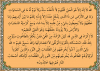
A Hadith on the Consequences of Neglecting the Remembrance of God

Seek refuge in Allah from the devil
In the name of Allah, the Merciful
"There is no power and no power except with Allah, the Most High."
And trust in Allah and suffice with Allah
The Holy Prophet, may God bless him and grant him peace:
The people of heaven will not express regret for any of the affairs of the world (tomorrow) except for the hour that passed over them and they did not remember God in it.
Leali Al-Akhbar, Vol. 1, p. 15
Iran's Supreme Leader's message to the people about negotiations with America
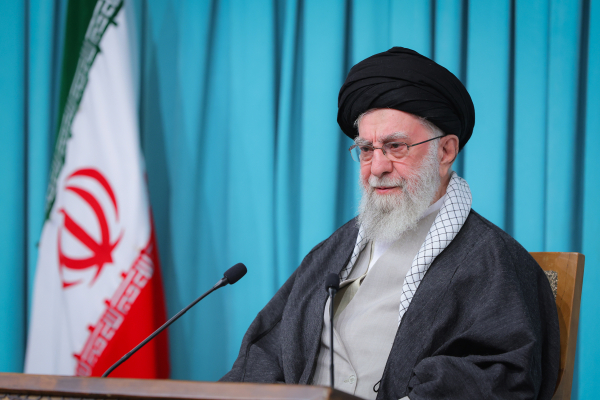
The United States is not seeking negotiation; its aim is imposition and coercion.
negotiating with the US, Imam Khamenei elaborated on the harms of such negotiations, stating: “The counterpart has threatened that if you do not negotiate, such and such will occur. Therefore, accepting such negotiations signifies submission, fear, and trembling — a surrender of the nation and the country in the face of threats.”
He warned that yielding to US threats only encourages further coercive and endless demands. “Today they say that if you pursue enrichment, we will take action; tomorrow, possessing missiles or having relations — or lack thereof — with certain countries will become grounds for threats and pressure to force retreat.”
Imam Khamenei emphasized: “No nation of honor would accept negotiations under threat, and no wise policymaker would endorse them.”
The Leader described promises of concessions by the counterpart in exchange for compliance as false. Referring to past experience with the Joint Comprehensive Plan of Action, he stated: “Ten years ago, we concluded an agreement with the US under which a nuclear production center was to be closed, and enriched materials exported or diluted, in return for the lifting of sanctions and normalization of Iran’s file at the International Atomic Energy Agency. Today, after ten years, not only has our nuclear file not returned to normal, but its problems have increased within the Security Council and the IAEA.”
Imam Khamenei stressed the importance of not forgetting these experiences. “The US side has consistently broken promises, lied, issued sporadic military threats, and, when possible, assassinated our figures such as the esteemed Martyr General Soleimani or bombed our facilities. How can one negotiate with such a counterpart with trust and confidence?”
The Leader asserted: “Negotiations with the US regarding the nuclear issue, and perhaps other matters, are a dead-end.”
In the final part of his speech, he described negotiations with the US as serving the current president’s interests, providing a display of power and an attempt to present his threats as effective in bringing Iran to the negotiating table. Imam Khamenei underscored that the only path to progress and safeguarding the country is to become strong in all dimensions: military, scientific, governmental, and structural. “If we attain strength, the US side will no longer even issue threats,” he said.
Imam Khamenei further emphasized that the unity of the nation was the main factor in the enemy’s failure during the twelve-day Imposed War. “The assassination of commanders and some key figures was intended to incite chaos in the country, especially Tehran, with the help of their agents, disrupt the nation’s affairs, target the foundations of the system, and eventually eradicate Islam from this country. However, the rapid appointment of successors to the martyred commanders, the high morale of the Armed Forces, and the orderly governance of the country contributed to defeating the enemy. Yet, the most decisive element in the enemy’s failure was the unity and cohesion of the nation.”
He stressed: “The critical point is that this decisive unity remains intact and continues to exert great influence.”
The Leader described today’s Iran as the same Iran of 12 and 13 June 2025, noting: “Back then, streets filled with people chanting powerful slogans against the accursed Zionist regime and criminal US demonstrated the unity of the nation, a unity that still exists and will continue to exist.”
In conclusion, Imam Khamenei, marking the anniversary of the martyrdom of Sayyid Hassan Nasrallah, described the great mujahid as a tremendous asset for the Islamic world, Shi’ism, and Lebanon. “He may be gone, but the treasure he created remains. The story of Lebanon’s Hezbollah is ongoing. Hezbollah shouldn’t be underestimated, and this important treasure shouldn’t be overlooked. It’s a treasure for Lebanon and for the rest of the world,” he said.