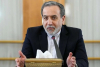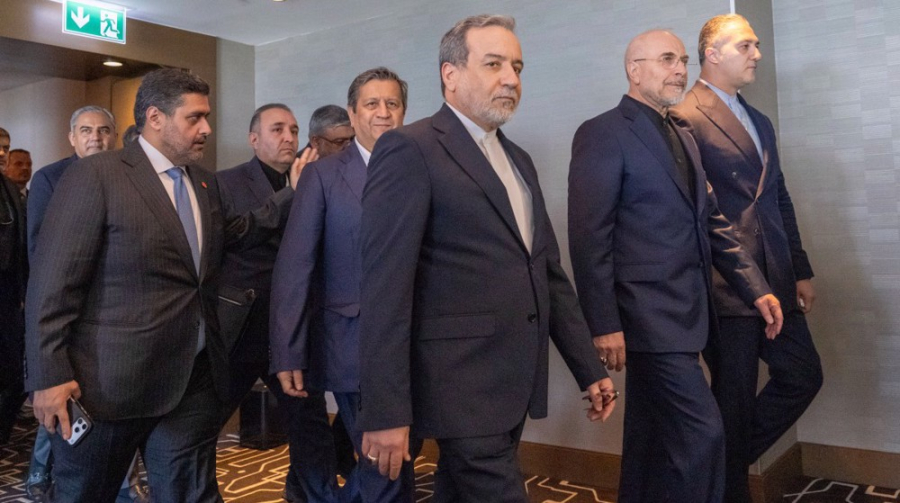
Iranian Foreign Minister Abbas Araqchi has praised Pakistan and Qatar for their "tireless" mediation efforts, saying major progress has been made toward ending the war on Iran, but that the "real test" will be the successful implementation of a ceasefire in Lebanon.
In a post on X early Monday, Araqchi wrote: "Tireless Pakistani and Qatari mediation has delivered major progress to end Lebanon War. Oil and petrochem exports are waived, blockade lifted, some frozen assets released, and major reconstruction & development plan launched for Iran. 1st real test: Lebanon deconfliction cell."
The foreign minister's comments came as the first round of high-level technical talks between Iran and the United States concluded in Switzerland, with Iranian officials confirming that quadrilateral meetings were suspended after Washington issued threatening remarks, but that technical work will continue.
Esmail Baghaei, who was accompanying the Iranian delegation led by Parliament Speaker Mohammad Baqer Qalibaf, told reporters early on Monday that the Swiss talks were focused on monitoring the implementation of US commitments under the MoU signed on June 18.
“We had a very long day. The meetings started on Sunday morning. During the quadrilateral session, threatening remarks from America were published, which led Iran to announce that it would not continue the quadrilateral meeting under such conditions,” Baghaei said, referring to anti‑Iran threats issued by US President Donald Trump on Sunday.
He added that Qatar and Pakistan attempted to keep the dialogue going, but Iran insisted it would not proceed in a quadrilateral format.
Baghaei confirmed that the implementation of the MoU demands the end of the war “on all fronts,” without which “entry into the negotiation phase for the final agreement is not possible.”
He noted that progress had been made on discussions regarding the issuance of necessary authorizations for Iran’s oil sales and the release of frozen assets.
He also confirmed that a mechanism for the safe passage of ships through the Strait of Hormuz is being arranged.
Baghaei reiterated that Iran has “absolutely not forgotten previous experiences” and is determined to meticulously pursue the implementation of US commitments.
Mediators confirm progress despite suspension
Despite the suspension of the quadrilateral format, Qatar and Pakistan issued a joint statement confirming that the first session of high‑level talks under the Islamabad MoU had concluded at the Bürgenstock resort in Switzerland.
“The Lake Lucerne Summit was conducted in a positive and constructive atmosphere. Encouraging progress has been made including the creation of a mechanism for further technical talks,” the joint statement read.
The statement said the parties had agreed to establish a High‑Level Committee to provide political oversight, with chief negotiators reporting regularly and leading working groups focused on nuclear issues, sanctions, and a monitoring and dispute resolution mechanism.
The committee has agreed on a roadmap towards reaching a final deal within 60 days.
The mediators also announced the formation of a communication line to avoid incidents and ensure safe passage for commercial vessels through the Strait of Hormuz, as well as a de‑confliction cell involving Lebanon to ensure adherence to the termination of military operations in the country.
Talks conditional on Lebanon ceasefire
According to informed sources cited by Iran’s Tasnim news agency, the quadrilateral talks began at around 3:00 PM local time and were suspended after approximately 90 minutes for consultations.
However, following Trump’s threatening remarks, the Iranian delegation refused to return to the quadrilateral format.
Tasnim reported that Iran has made clear that no progress on other issues will be possible unless the first clause of the MoU, concerning the end of the war on all fronts, including Lebanon, is fully implemented.
The talks in Switzerland were the first high‑level negotiations under the 14‑point Islamabad Memorandum of Understanding, which was signed on June 18 after months of Pakistani‑mediated diplomacy.
The MoU commits both sides to an “immediate and permanent” termination of military operations on “all fronts”, including Lebanon.
It also provides for the lifting of the US naval blockade within 30 days, the unfreezing of billions of dollars in Iranian assets, and a $300 billion reconstruction fund for Iran.
A final deal is to be negotiated within 60 days, covering Iran’s nuclear program, the full removal of sanctions, and a permanent end to the war.
However, the path to implementation has been rocky. Despite the ceasefire commitment, Israeli forces have continued strikes in southern Lebanon, including deadly attacks on Beirut’s southern suburbs that killed dozens of civilians.
Iran responded on Saturday by announcing it had again closed the Strait of Hormuz, accusing Washington of failing to meet its commitment to halt fighting in Lebanon.
As the Swiss talks got underway on Sunday, Trump issued a series of threats on his social media platform and in a Fox News interview.
He threatened that if Tehran placed restrictions on the strait, “You won’t have a country”. He also suggested the US might take control of the waterway and impose its own tolls.
Iran’s lead negotiator, Parliament Speaker Ghalibaf, dismissed the threats, saying, “Don’t they think that if their threats had any effect, they wouldn’t be in this desperate situation today? No matter how much they talk, it is we who take action”.
He later warned US officials to “be careful” with their statements and said Iran’s armed forces were ready to respond.
Press TV’s website