zarezadeh
What is the condition of Sunnis and religious minorities in Iran?
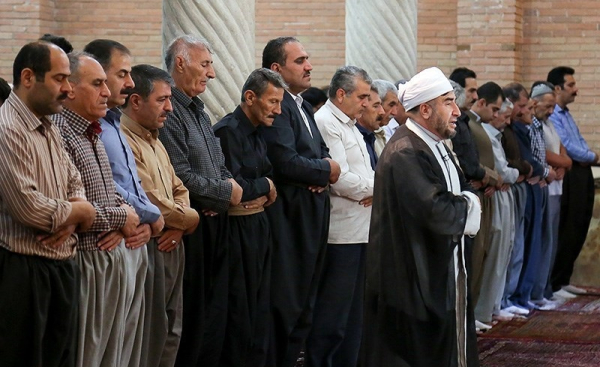
In today's Iranian society, Sunnis are the largest religious group after Shiites. Available estimates show that the Sunni religious population of Iran is about eight to 10% of the country's total population which is concentrated or dispersed in the provinces of Sistan and Baluchistan, Kurdistan, Kermanshah, West Azerbaijan, North Khorasan, Razavi, and South, Golestan, Gilan, Ardabil, Hormozgan, Bushehr, Fars, Kerman, Mazandaran, East AzarbaijanZanjan, as well as Tehran and Alborz.
Among the four Sunni schools of thought, Hanafi, Shafi'i, Hanbali and Maliki, the three schools of Hanafi, Shafi'i and, in a more limited way, Hanbali have followers in all corners of Iran. Hanafis are based in Sistan and Baluchistan province, Golestan and North Khorasan, Razavi Khorasan and South Khorasan, Hormozgan and to a lesser extent in Kerman, Mazandaran and Ardabil. Sunni Shafi'is are generally based in the provinces of Kurdistan, West Azerbaijan, Kermanshah, Gilan, Ardabil, Fars, Bushehr, Hormozgan and to a lesser extent in East Azerbaijan. In Zanjan province, there are also some Sunnis who are probably of the Shafi'i religion. A small group of Sunni Iranians are also Hanbali, who are based in the south of the country.
Ahl-e-Sunnat Azerbaijan (provinces: Ardabil, East Azerbaijan, Zanjan and West Azerbaijan)
- Sunni Kurdistan (provinces: Kurdistan, Kermanshah and Kurdish regions of West Azerbaijan)
- Sunni Khorasan (provinces: Razavi Khorasan, North Khorasan and South Khorasan)
- Southern Sunnis (provinces: Fars, Hormozgan and Bushehr)
- Sunnis of Balochistan (provinces: Sistan and Baluchistan and the Baloch areas of Kerman, Hormozgan and South Khorasan)
- Sunni Turkmen of the Sahara (provinces: Golestan, North Khorasan and Mazandaran)
- Sunni Talash (provinces: Ardabil and Gilan)
- Ahl-e-Sunnah Center (provinces: Tehran and Alborz)
After the victory of the Islamic Revolution in February 1979, in the Constitution of the Islamic Republic of Iran, religious minorities were limited to the four religions of Sunnis and Zaidi Shiites, and the known religious minorities were Zoroastrian, Kilimian and Christian (Armenian and Assyrian).
Also, these minorities are respected within the limits of the law, they are free to perform their religious ceremonies, and they are allowed to act according to their religion in their personal circumstances.
According to Article 64 of the Constitution and its amendment, each of the official religious minorities can have a representative in the Parliament.
In some principles of the constitution, there are general interpretations that include religious minorities, such as: the need to provide the basis for public participation of the people in determining their own destiny and providing judicial security for all people (principle 3), protection of the law for all people and equality of rights People (principles 19 and 20), the right to choose a suitable job (principle 28), the right to sue and choose a lawyer (principles 34 and 35).
Therefore, it can be concluded that the constitution of the Islamic Republic has specified more freedoms and rights for religious minorities than the government before revolution.
Yemen
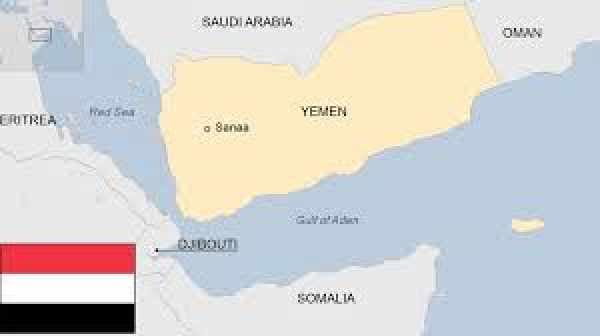
Yemen is a country located in southwest Asia and in the south of the Arabian Peninsula, and its capital city is Sana'a. The population of Yemen is about 23 million 800 thousand people. Its official language is Arabic and its currency is the Yemeni Rial. Yemen has an area of 527,968 square kilometers. This country has two important coasts, the western coast on the shore of the Red Sea and the southern coast on the coast of the Arabian Sea. It also has more than 200, the most important of which is the Socotra Islands in the Arabian Sea.

History
Yemen is a country in the neighborhood of Saudi Arabia that has had a special position since ancient times. Since ancient times, Yemen has been a rich and fertile region with forests in mountainous areas and groves and gardens of various fruits in other areas. The story of its historical dam, known as Marib Dam, is mentioned in history books. At that time, Yemen was called "Happy Arabia".
Between 1962 and 1990, Yemen was divided into two countries, the Arab Republic of Yemen, which united in this year and the Republic of Yemen was created. In 1994, a civil war broke out between the southern separatists and the central government. According to a 2012 estimate, between 60% and 65% of the Yemeni population are Sunni Muslims and between 35% and 40% are Shiites.
Political Crisis
This country has been caught in a political crisis since 2011. In this year, street protests against Ali Abdullah Saleh, who had practically become the country's president for life, led to his removal from power. In February 2012, Abd-Rabbu Mansour Hadi was elected as the country's president in a one-man election, but political differences continued and the two Ansarullah groups led by the Houthis and Al-Qaeda entered into conflict with the central government and each other. The Houthis captured Sana'a in September 2014 and announced the formation of a national unity government. Mansour Hadi and his government announced their resignation on January 21, 2015, but on February 21, Mansour Hadi withdrew his resignation and declared Aden as the temporary capital.
On March 26, a coalition of regional countries led by Saudi Arabia launched airstrikes against the Houthis in support of Hadi's government. On December 4, 2017, Ali Abdullah Saleh was killed by the Houthis after he had previously changed his positions towards Saudi Arabia.

After the Yemeni revolution in 2012, the power of the central government has been largely lost and most parts of the country are out of its control. The Houthis, who are a Zaydi Shiite group and whose center is in Saada province in the north of the country, are the strongest of these groups, and until March 2015, they control Sana'a, the capital and the largest city of the country. Ansar al-Sharia, which is a branch of al-Qaeda, is another powerful group in this country.
Economy
Yemen's GDP in 2013 was more than 61 billion dollars and the per capita income was about 2500 dollars. Services are the most important sector of the country's economy, accounting for 61% of GDP, followed by industry with 31% and agriculture with 7.7%. Oil production accounts for 63% of the government's income. Agriculture was more important in the past and included 18-27% of the country's production.

Palestine's request to the United Nations to declare a famine in Gaza
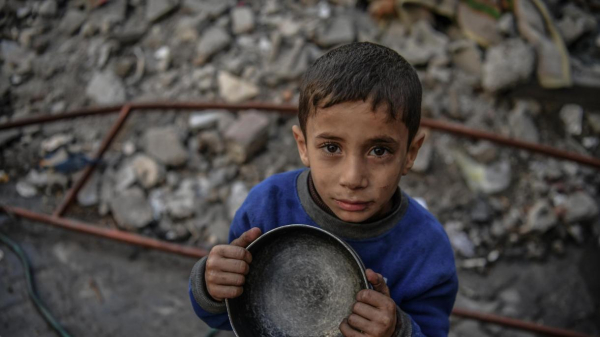
With the continuation of the humanitarian crisis in Gaza, which is the result of the continuous aggression of the Zionist regime, the Ministry of Foreign Affairs of Palestine asked the United Nations to officially announce the outbreak of famine in the Gaza Strip.
Following the relentless attacks of the Zionist regime on the Gaza Strip, which has created an unprecedented humanitarian crisis and left thousands of Palestinians homeless, the Palestinian Foreign Ministry stated: We ask the United Nations to officially declare the outbreak of famine in the Gaza Strip due to the killing war..
The Ministry of Health of Gaza announced, on the 80th day of the war, that the number of martyrs has reached 20,674. This ministry also announced the latest number of injured people in the aggression of the Zionist regime to the Gaza Strip as 54 thousand 536 people.
The Palestinian Ministry of Health in Gaza also said that 900,000 children in shelters in Gaza are facing the risk of drought, famine and disease. Also, Marwan Homs, the director of Abu Youssef al-Najjar hospital in Gaza, said that 800,000 people in Gaza City and the north of the Gaza Strip are without health care
The structure of the system of the Islamic Republic of Iran
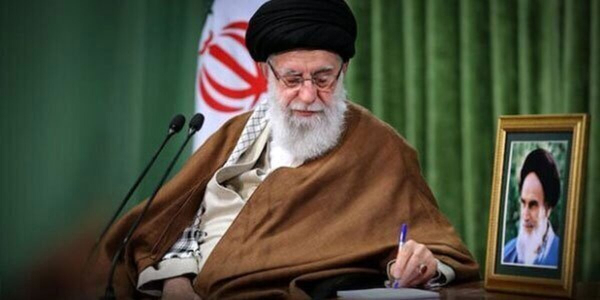
The Islamic Republic of Iran is a political system with the form of a republic and Islamic content arising from the Islamic Revolution (1979 February 11) by leadership of Imam Khomeini in Iran, which replaced the monarchy. This political system was formalized in the referendum of April 1, 1979, with the participation of 98.2% of all those eligible to vote, of which more than 97% voted for the Islamic Republic. In this referendum, out of a total of 20,422,438 votes 20, 054, 834 votes were in favor and 367,604 votes were against. With the end of the referendum, at 24:00 on April 1, 1979, in a message, the leader of the revolution called this day the day of God's rule and officially announced the establishment of the Islamic Republic.
The position of Islam in the Islamic Republic
The distinguishing feature of the system of the Islamic Republic of Iran from the common types of the republic in political custom is Islamic nature, meaning that the majority of the Iranian people have chosen Islam and the sovereignty of its scales as the content of the government through a referendum to determine the country's political system.
The principles of Shia Islamic beliefs (monotheism, prophethood, resurrection, justice and imamate) and the principle of dignity and freedom combined with human responsibility are the pillars of the establishment and continuation of the Islamic Republic of Iran.
The sovereignty of Islam and Twelver Shia religion in the system of the Islamic Republic requires that the standards of this religion be dominant and effective in legal, judicial, political and social affairs. Despite this, the rights of the followers of other Islamic schools of thought (Hanafi, Shafi'i, Maliki, Hanbali and Zaidiyya) will be equal to that school and they are free to do actions based on their opinions.
Followers of other divine religions, including Zoroastrians, Kalimians and Christians, who are known as People of the Book, also have these rights: freedom to perform religious ceremonies and teachings according to their religion, creation of religious organizations and Cultural, social and welfare, representation in the Islamic Council, and social, administrative and employment rights. Minorities are not among Divine religions if they do not conspire against Islam and the Islamic Republic, enjoy certain rights as well as good morals and Islamic justice.
Form of government
The form of government in the system of the Islamic Republic is three branches (legislative, executive and judiciary) independent of each other and under the supervision of the leader (supreme leader) and therefore the pattern of separation of powers in it is fundamentally different from the pattern of separation of powers in other systems. It is parliamentary; It is semi-presidential because the people elect the president and it is semi-parliamentary because the president proposes the members of the government to the parliament and the parliament approves them. The comprehensiveness and integrity of the system requires that there be harmony between the three powers, despite the separation of powers. For this purpose, the relations of the three forces and the limits of their independence have been clarified and the principle of banning the collection of jobs has been predicted. In addition to the three forces under the supervision of the leadership, there are special institutions in the implementation of the sovereignty of the Islamic Republic. Institutions such as Islamic Councils, Radio and Television, Supreme National Security Council, Supreme Council of Cultural Revolution, and Expediency Council
The pillars of government
The pillars of the government of the Islamic Republic of Iran are:
Velayat al-Faqih and leadership(supreme leader)
The first pillar of the government of the Islamic Republic is leadership.
According to the preamble of the constitution, the absolute rule of the leadership is the foundation of the Islamic government of the Islamic Republic. The Islamicity of the government means that the current laws in it, in every respect, are based on Islamic standards and the legitimacy of the constitution is conditional on its compliance with Sharia law.
The concept of velayat al-faqih is provided in the constitution (principle 5) in an institutional way. A leader must have these qualities: the scientific qualification necessary for ruling in different chapters of jurisprudence, justice and piety, correct political and social vision, resourcefulness, courage, management, and sufficient power for leadership. .
Powers and duties of leadership
The government forces in the Islamic Republic of Iran operate under the supervision of the leadership (Principle 57) and in fact, the leadership is the highest authority and authority of the government. The important powers and duties assigned to him indicate the importance of this position.
Some of the duties of the leadership are related to maintaining the Islam of the system, such as determining the general policies of the system, monitoring the good implementation of these policies, dismissing and installing and accepting or rejecting the resignation of the jurists of the Guardian Council and the head of the judiciary.
Some of the leadership duties have little to do with the three powers, such as dismissing and accepting the resignation of the commanders and heads of the armed and law enforcement forces or the head of the Broadcasting Organization, because basically having those powers in the hands of one of the powers can be harmful.
Some other duties of the leadership are declaring war and mobilizing forces, issuing a referendum order, and resolving the differences of the three forces and regulating their relations.
In this way, the leadership, while monitoring the government forces, determines their macro policies and solves their problems in performing their duties.
Also, the leader supervises the three forces.
Choosing a leader
The election of the leader is the responsibility of the Assembly of Leadership Experts. They monitor his leadership and his condition and in case of his incapacity, they remove him. In case of removal of the leader or his resignation or death, until the election of a new leader by the Assembly of Leadership Experts, his duties will be entrusted to the temporary leadership council. This council consists of the president, the head of the judiciary and one of the jurists of the Guardian Council.
Legislative branch
The second pillar of the Islamic Republic is the legislature. This authority is based on two distinct pillars: the Islamic Consultative Assembly and the Guardian Council. Each of these elements has duties. The Islamic Council consists of representatives who are elected by direct and secret vote of the people for four years. The main duty of the parliament is to enact laws in all matters and issues within the scope of the constitution. These limits do not conflict with the Sharia standards in the official religion and the constitution, and it is the responsibility of the Guardian Council to recognize them.
The Guardian Council consists of six jurists and six lawyers, whose jurists are appointed by the leader, and whose lawyers are nominated by the head of the judiciary and elected by the votes of parliament members. In addition to examining the conformity of relevant laws with Sharia and the Constitution, this council is also responsible for interpreting the Constitution and supervising elections and referendums.
Executive branch
The third pillar of the Islamic Republic is the executive branch. The president is the highest official position of the country, after the leadership position. The president is elected for four years by direct vote of the people, and his re-election is possible, consecutively, for one term (Principle 114).
The duties and powers of the president include: managing what is considered one of the supreme affairs of the country, such as the implementation of the constitution, the chairmanship and responsibility of the supreme councils of the country (Supreme National Security Council, Supreme Council of Cultural Revolution, Economic Council, Constitutional Revision Council and others) , international affairs (including signing contracts and sending and receiving ambassadors). Chairmanship of the Council of Ministers, supreme chairmanship of affiliated organizations (such as environment, sport and education, atomic energy and management and planning), and awarding government awards. The President, as well as duties and powers related to the legislature (including signing laws, proposing and signing referendums, appointing and dismissing ministers and vote of confidence in the government, suspending elections, attending and summoning the parliament, and requesting the convening of a closed session of the parliament) and Judiciary (appointing the Minister of Justice from among the people proposed by the head of the Judiciary and presenting him to the parliament for a vote of confidence).
The armed forces include the army, with the aim of protecting the independence and territorial integrity of the country; The Islamic Revolutionary Guard Sepah, as a multi-purpose institution (military, law enforcement, political and social) and emerging from the revolution, with the aim of guarding the revolution and its achievements; and police forces, with the aim of establishing order and security, providing public and individual comfort, and guarding the achievements of the Islamic Revolution. The General Command of the country's armed forces is in charge of leadership.
Judicial system
The fourth pillar of the Islamic Republic is the judiciary. This branch is responsible for judicial affairs and the administration of justice, and the authority for dealing with crimes and protecting the rights of individuals and society. At the head of the organization of this branch is the head of the judiciary, who must be a mujtahid. He is appointed by the leadership for five years. The head of the department is responsible for preparing judicial bills and appointing and dismissing judges, and he can delegate some of his powers to the Minister of Justice. The Minister of Justice regulates the relations between the executive, legislative and judicial branches.
Rights and freedoms
In the government of the Islamic Republic of Iran, the principle is equality between people and equality before the law, which includes men and women according to Sharia standards. People's rights and freedoms are divided into two categories: individual and group. The meaning of individual rights and freedoms is the right to property and freedoms related to private life. Private property, which apparently has no specific restrictions, must be provided by legitimate means; otherwise, the government is obliged to return them to their original owners.
The rights and freedoms of private life of people are related to individual choices, interests and tastes. In the Islamic Republic, the freedom to choose a job and place of residence (principle 33) and the freedom of opinions and votes (principle 23) are recognized and protected by the law (principle 22).
The condition of faith is trust in God
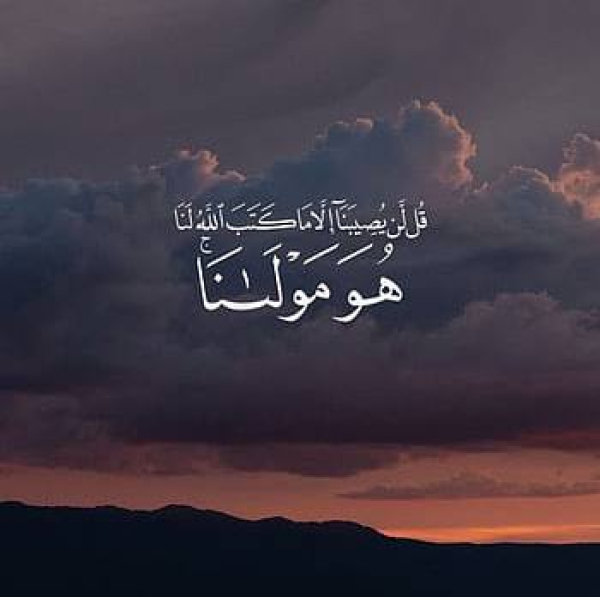
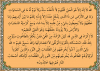
قُلْ لَنْ يُصِيبَنَا إِلَّا مَا كَتَبَ اللَّهُ لَنَا هُوَ مَوْلَانَا ۚ وَعَلَى اللَّهِ فَلْيَتَوَكَّلِ الْمُؤْمِنُونَ.
سوره توبه (9)
Say, ‘Nothing will befall us except what Allah has ordained for us. He is our master, and in Allah let all the faithful put their trust.’
Messages
1- The leader and the nation are partners in sorrow and joy. The previous verse is "Tasebka" here "Yoseibana"
2- We are responsible for the task, not the guarantor of the result. We fight, but fate is in God's hands.
3- True believers see even the hardships of the front in line with their interests.
4- Human destiny is written in advance.
5- What God has decreed for a believer is good, because a master does not write bad things for his servant.
6- A believer considers himself under the guardianship of God.
7- The highest degree of monotheism is moving in the orbit of divine law and entrusting fate to the wise God.
8- One should only rely on God.
9- The condition of faith is trust in God.
Imamzadeh Saleh Tajrish
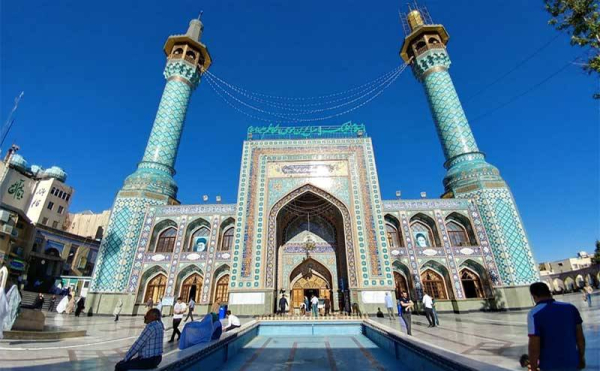
Imamzadeh Saleh, which is known as one of the children of Imam Musa Kazem (AS), is one of the cultural, pilgrimage and tourism centers in the north of Tehran, which, according to the Imamzadegan Jame base, has about 30,000 pilgrims daily. Due to the location of the shrine in the central area of Tajrish and the frequent movement of people and pilgrims, the market of Tajrish was gradually formed.
In the past, the courtyard and yard of Imamzadeh Saleh mausoleum was the burial place of the dead and there were graves in its courtyard, but gradually the tombstones disappeared and only a small number of tombstones remained. Iran's nuclear martyrs are among the famous people buried in the shrine.
The documentary film "Saleh Shemiran" narrates the biography of the brother of Imam Reza (AS) and the history of Imamzadeh Saleh shrine. This movie was directed and produced by Babak Minaei and narrated by Parviz Bahram in 2015 and then broadcasted on the Islamic Republic of Iran.
The 5th of Dhul-Qa'dah, which is between the births of Hazrat Masoumeh (pbuh) and Imam Reza (pbuh), is named after Saleh bin Musa Al-Kazim (pbuh).
The reason for the infallibility of Shia imams
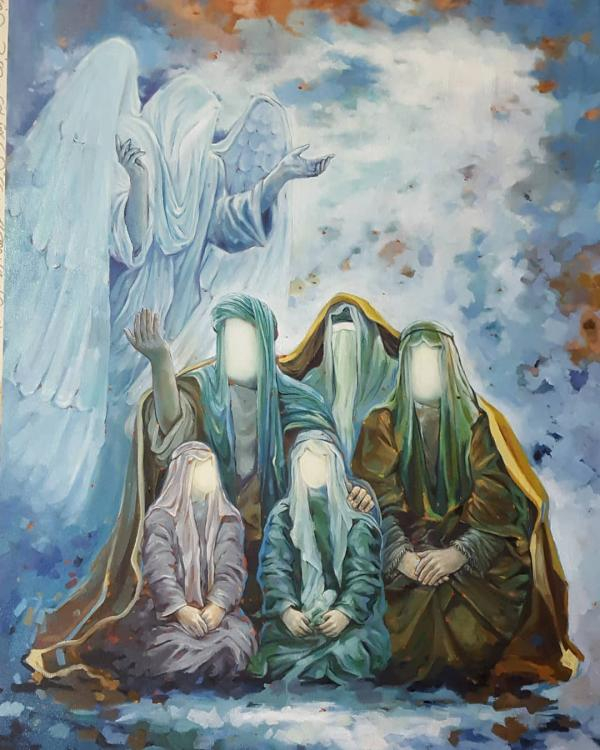
This question has been answered in two rational and narrative ways.
If we interpret infallibility in any sense, it is essentially from God, who is free from error and mistake in the shadow of his extensive knowledge, and is free from inappropriate actions due to his wisdom. This very richness of God causes other possibilities to benefit from his richness, to be alive, wise and powerful.
The issue of infallibility also belongs to the category that God, according to expediency, equips a group of His servants, who are the teachers of mankind and the guides of mankind, with the power to avoid sin and remain immune from mistakes.
But the infallibility of the twelve imams is confirmed through transmission.
According to the Hadith of Saqlain, they are equal to the Qur'an, and equality is necessary, since the Qur'an is the word of truth and does not deviate from reality and truth, their counterpart must also be like this, because in Otherwise, they will not be equal to the Qur'an.
In other words, since the Prophet (peace and blessings of Allah be upon him) introduces the Qur'an and the Ahl al-Bayt (peace be upon thim) as a means of guidance until the Day of Resurrection, until both of them reach him by the pool of Kausar, both of them should be immune to mistakes, because it is not possible for people who are the means of guiding mankind until the Day of Resurrection to commit mistakes.
Holy Prophet: "I leave two precious things among you: First, the book of God, in which there is guidance and light. So hold on to the Book of God. The Prophet encouraged and urged on the Book of God and then said: And my Ahl al-Bayt, do not forget God for the rights of my Ahl al-Bayt; Pointing out that you should not forget your divine responsibility towards Ahl al-Bayt"
The verse of purification, which talks about the Ahl al-Bayt (peace be upon them), reminds us that God himself wanted to purify them from all kinds of filth.
إِنّما یُریدُ اللّه لِیُذْهِبَ عَنْکُمُ الرِّجسَ أَهل البَیْتِ وَیُطَهِّرکُمْ تَطهیراً
Indeed Allah desires to repel all impurity from you, O People of the Household, and purify you with a thorough purification.
The will to purify the Ahl al-Bayt (peace be upon them) can be interpreted in two ways:
- A) Legislative and legal will, in the sense that God legally wants them to stay away from evil.
- b) The will to develop, in the sense that purification and purity are mixed with their existence and intertwined with their soul and soul.
Naturally, this will is a special will, because otherwise it will be a broad will that belongs to all. For this reason, we must say that the intention is the will to form and create, that pure factors are embedded in their existence, but at the same time, it has not deprived them of the power to commit sin.
Rational reasons for the infallibility of the Prophets (peace be upon them)
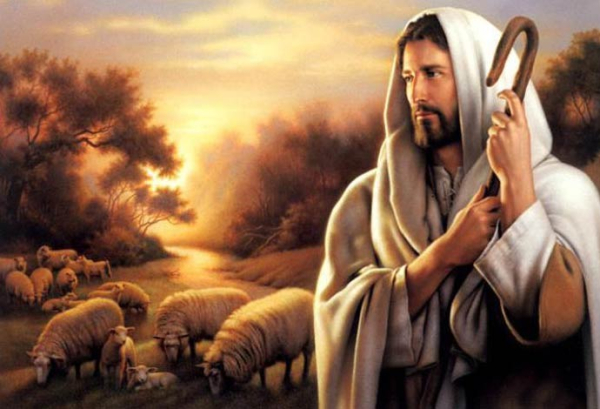
First: the factors of sin in the prophets are not effective against the factors that prevent them; That is, ignorance and the predominance of lusts as two important factors in the occurrence of sins are excluded from their existence due to the vast knowledge and the surrounding of the prophets with the ugliness of their actions.
Second: The purpose of sending prophets is to guide mankind. This goal will be achieved if people have no doubts about their words and teachings and trust them.
Third: If any type of sin occurs among the prophets, the purpose of their mission, which is to guide mankind, will be violated, because people consider the possibility of lies and distortion of facts, errors and mistakes in every word or behavior of prophets.
Fourth: If God gives His prophecy to someone who tells lies, makes mistakes, and commits sins, He has prepared the means to mislead His servants.
Fifth: Every mission needs competence and ability appropriate to that mission. Incompetent people and those who do not have the talent for that mission cannot do their duty properly.
In Numbers: Israeli regime’s genocidal war against Palestinians in Gaza
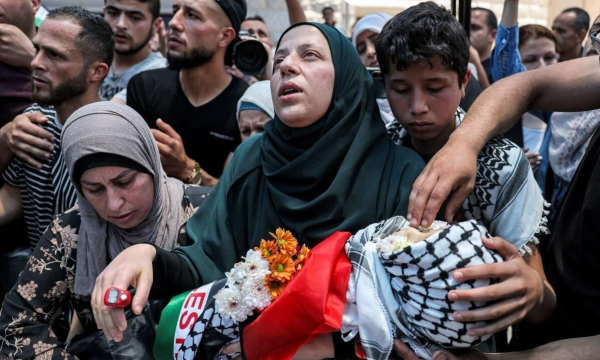
The Israeli regime's fresh aggression on the blockaded Gaza Strip has completed 80 days.
From corpses lying unattended on the streets to hospitals and schools reduced to rubble to children made orphans and tens of thousands of people rendered homeless, the gory events unfolding in the besieged Gaza Strip since October 7 are a textbook example of genocide and ethnic cleansing.
The death toll in the coastal territory since the Israeli regime launched its indiscriminate aerial and ground attacks exactly 80 days ago is now close to 21,000, most of them children and women.
Almost all hospitals and medical centers in the Gaza Strip have become defunct due to infrastructure damages as well as the lack of electricity and fuel to keep the essential services running.
Schools and universities have also been bombed. Bakeries remain shut. Almost all refugee camps have been rendered uninhabitable due to random strikes, forcing the majority of the population to sleep under the open sky amid heavy winds and heavy downpours.
Here we put the ongoing genocide in numbers, based on the data released by the Gaza government.
- 80 – the number of days of the latest genocidal war on Gaza
- 1,745 – the number of massacres committed by the regime since Oct. 7
- 20,915 – the total number of fatalities in Gaza since Oct. 7
- 20,674 – the number of people who were declared dead in hospitals
- 27,674 – the number of people killed or missing since Oct. 7
- 8,500 – the number of children killed since Oct. 7
- 6,300 – the number of women killed since Oct. 7
- 311 – the number of doctors and paramedics killed since Oct. 7
- 40 – the number of civil defense personnel killed since Oct. 7
- 103 – the number of Palestinian journalists killed since Oct. 7
- 7,000 – the number of people missing, 70 percent of them children and women
- 54,536 – the number of people infected by diseases, mostly children
- 101 – the number of health practitioners who have been arrested
- 9 – the number of journalists arrested since Oct. 7
- 1.8 million – the number of displaced people in the Gaza Strip since Oct. 7
- 355,000 – the number of people infected with infectious diseases due to displacement
- 126 – the number of government buildings destroyed since Oct. 7
- 92 – the number of schools and universities completely destroyed since Oct. 7
- 285 – the number of schools and universities partially destroyed since Oct. 7
- 115 – the number of mosques completely destroyed since Oct. 7
- 200 – the number of mosques partially destroyed since Oct. 7
- 3 – the number of churches targeted and destroyed since Oct. 7
- 65,000 – the number of housing units completely destroyed since Oct. 7
- 290,000 – the number of housing units partially destroyed since Oct. 7
- 23 – the number of hospitals taken out of service since Oct. 7
- 53 – the number of health centers that have become non-functional since Oct. 7
- 140 – the number of health institutions partially destroyed since Oct. 7
- 102 – the number of ambulances destroyed since Oct. 7
Israel releases 80 mutilated bodies with stolen organs for burial in Gaza
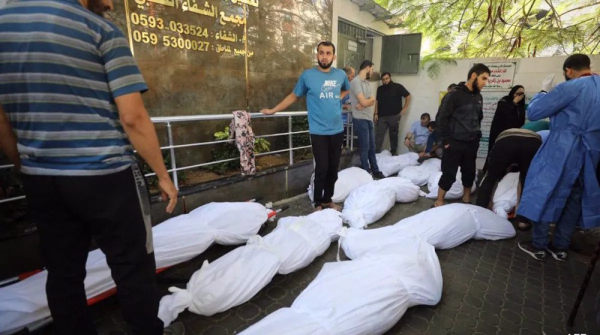
The Gaza government's media office says Israel has handed over the mutilated bodies of 80 martyrs after harvesting their organs.
In a statement released on Tuesday, the media office said that the bodies were unidentified and that the occupying regime refused to specify the victim’s names or the places they were kidnapped from.
Previously, it added, the occupation forces exhumed graves in the northern Gaza city of Jabalia and stole some of the bodies of Palestinian martyrs.
It also called for “the formation of a completely independent international investigation committee into the occupation army’s kidnapping of the bodies of martyrs and theft of their organs.”
The mutilated bodies were buried in a mass grave in the southern Gaza city of Rafah.
Hamas condemns Israeli ‘barbarism’
Meanwhile, the Palestinian Hamas resistance movement said the bodies released by the Zionist enemy were “in a state of decomposition and difficult to recognize.”
“What the enemy did can only be described as a war crime, a heinous crime, and a blatant violation of the sanctity and dignity of the dead,” it noted in a statement.
“Their barbarism and moral decline are confirmed in their aggression against our people, their assault on the bodies of our righteous martyrs, and the exhumation of their graves.”
Last month, a Geneva-based rights group raised concerns about organ theft from Palestinian corpses.
The Euro-Mediterranean Human Rights Monitor said it had documented Israeli forces confiscating dozens of dead bodies from the al-Shifa and Indonesian hospitals in northern Gaza, alongside others in the south.
It cited remarks by medical professionals in Gaza, who found that vital organs, such as livers, kidneys, hearts, cochleas and corneas, were missing in the bodies released by Israel.
The medical staff also said Israel exhumed and confiscated corpses from a mass grave in a courtyard at al-Shifa hospital.
Israel waged the genocidal war on the Gaza Strip on October 7 after Hamas carried out a historic operation against the occupying entity in retaliation for its intensified atrocities against the Palestinian people.
Since the start of the aggression, the Tel Aviv regime has killed at least 20,915 Palestinians, mostly women and children, and injured 54,918 others.
Thousands more are also missing and presumed dead under the rubble in the Gaza Strip, which is under “complete siege” by Israel.
Press TV’s website