zarezadeh
Iran will target US military bases in region if attacked, Araghchi warns
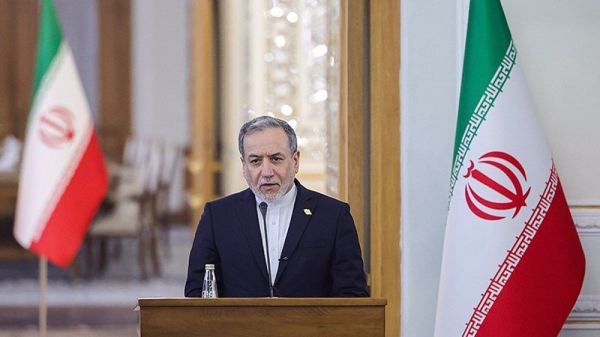
oreign Minister Abbas Araghchi has warned that in the event of an open aggression by the United States, American military bases in West Asia will be targeted.
“If the US strikes Iran, we will attack American bases in the region as they are accessible targets,” Araghchi said on the sidelines of the 17th edition of the Al Jazeera Forum in the Qatari capital Doha on Saturday.
He made clear that Tehran will not attack neighboring countries’ soil, and will only strike where American bases are located.
Araghchi noted that the Iranian Armed Forces are fully prepared to respond decisively at any moment to any hostile action.
The top Iranian diplomat said that the Islamic Republic has consistently stated that its missile program is not up for negotiation, as it is a purely defensive matter beyond the scope of any talks.
He also said that Iran has an inalienable right to enrich uranium, and the process should persist, emphasizing that even military attacks have been ineffective in eliminating Iran’s capabilities.
Araghchi also categorically rejected the idea of zero-percent uranium enrichment, stating that the issue is outside the scope of negotiations.
Elsewhere in his remarks, Araghchi pointed to the new round of nuclear talks between Iran and the United States, which concluded in the Omani capital Muscat a day earlier.
He described the negotiations as a “good beginning,” but cautioned that a long path lies ahead to build trust.
The Iranian foreign minister further said that the talks with the US were indirect and were limited solely to the nuclear issue.
Tehran has repeatedly stressed that any agreement lacking tangible economic benefits would be of no practical value, making the timing and outcome of the negotiations especially important for Iran.
On the nuclear front, Iran insists on its legal right to enrich uranium on its own soil, describing the issue as a red line in the talks. From Tehran’s perspective, any potential technical measures can only be considered within a framework that recognizes this right, and any preconditions beyond it would be seen as a sign of bad faith by the other side.
Iran had held five rounds of talks on a replacement for the 2015 nuclear deal prior to the US-Israeli airstrikes on the country and its nuclear facilities in mid-June.
Press TV’s website
Is it permissible to interrupt Tawaf?

Tawaf should be performed continuously, but in cases of necessity (such as obligatory congregational prayer or severe crowding), one may temporarily pause.
• If the interruption occurs after completing four circuits, one may usually continue.
• If it occurs before four circuits, the Tawaf generally must be restarted from the beginning (according to the well-known opinion).
What should one do if they are unsure about the number of circuits?
If doubt arises after completing the Tawaf, it is ignored, and the Tawaf is valid.
If doubt occurs during Tawaf and the exact number cannot be determined (e.g., unsure whether it is the 6th or 7th circuit), the Tawaf is generally invalid and must be performed again.
(The precise ruling depends on the opinion of one’s religious authority.)
What is the ruling on the Tawaf prayer?
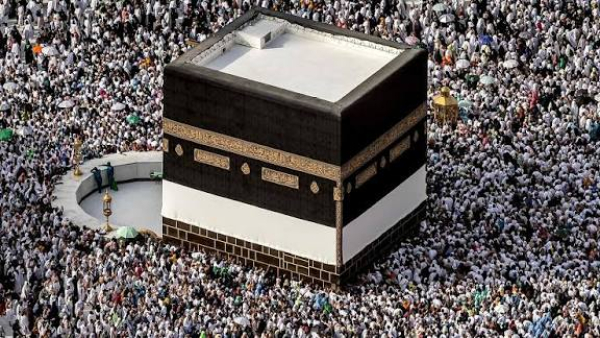
After completing Tawaf, it is obligatory to perform two rak‘ahs of Tawaf prayer.
This prayer should be performed behind Maqam Ibrahim if possible. Without performing this prayer, the Tawaf is not complete.
What are the main conditions for a valid Tawaf?
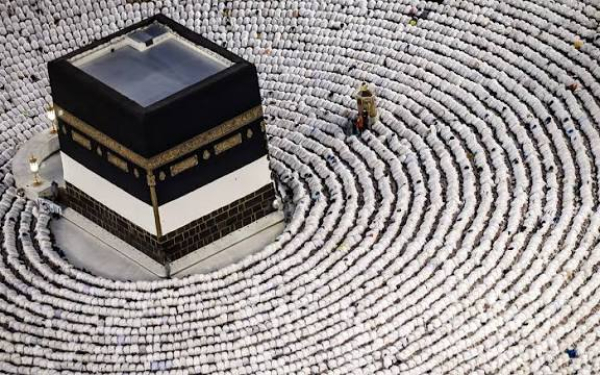
Some essential conditions are:
• Intention (niyyah) for the sake of Allah
• Ritual purity (wudu or ghusl; for women, being free from menstruation or postpartum bleeding)
• The body and clothing must be free from impurities
• Starting from the Black Stone (Hajar al-Aswad) and ending at the same point
• Performing Tawaf within the area between the Kaaba and Maqam Ibrahim
If wudu becomes invalid during Tawaf, one must either restart or complete the Tawaf according to the number of circuits completed.
What is Tawaf, and how many circuits does it have?
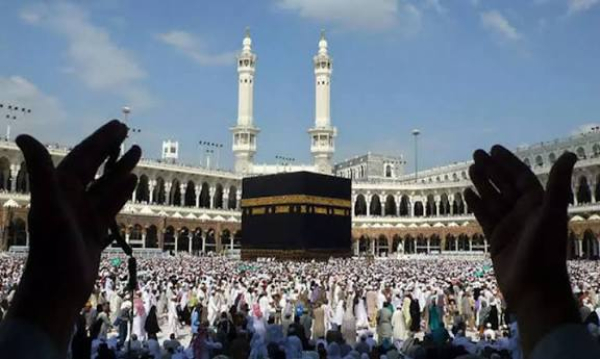
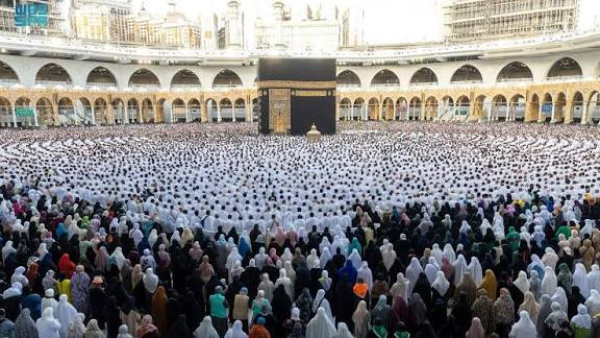
Tawaf means performing seven continuous circuits around the Kaaba, moving counterclockwise so that the Kaaba remains on the left side.
The number of circuits is exactly 7—no more, no less. Intentionally performing fewer or more circuits invalidates the Tawaf.
What should someone do if they pass the Miqat without ihram?
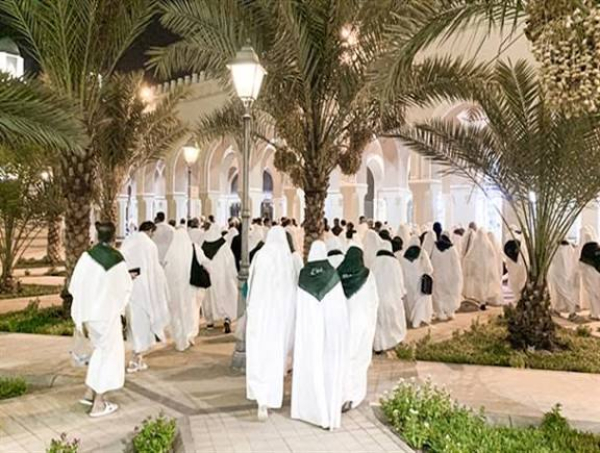
If they remember and are able, they should return to the Miqat and enter ihram properly.
If returning is not possible and they have already entered the Haram without ihram, they must enter ihram in Makkah and offer a sacrifice as compensation for missing the obligation.
What recommended acts should be done before entering ihram at the Miqat?
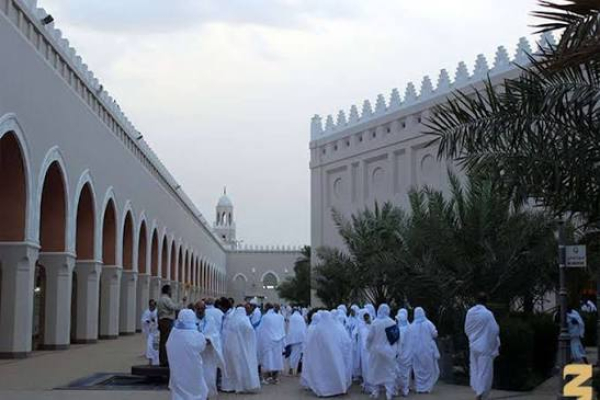
Some important recommended acts include:
• Performing ghusl (ritual bath)
• Trimming nails and tidying hair
• Wearing the ihram garments (two white pieces of cloth for men)
• Performing two rak‘ahs of voluntary prayer for ihram
These actions are not obligatory but carry great virtue.
What intention should be made at the Miqat for Hajj Tamattu‘?

The intention should be for ‘Umrah Tamattu‘, not Hajj itself.
This is because in Hajj Tamattu‘, one performs ‘Umrah first, and then later, at the appointed time, re-enters ihram for Hajj from Makkah.
A heartfelt intention is sufficient, but saying “Labbayka Allahumma ‘Umrah” along with the talbiyah is recommended.
From which Miqat should one enter ihram for Hajj Tamattu‘?

It depends on the route of arrival. For example:
• Residents of Madinah: Dhul-Hulayfah (Abar Ali)
• Residents of Sham: Juhfah
• Residents of Najd: Qarn al-Manazil
• Residents of Yemen: Yalamlam
Nowadays, most Iranian pilgrims coming from Madinah enter ihram from Dhul-Hulayfah.