zarezadeh
Keep dreaming’: Ayatollah Khamenei mocks Trump’s claim of dismantling Iran’s nuclear program
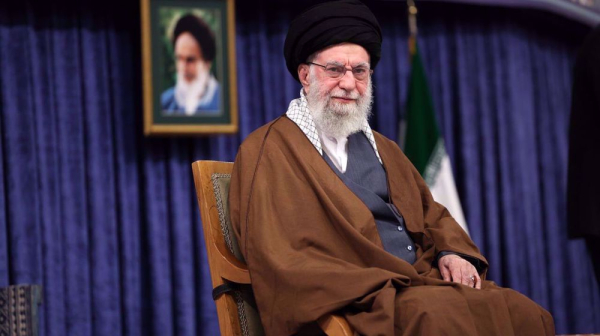
Leader of the Islamic Revolution Ayatollah Seyyed Ali Khamenei has sharply rebuked US President Donald Trump for his recent comments boasting about bombing Iran’s nuclear facilities, saying the American president has no authority to dictate what other countries can or cannot do.
“Fine, keep dreaming,” Ayatollah Khamenei said in reference to the US president’s boastful claim that he had destroyed Iran’s nuclear industry. “But who do you think you are to make any prescriptions about whether a country can or cannot have a nuclear industry?”
The Leader made the remarks during a Monday meeting with hundreds of Iranian athletes and medalists from various sports and international scientific Olympiads, whom he described as “symbols of national power and growth.”
He said the young achievers had shown that Iran’s hopeful youth “have the strength to stand on the peaks and draw the world’s attention to the bright horizon of Iran.”
Ayatollah Khamenei also condemned the bullying and baseless rhetoric of the US president, saying his recent behavior aimed to “raise the spirit of the Zionists and make himself look powerful through lies about Iran, the region, and its people.”
He hastened to add, “If he is truly powerful, let him calm the millions of people in all US states who are chanting against him.”
Expressing joy at meeting the country’s accomplished youth, the Leader said their victories carry extra value today because they come at a time when “the enemy, through psychological warfare, seeks to make the nation hopeless and forgetful of its own abilities.”
He dismissed claims about despair among Iranian youth as unfounded, stressing that “our dear Iran and its youth are symbols of hope” and that with determination and effort, young Iranians “can and will reach the highest peaks.”
The Leader said that during the 1980s’ Iraqi-imposed war, Iran achieved victory against a highly-equipped enemy, which was supported by all sides, through military ingenuity displayed by the nation’s youth.
He also noted that in June’s illegal aggression against the Islamic Republic, Iran delivered an “unbelievable” slap in the face of the Zionists and drove them to despair.
“The Zionists did not expect that Iranian missiles, with their flames and fire, could penetrate deep into their sensitive and vital centers, destroy them, and turn them into ashes,” Ayatollah Khamenei added.
He further emphasized that Iran did not buy or rent its missiles from anywhere, but manufactured them by its youth.
“These missiles were prepared and used by our armed forces and military industries, and they still have them. If necessary, they will use them again at another time,” he said.
Meanwhile, the Leader referred to Trump’s acknowledgment of the United States’ role in Israel’s genocide in the Gaza Strip, saying Washington is the main partner in the Zionist regime’s crimes, as the weapons dropped on the defenseless people of Gaza during the war were supplied by America.
Additionally, Ayatollah Khamenei rejected as a lie Trump’s claim about the US’s fight against terrorism.
“More than 20,000 children and infants were martyred in the Gaza war. Were they terrorists? The real terrorist is the US, which created Daesh, unleashed it on the region, and even today holds some of its members in a certain area for its own use.”
He also denounced the killing of around 70,000 Palestinians in the Gaza genocide and over 1,000 Iranians during the 12-day Israeli-US aggression as clear evidence of the terrorist nature of the United States and the occupying regime.
Trump described himself as a dealmaker, but if dealmaking is accompanied by coercion, it is called imposition and bullying, something that the Iranian nation will not submit to, Ayatollah Khamenei stated.
He further stressed that West Asia belongs to its own people and that war and death in the region are the result of the US presence.
“The US is a warmonger that fuels terrorism and ignites wars. Otherwise, what is the purpose of all these US military bases in the region? What are you doing here? What connection does this region have to you?”
Press TV’s website
Oxford University profits from companies complicit in Israeli occupation, activists warn

Oxford University, long renowned as a pinnacle of global education, is under intense scrutiny after revelations that it holds indirect investments in at least 49 companies linked to illegal Israeli activity in occupied Palestinian territories.
The holdings, worth over £19 million ($25.5 million), are a fraction of the university’s £8 billion endowment, but campaigners argue the implications are far greater, The Middle East Eye (MEE) news and analysis website reported.
The analysis published on Thursday showed that Oxford’s investments, made through a passive equity tracker fund co-developed with BlackRock, an American investment company, in 2020, include major Israeli banks, travel companies like Expedia, Booking.com, and Airbnb, and US technology firms such as Motorola Solutions.
Many of these companies are listed in United Nations and human rights reports for facilitating the Israeli regime’s illegal settlements.
The Oxford BDS Coalition, a campus group of students and staff, slammed the university’s investments, saying, "It is completely unacceptable for the University of Oxford to be involved in illegal activities of any kind. Even more so for the university to profit from an illegal occupation that has been linked to egregious human rights abuses, including genocide, the most abhorrent of all crimes.”
"The university has been made aware of these links on numerous occasions, so we have to assume that they are knowingly and willingly complicit in these crimes against humanity."
The coalition is demanding full transparency of Oxford’s investment holdings and immediate divestment from all companies implicated in human rights violations in Palestine.
Hundreds of university members, including senior academics, have pledged to uphold the Boycott, Divestment, and Sanctions (BDS) movement’s principles, further intensifying calls for action.
Oxford’s use of an index tracker, a tool designed to spread investments across many firms, was meant to screen out companies involved in fossil fuels and controversial weapons.
Yet it does not exclude firms flagged for violating Palestinian human rights or those on the BDS divestment list, raising questions about the university’s ethical investment policies.
Experts argue that Oxford, as the wealthiest UK university, is uniquely positioned to lead change across higher education.
Saqib Bhatti, executive director of the US-based Action Center on Race and the Economy, said, “If the biggest universities like Oxford were to band together and play a leadership role with other universities in the world with large endowments to say we need to make sure that our investments are mission-aligned and we need to make sure that asset managers are offering mission-aligned options for all universities, they could make that happen.”
The scrutiny comes as the regime faces mounting international condemnation over its atrocities in Gaza, described by UN investigators as part of a genocidal campaign.
Norway’s $2 trillion sovereign wealth fund and the Netherlands’ ABP pension fund have already divested from several Israeli companies, including some held in Oxford’s BlackRock fund, citing human rights abuses.
UN Special Rapporteur Francesca Albanese called out global asset managers, warning that continued investment in companies sustaining Israeli occupation implicates institutions, pension funds, and ordinary investors in ongoing crimes.
Pro-Palestinian activism on UK campuses has surged in recent years, with universities such as Queen’s University Belfast, King’s College Cambridge, and Swansea taking steps to divest from firms complicit in occupation.
Activists insist Oxford must follow suit.
Bhatti emphasized the moral responsibility of educational institutions, saying, “They’ve destroyed every university in Gaza. They are destroying centuries of scholarship and cultural sites.”
“You don’t exist to make money. You exist for a mission: To provide education.”
Press TV’s website
Israel massacres entire family in Gaza in latest ceasefire violation
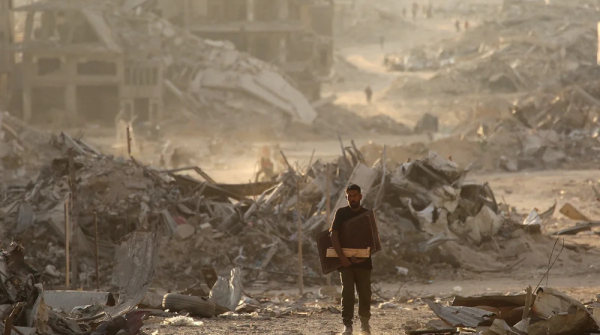
In a brutal violation of the ceasefire agreement with the Palestinian resistance movement Hamas, Israeli regime armed forces have killed an entire family in Gaza.
An Israeli tank deliberately fired on a civilian vehicle carrying the Abu Shaaban family in Gaza’s Zaytoun neighborhood on Friday afternoon, killing all its occupants.
Gaza’s Civil Defense said the family was trying to return home when the tank shelled their vehicle, killing all 11 passengers, including 7 children and 3 women.
Civil Defense officials said the Israeli forces struck the car after it had moved east of Gaza City and crossed the yellow line.
“It was possible to warn them or stop them without killing,” a Civil Defense spokesperson said, adding, “But the occupation remains thirsty for blood and determined to kill innocent civilians.”
Why do the Shia account their Imams as infallible?

There exist various proofs for the infallibility of the Shia Imams, the Prophet‟s Ahlul Bait (a.s). Suffice it to say, according to both the Shia and Sunnite scholars, the Prophet (peace be upon him and his descendants) in the last days of his life asserted,
اني تارك فيكم الثقلين كتاب هللا و اهل بيتي و انهما لن يفترقا حتي يردا علي
** الحوض
(I leave behind two worthy things, the Book of Allah and my household, and these two would not be separated until they join me at the Pond.)
It is noteworthy to say that the holy Quran, beyond doubt, is immune from any error, because Allah is its sender, the angle of revelation is its bearer, and the Prophet (peace be upon him and his descendants) is its recipient. They are wholly infallible, and the whole Muslims affirm the infallibility of the holy Prophet (peace be upon him and his descendants) in receiving the Word of revelation, its protection, and propagation. Moreover, it is apparent that when the holy Quran enjoys firm infallibility, the Prophet‟s Ahlul Bait (a.s) are away from error and deviation, too. Due to this fact, like two wings of a bird, the Prophet‟sAhlul-Bait in this hadith have been equally conceived as the
holy Quran for the nations‟ leadership and guidance.
In other wrods, there is no room for the fallible persons to
be counted as the affiliation of the holy Quran.
The most apparent evidance on the infallibility of the Ahlul-Bait (a.s) is the Prophet‟s statement:
لن يفترقا حتي يردا علي الحوض
(They would not be separated until they join me at the pond.)
If they had erred, they would be separated from the holy Quran, which is definitely away from error, and the honored Prophet (peace be upon him and his descendants) has negated the issue of his Ahlul-Bait‟s fallibility.
In addition, the term „Ahlul-Bait‟ includes not the whole Prophet‟s descendants, because, no doubt, they were not wholly immune from sin. Therefore, only a special group of his household attained the state of immunity from sin and error, known as Ahlul-Bait (a.s), who have been the illuminators for the people and the protectors of the Prophet‟s tradition and the Divine laws throughout the history.
IRGC deputy: Global powers’ new advanced arms failed against Iran
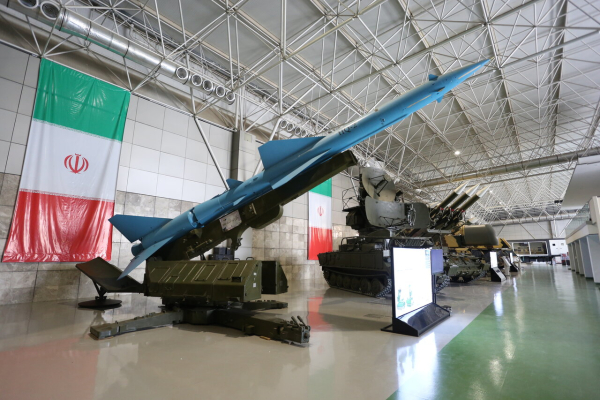
The deputy commander of the Islamic Revolution Guard Corps (IRGC) says through faith, experience, and indigenous technology Iran managed to defeat global powers in the 12-day war despite their new weapons.
Brigadier General Ali Fadavi made the remarks on Thursday, stressing that global powers deployed unprecedented new military technologies against the Islamic Republic during the war but Iran emerged victorious.
“In this war, all the material and scientific capabilities of the world were employed; many of the technologies and equipment used had never before been tested in any war. Nevertheless, our capabilities were high - the IRGC and the Basij volunteer forces entered the field - and God brought about the best result,” he emphasized.
On June 13, Israel launched a blatant and unprovoked aggression against Iran, triggering a 12-day war that killed at least 1,064 people in the country, including military commanders, nuclear scientists, and civilians.
The United States also entered the war by bombing three Iranian nuclear sites in a grave violation of international law.
In response, the Iranian Armed Forces targeted strategic sites across the occupied territories as well as the al-Udeid air base in Qatar, the largest American military base in West Asia.
Why did Iran not attend the Sharm el-Sheikh summit?
Iran’s Foreign Ministry said in a statement: “Iran is grateful for President al-Sisi’s invitation to attend the Sharm el-Sheikh summit. Despite our desire for diplomatic engagement, neither President Mecidian nor I can engage with those who have attacked the Iranian people and continue to threaten and sanction us. However, Iran welcomes any initiative that ends the Israeli genocide in Gaza and leads to the expulsion of the occupying forces.”
The statement emphasizes: “The Palestinians have every right to achieve their fundamental right to self-determination, and all countries have a duty, more than ever, to assist them in supporting this legitimate and legitimate demand. Iran has always been and will continue to be a key force for peace in the region. Unlike the genocidal Israeli regime, Iran does not seek endless wars, especially at the expense of its alleged allies, but rather seeks lasting peace, prosperity, and cooperation.”
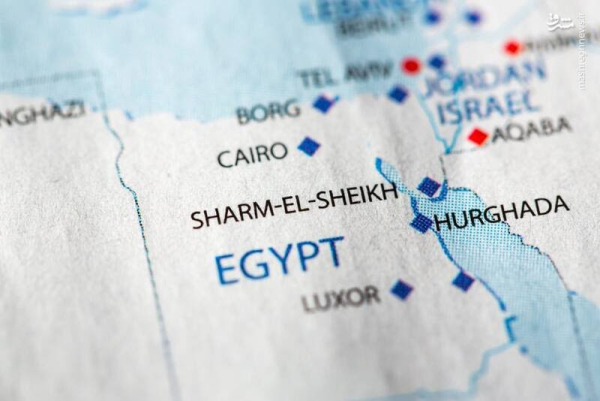
Where is Sharm el-Sheikh?
Sharm El Sheikh is a prominent coastal and tourist city in Egypt, known as one of the main recreational centers on the Red Sea. Sharm El Sheikh also hosts an international airport and commercial and military ports, which play an important role in the local economy. Sharm El Sheikh is located at the southernmost point of the Sinai Peninsula in Egypt, overlooking the peninsula's southeastern coast. The city is surrounded by the Gulf of Aqaba and the Strait of Tiran, which makes it a key strategic point in the Red Sea. The Strait of Tiran is a vital route for international shipping, and the Gulf of Aqaba borders Egypt, Israel, Jordan, and Saudi Arabia.
The history of Sharm El Sheikh is intertwined with the political and military developments of the region. Originally a small fishing village, the area grew in strategic importance in the 20th century, especially during World War II, when the British used it as a naval base. In the Suez Crisis of 1956, Sharm el-Sheikh was occupied by the Zionist regime and returned to Egypt after about a year in March 1957. Then, in the Six-Day War of 1967, it was reoccupied by Israel and developed as the settlement of Ofira and an air base until 1982. Under the Camp David Accords of 1979, Israel committed to returning the occupied territories, a process that was completed in April 1982. After that, Sharm el-Sheikh quickly became a tourist and diplomatic center.
Why didn’t Iran participate?
But Iran’s absence from the summit has created significant challenges on social media. Many analysts, regardless of the recent US actions in the field and diplomacy, claimed that this would be a golden opportunity for the Islamic Republic of Iran to play a role in the region and the world. But it was in the midst of these views gaining strength that it became clear that Netanyahu had canceled his trip to Egypt under the pretext of holding a celebration. This is despite claims on social media that Israeli representatives were not invited to the summit and that it was a good opportunity for Iran to attend.
Israel Hume claimed: “Netanyahu canceled his trip to the Sharm el-Sheikh summit not because of ‘holidays’ or ‘pressure from Orthodox Jews’, but because of opposition from Turkish President Recep Tayyip Erdogan. Sources say that Erdogan called Egyptian President Abdel Fattah al-Sisi mid-flight and warned that “if Netanyahu was present at the meeting, his plane would not land.” Turkish officials also informed the United States that they were “angry that this matter had not been coordinated with them.” After consultations between American and Israeli officials, Netanyahu canceled his trip and Erdogan’s plane landed.”
One of the points made by analysts opposing Iran’s presence was that the Sharm el-Sheikh meeting was convened at the initiative of US President Donald Trump and that representatives of his preferred and allied countries would attend. Trump views the Palestinian issue from a specific perspective that is close to the views of the occupying regime in Jerusalem, and within this framework, one cannot hope that the well-being of the Palestinian people will be ensured. On the other hand, when Iran does not accept Western views on the Palestinian issue, there is no reason for it to want to participate in a meeting that promotes these views on the Palestinian issue or to turn itself into a lever in the form of Western policies on the Palestinian issue.
Another point was that the Sharm el-Sheikh meeting did not include real representatives of the Palestinian people. This is while Iran has repeatedly emphasized that the Palestinian community must witness the presence of its real representatives in international forums. Representatives who comprehensively and genuinely support and protect the rights of the Palestinian people.
Cyberspace users also showed many reactions to this issue and emphasized that in the last three months, especially after the start of the Gaza war, Trump has repeatedly spoken proudly of bombing nuclear facilities and assassinating General Rashid Islam, Hajj Qassem Soleimani. In their belief, in addition to these statements, the practical policies of the US government also reflect the same hostile approach; Because Washington has not only increased economic pressure on Iran, but also, along with European countries, has intensified anti-Iranian sanctions. In the eyes of these critics, such behavior does not indicate any change in US diplomacy and bullying policies.
Why do the Shia send their regards both to the Prophet (pbuh) and his descendants
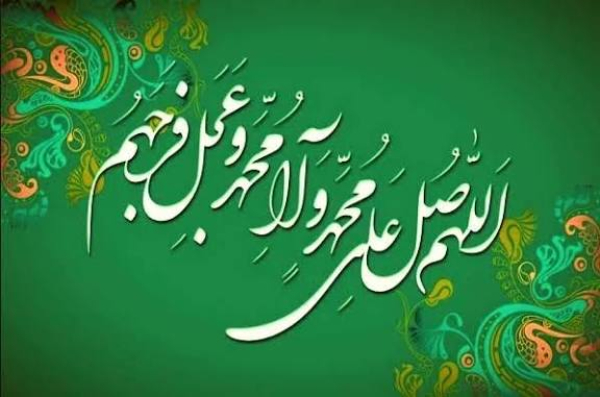
Why do the Shia send their regards both to the Prophet (peace be upon him and his descendants) and his descendants as saying,
صلي اللهم محمد آل و محمد علي) O, God, send down Your blessings on Mohammed and his household)?
The answer:
It is evident that the Prophet (peace be upon him and his
descendants) himself taught the Muslims the way of sending regards.
When the verse
* ان هللا و مالئكتة يصلون علي النبي يا ايها الذين آمنوا صلوا عليه و سلموا تسليما
(Surely, Allah and his angels bless the Prophet, O, you who
believe, call for Divine blessings on him with a salutation) was
revealed, the Muslims asked the Prophet (peace be upon him and his
descendants) how they could do so, and the Prophet (peace be upon
him and his descendants) answered,
التصلوا علي الصلوة البترا**
(Never send me incomplete regards). They repeated their question,
and he replied, “say: محمد آل و محمد علي صلي اللهم) O, God, send down
Your blessings on Mohammed and his household).
The status of the Prophet‟s Ahlul-Bait (a.s) is so high that Shafee‟
in his famous poem says:
يا اهل بيت رسول هللا حبكم فرض من هللا في القرآن انزله
* كفاكم من عظيم القدر انكم من لم يصل عليكم ال صلوة له
(O, the Prophet‟s descendants, having affection towards you is a
religious commandment, and Allah has revealed it in the holy Quran.
Your position is so elevated that there is no regard for he
who does not send his regards to you.)
* Ahzab Sura, verse no.56
** 2-Al-Savaegh Ul-Mohareghah, Ibn Hijr, the second edition, section 11, chapter 1,
p.146. Also in Dur Ul-Manthur, vol.5, the commentary on the verse 56 Ahzab Sura
*
Ibid, section 11, chapter 1, p.148; Also Athaf, Shiravi, p.29; Moshareq Ul-Anvar,
Hamzavi Maleki, p.88; Al-Mavaheb, Zarghani; and Al-Asaf, p.119.
** Mostadrak, Hakem, section 3, p. 148. Al-Savaegh Ul-Moharaghah, section 11,
chapter 1, p. 149. Also, this concept is seen in Kanzul Amal, section 1, chapter
„Adherence to the Book and Tradition‟; and in Mosnad Ahmad, section 5, p. 182-89
Compiled by: Seyed Reza Hosseini Nassab
Directed by: Ayatollah Ja’far Sobhani
Translated by: Mehdi Ghasemi
Published by: Imam Ali Foundation
Iran warns of Zionist expansionism, Israeli WMDs after Gaza ceasefire
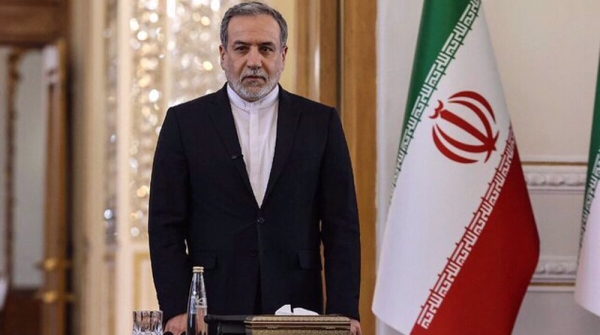
Iranian Foreign Minister Abbas Araghchi has warned that despite a fragile ceasefire in Gaza, Zionist expansionism and Israel’s possession of weapons of mass destruction remain key sources of instability and insecurity in the region.
In a note titled “The Non-Aligned Movement in a Changing Global Landscape: Reflections on the Eve of the Kampala Summit,” Araghchi reiterated Iran’s “principled and consistent” positions, including “unwavering support for the Palestinian cause and outright opposition to coercive sanctions that violate the sovereignty of states.”
Araghchi pointed to the “fragile opportunity for peace” following the US-mediated ceasefire in Gaza after a “genocidal campaign” that killed over 67,000 Palestinians.
He identified “Zionist expansionism, coupled with Israel’s possession of weapons of mass destruction,” as a major source of regional instability and insecurity.
Araghchi is in Kampala, where the 19th Midterm Ministerial Meeting of the Coordinating Bureau of the Non-Aligned Movement took place on October 15–16, chaired by Uganda.
The foreign minister outlined Iran’s vision for a fairer, multipolar world and underscored the importance of strengthening solidarity among developing nations.
“For Iran, this movement strengthens our voice for justice, fairness, and global institutional reform,” Araghchi wrote, expressing hope that the summit would strengthen practical solidarity based on common interests and challenges.
“Iran is strongly committed to building a truly multipolar world order; a system in which prosperity is equitably distributed, aggression is systematically contained, and sovereignty is established as the cornerstone of international relations globally,” he underlined.
He described NAM as a “living symbol of the fundamental principles of national sovereignty and principled resistance to hegemonic structures,” which aligns with Iran’s foreign policy based on dignity and solidarity with the Global South.
Araghchi said Iran’s support for NAM deepened after the 1979 Islamic Revolution, with the country’s revolutionary ethos resonating with the movement's anti-imperialist and independent ideals.
Iran has since played an “active and decisive role,” including hosting the 2012 Tehran Summit, which was dedicated to advancing serious negotiations on nuclear disarmament, Palestine, and collective resistance to unilateralism, he further wrote.
Elsewhere in his note, Araghchi characterized sanctions as "economic terrorism" that has limited the Global South's development, but have also spurred resilience by strengthening South-South cooperation.
He highlighted emerging structures like the BRICS group as challengers to Western hegemony.
“In this complex environment, the moral authority of the Non-Aligned Movement, founded on anti-hegemonic principles, provides the opportunity for a strong and coordinated collective defense,” he added.
Araghchi said the movement's endurance stems from its representation of the world's demographic and moral majority, providing a democratic counterweight to exclusive groups such as the G7.
The minister emphasized that Iran arrives at the Kampala meeting with a “sincere commitment to constructive multilateralism,” aiming for tangible results that enhance the capacity of the Global South, without “unrealistic promises of paradigm shift.”
Press TV’s website
Israel to resume Gaza onslaught once all captives repatriated, threatens war minister
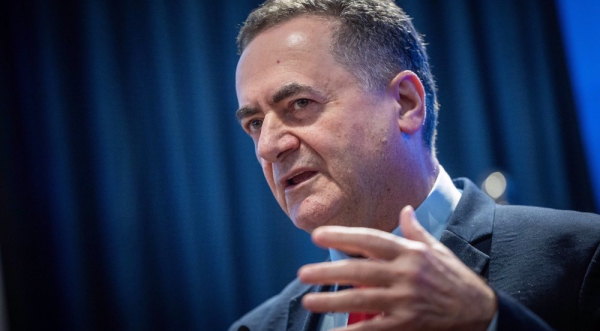
Israeli minister of military affairs Israel Katz has declared that the occupation army will resume its military onslaught on the besieged Gaza Strip once the remaining captives are returned, marking an open defiance of the newly agreed ceasefire agreement between the Hamas resistance movement and the Tel Aviv regime.
In a post on the social media platform X on Wednesday, Katz said that once the first phase of the deal is ended with the release of all captives, the Israeli military will resume its offensives to destroy Hamas.
“Israel’s great challenge after the phase of returning the captives will be the destruction of all of Hamas’s tunnels in Gaza, directly by the army and through the international mechanism to be established under the leadership and supervision of the United States,” he added.
“This is the primary significance of implementing the agreed-upon principle of demilitarizing Gaza and neutralizing Hamas of its weapons.
“I have instructed the Israeli army to prepare for carrying out the mission,” Katz said.
The remarks came less than a day after Israel and Hamas agreed to a ceasefire framework brokered by Qatar, Egypt and the United States, and intended to end Israel’s two-year-long genocide in Gaza.
Katz’s statement made it clear that Israel views the truce not as a step towards ending the military assault on the Gaza Strip, but rather as a temporary pause before re-launching its military offensive.
Israel killed at least nine Palestinians on Wednesday as the regime’s military warned Gaza residents to stay away from the areas it still occupies.
Additionally, Israeli tanks fired at Palestinians in the town of Bani Suheila and the Sheikh Nasser neighborhood, east of Khan Younis. There were no immediate reports of possible casualties and the extent of damage caused.
At least 67,913 Palestinians have been killed, mostly women and children, and another 170,134 individuals injured in the brutal Israeli onslaught on Gaza since October 7, 2023, according to the health ministry of Gaza.
Press TV’s website
Hamas: Israel using captive body delays due to airstrikes to violate ceasefire
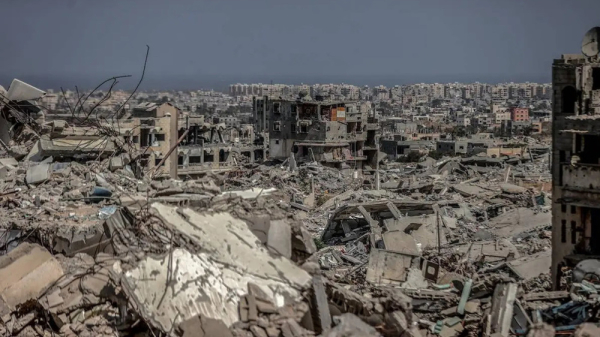
A senior Hamas official says Israel is obstructing efforts to locate and return captive bodies in Gaza, blaming its widespread destruction of the territory and recent decisions to close the Rafah crossing and reduce humanitarian aid deliveries.
The official said many captives and their Palestinian guards were killed during Israel’s military strikes, causing loss of communication with units responsible for the bodies.
He placed responsibility for the deaths and missing bodies, believed to be buried under rubble along with thousands of civilians, on Israeli prime minister Benjamin Netanyahu, his cabinet, and the military.
The official made the remarks in an interview Tuesday, following Israel’s decision to close the Rafah crossing and reduce humanitarian aid deliveries -- moves Hamas says violate the terms of the recent ceasefire agreement.
Hamas’s military wing, the al-Qassam Brigades, had previously warned that Israeli attacks risked killing captives, but the strikes continued unabated, the source said. “The main difficulty in finding the bodies is losing contact with the guards because the Israelis killed them,” he added.
He stressed that the presence of Israeli forces and their indiscriminate attacks made it harder to locate the bodies, requiring more time and effort.
Despite the challenges, Hamas remains committed to returning the remains of all captives and is cooperating with international parties involved in the agreement, even amid last-minute changes to prisoner lists.
Hamas has already fulfilled its part by releasing all 20 remaining living Israeli captives and four coffins of deceased captives. However, the timing for releasing the bodies of 28 captives declared dead remains unclear.
COGAT, the Israeli military body reporting on aid deliveries into Gaza, has also informed the UN that no fuel or gas will be permitted into the territory, except for specific humanitarian infrastructure needs.
It blamed Hamas for the decision to limit aid trucks to 300 daily, citing the slow release of captives’ bodies.
"Hamas violated the agreement regarding the release of the bodies of the hostages held in the Gaza Strip. As a result, the political leadership has decided to impose a number of sanctions related to the humanitarian agreement that was reached," a COGAT note claimed.
Hamas and Israel exchanged captives with prisoners on Monday as part of a ceasefire deal to end the occupying regime's genocidal war on Gaza.
A day after receiving all living Israeli captives, Israel announced that the Rafah crossing would remain closed through Wednesday, restricting the flow of critical humanitarian aid into Gaza in violation of the ceasefire agreement with Hamas.
Press TV’s website