zarezadeh
Iran warns of Zionist expansionism, Israeli WMDs after Gaza ceasefire
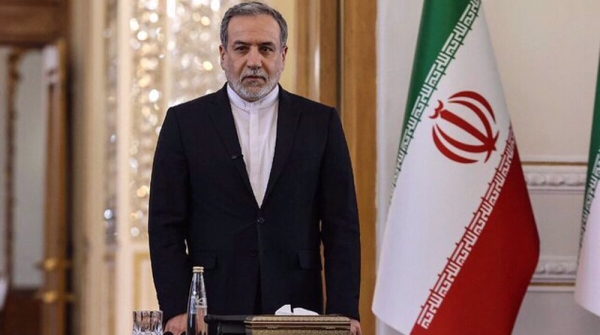
Iranian Foreign Minister Abbas Araghchi has warned that despite a fragile ceasefire in Gaza, Zionist expansionism and Israel’s possession of weapons of mass destruction remain key sources of instability and insecurity in the region.
In a note titled “The Non-Aligned Movement in a Changing Global Landscape: Reflections on the Eve of the Kampala Summit,” Araghchi reiterated Iran’s “principled and consistent” positions, including “unwavering support for the Palestinian cause and outright opposition to coercive sanctions that violate the sovereignty of states.”
Araghchi pointed to the “fragile opportunity for peace” following the US-mediated ceasefire in Gaza after a “genocidal campaign” that killed over 67,000 Palestinians.
He identified “Zionist expansionism, coupled with Israel’s possession of weapons of mass destruction,” as a major source of regional instability and insecurity.
Araghchi is in Kampala, where the 19th Midterm Ministerial Meeting of the Coordinating Bureau of the Non-Aligned Movement took place on October 15–16, chaired by Uganda.
The foreign minister outlined Iran’s vision for a fairer, multipolar world and underscored the importance of strengthening solidarity among developing nations.
“For Iran, this movement strengthens our voice for justice, fairness, and global institutional reform,” Araghchi wrote, expressing hope that the summit would strengthen practical solidarity based on common interests and challenges.
“Iran is strongly committed to building a truly multipolar world order; a system in which prosperity is equitably distributed, aggression is systematically contained, and sovereignty is established as the cornerstone of international relations globally,” he underlined.
He described NAM as a “living symbol of the fundamental principles of national sovereignty and principled resistance to hegemonic structures,” which aligns with Iran’s foreign policy based on dignity and solidarity with the Global South.
Araghchi said Iran’s support for NAM deepened after the 1979 Islamic Revolution, with the country’s revolutionary ethos resonating with the movement's anti-imperialist and independent ideals.
Iran has since played an “active and decisive role,” including hosting the 2012 Tehran Summit, which was dedicated to advancing serious negotiations on nuclear disarmament, Palestine, and collective resistance to unilateralism, he further wrote.
Elsewhere in his note, Araghchi characterized sanctions as "economic terrorism" that has limited the Global South's development, but have also spurred resilience by strengthening South-South cooperation.
He highlighted emerging structures like the BRICS group as challengers to Western hegemony.
“In this complex environment, the moral authority of the Non-Aligned Movement, founded on anti-hegemonic principles, provides the opportunity for a strong and coordinated collective defense,” he added.
Araghchi said the movement's endurance stems from its representation of the world's demographic and moral majority, providing a democratic counterweight to exclusive groups such as the G7.
The minister emphasized that Iran arrives at the Kampala meeting with a “sincere commitment to constructive multilateralism,” aiming for tangible results that enhance the capacity of the Global South, without “unrealistic promises of paradigm shift.”
Press TV’s website
Israel to resume Gaza onslaught once all captives repatriated, threatens war minister
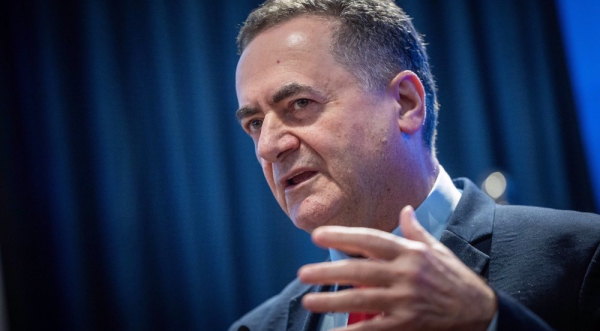
Israeli minister of military affairs Israel Katz has declared that the occupation army will resume its military onslaught on the besieged Gaza Strip once the remaining captives are returned, marking an open defiance of the newly agreed ceasefire agreement between the Hamas resistance movement and the Tel Aviv regime.
In a post on the social media platform X on Wednesday, Katz said that once the first phase of the deal is ended with the release of all captives, the Israeli military will resume its offensives to destroy Hamas.
“Israel’s great challenge after the phase of returning the captives will be the destruction of all of Hamas’s tunnels in Gaza, directly by the army and through the international mechanism to be established under the leadership and supervision of the United States,” he added.
“This is the primary significance of implementing the agreed-upon principle of demilitarizing Gaza and neutralizing Hamas of its weapons.
“I have instructed the Israeli army to prepare for carrying out the mission,” Katz said.
The remarks came less than a day after Israel and Hamas agreed to a ceasefire framework brokered by Qatar, Egypt and the United States, and intended to end Israel’s two-year-long genocide in Gaza.
Katz’s statement made it clear that Israel views the truce not as a step towards ending the military assault on the Gaza Strip, but rather as a temporary pause before re-launching its military offensive.
Israel killed at least nine Palestinians on Wednesday as the regime’s military warned Gaza residents to stay away from the areas it still occupies.
Additionally, Israeli tanks fired at Palestinians in the town of Bani Suheila and the Sheikh Nasser neighborhood, east of Khan Younis. There were no immediate reports of possible casualties and the extent of damage caused.
At least 67,913 Palestinians have been killed, mostly women and children, and another 170,134 individuals injured in the brutal Israeli onslaught on Gaza since October 7, 2023, according to the health ministry of Gaza.
Press TV’s website
Hamas: Israel using captive body delays due to airstrikes to violate ceasefire
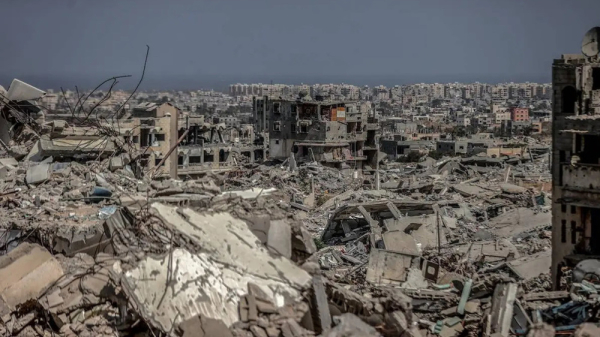
A senior Hamas official says Israel is obstructing efforts to locate and return captive bodies in Gaza, blaming its widespread destruction of the territory and recent decisions to close the Rafah crossing and reduce humanitarian aid deliveries.
The official said many captives and their Palestinian guards were killed during Israel’s military strikes, causing loss of communication with units responsible for the bodies.
He placed responsibility for the deaths and missing bodies, believed to be buried under rubble along with thousands of civilians, on Israeli prime minister Benjamin Netanyahu, his cabinet, and the military.
The official made the remarks in an interview Tuesday, following Israel’s decision to close the Rafah crossing and reduce humanitarian aid deliveries -- moves Hamas says violate the terms of the recent ceasefire agreement.
Hamas’s military wing, the al-Qassam Brigades, had previously warned that Israeli attacks risked killing captives, but the strikes continued unabated, the source said. “The main difficulty in finding the bodies is losing contact with the guards because the Israelis killed them,” he added.
He stressed that the presence of Israeli forces and their indiscriminate attacks made it harder to locate the bodies, requiring more time and effort.
Despite the challenges, Hamas remains committed to returning the remains of all captives and is cooperating with international parties involved in the agreement, even amid last-minute changes to prisoner lists.
Hamas has already fulfilled its part by releasing all 20 remaining living Israeli captives and four coffins of deceased captives. However, the timing for releasing the bodies of 28 captives declared dead remains unclear.
COGAT, the Israeli military body reporting on aid deliveries into Gaza, has also informed the UN that no fuel or gas will be permitted into the territory, except for specific humanitarian infrastructure needs.
It blamed Hamas for the decision to limit aid trucks to 300 daily, citing the slow release of captives’ bodies.
"Hamas violated the agreement regarding the release of the bodies of the hostages held in the Gaza Strip. As a result, the political leadership has decided to impose a number of sanctions related to the humanitarian agreement that was reached," a COGAT note claimed.
Hamas and Israel exchanged captives with prisoners on Monday as part of a ceasefire deal to end the occupying regime's genocidal war on Gaza.
A day after receiving all living Israeli captives, Israel announced that the Rafah crossing would remain closed through Wednesday, restricting the flow of critical humanitarian aid into Gaza in violation of the ceasefire agreement with Hamas.
Press TV’s website
Thanks to Indonesian authorities for preventing the Israeli team from participating in the World Gymnastics Championships in Jakarta
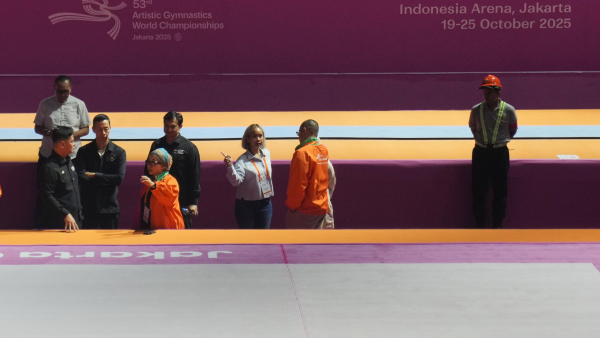
JAKARTA, Indonesia (AP) — Indonesia will block Israeli athletes from competing at the upcoming gymnastics world championships in Jakarta, a government official said Thursday.
The decision to deny visas to the Israeli athletes comes after their planned participation had sparked intense opposition in the world’s most populous Muslim-majority nation, which has long been a staunch supporter of Palestinians.
Israel is among 86 countries registered to compete at the worlds that start in Jakarta on Oct. 19, with a team highlighted by 2020 Olympic gold medalist and defending world champion Artem Dolgopyat in the men’s floor exercise.
Now its participation is in doubt, even though the Israeli Gymnastics Federation said in July that it had been assured by Indonesian officials that it would be welcome at the worlds. That would have gone against Indonesia’s long-standing policy of refusing to host Israeli sports delegations for major events.
Who are the Shia „Imams‟?
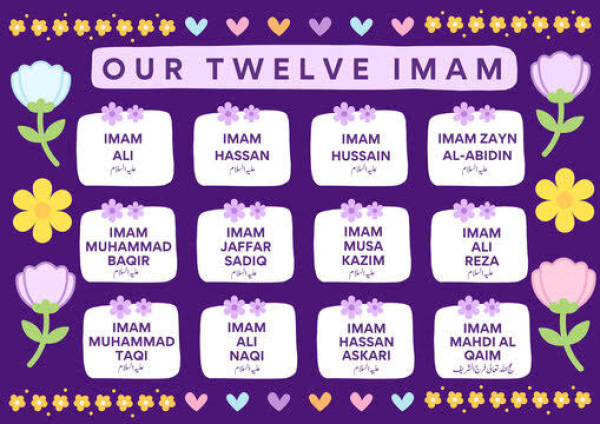
In his lifetime, the holy Prophet (peace be upon him and his
descendants) specified that twelve persons would rule as Caliphs after
him, and that they all would be from Quraysh tribe. He also added that
the Islam‟s glory would be protected under their Caliphate.
Jabir Ibn Samareh said,
سمعت رسول هللا )ص( يقول اليزال االسالم عزيزا الي اثني عشر خليفة ثم قال كلمة لم
* اسمعها فقلت البي ما قال؟ فقال : كلهم من قريش
(I heard the Prophet (peace be upon him and his descendants)
saying, “Islam will be revered by the twelve caliphs and
leaders”. And then said a phrase I did not hear, so I asked my
father, and he replied, “The Prophet (peace be upon him and
his descendants) said that they all were from Quraysh”.)
In the history of Islam, the twelve Caliphs as the protectors of
Islam‟s glory are, indeed, the twelve Imams, in whom the Shia
believes, because the twelve Caliphs, the Prophet (peace be upon him
and his descendants) introduced, were soon appointed as Caliphs after
him.
Now, who are these twelve persons?
*
Sahih, Moslim, vol. 6, p.2.
Apart from the four Caliphs, known as „Rashedin‟ in the Sunnite
terminology, the other caliphs were not an honor to Islam. The history
of the Umayyad and Abbasid Caliphs certifies this fact, but, on the
contrary, the twelve Imams of Shia have always been the symbol of
piety and virtue in their own eras and thereafter. As a consequence,
they preserved the Prophet‟s traditions and were honored by their
disciples, followers, and the next generations. The historians have
certified their immense knowledge and authority, and….
They are as follows:
1- Ali Ibn Abi Talib
2- Hasan Ibn Ali (Mujtaba)
3- Hussein Ibn Ali
4- Ali Ibn Hussein (Zein Ul-Abedin)
5- Mohammad Ibn Ali (Baqir)
6- Jafar Ibn Mohammed (Sadeq)
7- Musa Ibn Jafar (Kazim)
8- Ali Ibn Musa (Reza)
9- Mohammed Ibn Ali (Taqi)
10- Ali Ibn Mohammed (Naqi)
11- Hassan Ibn Ali (Askari)
12- Imam Mahdi (Ghaem).
The Islamic narrators have narrated a successive number of
traditions, called „Mahdi, the Promised‟ from the holy Prophet (peace
be upon him and his descendants). For further study on the lives of
these honored leaders, whose names have been stated by the Prophet
(peace be upon him and his descendants), refer to the following books:
1- Tazkeratul-Khavas
2- Kefayatul-Athar
3- Vafiyatul-Ayan
4- Ayan Ul-Shia (by Seyed Mohsen Amin Ameli), which is more
comprehensive than the above-mentioned books.
Why is Ali Ibn Abi Talib (a.s) the successor to the Prophet (peace be upon him and his descendants)?

As stated before, the Shia is steadfast in his belief that Caliphate is
„appointed by God‟. They also believe that Imamate after the Prophet
(peace be upon him and his descendants) resembles prophethood in
some aspects. Like the Prophet (peace be upon him and his
descendants), it is Allah, who appoints the Prophet‟s successors.
The chronicle of the Prophet‟s life bears witness to this fact, because
he has introduced Ali (a.s) as his successor in various cases, including:
1- At the advent of his prophetic mission:
When being commissioned to invite his relatives to
monotheism in accordance with the verse االقربين عشيرتك وانذر
(And warn your tribe and near kinsmen)*
, the Prophet (peace
be upon him and his descendants) addressed them as saying,
“Whosoever assists me in this way is my successor,
minister, and executor”.
The Prophet (peace be upon him and his descendants) phrased his
words as saying,
فايكم يوازرني في هذا المر علي ان يكون اخي و وزيري و خليفتي و وصيي فيكم
(Who does assist me in this way to be my brother, minister,
executo, and successor among you?”)
The only one who responded positively to this heavenly
proclamation was Ali (a.s), the son of Abu Talib.
Then, the Prophet (peace be upon him and his descendants) went on,
* ان هذا اخي وصيي و خليفتي فيكم فاسمعوا له و اطيعوه
(He [Ali] is my brother, executor, and successor among you;
listen to his words and follow him”.)
2- In Tabuk battle:
The Prophet (peace be upon him and his descendants) told Ali (a.s),
** اما ترضي ان تكون مني بمنزله هارون من موسي اال انه النبي بعدي
*
Shoara Sura, verse no. 214
* Tarikh Tabari, vol.2, p. 62-63; Tarikh Kamel, vol.2, p.40-41; Mosnad Ahmad,
vol.1, p.111; A Commentory on Nahjul Balaghah, Ibn Abil Hadid, vol.13, p.210-12.
** Sireh, Ibn Hesham, vol.2, p.520; Alsavaegh Ul-Mohareghah, Ibn Hejr, section 9,
chapter 2, p.121
(“Are you not pleased to know that you are to me like Aaron to
Moses, except that there will exist no prophet after me”.)
It denotes that as Aaron was the immediate successor of Moses, Ali
(a.s) was the Prophet‟s successor, too.
3-In the 10th year of Hijrah:
When returning from his last pilgrimage to Mecca, the Prophet
(peace be upon him and his descendants) introduced Ali (a.s) as the
Muslims and believers‟ guardian in a region, called „Ghadir Khum‟ in
a big congregation as saying,
من كنت مواله فهذا علي مواله
(“Henceforth, Ali is the guardian of those I have been their
guardian”.)
To begin with, the Prophet (peace be upon him and his descendants)
stated,
الست اولي بكم من انفسكم؟
(“Am I not superior to your selves than you?) And the Muslims
stood up confirming him unanimously. Therefore, the term مولي
(guardian) in this hadith signifies the superiority and the guardianship
over the believers. From this statement, it is deduced that the Prophet
(peace be upon him and his descendants) highlighted the same
guardianship position of himself for Ali (a.s). It occurred on the same
day that Hasan Ibn Thabet versified the historical movement of
„Ghadir‟ and composed the following poems:
يناديهم يوم الؽدير نبيهم بخم واسمع بالرسول مناديا
فقال فمن موالكم و نبيكم؟ فقالوا و لم يبدوا هناك التعاميا
الهك موالنا وانت نبينا ولم تلق منا في الواليه عاصيا
فقال له: قم يا علي فانني رضيتك من بعدي اماما و هاديا
فمن كنت مواله فهذا وليه فكونوا له اتباع صدق مواليا
* هناك دعا: اللهم وال وليه وكن للذي عادي عليا معاديا
Ghadir hadith is one of the Islamic successive hadiths, which, in addition to the Shia illuminate figures, has been narrated by
about 360 Sunni Scholars (for instance, refer to the book „Savaeq Ul-
Moharaghah‟, Ibn Hajr, Section 9, Chapter 2, p.122), and there exist
the documents, which show the approval of 110 of the Prophet‟s
disciples. Besides, 26 brilliant learned have written separate books
concerning the documents, proving the authenticity of this hadith.
Abu Jafar Tabari, the famous Muslim historian, has collected the
documents, dealing with this theme in two thick volumes. For further
information, refer to the book „Al-Ghadir‟.
Book: Shis responses
* Al Managhib, Kharazmi Maleki, p.80; Tazkerah Khas Al-Oma, Sebt Ibn Jozi
Hanafi, p. 20; Kefayatul Talib, Ganji Shafei, P.17,
Hamas 'insists' on full implementation of first phase of Gaza ceasefire
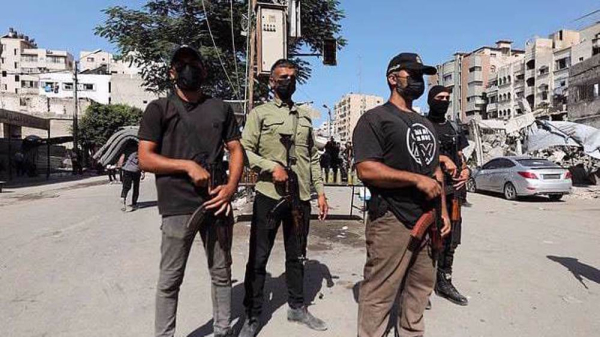
The Palestinian resistance movement Hamas has reaffirmed its commitment to completing the first phase of the ceasefire agreement with Israel.
In a statement on Saturday, Hamas said the truce “is holding, and the withdrawals of the occupation army are continuing according to the agreement.”
“We insist on completing the implementation of the first phase of the ceasefire agreement,” the statement read.
Hamas said it is working to remove any pretexts that could allow the Israeli regime to violate the ceasefire’s terms. It also said efforts are underway with mediators to locate the bodies of Israeli captives held in Gaza and to advance the prisoner exchange process.
“We continue our contacts with mediators regarding the prisoner file in an effort to achieve a breakthrough,” it added.
In a separate statement, Hamas political bureau member Izzat al-Rishq reiterated the resistance group’s “firm commitment to dedicating all our capabilities and efforts to serving our people and providing them with relief in the Gaza Strip.”
This, he said, will be done “despite the massive destruction left by the war and the lack of all basic necessities for normal life in the Strip.”
A multi-stage roadmap for the first phase of a ceasefire deal between Hamas and Israel was finalized on Thursday. Both sides confirmed that the ceasefire went into effect on Friday.
The first phase of the deal, proposed by US President Donald Trump, is expected to see the release of all 20 living Israeli captives and the beginning of the handover of deceased captives, in exchange for around 250 Palestinian prisoners and 1,700 detainees from Gaza.
Israel blocks release of two prominent Palestinian doctors as part of Gaza ceasefire
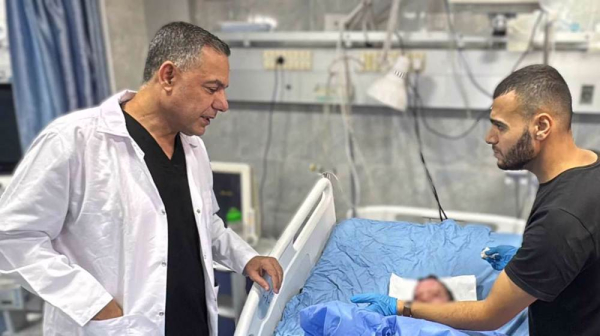
Israel has refused to release two prominent Palestinian doctors — including the pediatrician Dr. Hussam Abu Safiya — as part of a ceasefire and prisoner exchange agreement with Hamas, a report says.
A Hamas official told CNN on Friday that “the occupation refused to release Dr. Hussam Abu Safiya,” who was kidnapped during an Israeli raid that closed the last major functioning health facility in northern Gaza in December 2024. Abu Safiya served as the director of Kamal Adwan Hospital in Gaza.
Dr. Marwan al-Hams, director of field hospitals in Gaza, was also excluded from the deal, the official said.
Under the agreement reached on Wednesday, Hamas is set to release 48 Israeli captives held in the Gaza Strip, 20 of whom are believed to be alive. In exchange, Israel must free 250 Palestinian prisoners serving life sentences and 1,700 Gazans detained after October 7, 2023.
Students arrested in Morocco for having 'free Palestine' printed on soccer shirts
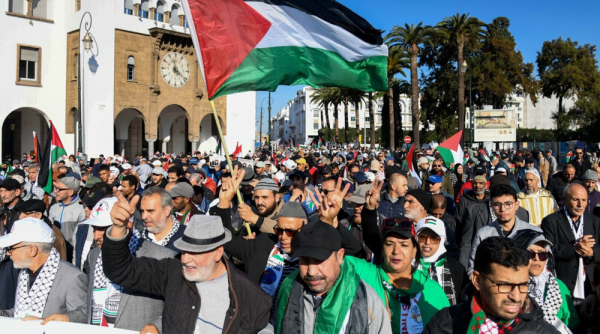
Two students, along with the owner of a printing shop in Morocco, have been taken into custody for purportedly “displaying provocative slogans” after they adorned two national football team shirts with messages advocating for Palestine and the social demands of GenZ 212 youth movement protesters.
Far-right Israeli minister Smotrich vows to vote against Gaza ceasefire deal
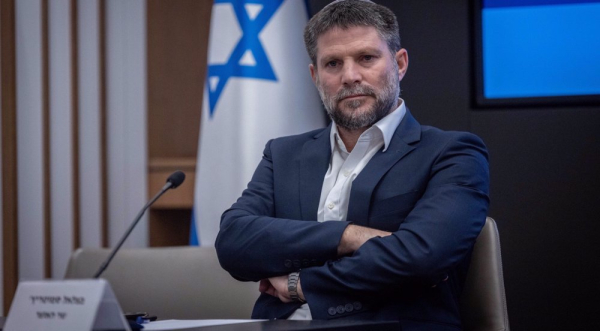
Far-right Israeli finance minister Bezalel Smotrich has expressed his opposition to a ceasefire deal with the Palestinian Hamas resistance group, saying he will vote against the agreement that brings an end to the genocidal war on the Gaza Strip.
Smotrich made the remarks in an X post on Thursday shortly after Israel and Hamas agreed to the first phase of the ceasefire plan proposed by US President Donald Trump, which includes the withdrawal of the occupation forces from Gaza, the entry of aid to the besieged territory, and the exchange of Israeli captives with Palestinian abductees.
The extremist minister, who has a history of making hawkish remarks, said he “cannot join in shortsighted celebrations or vote in favor of the deal” due to what he called “immense fear of the consequences of emptying the [Israeli] prisons.”
He further said that immediately after the return of captives, Israel should continue the war for “the real eradication of Hamas.”
The Israeli "security cabinet" is set to meet this afternoon to be briefed on the Gaza ceasefire agreement, with the full cabinet meeting afterward to vote on the deal.
An unnamed Israeli official has told CNN that the vote will only be on a prisoner exchange, and not the entire truce framework.
Meanwhile, Israel’s ambassador to the US, Yechiel Leiter, said that once Israel’s "security cabinet" convenes, there will be a 72-hour countdown for Hamas to release the remaining living Israeli captives held in Gaza.
The ceasefire announcement followed three days of indirect negotiations in Egypt on Trump’s 20-point plan for the Gaza Strip.