zarezadeh
First strike on US F-35: Iran hits stealth jet in central airspace
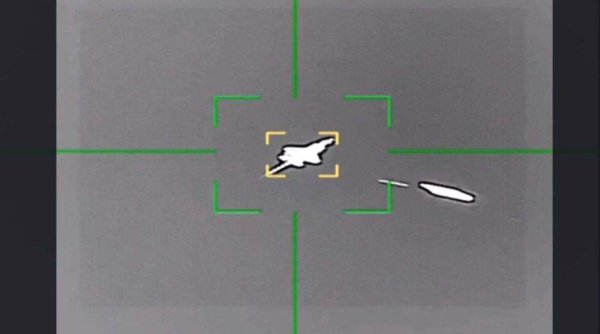
The Islamic Revolution Guards Corps (IRGC) says it has successfully hit a US Air Force F-35 stealth fighter jet in central Iran's airspace.
According to a statement released by the IRGC on its official news website on Thursday, the jet was struck at 2:50 a.m. local time by the IRGC’s advanced, modern air defense systems.
"The fate of the fighter jet is unclear and under investigation, and the likelihood of its crash is very high," it said.
The IRGC noted that the interception follows the successful downing of more than 125 US-Israeli drones by Iran’s defense systems, signaling significant and purposeful upgrades in the country’s integrated air defense network.
Further details on the incident are still under investigation.
CNN cited sources familiar with the incident as confirming that a US F-35 fighter jet made an emergency landing at a US airbase in West Asia after being struck by what is believed to have been Iranian fire.
Capt. Tim Hawkins, a spokesperson for US Central Command, confirmed that the fifth-generation stealth jet was conducting a combat mission over Iran when it was forced to land. The incident is currently under investigation, he said.
This marks the first reported instance of Iranian forces hitting a US aircraft since the Israeli-American war of terrorism on Iran began in late February, with the unprovoked assassination of Leader of the Islamic Revolution Ayatollah Seyyed Ali Khamenei.
Both the United States and Israel have been deploying F-35s in the war, with each jet valued at over $100 million.
The alleged emergency landing comes amid continued claims from senior US officials regarding the success of its terrorist operations against Iran.
Extremist US war secretary Pete Hegseth boasted on Thursday morning that the US is “winning decisively” and emphasized that Iran’s air defenses have been “flattened.”
Hegseth has made numerous controversial statements, in which he sees America’s military aggressions, especially against Islamic nations, as part of a larger crusade seeking to bring about Armageddon.
His extremism is reflected in his tattoos, including the Jerusalem Cross, a religious symbol associated with the violent Crusades of Europeans to reclaim al-Quds from Muslims and the phrase “Deus Vult” (“God Wills It”) inked on his body, a rallying cry of the Crusaders.
These tattoos, along with his self-published book American Crusade, which frames the fight against Islam as a modern-day “crusade,” have reportedly sparked numerous complaints from his service members who see an apparent connection between his extremist worldview and the ongoing terrorist war on Iran.
Press TV’s website
Explanation of the Moral Hadith by the Leader - Factors for the Stability and Decline of Faith
The Commander of the Faithful, Ali (peace be upon him), was asked: What is the source of the stability of faith? He said: “Piety.” He was asked: What is its decline? He said: “Greed.”
Al-Aسُئِلَ أميرُ المُؤمِنينَ عَلِيُّ بنُ أبي طالِبٍ عليه السلام : ما ثَباتُ الإِيمانِ ؟ فَقالَ : الوَرَعُ ، فَقيلَ لَهُ : ما زَوالُهُ ؟ قالَ : الطَّمَعُ .mali for Saduq: p. 365, h. 454
The Supreme Leader’s :
We have repeatedly heard from the great people of meaning and monotheism that the first recommendation is to abandon sin, then comes the turn to do good deeds, remembrance, adhkar, nawafil, mustahabb, and the like. The first is to abandon sin.
Explanation of Moral Hadith by the Leader - Ask for the best for your believing brother
Imam Baqir :
في قولِ اللّهِ عَزَّ و جلَّ : «و قُولُوا للنّاسِ حُسْنا» ـ : قولوا للناسِ أحسَنَ ما تُحِبُّونَ أن يُقالَ فيكُم .
“And speak to people [in a] kind manner” - He said: Speak to people the best words you would like to be said about you.
The Supreme Leader:
You do not like to be insulted, cursed, backbited, or called your name lightly. Do not do these things to your believing brother!
Source: Mizan Al-Hikmah, Volume 10, Page 208
Explanation of the Moral Hadith by the Leader - Attracting Hearts with Good Morality and Good Character
عَن الصّادِقِ جَعفَرِ بنِ مُحمّدٍ عَن أَبیه عَن آبائِهِ عَلَیهِمُالسّلام قَال قَالَ رَسُولُ الله صَلَّی اللهُ عَلَیهِ وَ آلِه إنَّکُم لَن تَسَعُوا النَّاسَ بِأَموالِکُم فَسِعُوهُم بِأَخلَاقِکُم
That is, you do not have the capacity to keep all people in the sphere of your love and in the sphere of your relationship with yourself [with your wealth]; you cannot do this with wealth, but you have a means to be able to bring the hearts of all or most people closer to you. What is it? It is “morality”.
If you are humble, if you are an honest person, if you do not do this or that destructive move against others, if you are someone who stands by your word - these are qualities that people love - then you can attract the hearts of people to you with this good morality, with this good morality and good character.
Footnote:
1) Al-Amali Sheikh Saduq, page 62
IRGC sets fire to US-linked oil facilities in 63rd wave of Op. True Promise 4
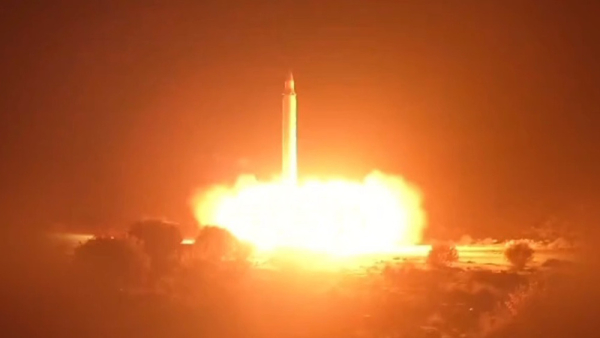
The Islamic Revolution Guards Corps (IRGC) has announced staging the 63rd wave of its ongoing retaliatory Operation True Promise 4 in the face of unprovoked American-Israeli aggression, targeting oil facilities associated with the United States in the region.
The latest phase took place on Wednesday, following recent attacks on Iranian energy infrastructure, the Corps' Public Relations Office said in a statement. Staged "with full force," the 63rd wave also came in retaliation for the martyrdom of Iran's Intelligence Minister Esmaeil Khatib and others during the aggression, it added.
The Corps denounced the “deceitful and lying enemy” for targeting the country's energy facilities.
By conducting the strikes, it added, the adversaries had also sought to exact revenge on the nation over the ongoing countrywide rallies it has been staging in support of Iran's Islamic establishment and in protest against the aggression.
'Attack on Iran's energy infrastructure took conflict to new stage'
"The Islamic Republic did not intend to expand the war to oil facilities and did not wish to harm the economies of friendly and neighboring countries," the IRGC said.
"However, with the enemy’s aggression against energy infrastructure, Iran has effectively entered a new stage of the conflict, and the necessity to defend the country’s energy infrastructure compelled a retaliatory strike against American-linked energy facilities."
Message to Iranian people
Addressing the nation, the IRGC declared, "Your brave sons in the Armed Forces immediately launched an offensive in response to the enemy’s malice, and through a heavy, targeted operation, set fire to a series of oil facilities considered to be American interests in the region.
The reprisal, it added, "inflicted damage proportional" to the one that had been imposed on the country.
Zionist targets
"As many as 80 military and military support targets" were struck in the southern and central parts of the occupied territories, including Rishon LeZion, Ramla, and Lod in the center; Eilat in the south; and Ramat Gan and Bnei Brak east of Tel Aviv, as well as Bat Yam and Holon south of Tel Aviv.
The targets lying in the south included a gathering of Israeli forces.
All targets were hit surgically using multi-warhead missiles and attack drones.
Warning to US, Israeli forces
The IRGC also issued a stern warning to the American-Zionist aggressors against repeating their strikes against the country's energy sites.
"If this is repeated, subsequent attacks on your energy infrastructure and that of your allies will not cease until total destruction, and our response will be far more severe than tonight’s strikes.”
Operation True Promise 4 began momentarily following the launch of Washington's and Tel Aviv's most recent bout of unlawful aggression towards the Islamic Republic late last month.
The reprisal has hit sensitive and strategic targets in the heart of the occupied territories, including those lying in the city of Tel Aviv, the holy occupied city of al-Quds, the occupied port of Haifa, Be'er Sheva, which serves as the regime's technological epicenter, and the Negev Desert.
American outposts across the region, including those based in Qatar, Bahrain, the United Arab Emirates, Kuwait, and Saudi Arabia, have also faced intense retaliation.
Press TV’s website
IRGC chief lauds martyred Basij commander as 'embodiment of revolutionary spirit'
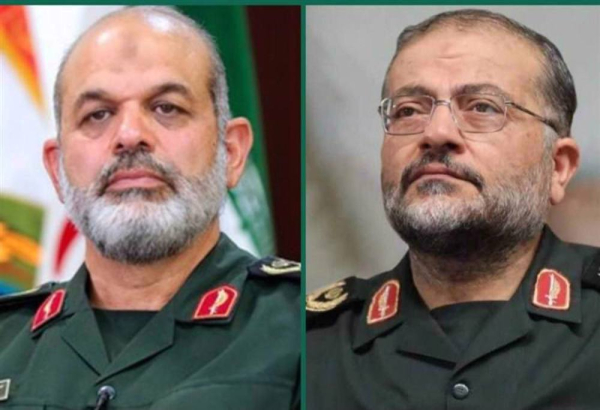
The commander of the Islamic Revolution Guards Corps (IRGC) issued a message on Thursday paying tribute to the martyred commander of the Basij forces, hailing him as a product of the Islamic Revolution whose legacy will continue to inspire future generations.
Brigadier General Ahmad Vahidi, who recently took command of the IRGC, honored the life and legacy of Major General Gholamreza Soleimani, the head of the Basij Organization of the Mustafafin (Oppressed), who was martyred on Monday in the Israeli-American aggression.
The message, addressed to the Iranian nation, the Leader of the Islamic Revolution, and the martyr's family, emphasized that the martyred commander's life was inseparable from the history of the Islamic Republic.
The IRGC commander hailed General Soleimani as "one of the commanders educated in the school of the two Imams of the Revolution" – a reference to the late founder of the Islamic Republic, Imam Khomeini, and his successor, Martyr Imam Khamenei.
He described him as "an embodiment of the jihadi and revolutionary spirit."
Hailing from the "honorable and resistant region of Chaharmahal and Bakhtiari," General Soleimani shone "like a jewel atop the crown of the heroic city of Shahrekord."
The statement emphasized his continuous service from the years of the eight-year Sacred Defense through to the present day, portraying him as a figure of "courage, commitment, and strategic insight" across various command positions.
General Vahidi specifically highlighted General Soleimani's tenure as the head of the Basij Organization, the volunteer paramilitary force, crediting him with "prudence, creativity, and transformative management" that brought strategic and operational innovations to it.
He noted that the martyred commander played an "unparalleled role" in elevating the Basij's position, enabling it to serve the "deprived and oppressed strata" more effectively, particularly during "the most sensitive historical moments and times of national and revolutionary need."
Beyond his official achievements, the statement emphasized the personal qualities that defined General Soleimani's legacy. Vahedi described his legacy as encompassing "the spirit of sacrifice, humility, sincerity, and steadfastness in the field of action, along with a deep commitment to the ideals of Islam and the Revolution."
This legacy, the IRGC commander wrote, "will forever remain in the historical memory of the Iranian nation, particularly among the guardians of the Revolution, and the young generation, today and tomorrow.”
Press TV’s website
True Promise, Wave 64: Ben Gurion, Haifa, US Fifth Fleet targeted in retaliatory strikes
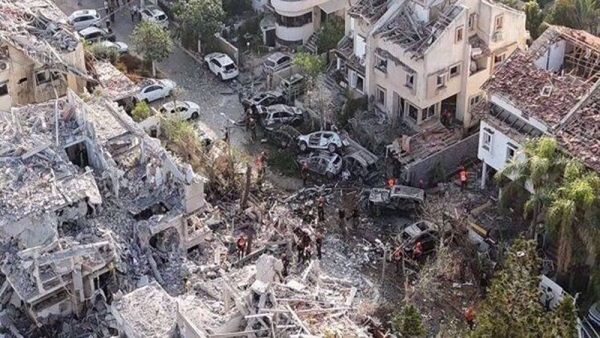
Iran has launched Wave 64 of Operation True Promise, targeting key military sites in the Israeli occupied territories, including Ben Gurion Airport, fuel supply lines, and strategic military bases in Haifa and Rishon LeZion.
The operation, which began at dawn Thursday, utilized advanced missile systems, including Qadr, Emad, Kheibar Shekan, and Khorramshahr, hitting all designated targets.
Iranian officials stated that the strikes are part of a broader response to Israeli and US military aggression in the region.
The US Fifth Fleet, stationed in the Persian Gulf, was also targeted by mid-range missiles. Iranian sources confirmed that the operation is continuing successfully.
As a result of the operations, over 5 million settlers of the occupied territories are said to be confined to shelters. Iranian authorities described the operation as a direct retaliation for Israeli and US aggression.
Meanwhile, the Islamic Revolution Guards Corps (IRGC) reported intercepting Israeli-made "Heron" and Herbiter (Harop) drones over Tehran and Karaj, which were attempting surveillance over sensitive Iranian sites.
The IRGC reported that life inside shelters has become the new normal for Israeli settlers in recent days, with residents having little to no chance to leave.
Press TV’s website
Why did there have to be war instead of negotiations?
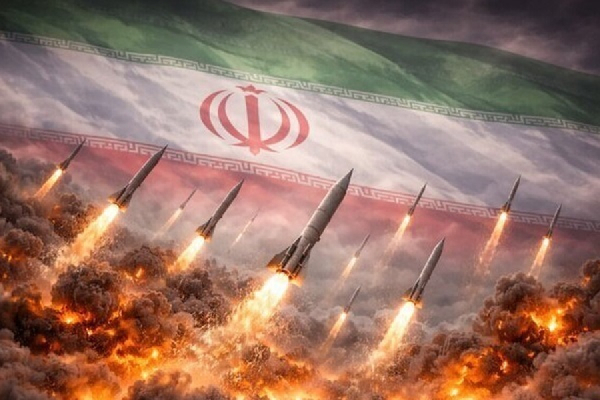
It is narrated in the narrations that the Holy Quran is “like the sun that rises every day in a new form.” In analyzing the situation today, the closest example of the Quranic verses is found in the events of the Battle of Ahzab and before that the Battle of Badr.
When the Muslim army set out, two caravans were facing them: one a trading caravan and the other an armed army of the Quraysh. The Quran says:
وَإِذْ يَعِدُكُمُ اللَّهُ إِحْدَى الطَّائِفَتَيْنِ أَنَّهَا لَكُمْ وَتَوَدُّونَ أَنَّ غَيْرَ ذَاتِ الشَّوْكَةِ تَكُونُ لَكُمْ (الأنفال: 7)
The Muslims were about a third as numerous as the infidels and did not have much military equipment. Naturally, the Muslims wanted the trade caravan to fall into their hands, but God’s will was that they face the enemy army so that He would establish the truth with His commands and cut off the roots of the disbelievers:
وَيُرِيدُ اللَّهُ أَنْ يُحِقَّ الْحَقَّ بِكَلِمَاتِهِ وَيَقْطَعَ دَابِرَ الْكَافِرِينَ (الأنفال: 7)
The phrase “God willing” shows that this was God’s wisdom and plan until the decisive stage arrived and the enemy’s roots were cut off.
In today’s situation in Iran, there were also two ways: negotiation or war. Given the negative consequences of reason and war, the path of negotiation was more preferable for Iran and the entire region, but God’s destiny was that the enemy would overturn the negotiating table in the face of reason and take the step of martyring the Leader of the Islamic Revolution, Iranian commanders, children, and women.
However, God’s tradition is that honor and glory belong to the believers and that ultimately the military power of the Zionist regime, the murderer of enemies and children, and all its supporters would be destroyed.
Reuters: The risks of war with Iran are growing for Trump
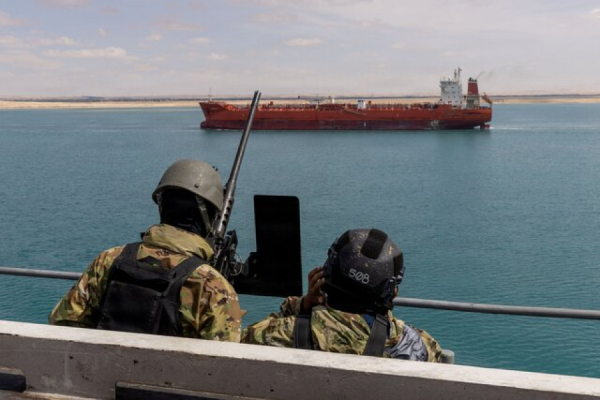
An article published by Reuters examines the growing political, military and economic risks facing US President Donald Trump a week after the US and Israeli war on Iran began. The article notes that the war has plunged West Asia into chaos and instability, raising questions about whether the United States will be able to turn its military actions into a clear geopolitical victory.
According to the report, even after the martyrdom of Supreme Leader Ayatollah Seyyed Ali Khamenei and strikes on Iranian forces, the crisis has quickly escalated into a wider regional confrontation. Reuters says this could lead to a protracted US military conflict, the consequences of which may be beyond the control of the Trump administration.
The article states that such a war would be a significant change in Trump's previous military approach. According to the report, Trump has usually preferred quick and limited operations. Reuters cited the January 3 blitzkrieg in Venezuela as well as a single strike on Iran’s nuclear facilities in the 12-day war.
The report quoted Laura Blumenfeld of the Johns Hopkins School of Advanced International Studies in Washington as saying that a war with Iran could turn into a complex and protracted military campaign. According to Blumenfeld, such a war could strain the global economy, undermine regional stability and even affect Trump’s Republican Party’s political standing in the US midterm elections.
The article also noted that when Trump came to power, he promised to keep the US away from what he called “foolish military interventions.” However, many experts cited in the report now see the current war as a self-inflicted and unjustified war; A war that they say was not launched in response to any imminent threat from Iran against the United States, although Trump and his aides have made such claims.
Analysts say Trump has struggled to explain the goals of his military operation in Iran. Reuters reports that the US administration has offered different explanations for the purpose of the war and has offered varying definitions of what would count as a “victory.”
White House spokeswoman Anna Kelly, however, has dismissed the criticism, saying Trump’s goals include destroying Iran’s ballistic missiles and their production capacity, destroying Iran’s navy, ending Iran’s ability to support its allies and preventing Iran from acquiring nuclear weapons.
Reuters also argues that if the war drags on for too long, the political fallout for Trump could increase. Increased U.S. troop casualties or the economic fallout from disruptions to Gulf oil flows could erode public support for the war and create political problems for the Republican Party.
The British media continued to examine domestic reactions in the United States and reported that members of the Trump supporters movement known as “MAGA” have so far mainly supported the military campaign against Iran, although some of his supporters who oppose military interventions have raised criticism. However, analysts have warned that any decline in this support could jeopardize Republican control of Congress in the midterm elections.
The report quoted “Brian Darling,” who is introduced as a Republican strategist, as saying that many Americans are unwilling to repeat the experience of the wars in Iraq and Afghanistan. According to him, the base of supporters of the MAGA movement is divided into two groups: those who relied on Trump’s promise to avoid new wars and those who trust his judgment in this war.
The article also examined the regional consequences of the war. According to a Reuters report, Iran has carried out retaliatory attacks against the Zionist regime and other neighbors; A move that, according to the report, was taken with the aim of increasing the costs of the war for the United States, the occupation regime and their allies.
The report also says that Lebanon’s Hezbollah has resumed fighting with the Zionist regime, a matter that shows that Iran still has the ability to activate its allied groups.
Reuters also examined the economic risks arising from the war. One of the immediate concerns raised in the article is the threat from Iran to the Strait of Hormuz, a narrow passage through which about a fifth of the world’s oil passes. Reuters writes that the traffic of oil tankers has been stopped and if this situation continues, it could have serious economic consequences.
The article quotes Josh Lipsky of the Atlantic Council think tank in Washington as saying that the economic consequences of this war seem to have not been fully foreseen by the US government. A former US military official was also quoted as saying that some members of Trump’s team did not consult enough with oil market experts before launching the attack on Iran.
The report also notes that Trump decided to proceed with the strikes despite warnings from some senior advisers that it would be difficult to contain the escalation. According to Reuters, some traditional US allies were also surprised by the decision.
British media analysis of the economic consequences of the closure of the Strait of Hormuz
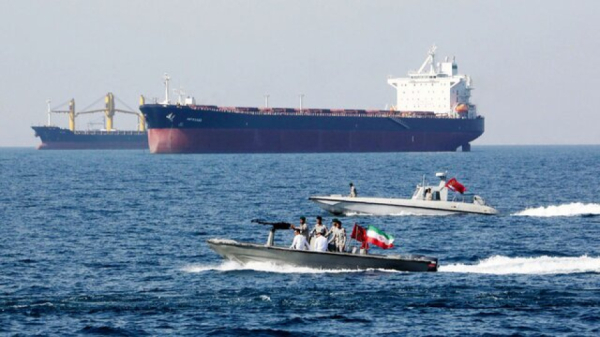
The Middle East Monitor has examined the strategic and economic implications of Iran’s closure of the Strait of Hormuz during its ongoing war with the United States. The article notes that the current situation reflects a strategy of “existential erosion,” a strategy through which Iran is trying to challenge the US government’s narrative of the war by exerting pressure on global markets.
According to the article, the White House has tried to portray its military campaign against Iran as a great success through press conferences and public statements. However, Iran’s actions have in practice sent shockwaves through global markets.
The British media outlet notes that disruption or closure of the Strait of Hormuz directly affects everyday economic sensitive points such as fuel prices and the cost of living. Even before the attacks on ships, threats alone had deterred many companies from using the waterway.
The article explains that major shipping companies have stopped transporting goods through the Strait of Hormuz due to security concerns. As a result, traffic through the strait has been virtually halted since the war began on February 28. The disruption threatens the transportation of about a fifth of the world’s oil supply, a fifth of global trade in liquefied natural gas and about 13 percent of global trade in chemicals, including agricultural fertilizers.
According to the article, tanker freight rates, the cost of marine fuel and war insurance premiums have also increased sharply.
The Middle East Monitor also cites comments by Iranian Foreign Minister Abbas Araqchi, who commented on the economic consequences of the crisis. In a post on social media, Araqchi said that just nine days after the “epic miscalculation”, oil prices have doubled and commodity prices around the world are rising. He also said that Iran is ready for further developments and raised the possibility of further measures.
The British publication further cites the statement of the spokesman for the Khatam al-Anbiya headquarters of the Islamic Revolutionary Guard Corps on March 11, who announced that any ship associated with the Zionist regime, the United States or their allies would be considered a “legitimate target.” He also considered efforts to curb the rise in oil prices ineffective, warning that oil prices could reach $200 per barrel, adding that insecurity in the region is the main factor driving up prices.
The International Energy Agency has tried to curb the rise in oil prices. 32 member countries of the agency decided to release 400 million barrels of oil from their strategic reserves to reduce market disruptions. Fatih Birol, the executive director of the International Energy Agency, announced that this measure was taken to immediately relieve market pressure, but stressed that the return of a stable flow of oil and gas will only be possible if passage through the Strait of Hormuz is resumed.
The Middle East Monitor cites the statement of US Senator Chris Murphy, who expressed his concern after attending a confidential briefing on the war. Murphy said the United States does not currently know how to safely reopen the Strait of Hormuz, adding that the current situation was entirely predictable.
Finally, the article concludes that the consequences of closing the Strait of Hormuz extend beyond purely military considerations. Tankers are piling up on both sides of the waterway, ports are overwhelmed by ships, and oil and gas production in countries such as Qatar, Bahrain, Iraq, and Saudi Arabia could be affected.