zarezadeh
USS Abraham Lincoln under constant surveillance, will be hit if within range: Navy commander
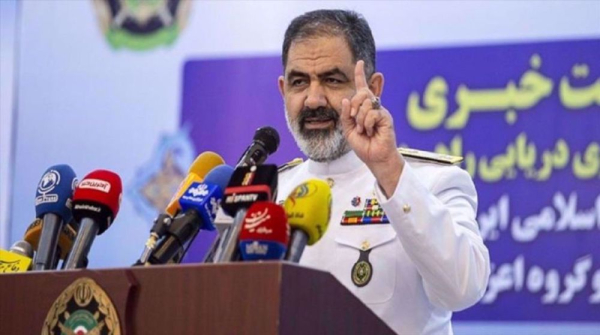
Iranian Army’s Navy has said that the movements of the USS Abraham Lincoln carrier group are being closely and constantly monitored and will be targeted if it comes within the range of Iranian missiles.
Rear Admiral Shahram Irani, the commander of the Iranian Navy, warned that should the hostile carrier group enter the range of Iranian missile systems, it would be targeted with crushing strikes.
"Like Mount Dena, we stand firm for the dignity and glory of Iran and Iranians, to be a hope for the oppressed and a thorn in the eyes of enemies," he said in remarks on Wednesday.
USS Abraham Lincoln (CVN-72) is the fifth Nimitz-class aircraft carrier in the US Navy.
Rear Admiral Irani honored the memory of the martyrs of the destroyer Dena and outlined the Navy's posture in the strategic waters of the Persian Gulf.
"The Navy of the Islamic Republic of Iran, with resolute will and the absolute maritime dominance of the Islamic Republic of Iran in the Persian Gulf, intelligent control of the Strait of Hormuz, and authoritative monitoring of the passage of military and hostile fleets north of the 10-degree line, will not relent until we avenge the blood of our dear martyrs," he said
Iran closely monitoring deployment of US troops in region: Qalibaf
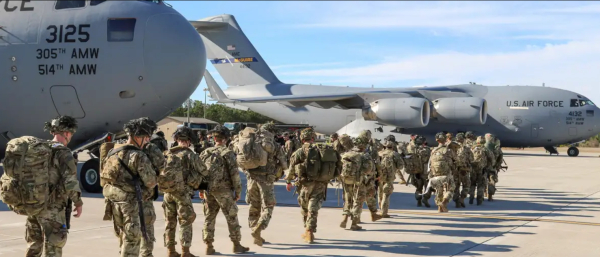
Western media reports say some 3,000 more US soldiers could be deployed to West Asia.
Parliament Speaker Mohammad Baqer Qalibaf has issued a stern warning to the United States, stating that Iran is closely monitoring the deployment of American soldiers in the region.
In a post on the social media platform X on Wednesday, Qalibaf addressed recent reports of US military movements.
“We are closely monitoring all US movements in the region, especially the deployment of their soldiers,” he wrote.
“What the generals have ruined, the soldiers cannot fix; instead, they will only become victims of Netanyahu’s delusions. Do not test our resolve to defend our land.”
The statement comes amid heightened tensions, 26 days into a US-Israeli aggression against Iran. The remarks follow unconfirmed reports from Western media and claims by US President Donald Trump regarding negotiations with the Islamic Republic.
Iranian officials have not yet officially confirmed any such negotiation proposals.
Analysts suggest that the proposed five-day deadline for talks, as floated by Trump, might serve as a cover for potential hostile actions.
Prior to the diplomatic overtures, Trump had made comments regarding the seizure of Iran’s Kharg Island. Reports from American media outlets indicate that the Pentagon has ordered approximately 2,000 soldiers from the US Army’s 82nd Airborne Division to deploy to West Asia.
In response to these naval movements, the Iranian Army’s Navy has conducted a military operation.
According to official reports, missiles of the Iranian Army’s Navy targeted the USS Abraham Lincoln strike group, compelling the US naval force to change its position.
Press TV’s website
Wave 80: IRGC launches major strikes against northern, central occupied territories, US bases
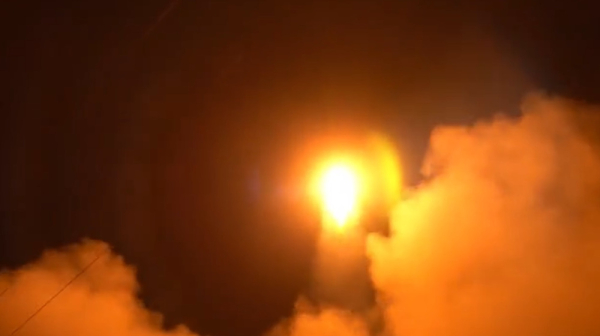
The Islamic Revolution Guards Corps (IRGC) has announced carrying out the 80th wave of its decisive retaliatory Operation True Promise 4, this time striking strategic points and military centers on the occupied territories' northern side, besides pummeling American outposts across the region.
In a statement on Wednesday, the IRGC said the latest phase was staged by the Corps' Aerospace Force in support of the "proud offensives," carried out by Lebanon's Hezbollah resistance movement against Israeli targets, and the residents of southern Lebanon, who have been bearing the brunt of Israeli aggression.
The Consequences of Trump's Contradictions
Shanaka Anselm Perera
(University Professor and Human Rights Scholar
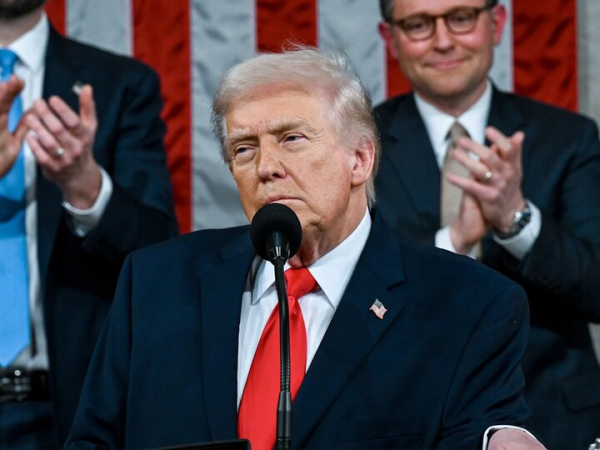
36 hours ago, President Donald Trump used the word "derailment"; this morning he spoke of "constructive dialogue." The question every trader, diplomat, and general is asking is: What broke between Saturday night and Monday morning?
*Six things fell apart simultaneously*
*First*: The bill has arrived. The Pentagon has requested more than $200 billion in supplemental funding. The cost of the war has been $11.3 billion in 6 days and $16.5 billion in 12 days. At $1.38 billion a day and rising, Congressional resistance to the supplemental funding is serious. Money that was supposed to pay for the war for "a few days, not weeks" now requires a vote that may not pass.
*Second*: The Federal Reserve killed the idea of cutting interest rates. On March 18, the Fed cut interest rates kept the target between 3.5% and 3.75% and raised its 2026 PCE inflation forecast from 2.4% to 2.7%, citing the energy shock from the Iran war. The dot plot now shows just one rate cut for all of 2026. Every unit of delay in easing means pressure on housing, credit and the Magnificent Seven. What was supposed to be a show of strength has become an inflationary show.
*Third*: Allies respectfully rebelled. 22 countries signed up to coordinate in Hormuz, but none committed to sending warships in time for a fight. Japan is releasing its strategic reserves. South Korea’s KOSPI is down 12%. European gas prices jumped 35% after Qatar’s LNG was decommissioned and declared a “major force” for five years. Trump called NATO “cowards” and received only a press release in response The “coalition of the miles” has become the “coalition of the waiting.”
*Fourth*: TSMC sends a signal. Taiwan imports about 97 percent of its energy. Its LNG reserves last only 11 days. Qatar supplies a third of the world’s helium, which TSMC needs to make chips. That helium is locked behind a closed strait. Every Nvidia GPU, every Apple chip, every AI cluster relies on a factory in Hsinchu. The seven tech giants have lost hundreds of billions of dollars.
*Fifth*: Birol names the extent of the damage. The head of the International Energy Agency told Australia this morning that 40 energy facilities in nine countries have been severely damaged, global oil supplies have been cut by 11 million barrels a day, and the crisis is bigger than the two shocks of the 1970s combined; no country is immune. He cited fertilizers and helium as the main culprits. The man who runs the world’s energy security He called the war Trump started the worst energy crisis in modern history.
*Sixth*: Midterm elections. Gas prices are up 93 cents a gallon. 60 percent are dissatisfied and 57 percent say things are going badly. The numbers that matter in Washington are approval ratings in key states, where voters fill up their gas tanks every Tuesday.
*Conclusion:*
Six pressures. President Trump didn’t get diplomacy; he got math.
The 48-hour deadline was a threat; the 5-day pause is an admission that the consequences of that threat were worse than intended.
Destroying the power plants would block the strait forever, fulfill Qalibaf’s promise to “irreversibly destroy” the energy and desalination infrastructure of the [Persian] Gulf, disrupt TSMC’s supply chain, and send inflation above 3 percent. and offered the opposition a midterm election in a $7 gas can.
This is a real pause, but not a lull. The strait is still closed. Those 40 facilities are still damaged. The fertilizer is still blocked. The planting season is coming to an end. The five-day clock is already ticking.
Molecules don’t negotiate. Molecules wait.
The Power Puzzle in the 2026 War and Trump’s Strategic Suicide
Mehdi Arab Sadeq, Energy Diplomacy Analyst
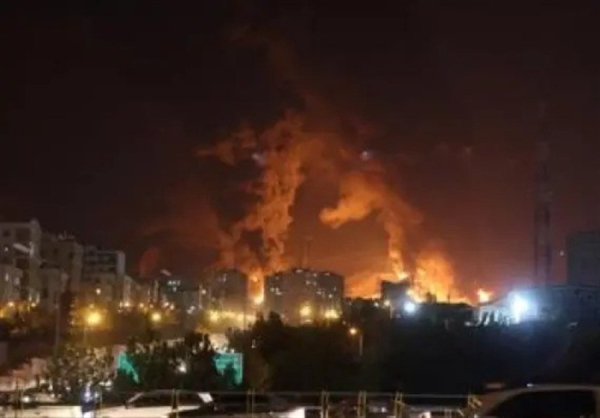
Trump did not hit the oil tanks in Kharg. Because he knew that oil would cost $150. Now he says he will hit the power plants. The difference is: oil can be brought from elsewhere. Electricity cannot.
Two different models of the power grid in the region:
Israel (centralized model): Five major power plants provide more than 50 percent of the electricity. The largest of them provides 20 percent of the electricity alone. The CEO of their power company said: “After 72 hours of power outage, life becomes impossible.”
Iran (dispersed model): Five major power plants provide only 14 percent of the electricity. The largest power plant, Damavand, produces only 3.7 percent of the country’s total electricity. That is, if all five major power plants are hit, we still have 86 percent of the capacity.
The hard test of war: In the past 23 days, there have been limited attacks on power stations in Tehran and Karaj. The outages were resolved within hours. The network has been restored. This means our architecture has passed the test of war.
Water, the next red line:
Iran’s response to Trump’s threat goes beyond power plants. The region’s desalination plants are within our reach. 80 percent of Israel’s water depends on five facilities. Kuwait and Bahrain get 90 percent of their water from desalination. There are more than 400 desalination plants in the Persian Gulf. Water has no substitute. Without water, cities will evacuate. Geography says this, not us.
You say you can hit our power plants. We say we can hit your five main power plants. We can hit your desalination plants. We can make life impossible for millions of people.
Mr. Trump, if attacking oil infrastructure is gradual suicide for you, attacking electrical infrastructure is certain and immediate death. And it is not you who will pay the price, but the American people, in sudden blackouts and $8 gas prices.
Iran’s armed forces determined to fight until complete victory: Commander
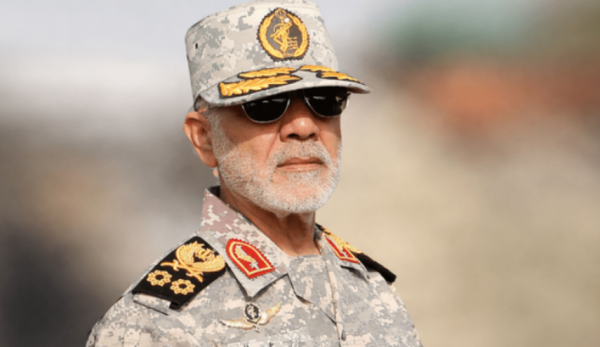
The commander of the Khatam al-Anbiya Central Headquarters says Iran’s armed forces remain steadfast on the path to complete victory.
In a statement released on Tuesday, Major General Ali Abdollahi said the “vicious, criminal US-Zionist enemy” ignited a war with the aim of partitioning and devouring the Islamic Republic of Iran.
On the first day of the war, February 28, they assassinated Leader of the Islamic Revolution Ayatollah Seyyed Ali Khamenei and a number of military commanders, expecting that the country without its leader and the military without its commanders would collapse within 48 hours.
But, Abdollahi said, by God’s grace, the epic presence of the great and heroic Iranian nation, and the unparalleled efforts of the brave fighters in the armed forces over the past 25 days, the enemies, chief among them the wicked and arrogant United States, have suffered major blows.
“The fake powers, notably the United States, which for decades exploited the oppressed nations of the world, particularly Islamic countries, through threats and intimidation, have now been brought to their knees before the eyes of the world with divine assistance,” the statement read.
Abdollahi said that given the facts on the battleground, the enemy is now desperately seeking off-ramps from the conflict it initiated.
Donald Trump, the president of the United States, “understanding the realities on the ground and finding himself trapped in the quagmire of war, has turned to the leaders of certain countries to seek a way out after losing hope in achieving his objectives,” General Abdollahi stated.
Araghchi: Strait of Hormuz ‘not closed’ to those who respect Iran’s ‘navigational rights’
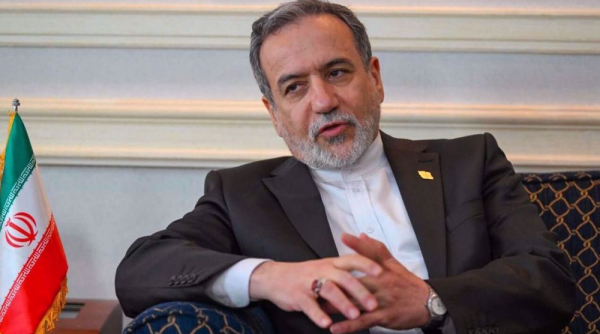
Iranian Foreign Minister Seyyed Abbas Araghchi says ships are avoiding the Strait of Hormuz because the United States and its allies fail to respect Iran’s trade and navigational rights.
In a post on the social media platform X on Tuesday, Araghchi stated: “The Strait of Hormuz is not closed. Ships hesitate because insurers fear the war of choice you initiated, not Iran.”
“No insurer, and no Iranian, will be swayed by more threats. Try respect,” he added.
He further warned that freedom of navigation must be accompanied by freedom of trade, saying, recognize Iran’s right to both of them, or you will be deprived of them as well.
During a phone conversation on Monday with South Korean Foreign Minister Cho Hyun, Araghchi underscored that the Strait of Hormuz is closed only to vessels belonging to aggressor parties and their supporters, while ships from other countries face no issues transiting the strategic waterway after coordinating with Iranian authorities.
Iranian missiles rain down on Israel’s intelligence hubs in new wave
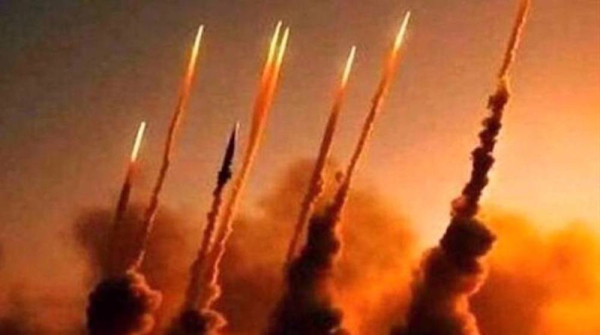
In a fresh wave of retaliatory strikes, the Islamic Revolution Guards Corps (IRGC) targeted the Israeli regime’s “secure” intelligence facilities in Tel Aviv.
The IRGC’s Public Relations Department said in a statement on Tuesday that it had carried out the 79th wave of its ongoing retaliatory Operation True Promise 4 against the Israeli and American targets.
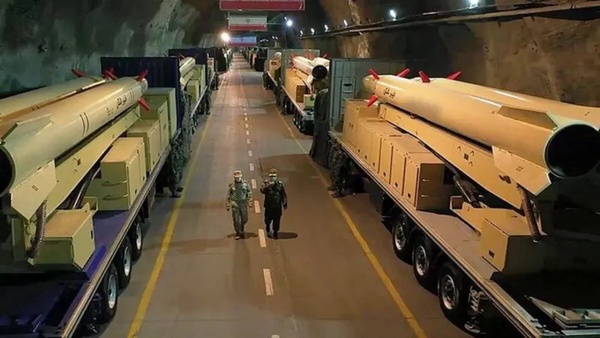
Deploying powerful Kheybar Shekan, Emad, and Sejjil missiles alongside IRGC Aerospace Force kamikaze drones, the operation successfully breached the regime's multi-layered air defense systems, the statement said.
The missiles, it stated, targeted Israel’s intelligence facilities in northern and central Tel Aviv, as well as military commercial and support centers in Ramat Gan and the Negev.
The missiles also hit Israel’s southern military logistics and command headquarters in Beersheba.
The missile strikes triggered widespread panic across Israel and forced the suspension of a Knesset (parliament) session on Tuesday.
"Plumes of thick smoke and fire engulfing the Israeli-occupied territories, while forcing over two million people into shelters, serves as undeniable evidence of Iran’s advanced missile and drone capabilities."
List of Targeted Areas on Tuesday, March 24, 2026
List of Targeted Areas on Tuesday, March 24, 2026
Until 2:00 PM
Part One: Operations of the Islamic Republic of Iran
Occupied Territories:
Haifa
Nahariya
Ashkelon
Tel Aviv
Dimona
Beer al-Saba
Western Negev
Arad
Eilat
Bahrain:
US Bases in Bahrain
US Fifth Fleet Headquarters in Bahrain
Bahrain Defense Force Headquarters in Hamala (occupier positions)
US Facilities in Bahrain (Fires)
Kuwait:
Ali al-Salem Base, Kuwait
US Bases in Kuwait
7 Main Electricity Distribution Grids in Kuwait (Direct Hit)
Saudi Arabia:
Riyadh
Sultan Air Base
US Bases in Eastern Saudi Arabia
Part Two: Hezbollah Operations Lebanon
Occupied Territories:
Liman Barracks in Nahariya
Migdal Tefen Radar in the South of Ma'alut Tarshiha
Zionist Artillery in the Town of Sa'sa
Zionist Artillery in Ein Hakvashim
Nimr Jamal Facilities
Balat Site
Zionist Forces Gathering at Fatima Gate (Palestine-Lebanon Border)
Zionist Forces Gathering in the Border Town of Naqoura
Zionist Forces Gathering Southwest of Ma'al-Shaab
Zionist Forces Gathering in Tepe Al-Khamara
Part Three: Operations of the Islamic Resistance of Iraq
Northern Iraq (Kurdistan Region):
Separatist Headquarters in Erbil
American Harir Base
Separatist Spy Radars on Mount Koruk
American Positions in Erbil
Geographical Description:
Dimona: Location of the Zionist regime's nuclear facilities in the Negev Desert.
Ali al-Salem Base: A strategic air base used by the US in Kuwait.
Sa'sa and Ma'aluth Tarshiha: Zionist settlements in the Galilee region (northern occupied Palestine).
Fatima Gate: An important border crossing between southern Lebanon and the Zionist settlement of Metula.
Korak Mountain: Strategic heights in Erbil that are used as a monitoring and spying center.
Trump's one-hour report on Iran invasion hits a million
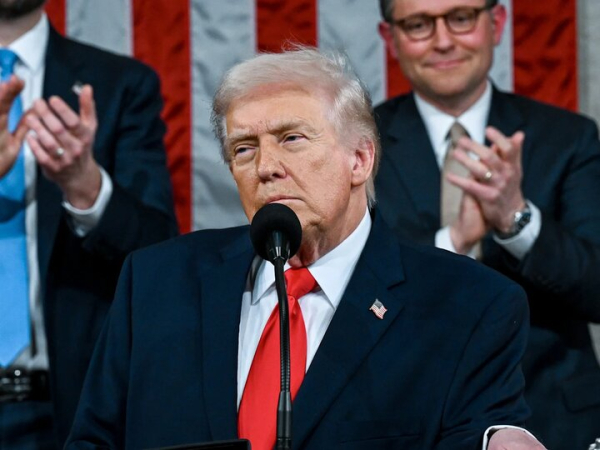
Tiberius, this tweet has over 1.8 million views, 14,000 likes and thousands of retweets
12:03 PM: Trump calls for ceasefire with Iran
12:05 PM: Trump declares victory
12:07 PM: Trump sends naval forces to Iran
12:08 PM: Trump says no troops on the ground
12:11 PM: Trump doesn't want a ceasefire
12:12 PM: Trump says Iran has no more humans
12:16 PM: Trump declares victory
12:17 PM: Trump calls for a ceasefire with Iran
12:18 PM: Trump asks for help for Iran
12:23 PM: Trump says NATO members are "dirty faces"
12:29 PM: Trump says Iran is begging for a ceasefire
12:31 PM: Trump says everything is great
12:37 PM: Trump He wants Iran to open the Strait of Hormuz
12:39: Trump says the Strait of Hormuz was never closed
12:41: Trump says the US is not at war with Iran
12:42: Trump declares victory in Iran
12:44: Trump says war with Iran is for nuclear weapons
12:45: Trump says Iran never had nuclear weapons
12:47: Trump says the world should thank him
12:51: Trump says the world is "dirty faces"
12:53: Trump gives himself the Trump Peace Prize
12:57: Trump declares victory in Iran
An hour later: Trump again calls for a ceasefire with Iran
Repeats every hour