zarezadeh
IRGC urges regional residents to evacuate areas hosting US-Israeli troops
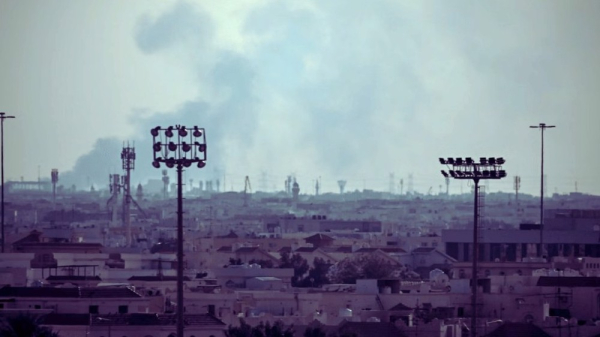
Iran’s retaliatory strikes have rendered many of the 13 US military bases in the Persian Gulf region “all but uninhabitable,” forcing American troops to work remotely from hotels and office spaces.
The Islamic Revolution Guards Corps (IRGC) has issued a statement addressing people across West Asia, saying it is obligated to eliminate US and Israeli “terrorist forces” wherever they are found for indiscriminately killing Iranian civilians and targeting key figures.
The statement, released on Friday, urged residents to immediately leave areas where American forces are stationed to avoid harm, stating that the US and Israeli militaries are hiding behind civilians and using noncombatants as human shields.
“The cowardly American-Zionist forces, who lack the courage and ability to defend their own military bases, out of fear of the fire of the warriors of Islam, are attempting to use civilian locations and innocent people as human shields,” the statement said.
“Since we are obliged to eliminate the terrorist forces of America and the usurping regime wherever we find them, as they recklessly engage in the killing of Iranian civilians and the assassination of key figures, we advise that you urgently leave the locations of American forces so that no harm comes to you.”
The Iranian warning comes shortly after a report by The New York Times revealed that US military across West Asia is facing mounting strain after sustained Iranian strikes rendered key American bases increasingly uninhabitable, forcing troops to disperse and operate from "improvised" locations across the region.
According to the newspaper, the shift has effectively transformed parts of the US-Israeli terrorist war campaign into a remote operation, with personnel working away from traditional command centers.
True Promise 4, Wave 83: Iran pounds US, Israeli assets with advanced missiles, drones
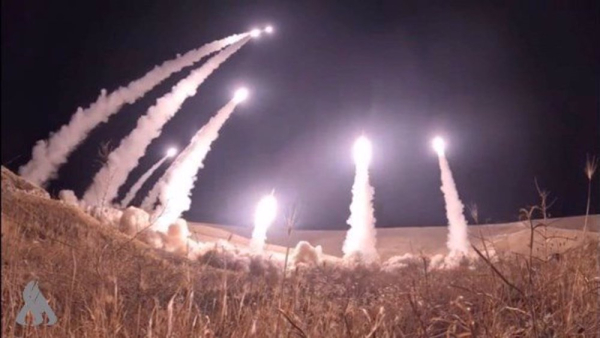
The Islamic Revolution Guards Corps (IRGC) announced the execution of wave 83 of Operation True Promise 4 in the early hours of Friday, targeting key American and Israeli military installations across the region with missiles and drones.
According to a statement from the IRGC's Public Relations, the operation was dedicated to the "warm-hearted people of the southern strip of the country in the north of the ever-Persian Gulf" and was conducted under the blessed code "Ya Aba Abdullah Al-Hussein (AS)."
The strikes targeted a range of strategic assets belonging to American and Zionist forces.
Among the targets were storage tanks and the oil depot in Ashdod, a military personnel site in the Modi'in settlement, and a US military information exchange center in the region.
The IRGC also struck American military bases at Al-Dhafra and Al-Udeiri, along with maintenance and storage hangars for transport aircraft and drones at Ali Al-Salem Air Base.
Additional targets include fuel tanks for jets and fighter aircraft of American forces, as well as the maintenance and repair hangar for the Patriot missile system at Sheikh Isa Base.
Why make weak bets when you have the upper hand?
Dr. Seyed Yasar Jabrayili
These days, a set of five conditions for ending the war has been put forward in the country’s official media, as stated by a political-security official. These conditions include an end to aggression and terror, creating guarantees that the war will not be repeated, paying compensation, stopping the conflict on all fronts, and recognizing Iran’s sovereignty over the Strait of Hormuz. At first glance, these conditions may seem logical, but if we look at them carefully and from a strategic perspective, we see significant flaws in them. The main problem is that this type of bet is more like a normative statement than a tool for consolidating field achievements.
The fact is that in the current situation, many international analysts believe that Iran has the upper hand in this asymmetric battle. Reports have even been published in media outlets such as the New York Times indicating that a number of US bases in the region have become practically unusable. The disruption of traffic in the Strait of Hormuz has put significant pressure on the global economy and increased oil prices. In such circumstances, it is not logical for field superiority to be transformed into vague demands that are neither verifiable nor necessarily in the hands of the other party.
One of the most important drawbacks of these conditions is the issue of “guaranteeing the non-recurrence of war.” In the international system, there is basically no such thing as a real guarantee of non-recurrence of war. Historical experiences, including agreements such as the JCPOA, have shown that great powers can easily withdraw from their commitments. In an anarchic international system, what prevents war is not a commitment on paper, but a change in the calculation of the costs and benefits of the other party. That is, conditions must be created in which an attack is fundamentally uneconomical for the enemy.
The condition regarding the payment of war reparations may be the only clause that can have a practical function, but even this clause becomes a mere political demand if it does not have an enforcement and collectable mechanism. In the history of international relations, compensation makes sense when the victorious side can impose it within the framework of a balance of power; not simply as a moral demand.
The condition regarding the cessation of attacks on the resistance fronts faces the same problem. If the cost of action against these forces remains high, the attacks will stop even without an agreement. But if the cost is low, even with an agreement and a signature, there is no guarantee that the conflict will stop. Therefore, the real way is to strengthen deterrence and increase the cost of any military action against these fronts; not to rely on verbal commitments.
The strangest part of the story is perhaps the condition regarding the recognition of Iranian sovereignty over the Strait of Hormuz. Sovereignty in such strategic points is formed by the “exercise of power,” not by the approval of a foreign power. Basically, whether a country like the United States wants to recognize Iranian sovereignty in this region or not is not a decisive legal issue. If the ability to exercise sovereignty exists, there is no need to obtain such approval.
The important point is that when a country has managed to change the balance of power in the field, it must convert this change into sustainable gains. Converting a practical advantage into a political demand is, in fact, lowering the level of play from “power realities” to “diplomatic statements”; something that may undermine field achievements.
Ultimately, the main question is: when the cost of war for the other side has risen and economic and political pressures have increased, is it not time to demand practical and irreversible concessions? In international relations, the common language is power. Diplomacy succeeds when it is based on power. If an achievement has been achieved in the field, the art of politics is to consolidate that achievement; not to turn it into an ineffective agreement at the political level.
The Ruler; A Deep Narrative of Politics and Economics
Yahya Abu Zakaria, Algerian Sunni thinker: To the Islamic Revolutionary Guard Corps of Iran
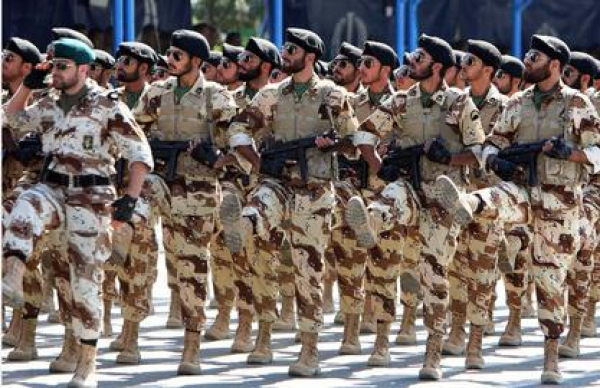
I am Yahya Abu Zakaria, an Algerian citizen and son of martyrs in Algeria. I wish you would give me a military uniform from the IRGC to pass on to my children and grandchildren and tell them; This is the uniform of heroes and noble people... When Palestine was slaughtered and Gaza was destroyed, the owners of this uniform resisted, fought jihad, raised the flag of Islam, won for Palestine and dedicated their commander and the achievements of their country to help Palestine and the oppressed.
A strong response to the UAE is on the way

An intelligence official in Tehran told our reporter: Decision-making circles in Tehran are summarizing numerous reports that show that the UAE has played an effective role in both the beginning and continuation of the war, in order to end this several-week tolerance towards this country.
There are also numerous reports that in addition to the barracks and bases of the US terrorist army in the UAE, given that they were hit by Iranian defensive attacks, the Emiratis have also provided some of their exclusive air bases to the US to use to attack Iran.
Some analysts believe that the UAE is Israel's foothold in the region and that it has carried out some of the false flag operations against Oman and some other countries.
Another cooperation between the Emiratis and Iran's enemies is to supplement their target bank using the artificial intelligence infrastructure provided in this country.
Also, given that private Iranian barges and vessels and some of our coastal geography have been hit by the areas of this sheikhdom, a strong Iranian response is on the way.
Israeli media reported an increase in the exodus of residents from northern occupied Palestine
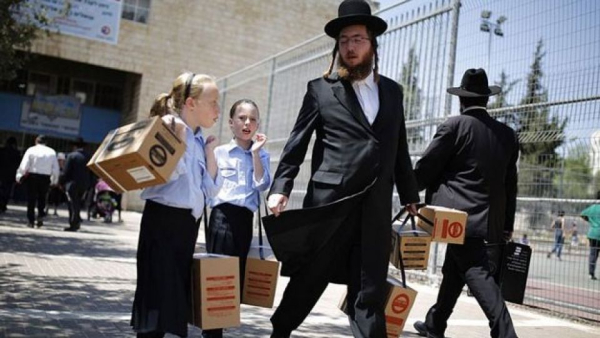
Israeli media reported an increase in the exodus of residents from settlements in the north of the occupied territories following the escalation of clashes with Hezbollah.
Reports indicate that a wave of residents has begun to flee from the northern border settlements as shelling intensifies.
Qalibaf: No one can issue an ultimatum to Iran and Iranians
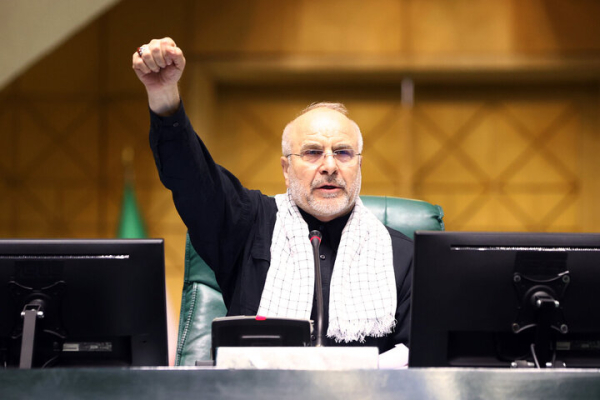
The vicious cycle of "war-ceasefire-war" must be broken.
Breaking a vicious cycle requires a firm decision. The cycle must be broken with a clenched fist, without any attention, and with a sledgehammer.
This is how the madman theory is invalidated in the political history of the world.
Qalibaf rejects Trump’s ultimatum, says Iran set for ‘historic victory’
Iran's Parliament Speaker Mohammad Baqer Qalibaf has responded firmly to US President Donald Trump's recent threats, asserting that “no one can issue ultimatums to Iran and Iranians.”
Qalibaf's statement in a tweet on Thursday came after Trump backtracked on a threat to “annihilate” Iranian power plants, reaffirming Iran’s resolve to protect its sovereignty and achieve a historic victory.
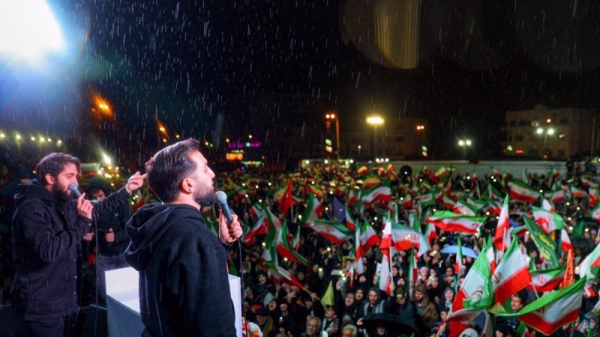
"The heroic people of Iran! Your 25 nights of presence in the streets and the sacrifices made by our armed forces have created the conditions for a historic victory for our dear Iran,” Qalibaf wrote.
“No one can issue ultimatums to Iran and Iranians. Your children will not let go of this opportunity until the complete victory is achieved and the vicious cycle of 'war–ceasefire–war' is broken."
Qalibaf’s remarks came following President Trump's latest threat of military action. The US leader had warned that Iranian power plants would be destroyed unless Tehran lifted its blockade of the Strait of Hormuz, a crucial global oil chokepoint, by a set deadline.
This ultimatum was initially issued on Monday, March 23, with a deadline for action that was later pushed back to March 27.
Over the last 25 nights, millions of Iranians have rallied in the streets of the country in support of the Islamic Republic and in condemnation of the US-Israeli war of terrorism.
The mass demonstrations, marking a decades-long movement against foreign interference and imperialism, have become a symbol of Iran’s steadfast commitment to its sovereignty and the resistance against external pressures.
These public gatherings have bolstered national unity, reinforcing the message that the Iranian people will not tolerate foreign ultimatums or military threats.
Amid Trump's ultimatum, reports in Western media are speculating that American airborne forces could launch a ground invasion of Iranian islands in the Persian Gulf.
A military source, cited by Tasnim news agency on Thursday, said that over one million Iranian troops are being organized for potential ground combat.
The source also revealed a surge of volunteers from young Iranians eager to participate in the defense of their country, particularly against any US ground invasion.
"Along with the organization of over one million ground troops, an overwhelming number of requests from Iranian youth are pouring into Basij, IRGC, and army recruitment centers to participate in this battle," the official was quoted as saying.
The source also addressed US tactics, saying, "The United States wants to open the Strait of Hormuz through suicide tactics and self-destruction; that's fine, we are ready for both—they can carry out their suicidal strategy, and the Strait will remain closed."
Press TV’s website
Houthi: Yemen ready with all options in solidarity with Iran
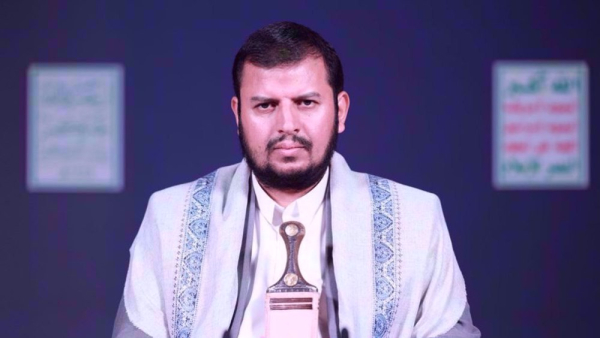
emeni leader Abdul Malik al-Houthi has vowed that his country stands ready with all options and will use every means at its disposal to confront the ongoing unprovoked and reckless US-Israeli aggression against Iran.
In a speech delivered on Thursday, al-Houthi said that “Yemen cannot remain neutral or silent and will do everything to confront the Zionist project in the West Asia region.”
“Iran was the only country which fully supported the Yemenis against the repeated US and Israeli aggressions,” he added.
He further emphasized that “the Yemeni stance against the US and Israel is clear and transparent and is not directed against any Muslim nation.”
“We have no hostile intentions against any Islamic country.”
Houthi further emphasized that the ongoing US-Israeli aggression against Iran was “illegitimate and has no justification.”
Iran’s military: US forces in region have collapsed, hiding in hotels
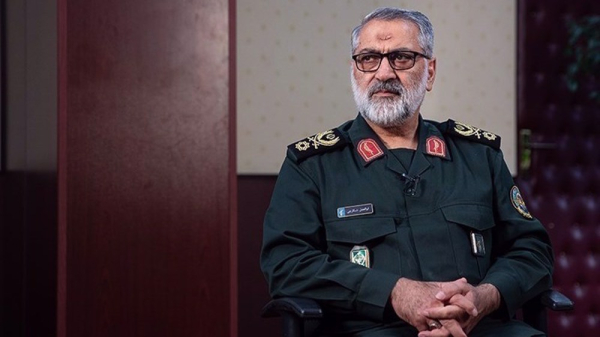
Iran's military is closely monitoring US forces across the region, the senior spokesman for Iran’s Armed Forces says, asserting that the American military structure in West Asia has "collapsed in the shortest possible time."
In a wide-ranging interview with the Iranian news agency IRNA, Brigadier General Abolfazl Shekarchi expressed strong criticism of US military adventurism in the region, while highlighting the Iranian response to ongoing hostilities.
He said that US personnel are now forced to abandon certain military bases and take refuge in civilian hotels, a move that he condemned as an attempt by the US to use civilian structures for military cover.
"The Americans, who once relied on their military bases to establish a presence, are now hiding in hotels and relying on the civilian areas of our region as a protective shield," Shekarchi said.
"This marks a humiliating retreat and an admission of their inability to defend themselves."
He said that the American forces are no longer able to sustain a military presence in several regions of West Asia, citing the destruction of key US bases.
"We have dismantled 17 US bases in the region, and they have failed to protect their forces or their installations," Shekarchi stated, adding that the failure of US military plans is a significant blow to American credibility.
The spokesman further discussed Iran’s evolving defense strategy, stating that the 12-day war in June had catalyzed a major shift in the country’s military doctrine.
"Following the 12-day war, we changed our defensive doctrine to an offensive one," Shekarchi said.
"This does not mean we are waging aggression against others, as the US does, but rather that any state that initiates aggression against us will be struck until it is destroyed. We will not relent until we have achieved victory and punished the aggressors."
He clarified that Iran’s new offensive posture is defensive in nature, aimed at safeguarding the country’s sovereignty and deterring foreign intervention.
"Our goal is to continue the fight until the enemy is punished, and we can remove the shadow of war from the Islamic Republic forever," Shekarchi explained.
The general also emphasized that Iran’s military doctrine is strictly focused on responding to aggression and that Tehran does not seek to engage in unnecessary conflict.
However, he stressed that Iran's resolve would not falter in the face of continued foreign interference. "If they attack us, we will retaliate with everything we have," he stated.
Despite the ongoing US-Israeli terrorist war, Shekarchi made it clear that even if the hostilities were to cease, Iran’s conditions for peace would have to be met.
He referenced the conditions laid out by the new Leader of the Islamic Revolution Ayatollah Seyyed Mojtaba Khamenei, asserting that these conditions are non-negotiable.
“The Strait of Hormuz will never return to the way it was before,” Shekarchi declared. "We have set four conditions, and until they are met, we will not leave the Americans alone."
He added that Iran’s security in the region would not be compromised, and that any foreign forces operating near Iranian borders would be targeted.
"The Americans have lost their grip on the region, and their F-35 fighter jets will no longer be safe," he warned.
"Any base that hosts US forces in the region will be a target for us. We are fully prepared to respond wherever the threat originates."
Shekarchi also shared grim figures regarding the toll the war has taken on US and Israeli forces.
He confirmed reports of heavy casualties among American personnel, estimating that between 600 and 800 US soldiers have been killed, with nearly 5,000 others wounded.
In addition, the general cited sources within Israel, who said that 1,321 Israeli soldiers have been killed in retaliatory strikes from Iran.
He noted that these numbers were likely understated by the Israeli regime, which has downplayed its losses in the war.
"In the first few days of the war, we targeted a hotel where American soldiers were hiding, and 160 American personnel were either killed or wounded," Shekarchi stated.
"This was just one of many strikes that have taken place, and the casualties on both sides continue to mount."
The general also pointed to the significant damage inflicted on Israeli infrastructure, noting that key military and industrial targets have been struck, resulting in extensive damage to Israel’s military capabilities.
“Israeli defense systems, including their air defense and military centers, have been completely destroyed,” Shekarchi said. “Even their most advanced facilities have been targeted, and the impact has been devastating.”
Iran’s strategy in the war
The military spokesman emphasized that Tehran is determined to maintain control of the situation in the region. "We have always maintained the initiative in this war," Shekarchi said.
"We have not been on the defensive; we have been on the offensive from the beginning, and we will continue to lead the conflict until we achieve our objectives."
He highlighted that the Iranian military had deployed a range of advanced technologies and capabilities in its retaliation, including cutting-edge air defense systems that have successfully targeted US F-35 fighter jets.
"Our capabilities are growing stronger by the day, and we are constantly improving our military systems to ensure that we can meet any challenge," Shekarchi said.
Addressing the regional countries that have been affected by the war, Shekarchi urged them to take a stand against the US and Israeli forces.
"We call on the Muslim nations of the region to stop providing shelter to US forces," he said.
"We respect the sovereignty of all countries, and we do not seek to impose our will on anyone. However, if you allow foreign forces to use your land and airspace for military operations against Iran, you will bear the consequences."
The general also reiterated that Iran’s military actions are aimed at defending its sovereignty and ensuring the security of the region, not at attacking innocent civilians.
"The land and airspace of the Muslim world are sacred to us, and we do not seek to harm anyone. However, if foreign forces use these lands to attack us, we will retaliate accordingly," Shekarchi said.
US strategy and NATO’s reluctance
In his analysis of the US strategy, Shekarchi pointed out that the US is seeking a way to exit the war with its reputation intact.
"The U is trying to exit the war with honor, but it is clear that they have already failed in their objectives," he said.
"The longer they remain, the weaker they become, and the more they risk further damage to their military and political standing."
He also noted that even NATO allies have refused to join the US in the war. "NATO members have declined to support the US in this war," Shekarchi said.
"They understand that engaging in this conflict would only bring more instability and harm to their own nations."
Despite the heavy toll the war has taken on US and Israeli forces, Shekarchi emphasized that the Iranian economy remains resilient.
"Even in the face of the most intense military pressure, our economy has held up," he said. "We have faced challenges, but our resolve has only strengthened. The Iranian people are united, and they will not be broken."
He pointed out that the US is facing significant economic costs as a result of the war, and that these costs would continue to mount as the conflict drags on.
"The world is beginning to see that the US is no longer the dominant power it once was," Shekarchi said.
"We are confident that in the long run, the global community will shift its stance on the U.S. and its aggressive policies."
As the war continues, Shekarchi emphasized Iran’s determination to press on until its goals are achieved.
"The US and Israel are mistaken if they think we will back down," he warned. "Our resolve is stronger than ever, and we will continue to fight until we achieve our objectives."
He reiterated Iran’s commitment to defending its sovereignty and ensuring the security of the region.
"We will not stop until the American and Israeli forces are removed from the region, and until our conditions are met," Shekarchi said.
Press TV’s website