zarezadeh
Kashmiri medical expert quoted by Reuters:
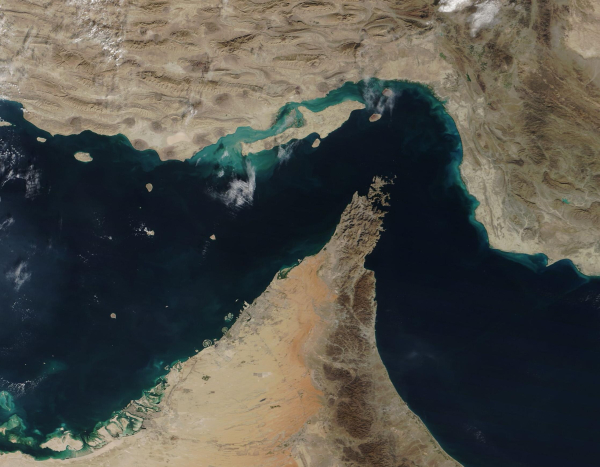
Did you know that Iran’s leverage in the #Strait_of_Hormuz is not just oil?! It’s also the cables that run under the water!
The Strait of Hormuz and the Red Sea are home to the cables that power banking, artificial intelligence, and basically your entire online life, and they are now in a real fire zone.
Why this matters: You don’t need to bomb cities to create chaos; just slow down the data, and the rest will take care of itself!
If these cables fail, it won’t be a regional problem, it will be a global one.
Footnote:
If things get tight. The Iranians will have plenty of surprises for the Epstein-like supercriminals.
Ayatollah Khamenei Shamed Death
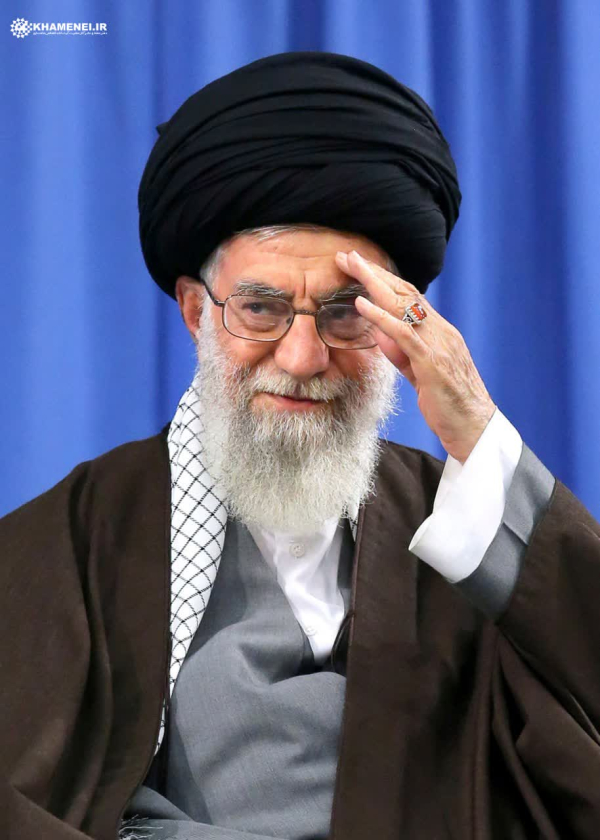
Tweet by Ravish Kumar; Journalist:️“[Ayatollah] Khamenei’s martyrdom will be remembered for centuries.
He knew that this time America and Israel would kill him, but he did not go to shelter or hide. He did not hide behind mountains. He shamed death and went towards it.”
Fareed Zakaria, American Host: In Iran, the Future of War Is Evolving
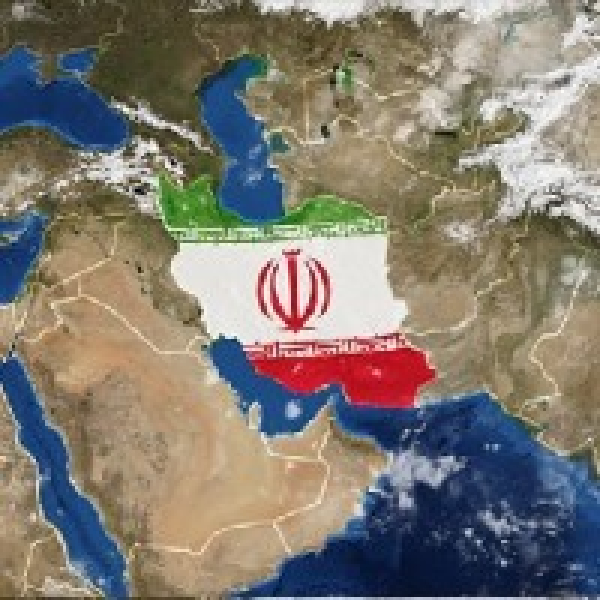
Beyond the daily headlines about attacks and strikes in the Middle East, the nature of war is changing entirely.
In the first week of Tehran’s response, drones accounted for about 71 percent of recorded attacks against [American interests in] the Persian Gulf states.
We could already see many of these trends in Ukraine, but in Iran, the outline of the “future of war” is definitely emerging.
Today, war can mean suicide drones, built from commercial parts and launched en masse.
The economics of war are being upended; a single drone often costs about $35,000.
It is really about a new military architecture: low-cost autonomous systems, AI-assisted targeting, commercial satellite imagery, flexible communications, integrated sensors, and cyber tools that all work together.
The goal is no longer just to hit. This contrast says it all. It is no longer simply a matter of technological sophistication, but of industrial scale, software integration, and the speed with which lessons learned from the battlefield are translated into mass production.
This revolution in military affairs has deeper implications. With drones, combat is everywhere, and soldiers will have no comfort.
In 2026, Iran will teach the world a more important lesson: “Precision” will now be mass produced.
The countries that win are not simply those with the best military platforms; Rather, the victors will be those nations that can combine a small number of highly advanced and expensive weapons with a large number of inexpensive drones.
Human judgment will eventually be replaced by computer algorithms. This is the future of warfare, and it is coming sooner than most of us imagine.
'Don’t be a tool': Yemen warns Arab states over 'Zionist conspiracy', backs Iran
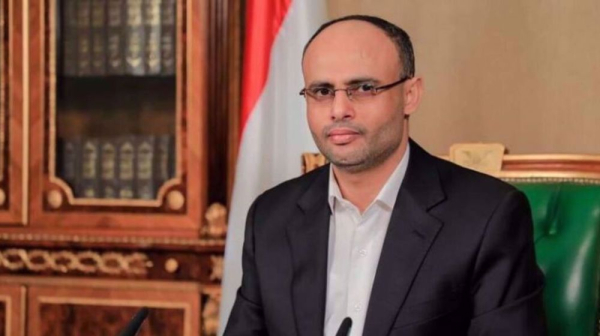
The chairman of Yemen’s Supreme Political Council has reaffirmed unwavering solidarity with Tehran, warning Arab states not to become “tools” for a “Zionist conspiracy” following illegal US-Israeli aggression against Iran.
Speaking on Wednesday, Mahdi al-Mashat said Yemen stands by Iran while stressing the Islamic Republic’s right to defend itself and confront the aggressor regimes.
He further noted that the military assault against Iran was launched due to the Zionists’ “covetous” policies in the region.
Addressing Arab and Islamic countries, he said, “If you don’t help defeat the Zionist conspiracy, don’t be a tool to implement it.”
The criminal US-Israeli aggression on Iran began on February 28 with airstrikes that assassinated senior Iranian officials and commanders.
The Iranian armed forces have responded by launching almost daily missile and drone operations targeting locations in the Israeli-occupied territories as well as US military bases and assets across the region.
Additionally, on Wednesday, the political bureau of Yemen's Ansarullah popular resistance movement congratulated Iran on its successful retaliatory operations.
It said the anti-Iran attacks are aimed at empowering the Israeli regime to achieve absolute control over the entire region.
Iran is currently fighting in defense of the region, the Islamic Ummah, and sanctities, against the front of blasphemy and rebelliousness, it pointed out.
Now, the only option is jihad (fighting for the sake of God) and resistance against the Zionist-American enemy that only understands the language of force, it added.
Meanwhile, a report said Ansarullah stands ready to enter the battlefield in support of Iran.
"As they have stated since the first day of the unlawful aggression on February 28, Ansarullah is on full alert and ready to enter the battlefield," Tasnim News Agency reported, citing an informed source.
The resistance movement, the source added, is prepared to enter the equation by exercising control over the strategic Bab el-Mandeb Strait as an instrument of pressure targeting the aggressors.
Press TV’s website
Aggressor-linked vessels forfeit right to innocent passage in Strait of Hormuz, Tehran tells IMO
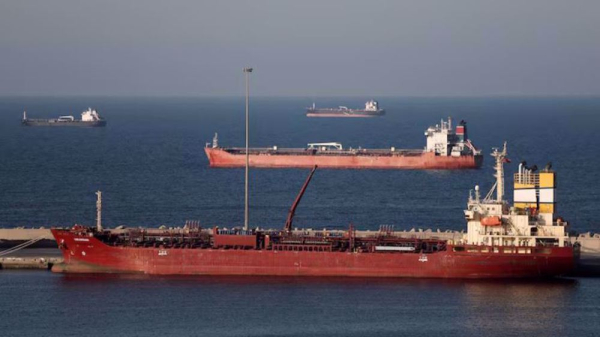
Iran’s permanent representative to the International Maritime Organization (IMO) Ali Mousavi says vessels not linked to aggressors can enjoy safe passage through the strategic Strait of Hormuz provided that they do not join or support anti-Iran aggression and adhere to regulations set by authorized bodies inside the Islamic Republic.
In a meeting with IMO Secretary General Arsenio Dominguez in London on Wednesday, Mousavi outlined Iran’s stance on the Strait of Hormuz, a waterway in the Persian Gulf which has been tightly controlled by Iran since the start of the US-Israel aggression on February 28.
“Vessels, equipment and assets belonging to or linked to the aggressor parties or those participating in the [US-Israel] aggression cannot enjoy innocentQ or non-hostile passage,” Mousavi said.
He reiterated Iran, as a country committed to the United Nations Charter and international regulations, has persistently emphasized the necessity of freedom of navigation and maritime safety and security.
He affirmed that the ongoing insecurity in the Persian Gulf, the Strait of Hormuz and the Sea of Oman is the “direct” result of the military campaign and destabilizing measures of the United States and the Israeli regime.
In line with its inherent right of legitimate defense, Iran has adopted necessary and proper strategies to prevent the abuse of the aggressors and their allies of the Strait of Hormuz for their hostile acts, the diplomat noted.
'Most extensive': IRGC launches 82nd wave of missile, drone strikes against US-Israeli assets
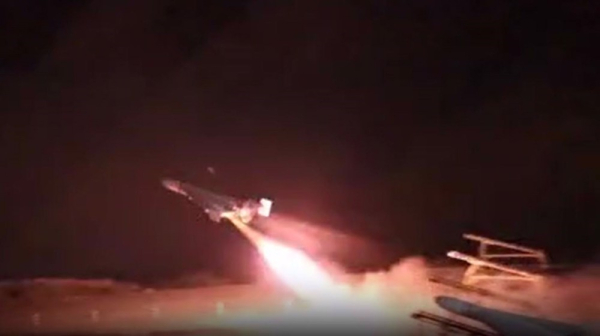
Screengrab from footage released by IRGC shows the moment of launch of suicide drones against US-Israeli assets in the 82nd wave of Operation True Promise 4, on March 26, 2026.
The Islamic Revolution Guards Corps (IRGC) has announced the launch of the 82nd wave of retaliatory operations against the invading US-Israeli coalition, using different types of missiles and drones.
In a Thursday statement, the IRGC said that this wave came in retaliation for earlier airstrikes against critical infrastructure and civilian facilities throughout Iran.
It noted that the wave began early on Thursday and would continue throughout the day.
According to the statement, designated US interests in Arifjan and al-Kharj districts of Saudi Arabia, the US Defense Logistics Site (kGL), the Patriot radar systems in Bahrain's Sheikh Isa region, support fuel depots of the US military, a hangar for P8 surveillance aircraft, a hangar for MQ-9 Reaper combat drones, and a satellite communications dish for drones deployed at Ali al-Salem airbase were devastated with a large swarm of kamikaze drones.
Trump is in a position where he has no good exit strategy

Piers Morgan, a prominent British presenter:
"If you were advising Trump, what advice would you give him? ... What advice would you give him that would be a skillful and achievable way to get America out of this war?"
John Mearsheimer, a prominent professor of international relations:
“I’ve thought about this for a long time and I’ve talked to some very smart people. What they mostly say is that President Trump should declare victory quickly and get out of the war.
He could do that, but it would be seen as a humiliating defeat for the United States. And then, the Iranians might not agree to end the war.
And as I said, the Iranians have a lot of cards to play. They can do a lot of damage. So even if we pull out, it’s not clear that it would solve the problem. The United States would also look like it had suffered a humiliating defeat. So I think President Trump has put himself in a position where he really doesn’t have a good exit strategy.”
IRGC hits over 70 Israeli targets with precision missiles in 81st wave of retaliation
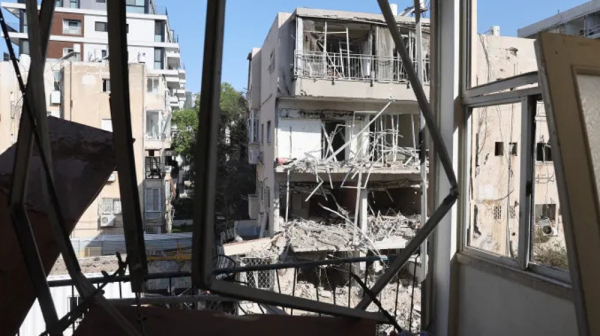
Islamic Revolution Guards Corps (IRGC) says precision-guided Emad, Qiam, Khorramshahr-4, and Qadr missiles struck more than 70 locations across the occupied territories in the 81st wave of Operation True Promise 4.
In a statement on Wednesday, the IRGC Public Relations Department said the missiles successfully hit targets in Haifa, Dimona, Al-Khudriyya near Haifa, and areas north and south of Tel Aviv.
According to field intelligence cited by the IRGC, the regime's casualty toll has gone up, notably following the previous three waves of Iran's powerful strikes.
The total number of killed and wounded has now surpassed 2,500, the statement said.
It said the IRGC and the Army have risen "in the stature of a nation," declaring that the entire nation is mobilized to defend beloved Iran.
In a direct appeal, the IRGC addressed the American people, warning that they are being misled by warmongers such as Trump and Netanyahu through lies and distortion of battlefield realities.
"The truth of the war you must observe at American gas stations, on the streets of Iran, and in the skies of Tel Aviv and Haifa," the statement read.
FM says Iran's policy rests in continued resistance, rules out negotiations
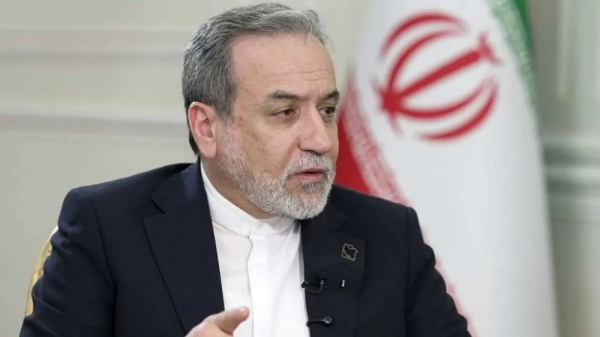
Foreign Minister Abbas Araghchi says Iran's current policy is to continue resistance in the face of ongoing unprovoked American-Israeli aggression, while ruling out negotiations and ceasefire in the absence of required guarantees.
"At present, our policy is to continue resistance, and no negotiations have taken place," the top diplomat said in a televised interview on Wednesday.
"There are no negotiations underway," he reiterated elsewhere in his remarks, besides questioning the reliability of outside assurances.
Regional diplomatic contacts have taken place, but Tehran’s position has not changed, the official stated.
“Many foreign ministers from the region have contacted Tehran, but Iran’s position has remained ‘principled and firm.’"
'Iran dismisses intl. guarantees in favor of inherent guarantee created by reprisal'
"International guarantees are not 100 percent reliable," Araghchi stated in reference to reported efforts by some third countries to act as intermediaries towards ending the unlawful aggression that has prompted decisive retaliation on the part of the Islamic Republic.
"Through the inherent guarantee that we created ourselves, no one will dare again to go to war with the Iranian people,” the official added, pointing to the Iranian reprisal that has seen the country's Armed Forces launch at least 81 waves of unrelenting counterstrikes against sensitive and strategic American and Israeli targets throughout the region.
Iran rejects US proposal, lays out five conditions for ending imposed war: Source to Press TV
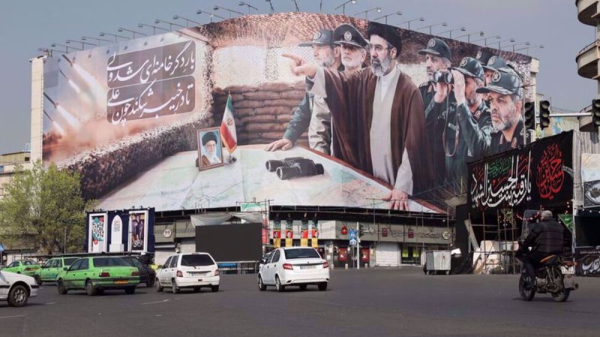
Iran has responded negatively to an American proposal aimed at ending the ongoing imposed war, insisting that it will only occur on Tehran's own terms and timeline, a senior political-security official told Press TV on Wednesday.
The official with knowledge of the details of the proposal, speaking exclusively to Press TV, said Iran will not allow US President Donald Trump to dictate the timing of the war's end.
"Iran will end the war when it decides to do so and when its own conditions are met," the official said, emphasizing Tehran's resolve to continue its defense and inflict "heavy blows" on the enemy until its demands are fulfilled.
According to the official, Washington has been pursuing negotiations through various diplomatic channels, putting forward proposals that Tehran views as "excessive" and disconnected from the reality of America's failure on the battlefield.
The official drew parallels with two previous rounds of negotiations held in the spring and winter of 2025, characterising them as deceptive.
In both instances, the official stressed, the United States had no genuine intention to engage in meaningful dialogue and subsequently carried out military aggression against Iran.
Tehran has therefore categorized the latest overture, which was delivered via a friendly regional intermediary, as a ploy to heighten tensions and has responded negatively.
The official outlined five specific conditions under which Iran would agree to end the war. These include:
A complete halt to "aggression and assassinations" by the enemy.
The establishment of concrete mechanisms to ensure that the war is not reimposed on the Islamic Republic.
Guaranteed and clearly defined payment of war damages and reparations.
The end of the war across all fronts and for all resistance groups involved throughout the region
Iran's exercise of sovereignty over the Strait of Hormuz is and will remain Iran's natural and legal right, and it constitutes a guarantee for the implementation of the other party's commitments, and must be recognized.
The official further noted that these stipulations are in addition to demands previously presented by Tehran during the second round of negotiations in Geneva, which took place just days before the US and Israel carried out a fresh round of aggression on February 28.