zarezadeh
Trump ‘stuck between a rock and a hard place', lacks Iran war strategy: Ex-CIA chief
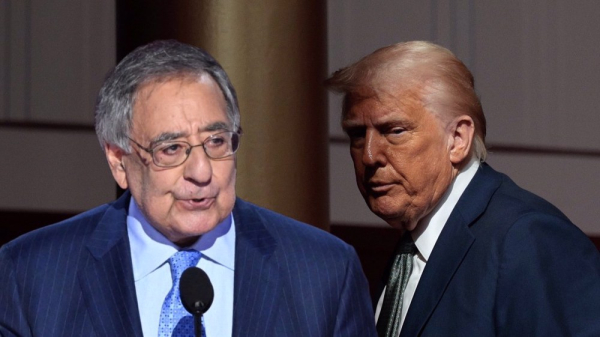
A withering critique from longtime Washington insider and former top spy Leon Panetta has intensified scrutiny of US President Donald Trump’s handling of the war against Iran.
In an interview with the Guardian newspaper on Sunday, Panetta, who previously also served as the US defense secretary (now war secretary), warned that the United States finds itself ensnared in a rapidly deteriorating crisis with few viable paths forward.
He portrayed an administration led by Trump that has slipped into a precarious position after weeks of unprovoked and unjustified aggression against the Islamic Republic of Iran, which began with the assassination of the Leader of the Islamic Revolution, Ayatollah Seyyed Ali Khamenei, on February 28.
He said Trump is "stuck between a rock and a hard place" and warned that his administration's approach projects an image of weakness on the international stage.
Panetta, a veteran of Democratic administrations spanning decades, did not hold back in his critique of the incumbent US president's decision-making style.
He said Trump has displayed a tendency toward naivety regarding the unpredictable nature of wars, saying the president appears to operate under the belief that simply repeating assertions might make them come true.
Such conduct, Panetta noted, was more “befitting of children than of presidents.”
His remarks came as the Iranian retaliatory operations continue to inflict heavy blows on the US military infrastructure in the region, decimating radars, drones and fighter jets.
The strategic waterway of the Strait of Hormuz also remains closed to US vessels, which has led to a dramatic rise in energy prices across the world.
Passage through Strait of Hormuz possible only through coordination with Iran: Defense Council
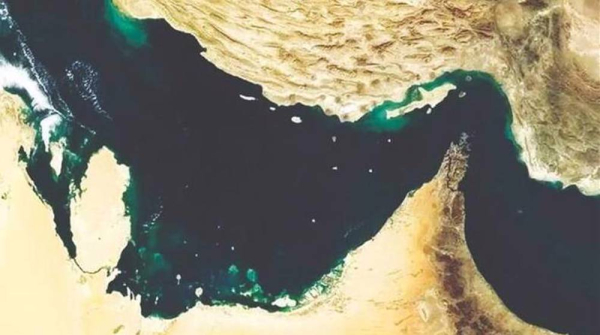
Iran's Defense Council says the passage of non-hostile vessels through the Strait of Hormuz is possible only via coordination with Iranian officials, amid ongoing US-Israeli aggression against Iran.
In a statement released on Monday, the Council underscored that Iranian Armed Forces will deliver a decisive and destructive response to any act of aggression against their nation's power plants and energy infrastructure without hesitation.
Iran struck the Dimona nuclear complex in the Israeli-occupied territories in reprisal for the attack on Natanz nuclear facility, and targeted US interests in retaliation for the attack on energy infrastructure in the southern gas-rich Asalouyeh region.
Iran's Defense Council also warned that any attempts by enemies to attack Iranian coasts or islands in the Persian Gulf waters would prompt Iranian forces to lay various types of naval mines along all maritime transition routes, and the move would be within the framework of their legitimate right and in accordance with accepted military statutes.
This would consequently create a situation in the Persian Gulf similar to the status quo in the Strait of Hormuz, and would freeze maritime activities in the strategic water body, it added.
IRGC targets US Fifth Naval Fleet, other sites in 76th wave of reprisal attacks
The Islamic Revolution Guards Corps (IRGC) has launched a fresh wave of retaliatory airstrikes, targeting military infrastructure belonging to the hostile US and Israeli regimes.
In a statement released on Monday, the IRGC’s Public Relations Department announced that it had successfully conducted the 76th wave of attacks as part of Operation True Promise-4, as part of the ongoing retaliation against illegal US-Israeli aggression against Iran.
During the operation, powerful drones, along with liquid-fuel Qiam and solid-fuel Zulfaqar missiles, struck the United States’ Fifth Naval Fleet, as well as its bases of al-Dhafra, Victoria, and Prince Sultan across the region, it said.
The Zionist regime’s military infrastructure in Tel Aviv, Ashkelon, Haifa, and Gush Dan were also targeted with heavy, solid-liquid and navigable missiles such as Kheybar Shekan and Qiam.
The elite military force said, “The sustained firing of Iranian missiles and drones, their passing through the enemy’s advanced air defense systems, and their effective and widespread hitting of strategic targets have annulled the claims and delusions of warmongering American and Zionist officials about the destruction of the Islamic Republic of Iran’s missile and naval capability.”
In an earlier statement on Monday, the IRGC said the drone unit of its Ground Force had carried out a massive attack against the positions and places of gathering of separatists in Erbil, in Iraq’s semi-autonomous Kurdistan Region.
It noted that the operation took place as part of the 75th wave of Iranian retaliatory strikes against the enemies.
“The enemies will be safe nowhere. We will find them (the enemies), whose fates have already been announced,” it warned.
Meanwhile, the IRGC said the 75th wave of Iranian attacks involved the targeting of new military deployments and hiding places of Israeli troops across the occupied Palestinian territories.
Ballistic missiles were also fired at Prince Sultan Air Base in al-Kharj, Saudi Arabia, which is a key hub for US aggressors' deployments and anti-Iran aerial assaults, it added.
The US and Israel launched their criminal act of aggression against Iran on February 28 by assassinating Leader of the Islamic Revolution Ayatollah Seyyed Ali Khamenei, along with senior military commanders, in flagrant violation of the country’s sovereignty.
The enemies have deliberately targeted Iran’s civilian infrastructure and energy facilities, killing hundreds of Iranian people.
Iran began to swiftly retaliate against the terrorist military assault by launching barrages of missile and drone attacks on the Israeli-occupied lands as well as on US bases and assets in regional countries.
Press TV’s website
Trump backed down after Iran threatened to retaliate, no talks underway: Report
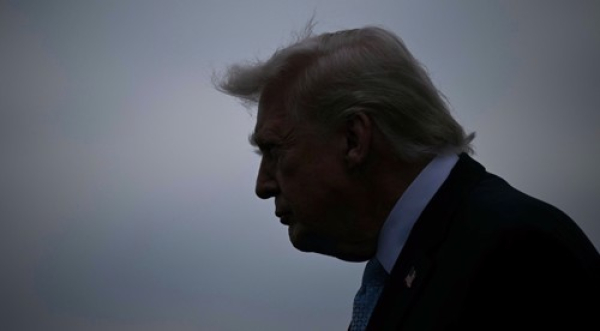
US President Donald Trump has backed away from his 48-hour ultimatum to strike Iran’s power plants after the Islamic Republic warned that all energy and power installations in the region would be targeted in retaliation, a report said.
Trump claimed in a post on his Truth Social media platform that the US and Iran have had “very good and constructive conversations over the past two days regarding a complete and total resolution of our hostilities in the Middle East.”
The US president also said that he had ordered the Pentagon to postpone all plans for military strikes on Iran’s electricity generation infrastructure for five days subject to the outcome of the negotiations.
“I have instructed the Department of War to postpone any and all military strikes against Iranian power plants and energy infrastructure for a five-day period, subject to the success of the ongoing meetings and discussions,” he said, claiming that conversations with Iran will continue throughout the week.
He had previously threatened to attack Iran’s power plants within 48 hours if Iran did not fully open the Strait of Hormuz.
A source familiar with internal discussions in Tehran told Tasnim news agency on Monday that there has been no official contact between Tehran and Washington.
“From the beginning of the war until today, messages have been sent to Tehran by some mediators, and the clear response has been that we will continue to defend ourselves until we achieve the necessary deterrence.”
The source, who spoke on condition of anonymity, said Trump’s claim was aimed at stabilizing the markets and buying time to implement his military plans. “With this kind of psychological warfare, neither the Strait of Hormuz will return to pre-war conditions nor will calm return to energy markets.”
Trump retreated from attacking Iran’s vital infrastructure when he realized that its threats of military action were legitimate, the source said.
Trump’s remarks came as the deadline he had given Iran was nearing its end.
According to the source, Trump’s new five‑day ultimatum reflects his administration’s intention to continue to commit crimes against the Iranian nation, “and we will continue to respond and defend the country extensively.”
The US and Israel started a fresh round of aerial aggression on Iran on February 28, some eight months after they carried out unprovoked attacks on the country.
Iran began to swiftly retaliate against the strikes by launching barrages of missile and drone attacks on the Israeli-occupied territories as well as on US bases and interests in regional countries.
Press TV’s website
Italian Prime Minister to Trump:
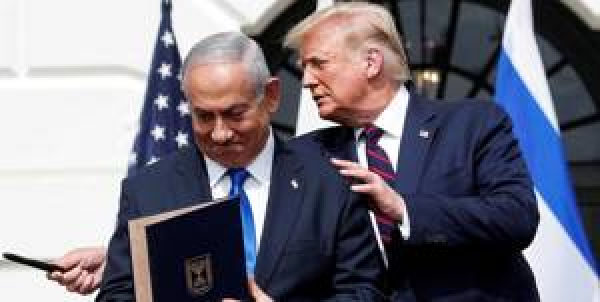
You must understand that you are only the President of the United States, not Italy, France, or Germany; and you have no right to decide on the sovereignty of these countries.
It was you who made the Strait of Hormuz unsafe because of your war with the Iranians. We will not go to war with you against them, and you are responsible to the world to restore the security of this oil tanker route as it was before.
Europe will not take responsibility for your decisions - whether right or wrong - and Italy rejects this war, which brings us nothing but evil.
What are Iran’s 6 basic conditions for stopping the imposed war with the US and Israel?
A high-ranking Iranian security and political official told Al-Mayadeen:
What Iran is currently implementing in its defensive war is a plan it prepared a few months ago.
Iran is implementing the pre-prepared plan step by step and with great strategic patience; after destroying the enemy’s air defense infrastructure, Iran now has complete control of its airspace.
With this military control gained by Iran, Iran sees no prospect of an imminent ceasefire.
Iran intends to continue its policy of punishing the aggressor until it teaches a historical lesson to the American, Israeli and Trump aggression.
Some regional parties and mediators have made proposals to Tehran to stop the war, but Iran has set conditions that must be taken seriously.
Iran has set 6 basic conditions for stopping the war in the new strategic legal framework;
Iran's demands
The first demand:
Guarantee that war will not happen again
The second demand:
Closing US military bases in the region.
The third demand is to repel aggression; pay compensation to Iran.
The fourth demand is to end the war on all fronts in the region.
The fifth demand of Iran is to implement a new legal regime for the Strait of Hormuz;
The sixth demand is to prosecute and extradite anti-Iranian media outlets.
Iran’s Army successfully attacks Ben Gurion airport using advanced Arash-2 drones
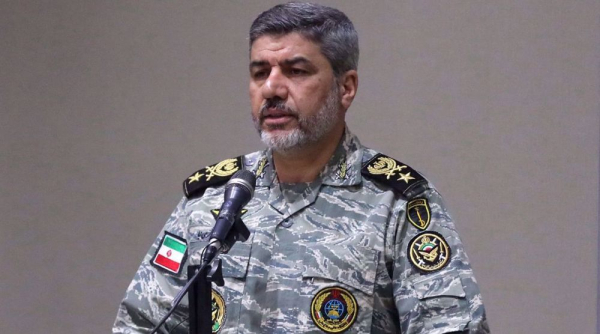
The Islamic Republic of Iran Army has successfully carried out retaliatory strikes targeting Tel Aviv’s Ben Gurion airport using advanced Arash-2 drones.
Army spokesman Brigadier General Mohammad Akraminia announced the operation on Sunday amid sustained retaliatory operations by the Iranian Armed Forces in the face of the US-Israeli aggression against the country.
“Most of the drones used against the Ben Gurion airport were Arash-2 which are more advanced and destructive that Kian and Arash-1 drones,” he said, adding that Arash-2 unmanned aerial vehicles “have a range of 2,000 kilometers and are known as Israel-hitting drones.”
With its small cross-sectional area, Arash-2 drone can easily pass through radar systems while it is very difficult for the enemy to detect it, he added.
Arash-2 drone, which is capable of carrying out precision-strike attacks, can fly for a long time and has low price compared to other drones and air defense missiles that target it.
Akraminia also said, “Arash-2 done is produced very fast and can swiftly be prepared for launch. Therefore, whenever we decide, we can easily launch a large number of this UAV.”
Meanwhile, the Army spokesman described Ben Gurion as the Israeli regime’s largest airport, where refueling tankers have stationed.
He further noted that aircraft maintenance industries are located near the Ben Gurion airport, which is the source of attacks against Iran.
“Due to maritime and ground restrictions, more than 90 percent of the regime’s trade is carried out by airlines, mainly through the Ben Gurion airport, which is considered the Zionists’ main economic artery and driving force.”
The criminal US-Israeli aggression on Iran began on February 28 with airstrikes that assassinated senior Iranian officials and commanders.
The Iranian Armed Forces have responded by launching almost daily missile and drone operations targeting locations in the Israeli occupied lands as well as US military bases and assets across the region.
The Islamic Republic has been exercising its legitimate right to self-defense by carrying out retaliatory strikes against the enemies, which are based on the principle of “eye for an eye.”
Press TV’s website
Iran will obliterate energy infrastructure in region if its power plants attacked: Qalibaf
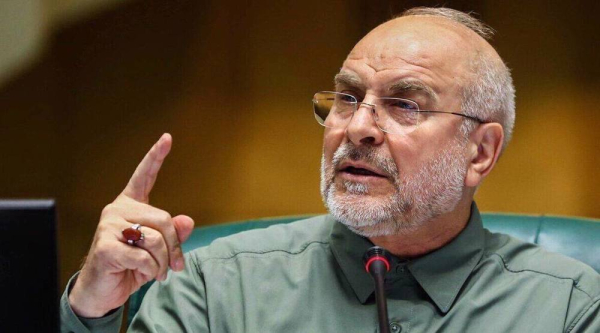
Iran's Parliament Speaker Mohammad Baqer Qalibaf says the Islamic Republic will “irreversibly” destroy vital energy and fuel infrastructure across the region if the United States attacks power plants inside Iran.
Qalibaf issued the stark warning in a post on his X account on Sunday in response to the latest threat by US President Donald Trump, who said Saturday night that the United States will “hit and obliterate” Iran’s “various power plants, starting with the biggest one first!” if the country does not “fully open, without threat”, the Strait of Hormuz, within 48 hours from this exact point in time.”
“Immediately after our country’s power plants and infrastructure are hit, vital infrastructure and energy and fuel infrastructure across the region will be considered legitimate targets [for Iran] and will be destroyed in an irreversible manner,” Qalibaf said.
The top Iranian parliamentarian added that oil prices will also continue to rise for a long period of time.
Earlier on Sunday, spokesman for the Khatam al-Anbiya Central Headquarters Lieutenant Colonel Ebrahim Zolfaqari warned of retaliation if Iran’s fuel and energy infrastructure are attacked in the US-Israeli aggression.
“If Iran’s fuel and energy infrastructure is attacked by the enemy, all energy infrastructure, as well as information technology (IT) and water desalination facilities, belonging to the US and the regime in the region will be targeted pursuant to previous warnings,” he said.
Since February 28, when the US and Israel launched their unprovoked aggression, Iran has blocked the Strait of Hormuz to oil and gas tankers affiliated with the aggressor regimes and those cooperating with them.
The disruption of tanker traffic in the waterway, lying between the Persian Gulf and the Sea of Oman, has triggered a major surge in energy prices.
In a desperate attempt to control the market, Trump said that the US Navy will escort tankers through the Strait of Hormuz. He even offered political risk insurance for tankers transiting there.
The US president also sought to form a coalition to secure the strait, asking NATO countries to contribute naval and air assets. However, most of Washington’s allies have declined to commit forces.
Handala hacktivists vow to release all maps of electricity, water infrastructure in region
Following Trump’s threat to target Iranian power plants, the pro-resistance hacktivist group Handala warned that it would release all the maps of electricity and water infrastructure across the region soon.
“We will release all the maps of the regime’s and the region’s electricity and water infrastructure in the coming hours. All of them have been registered in the target bank, and we are waiting for your foolish move,” it said on X.
Press TV’s website
Iran Army hits invading F-15 fighter jet over southern coast
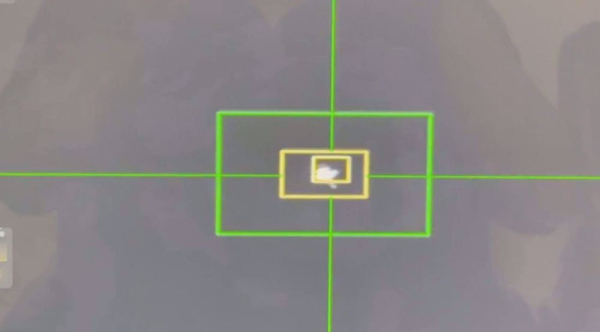
The Iranian Armed Forces have managed to target an invading F-15 fighter jet in the skies over the country’s southern coast.
In a statement released on Sunday, the Islamic Republic of Iran Army said that the Joint Air Defense Command had intercepted and fired ground-to-air missiles at the enemy fighter jet near Hormuz Island a few hours ago.
It also noted that investigations are underway to learn about the F-15’s fate.
The interception adds to Iran’s previous targeting of six invading jets, three of them over Iran’s skies and the remaining in Kuwait.
It further reflects Iran’s assertions of its growing military prowess and readiness to defend its airspace amid the illegal US-Israeli aggression against the country.
The US and Israel launched their criminal military assault against Iran on February 28 by assassinating Leader of the Islamic Revolution Ayatollah Seyyed Ali Khamenei, along with senior military commanders, in flagrant violation of the country’s sovereignty.
The enemies have deliberately targeted Iran’s civilian infrastructure and energy facilities, killing hundreds of Iranian people.
Iran began to swiftly retaliate against the terrorist act of aggression by launching barrages of missile and drone attacks on the Israeli-occupied territories as well as on US assets in regional countries.
Press TV’s website
Enemy fighter jet operations over central Iran reduce sharply after F-35 strike: Source
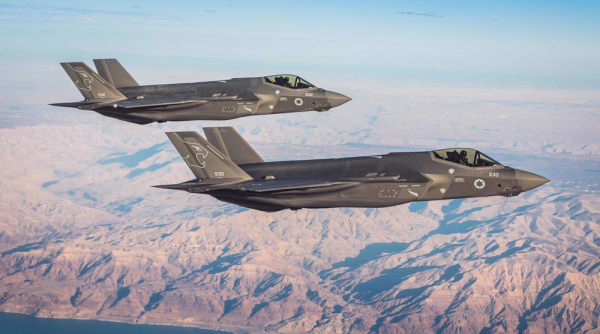
Iranian air defense systems have successfully reduced military aggression by American and Israeli fighter jets in the central regions of the country after the F-35 aircraft was struck, a highly-placed intelligence source told Press TV.
According to the source, Iran's advanced and integrated air defense network has inflicted multiple blows against enemy invading aircraft, forcing a decrease in the tempo of operations over central Iran.
"The multiple strikes by Iran's integrated air defense system against American and Israeli invading aircraft have led to a significant reduction in military operations by American and Israeli fighter jets in the central regions of the country," the source said.
The source further noted that the enemy had focused on harassment and terrorist actions in central Iran but has so far failed to achieve its objectives.
"After striking the F-35, the pace of military operations has decreased, although aircraft and drones are still being used for reconnaissance purposes," he added.
The intelligence source also revealed that the number of downed drones has reached nearly 200. Citing defensive innovations deployed against enemy aircraft, he said the rate of strikes against enemy warplanes is likely to increase in the coming days.
"Given the defensive innovations against enemy aircraft, it appears that in the coming days, the rate of strikes against enemy warplanes will increase," the source said.
On March 19, the Islamic Revolution Guards Corps (IRGC) aerospace division struck the crown jewel of the US Air Force – the F-35 Lightning II stealth fighter – irrevocably reshaping the strategic calculus of the ongoing US-Israeli aggression, as per experts.
For nearly two decades, the F-35 program stood as the pinnacle of American military dominance – a multi-trillion-dollar, fifth-generation platform designed to pierce the world's most advanced air defenses with total impunity.
That myth was shattered over the skies of central Iran, where the IRGC deployed the domestically built air defense system to expose vulnerabilities of the F-35 aircraft.
As the aggression enters its fourth week, Iran's integrated air defense network has not only endured the heaviest aerial bombardment but has systematically dismantled the technological arrogance of the US-Israeli war machine.
Press TV’s website