zarezadeh
Israel Loses War with Iran
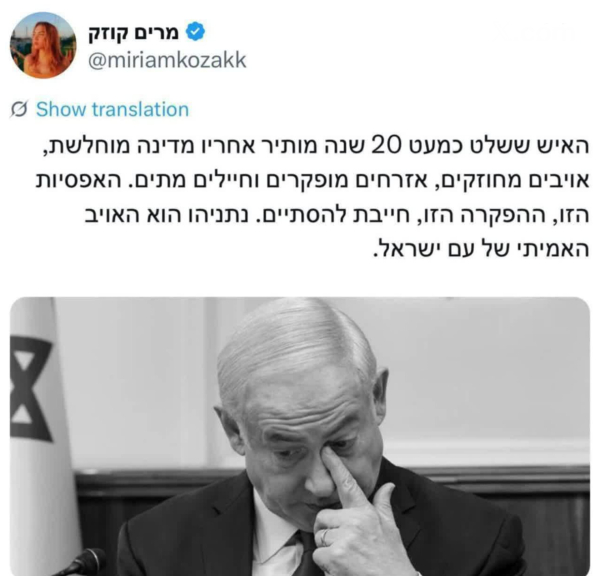
Israeli Social Activist: A Man Who Ruled for Nearly 20 Years Leaves a Weaker Country, Stronger Enemies, Abandoned Citizens, and Killed Soldiers.
This Incompetence and Abandonment Must End. Netanyahu is the True Enemy of the Israeli Nation.
Before Israel's War with Iran, Everyone in the World Thought Israel Was Invincible, But Iran Proved That Israel's Iron Dome Was Just a Superstition and All of Israel's Exaggeration Was Just a Slogan.
Hanzala: We hacked one of the most vital intelligence figures of Mossad

Laura Gilinsky, former Deputy Director of Planning and Strategy of Mossad and current Director General of the Institute for National Security Studies (INSS), was hacked by our cyber forces and more than 100,000 of her top-secret emails are now in our possession and available for public download.
The Blood of Minabe Children Is on Trump's Secretary of War

The American media outlet Politico has reported that Trump's Secretary of War, Pete Hexath, is responsible for the attack on Minabe students at the Shajara Tayyiba school.
As international and domestic pressure mounts in the United States over the attack on the elementary school in Minabe, Pete Hexath's decision to reduce the number of offices at the Pentagon that review civilian casualties has drawn attention.
Some senior US military officials warned the Pentagon last year not to eliminate the oversight offices responsible for reviewing and mitigating the risk of civilian casualties and investigating responsibility for their deaths.
Oil is getting more expensive

The Economist: Some analysts believe that if the Strait of Hormuz remains closed until the end of the month, the price of oil could reach $150 or even $200.
It is noteworthy that Iran has been under sanctions and economic pressure for years. It is now so capable in war, but in less than two weeks the world has faced a problem with the closure of the Strait of Hormuz
The enemy is attacking unjustified targets in neighboring countries with a drone copied from the Shahed drone
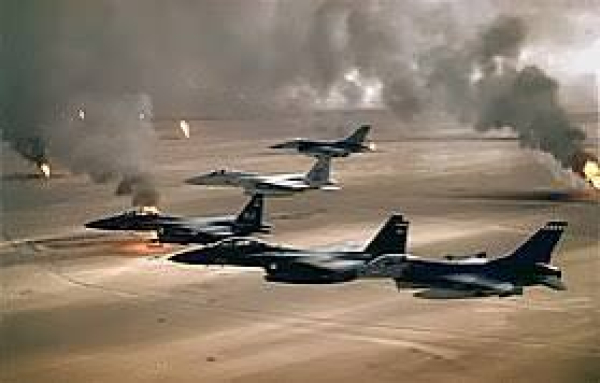
The enemy, defeated on the military battlefield and in building a political coalition against Iran, has resorted to cunning and trickery and, with a diabolical plan, has copied Iran's Shahed 136 drone and is attacking unjustified targets in the countries of the region under the new name of "Lucas drone".
The enemy's goal is to create pessimism and accusations against the Islamic Republic of Iran and ultimately to create differences and divisions between Iran and neighboring countries in order to undermine the defensive, legal and legitimate actions of the armed forces of the Islamic Republic of Iran.
The governments and nations of the region should know that the defense doctrine of the Islamic Republic of Iran against the military aggressions of the United States and the Zionist regime is based on a completely legal basis and has solid logic.
As it has repeatedly stated, the Islamic Republic of Iran only attacks the goals, centers, and interests of the United States and the Zionist regime, and it will take responsibility for any place it targets by issuing an official announcement and will be held accountable for its consequences.
Examples of that are the mischievous attacks on centers in neighboring and friendly countries such as Turkey, Kuwait, and Iraq in the past few days and their attribution to the armed forces of the Islamic Republic of Iran.
The intelligent reactions of the country's authorities to these deceptive and evil moves will nip this conspiracy in the bud, and being deceived by the devil and divisive positions will encourage him to expand it. Therefore, it is necessary to trust each other and, by maintaining unity and cooperation, make the foreign aggressor enemy regret continuing these mischiefs.
We attack the enemies by divine command
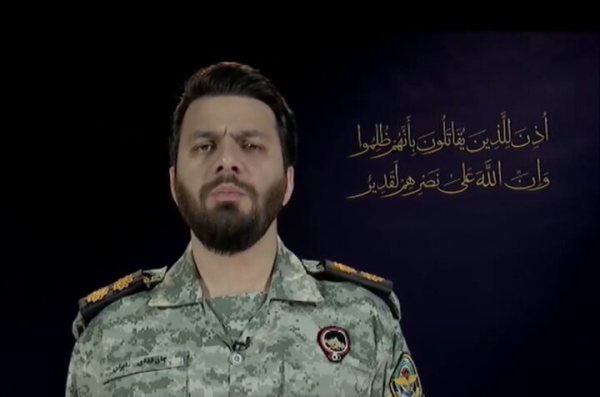
أُذِنَ لِلَّذينَ يُقاتَلونَ بِأَنَّهُم ظُلِموا ۚ وَإِنَّ اللَّهَ عَلىٰ نَصرِهِم لَقَديرٌ(حج:۳۹)
Those upon whom war has been imposed have been given permission to wage jihad, because they have been oppressed, and God is able to help them.
Divine victory, God willing, will encompass the people of Iran and Palestine, and the world of Islam will witness, by divine grace, the destruction of the Zionist cancerous tumor.
Hello to the first grade flowers of Minab
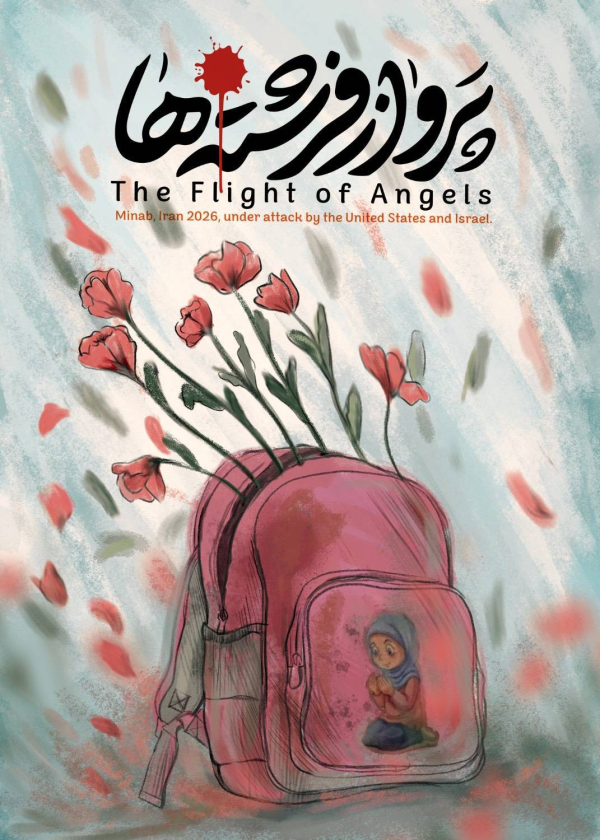
Who understands this; except me, the first grade teacher, who started your day with a smile and cold hands or the hug of your teacher.
How quickly the school year ended for you. The signs of the Persian book are not finished yet. They were supposed to celebrate the alphabet for you this year, but they celebrated in a different way; among the rubble, dirt and blood; and the song of the celebration is the sound of your mothers' cries and wails! So that the whole world saw this celebration.
It is true that you started with the first word, water, but you ended with the word homeland!
The beginning of your reading and writing was the beginning of your journey;
You had gone to school to study, but you did not know that today you would teach us a lesson in patriotism!
This blood cannot be erased.
Is it possible to forget all that purity and smiles????
I cannot write more than this; I can only say that your class today was a piece of heaven!
And history will write that the first martyrs recorded in the Third Sacred Defense were innocent schoolgirls.
First Grade Teacher; Mojgan Eslami
Airstrike on Minab School
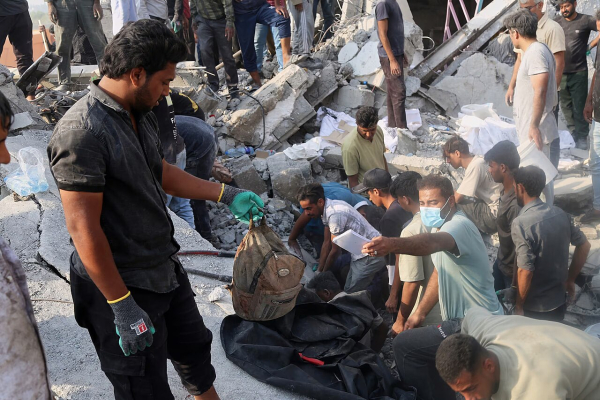
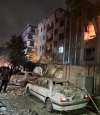
On March 29, 1404, in the early hours of the US-Israeli war with Iran, the Islamic Revolutionary Guard Corps Navy’s Shajre Tayyiba Girls’ Elementary and Preschool in Minab was attacked.
According to Iranian state media, during the March 29 airstrikes across Iran, the Shajre Tayyiba School in Minab was targeted by a missile. The airstrikes, which began at around 10 a.m. Iranian time, coincided with the time when children in Iran would normally be getting ready to go to school, as Saturday is a workday in Iran. The missile strike immediately killed dozens of people inside the building.
Human rights organizations said that about 170 students and teachers were killed in the attack, while the Iranian Ministry of Education put the number of students present at 264. Most of them were girls aged 7 to 12. Shiva Rad, a representative of the Iranian Teachers’ Union Coordination Council, said the school had decided to close after the airstrikes began, but parents were unable to reach the school before the missile hit.
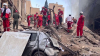
The school was targeted between 10 and 10:45 a.m., as classes were changing bells. The force of the explosion destroyed more than half of the school building, knocking down walls and causing the roof to collapse, trapping a number of people under the rubble. Images released showed the bodies of some of the victims, some of whose bodies were still buried under the rubble. The explosion destroyed at least half of the two-story school building.
According to reports provided to Middle East Eye by two Red Crescent aid workers and one of the victims’ parents, the second attack was a “double attack.” One aid worker said that after the first attack, the school principal had moved a group of students to the prayer room and called parents to come pick up their children; but the same location was targeted by a second attack shortly after, killing most of those who had taken refuge there. A parent confirmed this account, saying that after the school called about the first attack, in which her daughter had survived, she was on her way to school when the second attack occurred, killing her daughter. According to the mayor of Minab and the Iranian Ministry of Education, the school was targeted three times in total. On March 1, BBC Persian and some news agencies reported that a clinic in the same location had been hit, which some described as a “second attack on the same location” and others as a “supplementary attack.” The New York Times also confirmed that smoke was rising from two buildings at the scene. In the released videos, smoke can be seen coming from the windows of the school; A school whose painted walls were decorated with images of crayons, children and an apple. Experts also confirmed that other locations near the school were also targeted.
Who is Ayatollah Seyyed Mojtaba Hosseini Khamenei?
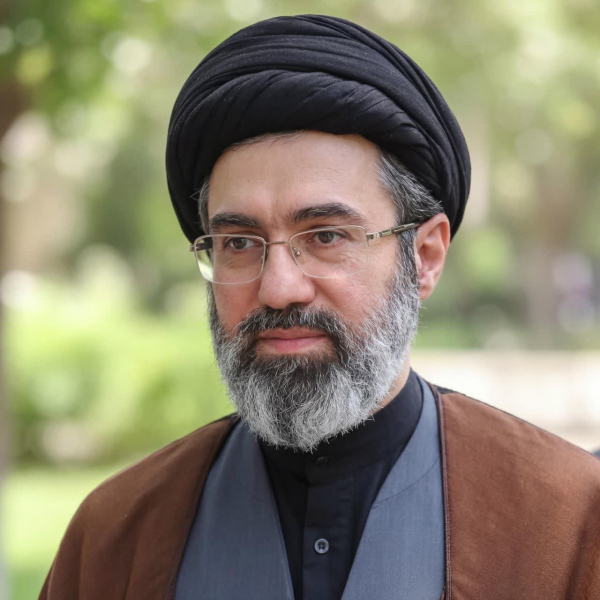
Ayatollah Seyyed Mojtaba Hosseini Khamenei is the third Supreme Leader of the Islamic Republic of Iran, who was elected as the Supreme Leader of the Islamic Republic by the Assembly of Experts after the martyrdom of his father, the former Leader of the Islamic Revolution, and the deaths of his wife, mother, and some other close family members in a terrorist attack on the Supreme Leader's residence. The beginning of his leadership came at one of the most sensitive and tense periods in Iran's contemporary history, and had a wide-ranging impact on the domestic and regional space.
Seyyed Mojtaba Khamenei was born in the city of Mashhad. He is the second son of Seyyed Ali Khamenei, the former martyred Leader of the Islamic Republic of Iran, and comes from a family known for religious, revolutionary, and cultural activities. His mother was also from a religious and cultural family that lived alongside the former Leader of the Revolution for many years.
Despite their high political and social status, this family has continued to focus on raising their children and maintaining family unity over the past years, and has always kept their distance from the media.
Seyyed Mojtaba Khamenei pursued his religious education at the Qom Seminary and learned an important part of jurisprudence and principles from prominent professors. After years of scientific and research presence at the seminary, he also taught and trained students and played an effective role in teaching and spreading Islamic knowledge.
During a terrorist attack that targeted Tehran, Seyyed Ali Khamenei, the former leader of the Islamic Republic of Iran, was martyred. At the same time, his wife, mother, and a number of other close family members also lost their lives. This incident was one of the most bitter and important events in Iran's contemporary history and had a profound impact on the country's political, social, and security environment.
Following this tragic incident, the Assembly of Experts held an extraordinary session and, by vote of its members, elected Seyyed Mojtaba Hosseini Khamenei as the third Supreme Leader of the Islamic Republic of Iran. This election was made in a situation where the country was facing security and regional threats and pressures, and maintaining internal stability and continuing the path of the revolution were considered the most important priorities.
With the beginning of Seyyed Mojtaba Khamenei’s leadership, the Islamic Republic of Iran entered a new stage in its history. He is known as the third leader after Ruhollah Khomeini and Seyyed Ali Khamenei, and the responsibility of maintaining internal cohesion, guiding the path of the Islamic Revolution, and confronting regional and international threats has been placed on his shoulders.
20 defeats for enemies so far
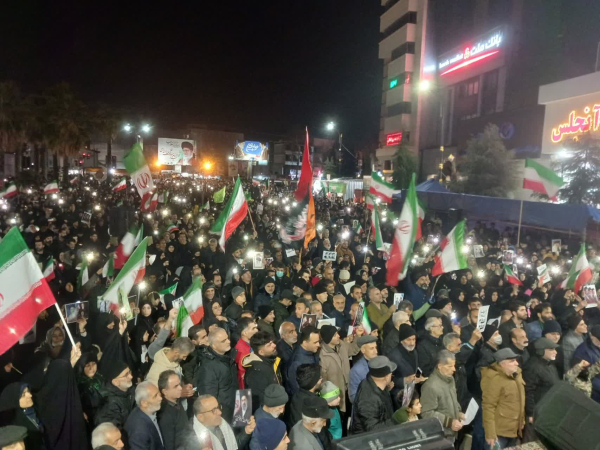
The enemy entered the field with great calculations, but the reality of Iran upset their equations one by one. Today, even in their think tanks, there is a discussion about finding a “turnaround.”
1. They thought that by eliminating the Leader of the Revolution, the pillar of the country’s tent would collapse; but they saw that the nation stood firm and a deep-rooted structure would not allow collapse.
2. They had imagined a three-day war; but Iran stood firm and from the very first days, they realized that they had entered a field whose end was not in their control.
3. They wanted to shake the country’s defensive pillars by assassinating the commanders; but the command was rebuilt faster than they imagined and the responses continued to be heavier.
4. They thought that the streets would be on fire at the same time as the war; but the people stood firm and this scenario collapsed before it could take shape.
5. They wanted to deepen social polarization by inducing fear for one group and courage for another; but the war awakened the sense of defending the homeland.
6. They dreamed of dividing some regions of the country; but the timely presence of the military buried this dream at the very beginning.
7. They thought that the resistance front was tired and weakened; but the field responses of Iraq, Hezbollah, and Yemen surprised them.
8. They thought that by attacking police stations, the security of the cities would collapse; but timely planning caused only empty buildings to be demolished and the security of the people to be maintained.
9. They wanted to create a narrative of victory through a media war; but the reality of the field was so clear that many of these claims collapsed.
10. They thought that Iran's missile capabilities were limited; but in the field, they were confronted with new weapons and new methods that they were nailed.
11. They thought that Iran's missile stockpile would run out soon; But the continuation of the responses showed that Iran was ready for a long battle.
12. They thought they could portray the war as a mere conflict with the government; but when hospitals and people's homes were targeted and the blood of innocent students spilled on the ground, this deception collapsed
13. They hoped that the country's economy would collapse and the service delivery system would be disrupted; but the market and the provision of people's needs and the service delivery process continued.
14. They expected internal political divisions to deepen; but many currents stood together against foreign aggression.
15. They thought that Iran would be isolated in the world; but Iran's voice was heard in many forums.
16. They thought that a grand coalition would be formed against Iran; but such a consensus never emerged.
17. They hoped that the countries of the region would side with them; but many of them distanced themselves from the spread of the war.
18. They sought to disrupt the country's management with sabotage and cyber attacks; but the resilience of the structures also thwarted this plan.
19. They thought they could downplay the international economic effects; but the reaction of global markets showed that the crisis could not be easily hidden.
20. They thought that Iran would become confused in difficult moments such as the removal of the leadership; but timely decisions and anticipated structures such as experts showed that the regime of the governor was ready for difficult days.