zarezadeh
Niyabah In Hajj
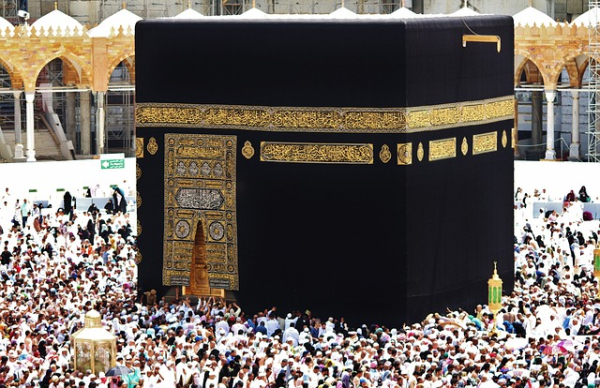
Conditions of the naib:
a. Maturity
b. Sanity
c. Faith
d. Confidence in performing the rites
e. Knowledge of Hajj rites and rituals
f. Exemption from the obligatory Hajj that particular year
g. Having no excuses to abstain from certain Hajj rites
Conditions of one for whom a naib is hired:
For the obligatory Hajj, the person for whom a naib is hired should be a deceased one, and in case he is alive. Hajj should be incumbent on him, while he cannot personally go on Hajj due to an incurable disease or old age. In the Hajj Istihbabi, this is not a condition, and the person who hires a naib does not have to be mature and sane. There is no need for the naib and one who hires him to have familiarity. One who has not so far gone on Hajj and is mustati can become a naib for another person.
Hiring a person who has little time for Hajj at-Tamattu and who is compelled to perform the Hajj al-Ifrad is not correct for a person on whom Hajj at-Tamattu is incumbent. But if the naib was hired with ample time and then the time ran out, he should engage in udul. This would suffice for Hajj at-Tamattu. The naib should be paid in return.
One on Whom Hajj had become obligatory but had not gone on Hajj pilgrimage in the first year of istitaah due to ailment or inability to walk because of old age or of imminent distress and difficulty by going on Hajj should hire a naib in case there is no hope of his recovery. Based on ihtiyat wajib, he should immediately hire a naib. If Hajj does not become incumbent on him, he will definitely face no obligation in this regard.
When the naib performs the Hajj, the one who hired him does not need to personally go on Hajj later even if the excuse he had no longer exists. But if this excuse is removed before the completion of Hajj, the pilgrimage on behalf will not suffice.
One on whom Hajj is incumbent, whether through having istitaah or being duty-bound, should not engage in niyabah for another person.
If the hired person dies after ihram and entrance into the Haram, (Sacred Mosque of the Kabah) this would suffice for the Hajj of the one whom he represented. But if he dies after ihram and before entrance into the Haram, it would not suffice based on ihtiyat wajib. In this case there is no difference whether the Hajj was supererogatory, by hire (on behalf), the Hajj in Islam or the obligatory Hajj, the same decree that applies to one who goes on Hajj in person would apply here.
If a naib is hired to carry out the religious duty of one who hires him - as is the case for hiring the naib for Hajj - and if he dies after ihram and entrance into the Haram, he deserves the entire wage (of naib).
One who has gone to Makkah as a naib without having personally performed the obligatory Hajj should follow the ihtiyat mustahabb and, after niyabah, perform Umrah Mufradah for himself. This ihtiyat is not binding. Nevertheless, it is highly recommended.
One who cannot perform some Hajj rites due to valid reasons cannot be hired as a naib for Hajj. If such a person who has excuses not to perform some rites, gratuitously and voluntarily goes on Hajj on behalf of another person, this would not suffice.
Secondary Issues Related To Niyabah
The caravan attendants who are compelled to leave Mashar at midnight to perform the required tasks in Mina or who have to accompany the weak pilgrims to Mina, would be among those having excuses for not being able to have ikhtiyari wuquf in Mashar. Therefore, their niyabah will be invalid. But, if they have been hired as a naib before employment (as a caravan attendant), they have to perform the Hajj and observe ikhtiyari wuquf.
For a living person who can hire a naib, it would suffice to employ the naib at the miqat.
One who performed the Hajj for the first time, say as a caravan attendant, could go on Hajj as a naib for his deceased father or mother, unless he was not mustati in the first year and has become mustati in the next year.
Ihram would be incorrect for one who, as a naib, becomes a muhrim at the Masjid ash-Shajarah and goes to Makkah where he realises he was personally mustati. He should return and become a muhrim for his own Umrah Tamattu and perform his own religious duties.
The condition of faith and belief of the naib, being a prerequisite for niyabah in Hajj, also applies to other rites in which niyabah is permissible, such as ramy and tawaf.
It is incumbent on the naib to perform the rites in accordance with the decrees of his own Marja Taqlid.
A naib who, at the time of accepting niyabah, was fully capable of representing another person at the Hajj but who has an excuse at the time of becoming a muhrim or even before, could continue his niyabah if his excuse does not make him violate some Hajj rites. But if his excuse makes him violate some Hajj rites, the contract for his niyabah could be declared null and void. Based on the ahwat, the naib and one who has hired him should make a compromise on the former's wages, and the duty of the Umrah and Hajj would be vested with the latter.
Gratuitous or wage earning niyabah is not acceptable from those hired to render services and unable to have ikhtiyari wuquf in Mashar, as well as all other people who have excuses and who have performed such incomplete forms of Hajj. Their niyabah would not be acceptable as the Hajj of the persons who have hired them, and they do not deserve wages.
One who cannot perform the ikhtiyari rites of the Hajj is exempt and cannot become a naib.
The niyabah of a person who lacks the ability to correct his qiraah is null and void. If he has the ability, the niyabah of such a person is valid, provided he corrects his qiraah.
Question 1: Suppose a person who registers his name, receipt of payment, and specifies in his will that after his demise his son should go on Hajj and perform it on behalf of him, passes away. Upon the father's death, the son obtains financial istitaah but he can only go on Hajj using his father's receipt of payment. Now by using this receipt and arriving at miqat should he perform the Hajj on behalf of his father? Or would he obtain istitaah and have to perform Hajj for himself.
Answer: The son can go on Hajj using the receipt based on his father's will in case the will for what is additional to the Hajj Miqati does not exceed one third and the heirs have allowed it. He should perform the Hajj on behalf of his father.
Question 2: In the past two cases, if the son shoulders the duty of performing Hajj on behalf of his father but performs his own Hajj, would it be considered his obligatory Hajj of Islam or not?
Answer: No.
Question 3: A person's father who was mustati passes away. The son takes his father's receipt and goes on Hajj with the intention of representing his father. He reaches miqat where he himself is mustati. What should he do? I should explain that there is no will. Nor has he been asked to engage in niyabah. For instance, he was the sole heir and Hajj would not be possible for him unless in this way.
Answer: In this case, he should perform his own Hajj and hire a naib for his father.
Question 4: Being responsible for the Hajj caravan, I had to take care of the sick and disabled people in my group and, therefore, performed idhtirari wuquf. Please explain my religious duty.
Answer: If you accompanied disabled and sick persons who had excuses not to engage in ikhtiyari wuquf, here is no problem for you. But if served as a naib for someone else, your niyabah would not be acceptable.
Question 5: A person served as naib for a deceased person without having any excuses not to perform some Hajj rites at the time of being hired as naib. But several years after performing the Hajj, he realised that in the Mashar al-Haram he had engaged in idhtirari wuquf with women and sick persons for whom he was guide and went to Mina. He was unaware of the fact that the naib should engage in inkhtiyari wuquf. What duty does he shoulder?
Answer: This should not have been done on a Hajj in which he was hired as naib and he does not deserve any wages. In terms of the wages, he should refer to the person who hired him. Or in case his contract for niyabah has not expired, he should once again go on Hajj as a naib and correctly perform the rites.
Question 6: My late father had stated that his eldest son should go to Makkah on his behalf. I am the eldest son and have become mustati with the inheritance. So far, I have not been able to convert my share of the inheritance into cash. Under such conditions, can I perform the Hajj on my father's behalf or not?
Answer: Supposing that you have financial istitaah through converting your share of the inheritance into cash, you should primarily perform your own-obligatory Hajj and later on perform it on behalf of your father or hire a naib for him.
Question 7: A lady for whom the Hajj was obligatory said in her last will that the executor of her will should go on Hajj on her behalf using money from what she left behind. Now the executor of her will has physical, financial, and other types of istitaah, but has not registered name for Hajj based on an excuse and lacks istitaah for travelling. Could the executor of the will engage in Hajj Niyabi?
Answer: If the executor of the will did not previously have istitaah, if the route is not open to him now, and if he is not mustati, he can be hired for Hajj Niyabi. But if he can reach the miqat without being hired, he should not perform Hajj Niyabi and should perform his own Hajj.
Question 8: While hiring someone for Hajj, if the person hiring the naib is unaware that the latter has excuses and hires him, would the niyabah wages be halal for the naib? Would his Hajj Niyabi be correct and be considered the obligatory Hajj of Islam or other type of Hajj for the one who has hired him?
Answer: In case he had an excuse and was hired, he does not deserve wages and it would not suffice for the Hajj Niyabi.
Miscellaneous Issues Of Istitaah
A woman, who lacked financial means during her husband's lifetime, acquires the financial means for Hajj after his death through his inheritance, but since she has an illness that prevents her from going on Hajj she will not be called a mustati and Hajj is not obligatory for her. Likewise, if, after becoming a widow, she does not have a job, farming or industrial occupation with which to earn a living upon return from Hajj, she will not become mustati, even if what she has received as inheritance is enough for her to go on Hajj and return.
A woman whose marriage portion is equal to or more than the Hajj expenses is a mustati for Hajj, provided she can obtain her marriage portion without causing trouble and difficulty (for her husband).
A woman whose marriage portion is sufficient for Hajj and is owed the same by her husband, since he cannot afford to pay it does not have the right to demand the marriage portion and is not mustati.
If a person has a very expensive house and can go on Hajj with the difference earned through selling it and buying a cheaper one, should not sell the house if it is not higher than his status and position. In this case he is not a mustati. If the house is more than his social standing, he is a mustati, provided all other conditions are met.
Those who can meet the expenses of the Hajj journey through business or other means and who upon return can meet a part of their expenses through earnings such as preaching and the remaining part from allowances through legal sources (theological schools) are mustati, even if they need the allowance to meet their expenses upon return from Hajj.
If one sells a piece of land or something else to buy a house, he will not become mustati in case he needs the money to buy a house, even if the money is sufficient to cover the Hajj expenses.
When the due time for Hajj arrives, the mustati cannot dispense with his status of istitaah, and before this time, based on ihtiyat wajib he should not dispense with the status istitaah.
If a person who was hired to go on Hajj on behalf of another person who was not a mustati at the time of concluding the contract but who before the Hajj became a mustati through means other than the sum of the contract, should cancel the contract and perform his own obligation of the Hajj in Islam.
Caravan attendants who arrive in Jeddah would become mustati if, while serving the Hajj pilgrims, they are able to perform all Hajj rites and rituals and meet all other conditions of istitaah, for instance, having actual or potential means of earning a living and being competent for a job or industrial and other ability with which they could earn a proper living upon return. These persons should perform the Hajj in Islam that fulfils their obligation of Hajj. If the caravan attendants do not meet the required conditions, they’re not mustati and their Hajj will be istihbabi, but they should perform the obligatory Hajj, if they later become mustati.
It is incumbent on the physicians and other people who come to miqat on duty and who meet all conditions of istitaah in miqat to perform the Islamic obligation of Hajj, even though it is necessary for them to carry out their duties as well.
One who has financial capability and meets other conditions of istitaah should go on Hajj. Performing other good deeds such as visiting the holy sites or building mosques will not substitute the obligation of going on Hajj.
If, during the obligatory Hajj, the mustati were to make the intention of istihbab due to negligence or on the assumption of not having attained istitaah, or even consciously and willfully with the aim of practice for performing the obligatory Hajj better the following year, there is a degree of doubt for the fulfilment of Hajj unless the intention for the Hajj was according to what has been decreed by the Divine Legislator. On this basis, as a matter of ihtiyat, he should go on Hajj the next year.
If the mustati passes away after putting on the ihram and entering the Sacred Mosque, the
Hajj obligation will be removed from him.
If the deceased person was mustati in his lifetime and deliberately delayed the Hajj pilgrimage, Hajj remains due on him and a Hajj Miqati should be performed for him from what he has left.
For one who meets all the conditions of a mustati for Hajj but has not performed it, the obligation of Hajj remains, even if due to old age or an incurable disease it is not possible for that person to go on Hajj in the latter case the person should send a representative to perform Hajj on his behalf.
A wife does not require the permission of her husband to go on obligatory Hajj, and she should perform her obligatory Hajj even if her husband does not approve of her travelling for Hajj.
Family, in case of financial istitaah for which nafaqah is a requisite, refers to a person's formal family, though it may not be religiously qualified for his maintenance allowance.
Question 1: Suppose a person becomes ill in Madinah (say if he undergoes an apoplexy) and is hospitalised for two weeks by the doctors. If after convalescence, it is difficult to take him to Makkah to perform the Hajj rites, what is his duty?
Answer: If it is the first year of istitaah and the person lacks the strength, even for an emergency case, to carry out the Hajj rites, the status of istitaah will become null and void, and the Hajj will not be obligatory. If, however, it is not the first year of istitaah and the Hajj is already incumbent on him and the person is despaired of regaining health, then a substitute should carry out the rites of Umrah and Tamattu.
Question 2: At present, those who want to perform the Hajj pilgrimage should register their names in advance and make the necessary arrangements. If the turn of a person takes several years to come, and before the coming of the turn that person finds other means of going on Hajj and borrows money and goes to Makkah, will such a pilgrimage be considered the obligatory Hajj of Islam?
Answer: If Hajj has not already become incumbent and the person cannot presently go on Hajj without borrowing money, Hajj is not obligatory for him, and such a pilgrimage cannot be considered the obligatory Hajj of Islam.
Question 3: I went on Hajj by borrowing money and receiving a month's salary in advance. Since the person who lent the money fully approved of my going on Hajj and did not need his money, would my Hajj be regarded obligatory or not?
Answer: If your financial istitaah met the required conditions, your Hajj will be correct and deemed obligatory, provided that you can easily repay your debt later on. But if you obtained financial istitaah by borrowing money, you have not become mustati, and your Hajj will not be considered the obligatory Hajj of Islam.
Question 4: Based on lots drawn by the Hajj and Pilgrimage Organisation, Allah (SwT) willing, I will be able to go on Hajj in the coming years based on the following conditions:
(a) The entire expenses of the Hajj performed by my spouse and me have been met by khums money.
(b) I am a schoolteacher and lead an ordinary life with continence.
(c) I do not have a house or an automobile of my own. I am a tenant in every city where I work.
(d) I have ordinary housing appliances. In view of these conditions and doubts raised by others about Hajj being obligatory for my spouse, and me would our Hajj meet conditions necessary for obligation?
Answer: As per the conditions cited, if your spouse has enough money to go on Hajj and return, she would be mustati. You would have istitaah only when you have household appliances for yourself and your family in accordance with your social position, and when upon return you could make a living for yourself and your family through what you earn.
Question 5: If a person was mustati but neglected to go on Hajj until he lost his turn, now that names are no longer being registered, would it be permissible for him to perform Hajj by way of connections and recommendations inside or outside Iran and through expending huge amounts? This is because otherwise, his duty of fulfilling the obligation would be delayed for years and he tears that, Allah (SwT) forbid, he would be considered as one who has forsaken Hajj.
Answer: He should go on Hajj in any way possible if it does not violate the regulations of the Islamic Republic of Iran, and in a way that he would not face distress and difficulty.
Question 6: Supposing Hajj has not already become incumbent on a person but while registering names for the Hajj, he became mustati. Later on, he, however, faced financial problems and needed the money he had deposited with the bank (for registering his name). Could he withdraw the money or not? Would it make any difference if his turn comes in the first year or in the next years?
Answer: Based on this supposition, he is not mustati and can withdraw his money. It would make no difference.
Question 7: A person, who had to perform the obligatory Hajj departed for Hajj from Pakistan, fell ill in Madinah but continued his journey to Makkah in that condition, and passed away in a hospital in Makkah before performing the Hajj. At the time of his death, his entire property consisted of some money and a piece of land in Pakistan. Given the fact that his money is not enough for Hajj on his behalf, should his heirs sell the piece of land and hire someone to fulfill his Hajj, or would the obligation of Hajj no longer be due upon his death?
Answer: If he arrived in Makkah with the ihram for Umrah Tamattu and passed away before performing Umrah or after completing its rites, whatever he performed will be accepted and the obligation of Hajj would be removed from him. But if he entered Makkah without ihram for Umrah and passed away there, and in case Hajj had remained incumbent on him, a substitute on his behalf should be hired out of what he has left behind. A Hajj Miqati would suffice in such a case. But if Hajj had not remained incumbent on him, he would not be considered a mustati, and there is no need to hire a person to perform Hajj on his behalf.
Question 8: If a person becomes mustati in miqat and performs the obligatory Hajj of Islam, would it suffice or not? Would kifayah be a precondition or not?
Answer: If he becomes mustati, it is sufficient, but he should have kifayah.
Question 9: In cases where an organisation or body sends a person on Hajj without asking him to do anything in return, would it be regarded as Hajj Badhli and should it be necessarily accepted?
Answer: Provided that it is legitimate, it would be Hajj Badhli if there were no commitment to do anything in return for it.
Question 10: A person has four sons, all of whom are married, and can meet his annual expenses and has no debts, but he and his sons make their living jointly from the same source of income. Now, since the Hajj expenses of only two people can be met, is Hajj obligatory in this case? If so, is it only incumbent on the father or on the sons as well? If Hajj is incumbent on the sons, which one has the priority to perform it?
Answer: One who has enough property to meet his Hajj expenses, go to Makkah, and upon return afford a living, which befits him, is mustati and should perform the Hajj.
Question 11: Having financial istitaah and being 72 years old, I have been prevented from going on Hajj pilgrimage by the Health ministry in accordance with domestic laws, as I am addicted to opium. What is to be done from the viewpoint of Sharia?
Answer: If you were previously mustati but did not go on Hajj pilgrimage, you shoulder the duty of going on Hajj. If previously you did not have istitaah, you are not mustati under the present conditions, unless you can abandon opium addiction, obtain the required permit, and go to Makkah.
Question 12: If a person has capital or equipment and can sell part of it to lead a comfortable life and go on Hajj with the difference, would he be mustati?
Answer: If all the other conditions are met, he will be deemed mustati.
Question 13: A person has an orchard that has not brought him any income for several years but which, if sold, would cover his Hajj expenses. He is sure that by the time the orchard bears fruit, he would be old and retired and would be dependent on it for his living. Would such a person be mustati?
Answer: If he has no source of income other than the orchard, he will not be considered mustati.
Question 14: In the case of debt, how much money should a person possess to have istitaah? In case he has the needed money but suffers from cardiac ailment and has been notified by the physicians at the Hajj and Pilgrimage Organisation that his pilgrimage might be dangerous, should he substitute someone else?
Answer: If before attaining istitaah he fell ill and consequently lacked the strength to go to Makkah, he will not become mustati and there is no need to substitute someone else for Hajj. In addition, financial istitaah would develop only when he has enough money for a round trip and can easily repay his debt.
Conditions For The Obligation Of Hajj In Islam
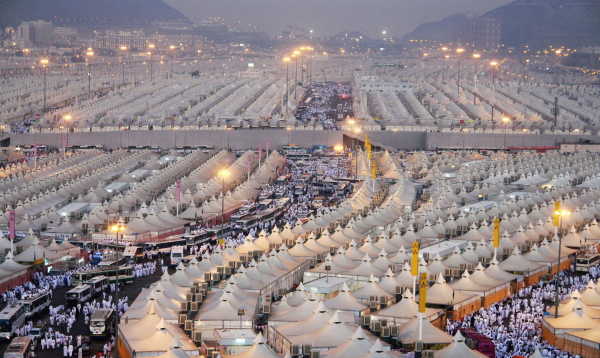
Several conditions make the Hajj obligatory, and without all of them the Hajj would not he obligatory.
A And B: Maturity And Sanity
Hajj is not incumbent on the children and the insane.
If a child is made muhrim for Hajj and becomes religiously mature in the process of the pilgrimage, the Hajj would be acceptable as the required Hajj of Islam.
One who thought that he was religiously immature and went on istihbabi Hajj and then realised that he was religiously mature, cannot consider his Hajj as the required Hajj of Islam, unless he had made the niyyah to perform the Hajj, which the Divine Legislator (Allah the Almighty) has decreed for him.
Atonement for hunting rests with the guardian. Other types of atonements obviously do not rest with either the guardian or the child.
In Hajj, the child’s guardian should procure sheep for sacrifice.
C. Having Financial Istitaah, Physical Health And Ability, And Free Access And Sufficient Time
Financial istitaah means having provisions for the Hajj journey and the means of conveyance for it. If the likes of these are not possessed, something such as money or another commodity should be available for possible use to obtain the required provisions. It is a condition that the individual should financially afford his return trip. Other issues related to istitaah will be subsequently explained.
For Hajj to become obligatory, the individual should be able to afford expenses of departure and return. In addition, he should have whatever is imperative for a living and sustenance such as a residence, household appliances, automobile and the like, in accordance with his social standing and honour. In case he lacks these things, he should possess money or anything else with which he could provide them.
One who needs to get married and for whom abstaining from marriage would result in disease or the commitment of sin and forbidden acts, and who needs money for marriage, would become mustati when the marriage expenses are met in addition to the Hajj expenditures.
If one has money owed to him and possesses the rest of the conditions for istitaah, he should receive the amount owed to him if the due time of payment has arrived provided he could obtain it without difficulty. Then he should go on Hajj.
If one who does not afford Hajj obtains a loan to cover its expenses, he will not become mustati, and the Hajj he performs will not be considered the required Hajj of Islam.
One, who can afford Hajj expenses but has debt as well, should go on Hajj if he has time for repayment and he is confident that when repayment time comes he can afford to repay his debt. The same rule applies to a case when repayment time approaches yet the creditor agrees to defer repayment and the debtor is confident that he can repay it at the determined time.
Apart from these two cases, Hajj will not be regarded as obligatory.
If the high expenses of the Hajj do not make the prospective pilgrim unable to afford the pilgrimage, this will not remove the obligation of Hajj, unless such expenses cause distress and difficulty for him.
For those who have extra equipment which they do not require at the moment, and which if sold would cover the Hajj expenses, Hajj is obligatory, provided that they meet all other conditions for the pilgrimage.
If one doubts whether his property is sufficient enough to make him mustati for Hajj, it is obviously necessary for him to study the matter. There is no difference regarding the necessity of study and investigation in this matter between the one who does not know the amount of actual estimate of his property and the one who does not know Hajj expenditures.
One who knows that under the normal conditions and the expenses of Hajj he would not have istitaah but who believes that possibly through study and investigation he could find ways to go on Hajj under his present conditions, does not need to embark on such investigation. But for one who does not know whether or not he has istitaah for Hajj it is obviously obligatory to take proper stock of his present financial conditions.
One who is employed to render services to the pilgrims and who could meantime perform all Hajj rites and could earn his living upon return would be considered as having istitaah for Hajj. Hajj is obligatory for him and he would meet the requirements of the Hajj in Islam, even though it is obligatory for him to be hired.
Among conditions for istitaah, the individual should be able to meet expenses of his family (members of the household which are dependent on him) until his return from Hajj.
In istitaah arising through competence, i.e. upon return from Hajj the person has to engage in trade, agriculture, and industrial activity or have property such as orchards and shops in order not to face distress and difficulty in making his living, if he were able to engage in a business befitting his place and position, it would suffice. If upon return, he could make his living with allowance, it would also suffice.
As a result, Hajj is obligatory for students of theological seminaries who, upon return from Hajj, would require allowances of the theological seminaries and who could make a living with such allowances.
Conditions for the obligation of Hajj is physical ability, as well as openness of the route and availability of time. Therefore, Hajj is not obligatory for a sick person who lacks the physical strength to go on Hajj or who faces great distress and difficulty in doing so. The same applies to a person to whom the route for Hajj is closed or who faces time shortage such that he could not go on Hajj in due time.
If, while having istitaah, a person abstains from going on Hajj, he will be committing a sin and is duty-bound to go on Hajj in any way possible.
The mustati should personally perform Hajj. Deputation of Hajj would not suffice for him, unless for one who cannot perform Hajj due to old age and sickness.
One who is personally mustati cannot become a representative to perform another person's
Hajj. If such a Hajj on deputation is performed, it will be null and void.
If one who is required to go on Hajj pilgrimage passes away before fulfilling this obligation, his Hajj should be performed with what he has left behind, and a Hajj Miqati will suffice in such a case.
Illegal Israeli settlers set mosque on fire in occupied West Bank
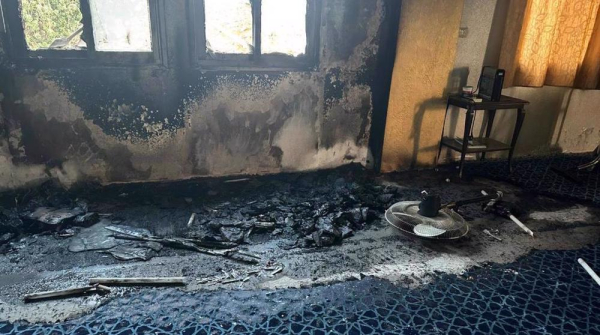
A group of illegal Israeli settlers has set fire to a mosque in the occupied West Bank and damaged its interior, marking the latest such attack in a surge of settler violence against Palestinians.
The official Palestinian news agency WAFA, citing anti-settlement expansion activist Nazmi Salman, reported that the attack targeted the Hajja Hamida Mosque northwest of the city of Salfit early on Thursday.
He added that residents were shocked to find that settlers had set the mosque ablaze by pouring flammable material at the entrance.
Salman noted that locals intervened to prevent the fire from spreading throughout the mosque.
Settlers had also spray-painted racist slogans against Arabs and Muslims on the walls of the mosque.
Elsewhere in the village of Kisan east of Bethlehem, a 25-year-old Palestinian was shot by Israeli forces during a settler attack on the area.
Salameh Rashaida, Deputy Head of Kisan Village Council, told WAFA that a group of settlers, backed by Israeli forces, attacked Palestinian residents while they were plowing their land in the Wadi Abu Ayyash region.
Israeli forces fired live rounds after residents confronted the assailants, shooting and injuring a young man in the leg, who had to be transferred to hospital for treatment.
Separately, a young Palestinian man sustained serious injuries on Wednesday evening after being attacked by settlers in Arab al-Rashaida area northwest of Ariha.
The Palestine Red Crescent Society (PRCS) reported that the young man suffered a fractured skull, as a result of the settlers’ attack and was transferred to a hospital for treatment.
In a related development, a Palestinian woman sustained bruises after settlers pelted Palestinian vehicles with stones in the village of al-Rashayida, east of Bethlehem.
The head of the Palestinian Authority’s Colonization and Wall Resistance Commission (CRRC), Mu’ayyad Sha’ban, said on November 5 that Israeli forces carried out 1,584 attacks across the West Bank last month, which included direct physical assaults, home demolitions, and the uprooting of olive trees.
The governorates experiencing the bulk of the violence were Ramallah with 542 incidents, Nablus with 412, and al-Khalil with 401.
The research, compiled in a CRRC monthly report titled Occupation Violations and Colonial Expansion Measures, additionally recorded 766 attacks carried out by settlers.
In July 2024, the International Court of Justice (ICJ) declared Israel’s decades-long occupation of historical Palestine illegal.
The ICJ demanded the evacuation of all existing settlements in the West Bank and East al-Quds.
The court's advisory opinion, though not legally binding, carries significant political weight as it marks the first time the ICJ has delivered a position on the legality of the 57-year occupation.
Press TV’s website
Israel launches new wave of airstrikes against south Lebanon amid repeated truce violations
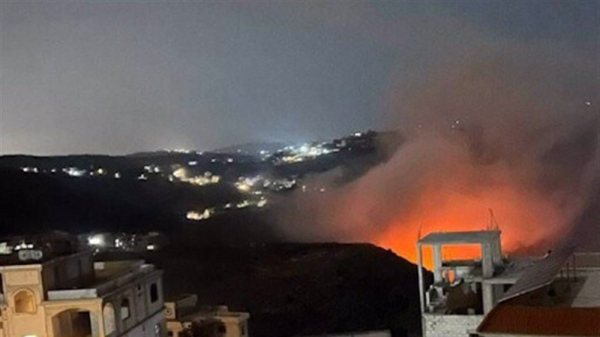
Israeli forces have carried new wave of aerial raids and bombed multiple residential neighborhoods across southern Lebanon as the regime continues to violate the ceasefire agreement with the Arab country.
Lebanon’s el-Nashra and al-Manar news networks reported on Thursday that the Israeli warplanes bombed Lebanese villages in Bint Jbeil and struck the outskirts of the town of Tayr Falsayh in the Tyre district of southern Lebanon.
Lebanon’s National News Agency said that Israeli jets also struck the al-Khanouk area of the Aitaroun municipality in the Nabatieh district with air-to-surface missiles.
The attacks reportedly caused casualties and inflicted heavy damage on civilian infrastructure in the region.
Later in the day, an Israeli drone targeted a Renault Rapid vehicle in the Nabatiyeh district town of Toul, wounding at least one person.
The strike took place in a densely populated area while students were leaving school.
Local media reports quoting local sources said that an Israeli warplane dropped a sonic bomb over the Naqoura beach in southern Lebanon.
Witnesses said that Israeli soldiers also fired volleys of machine guns towards the outskirts of the Kfar Shouba municipality.
Israeli artillery also shelled on Wednesday night the southern border town of Mays al-Jabal.
Tensions have been mounting in southern Lebanon for weeks, with the Israeli army intensifying near-daily air raids inside Lebanese territory.
Despite a ceasefire reached in November last year, Israel has kept up its near-daily attacks on south and east Lebanon and is occupying five hills it deems strategic in the south.
The Secretary General of Lebanon's Hezbollah, Sheikh Naim Qassem, in a speech on Tuesday, reiterated that the US and Israel’s calls for the disarmament of the resistance group were designed to weaken Lebanon and leave it exposed to external aggression.
He described the calls for the disarmament of Hezbollah as “a pretext” for launching an aggression on Lebanon
The Hezbollah chief stressed that the US and Israeli threats and pressure “will not change our stance; we will defend our land and dignity, and we will not surrender.”
Press TV’s website
Poems of Imam Shafi'i about the Ahlul Bayt (a.s.)
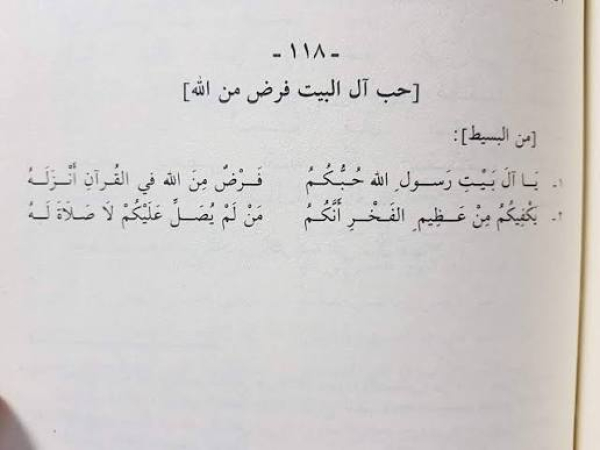
Muhammad ibn Idris al-Shafi'i, known as Imam al-Shafi'i, is one of the leaders of the Sunnis who lived in the second century AH. He was renowned not only in jurisprudence but also in poetry, and if we look at him from the perspective of a poet rather than a jurist, we will notice his poetic flair. The Ahl al-Bayt (a.s.) have a special place in his poems that attracts the attention of every reader. In the poems he wrote about the Ahl al-Bayt (a.s.), after praising the Prophet's family and expressing his love for them, he considers love for them to be an obligation from God and the Quran, and urges everyone, regardless of ethnic or religious prejudice, to respect, appreciate, and value them, to the point that he considers not sending blessings and salutations upon the Prophet's family and family in prayer to invalidate one's prayer. Finally, he reminds us that in an era when everyone is lost and drowning in the sea of jurisprudential and sectarian differences, we must cling to the rope of God, the family of the Prophet, and their ways and methods in order to be safe from the scourge of differences.
The honors of the Ahl al-Bayt (a.s.) are enough for all the jurisprudential and theological schools of Islamic sects, whether Shia or Sunni, to boast of them, and it can be said with boldness that even the most radical individuals from Islamic sects do not dare to dare to enter their sacred space.
Now, let us turn to some examples of Shafi'i's precious poems:
O family of the Prophet, your love is an obligation that has been stated by God in the Quran.
- This is enough for your greatness, the one who did not greet you in prayer, has no prayer, (his prayer is not valid)
Or
-The family of the Prophet is my support and they are the means for me to reach the Prophet
- I hope that on the Day of Judgment, they will give me the record of my deeds in my right hand.
A review of his poems is available from various sources, the following can be mentioned:
1- Loving the Ahl al-Bayt and the family of the Prophet without any intellectual or jurisprudential bias
2- Loving the Ahl al-Bayt is a recommendation taken from the Quran and the Prophet (PBUH), so that if someone does not send blessings and salutations on the Prophet and his family in his prayer, his prayer is not valid.
3- In the Quran, Allah means the Prophet and his pure family by the divine rope.
4- In times of disagreement, acting in the way and manner of the Prophet and his family leads to victory and salvation, and the right path is to follow the Prophet and his family.
5- Following the Prophet and his family will result in receiving the record of one's deeds in one's right hand on the Day of Judgment and ultimately happiness in eternal life.
Horrific reports of systematic rape emerge from Sudan's El Fasher
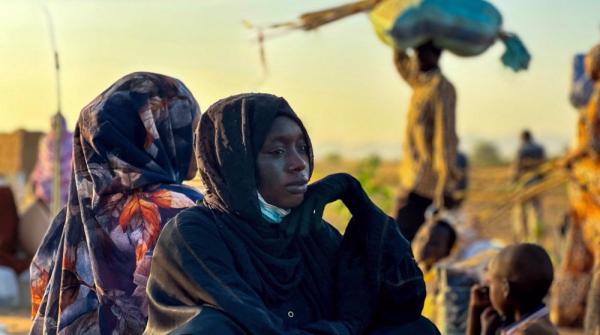
The UN’s gender equality agency has warned that rape is being used as a “weapon of war” in Sudan, where mounting violence by UAE-backed militants has claimed thousands of civilian lives amid rampant hunger and displacement.
Violence in Sudan has escalated significantly over the past month, especially after the so-called Rapid Support Forces (RSF) and allied militias seized the city of El Fasher in North Darfur in late October.
They have massacred at least 2,000 people in El Fasher, in what some rights groups describe as a “true genocide.”
The conflict has involved widespread atrocities, including ethnic massacres, sexual violence, summary executions, and mass displacement of nearly 89,000 people.
“Women speaking to us from El Fasher, the heart of Sudan's latest catastrophe, tell us that they've endured starvation…displacement, rape and bombardment,” Anna Mutavati, UN Women Regional Director for East and Southern Africa, told reporters in Geneva.
“Pregnant women have given birth in the streets as the last remaining maternity hospitals were looted and destroyed.”
Mutavati spoke of “impossible decisions” having to be made by families “forced to choose between food and medicine and dignity."
“What the women tell us is that on their horrific journey…every step that they've taken to fetch water, to collect firewood or to stand in a food line has carried a high risk of sexual violence,” Mutavati said. “There is mounting evidence that rape is being deliberately and systematically used as a weapon of war.”
She warned that women’s bodies “have become a crime scene in Sudan,” adding, “There are no longer any safe places where women can access protection or basic psychosocial care.”
Mutavati also said that health workers report rising cases of severe acute malnutrition in infants, often linked to their starving mothers’ reduced ability to breastfeed.
“There's a ripple effect of the hunger that women are experiencing,” she warned.
While calling for an end to the violence, the official also urged broader humanitarian access and increased support to aid providers, and underlined that women and girls in Sudan “are the measure of our shared humanity.”
“Every day that the world delays to act on Sudan, another woman gives birth under fire or buries her child in hunger, or disappears without justice,” she concluded.
The RSF has been in war with the Sudanese Armed Forces (SAF) for more than two years.
Despite denials, the UAE has emerged as a major backer of the RSF, providing weapons and logistics support, in exchange for Sudanese gold.
Israel, the UK, France, Canada, and the US also face international backlash for arms sales and diplomatic cover.
'RSF gang raped me in front of my daughter'
Meanwhile, the Euro-Mediterranean Human Rights Monitor warned in a Tuesday report published on X about the sexual violence perpetrated by the RSF against women in Sudan.
The Geneva-based rights group said dozens of horrifying testimonies are emerging from women and girls in El Fasher after the RSF’s attack, adding that while some survivors are bravely breaking the silence to seek justice, hundreds of others remain unable to speak about the rape and sexual violence they endured.
“Three members of the Rapid Support Forces gang raped me in front of my 12-year-old daughter and my sister-in-law. It was extremely humiliating. I feel shattered,” said a woman.
“Any woman who resisted the rape was subjected to beatings, torture, or even killed. An 11-year-old boy was beaten to death while trying to help his mother.”
The Euro-Mediterranean Human Rights Monitor said around 25 women were gang raped in a displacement camp in El Fasher.
“Four members of the Rapid Support Forces came. One of them grabbed me and said he wanted to rape me. I tried to resist, but he beat me and threatened to rape my young daughter,” another woman was quoted as saying.
“They tied me up and stripped me of my clothes, then three of them raped me in front of my daughter.”
Press TV’s website
Remembering the ‘father of Iran’s missile program’ who wanted to ‘destroy Israel’
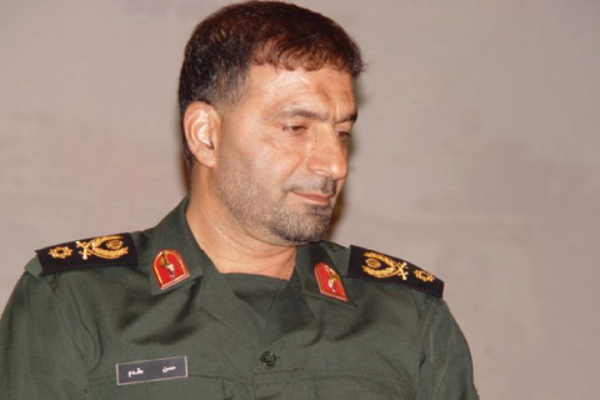
Today, November 12, marks the 14th anniversary of the martyrdom of Hassan Tehrani Moqaddam, known as the ‘father of Iran’s missile program’ and a visionary military strategist who was ahead of his time.
He played an instrumental role in developing Iran’s indigenous missile capabilities during the 1980s imposed war and groomed many aerospace commanders who continued his mission.
Born in 1959 in Sarcheshmeh, a neighborhood in central Tehran, Tehrani Moqaddam completed his high school education in 1977.
In 1979, he earned a Bachelor’s degree in mechanical engineering from Sharif University of Technology, which was followed two years later by a Master’s degree in industrial engineering from Khajeh Nasir al-Din Toosi University.
At the young age of 21, when the Islamic Revolution Guards Corps (IRGC) was established, Tehrani Moqaddam joined the intelligence division of the third region in northern Iran as a young cadet.
After the successful Samen-ol-A’emeh operation in 1981, which freed Abadan city in southwestern Khuzestan from West-backed Iraqi Ba'athist forces, he recognized the urgent need to strengthen fire support on the front lines.
This realization inspired him to draft a plan to address the challenge, which he submitted to Hassan Bagheri, then-IRGC intelligence chief. Following his proposal, the IRGC artillery corps and the artillery research center in Ahvaz were established.
Tehrani Moqaddam played a leading role in setting up the IRGC artillery, using 155 mm and 130 mm traction shells, as well as Portuguese 105 mm shells.
In the mid-1980s, when Iraq was escalating missile attacks on Iranian cities backed by Western governments, including the United States, Iran sought to compensate for its missile defense shortcomings through limited foreign assistance.
By Press TV Website Staff
US planning to build ‘temporary housing’ in Gaza for ‘screened’ Palestinians
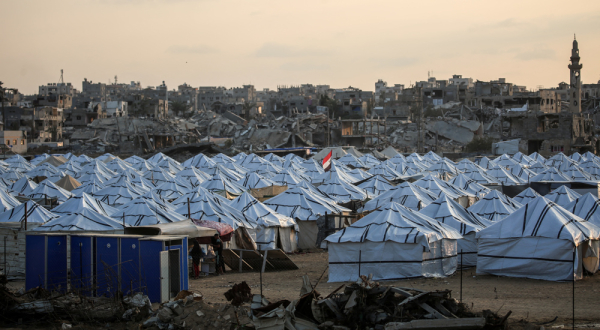
The US is reportedly backing a plan to construct housing compounds for thousands of “screened” Palestinians in areas of Gaza currently occupied by Israeli forces, raising fears that the project could entrench the territory’s division.
According to The Atlantic, US President Donald Trump’s administration, in coordination with Israeli officials, is advancing a proposal to build so-called “Alternate Safe Communities” behind a “yellow line” that divides Hamas-controlled western Gaza from Israeli-occupied eastern Gaza.
The plan aims to resettle Palestinians who pass anti-Hamas security screenings conducted by Israel’s Shin Bet, effectively separating them from the majority of Gaza’s two million residents.
Movement across the yellow line will be heavily restricted, raising concerns that the communities could become enclosed zones of indefinite displacement.
US Lieutenant General Patrick Frank, who heads the civil-military coordination center overseeing the Gaza ceasefire, outlined the plan in an internal email cited by The Atlantic.
He proposed that each community include a medical center, school, administrative building, and temporary housing for about 25,000 residents.
However, according to the report, US, UK, and Israeli officials later revised the target population down to around 6,000 per site.
The first pilot is expected to be built near Rafah in southern Gaza, an area largely owned by
Palestinians.
The project would be part of a broader US effort to implement Trump’s 20-point peace plan, which envisions an eventual Israeli withdrawal from Gaza, even though no timeline has been provided.
The Financial Times reported that the proposal has alarmed Arab and European governments, who fear it could mark the beginning of a permanent Israeli occupation in parts of Gaza.
They think the project could cement a lasting partition, creating a two-tiered system between “approved” Palestinians and those remaining under Hamas administration.
Less than two percent of Gaza’s two million residents currently live behind the so-called yellow line, which was originally intended to be a temporary barrier.
The Trump administration has not committed US funds to Gaza’s reconstruction, instead seeking investments from Persian Gulf states. Meanwhile, the United Nations estimates the cost of rebuilding war-torn Gaza at roughly $70 billion.
Critics note that the proposed sites sit on Palestinian-owned land, raising concerns about potential displacement. The plan, they warn, risks deepening Gaza’s fragmentation while providing no clear path toward Palestinian sovereignty or full Israeli withdrawal.
Press TV’s website
Mushaf of Hazrat Zahra (peace be upon her)
Question: There are many narrations about the Mushaf of Hazrat Zahra (peace be upon her); some narrations say that it was from Gabriel, some consider it to be the dictation of the Messenger of Allah (peace be upon him) and the handwriting of Imam Ali (peace be upon him), and some say that the divine angels brought that book to the Imam in the form of a book! Which of these narrations is authentic and correct?
Answer: There are narrations from the infallibles, especially Imam Sadiq (peace be upon him), about the characteristics of the Mushaf of Hazrat Zahra (peace be upon him). In some narrations, the person who dictated this book is referred to as Gabriel and the angel of revelation, and in some narrations, it is also referred to as the Messenger of Allah. The common point of these two groups of narrations in the author is that it is Hazrat Amir al-Mu’minin (peace be upon him). The common point of these two groups of narrations is that, considering the literal meaning and Quranic evidence, the word “Messenger of Allah” in these narrations does not mean the Prophet (peace be upon him), but rather the divine messenger Gabriel; Therefore, in both sets of narrations, the dictator of these teachings is the trustworthy Gabriel and the writer is Imam Ali (AS).
Detailed answer:
According to narrations, a legacy has been left for the Imams (AS) from the Prophet (PBUH), the Commander of the Faithful (PBUH), and Fatima Zahra (AS). The “Musahf of Fatima” remains with the Imams (PBUH) as a legacy of Imamate and is inherited from one Imam to another. It is stated in authentic narrations that between the death of the Holy Prophet (PBUH) and the martyrdom of Siddiqah al-Kubra (AS), an angel would descend upon the Holy Prophet (PBUH) and inform him of the state of his venerable father in the world of Barzakh and also of future events. Of course, it is also derived from some narrations that this Musahf was written during the time of the Messenger of Allah (PBUH). In this article, first a reference is made to these two categories of narrations and then the commonality between them is explained.
A) Typology of narrations
According to authentic narrations, the content of the book “Musahf Fatima” was revealed by God to Hazrat Zahra (peace be upon her) by an angel. The content of this Musahf is neither the Quran nor jurisprudential rulings, but all the future events and happenings of the world until the Day of Judgment are recorded in it.
There are two interpretations in the narrations regarding the dictator of the contents of this book. Some narrations consider it to be dictated by Gabriel, and in some narrations, the dictator is interpreted as “the Messenger of Allah”. However, just as there is no doubt about the existence of this book, there is also no disagreement or doubt about its writing by the Commander of the Faithful (peace be upon him).
1. Gabriel, the Dictator from God
Imam Sadiq (peace be upon him) says about the content and manner of writing this Mushaf:
"Indeed, Fatima (peace be upon her) was in the world for seventy-five days after the Prophet (peace be upon him) and she was very saddened by the separation of her father. Gabriel (peace be upon him) would come and console her on her father's death, inform her of his condition and status, and tell her the story of his children after him. Ali (peace be upon him) wrote these and those writings are the Mushaf of Fatima (peace be upon her). (1)
It is also narrated in another narration from Imam Jafar al-Sadiq (peace be upon him) that "When God Almighty took the soul of His Prophet (peace be upon him and his family), Fatima (peace be upon him) was filled with grief over the death of the Prophet whose extent is known only to God Almighty. Therefore, God sent an angel to comfort her and speak to her. Fatima complained about this story to the Commander of the Faithful (peace be upon him) (or her complaint was that the angel's words were not written down). Ali (peace be upon him) said: When you felt the angel's arrival and heard his voice, tell me." So Fatima informed the Commander of the Faithful (peace be upon him), and the Prophet (peace be upon him) wrote down everything he heard until he made a Mushaf from those words, but in that Mushaf there is nothing of what is permissible or forbidden, but rather in it is knowledge of future events. "(2)
Some narrations also do not mention the details of the content and how the Mushaf was written, but only state in general terms that this Mushaf was revealed to Fatimah (peace be upon her) by God after the death of the Prophet (peace be upon him). (3)
Although these narrations generally refer to Fatimah's Mushaf, but considering the previous narrations, it can be concluded that this Mushaf was revealed by God after the death of the Holy Prophet (peace be upon him).
2. The Messenger of God Dictating on behalf of God
As mentioned earlier, some narrations mention that the Mushaf of Hazrat Zahra (peace be upon her) was written with the dictation of "the Messenger of God" and written by the Commander of the Faithful (peace be upon him).
Imam Sadiq (a.s.) said: “By Allah, we have the Mushaf of Fatima, which contains not a verse from the Book of Allah, and it is the dictation of the Messenger of Allah and it was written by Ali (a.s.) with his hand....(4) By Allah, we have the Mushaf of Fatima (a.s.) and it is the dictation of the Messenger of Allah and it was written by Ali (a.s.) with his hand.”
Also, in another narration, Imam Sadiq (a.s.) mentioned the Mushaf of Fatima as a legacy of the Imamate and said: “Fatima left behind him a Mushaf that is not the Quran, but rather a word from the words of Allah, revealed to her, dictated by the Messenger of Allah and written by Ali (a.s.).” (5) Fatima Zahra (a.s.) left behind a Mushaf that is not the Quran, but rather a word from Allah, revealed to her, dictated by the Messenger of Allah and written by Ali (a.s.).”
According to the second group of hadiths, the person who dictated the “Mushaf of Fatima” is referred to as the Messenger of Allah, and unlike the first group, Gabriel is not mentioned.
B) The commonality between the narrations: The narrations related to the Mushaf indicate that Hazrat Zahra (peace be upon her) was a hadith speaker and that she had a special position with God, to the extent that the angels spoke to her and the "Mushaf of Fatima" is the fruit of this conversation; but there is a fundamental question: