zarezadeh
Genocide rages on’: Report says Israel kills some 10 Gazans daily since ceasefire deal took force
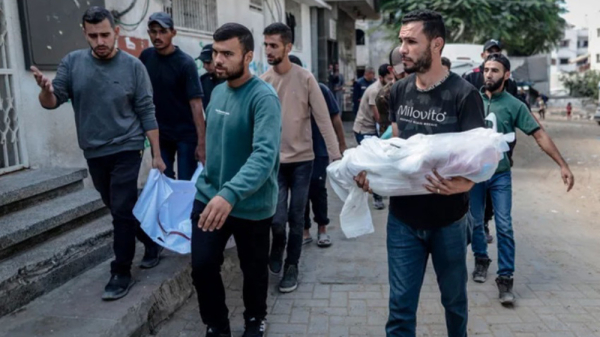
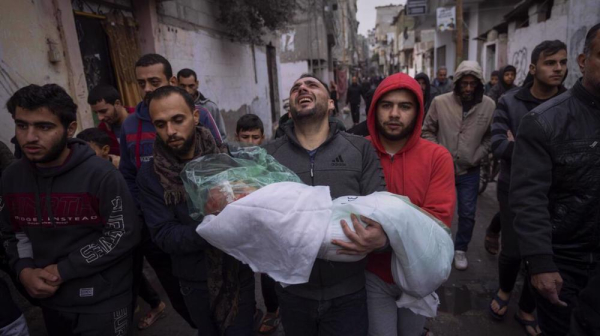
The Israeli regime has killed an average of 10 Palestinians per day in the Gaza Strip since October 10, when a deal took effect aimed at implementing the first phase of a plan to end Tel Aviv’s two-year-plus war of genocide on the territory, a human rights organization has reported.
In a statement on Friday, the Geneva-based Euro-Mediterranean Human Rights Monitor said the regime’s actions, including daily shelling, systematic destruction, and forced displacement, amounted to “acts of genocide against Palestinians.”
According to the body, the campaign was now being waged “in a quieter and more systematic manner,” with repeated violations of the agreement through attacks that often escalate into large-scale strikes on displacement centers, homes, and tents.
Israel’s Ben‑Gvir calls for Palestinian detainees’ execution on prison visit
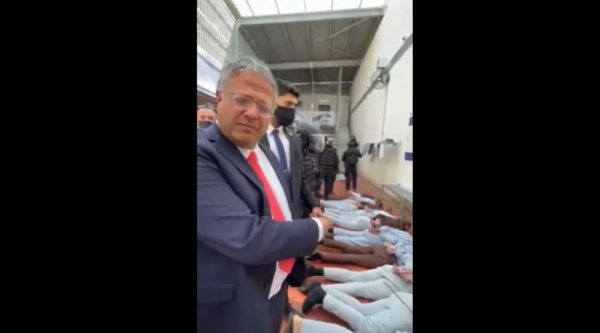
This screen grab taken from a video, released on October 31, 2025, shows Israeli minister Itamar Ben-Gvir standing next to tied-up Palestinian prisoners at an Israeli detention center.
Israeli minister Itamar Ben‑Gvir called for the execution of Palestinian inmates in Israeli prisons and detention centers, as he stood beside a row of Palestinian prisoners being abused while lying on the ground with their hands tied behind their backs.
In footage shared on his personal Telegram channel on Friday, Ben-Gvir addresses the camera while pointing at a dozen detainees faced down in front of an Israeli flag.
The Israeli minister and chairman of the Otzma Yehudit party stated that Palestinian prisoners are being held under minimal conditions.
“But there’s still something that must be done: the death penalty” for them, he stated.
He highlighted the severe detention conditions he had enforced on Palestinian prisoners – a subject he has repeatedly flaunted in recent months.
“I am proud of the revolution in the prisons, unlike anything since the founding of the entity; today, instead of a summer camp, there is deterrence. There are no more smiles there — we erase them,” Ben-Gvir said.
“Ask any detainee who passed through my prison, if he would like to return there — they are afraid, trembling, and the number of attacks has fallen remarkably,” he added.
Ben-Gvir, who is known for his inflammatory remarks, has threatened to stop voting with Israeli Prime Minister Benjamin Netanyahu’s right-wing coalition if his bill calling for the execution of Palestinian detainees is not put to a parliamentary vote soon. The Israeli Knesset (parliament) is set to vote next week on the bill.
Earlier this month, Ben-Gvir told reporters that with the release of the final 20 surviving Israeli captives from Gaza, there were no longer any excuses for delaying the legislation.
He published a video in August, showing him threatening prominent Palestinian political leader Marwan Barghouti in his prison cell.
Testimonies collected by Palestinian lawyers indicate that prisoners are subjected to systematic torture in Israeli facilities, including severe beatings, starvation, medical neglect, and other brutal treatments.
According to the Palestinian Prisoners’ Society, 80 Palestinians have died in Israeli custody since October 2023, when the Tel Aviv regime unleashed its genocidal war on the Gaza Strip.
Press TV’s website
Hezbollah not merely a military force but 'integrated strategic project,' says Sheikh Naim Qassem
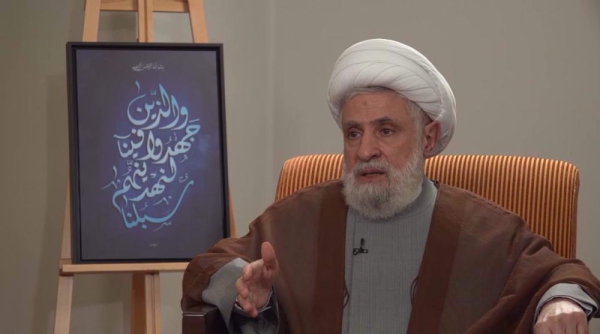
Screengrab of Hezbollah chief Sheikh Naim Qassem during an interview broadcast on Al-Manar on October 26, 2025.
Hezbollah Secretary-General Sheikh Naim Qassem says the movement is far more than an armed group, describing it as an “integrated strategic project” that addresses Lebanon’s defense as well as its social and economic needs.
In an interview with Al-Manar TV aired on Sunday, Sheikh Qassem said resistance for Hezbollah is not a temporary tactic or a standalone military option but an “integrated way of life” embedded in the organization’s identity.
“We do not tire, and the party’s journey is strong and firm, and we cannot resort to surrender just because of a feeling of exhaustion. Instead, we continue to defend and stand firm,” he said, highlighting the religious and ethical commitment that animates the movement.
He stressed that the spirit of martyrdom permeates the group, from front-line fighters to the families who have borne heavy sacrifices. “The characteristic of the martyrdom-seeker belongs to every individual in the party, and it means facing difficulties and sacrificing everything precious to achieve the goal, no matter how difficult the path,” he said.
Iran's National Elites Foundation honors 17 Olympiad medalists in scientific fields
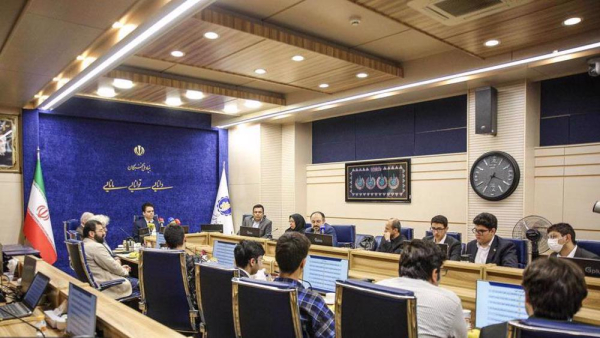
Iran's National Elites Foundation (INEF) has held a ceremony honoring 17 talented students and young individuals who have won gold, silver, and bronze medals in the International Science Olympiad competitions in the fields of Artificial Intelligence, Astronomy and Astrophysics, Economics, and Computer Science.
Speaking during the event on Saturday, INEF Deputy Head Saeed Khodaygan said that Olympiad medalists automatically enter the “elite pathway,” a journey that marks the beginning of their scientific flourishing and a true test of their impact on society.
He emphasized that the path embodies both privilege and duty, a privilege bestowed upon the elite by society, and a duty the elite must uphold in service to that society.
“Your medal is a great honor for the country — but it is only the beginning of the journey,” he told the medalists. “In the years to come, what will hold greater value than the medal itself is your social impact and scientific service to the nation. That is the true medal that society gives you.”
The official further highlighted the challenging and complex nature of the elite pathway, saying it marks a stage during which the individual must transition from being a recipient to becoming a provider of scientific and social services.
“I hope that through your personal dedication, the support of families, and the collaboration of the country’s scientific institutions, you will continue on the path of elite development with steadfastness — so that your name may be proudly etched in Iran’s history,” he added.
In July, Iran’s biology team won 3 golds and 1 silver at the 36th International Biology Olympiad in the Philippines, cementing its place among the world’s top teams.
In the same month, Iran’s national mathematics Olympiad team shone at the 66th International Mathematical Olympiad 2025 in Australia, winning two golds, three silvers, and one bronze
In August, the Iranian National Olympiad Team in Astronomy and Astrophysics, for the second year in a row, claimed top honors at the 18th International Olympiad on Astronomy and Astrophysics (IOAA), where 64 nations took part.
The Iranian team staged an outstanding performance in this year’s competition and managed to secure first place with a clean sweep of five prestigious gold medals.
Press TV’s website
Israel continues to exploit Gaza aid as weapon of war: Doctors Without Borders
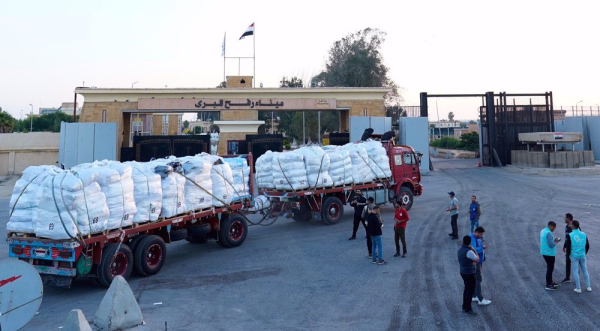
A senior official from the international medical humanitarian organization Doctors Without Borders (MSF) says the Israeli regime continues to use humanitarian aid in Gaza as a weapon of war against Palestinians.
Caroline Willemen, MSF project coordinator in Gaza, underscored in a statement on Sunday that aid sent to the Gaza Strip should not be tied to any political conditions.
She noted that there has been a notable decline in Israeli attacks on Gaza since the ceasefire was enacted, but she also pointed out that a major assault took place on 19 October, with near-daily shelling persisting.
The humanitarian conditions in Gaza, Willemen said, have not seen significant improvement. Shortages of water and shelter continue to exist, and as winter draws near, hundreds of thousands of individuals remain living in tents, she added.
She highlighted that MSF teams are still registering severe malnutrition in children younger than five years and in pregnant women. Despite a slight increase in food availability, the nutritional status remains worrisome.
“Residents of Gaza have lived under the threat of mass extermination for two years,” Willemen said.
The senior MSF official added, “We urgently need aid to ensure people can sleep on a mattress with a blanket inside their tents. Rebuilding Gaza will take a long time, but we have not yet reached even the minimum basic humanitarian standards in the strip.”
One Palestinian killed in Israeli drone strike
Meanwhile, medical sources at al-Awda Hospital said one Palestinian was killed and four others injured in an Israeli drone attack last night at Nuseirat refugee camp in northern Gaza.
The Israeli army asserted in a statement that it carried out the attack against a member of the Islamic Jihad resistance movement.
The first phase of the Gaza ceasefire agreement was aimed at bringing an end to Israel’s assault, a partial withdrawal of its troops to a so-called yellow line along Gaza’s borders, and a modest increase in humanitarian aid.
Last Monday, as part of the deal Hamas released all living captives, as well as the remains of 12 of the 28 dead Israeli captives.
In return, Israel freed 2,000 Palestinian detainees and returned 15 Palestinian bodies for every one dead Israeli captive returned.
Since the onset of the Israeli genocidal war in October 2023, the occupying regime has killed at least 68,519 Palestinians — mostly women and children — and reduced Gaza to ruins, drawing global outrage and calls for accountability.
Experts warn that the true death toll could reach hundreds of thousands once the missing and those buried beneath the ruins are fully counted.
Press TV’s website
How Trump frames himself and Iran: An analysis of his social media posts
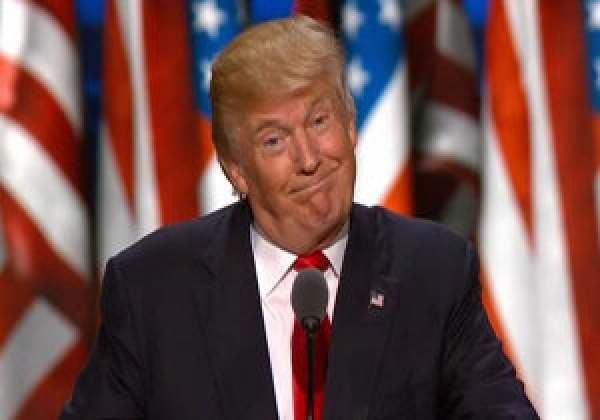
By Saeedeh Moradifar, Ali Reza Nasr Esfahani
After Donald Trump’s social media accounts, particularly on X (Twitter), were suspended, he launched his own platform, Truth Social, at the end of 2021. The goal was to regain media influence and directly convey his political beliefs as well as his portrayals of himself and others.
Trump has consistently expressed his views—often diverging from traditional diplomatic norms—first via X and later through Truth Social. Notably, his rhetoric directly influences US foreign policy and international diplomatic relations, shaping perceptions of US governance
One country that Trump frequently comments on is the Islamic Republic of Iran. In this article, we analyzed 80 posts (Truth Social) from Trump specifically about Iran, spanning from January 2025 to the end of the 12-day imposed war, to uncover the implicit messages in his content
Using a mixed-method content analysis, we extracted 165 codes, including keywords, repeated phrases, and thematic variations, and grouped them into meaningful categories. Ultimately, two dominant conceptual images emerged: Trump as the “Saviour of the world” (Trump's image of himself), and Iran as the“weak enemy” (Trump's image of Iran).
The content analysis of Trump’s social media posts suggests that he has emphasized building a positive image of his administration to shape international perceptions against Iran and foster empathy and support for the United States.
By publishing this content, Trump has aimed to portray Iran negatively in the region and globally, while presenting his administration in a favorable light. Indeed, 75 percent of the content in Trump’s posts focuses on his image as a global savior, while only 25 percent addresses Iran as a weakened adversary.
Trump's image of himself – ‘savior of the world’
Trump has sought to portray himself as the “savior of the world” by disseminating selective information. His aim appears to be the justification of his administration’s policies toward Iran and the manipulation of international perceptions to align foreign stances with US objectives.
His self-image is constructed through four thematic categories: 'Questioning the achievements of the Democrats,' 'pre-emptive self-defense,' 'ending the war,' and 'preventing the emergence of a regional hegemon.'
The analysis reveals that 'pre-emptive self-defense' dominates his narrative, representing 39 percent of the content, followed by 'ending the war' (35 percent), 'questioning the achievements of the Democrats' (23 percent), and 'preventing the emergence of a regional hegemon' (3 percent)
To construct this image of himself, the US president has questioned the Democrats’ achievements through two main codes: the termination of the Democrats’ nuclear deal and the need for a new diplomatic agreement with Iran.
He has depicted former US president Barack Obama and the Democrats’ nuclear deal as responsible for enabling Tehran’s “pursuit of nuclear weapons.” From Trump’s perspective, a new agreement with Iran is necessary to prevent uranium enrichment and the acquisition of nuclear weapons by Tehran. He frames Iran as a state whose interests conflict with those of the US, aligned with the Eastern Bloc, and as an international threat that must be countered to protect both the Israeli regime and American interests in the region.
By filtering intelligence and using his own rhetoric, Trump has sought to present a US attack on Iran as “pre-emptive self-defense,” guided by two codes: the legitimacy of striking Iranian nuclear facilities and the destruction of Iran’s nuclear sites.
From his perspective, these actions enabled the US to create a significant historical moment for Israel and the world by targeting Iranian nuclear sites, including Fordow, Natanz, and Esfahan.
Trump’s ultimate aim has been to portray his administration’s success in so-called “Operation Midnight Hammer” in mid-June as neutralizing a destabilizing nuclear threat in the region, which in reality was in brazen violation of international law and based on false intelligence.
He has presented his Republican administration as the main factor in ending the war in the West Asia region with two codes (a ceasefire agreement between Israel and Iran, establishment of world peace). In fact, Trump's goal was to present himself as a peacemaker and a security-conscious person in the international system by sorting out positive information, such as the one that resulted in the ceasefire agreement after the 12-day war, sought by Israel.
Importantly, Trump has placed less emphasis on preventing the emergence of a regional hegemon with a code. However, he sees any progress in Iran’s nuclear program as a basis for acquiring nuclear weapons, which he claims would imperil security in the region.
Trump's image of Iran – ‘weak enemy’
Trump has also attempted to portray Iran as a weak adversary within the international system. While the roots of this negative depiction date back to the victory of the Islamic Revolution in 1979, there are two primary reasons for it:
The fundamental principle of Imam Khomeini’s and Leader of the Islamic Revolution Ayatollah Seyyed Ali Khamenei’s foreign policy during their leadership was resistance to global arrogance and confrontation with American imperialism. From the US government’s perspective, this reflects Iran’s deep hostility toward the US.
Iran’s support for Palestine in resisting Israel is another aspect of its discourse of resistance to global arrogance. Clear evidence of this support includes operations "True Promise1" in April 2024 and "True Promise2" in October 2024, carried out in response to Israel’s genocidal war against the people of Gaza and the cowardly assassinations of top resistance leaders, Hassan Nasrallah, Ismail Haniyeh, and Abbas Nilforoushan.
These factors have contributed to a distorted image of Iran in international relations, portraying it as an enemy and a threat from the US perspective, potentially encouraging Western countries and Israel to consider further attacks on Tehran. Crucially, Trump sought sufficient and morally framed justifications for this negative portrayal of Iran to support potential military action.
Trump’s image of Iran as a weak enemy is constructed around three categories: 'disruptor of the international order,' 'incapable of governance,' and 'lacking credibility and authority in the international system.'
Content analysis indicates that Trump placed the greatest emphasis on the 'disruptor of the international order,' which accounted for 68 percent of the content. This was followed by 'incapable of governance' at 17 percent and 'lacking credibility and authority in the international system' at 15 percent, showing his focus on reinforcing a negative image of Iran.
To depict Iran as a disruptor, Trump emphasized two codes: sponsorship of terrorism and pursuit of nuclear weapons. In his view, Tehran’s support for the Ansarallah resistance movement in Yemen through military and financial aid contributes to regional chaos and instability, while its nuclear ambitions threaten global security.
Trump has also portrayed the Islamic Republic as incapable of governing effectively, emphasizing the need for regime change as a key code. By highlighting internal challenges and sanctions-related restrictions, Trump linked the solution to Iran’s problems to “regime change,” while downplaying the primary causes—namely, unilateral and illegal sanctions imposed by his own country against the Iranian nation. The same “regime change” project that has been in the works for the past 46 years.
Finally, Trump frames Iran as lacking credibility and authority in the international system through two codes: inability to sell oil and defeat in the war against Israel. From his perspective, Israel’s 12-day war represented a successful counter to Tehran’s regional ambitions, positioning Israel as the real victor. Moreover, Iran’s weakened state, according to Trump, prevents it from exporting oil even to allies like China. Both claims are based on bogus information fed to the US president.
To counter Trump’s negative and manipulative portrayals of Iran, a strategic approach could involve establishing a non-profit organization, which would operate independently, free from political influence, and adopt a long-term strategy for real image-building.
Saeedeh Moradifar is a Ph.D in International Relations and a Researcher at the Islamic Parliament Research Center of the Islamic Republic of Iran.
Ali Reza Nasr Esfahani is a Ph.D. in Futures Studies and a member of the academic staff at the Islamic Parliament Research Center of the Islamic Republic of Iran.
Press TV’s website
Bowing to Zionist lobby pressure, UK medical regulator hounds British-Palestinian medic
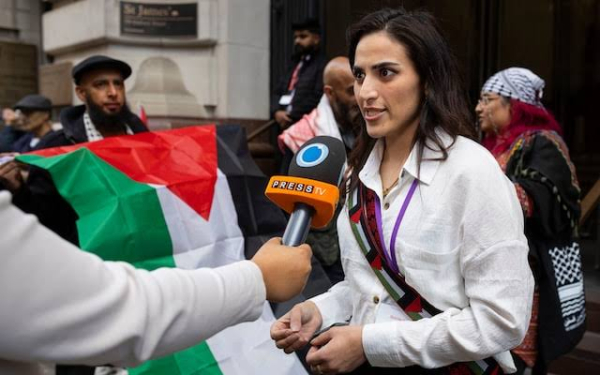
By Maryam Qarehgozlou
Yielding to pressure from pro-Israel lobbying groups, the UK’s General Medical Council (GMC) has reopened a politically motivated case against British-Palestinian doctor Rahmeh Aladwan over her outspoken criticism of UK-backed Israel’s genocidal war on Gaza.
The renewed proceedings aim to suspend the 31-year-old medic from the UK medical register over social media posts condemning the genocide in Gaza and the complicity of the British government.
The move comes less than a month after the Medical Practitioners Tribunal Service (MPTS) ruled that the complaints against her were not “sufficient to establish that there may be a real risk to patients” and refused to impose any restrictions on her licence.
That September 25 decision had appeared to close the case.
However, under pressure from Zionist lobbying groups — led by the so-called Campaign Against Antisemitism (CAA) and the Jewish Medical Association (UK) — the GMC has now reversed course.
Both groups, backed by Labour Health Secretary Wes Streeting, have spearheaded a smear campaign to punish Dr. Aladwan for her vocal and strong pro-Palestine stance.
For nearly two years, she has been the target of online smears and defamation for exposing Israel’s slaughter of more than 68,000 Palestinians and the near-total destruction of Gaza.
Earlier this month, the CAA escalated its rhetoric, claiming that Aladwan was conducting a “campaign of hatred against British Jews” and threatened to legally challenge the MPTS for clearing her name.
Streeting — who has publicly vowed to overhaul the way medical regulators handle so-called “anti-Semitism” cases — has openly pushed for harsher measures against critics of Israel.
In practice, his proposal would mean prosecuting anyone who denounces the Zionist regime’s genocidal actions.
Investigations by Declassified UK revealed that Streeting received almost £30,000 from Britain’s pro-Israel lobby, and in 2022, he became the first member of Keir Starmer’s shadow cabinet to visit the Israeli-occupied territories — in a move designed to signal a break with former Labour leader Jeremy Corbyn’s pro-Palestine position.
Under this political pressure, a GMC case examiner compiled a new dossier of Aladwan’s social-media posts from late September to early October and referred her again to the Interim Orders Tribunal (IOT).
The CAA quickly boasted that its legal threat had forced the regulator to act.
At Thursday’s hearing, the MPTS agreed to convene a second tribunal — a move that could ultimately strip Dr. Aladwan, a National Health Service (NHS) doctor with seven years of service, of her right to practice medicine in the country where he grew up.
Speaking before the hearing, Dr. Aladwan told reporters she had been “summoned by what is now more accurately called the Genocide Medical Council.”
“It is only four weeks since I was summoned here for exactly these allegations, it is my social media postings, it is my support for the Palestinians to resist under international law,” she said.
“Mostly really, it’s the GMC buckling to the pressure of the Israeli lobby and the MPs such as Wesley Streeting who are funded by them and who are making comments.”
She described the ordeal as a coordinated effort to silence voices of dissent.
“There’s been a huge media smear campaign, corruption, and collusions between all these institutions that have been subverted by the Israeli lobby to just take my license away or silence me.”
Inside the tribunal, Aladwan was even denied the right to address the panel directly. Representing the GMC, Emma Gilsenan said that only her legal representative could pose questions — a privilege she had been granted in the earlier hearing.
Her counsel, Kevin Saunders, instructed by Zillur Rahman of Rahman Lowe Solicitors, denounced the proceedings as a response to “external pressure.”
He highlighted Streeting’s public condemnation of the previous tribunal’s ruling, calling it “an attempt to undermine the rule of law and the determination of an independent body.”
Saunders pointed out that the 12-page dossier presented by the GMC contained nothing new to justify reopening the case.
He stressed that Aladwan’s social media posts were separate from her clinical practice, which has been exemplary, noting that she was expressing solidarity with her own people under siege.
No evidence has ever shown that her posts affected patient safety or her duties as a doctor, he said.
When Saunders requested a stay of proceedings on grounds of “abuse of process,” the tribunal rejected the motion.
‘Surrender to political pressure’
On Friday, after the second tribunal, Dr. Aladwan took to X (formerly Twitter) to condemn what she described as the MPTS’s “surrender to political pressure.”
“They chose to trample on their own ruling from the 25th of September and allow the GMC to resubmit the same evidence—effectively perverting our British legal system on behalf of the ‘Israeli’ Jewish lobby and their funded MP Streeting,” she wrote.
“If a foreign lobby can force our panels to backtrack on a ruling, the finality of British justice is dead.”
She called it “a dark day for Britain,” vowing to continue her fight.
“They picked the wrong British Palestinian. I will fight this — not just for me, but for our sovereignty and fundamental rights in Britain. If the process is the punishment, then bring it on.”
Ahead of the hearing, she had warned that the GMC was determined to destroy her livelihood “to please its masters in the Israeli lobby.”
“Let’s be clear,” she posted. “A British Jewish or ‘Israeli’ doctor could … bomb hospitals and kill patients in Palestine — and keep their license and freely treat British patients. I’m being persecuted for speech. They would be protected for murder. This is Jewish supremacy.”
By Tuesday, Aladwan revealed that the GMC was now seeking her suspension for being “unrepentant.”
“The first tribunal found no need for any order. Now, the GMC demands suspension because I refused to ‘moderate’ speech that was already deemed acceptable,” she said.
“This is not about safety. It’s about punishment. They are explicitly seeking what the ‘Israeli’ lobby demanded: my removal from practice for my political views. This is the weaponisation of medical regulation. This is political persecution.”
Arrest before tribunal: A ‘political theatre’
Only two days before facing her second tribunal, Aladwan was arrested by British police — a move many saw as part of a broader campaign to silence and intimidate her.
In a video posted on social media, the British-Palestinian doctor could be seen confronting police officers as they informed her she was under arrest for “three malicious communications and one offence of inciting racial hatred.”
According to the officer, the charges stem from Aladwan’s posts on October 7 — marking the second anniversary of Operation Al-Aqsa Flood, the Hamas-led operation launched in response to over seven decades of Israeli apartheid — and from a July 21 speech at a pro-Palestine rally outside the Foreign Office, where police claimed she had called for “the eradication of Israel.”
Aladwan, who in her posts described the historic resistance operation as the day Israel was “humiliated,” immediately challenged the officer’s motives.
“You are doing this for the Israeli Jewish lobby so you can get an arrest on me before my tribunal on Thursday,” she said in the video. “This is what the UK does to its doctors.”
After her release, Aladwan denounced the arrest as “political theatre, not policing.”
In a detailed social media post, she described harsh and degrading conditions during her detention — denied water for six hours, refused essential medication, left in a freezing cell without a blanket, and isolated with a broken intercom.
“These are not standard procedures. They are punitive measures,” she wrote.
Aladwan also revealed the political motive behind the arrest.
“An officer explicitly informed me the police would be ‘reporting the arrest to the GMC.’ This is a non-reportable event. This admission reveals the direct channel of communication between the police and my regulator,” she said.
She further noted that the arrest was part of a coordinated campaign of intimidation aimed at influencing the medical tribunal and shaping public perception.
“It reveals a seamless network: lobby groups, politicians (Streeting), police, regulator (GMC),” she wrote. “They are not following due process. They are executing a strategy. Our British institutions have become enforcement tools for a foreign, hostile agenda—for the Israeli Jewish lobby—and the entire world can see it.”
Her post ended with a defiant declaration: “Free Britain and Palestine from Jewish supremacy (Zionism).”
Later, Aladwan published her bail conditions, which she said were a form of “house arrest.”
She is banned from attending any public event or protest related to Palestine or the Israeli regime in London, placed under curfew at a specified address, and required to notify police if she leaves home for more than 48 hours.
‘Losing grip over the narrative’
The arrest sparked outrage among pro-Palestine activists and supporters online, who harshly criticized British authorities for weaponizing law enforcement to suppress dissent.
A social media activist, Thomas Keith, wrote that the state’s reaction only exposes its weakness.
“The irony is that every time they try to silence a Rahmeh Aladwan, they just spotlight the hollowness of their so-called freedoms,” he said. “The more aggressive and coordinated the repression, the more obvious it is that the state is panicking, losing its grip over the narrative as more and more people refuse to look away from Gaza.”
“What you’re seeing is Britain showing the world it’s still an empire at heart, propping up colonialism abroad and silencing dissent at home. The cost of speaking the truth has never been higher, but the mask is off, and more people than ever see exactly who benefits from the machinery of state repression.”
Ellen Kriesels, another user on X, highlighted the hypocrisy of reopening a cleared case under lobby pressure and condemned the GMC’s renewed action as a blatant act of political persecution.
“This doctor was cleared by a tribunal three weeks ago. Now she is going back there on Thursday after intense media and political pressure at the behest of pro-Israel lobby groups. No new material. Political persecution is what this is. Shame on the GMC,” she wrote.
Aladwan herself has long maintained that silence is complicity. After her first tribunal in September, she posted a message urging others to resist fear and speak truth.
“We must operate without fear. We must name the root cause and identify the criminals. Palestinians are bravely resisting with their lives. The least we can do is resist with our words, uphold the principles of liberation (thawabet), and speak the full truth.”
She condemned Zionist supremacist structures behind the ongoing genocide in Gaza and the extermination of Palestinians across the occupied territories.
“The Jewish lobby and Jewish supremacists need to have some shame,” she wrote. “While Palestinians are being kidnapped, tortured, murdered, starved, raped, and burned alive by Israeli Jews, they continue to play victim and cry over our words and activism that are rooted in justice, morality, and humanity.”
In her message, she made clear what this struggle is really about.
“This is not about Jewish feelings or tears. This is about genocide caused by Jewish supremacy, extremism, and unadulterated terrorism.”
Press TV’s website
Palestinian factions demand full Israeli withdrawal from Gaza
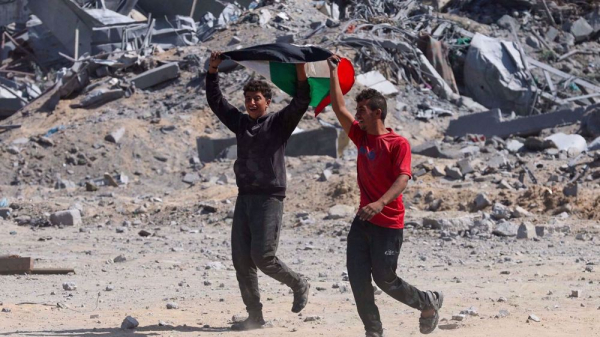
Palestinian factions have reiterated their unified stance against Israel’s annexation of the occupied West Bank and the displacement of Palestinians in Gaza.
As they concluded a two-day meeting hosted by Egypt on Friday, the factions stressed that the current stage requires “a unified national stance,” rejecting all forms of annexation and displacement in Gaza, the West Bank, and al-Quds.
They condemned the Israeli parliament’s (Knesset) initial nod to annex the occupied West Bank as “a serious aggression on the Palestinian identity and existence.”
The meeting was held amid international efforts to consolidate the Gaza ceasefire agreement reached earlier this month and to address the repercussions of Israel’s genocidal war.
Several Palestinian factions attended the meeting to discuss the latest developments of the Palestinian cause and the second phase of US President Donald Trump's ceasefire plan, in preparation for holding a comprehensive national dialogue to restore national unity.
In a joint communiqué, the Palestinian factions demanded the full withdrawal of Israeli forces from the Gaza Strip, the complete lifting of the siege imposed on the territory, and the immediate start of a comprehensive reconstruction process of the strip.
They expressed their support for a temporary committee of technocrats to run post-war Gaza, in cooperation with Arab states and international institutions, stressing that national unity is the “decisive” response to Israel’s policies.
The statement also called for adopting all necessary measures to preserve security and stability in Gaza, and pointed to the importance of the issuance of a UN resolution regarding the deployment of temporary international forces to monitor the ceasefire.
Meanwhile, the factions urged the international community to pressure Israel to stop violating the rights of Palestinian prisoners held in Israeli jails.
They agreed to prepare for a meeting of all Palestinian forces and factions to unify visions and to activate the Palestine Liberation Organization (PLO), described as "the sole legitimate representative of the Palestinian people," so that it includes all components and active forces of the Palestinian people.
The statement called for making the outcome of the meeting a true starting point for a genuine national unity to defend the Palestinian people’s right to life, dignity, freedom, self-determination and the establishment of an independent Palestinian state with al-Quds as its capital, while guaranteeing the right of return for refugees.
Israel has so far killed nearly 70,000 Palestinians since launching the genocidal war on Gaza on October 7, 2023, before a ceasefire deal was reached in the strip earlier this month.
The deal marks the first phase of US President Donald Trump’s 20-point Gaza ceasefire plan, with further stages to be negotiated at a later date.
Press TV’s website
Palestinian journalist honored posthumously with prestigious award for courage amid Israeli genocide
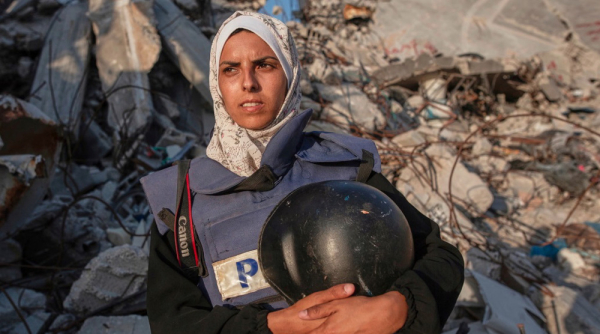
The International Press Institute (IPI) has paid tribute to martyred Palestinian journalist Mariam Abu Dagga, honoring her and her colleagues worldwide, who risked their lives to reveal the truth from harshest frontlines.
At its 75th-anniversary World Congress in Vienna on Friday, the IPI named seven journalists as World Press Freedom Heroes, including Dagga.
The awardees, who also hailed from Georgia, Peru, Ethiopia, and the United States among other places, were celebrated for their courage in confronting repression, propaganda, and war machines.
“As IPI marks 75 years of defending press freedom, we chose to honor seven journalists who truly embody what it means to be a press freedom hero…,” said IPI Executive Director Scott Griffen.
Dagga, who chronicled Gaza’s devastation for global outlets, including the Associated Press and Independent Arabia, was killed while documenting the impact of Israeli airstrikes on civilians on August 25.
She was among five journalists, who lost their lives in a “double-tap” Israeli strike on the Nasser Hospital in the city of Khan Younis in southern Gaza Strip.
Overall, the attacks claimed around two dozen lives, hitting the city amid the Israeli regime’s war of genocide on the coastal sliver, which had begun in October 2023.
The other journalists targeted in the strike used to work for Al Jazeera and Reuters among other news agencies.
The United Nations human rights spokesperson reacted to the atrocity, saying the high number of media workers killed in the genocide “raises many, many questions about the targeting of journalists.”
Hundreds of journalists have been killed by the war that has claimed the lives of 62,800-plus Palestinians, most women and children.
The Friday ceremony also heard emotional tributes from other awardees, who warned of the mounting threats to journalists everywhere.
Press TV’s website
Global Jewish figures urge UN, world leaders to sanction Israel over genocide in Gaza
More than 450 Jewish figures from around the world have called on the United Nations and global leaders to impose sanctions on the Israeli regime for “unconscionable” genocidal atrocities in the Gaza Strip.
In an open letter, the signatories, including former Israeli officials, writers, and award-winning artists, demanded accountability for the regime’s policies in the coastal sliver as well as the occupied West Bank, The Guardian reported on Wednesday.
The undersigned warned that Tel Aviv’s conduct had systematically violated the international law and the very principles created to prevent mass atrocities.
"We have not forgotten that so many of the laws, charters, and conventions established to safeguard and protect all human life were created in response to the Holocaust," the letter states. "Those safeguards have been relentlessly violated by Israel."
Among the signatories are former Knesset (Israeli parliament) speaker Avraham Burg, negotiator Daniel Levy, authors Michael Rosen and Naomi Klein, filmmaker Jonathan Glazer, and actors Wallace Shawn and Ilana Glazer.
The collective appeal emphasized that governments had to take concrete steps to prevent further harm to Palestinians.
The letter urged states to respect rulings of international courts, halt the transfer of arms, enforce targeted sanctions, and ensure humanitarian access to Gaza.
It also denounced “false claims of antisemitism against those advocating for peace and justice.”
"We bow our heads in immeasurable sorrow as the evidence accumulates that Israel’s actions will be judged to have met the legal definition of genocide," the letter added.
The statement highlighted the growing recognition among Jewish communities worldwide of the scale of the regime’s violations.
Recent polls cited by The Guardian indicate that 61 percent of American Jews believed Tel Aviv had committed war crimes against Palestinians, while 39 percent said it was committing genocide.
The signatories made clear that their solidarity with Palestinians was grounded in ethical and historical responsibility.
"Our solidarity with Palestinians is not a betrayal of Judaism, then, but a fulfillment of it," the letter reads.
Since October 2023, over 68,200 Palestinians, mostly women and children, have been killed and more than 170,300 others injured in Gaza as a result of a war of genocide waged by the regime.
The war has compounded decades of occupation, blockades, and systematic human rights violations, creating what experts increasingly describe as a man-made humanitarian catastrophe.
Press TV’s website