zarezadeh
Place Of Getting Into The State Of Ihram In Umrah Tamattu
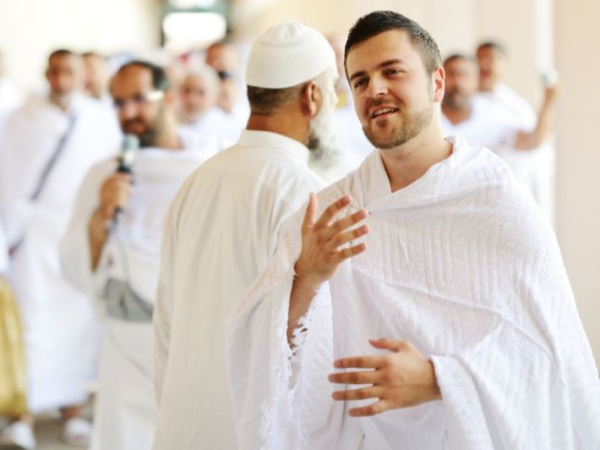
The place of getting into the state ihram in Umrah Tamattu, which is called miqat, can be different based on the different places from which the pilgrims depart for Hajj. The following five places serve as miqat:
1. Masjid ash-Shajarah (also known as Dhul-Hulayfah) is the miqat for the people of Madinah who go to Makkah.
In the case of emergency, getting into the state of ihram could be postponed to reach the miqat of the pilgrims of ash-Sham (Syria) or places parallel to it (including Lebanon, Palestine, and Jordan).
Ihram outside the Masjid ash-Shajarah is not acceptable for the people who depart from Madinah and head for Makkah. It is compulsory for them to put on ihram inside the Masjid ash-Shajarah.
A person in the state of junub or haydh can become a muhrim while passing through the Masjid ash-Shajarah but should not halt in it.
2. Al-Aqiq which has three points, namely "al-Maslakh", "al-Ghamrah", and "Dhat al Irq", is the
miqat for those who go to Makkah from Iraq and Najd.
3. Qarn al-Manazil is the miqat for the people who go on Hajj through Taif.
4. Yalamlam, which is the name of a mountain, is the miqat for those from Yemen.
5. Juhfah is the miqat for those who head for Makkah through ash-Sham.
After religious proof is provided on the miqat (that is, when two just witnesses testify about the place being miqat), there is no need for investigation. In the absence of religious proof, one can ask people who are informed of these places.
Whenever a pilgrim takes a route, which does not pass through any of the mawaqit, he should get into the state of ihram at any place parallel to the said mawaqit.
When there is choice, the pilgrim should not get into the state of ihram in Jeddah and should go to one of the five mawaqit, unless he or she lacks strength. In such a case, based on precaution, the pilgrim could put on ihram in Jeddah by making a nadhr.
Parallel areas refer to the case in which a person who heads for Makkah reaches a place where the miqat is located on his right or left in a straight line, such that if he passes this area, the miqat would stand behind him.
Getting into the state of ihram before reaching the miqat is not permissible. If one thus puts on the ihram, it would be incorrect, unless the pilgrim makes a nadhr to get into the state of ihram in a place before the miqat, He should then become a muhrim in this very place. For instance, if he makes a nadhr to become a muhrim in Qurn, it is incumbent on him to act in accordance with his nadhr.
It is not permissible to voluntarily delay getting into the state of ihram in miqat. If due to forgetfulness, ignorance, or some other excuse, he leaves the miqat without getting into the state of ihram, he should, if possible, return to the miqat and become muhrim there. If not possible to return to the miqat, he should leave the Haram, if he has entered it and, based on ihtiyat wajib, get as close to the miqat as possible and then get into the state of ihram. If he cannot go out of the Haram due to time limitation or the like, he should become a muhrim inside the Haram at the very point where his excuse has been removed.
If he leaves the miqat without getting into the state of ihram, it is wajib for him to return if time is not limited and become a muhrim in the miqat he has passed, no matter whether another miqat is before him or not.
What Is Shi‘a Islam?

Shi‘a Islam, particularly the Twelver Shi‘a tradition (Shi‘a Ithnā ‘Asharī), is one of the main schools within the global Muslim community. It is an Islamic path that, like all other recognized schools, seeks to follow the message of the Qur’an and the teachings of Prophet Muhammad (peace be upon him). Shi‘a Muslims are known for their devotion to the Ahl al-Bayt, the noble family of the Prophet, and believe that spiritual and moral leadership after the Prophet was entrusted to a line of twelve Imams from among his household.
The Twelver Shi‘a school shares with the rest of the Muslim ummah the core doctrines of Islam: belief in one God, the prophethood of Muhammad, the Qur’an as divine revelation, and the essential acts of worship. In matters of jurisprudence, Twelver Shi‘a fiqh stands as an Islamic legal school alongside the well-known Sunni schools. Many contemporary scholars acknowledge that, just as Muslims may pray behind followers of any Sunni school, it is also permissible to pray behind a Shi‘a imam, as all are part of the same faith community.
A notable aspect of Shi‘a spirituality is the emphasis on love, loyalty, and respect for the Prophet’s family. This understanding is often connected to Qur’anic verses and early Islamic reports. In Surat al-Bayyinah (98:7), God describes “those who believe and do righteous deeds” as “khayr al-bariyyah” — the best of creation. Classical Sunni exegetical works, including those attributed to scholars such as al-Suyuti, transmit narrations stating that this verse was revealed concerning ‘Ali ibn Abi Talib and his followers, sometimes referred to as Shi‘at ‘Ali. These reports, while interpreted in various ways by different scholars, show that the term “Shi‘a” in its basic linguistic sense — meaning “followers” or “supporters” — was known in early Islamic history and used in reference to those devoted to the Prophet’s family.
For Twelver Shi‘a Muslims, this connection to the Ahl al-Bayt, grounded in love, ethics, and spiritual guidance, forms the heart of their religious identity. They see themselves simply as another school within the universal tradition of Islam — united with all Muslims in faith, worship, and devotion to God, while holding a particular reverence for the Prophet’s household as a source of guidance and inspiration.
The Blessing of Patience and Gratitude

✨ *And be patient, and your patience is only with Allah, and do not grieve over them, and do not be distressed by what they plot.*
✨ *And be patient, and your patience is only with Allah, and do not grieve over them, and do not be distressed by what they plot.*
(Nahl 127)
✨ *And be patient, and your patience is only with Allah, the Exalted, and in fact, it is one of the great blessings of Allah, and gratitude for it is obligatory.
✨ *And do not grieve over them*
✨Another point in the noble verse is that it says, "Do not grieve over them." This shows that *the prophets and saints of God suffer from the ignorance and disbelief of the people. Imam Hussein (AS) used to advise people many times on the scene of Karbala and before that on the way to Karbala.*
✨ Imam Hussein (AS) introduced himself several times on the day of Ashura and preached to the enemy army, while the enemy was very harsh on him, and in this situation, ordinary people cannot react except with anger and hostility. *This is one of the miracles of the behavior of the prophets and saints that while they were subjected to hostility and persecution, they could advise their enemy and be kind to him.*
✨ Imam Sadiq (AS) said: Commander of the Faithful Ali (AS) complained to the Holy Prophet (PBUH) as follows: "... O Messenger of God (PBUH)! I endured sufferings and hardships that no successor of the Prophet in any nation could endure, to the point that I was killed by the blow of Abdur Rahman bin Muljam, and God is witness to how my allegiance was violated. Talha and Zubair took Aisha to Mecca under the pretext of performing the Hajj and Umrah rituals, but they changed her route and brought her to Basra. I was forced to mobilize to prevent their rebellion and reminded them of God and you, but they did not return until God gave me victory over them and the blood of twenty thousand Muslims was shed and seventy hands that wanted to hold Aisha's camel were cut off. O Messenger of God (peace and blessings of God be upon him and his family)! What I saw in your battles and the battles after you was not more difficult for me than the Battle of Jamal; because that battle was one of the most difficult, most terrifying and greatest battles that I saw; So I was patient, just as God disciplined me with the same manners as you, with this verse: So be patient, as the prophets of the firm resolve were patient. (Al-Ahqaf: 35) And the verse: *And be patient, and your patience is only with Allah* I too was patient.
✨Tafsir Ahlul Bayt (a.s.) Vol. 7, p. 776
✨ Bihar Al-Anwar, Vol. 53, p. 20
Water Crisis; Nature's Irony on Netanyahu's Illusions
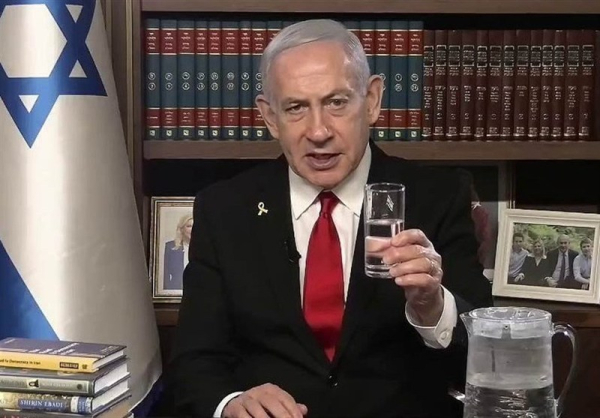
While Israeli Prime Minister Benjamin Netanyahu recently made claims about his ability to solve Iran's water crisis, today he and his cabinet have been brought to his knees in the face of an unprecedented drought in the occupied territories.
According to the Tasnim News Agency political group, while Israeli Prime Minister Benjamin Netanyahu recently made claims about his ability to solve Iran's water crisis, today he and his cabinet have been brought to his knees in the face of an unprecedented drought in the occupied territories.
This natural event is a crushing response to his interventionist statements in Iran's internal affairs under the pretext of providing water. History has always witnessed that those who seek to interfere in the internal affairs of others often become weak and helpless in the face of their own fundamental internal challenges. This article examines this bitter paradox, a paradox in which the defamatory claims of the Gaza executioner are shattered by environmental and climatic realities.
The current situation in the occupied Palestinian territories is indicative of a profound environmental crisis that goes beyond a seasonal drought. The unprecedented decrease in rainfall, combined with extreme heat and persistent drought, has forced the Israeli authorities to declare a state of “drought.” This situation has severely challenged the regime’s water management structure and infrastructure.
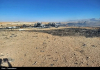
Vital water resources, which are the main arteries of life and agriculture in this arid region, are under severe pressure. The famous Hula Valley, once a symbol of water management and restored wetlands in Israel, is now facing a sharp decline in water levels. Local reports indicate that the situation in this area and other major water sources has been described as “desolate.” This not only affects drinking water supplies, but also puts the food chain and agricultural economy at risk.
Ofer Barna, director of the Upper Galilee Regional Council, has issued a stark warning that has resonated with farmers. He stressed that farmers will lose the ability to grow many of their strategic and essential crops in the near future. The warning, above all, emphasizes the fragility of a system based on limited water resources in a region where climate change is already having its devastating effects. This is not just a climate crisis; it is an existential warning for the agricultural infrastructure and, in the long term, the regime’s ability to sustainably inhabit the region.
What is very striking and politically ridiculous is that this serious domestic crisis has occurred while Netanyahu, in a fabricated "political show," was trying to boast about Iran's water problems from a position of fake power and even use this excuse to legitimize support for Iran's internal unrest. In statements that went beyond interference in international affairs, Netanyahu claimed that Iran had entered a crisis due to mismanagement of its water resources and that Tel Aviv could provide solutions. These claims, which are often viewed in the domestic context of Iran as "the gibberish of a leader under pressure," have now become a bitter joke and an open scandal in the light of his own complete inability to manage the water crisis within his own borders.
The Iranian nation, with its historical wisdom and intelligence, thwarted Netanyahu’s sinister plan, which attempted to exploit Iran’s internal weaknesses to advance its political goals. But now, the irony of history has come upon him; Netanyahu himself remains desperate and powerless in the face of the power of nature. This situation shows that focusing on propaganda and foreign intervention will never replace managing domestic crises and paying attention to vital infrastructure.
Israeli minister urges assassination of PA officials if UN backs Palestinian state

Israeli minister Itamar Ben-Gvir has called for the assassination of Palestinian Authority (PA) officials if the United Nations endorses a plan on postwar management of the Gaza Strip that mentions Palestinian statehood.
Ben-Gvir made the remarks at a meeting of his extremist Otzma Yehudit party on Monday, hours before a UN Security Council vote on the US-drafted Gaza resolution.
The draft resolution states that conditions may be in place for “a credible pathway to Palestinian self-determination and statehood” while “Gaza re-development advances and when the PA reform program is faithfully carried out.”
Ben-Gvir called top PA officials “terrorists” and insisted that a Palestinian state must never be established.
“If they accelerate the recognition of the Palestinian … state, and the UN recognizes a Palestinian state, targeted assassinations of senior Palestinian Authority officials… should be ordered,” he added.
Ben-Gvir also said Palestinian President Mahmoud Abbas should be arrested if the UN vote takes the idea of Palestinian statehood forward, noting that a solitary confinement cell is “ready for him” at the Israeli Ketziot prison.
The draft resolution would follow up on the ceasefire deal between Israel and the Palestinian Hamas resistance group, which took effect on October 10 and brought an end to Israel’s two-year-long genocidal war on Gaza.
The proposal also lays out a multi-stage process that would hand Gaza over to an international stabilization force to oversee the disarmament of Hamas.
Additionally, it will place Gaza under the authority of a technocratic Palestinian administration answering ultimately to the so-called “board of peace” chaired by the US President Donald Trump.
Hamas and other Palestinian factions rejected the “dangerous” resolution submitted by the US to the UN Security Council as “an attempt to subject the Gaza Strip to international authority.”
In a statement, they dismissed any foreign military presence inside the Gaza Strip and any clause relating to the disarmament or harming “the Palestinian people’s right to resistance.”
The wording of the resolution “paves the way for external domination over Palestinian national decision-making by transferring the administration of Gaza and reconstruction to an international, supranational entity with broad powers, thereby stripping Palestinians of their right to manage their own affairs.”
Speaking on Saturday, Ben-Gvir alleged that “there is no such thing as a Palestinian people” and that Palestinians are a “collection of immigrants from Arab countries.”
Israel unleashed its genocidal war on Gaza on October 7, 2023, but it failed to achieve its declared objectives despite killing at least 69,483 Palestinians, mostly women and children, and injuring 170,706 others.
The Gaza genocide mounted calls worldwide for the establishment of a sovereign Palestinian state.
Press TV’s website
Israel asks ICC to dismiss genocide case prosecutor, revoke arrest warrants
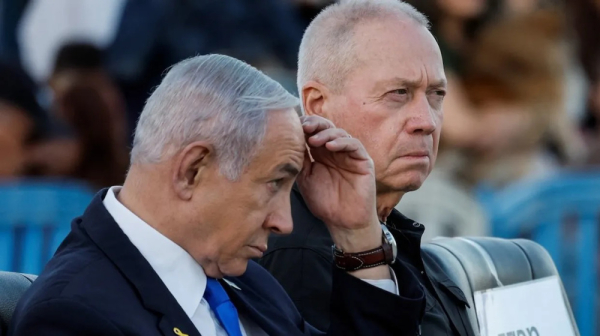
Israel has formally appealed to the International Criminal Court (ICC), demanding the removal of the chief prosecutor from the Gaza genocide case, and the nullification of arrest warrants issued for Israeli prime minister Benjamin Netanyahu and former minister of military affairs Yoav Gallant.
In a document published on Monday, Israel’s Foreign Ministry asserted, without providing evidence, that prosecutor Karim Ahamd Khan pursued Israel’s genocide case with “improper personal motives.”
Israel also demanded the revocation of the arrest warrants issued by the court on November 21, 2024, at Khan’s request, against Netanyahu and Gallant.
The indictments include the war crime of starvation as a method of warfare and the crimes against humanity of murder, persecution, and other inhumane acts committed during the regime’s genocidal campaign in Gaza, which, since October 7, 2023, has killed at least 69,490 Palestinians and wounded 179,000 others.
Since the issuance of these warrants, Israel and its chief Western partners, especially the United Kingdom and the United States, have engaged in a campaign of intimidation and propaganda against the ICC and Khan.
In July, Khan and the ICC were threatened with being “destroyed” should they proceed with the case against the Israeli leadership.
Khan was also privately pressured by then-British Secretary of Foreign Affairs David Cameron in April 2024, who warned that the UK would defund and withdraw from the ICC if the court moved forward with warrants against the Israeli authorities.
In May 2024, US Republican Senator Lindsey Graham also “threatened” Khan with sanctions if he applied for the warrants against Netanyahu and Gallant.
Subsequently, the administration of US President Donald Trump imposed sanctions on Khan and four ICC judges.
Furthermore, Khan received a security briefing alerting him that Israel’s spy agency, Mossad, “was active in The Hague and posed a potential threat” to his safety.
Khan also met with Nicholas Kaufman in May, a British-Israeli lawyer at the ICC, to discuss the Israeli investigation.
In a note of the meeting on file at the ICC, Kaufman told Khan that if the warrants against Netanyahu and Gallant were not dropped, “they will destroy you, and they will destroy the court.”
Meanwhile, in a letter to the Israeli regime’s president, Isaac Herzog, Trump urged him to pardon Netanyahu in a separate domestic criminal case.
“I hereby call on you to fully pardon Benjamin Netanyahu, who has been a formidable and decisive War Time Prime Minister,” Trump wrote.
Netanyahu is currently facing charges of fraud, bribery, and breach of trust in three separate cases that began during Trump’s first term. He has pleaded not guilty and continues to claim his innocence while testifying in court.
In response to this intervention, Herzog declined to take a position, stating that a pardon request must follow official, established procedures.
“The president has made it clear on multiple occasions that anyone seeking a pardon must submit a formal request in accordance with the established procedures,” his statement clarified.
Press TV’s website
‘Day of shame’: Ex-UN rights official slams UNSC resolution on Gaza
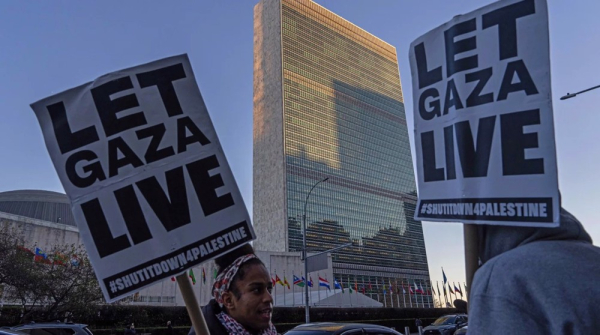
A former senior United Nations human rights official has denounced the UN Security Council’s adoption of a resolution backing a US plan for foreign forces in the besieged Gaza Strip, describing the vote as a "day of shame" for the world body.
In a social media post on Tuesday, Craig Mokhiber, former director of the New York office of the UN High Commissioner for Human Rights (OHCHR), described the vote on the US resolution as a "day of shame" for the world body and called it a “colonial outrage.”
The former rights official further accused governments worldwide of being “on their knees before the US empire and its violent Israeli client.”
The US-drafted resolution was adopted on Monday with 13 votes in favor, with two abstentions from Russia and China in the 15-member council.
The plan is based on US President Donald Trump's 20-point project for Gaza's future, including only a singular line that envisions the possibility of a future Palestinian state.
It outlines a Trump-chaired "Board of Peace" to oversee affairs in the besieged Palestinian territory as a transitional authority. It also authorizes an "international stabilization force" that would ensure "demilitarization" of Gaza.
Mokhiber also criticized the "horrific" resolution as a violation of international law.
“This proposal has been rejected by Palestinian civil society and factions, as well as by defenders of human rights and international law everywhere,” Mokhiber said.
“The struggle for Palestinian freedom will continue undeterred,” he emphasized.
The Hamas resistance movement and other Palestinian factions, including Islamic Jihad, have condemned the resolution for imposing an “international guardianship” over Palestinians.
“The resolution imposes an international guardianship mechanism on the Gaza Strip, which our people and their factions reject,” Hamas said.
“It also seeks to achieve the occupation’s objectives, which it failed to accomplish through its brutal genocide,” he stated.
The Palestinian group criticized the resolution for “detaching the Gaza Strip from the rest of Palestinian territory” in an attempt to impose new realities against the will of the Palestinian people.
The Islamic Jihad Movement also affirmed its rejection of the US resolution, stating that it violates the Palestinian people’s “right to self-determination.”
It further censured the use of humanitarian aid as a tool of pressure and noted that the resolution fails to hold Israel accountable for the blockade of Gaza.
Critics and independent observers argue that the US draft seeks to use the UN’s authority to normalize Israel’s genocide and impose another foreign regime on Palestinians.
The plan is also criticized for operating outside recognized international legal frameworks, establishing a parallel order based on security control and external authority.
The diplomats said that the Americans could decide to go forward unilaterally with a force from willing countries that would not have the UN backing.
Hamas and Israel agreed last month to the US-brokered Gaza ceasefire, aimed at ending the latter’s two-year-long genocidal war against Palestinians in the besieged territory.
The truce took effect on October 10, but Israel has continued to violate it by carrying out airstrikes, incursions, shootings, and arrests.
Press TV’s website
UN Security Council approves US plan for Gaza, Hamas rejects UNSC resolution
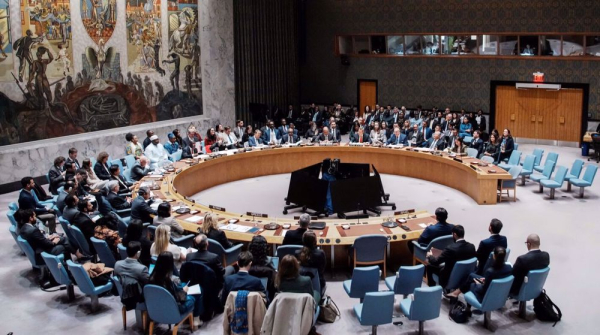
The United Nations Security Council has adopted a resolution drafted by the United States to establish an International Stabilization Force (ISF) in the Gaza Strip.
The resolution, passed on Monday, endorses US President Donald Trump's Gaza plan and authorizes the creation of a peacekeeping coalition that would include Muslim-majority countries such as Egypt, Indonesia, and Azerbaijan.
In response, the Palestinian resistance movement Hamas rejected the resolution, arguing that it imposes international guardianship, does not address Palestinian rights, and aims to disarm the resistance movements.
Hamas said the resolution does not meet the political and humanitarian demands and rights of the Palestinian people.
The movement stressed that any international force must be deployed only at Gaza’s borders to monitor the ceasefire under UN supervision.
"Assigning the international force with tasks and roles inside the Gaza Strip, including disarming the resistance, strips it of its neutrality, and turns it into a party to the conflict in favor of the occupation," the group added.
Russia, which had circulated a rival resolution, abstained along with China on the 13-0 vote.
US Ambassador Mike Waltz said the force will be “a strong coalition of peacekeepers, many from Muslim-majority nations like Indonesia [and] Azerbaijan.”
The force will “deploy under a unified command” and begin its activities “while Israel phases out its presence,” Waltz added.
The United Kingdom said it voted for the resolution to advance the US peace plan for Palestinians and Israelis and stressed the urgent need to deploy the International Stabilization Force.
The international force will be deployed under a unified command to secure Gaza, oversee its demilitarization, and take in aid through safe corridors.
According to the resolution, this process will unfold as Israel phases out its Gaza presence, and a vetted police force assumes new responsibilities.
A transitional administration will also be formed, coordinating reconstruction efforts through a trust fund backed by the World Bank.
It must also operate exclusively in coordination with official Palestinian institutions, with no role for Israel in it.
Washington formally circulated the draft resolution to the 15 Security Council members last week. The text would authorize a two-year mandate for a transitional governance body and an international stabilization force.
Russia, China, and some Arab states oppose the proposal, citing concerns about a yet-to-be-established board temporarily governing the strip and the absence of any transitional role for the Palestinian Authority.
According to four UN diplomats briefed on the matter, China and Russia — two veto-wielding members — have called for the “Board of Peace” under US President Donald Trump’s Gaza ceasefire plan to be removed from the resolution entirely.
However, the US maintains the language around the board that the US has proposed as a transitional administration for Gaza in the latest draft released late Wednesday.
The Russian draft requests that the UN Secretary-General identify options for an international stabilization force for Gaza, and does not mention the "Board of Peace".
Among the sticking points regarding the US text are the pathway to an independent Palestinian state and the timeline for the withdrawal of Israeli forces from the Gaza Strip, according to the diplomats.
Still, the US mission to the UN urged the Security Council to move ahead with Washington's resolution.
"Attempts to sow discord now – when agreement on this resolution is under active negotiation – has grave, tangible, and entirely avoidable consequences for Palestinians in Gaza," a US mission spokesperson alleged.
The diplomats said that the Americans could decide to go forward unilaterally with a force from willing countries that would not have UN backing.
Hamas and Israel agreed last month to the US-brokered Gaza ceasefire, aimed at ending the latter’s two-year-long genocidal war against Palestinians in the besieged territory.
The truce took effect on October 10, but Israel has continued to violate it by carrying out airstrikes, incursions, shootings, and arrests.
The deal marks the first phase of Trump’s 20-point Gaza ceasefire plan, with further stages to be negotiated at a later date.
Press TV’s website
Types Of Hajj
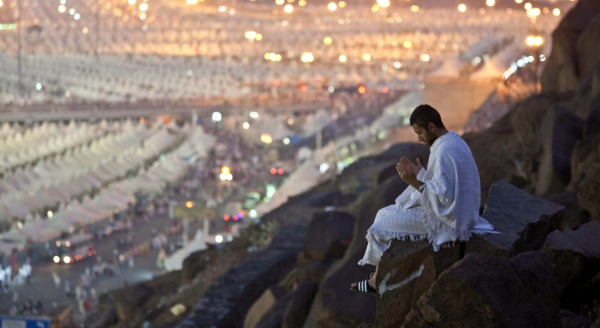
The Hajj in Islam is of three types: Hajj at-Tamattu, Hajj al-Qiran, and Hajj al-Ifrad. Those who live over 48 miles away from Makkah should perform Hajj at-Tamattu, while Hajj al-Qiran and Hajj al-Ifrad are incumbent on others.
Hajj Al-Ifrad And Umrah Mufradah
A person who cannot perform Umrah Tamattu due to shortage of time should go on Hajj al-Ifrad. With the same ihram for the Hajj at-Tamattu, he can perform the Hajj al-Ifrad and go to the plain of Arafat and embark upon wuquf like other pilgrims. He should then go to Mashar and stay (wuquf). Afterwards, he should go to Mina and perform the Mina rites apart from hady, which is not compulsory for him. He should subsequently go to Makkah, perform the tawaf, prayer, Say, tawaf an-nisa and its prayer.
After this, he can dispense with ihram and return to Mina to pass the night and spend nights of tashriq period as done by other pilgrims. In principle, therefore, Hajj al-Ifrad is similar to Hajj at-Tamattu with the exception that in the latter case, a hady should be offered, while in the Hajj al-Ifrad, hady is not compulsory and is rather recommended.
Umrah Mufradah, which should be performed after Hajj by one, whose Hajj at-Tamattu has been turned into Hajj al-Ifrad requires departing from Adni al-Hal. It is best to put on ihram from "Jeranah" or "Hudaybiyah", or "Taneem" which are closer to Makkah. Then he should go to Makkah for circumambulation around the Kabah and recite its prayer, embark upon Say between Safa and Marwah, engage in taqsir or shave his head, carry out the tawaf al-nisa and recite tawaf prayer.
Hajj At-Tamattu In Brief
Hajj at-Tamattu includes two rites: Umrah Tamattu and Hajj at-Tamattu. Umrah Tamattu has priority over Hajj.
Umrah Tamattu has the following five acts:
1. Getting into the state of the ihram
2. Tawaf around the Kabah
3. Tawaf prayer
4. Say between Safa and Marwah
5. Taqsir
When the muhrim accomplishes these tasks, things, which had become unlawful to him due to ihram, become permitted.
Hajj at-Tamattu comprises of the following thirteen acts:
1. Getting into the state of the ihram
2. Wuquf in the plain of Arafat,
3. Wuquf in Mashar al-Haram
4. Stoning the Jamarat al-Aqabah in Mina
5. Offering sacrifice in Mina
6. Shaving the head or taqsir in Mina
7. Tawaf in Makkah
8. Reciting two rakah tawaf prayer
9. Say between Safa and Marwah
10. Tawaf an-nisa
11. Reciting two rakah prayer of tawaf an-nisa.
12. Staying in Mina on the 11th, 12th, and 13th Dhul al-Hijjah (for some people)
13. Ramy Jamarat on the 11th 12th of Dhul al-Hijjah. Those who remain in Mina on the night preceding the 13th should engage in ramy jamarat on the 13th.
It is permissible to perform Umrah Mufradah during the Hajj season before Umrah Tamattu.
Based on precaution, one should observe a month's space between the two Umrah he undertakes for himself. If the second Umrah is performed through niyabah, the naib can receive wages for it. If the Umrah Mufradah were obligatory for the one who has hired the naib, it would be sufficient.
Types Of Umrah
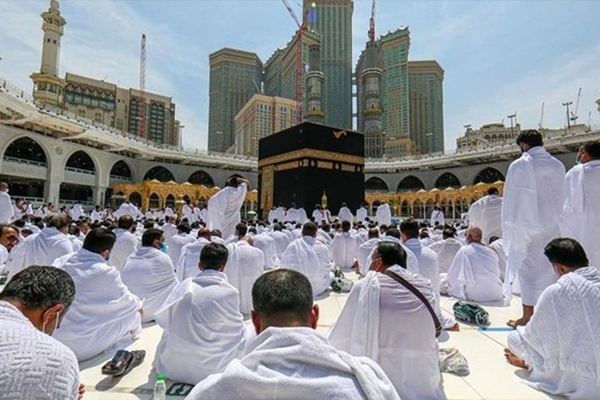
As with Hajj, Umrah also falls into two types: obligatory and recommended. Umrah would become incumbent only once in the lifetime of one who has istitaah. As with Hajj, its obligation is immediate. In its obligation, there is no requirement for having istitaah for Hajj. If one were mustati for Umrah, it would become incumbent on him to perform, even if one is not mustati for Hajj. The opposite also holds true: If a person has istitaah for Hajj but is not mustati for Umrah, he should perform the Hajj.
But for those who are away from Makkah, such as the Iranians who shoulder the duty of Hajj at-Tamattu, the istitaah of Hajj and the istitaah of Umrah would be the same, as Hajj at-Tamattu is a combination of both. This is contrary to the case of people who are in Makkah or close to it. They shoulder the duty of Hajj and Umrah Mufradah, for one of which they should have istitaah.
Getting into the state of ihram is compulsory for anyone who wants to enter Makkah to get to the state of Umrah or Hajj. If he wants to enter Makkah sometime other than the Hajj season, he should perform Umrah Mufradah. This does not apply to one for whom only a month has passed after ihram. In such a case, ihram is not necessary.
Going on repeated Umrah (more than once), like going on Hajj repeatedly, is mustahabb. Spacing is not needed between two Umrah, but based on precaution, one can perform only one Umrah for himself every month. Each person can however, perform an Umrah on behalf of others.