zarezadeh
Imam Riza:Personality and Characteristics
Generally speaking, an Emam enjoys a unique personality and distinctive characteristics, in as far as Shi'a followers of the Emams are concerned; therefore, he is not permitted to do what others are, such as falling into error, or getting confused about a matter. Rather, infallibility is essential in him since he conveys on behalf of the Prophet (S.A.W.) what seems to others to be obscure of the Message and its intricacies. Just as we proved the infallibility of the Prophet (S.A.W.), we, by the same token, prove infallibility for the Emam as well with one exception: the Emam conveys on behalf of the Prophet (S.A.W.), whereas the Prophet conveys on behalf of the Almighty God. The wisdom in this argument is that should falling into error be accepted and expected from the Prophet (S.A.W.) or the Emam, then doubt will result regarding the reliability of what they convey to people of jurisdic rules and regulations and other such matters since they are liable to err in their judgement or get confused about a particular issue. Although the believers are not held accountable for doing what they are not supposed to be doing due to such error of judgement, the assumption of the error of judgement itself collides with the very wisdom behind the reason why prophets were sent to people at all which is to clarify to people, according to the way God Almighty intended them to, without any error or confusion, what His Will is.
The topic of infallibility is a vast one the discussion of which has no room here and which requires a dedicated research I may be able one day to tackle. What I have to same fa here is that Emamate is characterized by certain distinctive aspects such as infallibility which we cannot discuss by itself with others except after both parties agree on the basis from which it emerged; otherwise, our case would be like one who discusses the necessity of performing the ritual prayers (salat) with someone who does not believe in the message of the Prophet (S.A.W.).
The basic point upon which we have first and foremost to agree is the definition of general Emamate, then the distinctions it requires and, finally, the proofs which testify to these distinctions. It is only then that disagreeing parties can conduct a reasonable discussion. Having been convinced by unequivocal proofs of such infallibility, and having seen the Twelve Emams (A.S.) to be fully qualified to be the only ones in whom such infallibility could be observed, we became fully convinced of their unshakable superiority over all others, and that they were the ones adorned with absolute human perfection.
An Emam, according to this viewpoint, has got to be the most learned among people and the most aware of the general needs of people such as knowledge or other necessities of life, and that he has to be the most pious, the most ascetic, the most perfect in personal conduct and norms of behaviour. In other words, in order to be qualified for Emamate, one has to be superior to everyone else in all aspects of perfection and its requirements which all raise him to his position of leadership. On this basis, the character of Emam al-Rida (A.S.), who is one of these Twelve Emams, becomes clearly distinctive due to its merits. But this is not the limit of the scope of this research; rather, we shall attempt to research his personality and the qualities which distinguished him from all others by our sifting into the legacy history has preserved for us of his conduct while still alive, and from the stances taken by the men of knowledge and by contemporary caliphs towards him.
Imam Riza and his children
Disputes exist also regarding the number of his offspring and their names. A group of scholars say that they were five sons and one daughter, and that they were: Muhammad al-Qani', al-Hassan, Ja'fer, Ibrahim, al-Husayn, and 'Ayesha.
Sabt ibn al-Jawzi, in his work Tadhkiratul-Khawass, says that the sons were only four, dropping the name of Husayn from the list. Al-Mufid inclines to believe that the Emam did not have any son other than Emam Muhammad al-Jawad (A.S.), and Ibn Shahr Ashoob emphatically states so, and so does al-Tibrisi in his A'lam al-Wara. Al-'Udad al-Qawiyya states that he had two sons, Muhammad and Mousa, and that he did not have any other offspring. In his claim, he is supported by Qurb al-Asnad in which the author says that al-Bazanti asked al-Rida, "For years I have been asking you who your successor is and you keep telling me that it is your son even when you had no son at all, but since God has now blessed you with two sons, which one of them is he?" 'Uyoon Akhbar al-Rida indicates that he had a daughter named Fatima.
We are not in the process of investigating, researching and pinpointing with accuracy the number of his offspring and their names, but what seems to be more reasonable is what al-Mufid states. What is established as a fact with us is that Emam Muhammad al-Jawad (A.S.) was his son; as regarding his other sons, nobody seems to be able to prove any facts regarding them, and God knows best.
Imam Riza and his mother
There is a great deal of dispute regarding the name of his mother. Some say she was called al-Khayzaran; others say she was Arwi and that her nickname was "the blonde of Nubia," while others say she was Najma and her nickname was "Ummul-Baneen." Others say she was called Sekan the Nubian; still others say she was called Takattam as may be proven from the poetry in his praise which said:
The best in self and parenthood,
In offspring and in ancestry,
Is Ali al-Muaddam,
Eighth in series of the knowledgeable
and the clement,
An Emam descending from the Proof of God,
that is Takattam.
Imam Riza, Birth and Demise
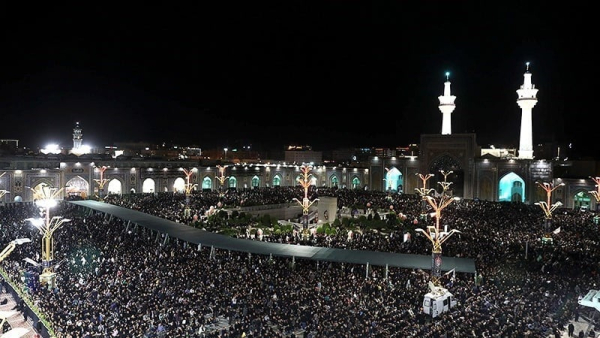
Historians disagree a great deal about the year of his birth and even in determining the month as well, and they also disagree about determining the year and the month of his death. Their disagreements are not confined to the limit of a short span of time but they may be five years apart, and the disagreement is so confusing that it is very difficult to determine clearly such matters; however, we shall point out the statements recorded in this regard without favouring any of them due to the lack of purpose of such favouring which naturally requires research and investigation and a proof for selecting what seems to be the most accurate.
He was born in Medina on Friday, or Thursday, Dhul-Hijja 11, or Dhul-Qi'da, or Rabi'ul-Awwal, of the Hijri year 148 or the year 153. He died on Friday, or Monday, near the end of the month of Safar, or the 17th of Safar, or Ramadan 21, or Jumada I 18, or Dhul-Qi'da 23, or the end of Dhul-Qi'da, of the year 202 or 203 or 206. In his 'Uyoon Akhbar al-Rida, al-Saduq states: "What is accurate is that he died on the 13th of Ramadan, on a Friday, in the year 203."
What is most likely is that his death took place in the year 203 as stated by al-Saduq. It is the same year in which al-Mamoon marched towards Iraq. To say that he died in 206 is not to agree with the truth because al-Mamoon marched towards Baghdad in the year 204, and the Emam died while he was heading in the same direction.
30th Safar Martyrdom Anniversary of Imam Reza

On the Sad and Mourning occasion of the martyrdom anniversary of Holy Prophet of Islam Hadrat Muhammad Mustafa (S.A.W.), Imam Hasan Mujtaba(A.S.) and Imam Reza(A.S.) we extend our Heartfelt Grief and Condolences to the Millions Muslims and all the lovers of the Holy Ahlul Bayt(A.S.) in the world.
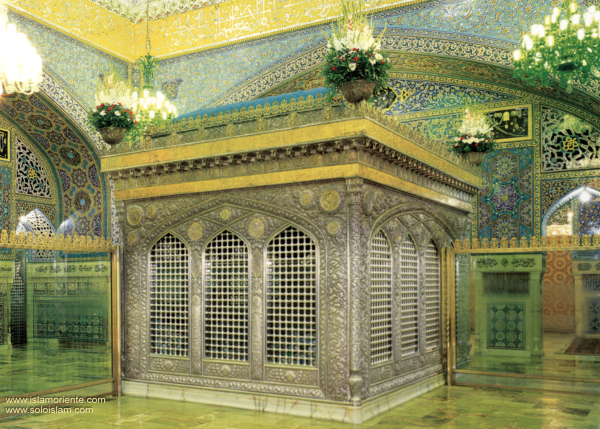
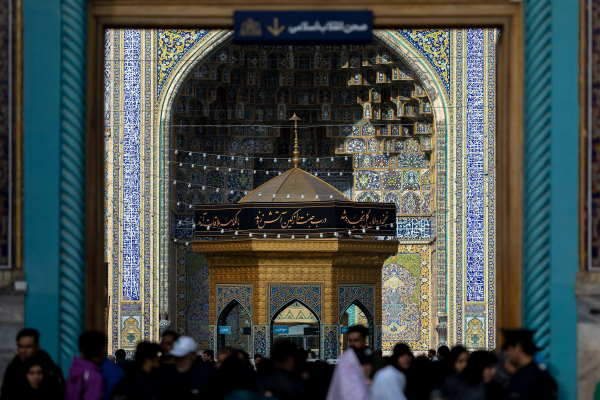
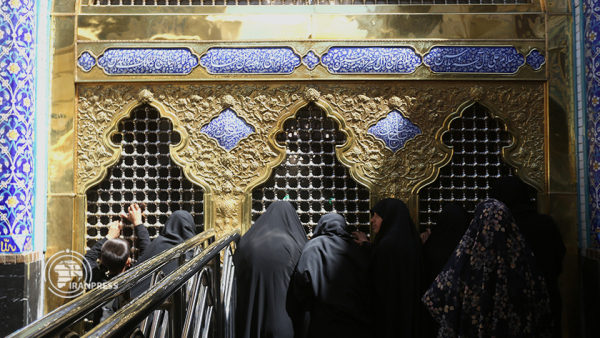
He is Ali son of Mousa son of Ja'fer son of Muhammad son of Ali son of al-Husayn son of Ali son of Abu Talib (A.S.), eighth in the series of the Emams belonging to the Ahl al-Bayt (A.S.). His birthplace is Medina, and his resting place is Toos (Iran).
The Martyrdom of the Holy Prophet (PBUH) and Imam Hassan (AS)
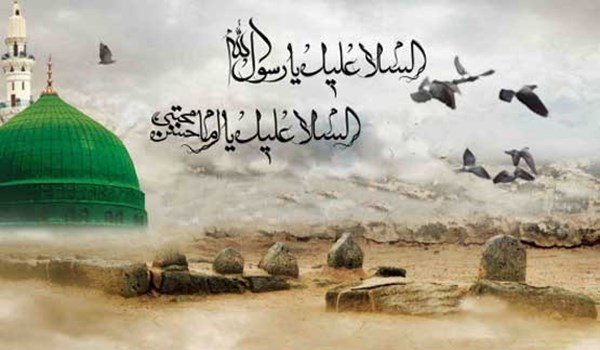
In the great mourning of the martyrdom of the Great Prophet (PBUH) and Imam Hassan (AS), the hearts of the believers are in mourning and the eyes of the Islamic community are immersed in sadness and grief.
These sad days are a reminder of the lights in the heart of darkness that always shone with the message of love and mercy towards humanity. The Prophet (PBUH) with his pure conduct and Imam Hassan (AS) with his good deeds were beacons that showed the way to people seeking truth.
O friends, truly, this heartbreaking separation is an opportunity to reflect on the noble human and religious principles that they taught us. Let us be inspired by the purity of love and peace of Imam Hassan (AS) and be on each other's path as much as possible.
Also, in these days, it is necessary to offer our condolences to the Master of the Time (AS). It will guide us with love and patience in the face of these sorrows, and our hope for the emergence of the Promised Mahdi (a.s.) and the establishment of divine justice on earth will always grow stronger.
In these days, let us remember our loved ones so much that they will truly continue to live in our hearts. Let us fill our hearts with prayer and good thoughts in the memory of those great people.
Accept our condolences to all our relatives and loved ones, and in the memory of these saints, let us wish peace of heart and soul for ourselves and others.
Relocation under shellfire: Details on Israel’s plot to displace one million Palestinians
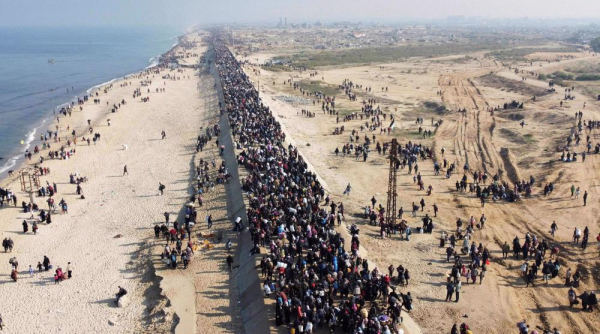
Israel has established a “Population Relocation Unit” to systematically map, surveil, and forcibly expel Palestinians from Gaza City through a campaign of leaflets, text messages, and artillery fire, according to Israeli media.
Details shared with Israel Hayom show that the Israeli regime is about to forcibly displace approximately one million Palestinians from the Gaza Strip’s largest urban area, moving them south beyond the Netzarim Corridor.
This is the most extreme step yet during Israel’s October 2023-present war of genocide on the Palestinian territory.
The complex evacuation operation is managed by Southern Command’s Population Relocation Unit, whose existence is revealed for the first time.
The unit is responsible for mapping the population, gathering intelligence on it, and coordinating actions to facilitate its movement – distributing leaflets, sending text messages, and, ultimately, firing artillery shells, which send the clearest message to residents that they must evacuate.
“In the current war, the unit was already prepared for micro-level management of the operation,” claimed Erez Weiner, who served as the commander of the operational planning team in Southern Command during the genocide.
“This includes the process of notifications, who issues them, when, and how, as well as monitoring and verifying that there is a response on the other side and that the population is actually moving,” Weiner further claimed.
The regime’s minister for military affairs Israel Katz announced on Tuesday that he had approved new operational plans alongside military chief Eyal Zamir and spy agency chiefs.
The strategy calls for regular brigades to encircle the city, forcing its roughly one million residents to flee.
According to UN data, before the genocide, about 82% of Gaza’s residents lived in areas the regime designated as “evacuation zones.”
Providing aid to these millions of displaced people is an integral part of the population relocation principle. “To convince them to move, you need to use not only a stick but also a carrot,” a former military source claimed.
Israel has insisted that the “carrot” – humanitarian aid to Gaza – be provided and managed by the US-backed GHF foundation.
Gaza Health Ministry has reported that approximately 1,924 Palestinians have been killed and over 14,000 have sustained injuries while seeking aid at GHF sites since May 27, when the Israeli-operated initiative commenced.
Most of them have been purposefully shot by Israeli occupation forces or so-called US “security contractors” hired by GHF, according to testimonies from whistleblowers.
The developments come as on Tuesday, Qatari foreign ministry spokesman Majed al-Ansari confirmed that Gaza’s Hamas resistance movement had responded positively to a new ceasefire proposal.
The regime, though, claims it is yet “studying” Hamas’ response, while pressing ahead with war planning.
“The reaction of the Zionists on Tuesday revealed Netanyahu’s sinister intentions to prolong the war, pursue mass killings, and carry out ethnic cleansing,” senior Hamas official Bassem Naim said.
Press TV’s website
Why Egypt’s failed ‘normalization’ gamble with Israel serves as warning for others
By Robert Inlakesh
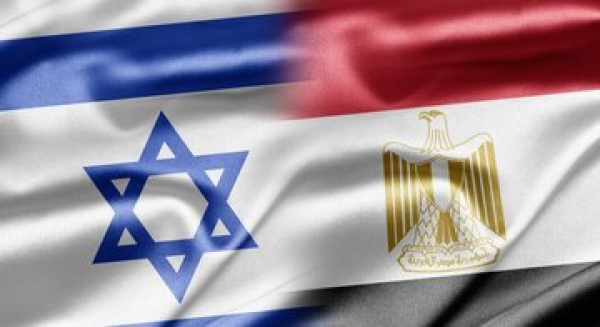
As the first Muslim Arab state to normalize relations with Israel, Egypt’s experience offers a lesson for others eager to jump on the US President Donald Trump’s so-called Abraham Accords bandwagon.
A country teetering on the brink now, under the immediate threat of an Israeli military invasion and still attempting to finalize deals with the regime in Tel Aviv even after its normalization treaty was broken.
Egypt serves as a perfect case study for the Arab normalization model. A once independent regional power, exerting cultural, ideological and even military power throughout the Arab world and beyond, Cairo has devolved into a chaotic mess that is not only in economic and social decline, but is also largely beholden to the US, NATO military alliance and its Persian Gulf backers.
The road to Egyptian normalization with Israel began in the aftermath of the defeat in June 1967 war. Israel launched a surprise attack, dubbed “Operation Focus”, which wiped out most of the country’s air force while it was still on the ground.
In only 6 days, Tel Aviv’s offensive had succeeded at occupying East al-Quds, the West Bank, Sinai Peninsula, Golan Heights and Gaza.
Years later, Egypt’s President Gamal Abdul Nasser died of a heart attack. Until that moment, one of the dominant regional ideologies had revolved around his version of Socialist Arab Nationalism, popularly referred to as Nasserism.
However, unlike other ideologies, it was largely centered on a concept of one man and thus the defeat of this Arab nationalist wave came swiftly with the conclusion of the 1967 war.
During this period, the region underwent a major shift. Marxism gained popularity, nationalist movements surged, and Islamic groups slowly began to assert their presence as well.
Equally important was the evolution of US imperialist strategy in the West Asia region.
The US-Israel relationship soared to unprecedented heights, bolstered by intensified Zionist lobbying in Washington. Tel Aviv became Washington’s foremost regional ally in its Cold War battle for dominance, securing billions in aid and weapons.
Meanwhile, the memory of the Arab defeat in 1967 never faded and fueled greater resistance. The Palestine Liberation Organization (PLO) rose in regional and global prominence, taking full leadership of the Palestinian liberation struggle, making Palestinians the main enemy of the US in the region.
In the midst of this, Egypt and Syria conspired to launch an offensive aimed at restoring Arab honour and reclaiming the territories occupied in 1967.
In 1973, what came to be known as the October War unfolded. Despite delivering stunning defeats to Israel and reclaiming occupied territories, the Egyptian forces under President Anwar Sadat halted their offensive. Meanwhile, the US rushed massive supplies to Israel, enabling it to regain the upper hand.
Due to Egypt’s decisions, interpreted by the leadership of Syria under President Hafez al-Assad as a betrayal, the Israelis managed to once again reoccupy the territories they had captured in 1967.
While a key takeaway here was that Israel was far from invincible and could be subjected to defeats, the power of the US proved sufficient to save Tel Aviv.
While Arab regimes used this as a lesson to back off, the most important lesson that was never truly learnt was that hesitancy is the real killer and that refusal to act eventually gives the more advanced enemy the time it needs to plan and move assets into position.
If the surprise attack from both Egypt and Syria had been followed through all the way, they may have succeeded.
Following the October War, Egyptian President Anwar Sadat swiftly decided to pivot Egypt toward the US, pursuing normalization with Israel and effectively abandoning the Palestinian cause.
In 1978, Egypt and Israel signed the Camp David Accords, setting the stage for the 1979 normalization agreement. In return, Egypt firmly aligned with the US-led bloc, receiving vast aid packages and integrating its defense arrangements with the West.
Between 1978 and 2022, the US granted Egypt over $50 billion in military aid and $30 billion in economic assistance. This alignment with the us also came at the expense of the military regime that had, in effect, run Egypt since 1952, implementing liberal economic reforms (enfitah) that eventually culminated in the assassination of President Sadat.
A key figure from Cairo’s military establishment, Hosni Mubarak, then assumed control for over three decades. Under his rule, Egypt pursued a US-backed neoliberal model, even as rampant corruption, state violence, incompetence, and crony capitalism steadily eroded the country.
Continuing to work in Israel’s favour, in 2005, Mubarak inked a 15-year multi-billion-dollar gas deal with Israel, aimed at supplying the occupying regime with 1.7 billion cubic meters of natural gas per year via an undersea pipe from al-Arish to Ashqelon.
Even on this deal, Mubarak worked closely with Eastern Mediterranean Gas (EMG) co-owner and Israeli Mossad asset, Hussein Salem, to sell Egypt’s gas for as little as $1.50 per million British Thermal Units (MBTU), when the international price was around $12.60. The result was that Salem and his Israeli partners reaped the profits while Egypt lost $11 billion in revenue.
Despite the announced “reforms” announced by Egypt in the early 2000s, the Egyptian people continued to suffer under a pro-US leadership that collaborated with Israel on various projects, while the country relied on US aid handouts to function.
The results of this normalization scheme by 2011, when the Egyptian revolution came, were that one in five Egyptians lived below the poverty line, as their rich elites lived in villas.
By 2021, some estimates put the poverty rate in Egypt at 58.50 percent, which was actually better than in the previous years. By 2023, Egypt stood on the brink of economic collapse and prior to October 7, 2023, it looked as if the situation was ready to deteriorate, before the IMF, European Union and UAE began stepping in to help it.
In 2022, another measure taken by Cairo was to begin selling off stakes in state-owned businesses to private corporations. The Persian Gulf states, which financed the rise of General Abdel Fattah el-Sisi to power in a military coup back in 2013, now own huge stakes in many formerly State-owned businesses.
Despite the Western-Arab lifeline, Egypt is only getting worse on the global Economic decline index, scoring a whopping 7.20, which has been rising since 2022.
Back in 2018, although Cairo had previously been exporting gas to Israel, the pipelines were reversed, and a new arrangement was struck for Egypt to purchase gas from Israel.
This ultimately culminated in the August 7, 2025, deal, in which Egypt committed to a \$35 billion gas agreement with the Israeli energy company NewMed.
Now, as Israel commits genocide in Gaza, Egypt is under another potentially existential threat and from the neighbouring entity that it sought to gain economic prosperity through.
Israel already violated the 1979 normalization agreement last year when it decided to invade the Rafah Crossing and Philadelphi Corridor, also murdering Egyptian soldiers and launching airstrikes into the Sinai, to which Cairo refused to respond.
Despite this, Israeli Prime Minister Benjamin Netanyahu recently confirmed his intention to advance the so-called “Greater Israel” project, which includes seizing Egyptian territory.
Last year, a campaign of incitement against Egypt emerged from pro-war think tanks and Israeli politicians, relying on fabricated claims to justify a potential Israeli invasion of the Sinai.
Meanwhile, the Trump administration repeatedly signaled its intent to ‘own Gaza’ and pursue ethnic cleansing, with little regard for Egyptian interests.
Although Egypt is often perceived as one of the region’s largest military powers, this reputation is misleading. Its actual military expenditure is relatively low compared to neighboring states, and soldiers’ salaries are so meager that some have resorted to running lemonade stands to supplement their income.
Compounding these issues, Egypt purchases advanced arms from Western nations without fully understanding how to operate them or integrate different systems effectively. In other words, these acquisitions serve Western weapons manufacturers more than Egypt’s actual defense strategy.
All of this unfolds as social tensions in Egypt continue to simmer, threatening to erupt into mass protests at any moment. A stark warning came last month when 21-year-old Ayman Abdel Wahhab was tortured to death while in police custody, sparking riots against the authorities. The public is also fed up with a constant stream of promised projects that either never materialize or benefit only the wealthy.
As the first Arab state to normalize ties with Israel, Egypt’s trajectory offers a cautionary tale for others contemplating the same path.
Normalization has undermined Egypt’s sovereignty, entrenched submission to external powers, enriched the elite, and pushed the broader population deeper into poverty and despair.
Today, the country teeters on the brink, bearing a stark warning for other Arab countries that are considering a similar course.
Robert Inlakesh is a journalist, writer and political analyst who has lived in and reported from the occupied West Bank.
Press TV’s website
Palestinian basketball player killed by Israel while searching for food in Gaza

Mohammed Shaalan, nicknamed “the Earthquake,” was targeted by Israeli gunfire in Khan Younis, southern Gaza Strip, on Tuesday.
At the time of his murder, Shalaan had been searching for food and medicine for his children, particularly his daughter Maryam, who suffers from severe blood poisoning and kidney failure.
The famous Palestinian player had played hundreds of games for the Palestinian national team and several local clubs.
His participation in Arab and international tournaments cemented his reputation as one of Palestine’s most recognized athletes.
Shalaan's killing is the latest blow to the Palestinian sports community, which has endured further losses in recent days. Two more members were killed within 24 hours of Shaalan's death.
Salem Shaer, 26, equipment manager of Shabab Rafah Club, and Ahmad Jourani, 40, a former Al-Salah Club player, were both shot dead by the Israeli forces while waiting for aid near the Netzarim corridor.
Israel has recently come under international criticism for killing Suleiman al-Obeid, also known as the “Palestinian Pele."
Al-Obeid, 41, was fatally shot by the Israeli forces while waiting for humanitarian aid at a distribution point in southern Gaza.
A father of five, he was regarded as one of Palestine’s greatest footballers, having played 24 official matches for the national team and scoring twice.
The ongoing Israeli bombardments, the collapse of infrastructure, and famine have devastated Gaza’s sports community.
According to Palestinian officials, more than 800 athletes have been killed in Gaza since October 7, 2023, when the Israeli regime began its genocidal war on the besieged strip.
The Palestinian Football Association (PFA) reported that 421 football players were among the 808 athletes killed over the past 22 months.
The PFA said 288 sports facilities have been damaged or destroyed across Gaza and the West Bank since the war began, including gyms, football clubs, and stadiums.
Its own headquarters was among the buildings struck. Of those facilities, 268 were in Gaza, while 20 were in the West Bank.
Since Israel began its genocidal war on Gaza, the regime has murdered nearly 62,122 Palestinians and wounded 156,758, most of them children and women.
Forced starvation has killed 266 Palestinians, including 122 children, Gaza health authorities reported.
Press TV’s website
Iran’s top military command says Armed Forces fully ready to repel threats
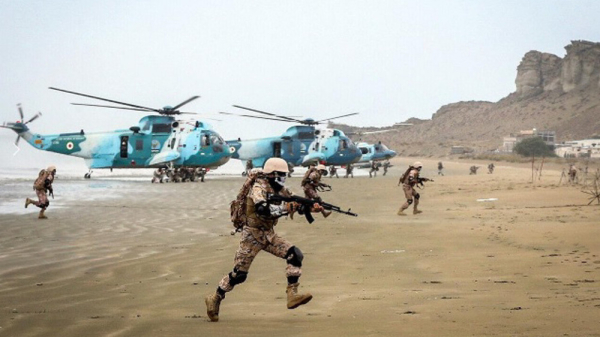
Iran’s top military command has underlined the total combat readiness of the country’s Armed Forces in fighting off any potential acts of aggression by enemies against Iranian soil.
“The Armed Forces are in full readiness, closely monitoring any enemy movements, and if they make any miscalculation and attempt to encroach on the sacred soil of our country again, they will face a more crushing response,” the commander of the Khatam al-Anbiya Central Military Headquarters said on Wednesday.
The announcement comes as the Iranian Navy is scheduled to kick off the operational phase of its Eqtedar (Authority) 1404 missile exercise on Thursday.
Navy spokesperson Rear Admiral Abbas Hassani said the two-day missile exercise will take place in the Sea of Oman and the northern Indian Ocean, involving surface and subsurface vessels, aerial units, coast-to-sea missile sites, sea-based missile platforms, and electronic warfare units.
Hassani added that the exercise will also incorporate missile launches, electronic warfare drills, and drone operations based on experience gained during previous exercises and established operational guidelines.
Pointing to the armaments and missile systems, the Navy spokesperson underlined that a wide range of precision cruise missiles with short, medium, and long ranges will be leveraged to target and destroy surface vessels.
Hassani also emphasized that the exercise aims to enhance the force's combat readiness, boost public confidence, improve operational planning, command and control capabilities, and strengthen deterrence based on domestic expertise.
Iran to use new missiles in case of new aggression: Minster
Also on Wednesday, Iran's Defense Minister Brigadier General Aziz Nasirzadeh said the missiles the Armed Forces used against Israel in June’s 12-day war had been domestically produced a few years ago, warning that newly-manufactured missiles with much better capabilities would be used in case of any fresh Israeli onslaught.
“In the 12-day war, we faced a fully supported power. In this war, the Islamic Republic of Iran did not confront only the Zionist regime, as the entire logistical, intelligence, and support capabilities of the United States were present in this war,” Nasirzadeh said.
Stressing that the Iranian Armed Forces had no reliance on foreign resources and used what was made by the country's defense industries, Nasirzadeh said the world witnessed that the missiles launched by Iran hit their targets perfectly and inflicted severe damage on the Israeli regime.
“The missiles used in the 12-day war were manufactured by the Defense Ministry a few years ago. Today, we have manufactured and possess missiles that have much better capabilities than previous missiles, and if the Zionist enemy undertakes another act of adventurism (against Iran), we will definitely use these missiles,” he added.
Nasirzadeh also said the Israeli regime had used the full power of its so-called air defense systems during the 12-day war, including the THAAD, MIM-104 Patriot, Iron Dome, and Arrow systems.
“Despite the use of all these systems, the Zionist regime only prevented about 40 percent of our missiles from hitting in the first days of the war. But in the final days of the war, 90 percent of our missiles were hitting their targets, which made it clear that our experience had increased while the opposing side’s defense capabilities had decreased,” he added.
“If this trend had continued, the Islamic Republic’s Armed Forces would have definitely had the upper hand.”
On June 13, 2025, the Israeli regime launched strikes against Iran, targeting several civilian, military, and nuclear facilities, which led to the assassination of a number of Iranian military commanders and nuclear scientists.
In retaliation, Iran unleashed waves of drones and missiles at the occupied territories under the operational name True Promise III, inflicting significant damage on both settlements and military installations.
On June 22, 2025, the US Air Force and Navy carried out airstrikes against three Iranian nuclear facilities in an attempt to relieve pressure on the Israeli regime.
The following day, June 23, Iranian forces retaliated with over 30 drones and missiles against the US base in Qatar, under the codename Operation Glad Tidings of Victory, damaging multiple parts of the facility.
Finally, on June 24, after suffering heavy losses at the hands of Iran’s Armed Forces, both the Israeli regime and the US were forced to agree to a cessation of hostilities.
Press TV’s website