zarezadeh
Iran, Malaysia urge Muslim nations to stop Israeli genocide in Gaza

Iranian President Masoud Pezeshkian has called on Muslim countries to leverage active diplomacy and diplomatic pressure to terminate the Israeli regime’s genocidal war against Palestinians in the besieged Gaza Strip.
Pezeshkian made the call in a phone conversation with Malaysian Prime Minister Anwar Ibrahim on Wednesday as the former underscored the necessity of collective efforts by Islamic countries to prevent Israeli atrocities in Gaza.
“The atrocities committed by the Zionist regime in Gaza are unacceptable to any free human being, and I hope that Islamic countries, through active diplomacy and diplomatic pressure, will prevent the continuation of these crimes and will respond to them with cohesion, unity, and responsibility,” the Iranian president said.
“The Islamic Republic of Iran has always defended the rights of the oppressed Palestinian nation, and other Islamic countries should adopt a stronger and more active stance in support of the oppressed people of Palestine and Gaza too,” he added. “Collective efforts will be very effective in confronting the crimes of the Zionist regime in Gaza.”
Pointing to the Israeli-imposed 12-day war on the Islamic Republic, Pezeshkian said, “We are blamed for defending the oppressed people of Palestine and their human rights, and we abhor the oppression and tyranny inflicted upon them; the arrogant powers of the world consider this wrong, and that is why they pressure us.”
Elsewhere in the conversation, Pezeshkian called for the development of cooperation and strengthening of interactions in all areas between the two countries.
Ibrahim, for his part, decried the occupying entity’s aggression against Palestinians, saying, “The Malaysian government has issued a strong statement against Israel's crimes in Gaza and is pursuing extensive diplomatic efforts to stop the genocide in Gaza. We hope that with the cooperation and assistance of other Islamic countries, we can stop these crimes.”
Underlining his government's special attention to cooperation with Iran, the Malaysian prime minister assured Pezeshkian of efforts to strengthen Kuala Lumpur-Tehran interactions, saying, “The government and people of Malaysia have special respect for the Islamic Republic of Iran.”
Ibrahim also welcomed Pezeshkian’s invitation to visit Iran and expressed readiness to travel to the Islamic Republic.
Backed by the US, the Israeli regime has been ravaging the besieged Gaza Strip since Operation al-Aqsa Flood on October 7, 2023, killing more than 60,000 Palestinians and wounding upwards of 150,000 others up to now. Most of the victims are women and children, as indiscriminate Israeli attacks target schools, mosques, and even tents that shelter displaced Palestinians.
Israel’s relentless bombardment campaign has devastated the territory and led to food shortages, famine, and acute starvation.
Press TV’s website
The Quran contains the complete plan for human life
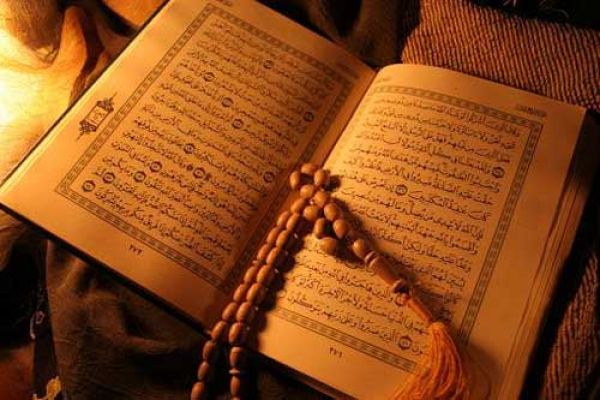
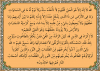
الحکمة ۳۱۳
وقال عليه السلام : وَ فِي الْقرْآنِ نَبَأُ مَا قَبْلَكُمْ، وَ خَبَرُ مَا بَعْدَكُمْ، وَحُكْمُ مَا
saying 313
Imam Ali ibn Abu Talib (PBUH) said: The Quran contains news about the past foretelling about the future and commandments for the present.
To remove difficulties and increase sustenance
Question:
What dhikr or prayer should we do to remove problems and also to open and increase sustenance?
Hazrat Ayatollah Vahid Khorasani:
After the morning prayer, send salavat 14 times and then say 70 times Ya Fattah Ya Razzaq and then send salavat 14 times.
Prayer to remove problems and also increase sustenance
To hasten the answer to prayer, the removal of sorrow, and the untying of a person from a difficult situation

The Prophet (peace be upon him and his family):
Whoever wants his prayer to be answered and his sorrow to be removed, let him free a person from a difficult situation.
Nahj al-Fasaha: H2961
Israel kills nearly 90 Palestinians, including 71 seeking aid, in Gaza amid worsening starvation
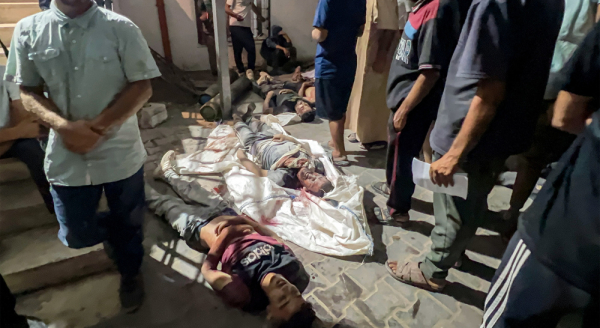
At least 86 people, including 71 seeking humanitarian aid, have lost their lives in fresh Israeli attacks on the Gaza Strip as the regime pushes ahead with its genocidal war on the Palestinian territory despite international condemnations.
Citing medical sources, the Gaza Government Media Office said on Wednesday that 51 people were killed and more than 648 others wounded by Israeli forces as they were heading towards the Zikim crossing point for aid trucks entering northern Gaza.
Another 20 aid seekers were killed in Israeli attacks near the Morag corridor, the Nasser hospital in the southern city of Khan Yunis reported.
Meanwhile, 15 more people were killed in separate Israeli aerial assaults across Gaza. Palestinian photojournalist Ibrahim Mahmoud Hajjaj, 35, was among the victims in the occupying regime’s strikes on Gaza City.
The fresh Israeli attacks come as aid agencies and health officials have warned of a sharp rise in Gaza starvation, particularly among children and the elderly.
The Euro-Med Human Rights Monitor (Euro-Med) said approximately 1,200 elderly Palestinians have died in the Gaza Strip over the past two months due to Israel’s starvation policy, malnutrition, and lack of medical care.
“The actual death toll may be significantly higher,” it added, noting that hundreds of elderly people have been arriving each day at hospitals and primary care centers in states of extreme exhaustion, seeking nutritional fluids.
According to the UN, Gaza needs at least 500 to 600 aid trucks per day to cover its basic humanitarian needs. Yet, only 269 trucks have entered the besieged territory over the past four days.
The trickle of humanitarian assistance allowed into Gaza “does not reach the majority of the population,” said Adnan Abu Hasna, a spokesman for UNRWA, the United Nations agency for Palestinian refugees.
Israel unleashed its Gaza genocide on October 7, 2023, after the Hamas resistance group carried out its historic operation against the occupying entity in retaliation for the regime’s intensified atrocities against the Palestinian people.
The Tel Aviv regime has so far failed to achieve its declared objectives of eliminating Hamas and freeing all captives in Gaza, despite killing 60,138 Palestinians, mostly women, and children, and injuring 146,269 others.
A mass starvation is also gripping Gaza due to Israel’s blockade of the territory.
Press TV’s website
UNRWA chief slams failed Gaza aid ops, demands Israel reopen crossings
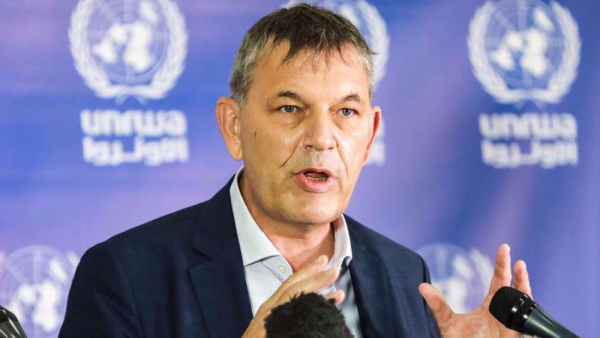
The Commissioner-General of the United Nations Relief and Works Agency for Palestine Refugees (UNRWA) has strongly criticized the failure of humanitarian operations to deliver food to starving civilians in the Gaza Strip. He called on the Israeli regime to reopen closed land crossings into Gaza to allow the unhindered passage of aid trucks.
As famine continues to claim lives across the besieged enclave, Philippe Lazzarini stated on Friday via a post on X (formerly Twitter) that UNRWA should be leading aid deliveries, given its capacity and long-standing experience in managing humanitarian relief operations efficiently.
In recent days, numerous airdrops have been carried out by the United Arab Emirates, Jordan, Egypt, and others in an attempt to ease the humanitarian catastrophe unfolding in the besieged strip.
"Airdrops are at least 100 times more costly than trucks. Trucks carry twice as much aid as planes," Lazzarini stated. "If there is political will to allow airdrops, which are highly costly, insufficient & inefficient, there should be similar political will to open the road crossings."
Lazzarini warned that the people of Gaza were starving to death and the "only way to respond to the famine is to flood Gaza with assistance."
He said UNRWA is the largest UN agency on the ground. “Today, UNRWA alone has the equivalent of 6,000 trucks of food and medical assistance stuck in Egypt and Jordan.”
Lazzarini reminded that the UN had been able to bring in 500 to 600 trucks a day during the brief ceasefire earlier this year.
He said under UN supervision, aid reached the entire population of Gaza in safety and dignity.
"It succeeded to reverse the deepening starvation without any aid diversion," the UNRWA chief stated.
Lazzarini insisted that there is no replacement to UNRWA. "No alternative to the UN-coordinated response with UNRWA as the backbone had provided similar results."
The UN official urged the US government and the Israeli regime to allow UNRWA to carry out its mission. "Let’s go back to what works and let us do our job."
"This is what people in Gaza need today more than ever, together with a lasting ceasefire," the Commissioner-General of the United Nations' agency concluded in his statement on Friday.
During the previous ceasefire, which began in January and was later broken by Israeli forces in March, UNRWA reported that it had successfully managed to “reverse the deepening hunger” in Gaza. But that fragile progress has since collapsed.
On March 2, 2025, the Israeli regime ordered the closure of Gaza’s main land crossings, cutting off all food, medical, and humanitarian supplies to the territory. According to reports by international human rights organizations, the move has exacerbated the humanitarian catastrophe for Gaza’s 2.3 million residents, many of whom are now surviving on grass, animal feed, or nothing at all. These groups have accused Israel of deliberately using starvation as a weapon of war against the Palestinian population.
Now, after more than 80 days of total blockade, and amid mounting international outrage, only limited aid has reportedly been delivered by the so-called Gaza Humanitarian Foundation (GHF), a controversial organization backed by the U.S. and Israel. Critics say GHF was established to bypass the UN’s longstanding and effective aid infrastructure in Gaza, and it has already been mired in accusations of corruption and politicized distribution.
The failure of the aid mechanism run by GHF to address mass starvation in Gaza has prompted UNRWA to describe it as a “flawed distribution system” violating humanitarian principles by restricting aid to south and central Gaza, requiring Palestinians to walk long distances to collect aid, and only providing limited aid, among other critiques.
The US-Israeli-crafted aid distribution points have been described as "mass death traps” and “slaughterhouses” for starving Gazans.
Every day, Palestinians are met with carnage in their attempts to receive supplies from the insufficient amount of aid trickling into Gaza,” Doctors Without Borders (MSF) said in a statement.
UN Secretary-General Antonio Guterres said that the US-backed aid distribution mechanism is “inherently unsafe” and “it is killing people.”
“Any operation that channels desperate civilians into militarized zones is inherently unsafe. It is killing people,” Guterres told reporters.
Guterres said UN-led humanitarian efforts are being “strangled,” aid workers themselves are starving and Israel, as the occupying power, is required to agree to and facilitate aid deliveries into and throughout the Palestinian enclave.
“People are being killed simply trying to feed themselves and their families. The search for food must never be a death sentence,” Guterres added.
The UN estimates that at least 1,373 Palestinians were killed as they tried to access food between May 27 and July 31, 2025.
US contractors said in an interview that they witnessed their colleagues using live fire, stun grenades and pepper spray against civilians during aid distribution inside the GHF sites.
Meanwhile, the overall death count resulting from starvation and malnutrition in Gaza has currently reached 155, including 89 children, and it is projected to escalate rapidly as the siege and the closure of crossings persist.
The World Food Programme (WFP), UNICEF, and the Food and Agriculture Organization (FAO) this week warned that "time was running out" and Gaza stood "on the brink of a full-scale famine."
Since the Israeli regime unleashed its brutal onslaught on Gaza in October 2023, more than 60,300 Palestinians have been killed, mostly women and children.
Press TV’s website
Iranians dealt strong blow to enemy during Israeli war: Official
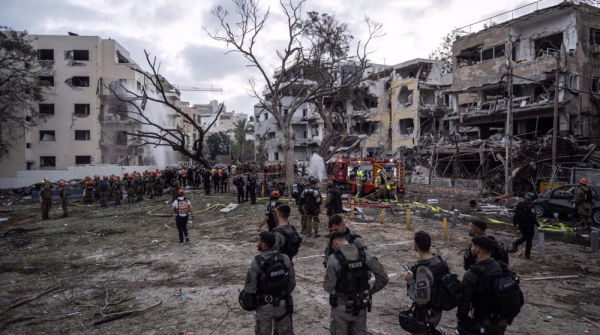
The Iranian people have succeeded in dealing a heavy blow to the enemy during 12 days of the Israeli-US war of aggression, says a senior official in the office of Leader of the Islamic Revolution Ayatollah Seyyed Ali Khamenei.
Ali Saeedi, head of the Leader’s ideological-political office, on Friday hailed the Iranian people’s resistance and support for the Islamic establishment during the Israeli-imposed war in June.
He said the Israeli regime has made its utmost efforts to collapse the Islamic Republic over 15 years, pursuing its goals at the beginning of the war by assassinating the Iranian commanders.
However, he said, the Tel Aviv regime failed to achieve its objectives as the Leader’s guidelines, resistance of people and strong performance of the Armed Forces thwarted the adversarial plots.
During the Israeli-US acts of aggression, the Iranian Armed Forces responded strongly to the enemies under the guidelines of Ayatollah Khamenei, Saeedi said.
He warned that if the Israeli regime made another mistake, “we will not give them a chance…and we will solve humanity's fundamental problem by destroying the occupying regime of Quds."
The official also underscored the importance of increasing Iran’s intelligence, improving the national security system and protecting border areas.
Saeedi’s remarks came a day after Iran’s President Masoud Pezeshkian hailed the “honorable” and strong defense of the Iranian people, police, and security forces, as well as missile scientists, during the Israeli-US acts of aggression.
The president said no power will be able to bring the Iranian people to their knees, and no obstacle can hinder their progress as long as they maintain their unity and coherence.
On June 13, the Israeli regime launched its aggression targeting senior Iranian officials and nuclear scientists in an act of terrorism that killed scores of civilians as well. Days later, the United States escalated the war by bombing three civilian nuclear facilities in Iran.
In a powerful response, the Iranian Armed Forces launched retaliatory strikes on strategic Israeli targets across the occupied territories and also hit the al-Udeid air base in Qatar, the largest American military outpost in West Asia.
On June 24, Iran, through its successful retaliatory operations against both the Israeli regime and the US, managed to impose a halt to the illegal assault as Tel Aviv, overwhelmed by the counterstrikes, was compelled to seek a ceasefire.
Press TV’s website
The Martyrdom of Hazrat Ruqayyah (PBUH)

She was a little girl.
In the book Iqad, page 179, it is stated:
"Hussain (PBUH) had a little daughter named Ruqayyah. She was with the prisoners of Damascus, and she cried day and night for her father's separation.
They told her: Your father has gone on a journey. One night, Ruqayyah saw her father in a dream, and when she woke up, she became very impatient and asked for her father.
No matter what the Ahlul Bayt (PBUH) did, she could not calm down. They also started crying because of her crying. They slapped her face and sprinkled dust on her head, and there was a lot of wailing and lamentation.
Yazid said: What happened?
They said: The daughter of Hussain (PBUH) saw her father in a dream and wants him.
Yazid said: Cut off her father's head and place it in front of her, so that she may be pleased.
Then they put the head in a tray, covered her face, and placed it in front of the girl.
She said: O man! I asked for my father, not food.
They said to her: Your father is here.
Ruqayyah pulled aside the cloak, picked up the head and pressed it to her chest, saying:
My dear father! Who dyed you with your blood?
My dear father! Who cut your veins?
Who made me an orphan in my childhood?
My dear father! Who owns women?
Who owns widows and captives?
Who owns foreign women?
My dear father! We have no one after you.
My dear father! I wish I could be your sacrifice.
I wish I had been blind before this.
I wish I had been buried and not seen that your hair was dyed with blood.
So she put her mouth on her father's face and wept until she lost consciousness.
When they shook her, they saw that her soul had left her body.
The women's wailing rose, and sorrow and mourning became new. Every Syrian who heard their voice wept. Men and women wept that day. Then, by the order of Yazid, they bathed him and buried him."
Peace be upon Ruqiyyah
The Zionist regime had offered a reward for the assassination of these elite twins.
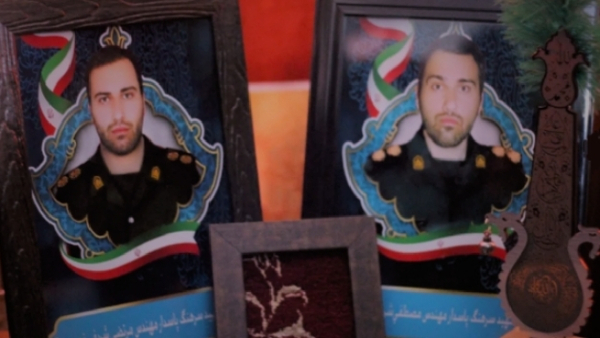
After the 12-day war, it was rare to hear a story behind the scenes of the firing of missiles and drones by the homeland that landed in the heart of Tel Aviv. Of untold bravery; of stories that can be written in Shahnamehs and fill the history of Iran, of the stories of true heroes.
The story of the twin engineers of Kermanshahi; The martyrdom of IRGC Lieutenant Colonels Morteza and Mustafa Sharifinasb and the moments of their martyrdom are just two of the dozens of stories from the land of Iran that we listen to with bated breath.
It is by hearing these stories that we become convinced that if it were not for the courage and audacity of the soldiers behind General Hajizadeh in launching missiles and drones for the homeland, perhaps the 12-Day War would have turned out differently.
When the missiles flew at the same time as the twins were martyred
If Morteza Khari had stepped on his foot, Mustafa would have felt his pain. If Mustafa was well, Morteza would have smiled wherever he was. The twins also had telepathy in their martyrdom.
From Tehran, with the Kermanshahi accent of Reza Sharifinasb, the brother of the martyrs, we go to the city of Kurdish lion cubs and begin our story of the twin aerospace engineers of the Kermanshah IRGC from the last moments of their lives;
"After Iran decided to respond to the Israeli attack in the shortest possible time, Morteza, Mustafa, and 10 of the Kermanshah IRGC Aerospace Force knew that in order to carry out the operation in a situation where the Iranian sky was unsafe and reconnaissance drones could target them at any moment and prevent the launch of missiles and drones, the cost of launching missiles and drones through launchers might cost them their lives.
But our Iran is full of those who understood Hussein. I knew that passion and zeal that I had from my brothers, knowing that they could be martyred at any moment, while preparing the launchers for firing, they had also recited their martyrdom and muttered, "Sacrifice for the head of my leader!" These moments were narrated by their wounded comrades. In the end, the flight of the missiles became one with their own flight, and out of those 11, 5 of them became heavenly."
Israel was afraid of the aerospace kids and the students of General Hajizadeh, and still is afraid of the Iranian soldiers who have been fed milk. He knew very well what kind of zealous soldiers he was dealing with.
"Faezeh Salimi", the wife of Morteza Sharifinasb, recalls a memory from some time ago and says: "One night, Mr. Morteza was telling us with a laugh and saying that they had distributed the photo of me, Mustafa, and a few other children to groups affiliated with Israel and that they had written that they had put up a million-dollar reward for killing these Iranian aerospace forces. They don't know that we have no qualms about martyrdom, that we will go to meet him.
I asked. I got worried. But Mr. Morteza said that life is in the hands of God. Don't worry, madam! We will be the masters of our lives until the last moment of our lives. It was really like that, Mr. Morteza and Mr. Mustafa fought until the last moment of their lives. Even though a garrison had set up a few meters away from them, they did not leave the field and stayed until their last breath. On the day of Eid al-Ghadir, Morteza was martyred like Mullah Ali (AS). The shrapnel pierced his head. But Mustafa was taken to the hospital. Mustafa was born two hours later than Morteza. He was martyred two hours later than him. It was as if God had arranged the lives of these two twin brothers to be equal, even in hours and seconds.”
Birth in the bombing of Kermanshah
How did the Kermanshah twin brothers become a thorn in Israel’s side? We tell the story of Morteza and Mustafa from the last scene. The words of the brother and wife of Morteza Sharifinasab, who are related to the setting of the hours and seconds of their lives, flash back to 35 years ago, to the Iran-Iraq war and the heavy shadow of the bombings of Kermanshah, and we resume the narrative from the words of the martyrs' brother and from the delivery room of one of the cities of Kermanshah;
"In those years, there was no ultrasound and prenatal gender determination, or if there was, there was no such equipment in the peripheral areas of Kermanshah. We did not know that my mother was pregnant with twins. We went to the hospital when she started having pain. Morteza was born and the mother's pain had not yet ended and her belly was still protruding when God announced the second blessing, and the midwife's voice in the delivery room was distorted when she said there was another one. The children are twins. Two hours after Morteza, Mustafa was born. Two twin brothers with white faces like the crescent moon who did not mix with each other.
In 1965, I was 15 years old when the twins were born. Dad was always at work and away from the city. I was the eldest son of the family and in a way I was the father of the children. Most of their responsibilities were with me. School registration and following up on all the twins' work. It was the post-war era and the economic problems after the war. In short, we looked at each other and the children went to school. They got their diplomas with high GPA. They were studious and top of the class in math. It so happened that both of them were accepted to study mechanical engineering and solid design at Ahvaz University and at this point in their lives they were also outstanding and graduated from the university with an A grade.”
Production line engineering in a factory or joining the soldiers of Sardar Hajizadeh!
There was a lot of work for the mechanical engineer twins. But the bachelor's degree had not yet dried when they made up their mind to be sent to military service. They had been serving for a few months when the path of their lives changed; They decided to use their intelligence and knowledge in the service of their homeland, and the story of the beginning of the ups and downs of the journey, full of goodness and blessings, can be heard from the brother's lips;
"They had been serving for a few months when, considering the twins' high intelligence, education, and their status as guardians, they offered them the opportunity to join the IRGC Aerospace Force and continue their studies at Imam Hussein University. At that time, I told them, in accordance with the duty I was in charge of and being their older brother, "Have you thought about it? Your path is not an easy one. It is difficult. Your responsibility will be multiplied many times over. I even invited them to go to a factory whose boss had requested that the twins become production line engineers with high salaries and benefits. I took the children to the factory. But they didn't want to. They had chosen their path. Both of them together. In fact, every decision they made was a decision for the two of them. They had agreed to build their lives together and move forward. Both majored in mathematics and physics, and then in a different major, in a different university. They consulted as a couple to join the IRGC Aerospace Force and made their decision."
Kermanshah UAV Elites
The beginning of a path full of ups and downs for construction, for the pride of Iran. The identical twins from Kermanshah soon became one of the elites of the Kermanshah IRGC aerospace force. Their older brother remembers those days very well; “Participating in different courses and gaining experience meant that we saw the twins less often. They were so absorbed in their service that they were not at home much. They worked with all their heart. They didn’t talk to us much about their work. They didn’t give us any information, but we more or less understood that Morteza and Mostafa had used their intelligence and knowledge to serve the development of the aerospace industry and the advancement of Iran’s UAVs.”
The Leader’s words should not be left unspoken
“Morteza and Mostafa worked day and night. They never complained about the difficulty of the work. Some days when they came home, I would see their hands cut and bruised. The aerospace kids work like Basijis and in teams. They also did heavy manual work. It wasn’t like they said, for example, because I have such and such a degree or am an engineer, I shouldn’t move equipment. Whenever I would say to one of them, doesn’t this amount of work tire you out? Don’t you give yourself a break? They would say, “The words of the Holy Prophet should not remain unfulfilled.” We must become strong. We must progress every day.
We still don’t know what kind of strength God gave these kids that fatigue meant nothing to them. After the martyrdom, when we got to know their colleagues better, we saw that all of these kids were the same. Sincere, sincere, hardworking, provincial.
It is this Basij spirit and commitment of the IRGC aerospace guys that, under the strong management of General Martyr Hajizadeh, has made Iran one of the powerful countries in the field of developing the drone industry, so much so that many countries that have something to say in the field of military equipment are requesting Iranian drones. The undemanding and hardworking aerospace guys are building advanced drones at the lowest cost and upgrading previous drones.”
I stayed 8 hours overtime, but I turned down 3 hours
The stories of the martyr’s brother that come to the undemanding and hardworking of aerospace workers remind me of the words of the martyr’s wife; when she said that Mr. Morteza worked too much. Sometimes he worked 8 hours overtime, but when he came home and felt tired, he would say, “I stayed 8 hours today, but I turned down 3 hours of overtime.” I asked why? He said, "I didn't work for those 8 hours. I prayed. I talked to you. This way, I feel more at ease."
A stone in the fight against ISIS
It had not been a few years since the twin brothers joined the aerospace force when ISIS attacked the Two Holy Mosques. The engineers did their best in the fight against ISIS and in defending the shrine. The older brother says of those days; "Morteza and Mustafa went to Iraq and Syria of their own free will to help defeat ISIS alongside the Quds Force forces and in a situation where ISIS had taken control of the region. Each of them was in Iraq for more than 500 days and, together with General Soleimani, they spared no effort to reduce the evil of ISIS in the region."
Mother's reaction after hearing about the simultaneous martyrdom of twins
It's hard to stand behind glass and watch the doctors' futile efforts to bring your brother back to life, the Sharifi-Nasab family lost two loved ones on the first day of the war in the defense of the homeland; twin children two hours apart; two young Rana.
They were left in the hospital that day, wondering how to tell their mother about Mustafa's martyrdom. She had just learned that Morteza was no more. Now how to tell her that meeting Mustafa had gone to the afterlife! But it seems that when God passes martyrdom on to his family, patience in the face of pain is also wrapped up in a gift and presented to his loved ones. Like the father and the snake of the twins.
When we hear the reaction of the mother of the Sharifi-Nasab martyrs upon hearing the news of the martyrdom of her children, we are reminded of this unwritten rule; "My mother would have gone crazy if she had followed Murtaza and Mustafa. She loved them so much that she was madly in love with them. But that day in the hospital, when she heard the news of Murtaza and Mustafa's martyrdom, she cried and said, "For the sake of Imam Hussein's (AS) head, O God, make them guests at the table of the Ahlul Bayt today!" We were just looking at them during the Hajj and Waj. My parents comforted me and the sisters and wives of the martyrs. Murtaza has a 5-year-old daughter and Mustafa has two children, a few months old and a 5-year-old.
Obstacles to Islamic Awakening from the Perspective of Imam Khomeini (RA)
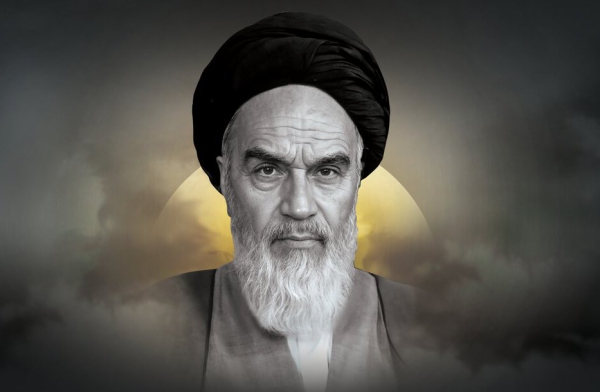
1- Turning to Western Culture
Imam Khomeini, as the founder of the Islamic Republic of Iran, was not like the intellectuals and leaders of other Islamic movements who emphasized the need for complete submission to the West, nor like the thinkers who rejected any use of Western tools and techniques. Rather, the Imam's view of the West and its culture can be divided into two areas: cultural and technical. In the technical and instrumental areas, he emphasized the need to use human experiences, but in the area related to human and social identity and intellectual and cultural foundations, he considered any imitation of the West and self-destruction to be the main cause of the misery of Eastern and Islamic societies.
2- Division
From the perspective of Imam Khomeini (RA), creating division is a policy of colonialism that must be fought against. Stirring up religious and sectarian differences is only in the direction of the policy of the enemies of Islam. It is in the shadow of maintaining unity that the enemies of Islam can be suppressed and Muslims can be restored to their lost dignity. In this case, the hand of the superpowers will be cut off from the Islamic countries and the establishment of the Islamic government will be achieved: "Islam came to unite all the nations of the world, Arabs, non-Arabs, Turks, Persians, all together and establish a great nation in the world called the nation of Islam, so that those who want to gain dominance over these Islamic states or Islamic centers, will not be able to do so through the great community of Muslims from every tribe. The plan of the great powers and their affiliates in the Islamic countries is: to separate these Muslim groups, among whom God Almighty has created brotherhood and has called the believers in the name of brotherhood, and to separate them from each other, but rather to make them enemies of each other under the name of: the Turkish nation, the Kurdish nation, the Arab nation, the Persian nation. And this is exactly contrary to the path of Islam and the path of the Holy Quran. All Muslims are brothers and equals and none of them is separate from each other. All of them should be under the banner of Islam and under the banner of monotheism. Those who, in the name of nationality, sectarianism, and nationalism, divide Muslims are the armies of Satan and helpers of the great powers and opponents of the Holy Quran.
The unclean hands that are trying to create discord between Shiites and Sunnis have sought to limit the impact of the Islamic Revolution and prevent its effects from spreading in Sunni areas (both its oil-rich areas and the countries fighting Israel).
3- Distortion of Islam and religious concepts
As Islamic societies gradually moved away from the original Islamic concepts and teachings and the initial message of justice-seeking Islam changed, this school slowly deviated and became stagnant. Valuable concepts such as justice, equity, jihad, martyrdom, the good cause, etc., were either corrupted or forgotten because they were dangerous to those in power. Instead, issues such as fate and predestination, the creation or antiquity of the Quran have been the most important issues of religious and Islamic thought for many years. Through such issues, people's religious concerns have been controlled and have become the focus of intellectuals' attention. On the other hand, sectarian and Arab tendencies, the introduction of Greek thoughts and ideas and non-Islamic culture, and inspiration from Western education and worldviews have isolated Islamic ideals. Later, these issues led to the perception that Islam is not compatible with the contemporary era. Most of the educated, unaware of the rich treasures and accumulations of their Islamic culture, saw the key to development and even salvation of society in adopting Western sciences, values, and philosophy. In a meeting with some officials, the Imam points out that the enemies have seen their way to salvation in either the absence of Islam in these countries or at least its lack of content. Although they have not succeeded in the first part, they have succeeded in emptying Islam of its content. (Sahifa Noor, Vol. 20, p. 118). “Islam is the religion of the mujahideen who are in pursuit of truth and justice, the religion of those who want freedom and independence, the school of fighters and people against colonialism. But they have introduced Islam in a different way... In order to take away the revolutionary and vital nature of Islam and prevent Muslims from striving and moving and mobilizing... They have propagated that Islam is not a comprehensive religion, it is not a religion of life, it does not have systems and laws for society. It has not brought a way of government and laws of government. Islam is only the rules... It also has ethics, but it has nothing about the life and administration of society.”
4- Leaders of Islamic countries
“One of the obstacles in the way of the awakening movement is the rulers and leaders of Islamic countries. They consider the establishment of pure Islam to be contrary to their personal and governmental interests, the problem of Muslims is the governments of Muslims. It is these governments that have brought Muslims to this day...”.
"The black and shameful record of the ruthless rulers of Islamic countries is evidence of adding pain and misery to the half-hearted body of Islam and Muslims."
5 - The petrification and stagnation of the holy icons
The Imam mentions the holy icons as one of the obstacles to Islamic knowledge and awakening, and considers it necessary to recognize and fight against them for the spread of Islam: "...America and arrogance have people up their sleeves in all fields. In the seminaries and universities, the holy icons, whose danger I have warned about time and again, are destroying the content of the revolution and Islam from within with their deceit. They introduce everyone as irreligious with the appearance of being right and supporting religion and guardianship. We must seek refuge in God from their evil... Today, the world is thirsty for pure Muhammadan Islam."
"Today, Muslim society has become such that fake saints prevent the influence of Islam and Muslims and attack Islam in the name of Islam... They spread their spirit and thoughts in society in the name of Islam...."
6 - Intellectuals
Just as petrification and rigidity from the perspective of