zarezadeh
The shiites view on the justice of companions
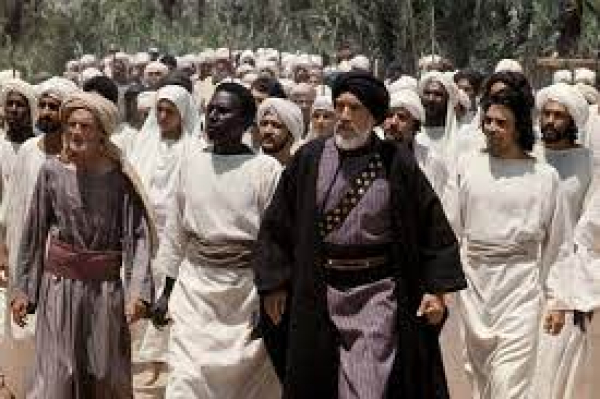
The shiites believe that those who had the honor of meeting the prophet and the privilege of being his companions,were not of the same rank and according to Qur`anic verses and prophetic traditions were divided in to several groups.one group included the pure individuals of the highest merit whose valuable services facilitated the growth of the young tree of the islam.The following verses are some examples: سوره التوبه/100
والسابقون الاوّلون من المهاجرین والانصاروالّذین اتّبعوهم باحسان رضی الله عنهم ورضوا عنه واعدّ لهم جنّات تجری تحتها الانهار خالدین فیها ابدا ذالک الفوزالعظیم
فتح/18
لقد رضی الله عن المومنین اذ یبایعونک تحت الشجره فعلم ما فی قلوبهم فانزل السکینه علیهم واثابهم فتحا قریبا
حشر/8
للفقراءالمهاجرین الّذین اُخرجوا من دیارهم واموالهم یبتغون فضلاً من الله ورضواناً وینصرون اللّه ورسوله اولئک هم الصّادقون
فتح/29
محمدرسول الله والّذین معه اشدّاء علی الکفّار رحماء بینهم تریهم رکّعاً سجّداً یبتغون فضلاً من الله ورضواناً سیماهم فی وجوههم من اثر السجود ذالک مثلهم فی التورته ومثلهم فی الانجیل
احزاب/23
من المومنین رجالٌ صدقوا ما عاهدواللّه علیه فمنهم من قضی نحبه ومنهم من ینتظر وما بدّلوا تبدیلا
Second group included people who were rightful from the beginning, hypocrites, double dealers, black hearted or sinful. The following are Qur`anic verses concerning this group:
منافقون/1
اذا جاءک المنافقون قالوا نشهد انّک لرسول الّله والّله یعلم انّک لرسوله والّله یشهد انّ المنافقین لکاذبون
توبه/101
وممّن حولکم من الاعراب منافقون ومن اهل المدینه مردوا علی النّفاق لا تعلمهم نحن نعلمهم....
This verse says a group of the people of Medina turned to hypocrisy. The holy prophet did not know them ,and only God knew them.
احزاب/12
واذ یقول المنافقون والّذین فی قلوبهم مرض ما وعدنا الله ورسوله الّا غروراً
جمعه/11
واذا راو تجارهً او لهواًانفضّوا الیها وترکوک قائماً
According to this verse a group of companions were performing Friday prayer behind the holy prophet (a.s), but when a commercial caravan entered the city, they left him while the holy prophet was standing and the prayer had not been finished.
*How do these companions lead the Muslim society to the straight path when they prefer the material world to obeying the holy prophet?
منافقون/4
واذا رایتهم تعجبک اجسامهم وان یقولوا تسمع لقولهم ...
This verse says, oh our prophet when you look at them (hypocrites),you would be pleased with their appearance .They appear in a very religious man and virtuous people and when they speak ,they speak so eagerly about Islam that you are
interested to hear.
*please judge honestly. How can the Muslims rely on these people and follow them?
Another group of verses are about the people who did not participate in war,because they feared of death. They were also hypocrite. The verse says:
یا ایّها الذین امنوا مالکم اذا قیل لکم انفروافی سبیل الله اثّاقلتم الی الارض
You are sticking to the earth, you are not ready to move.
This verse addresses الّذین امنوا the Muslims ،the companions .It shows some of the companions are ready to go to the war and some of them are not.
some verses threat a group of companions :
وان تتولّوا یستبدل قوماً غیرکم
If they turn back to you, God would replace them with another people (another generation).
So it indicates that at the time of the prophet there were companions that God threatened them.
Traditions about the justice of the prophet companions
History has recorded the names of more than 120000 people as the companions of the holy prophet (a.s).There were various personalities among the companions. No doubt ,being the prophet`s companion was a great honor for a group whom the Muslim nation respects ,because they were the pioneers of Islam ,the one who erected the flag of Islamic glory for the first time ,but it does not mean that they were pure and just.
The Sunnis narrate a tradition from the holy prophet (a.s):
اصحابی کا لنّجوم با یّهم اقتدیتم اهتدیتم
If all of companions are just and can lead us to the straight path, so why do not you consider imam Al (who is also a companion too) just?
Concerning these two traditions from the holy prophet (a.s):
اصحابی کالنّجوم بایّهم اقتدیتم اهتدیتم
And
علیکم بسنّتی وسنّه الخلفاءالراشدون من بعدی
indicates a problem that if these two traditions are correct, then the holy prophet is inviting the Muslims to contradictory things and it is impossible,because when you say علیکم بسنّتی ,we can find some part of the sunnah of the holy prophet which is different from the sunnah of خلفاء راشدین .We can find some behaviours of خلفاء راشدین which are not only different from the holy prophet ,but also Omar was different from Abubakr,and imam Ali(a.s) was different from Omar and Abubakr. So how is it possible to follow them when they have different ways? When it says بایّهم اقتدیتم اهتدیتم this shows that this tradition is not correct, because the holy prophet (a.s) does not invite the people in contradictory things. For exampleصلوه التراویح was not the sunnah of prophet, but it was the sunnah of Omar. If a Muslim wants to practice to prophet`s sunnah what`s the sunnah of the prophet? perform the صلوه التراویح individually .And what`s the sunnah ofخلفاءراشدین(especially Omar)? It is performing صلوه التراویح congregationally .What is our duty? performing or not performing it, especially when Omar called this changing of the holy prophet`s sunnah نعم البدعه.
*Bokhari in Sahih ,vol 9 کتاب الفتن narrates a tradition from the holy prophet that shows the position of the holy prophet on some of the companions:
یردوا علیّ یوم القیامهُ رهطٌ من اصحابی فیحلوء ون عن الحوض فاقول یا ربّ اصحابی،فیقال:انّه لا علم لک بما احدث بعدک ،انّهم ارتدّوا علی ادبارهم القهقرا
At the day of judgment a group of my companions rush to me, the angle would push them away ,I (the holy prophet)say: they are my companions ,it is said :you don`t know they became unbelievers after you.
Now we should ask the dear Sunni brothers and sisters : Do you believe in Sahih of Bokhari or not? It says that some of the companions were unbelievers. The holy Qur`an says about this group of people:
البقره/ 161
انّ الّذین کفروا وماتوا وهم کفّار اولئک علیهم لعنه الله والملائکه والنّاس اجمعین
So if some of the companions died when they were unbelievers , then is it possible for them to lead us in straight way?
*Another tradition: Muslem in Sahih,vol 7,p 58 narrates a tradition from the holy prophet:
انّی لست اخشی علیکم ان تشرکوابعدی ولکنّی اخشی علیکم الّدنیا ان تنافسوا فیها وتقتلوا فتهلکوا کما هلک من کان قبلکم
I am not afraid of you becoming mushrik after me, but I am afraid that you may return to this material world and compete with each other in this world about it (for having more)and you will kill each other and then you would be perished(destroyed)l like the generation before(like Nuh people and Lut people).
This tradition shows that you (my companions) are not immune of mistake and may turn to this material world.
*One example at the time of the holy prophet: The holy prophet in the last days of his life ordered everybody to follow Osama as the commander of the army ,but some of the great man of Quraish refused it. How can you say all of the companions are just when they didn`t obey the holy prophet?
*Another tradition in Sahih of Muslem
Walidebn Oqbah(ولیدبن عقبه)who was one of the holy prophet`s companion, performed the morning prayer 4rak`ah (because he was drunk),when Muslims in the mosque criticized him, he said: I am well today, so I can even perform more rak`ah. The second caliph gave him lashes.
If all of companions are just, so they shouldn`t be punished by Omar or Imam Ali (a.s).
*A logic reason:
At the time of Osman (the third caliph) some companions surrounded his house .Both sides were the holy prophet`s companions. Which one was right? Can we say both sides were right? Or in Camel and Seffin wars the both sides who were fighting with each other ,were the holy prophet`s companions. Were the both sides right? Is there two straight path? Or one side is right and the other side is wrong?
Shiites` view on Aisha
The Sunnis say because the holy prophet`s wives , including Aisha, are his companions, they are just .But we reject it ,as we reject the justice of all companions.
Another argument is that, they are infallible because they are the prophet`s wives.
But our view is based on Qur`an which says:
ضرب الله مثلاً للّذین کفروا إمرأت نوح وامرأت لوط کانتا تحت عبد ین من عبادنا صالحین فخانتا هما فلم یغنیا عنهما من الله شیئاً وقیل الدّخل الناّر مع الدّاخلین
الّتحریم/10
As this verse shows we know some wives of the prophets before the prophet Muhammad (a.s) who were not pure, Nuh`s wife and Lut`s wife .They were unbelievers (کافر).So the wives of the prophet may be unbelievers.
*The important point is that God has given wife of Lut and wife of Nuh as an example of الّذ ین کفروا .So it is possible somebody like Aisha who is grown and is trained in the house of the holy prophet ,to be a bad one. Here the verse:
کانتا تحت عبد ین من عبادنا صالحین فخانتاهما فلم یغنیا عنهما من الله شیئاً....
Lut`wife and NUH`wife were also growned and trained under two prophets who were صالح ,but their virtuous didn`t influence on them.
*Another argument among Sunnis is that the prophet of Islam is different from the previous prophets,so his wives are different from their wives.He has an extra ordinary influence on his wives ,so that they became virtuous women. This is also rejected by
التحریم/4 :
ان تتوبا الی الله فقد صغت قلوبکما وان تظاهرا علیه فانّ الله هو مولیه وجبریل وصالح المومنین والملائکه بعد ذلک ظهیر
If you (two women) repent toward Allah ,means that they had done something wrong and should repent.
وان تظاهرا علیه....
If you two ( Hafsa and Aisha ) supported each other against the prophet , but the prophet has strong supporters among them,الله ,جبریل,صالح المومنین and ملائکه
In SAHIH OF MUSLEM ,VOL 4, P 188 and
IN SAHIH OF BOKHARI ,VOL 1, P 101
There is tradition from IBN ABBAS(ابن عبّاس ) about the plot of Hafsa and Aisha against the prophet
A good point in “Al-Tahrim”chapter is that at the beginning to the middle of the Surah it talks about two wives of the prophet .At the end of Surah it talks about two wives of two other prophet :LUT and Nuh .
So if we study this Surah as a package ,we should say there is a relation between the two holy prophet`s wives and those wives of Nuh and Lut.Why they should come in one Surah, two at the beginning ,and two at the end of Surah ? Is it possible that Aisha and Hafsa as the wives of the prophet do something wrong?
The holy Qur`an says it is not only possible ,but also has happened .So it is possible that the fate of Aisha would be the same as the fate of wives of Nuh and Lut.
Second point is that it is possible even for some women who are not the wives of the prophet to be better than the prophet`s wives.سوره التّحریم/11و12 explain it more:
وضرب الله مثلاً للّذین امنوا إمرأت فرعون اذ قالت ربّ بن لی عند ک بیتاً فی الجنّه ونجّنی من القوم الظّالمین.و مریم ابنت عمران الّتی احصنت فرجها فنفخنا فیه من روحنا وصدّقت بکلمات ربّها وکتبه وکانت من القانتین
.
Allah gives two examples here for two women who were not in the house of the prophets, but he says :These are examples for الّذین امنواّ .One of them is Pharaoh`s wife .Even she was the wife of Pharaoh ,the cruel one ,evil and satanic one ,but she was believer(مومن).Another one isمریم.Then what we can understand here is, that although حفصه and عایشه are the holy prophet`s wives, but respecting Pharaoh`s wife is recomended by Qur`an more than respecting حفصه and عایشه.
The relationship of the holy prophet and his companions in the Qur`an and traditions
As I said before, according to the holy Qur`an and prophet `s sunnah the companions were divided in to two groups .Some of them are denounced, and some of them are admired. I mentioned some verses and traditions regarding them, in previous section. Now something more:
Some of the companions were not pleased by the rulings made by prophet Muhammad (a.s):
According to different verses of Quran obeying prophet Mohammad means obeying Allah .This matter can be clearly seen in the following verse:
وما ارسلنا من رسول الّا لیطاع باذن الله ولو انّهم اذ ظلمواانفسهم جاءوک واستغفرواللّه واستغفر لهم الّرسول لوجدواللّه توّاباُ رحیماُ.فلا وربّک لا یومنون حتّی یحکّموک فیما شجر بینهم ثمّ لایجدوا فی انفسهم حرجاُ ممّا قضیت وسلّموا تسلیماُ
There are two narrations about why these verses were revealed: The prophet`s cousin Zubair b. Avvan had a disagreement with Hatib b.Abi Beltea about the use of the water rights. They came to the prophet to solve the disagreement. The prophet said :"o Zubair! First you use the water, and then leave it for your neighbo r. Hatib didn`t like this decision and became angry, saying: "oh Allah`s apostle, have you made such a decision, because he is your cousin?
Whatever the reason for the revelation of these verses, it is clear that true faith in the holy prophet was to be achieved through submission to him.
When addressing the prophet, the companions speaking in a loud voice: In the Qur`an it is clearly stated that the companions should not raise their voice above that of the prophet when talking to him.
Al-Hujurat ( حجرات( 2-3
یا ایّها الّذین امنوا لا ترفعوا اصواتکم فوق صوت النّبی ولا تجهروا له بالقول کجهر بعضکم لبعض ان تحبط اعمالکم وانتم لا تسعرون.انّ الّذین یغضّون اصواتهم عند رسول الله اولئک الّذین امتحن الله قلوبهم للتّقوی لهم مغفره واجر عظیم
The reason for the revelation is that a committee from Bani Temim and Abubakr said that Ka`ka b.Ma`bed should be appointed as their chief by the prophet .Omar was not pleased with this offer,and wanted Aka b. Habis to be appointed .As Abubakr and Omar began to debate the matter in raised voices, the above verses were revealed.
Despite stern warnings by the prophet, the arches abandoned their positions in the Battle of Uhud:
At the battle of uhud a regiment of arches, under the command of Abdullah b. Jubair ,were positioned by the slope of a strategic pass and they were sternly warned."Even if you see that we have defeated them, don`t abandon your positions! Even if you see that we are defeated, don`t run to our aid !Despite this ,when they saw that the unbelievers had been defeated, they abandoned their positions in a desire for the spoils of war. In fact, Abdullah b. Jubair reminded them of the prophet`s order ,but in vain. The following verses indicate the serious error of the archers and importance of obeying the prophet.
Al-Imran: 152-153 (آل عمران)
ولقد صدقکم اللّه وعده اذ تحسّونهم باذنه حتّی اذا فشلتم وتنازعتم فی الامر وعصیتم من بعد ما اریکم ما تحبّون منکم من یرید الدّنیا ومنکم من یریدالاخره ثمّ صرفکم عنهم لیبتلیکم ولقد عفا عنکم والله ذو فضل علی المومنین. اذتصعدون ولا تلوون علی احدوالرّسول یدعوکمفی اخریکم فاثابکم غمّاُ لکیلا تحزنوا علی ما فاتکم ولاما اصابکم والله خبیربما تعملون
The attempt by a companion to inform the Quraysh of the secret preparations of the prophet to conquer Mecca
When Quraysh violated The Hudaybiah Treaty , prophet Muhammad (a.s) began to secretly prepare to conquer Mecca, he took precautions that the Quraysh did not hear anything about his preparations and that no news of it would leak to Mecca.In fact ,other than a few of companions no one was aware of this aim .Despite all the care ,Habib b .Abi Beltea somehow learned of the situation and sent a woman to carry a letter to Mecca.Allah informed the prophet of this via the angel Gabriel.The holy prophet sent Ali,Abdullah b. Zubair and Mikdad b. Aswad to distance of 40 km from Medina and orderd them to take the letter from the woman .They brought the letter to the prophet. Then he asked Hatib :"Why did you do this?" He replied:"I am from Ansar ,not of Quraysh .Here the emigrants who are with you, have relatives in Mecca to protect their families and goods .I wanted to make friends to protect my relatives in Mecca .I didn`t do this, to deny my religion or to approve of disbelief after becoming a Muslim .Then the following verse was revealed.
Al-Mumtahana :1 (الممتحنه /1)
یا ایّها الّذین امنوا لا تتّخذوا عدوّی وعدوّکم اولیاء تلقون الیهم با لمودّه وقد کفروا بما جاءکم من الحقّ یخرجون الرّسول وایّاکم ان تومنوا با لله ر بّکم ان کنتم خرجتم جهاداُ فی سبیلی وابتغاء مرضاتی تسرّون االیهم بال مودّه وانا اعلم بما اخفیتم وما اعلنتم و من یفعله منکم فقد ضلّ سواء السّبیل
There are also some companions whom the holy prophet admired:
Dorr -Almansour of Soyouti, vol 8, p 589 from Jabir b. Abdullah:
کنّا عند النّبی ،فاقبل علیّ،فقال النّبی :والّذی نفسی بیده انّ هذا وشیعته لهم الفائزون یوم القیامه ونزلت :انّ الّذین امنوا وعملو الصّالحات اولئک خیر البریّه
We were to the prophet, then Ali entered, then the prophet (referred to him)and said :by Allah, this man and his followers will be at paradise and then the above verse was revealed.
When this verse ofسوره البیّنه was revealed, the companions asked the holy prophet :"who are خیرالبریّه?" He answered:"علیّ وشیعته"
The other tradition is in Musnad of Ibn Hanbal,vol 2,p 654 from the holy prophet:
یا علی ،ابشر فانّک واصحابک فی الجنّه
Verily you and your companions and your followers are in the paradise.
There are many traditions in different books of Shiites and sunnis from the holy prophet about Ali (a.s) .For example Nessaee who is the writer of Sunan (one of the six Sahih of Sunnis` brothers ) has written a book about the of Imam Ali(a.s)
He has narrated a lot of traditions from the holy prophet about him .For instance : a tradition narrated by Muslem ,Bokhari,Hakem,Imam Ahmad b. Hanbal ,Ibn Maja and….
انت منّی بمنزله هارون من موسی الّا انّه لا نبیّ بعدی
انا مدینه العلم وعلی بابها
من کنت مولاه فعلی مولاه
Historical argument: In history and also in tradition books we read that Muaviah ordered Sa`d b. Abi Vaghghas what did prevent you from cursing Aba Torab?
(ما منعک ان تسبّ ابا تراب؟)
He answered: whenever I remember three things that the holy prophet said about Ali,I can`t curse him
(فقال امّا ذکرت ثلاثاُ قال هنّ رسول الله فلن اسبّه )
1-When the prophet went for Tabuk war ,he appointed him as his successor .
2-At the battle of khaibar, the prophet had said ;”whoever can go and stop Jews, he is my brother and my deputy.
3-At the verse of Mobahelah Ali is the same soul of the prophet (انفسنا)
So Ali is the prophet`s brother.
Therefore by studding the mentioned verses and traditions we can conclude that all of the companions are not just and cannot lead the Muslims.
By : Batoul Sadat Hosseini Saadat
Arbaeen Hussaini
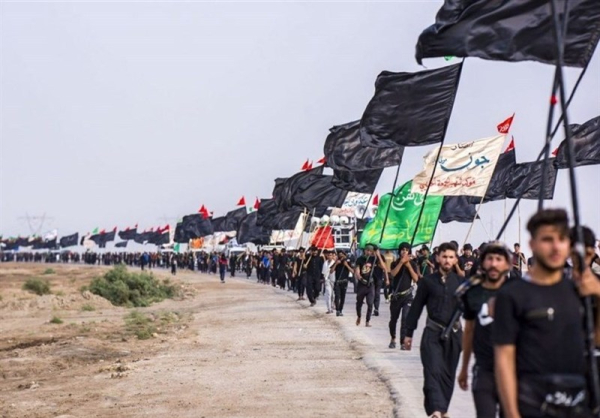
Arbaeen, also known as “Arbaeen Hussaini”, is the fortieth day after Ashura. Ashura is the tenth day of Muharram, the day on which Imam Hussain (AS), the grandson of the Prophet Muhammad, and his companions were martyred in the Battle of Karbala in 61 AH (680 AD). Arbaeen is calculated by the date of the Hijri calendar and usually falls on the 20th of Safar.
On Arbaeen, a ceremony is held to commemorate the martyrdom of Imam Hussain (AS) and his companions. The day holds special significance in Shia culture, and many Shias make a pilgrimage to the shrine of Imam Hussain (AS) in Karbala. The pilgrimage to Karbala during Arbaeen is one of the largest religious gatherings in the world, with millions of people from all over the world participating in the ceremony.
Arbaeen is an opportunity to remember the values such as justice, sacrifice, and resistance to oppression that Imam Hussein (AS) and his companions fought and were martyred for.
Is holding ceremonies innovation in Islam?

First of all, we do not consider these ceremonies as an obligatory part of religion and we don't believe that avoiding them is unlawful (haram). But as we celebrate our darlings' birthday, we also celebrate the birthday of our prophet, his household, and even the anniversary of the day of Mab'ath. In this way, we thank God and show our love to the prophet, his family and Qur'an.
This issue is not only forbidden (Haram) in Islam, but also we have reasons in Qur'an that confirm it. These ceremonies are reverence and respect to the prophets and saints of religion as we have in surah HAJ verse 32:"
"مَنْ يُعَظِّمْ شَعائِرَ اللَّهِ فَإِنَّها مِنْ تَقْوَى الْقُلُوبِ":
"Respecting the rites of Allah represents the purity of heart and the state of piety of the pilgrim." And our prophet, his household and the day of mab'ath are all signs of Allah and we know it as our duty to respect them and thank God for the sake of them. Or about our prophet, we have in surah A'araf, verse 157 :
"....فَالَّذِينَ آمَنُوا بِهِ وَ عَزَّرُوهُ وَ نَصَرُوهُ وَ اتَّبَعُوا النُّورَ الَّذِي أُنْزِلَ مَعَهُ أُولئِكَ هُمُ
الْمُفْلِحُونَ."
So those who believe in him and honour him, and help him, [in Allah's Way] and follow the light which has been sent down with him, they are indeed the ones who receive salvation."
Believing, helping, and respecting him does not belong just to his age, but in all times these issues should be considered. Taking part in these ceremonies, we announce and renew our royalty (bay'at) to him and his path. When we hold a ceremony for one of the households of Rasul of Allah(pbuh), in fact we act according to the verse 23 of surah Shura:
"قُلْ لا أَسْئَلُكُمْ عَلَيْهِ أَجْراً إِلَّا الْمَوَدَّةَ فِي القربی"
Say [O, Messenger!]: "No wage I ask you for my mission, but all I expect is the affection to my near kin."
In this way we show our love and respect to his household.
To explain more, let's see what we do in these ceremonies?
Usually, a lecturer is invited to speak about our prophet or his household, their characteristics, behavior, sayings, and their attitudes in different situations of their lives as it is mentioned in the history of Islam. Which of these do you think is against Islam or Qur'an?
In ceremony days, helping the poor, giving gifts and being kind to each other is a custom. Are these forbidden or recommended in Qur'an?
What do you think if the prophet of Islam were here among us and see people doing such activities, would he appreciate or punish these people?
We also have funeral ceremonies. One of them is the anniversary of martyrdom of Imam Hussein(the nephew of Rasul of Allah (pbuh) and his men in Moharram. Holding this ceremony, we remind the muslims that the nephew of our prophet and his men were called nonmuslims and killed in a horrible way by the caliphate of muslims who claimed he was the successor of the prophet. This is exactly the reason why some apparently Islamic governments oppose against us and call us polytheist(moshrek). These ceremonies act as a warning for muslims of the world to be more careful and not follow those who think are landlord of the muslims but for the sake of power and their own material benefits they are ready to kill even innocent baby muslims as you see in Yemen.
Of course, those who claim birthday celebration is forbidden (haram) in Islam, beforehand had said that using telephone and telegram is haram and against the sunnah and then they themselves had to use it and commit this "haram"! Recently, they have given Fatwa(Islamic decree) that if a man becomes very hungry and finds nothing to eat is allowed to eat some or all body of his wife! Would you ever really think of acting according to such a decree?
Meanwhile, our prophet didn't perform or use a lot of things from new technology . He never travelled by airplane, never used TV, mobile, Internet. Can we say they are haram because our prophet didn't use them?
Moreover, reviving the history of Islam, these ceremonies make our new generation more familiar with Qur'an, Islam and the prophet. It is a suitable program to confront the cultural attack against our youth by nonmuslims.
At the end, These ceremonies strengthen and stabilize the values of faith and moral foundations. Remembering the prophets, saints, martyrs, truthful and sincere followers of the school of the prophets, faith, piety, jihad and their sacrifices and how they attempted to perform the divine revelation is a strong incentive to make people follow them and consider them as a pattern in their life.
After all, we ask Allah to guide all of us to the right path.
By: z.khodaparast
Child-murderers: Israeli bombing of Tehran kindergarten textbook case of savagery
By Humaira Ahad
In Tehran’s District 7, on the otherwise quiet Saboonchi Street, the laughter of children once echoed between painted walls and playground swings.
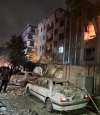
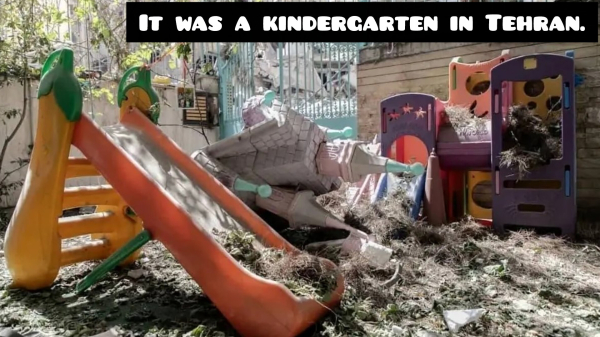
These joyful shrieks were silenced on June 25, 2025, when an Israeli airstrike turned Ranginkaman Kindergarten into rubble.
Adorned with cheerful murals and vibrant classrooms, the kindergarten now stands as stark evidence of a deliberate act of aggression by the child-murdering regime, an unmistakable and blatant violation of international humanitarian law.
The attack, carried out during the unprovoked and unlawful 12-day Israeli war on Iran, levelled the Ranginkaman Kindergarten along with nearby residential homes. The location was entirely civilian, serving solely as a place where toddlers gathered to learn and play.
The kindergarten that almost became a mass grave
Ranginkaman, meaning “rainbow” in Persian, had only been operating for a year.
The play school was known for its cheerful atmosphere, colorful furniture, and dedicated staff. The kindergarten had served as a modest refuge for working-class families in Tehran, a place where they entrusted their children each day while they went to work.
Inside its modest building, walls were decorated with children’s art, and the yard held a swing set in the corner; everything was designed to bring joy and comfort to the young kids.
The sense of joy vanished in an instant when an Israeli terrorist strike struck the kindergarten, shattering the calm and leaving behind a scene of chaos, smoke, and blood.
Just before the attack, there were 20 children inside the kindergarten. Mehri Vatankhah, the director of Ranginkaman, had been increasingly concerned about the rising intensity of air defence activity over the skies of Tehran.
In an interview, she recalled the chilling minutes leading up to the decision to evacuate.
“That day we tried to sing more songs and poems with the children, hoping their voices would drown out the sound of the air defence systems,” she said. “But after lunch, the noise was too loud. I knew I had to call the parents and get the kids out.”
According to Vatankhah, she and her staff contacted the families and began sending the children home early that day. The final child was picked up at approximately 3:20 p.m.
Ten minutes later, the building was destroyed in an Israeli missile strike.
“Had the evacuation been delayed even slightly, the attack would have resulted in one of the deadliest mass killings of children in Iranian history,” a parent, still recuperating from the shock, stated.
A house of joy turned into rubble
The scenes left behind are etched in the minds of those who visited the kindergarten following the brutal Israeli strike. Shattered glass covers the pavement. Children's animated books, half-burned, lie beneath collapsed walls.
What was once a colourful, vibrant learning space is now blackened rubble.
“It had been about a year since this kindergarten was established on Saboonchi Street. From the very first day Ranginkaman opened its doors, few could have imagined that the image of collapsed walls, charred photographs of children, and shattered glass would be the final memory left of this place,” said a parent whose 3-year-old child went to the play school.
Another parent spoke of the terrifying thought of what could have unfolded if the children had remained at the kindergarten.
“Seeing the photos, just imagining that even a tiny scar from broken glass could’ve marked my child’s face still makes me sick,” she said.
The attack, as a deliberate act of terror, was a part of a 12-day war of aggression by Israel to destabilise the Iranian society by targeting civilian infrastructure.
According to official figures, Israel's attacks on Iran have claimed the lives of 1,062 people, including around 140 women and children. Approximately 5,800 others have been injured.
The aggression was launched in the early hours of June 13 and resulted in the martyrdom of many high-ranking military officials, scientists and ordinary citizens in the initial wave.
A broader pattern: children as victims of Israeli aggression
The attack on Ranginkaman is not an anomaly when placed in the broader context of Israeli assaults. It echoes a pattern that has been unfolding for decades, particularly in Gaza.
According to the United Nations Relief and Works Agency for Palestine Refugees (UNRWA), since the beginning of Israel’s genocidal war on Gaza on October 7, 2023, Israel has been killing the equivalent of an entire school class of children every single day, with class sizes averaging 35-45 students.
“Every day since the beginning of the war in Gaza, an average of an entire school class of children has been killed,” Sam Rose, UNRWA’s Director of Operations in Gaza, said on Wednesday.
Medical sources in Gaza report that over 18,000 Palestinian children have been killed since the beginning of Israel’s genocidal war on the besieged territory. Another 16,854 have been hospitalised.
The ongoing war has left over 197,000 dead or wounded, and the majority of them are women and children. More than 11,000 people are still missing, many likely buried under the rubble. Famine conditions have taken the lives of dozens more, including infants.
The deliberate bombing of homes, schools, hospitals, and bakeries has long marked Israel’s genocide in Gaza. Now, with the strike on Ranginkaman Kindergarten in Tehran and attacks on hospitals, residential houses, and ambulances across Iran, this systematic assault on civilian infrastructure exposes a ruthless strategy aimed at destroying the very foundations of civilian life.
Press TV’s website
Israeli-enforced starvation kills two more Palestinian children in Gaza
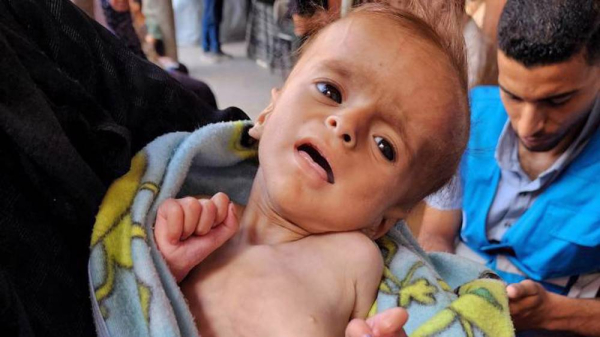
Palestinian medical officials report the death of at least two more heavily-malnourished Palestinian children in the Gaza Strip, which has been enduring a 21-month-long Israeli war of genocide, coupled with starvation tactics by the regime.
Medical officials in Gaza confirmed on Tuesday that Yousef al-Safadi, a child from the north, and Abdul Hamid al-Ghalban, from the south in the city of Khan Yunis, had died of starvation.
Pro-Palestinian campaigners and human rights activists reacting to the development lamented that the young ones’ bodies had given out in a place where “food has been turned into a weapon.”
They were referring to the Israeli regime’s resorting back in May to further lethal restrictions on its already stringent 2007-present siege of Gaza as a means of, what critics call, trying to maximize fatalities.
Gaza’s doctors note how the coastal sliver’s hospitals, already shattered by months of siege and bombardment, are now overwhelmed by cases of malnourishment.
Hundreds of children, parents, and the elderly arrive daily, most barely conscious, and some unable to speak, they decry.
The physicians report haunting symptoms of advanced starvation, including patients forgetting their own names, and collapsing mid-sentence from exhaustion.
According to UNRWA, the United Nations agency for Palestinian refugees, more than 17,000 children are suffering from acute malnutrition.
Between March and June alone, the number of malnourished children under five doubled, the body adds.
In total, UNRWA screened 74,000 children and found 5,500 cases of severe acute malnutrition and over 800 already in critical wasting, a term meaning the body’s beginning to nourish on itself.
The warfare, which began in response to a long-overdue historic resistance operation against decades of deadly occupation and aggression by the regime, has already claimed the lives of more than 59,000 Palestinians, mostly women and children.
Press TV’s website
Ending Iran’s nuclear program ‘an illusion’; we’re ready to strike Israel hard again if need be: Pres.

President Masoud Pezeshkian has thoroughly dismissed efforts and incitement by the United States and its allies, particularly the Israeli regime, to push for termination of Iran’s nuclear energy program.
The chief executive made the remarks during an interview with Qatar’s Al Jazeera television network on Tuesday, asserting that uranium enrichment on the Iranian soil would continue in the future within the framework of the international law.
The official’s remarks concerned, what critics have denounced as, a feverish campaign by Washington and Tel Aviv to supposedly eliminate the nuclear program under the pretext of its “deviation towards military purposes.”
The campaign has seen the duo exercise intense pressure on the global stage towards painting the nuclear work in a bad light and even resort to many rounds of military aggression against the Islamic Republic’s nuclear facilities.
Apparently addressing US President Donald Trump’s repeated allegations of the US’s having delivered debilitating blows to the program, Pezeshkian said, “To claim that our nuclear program has ended is an illusion.”
“Nuclear capability resides in the minds of our scientists, not in our facilities.”
The Iranian president, meanwhile, repeated the Islamic Republic’s outright rejection of nuclear weapons and its strict pursuance of nuclear energy for peaceful purposes. The assertion has been proven unexceptionally right by the International Atomic Energy Agency (IAEA)'s inspectors, despite their conducting unprecedentedly rigorous inspections of Iran’s nuclear facilities.
“We categorically reject possessing nuclear weapons,” the president said, adding, “This is our political, religious, human, and strategic position.”
Pezeshkian also repeated Iran’s preparedness for negotiations that do not deny it of its right to peaceful uranium enrichment, but asserted that “any future negotiations must be based on a win-win logic.”
Elsewhere in his remarks, the official underlined the Islamic Republic’s readiness to respond in kind to any fresh act of aggression by the Israeli regime targeting the nuclear program.
Last month, Iran’s Armed Forces deployed hundreds of ballistic missiles and drones in the face of an unprovoked Israeli war, forcing the regime to request a ceasefire only after 12 days.
“We are fully prepared for any Israeli military action, and our forces stand ready to strike deep into the occupied territories once again.”
Pezeshkian also noted how the regime has been trying to hide the sheer extent of the losses it has suffered as a result of the Iranian strikes.
The official cited the regime’s requesting the ceasefire just after 12 days, saying the request “says a great deal” concerning the effectuality of Iran’s reprisal.
Press TV’s website
What is happening in Gaza?
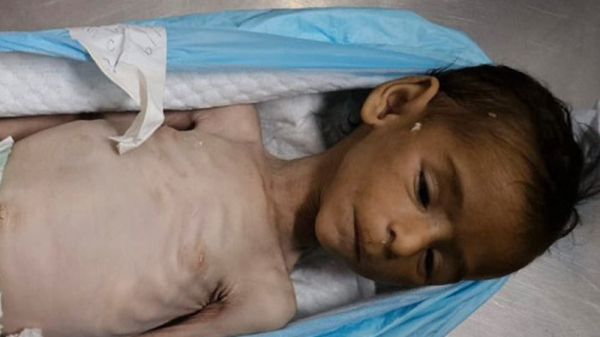
A third Palestinian child dies in the Gaza Strip within 24 hours of the starvation that is being imposed with full force by the Israeli regime as a means of lending further brutality to Tel Aviv’s genocidal war on the coastal sliver.
The weeks-old infant was identified as Yahya al-Najjar, who died at the Nasser Hospital in the southern Gazan city of Khan Younis on Saturday.
Journalists worldwide shared harrowing pictures of the victim, which showed him lying lifelessly on the hospital bed, his body bearing clearly visible signs of extreme malnutrition.
“This is Baby Yahya Al-Najjar, and Israel's starvation has just killed him in Khan Younis,” Gaza-based journalist Ahmed al-Najjar wrote on his social media account on X.
“We scream, our children cry to the world— but no answer,” he added.
“2.3 million are on the way if no food allowed to enter into the blockaded war-torn Gaza Strip!” wrote Motasem A Dalloul, another journalist reporting from the territory.
‘Only a sip of milk away from survival’
“His tiny body only needed a sip of milk to survive,” wrote a pro-Palestinian blogger.
“He died waiting. He died hungry.”
Palestinian sources, meanwhile, also underlined the absence of the means of serving Yahya with the required medical care that could save him, as another factor contributing to his premature demise.
The fatality was among the roughly-116-strong Palestinians, who were killed throughout the territory as a result of Israeli brutality on Saturday.
As many as 38 of the deaths occurred as a result of Israeli attacks against those, who had crammed themselves around US- and Israeli-backed so-called food distribution centers in the southern Gazan city of Rafah.
‘1000s teetering on edge of catastrophic starvation’
The centers have been denounced for serving rather as “death traps” for Gazans, thousands of whom are on the “verge of catastrophic hunger,” according to the United Nations.
The mass starvation has been brought about by the Israeli regime’s tightening its 2007-present siege of Gaza to insufferable levels.
The restrictions have reduced Gaza’s food intake to nearly zero, forcing Palestinians to swarm around the distribution centers, where Israeli aggression is a regular occurrence.
The overall situation has prompted vehement criticism of Tel Aviv over its using starvation as a “weapon of war” throughout the genocide.
Since its inception in October 2023, the warfare has already claimed the lives of more than 58,700 Palestinians, mostly women and children.
Press TV’s website
Palestinians in Gaza face ‘acute risk of famine’ as food supplies run dry
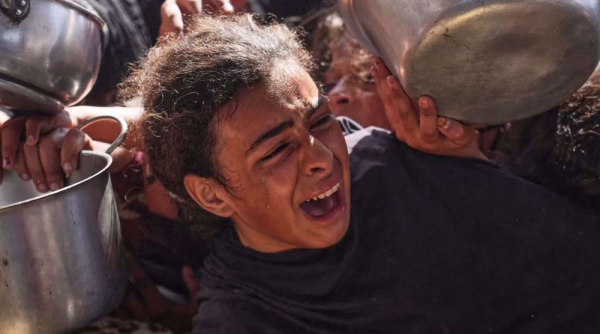
The International Federation of Red Cross and Red Crescent Societies (IFRC) has warned that Palestinians in Gaza face an “acute” risk of famine, amid Israel’s total siege on the strip.
“The population is facing an acute risk of famine, with continuously worsening conditions. Basic food supplies are no longer available in markets or distribution points,” Jagan Chapagain, secretary general of the IFRC, said in a post on X on Saturday.
“The cost of remaining essentials, such as flour, has skyrocketed, with one kilogram now reaching as much as $20, making it impossible for two million people to meet their minimum daily nutritional needs,” he said.
Amid the deliberate killings of “desperate” aid seekers at aid distribution centers in recent weeks, Chapagain said, “No one should have to risk their life to get basic humanitarian assistance.”
The United Nations said on 13 July that 875 people had been killed while seeking food at distribution points operated by the US- and Israeli-backed Gaza Humanitarian Foundation and other aid centers since the end of May.
The number now exceeds 900, local officials said.
A report by the Associated Press (AP) has detailed how American contractors guarding the aid centers used live ammunition, stun grenades, and pepper spray against the Palestinian aid seekers.
In its late June issue, the Israeli newspaper Haaretz also reported that the Israeli regime’s forces had received orders to fire on the unarmed aid seekers to “keep them away from food distribution centers.”
Chapagain also reiterated a call “for full and unhindered access for humanitarian assistance” to Gaza.
“Aid must be guaranteed and delivered at scale to meet the overwhelming needs.”
Israel has imposed a total siege on Gaza since March, blocking the entry of humanitarian aid into the strip.
The looming risk of famine came while the UN agency for Palestinian refugees said it has “enough food for the entire population of Gaza for over three months stockpiled in warehouses–including this one in Al Arish, Egypt–awaiting entry.”
In a post on X on Saturday, the organization said, “Open the gates, lift the siege, allow UNRWA to do its work and help people in need among them one million children.”
In November last year, the Israeli regime banned the operations of UNRWA, terminating the body’s decades-long crucial relief practices across the Palestinian territories and putting millions of lives at risk.
The Israeli regime’s bloody onslaught on Gaza has killed at least 58,765 Palestinians, mostly women and children, since October 7, 2023.
Israel has long been accused of using food as a weapon of war against the Palestinians in the besieged strip.
Press TV’s website
Iran ‘fully prepared’ if Israel breaks ‘fragile’ ceasefire: FM Araghchi
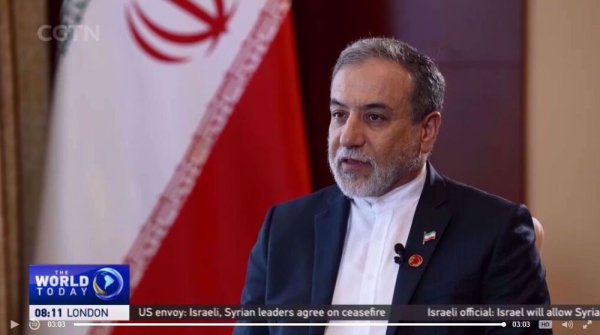
Foreign Minister Abbas Araghchi says Iran is fully vigilant and prepared to defend itself should the Israeli regime break a “fragile” ceasefire that ended 12 days of aggression against the country last month.
Araghchi made the remarks in a Wednesday interview with China Global Television Network (CGTN) in Tianjin, China, where he attended the Shanghai Cooperation Organization (SCO) foreign ministers' meeting on Tuesday.
He pointed out that the 12-day war launched by the Israeli regime against Iran was unprovoked military aggression and not simply a "conflict."
"It is not a conflict. It is an act of aggression, unprovoked aggression by Israel against the Islamic Republic of Iran,” he added.
“We had no way but to exercise our right of self-defense. So, we defended our country. We defended it in a very courageous way and forced the aggressors to stop the aggression and ask for an unconditional ceasefire, which was accepted by us," the top Iranian diplomat emphasized.
He cast doubt on Israel's intention to truly honor the ceasefire, which he characterized as “fragile”.
"The ceasefire is, of course, fragile and the reason is obvious: no ceasefire by the (Israeli) regime is reliable because the regime has a very bad record on that,” he explained.
“We are very careful and fully prepared if the ceasefire is broken, but this is not our wish. That was not our wish from the beginning. We did not want this war, but we were ready for that,” he stressed.
The foreign minister said Iran does not wish for the war to continue, but reaffirmed the country’s full readiness should aggression resume.
Between June 13 and 24, Israel waged a blatant and unprovoked aggression against Iran, killing at least 1,060 people, including high-ranking military commanders, nuclear scientists, and ordinary civilians.
On June 22, the United States also entered the war and bombed three Iranian nuclear facilities in Fordow, Natanz, and Isfahan, in a clear violation of international law and the Nuclear Non-Proliferation Treaty (NPT).
In response, the Iranian Armed Forces targeted strategic sites across the occupied territories as well as the al-Udeid air base in Qatar, the largest American military base in West Asia.
On June 24, Iran, through its successful retaliatory operations against both the Israeli regime and the US, managed to impose a halt to the illegal assault.
Iran open to talks if other side shows genuine intent for win-win solution
Araghchi said Iran will resume nuclear negotiations with the United States if it sees a real intention for a win-win solution.
“There should be a real intention for a win-win solution. Our nuclear program is for peaceful purposes, and we are 100% confident in that,” he added.
He emphasized that Iran has no problem sharing this confidence with others, which “can happen only through negotiation.”
Iran and the United States had held five rounds of indirect talks on Tehran’s peaceful nuclear program before June 13, when Israel launched aggression on the Islamic Republic.
Mediated by Oman, the 6th round of talks had been planned to be held in the Omani capital of Muscat on June 15, but was called off due to the attacks.
Firm determination can lead to a negotiated agreement
Araghchi said the opposite side’s “serious and real” determination can lead to a negotiated agreement.
He stressed the need for the US to drop the military option, adding that the sides should move forward and seek a solution through negotiations.
He noted that the US attacks on the three Iranian nuclear facilities proved that there is no military solution to the country’s nuclear program.
"Only one diplomatic and negotiated solution can be effective, and its realization is only possible when they set aside their military ambitions and compensate for the damages they have inflicted on us. Then we will be ready to participate in negotiations,” Araghchi pointed out.
Press TV’s website
Iran condemns deadly Israeli airstrikes in southern Syria
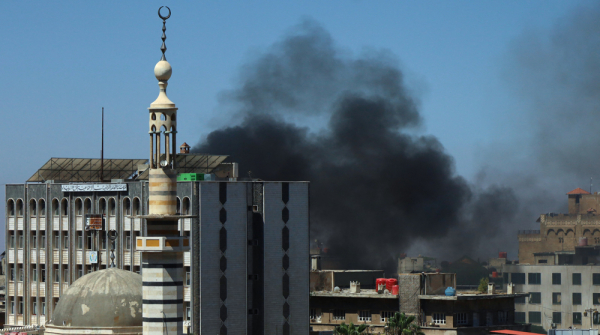
Tehran has expressed deep concern over the recent clashes in the Suwayda region in southern Syria and condemned the Israeli attacks on the Arab country over the past two days.
Esmaeil Baghaei, the spokesman for the Iranian Foreign Ministry, pointed to the continued military aggression by Israel against Syria’s territorial integrity, coinciding with the ongoing occupation of a large part of Syrian territory.
He described the continued inaction of the United Nations Security Council regarding the aggressive actions of the Zionist regime against regional countries as 'extremely dangerous' and as fueling the escalating boldness of the occupying regime.
Baghaei emphasized the necessity for countries in the region and the Islamic world to act urgently to stop the violations and crimes committed by the Zionist regime, including its unprecedented genocide in Gaza and ongoing attacks against Syria and Lebanon.
He emphasized the international community's responsibility to prevent further severe violations of international law and the UN Charter.
The Druze-majority city of Sweida in southern Syria has been a scene of clashes since Sunday between factions from the Druze religious minority and Bedouin tribes, killing more than 100 people.
The two sides have a longstanding feud in Sweida.
Syria's unelected HTS regime has deployed its forces in a bid to extend its power to the area controlled by local armed groups.