hasania
Terrorists kill 11 Shia Muslim miners in southwest Pakistan
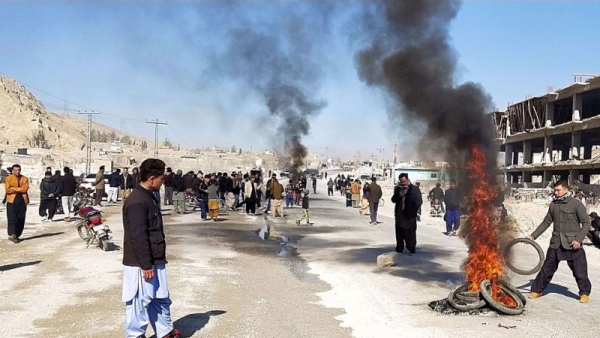
Terrorists have killed at least 11 coal miners in Pakistan's southwestern province of Balochistan, after abducting them.
According to reports, Khalid Durrani, a government official in the area, said the attack took place in Machh town, located 60 km southeast of the provincial capital Quetta, before dawn on Sunday.
"Dead bodies of the 11 miners have been taken to a local hospital”, he said, adding that all the victims were members of the minority Hazara Shia Muslim community.
He further said the miners were attacked while they were sleep, adding that the armed men took them to a secluded area in the nearby hills where they were later killed.
Abid Salim, another top government official in the area, said the gunmen tied the miners’ hands and feet and “brutally slaughtered them with some sharp instrument".
He also said some of the victims were beheaded.
Hours later, the Daesh Takfiri terrorist group claimed responsibility for the deadly assault.
Police say Pakistani paramilitary forces had launched a search operation to trace the assailants who have fled the scene.
Following the attack, dozens of local people and family members blocked a main road in the area and set tires on fire, demanding protection.
Sunday’s violence was largely condemned across the country.
Liaqat Shahwani, a spokesman for the provincial government, who confirmed the attack, termed it as an “act of terrorism”.
In a post on Twitter, Prime Minister Imran Khan condemned the killings, terming the incident as “yet another cowardly (and) inhumane act of terrorism”.
He also noted the families of the victims would be taken care of by the government and the perpetrators would be brought to justice.
This is the first major attack targeting the Hazaras since April last year when a bomb blast at a market in Quetta killed at least 20 people.
Is It Acceptable to Convert to Islam for Marriage?

One of the motivations of those who convert to Islam may be marrying someone who is a Muslim. In Islam, marriage is a sacred and dear institution to Allah, and it plays a very crucial role in the formation of an ideal society. It is in fact, considered one of the greatest Divine blessings for responding to the natural instincts of human beings. However, according to the Islamic teachings, faith is the first quality to be considered in choosing a spouse.
A faithful and harmonious partner plays a crucial role in having a prosperous life. It is on this basis that the Quran, the Holy Prophet (PBUH) and his Ahl al-Bayt (AS) have laid great emphasis on religion and well mannerism as necessary criteria for marriage.
Meanwhile, an important question that comes to mind is that, “can we convert to Islam for the sake of marriage or not?”

The Highest Goal of Islamic Marriage
Marriage is a natural necessity for every human being and several good outcomes such as procreation, sexual satisfaction, peace of mind, etc. are considered as the purposes of marriage. However, these could not be the ultimate goal of marriage in Islam as the non-Muslims can also achieve these, perhaps in better ways.
Humankind is not created solely to eat, drink, sleep, seek pleasure or act lustfully. Thus, the aim of marriage for a religious person should be a means of gaining proximity to Allah and avoiding sins. In this regards, a good and faithful partner assumes a vital role as he/she invites his/her partner to goodness, in the same way as a corrupt person would tempt his/her partner towards corruption. Islam has enjoined its adherents to consider religion and good manners as necessary criteria for the selection of their future partners on different occasions.
The Prophet (PBUH) said: “If I were to bestow all the good of both worlds upon a Muslim, I would endow him with a humble heart; a tongue which continuously utters the praises of Allah; a body patient enough to withstand all calamities; and I would give him a pious spouse, who when he sees her becomes happy and protects his property as well as her own honour in his absence”.[1]
Convert to Islam for Marriage
In the Quran, it is said:
“Do not marry idolatresses until they embrace faith. A faithful slave girl is better than an idolatress, though she should impress you. And do not marry [your daughters] to idolaters until they embrace faith…” (2: 221)
From the above verse, it is clear that faith and religion is an uncompromised condition for marriage in Islam. It has explicitly prohibited marriage with the infidels except that they embrace Islam, as the statement “until they embrace faith” indicates. Thus, neither is the man allowed to marry idolatress nor a Muslim woman is allowed to marry an idolater. However, there is a separate ruling [i] to the marriage with the people of the Book (i.e., Jews and Christians).
Meanwhile, following the Islamic jurisprudence, it is considered permissible for someone to convert to Islam for marriage, as there is not any religion hindrance on that, as far as it is based on the sincerity of intention and a strong determination to act by the Islamic teachings. Although such a conversion might not be the best idea, it might be a perfect chance to think more about converting to the real and true religion.
Conclusion
In Islam, faith and religion are crucial requirements to be considered in the choice of a future spouse. This is because the ultimate goal of a marriage is the everlasting salvation in this world and the Hereafter. And this cannot be achieved by marrying an idolatress or idolater. However, based on the verdicts of the Islamic jurists, it is acceptable to convert to Islam for the sake of marriage, so far as it is based on the sincerity of intention and a resolution to work in line with the teachings of the religion.
Note:
[i] Books on the Islamic jurisprudence or the official sites of the religious authorities should be consulted for details of the ruling.
References:
[1] Hur Amuli; Wasa’il as-Shiah, Vol. 14, P. 3.
How Does Hajj Unite all Muslims?
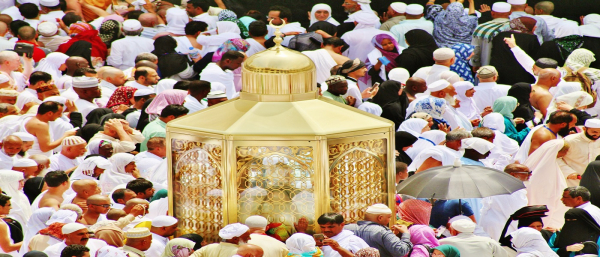
Unity between Muslims is considered as a crucial matter in Islam. Thus, the Quran compares discordance and disunity among Muslims to “a pit of the Fire”: "And hold firmly to the rope of Allah all together and do not become divided...And you were on the edge of a pit of the Fire, and He saved you from it." (3:103). Looking at the former nations, we find them honored and glorious when they were united, but disgraced and vulnerable when they fell apart [3]. Hajj, as one of the obligatory rituals in Islam, is one of the ways which encourages unity among Muslim nations. Let’s see how.
Every Muslim is Welcomed to Hajj, No Exception!

There is no other ritual, social, or political program in Islam greater than Hajj, where every Muslim from any corner of the world finds the chance to approach others and communicate with them freely.
Besides, it provides the opportunity to strengthen the emotional, social, and religious bonds with other Muslims. Hajj is a social kind of worship that represents the glorious Islamic unity through its numerous participants of various nationalities, skin colors, languages, and sects who are like brothers (49:10). They have left behind the religious conflicts, and follow the same intention, perform the same actions, and wear the same outfit.
Hajj Brings Muslims Power
In Surah Ma’idah, it is stated that coming together around Ka’aba makes Muslims powerful (5:97). In other words, the aim of Hajj for Muslims is not just performing some physical actions. It is to bring Muslims of different races and origins together to get acquainted, communicate with each other, initiate political, economic and cultural relations, and find themselves closer to each other despite their many differences.
Besides, Islam calls “every” Muslim to Hajj, which means that everyone, regardless of origin and skin color, is invited to the land of Allah. It reminds us of what the Quran says; that there is no superiority except rightfulness and the most righteous, is the noblest in the sight of Allah (49:13). This is an important message, especially for the less powerful Islamic nations, causing them to feel more confident and encouraging them to communicate with other Muslims, which ultimately results in a more united Muslim society.
Muslims Are Like the Hands which Help Each other

In a discourse that Prophet Muhammad (PBUH&HP) has given during one of his Hajj pilgrimages, he described Muslims as brothers, and like a single hand (a united community) when facing the enemies [2]. Emphasizing brotherhood among Muslims during Hajj shows that this ritual was a good representation of unity. Thus, Muslims are expected to support each other and be close to each other as they are during Hajj.
Two Axes of Solidarity in Hajj
During Hajj, Muslims learn and practice solidarity in two main areas:
1. Ideology and Principles
During Hajj, Muslims can exchange ideas with Muslims of other sects. In the early years of Islam when non-Muslims also went to Mecca for their religious rituals, Prophet Muhammad (PBUH&HP) took this opportunity to introduce Islam to them and exchange ideas with them to spread his message and find followers in other cities, too. In Hajj, many misunderstandings and ideological conflicts can be discussed among Muslims, and the real beliefs of different sects about the others can be clarified. Hence, the wrong prejudgments and hostilities can be rectified. According to Imam Sadiq (AS), Hajj is a means to gather all Muslims from east to west to let them get acquainted with each other and achieve consensus [3].
2. Social and Political Matters
Through the communications that Muslims have during Hajj, they find out the social achievements and national advances in other Muslim nations and might decide to follow their path. They also learn about the social problems and deficiencies of others and might find solutions by further cooperation. Moreover, they become aware of the real political situations of other Muslim countries, especially the difficulties that sometimes other countries impose on them. For instance, one of the goals of Hajj is to announce the support of Muslims for Palestinians and those oppressed in the world. This helps Muslims to become more united against common enemies of Islam.
To summarize, Hajj is a time that a Muslim finds him/herself in the accompaniment of millions of others who wear as simple as him/her and who repeat the same words as him/her as they move around Ka’aba. This is where “one” is transformed into the totality of ‘people’, establishing the universality of the Islamic community with the goal of approaching Allah.
References:
[1]. Imam Ali (AS), Nahj-ul Balaqa, Infallible 192
[2]. M. B. Majlesi, "Bihar al-Anwar", vol. 21, p. 105.
[3]. Shaikh al-Hur al-Aamili, “Wasa’il al-Shi’a”, vol. 11, p. 14
Prophet Muhammad (PBUH&HP) and Her Daughter, Lady Fatima (AS)
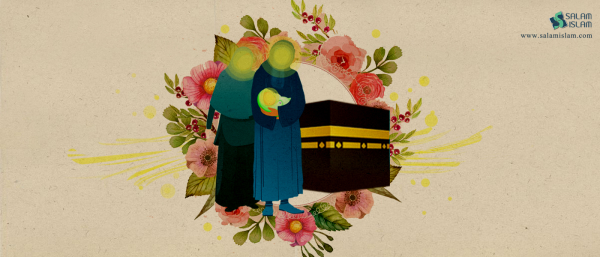
Before she was born, both Prophet Muhammad (PBUH&HP) and lady Khadija (AS) went to a spiritual retreat separately for forty days by the command of Allah. During those days, Prophet Muhammad (PBUH&HP) and Lady Khadija (AS) prayed Allah sincerely and prepared their pure soul to receive Allah's blessing, their beloved daughter. After those forty days of worship and servitude, angels brought Prophet Muhammad (PBUH&HP) an apple from heaven, and he broke his fast with those gifts from Allah. That night Lady Fatima (AS) was formed [1].
The father-daughter relationship between Prophet Muhammad (PBUH&HP) and Lady Fatima (AS) was one of a kind. Here, we are going to exemplify some instances of deep father-daughter love between the two and the formation of an ideal respectful relationship.

1. Respecting and Loving Lady Fatima (AS)
Prophet Muhammad (PBUH&HP) was always affectionate and caring toward Lady Fatima (AS). He used to kiss her throat every time she returned from a trip [2]. In response, she used to hug her dear father and kiss his forehead, between his eyes [3]. He didn't get to sleep before kissing her cheeks and praying for her, which reveal his deep respect and fatherly love toward her [4]. Aisha said she was the most similar person to Muhammad (PBUH&HP) in her speech. Whenever she came to see Prophet Muhammad (PBUH&HP), he used to take her hand and kiss her and sat next to her, and whenever Prophet Muhammad (PBUH&HP) went to meet Fatima (AS), she used to kiss his hand and sat next to him respectfully [5].
2. Lady Fatima (AS), The Mother of Her Father (Umme Abiha)
Lady Fatima (AS) lost her mother when she was five. The other five years of her life passed without a mother. As a daughter, she used to take care of her father. Whenever the unbelievers threw him stones and ashes, Fatima (AS) used to take care of him and do what a mother does for her child. That is why when Allah asked Prophet Muhammad (PBUH&HP) to call his wives Umol-Mumenin (Mother of the Believers), she asked him to grant her a title, too, Then Prophet Muhammad (PBUH&HP) called her Umme Abiha, the mother of her father [6].
3.The Event of the Cloak
Prophet Muhammad (PBUH&HP) was at home, resting, with his cloak over his body. Fatima (AS) came beside him with some food. Prophet Muhammad (PBUH&HP) asked her to call her husband, Ali (AS), and her two sons, Hassan (AS) and Hussain (AS). They started eating together when Allah inspired this verse to his Prophet:
"Stay in your houses and do not flaunt your finery like the former [days of pagan] ignorance. Maintain the prayer and pay the zakat, and obey Allah and His Apostle. Indeed, Allah desires to repel all impurity from you, O People of the Household, and purify you with a thorough purification." Quran (33:33)

Then Prophet Muhammad (PBUH&HP) covered the four of them with the remaining of his cloak and prayed:
O Allah, these are the people of my household and my special ones. Keep them pure and clean and take all evil away from them [7].
4. Attached, Even in the Other World
Prophet Muhammad (PBUH&HP) used to know about the difficulty of Lady Fatima's (AS) life after his death and the cruelty imposed on her and her family, and he cried for that a lot. Once when she was crying, he inspired her with this news: "You will join me in the other world soon after" [8] Lady Fatima (AS) was martyred 95 days after the death of his father!
References:
[1] Naseri, Muhammad (2011), Prophet Muhammad's Behavior with Fatima, Farhang-e Kothar, vol. 81.
[2] Bihar al-Invar, Vol.43, p. 6.
[3] ibid, p 40.
[4] ibid, p 42.
[5] Amini, Ibrahim The Model Woman of Islam, Fatima Pp108-109.
[6] Qa'emi, Ali In Fatima's School p.90.
[7] Tabatabai, Muhammad Hussain, Tafsir Al-Mizan Vol. 16, P 474.
[8] Qomi, Abbas, Montahal Aamal p164.
6 Major Islamic Occasions
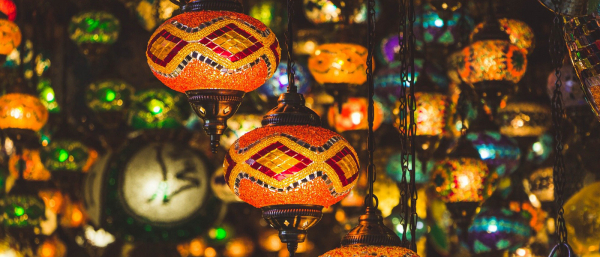
In Islam, there are some ceremonies and occasions which are held all around the world among Muslims. They all have religious backgrounds and are mostly referred to in the holy Quran. Muslim nations have been commemorating them in the course of history. Here we are going to have a glance at the most significant Islamic occasions based on the Lunar Calendar.
1.10th of Muharram: Martyrdom of Imam Hussain (AS)
The month of Muharram is the first month of the year in the lunar calendar. On the tenth day of this month, Hussain Ibn Ali (AS), the grandson of Prophet Muhammad (PBUH&HP), and his companions were brutally martyred, and their women and children were taken captive by the caliph of the time, Yazid ibn. Muawyah. Their story has been the source of inspiration for many new converts.
2. 20th of Safar: The Day of Arbaeen
Arbaeen is the Arabic word for forty, and it marks the 20th of Safar, the fortieth day after Imam Hussain's (AS) martyrdom on the day of Ashura, who was martyred in the event of Karbala along with his companions in the cruelest and most inhumane way possible.
According to some historical accounts [2], some of the members of Imam Hussain's (AS) family after being released from the bondage of Yazid's forces returned to Karbala from Sham (today's Damascus) to visit Imam Hussain's (AS) grave. Also, some believe that Imam Hussain's (AS) head, which was taken to Sham by Yazid's army was brought back to Karbala on this day and buried with his body [3] & [4].
Every year, a few days before this day, a vast number of people from all over the world, Muslims or even non-Muslims, gather in Iraq to take part in a symbolic walk, to revive the teachings of Imam Hussain (AS) and commemorate his sacrifice in the way of Allah and humanity.
3. 17th of Rabi al-Awwal: Prophet Muhammad's (PBUH&HP) Birthday
There is a disagreement concerning the exact date of Prophet Muhammad's (PBUH&HP) birthday. Some believe it occurred on the 12th of Rabi al-Avval, while others consider it to be on the 17th of Rabi al-Avval, the third month in the Islamic calendar. Prophet Muhammad (PBUH&HP) was born in Mecca. All Muslims around the world celebrate his birthday and regard it as one of the important Islamic occasions. On this day, Muslims feed the needy, pray and recite the Quran, commemorate Prophet Muhammad (PBUH&HP), and his challenges to deliver the messages of Allah to human beings.
4. 1st of Shawwal: Eid al-Fitr
The first day of the month of Shawwal, the tenth month of the Islamic calendar, is called Eid al-Fitr. After fasting for one month, during the month of Ramadan, remembering, worshipping Allah and trying to do fewer sins beside not eating and drinking from before the Call for Fajr prayer to after the Call for Magrib prayer, Muslims celebrate the first day of the month of Shawwal, for their success in submitting to Allah's command. They perform the Eid prayer first; then, they hold a feast inviting their loved ones, wear their best clothes, and visit their friends and family. The culture of feasting might be different in different Islamic communities, but one thing is for sure; no one is allowed to fast on this exceptional day. Allah also obliges Muslims to share their blessings and happiness with the needy with the money they donate to them.
5. 10th of Dhu'l-Hijjah: Eid al-Adha
Eid al-Adha is one of the most significant Islamic occasions. Some of the most important events of this Abrahamic religion happened on this day. On this Eid, similar to Eid al-Fitr, Muslims are not allowed to fast. The first is the sacrifice of Ishmael by his father, Abraham, for the sake of Allah. When Abraham and his son both surrendered, and he was ready to behead his son, Allah sent a ram and asked Abraham to kill that instead.
"So when they had both surrendered [to Allah's will], and he had laid him down on his forehead, We called out to him, 'O Abraham! You have indeed fulfilled your vision! Thus indeed do We reward the virtuous! This was indeed a manifest test. Then We ransomed him with a great sacrifice, and left for him a good name in posterity." (37: 103-108)
This day is also the last day of Hajj rituals, in which Muslims shall sacrifice an animal to feed the needy Muslims. On this day, those who attended Hajj have performed all their Hajj rituals, and with the great assistance of Allah, all their sins are wiped away, and Allah accepts their good deeds and repentance.
Many Muslims celebrate this day. They sacrifice an animal to feed the needy, even if they have not attended Hajj. If they do not have enough money to buy a sheep, they do other things and feed the destitute in different ways. This sacrifice is an expression of generosity and obedience to the commands of Allah. This Eid also reminds humankind of the characteristics, such as envy, rage, dishonesty, etc., they have to symbolically sacrifice in themselves to become the better version of themselves and be worthy of being Allah's best creation.
6. 18th of Dhu'l-Hijjah: Eid al-Ghadir
This Islamic occasion was a day in the last Hajj pilgrimage (Hajjat al-Vida'a) of Prophet Muhammad (PBUH&HP). When he was going back to Medina with all his companions and other pilgrims, he gathered everyone around a place called Ghadir and announced these words in which he appointed Imam Ali b. Abi Talib (AS) as his caliph and the Imam after himself following a direct order from Allah [i]:
"Whomsoever, I am his leader (Mawla), Ali (AS) is also his leader (Mawla). O' Allah! Love those who love him (Ali (AS)) and oppose those who oppose him" [1]
This is another important day in the Muslim calendar. On this day, Muslims can fast and again feed the needy, as an essential part of Islamic culture.
These are the most significant and most celebrated Islamic occasions. As one can see, feeding others and praying to Allah are the essential things a Muslim should do to celebrate a feast, which reveals the importance of caring for others in Islam that results from the devotion to Allah.
Notes:
[i] Verse 67th of Surah al-Maedah known as Al-Tabligh Verse, and the third verse of the same chapter known as Al-Ikmal Verse.
References:
[1] Ibn Athīr, Usd al-ghāba, vol. 3, p. 605; Kulaynī, al-Kāfī, vol. 1, p. 295; Balādhurī, Ansāb al-ashrāf, vol. 2, p. 110-111; Ibn Kathīr, al-Bidāya wa l-nihāya, vol. 7, p. 349.
[2] Ibn Tawus, 'Ali b. Musa, Al-Luhuf 'ala qatla l-tufuf, Uswi, Qom, 1414 AH.
[3] Al-Biruni, Abu Rayhan, The Remaining Signs of Past Centuries, p.331.
[4] Qazi al-Tabataii, Muhammad Ali, A Research on the first Arba'een of the Leader of Martyrs (Imam Hussain (AS)), vol.3, p.304.
Iran will respond to scientist’s assassination in due time: Rouhani
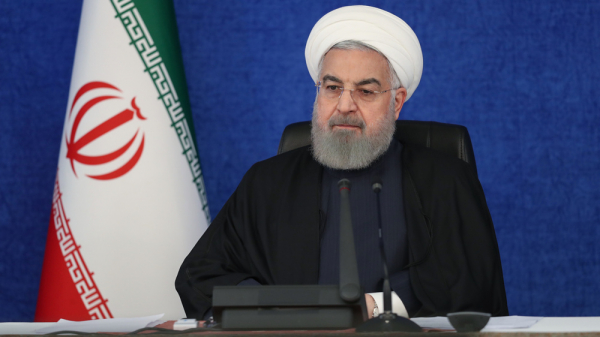
Iran’s President Hassan Rouhani has warned of a plot hatched by Israel to incite chaos in the region, vowing that Tehran will at the proper time respond to the assassination of its prominent nuclear scientist.
“Our people are wiser than to fall in the trap of the Zionists’ conspiracy. They are thinking of creating chaos and unrest, but they should know that we have already read their hands and that they will not succeed in achieving their evil objectives,” Rouhani told a cabinet meeting on Saturday.
The remarks came a day after Mohsen Fakhrizadeh, a professor of physics at Imam Hussein University who headed the Iranian Defense Ministry's Organization of Defensive Innovation and Research (SPND), was assassinated while travelling near Absard city in Tehran Province's eastern Damavand county in an attack that also involved a car bombing.
The president stressed that “the Iranian nation and the officials of the country are more courageous and zealous than to leave this criminal act unanswered, and that the relevant officials will respond to the crime in due time.”
“Both the Zionist regime and those who are against Iran should know that the country’s path of development and research will continue rapidly, and that with the loss of our beloved Fakhrizadeh, many Fakhrizadehs will strive to make up for his absence,” he added.
Earlier in the day, Rouhani issued a message, expressing sympathy with Fakhrizadeh’s family and offering condolences to the scientific community as well as the revolutionary people of Iran over the martyrdom of the prominent scientist.
“Once again, the wicked hands of the global arrogance, with the usurper Zionist regime as the mercenary, were stained with the blood of a son of this country, causing deep grief among the nation over the loss of a hard-working scientist,” the message read.
“Undoubtedly, this terrorist and desperate incident emanates from the weakness and inability of the sworn enemies of the Iranian people amid the scientific capabilities and honors of the great nation and their successive defeats in the region and other political arenas.”
The Iranian president also noted that the assassination operation showed to the world “the depth of malice and resentment” by Tehran’s enemies.
“However, the enemies of our nation should know that the martyrdom of figures like Mohsen Fakhrizadeh will not disrupt the will of the Iranian youth and scientists to pursue the path of accelerated scientific growth and conquer the peaks of honor, but rather makes them more determined to continue the way followed by the martyr,” Rouhani said.

The New York Times reported that an American official and two other intelligence officials confirmed Israel was behind the targeted killing.
In a post on his Twitter account, Russia’s first deputy permanent representative to the UN shared an excerpt from the article, which quoted the US officials as claiming that the assassination would send “a chilling message” to other Iranian scientists.
“That’s a telling analysis from @nytimes reflecting readiness of US establishment to give green light to political extra territorial assassinations. Not a thing to boast for a democratic country!” Dmitry Polyanskiy wrote.
Imam Khamenei's message following the assassination of the Nuclear Scientist, Mohsen Fakhrizadeh
In the Name of Allah, the Beneficent, the Merciful
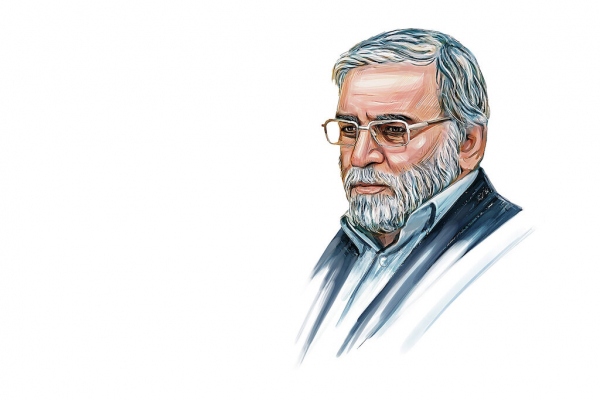
One of our country’s eminent scientists in the nuclear and defense fields - Dr. Mohsen Fakhrizadeh - has been martyred by brutal mercenaries. With his great, enduring scientific efforts, he sacrificed his life on the path of God and the lofty status of martyrdom is his divine reward.
All relevant administrators must seriously place two crucial matters on their agendas: First to investigate this crime and firmly prosecute its perpetrators and its commanders, second to continue the martyr’s scientific and technological efforts in all the sectors where he was active.
I offer my condolences for this loss and my congratulations on his martyrdom to his respected family, the scientific community of the country as well as his colleagues and students in various sectors, and I ask God to elevate his rank.
Sayyid Ali Khamenei
November 28, 2020
Why it's better to Recite the Holy Quran in Arabic?
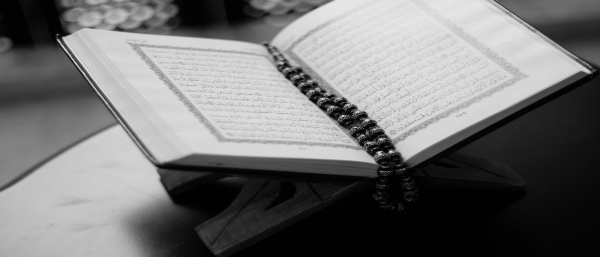
Do I need to read the Quran in Arabic or can I just read it in English?
Every Muslim agrees on the fact that the Holy Qur'an came down as a revelation to the Prophet Muhammad (PBUH&HP) in Arabic as we see in the following two verses:
The Holy Quran 43:3
"Surely We have made it an Arabic Qu'ran that you may understand."
The Holy Quran 12:2
"Surely We have revealed it-an Arabic Qu'ran-that you may understand."
But today with uncountable nationalities embracing the fold of Islam, many read the Holy Qu'ran in their native tongue and thereby pose different questions and arguments about reciting it in their own tongue.
These arguments include the following:
1. It is not wajib (Obligatory) to read the Holy Quran in Arabic because it is not specifically mentioned in the Holy Qu'ran that we must read it in Arabic.
2. Non-Arab Muslims do not understand the Holy Quran in it's revealed language and since Islam is a way of life, then it is more important to understand the injunctions, clear signs, stories of the Holy Prophets (AS) of Allah to gain guidance from these instead of spending time; learning a language, reciting in that language that they believe does not benefit them and that the time in which they would be occupied in reciting a language that is, they feel, not of use to them, then this time although not exactly wasted can be put to better use in acquiring actual knowledge.

Some argue that they can not learn Arabic because they are not good with languages and others still insist that while they read the Holy Quranic interpretations in their native language in the holy month of Ramadan, they have actually completed an entire Quran that month.
And a final argument given is the following:
"I do not understand at all why the Quran should be read in Arabic? Yes, Allah Almighty has said that we sent the Qur'an in Arabic for you to think about, but if we read the Qur'an in Persian, can we not think about it?"
So let's begin to answer these arguments by going directly to the Holy Qu'ran where the word Arabic is mentioned exactly ten times and see what Allah is telling us.
In the Holy Quran 12:2,
"Surely We have revealed it-an Arabic Quran-that you may understand."
In the Holy Quran 13:37,
And thus have We revealed it, a true judgment in Arabic, and if you follow their low desires after what has come to you of knowledge, you shall not have against Allah any guardian or a protector.
In the Holy Quran 16:103,
And certainly, We know that they say: Only a mortal teaches him. The tongue of him whom they reproach is barbarous, and this is a clear Arabic tongue.
In the Holy Quran 19:97,
So We have only made it easy in your tongue that you may give good news thereby to those who guard (against evil) and warn thereby a vehemently contentious people.
In the Holy Quran 20: 113,
And thus have We sent it down an Arabic Quran, and have distinctively set forth therein of threats that they may guard (against evil) or that it may produce a reminder for them.
The Holy Quran 26:193,194,195 and 200
193. The Faithful Spirit has descended with it.
194. Upon your heart that you may be of the warners.
195. In plain Arabic language.
200. Thus have we made it enter into the hearts of the guilty.
The Holy Quran 39:28,
An Arabic Quran without any crookedness, that they may guard (against evil).
The Holy Quran 41:3,
A Book of which the verses are made plain, an Arabic Quran for a people who know.
The Holy Quran 42:7,
And thus have We revealed to you an Arabic Quran, that you may warn the mother city and those around it, and that you may give warning of the day of gathering together wherein is no doubt; a party shall be in the garden and (another) party in the burning fire.
The Holy Quran 46:12,
And before it, the Book of Musa was a guide and a mercy: and this is a Book verifying (it) in the Arabic language that it may warn those who are unjust and as good news for the doers of good.
As we see from the ten verses above, Allah has a specific message that he wants to imprint on our minds and hearts by the adjectives which he brings with the word Arabic in the same verses. However, let us not rely on our own assumptions or interpretations as I can already hear the arguments that may arise that, yes, it may be that it was revealed in Arabic because the people of the time were Arabs and how could they understand another language but today we come from many different nations and tongues. So let us continue by looking at a clear hadith from Imam Jafar as-Sadiq (as).
Imam Sadiq (as) said:
"Learn Arabic, which is the word of Allah, and Allah has spoken to His servants in that language (the meaning of the Qur'an), and speak your jaws in Arabic and pronounce the end of the words clearly". (Al-Khesal. Vol 2. P 258)
In this above tradition, we see that the words of Imam As-Sadiq (as) are not advising or recommending us towards an action or a behavior, rather the words are decisive - a command. What is our Imam telling?
He says: "Learn Arabic", these are final and conclusive words from the sixth Imam (as). He further tells us that Arabic is the word of Allah, he does not say the Quran is the word of Allah but Arabic itself. He tells us that Allah has spoken to His servants in Arabic "That language" and finally, he explains the physical aspect of the recitation - how we should recite in Arabic? "Speak your jaws in Arabic and pronounce the end of the words clearly."
The above tradition coming from the Sixth Imam himself should also instill into our hearts that there is a science to the recitation of the Arabic Quran and when something has a science, then there is a cause and an effect. By mentioning the jaws, we see that there is some physical benefit for our actual body that comes from reciting the Holy Qur'an in Arabic but what more does he tell us about this recitation?
The following tradition, answers this question.
Imam Jafar As-Sadiq (as) said "Try your best to read the Qur'an correctly in true Arabic pronunciation in the same way that Arabs read it."
p 270 The life of Imam Al-Sadiq (as) Allama Baqir Sharif al Qarashi.
By the mentioned verses of the Holy Quran and the clear tradition (without even touching on the benefits of Arabic), there should be no doubt left about the actual command from our Imams and the guidance in the words of Allah himself that although we must understand the Holy Quran (reading in our native tongue), still there is nothing that can replace the function and role of the word of Allah in His own language.
Shocking New Figures Show How Just Much the US is Fueling the Violence in Yemen
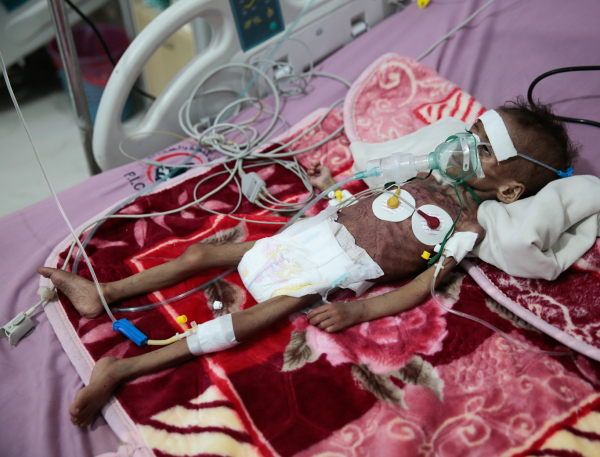
New figures from the UN and the Stockholm International Peace Research Institute show that since the war in Yemen began, the US has sold over $13 billion in high-tech weapons to Saudi Arabia, making the Kingdom a cash cow for US weapons makers.
Imam Hadi (as) introduced Abdul-Azim Al-Hasani as a religious scholar to his Shiites
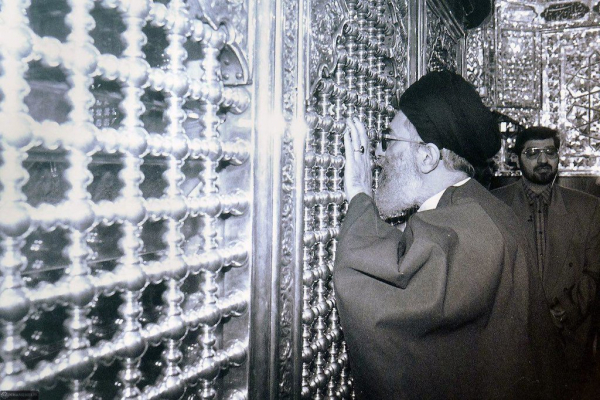
There is a saying from Hazrat Hadi (as), which reveals both the knowledgeable and spiritual aspects of Hazrat Abdul-Azim.
An individual once paid a visit to Imam Hadi (as).
Imam (as) asked him: Where are you based?
The man replied: In Rey
Imam Hadi (as) said: "You can ask Abdul-Azim bin 'Abdullah al-Hassani about any issue regarding the religion."
Imam Hadi (as) introduced Abdul-Azim al-Hassani as a Scholar of religion to his Shiites. Then, at the same time, the Imam (as) said: “Send my regards to him.”
This shows the spiritual aspect.
Excerpt from Leader of the Revolution's speech at the holy shrine of Hazrat Abdul-Azim Hassani (as) for the people of Rey (October 27, 1994)
Abdul-Azim was a great person; at the same time, he was a knowledgeable figure and a jihadist whom brought about some interesting initiatives. The late Sheikh Najashi says: "He collected the speeches of Amir al-Mu'minin." Thus, about a hundred and seventy years before Nahj al-Balagheh was published, he collected the speeches of Amir al-Mu'minin; this is very important. It is not unlikely that Sayyid Razi (God bless him) had used his writings.
On the other hand, due to his jihadist character, he secretly fled to Rey. Sheikh Najashi said to escape from the Sultan. He escaped from the Abbasid caliph, from Iraq and Hijaz, and he came to Rey, because the population of Rey was predominantly Shi'ite. In Medina and in Iraq, the same people did not have to escape the caliph. His escape revealed his warrior-like personality. It reveals that he promoted the teachings of Shia Imams, especially during the time of Imam Javad and Imam Hadi (as), since he was, at least, a narrator of these two Imams. It was a strange era: a period of intense repression against the Imams and, at the same time, a period of joy for Shi'ite throughout the Islamic world. This is an important fact that displayed in no other time, during the life of the Imams', did the Shi'ites have so much vitality, dynamism, organization and expansion among the Islamic world as they had during the era of these three Imams (as): Imam Javad, Imam Hadi, and Hazrat Askari (as). Although, these three Imams (as) were under surveillance and extreme pressure in Medina, Baghdad, and Samarra, at that time, one can conclude that he [Abdulazim] was an important and active person who was noticed by the caliph.--He was wanted and thus escaped to Rey.
Therefore, he was a jihadist, a religious scholar, and a scribe of Hadith, he narrated, at the least, from Imam Jawad and Imam Hadi (as).
Statements made during a meeting with organizers of the congress on Hazrat Abdul-Azim al-Hassani (May 26, 2003)